

P0496 on 2013-2016 Mazda CX-5: Causes and Fixes for EVAP High Purge Flow
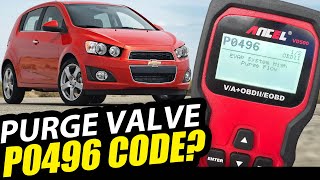
On a 2013-2016 Mazda CX-5, code P0496 is almost always caused by a faulty canister purge valve that is stuck open. This often causes difficult starting right after refueling. Replacing the purge valve is the most common fix, with the part costing around $70-$110 for an OEM unit.
- P0496 on your CX-5 almost always means the canister purge valve is stuck open.
- The most telling symptom is your car struggling to start right after you fill the gas tank.
- This is a DIY-friendly fix. The purge valve is easy to access on the engine and can be replaced in under 30 minutes with basic tools.
- The correct OEM part number is PE01-18-751, which is used across many Mazda models. Using the OEM part or a quality aftermarket equivalent is recommended.
- Don't replace the gas cap for this code; it is not the cause.
What's Unique About the 2013-2016 Mazda CX-5
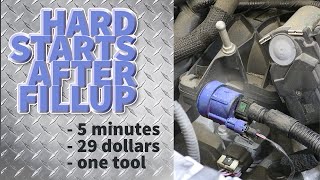
The P0496 code on the first-generation Skyactiv-G CX-5 is a textbook case of a common modern engine issue. The primary symptom—difficulty starting immediately after filling the gas tank 🎬 Watch: Why your car struggles to start after refueling—is a classic sign of a stuck-open purge valve on this and many other vehicles. When you refuel, the incoming gasoline displaces a large volume of fuel vapor, which gets forced through the stuck-open valve directly into the engine intake, creating a temporary 'flooded' or overly rich condition that prevents an easy start. While the issue is common across many brands, Mazda owners on forums like Mazda Forum and Mazdas247 frequently pinpoint this specific symptom as the main indicator for this code.
Symptoms You May Notice
- Check Engine Light is on
- Difficulty starting the engine, especially right after refueling
- Rough or unstable idle
- Slight decrease in fuel economy
- Possible fuel smell
- Replacing the gas cap. A loose or faulty gas cap typically causes codes for a large leak (like P0455 or P0457), not a 'flow during non-purge' condition like P0496. While a good seal is important, it is not the cause of P0496.
Most Likely Causes
- Faulty Canister Purge Valve (Solenoid) 🔴 High Probability → Shop Vapor Canister This is a very common failure point on many modern vehicles, including Mazdas with Skyactiv-G engines. The valve's internal solenoid can fail, or it can get stuck open due to carbon buildup or debris over time, allowing un-metered fuel vapor into the intake.
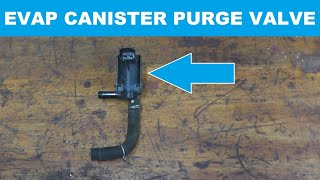
How to confirm: With the engine off, locate the purge valve on the intake manifold. Disconnect the hoses and electrical connector. Try to blow through the valve; if air passes through, it is stuck open and faulty. A working valve should be closed with no power applied. 🎬 Watch: How to test and replace a purge valve Alternatively, with the engine running, disconnect the EVAP hose running from the valve to the intake. If you feel suction with your finger, the valve is stuck open.
Typical fix: Replace the canister purge valve. It is located on the engine's intake manifold, secured by an 8mm or 10mm bolt, making it a straightforward replacement that typically takes less than 30 minutes.
Est. part cost: $50-$110
Rare But Worth Checking
- Faulty Fuel Tank Pressure (FTP) Sensor: → Shop Fuel Tank The FTP sensor tells the computer the pressure in the EVAP system. If it sends an incorrect reading, the computer might mistakenly believe there is flow when there isn't. This is much less common than a failed purge valve for this specific code.
- Cracked or Disconnected EVAP Hoses: A significant crack or disconnection in the hose between the purge valve and the intake manifold could cause a vacuum leak, but this is less likely to specifically trigger P0496 compared to a stuck-open valve. A smoke test is the best way to identify such leaks.
- Clogged EVAP Canister: → Shop Vapor Canister If the charcoal canister becomes saturated with fuel, often from habitually overfilling the gas tank, it can cause various EVAP system problems. However, this is more likely to cause other codes before P0496.
Diagnosis Steps
- Verify the code with an OBD-II scanner.
- Confirm the primary symptom: Does the vehicle have trouble starting immediately after refueling? If yes, the purge valve is the prime suspect.
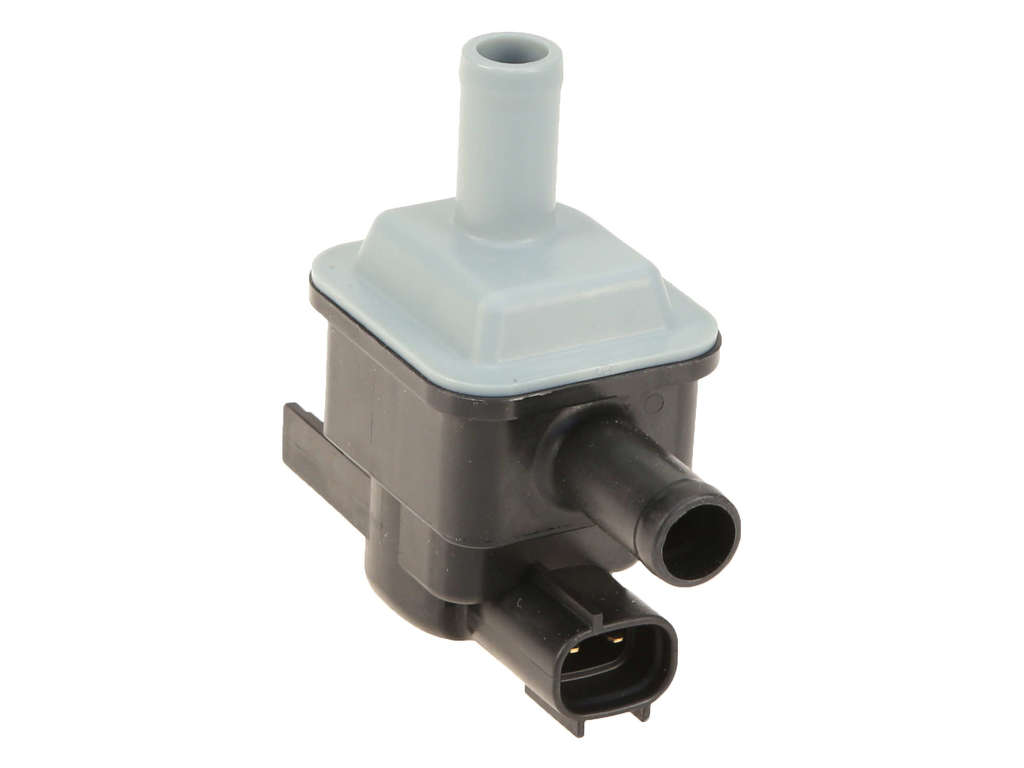
- Locate the canister purge valve on the engine's intake manifold. It will have two hoses and an electrical connector.
- With the engine off, disconnect the electrical connector and both hoses from the valve.
- Attempt to blow air through the valve. If air can pass through in either direction, the valve is stuck open and must be replaced. A new, functional valve will not allow air to pass.
- If the valve passes the blow test, the issue could be more complex, such as an intermittent electrical problem or a faulty Fuel Tank Pressure sensor. A professional diagnosis with a smoke machine or advanced scan tool may be required.
Parts You'll Likely Need
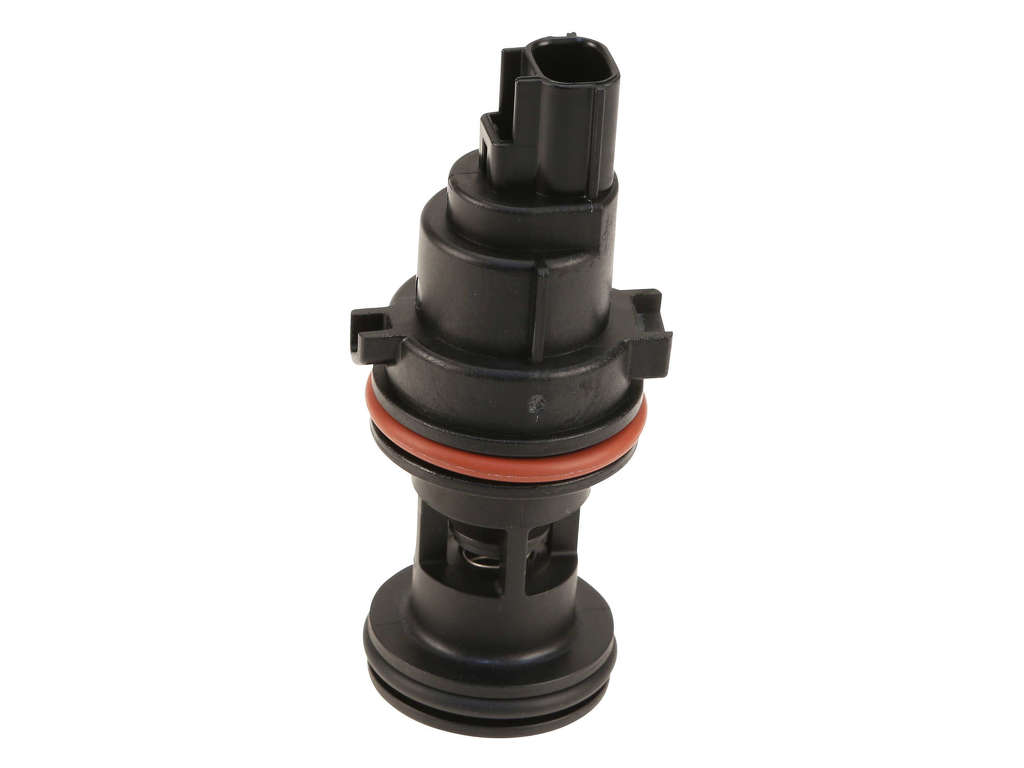
- Canister Purge Valve / Solenoid
(OEM #PE01-18-751)— This is the most frequent cause of P0496. It gets stuck open, allowing fuel vapor to enter the engine at the wrong time, causing the code and the common symptom of hard starting after refueling.
Trusted brands: Mazda (OEM), Bosch, Standard Motor Products, Dorman
OEM price range: $70-$115
Aftermarket price range: $30-$75
Technical Service Bulletins (TSBs) & Recalls
- While no TSB is specifically for P0496 on this model, Mazda TSB 01-002/18 addresses general EVAP leak detection for codes like P0441/P0442/P0455/P0456, outlining diagnostic procedures that can be useful.
Platform-Specific Known Issues
- Owner Experience on Mazda Forum: A user with a hard-start issue after refueling was advised by multiple experienced members that the problem is almost certainly a stuck-open EVAP purge valve causing a flooded condition, and not a fuel filter or pump issue.
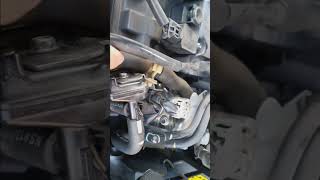
- YouTube DIY Confirmation: A video for a 2015 CX-5 with a different EVAP code (P144A) shows the exact location of the purge valve on the 2.5L engine and confirms the ease of replacement with a single 8mm bolt, corroborating the simple fix 🎬 See this video for the exact purge valve location for P0496.
Mechanic-Grade Diagnostic Values
- Purge Valve Solenoid Connector Voltage — expected: ~12V DC. Failure: Significantly lower or no voltage indicates a wiring or PCM issue, not a faulty valve.
- Purge Valve Solenoid Coil Resistance — expected: Approximately 14-22 Ohms (based on similar part examples). Failure: A reading of infinity (Open Loop) or zero Ohms (short circuit) indicates a failed solenoid coil. A reading outside the expected range may also indicate a problem.
Scan Tool Commands That Help
- Mazda M-MDS / IDS: EVAP System Leak Test — This automated test function was DISCONTINUED for the 2013-2016 CX-5 as of IDS software version 100. Technicians must now use an external EVAP smoke tester.
- Professional Scan Tool (Bi-Directional): Vent Valve/Solenoid Control (On/Off) — When performing a smoke test, the normally-open vent valve must be commanded closed to seal the EVAP system. This function allows the technician to manually close the valve to check for leaks.
- Professional Scan Tool (Bi-Directional): Purge Valve/Solenoid Control (% or On/Off) — This allows a technician to command the purge valve open while the engine is off to check if it is physically stuck closed, or to observe its effect on fuel trims and engine vacuum when running.
Wiring & Ground Locations
- Purge Solenoid Valve — Located at the right rear of the engine, on the intake manifold.. This is the component that most commonly fails and causes P0496. Knowing its exact location is critical for testing and replacement.
- Purge Solenoid Connector — A 2-terminal female connector that plugs into the purge solenoid valve.. This is the point where voltage and signal from the PCM are delivered. Corrosion or damage here can mimic a failed valve.
- G07 — A primary ground point located at the left rear of the engine.. A poor ground at this location could potentially affect the operation of various engine sensors and solenoids, including the EVAP system components.
- G03 — A primary ground point located in the left front of the engine compartment.. This ground serves the front body control module (FBCM), which is located in the same area. While less direct, ensuring all major grounds are clean and tight is a key step in diagnosing any electrical fault.
Diagnostic Flowchart
Other Known Issues on This Vehicle
Issues unrelated to this code that are worth knowing about as an owner of this generation:
- LED Daytime Running Light (DRL) Failure 🟠 Medium — Common on the 2016 model year. The DRLs may flicker or fail completely due to corrosion of the circuit board. (Ref: Mazda Recall 4320A / NHTSA 20V063000.)
- Infotainment 'Ghost Touch' and System Freezes 🟡 Low — A widespread issue where the infotainment screen registers phantom touches, causing random inputs. Often occurs on 2014-2016 models. (Ref: No recall, but a well-known issue. A common DIY fix is to disconnect the touchscreen's ribbon cable, disabling touch functionality but resolving the phantom inputs.)
- Intake Valve Carbon Buildup 🟠 Medium — As a direct-injection engine, the Skyactiv-G is prone to carbon deposits on the intake valves over time (50k-100k miles), which can lead to misfires (P0300-P0304) and rough running. (Ref: Mazda TSB 01-012/19 outlines a procedure for decarbonizing the intake valves.)
- Premature Brake Wear 🟡 Low — Some owners of early models (2013-2014) reported faster-than-expected wear of brake pads and rotors.
- Car Not Shutting Off (Accessory Mode Stays On) 🟠 Medium — Reported on 2013-2014 models, a faulty shifter switch can prevent the vehicle from recognizing it is in Park, leaving accessory power on and draining the battery.
- Easily Cracked Windshields 🟡 Low — Numerous owner complaints across the first generation suggest the OEM windshield is unusually susceptible to cracking from small impacts or even thermal stress.
Used vs. New Parts: Buying Guide for This Vehicle
When a used part is the smart pick: For this specific repair, a used part is NOT recommended. The purge valve is a relatively low-cost item that fails from internal wear and tear (solenoid coil burnout, seal degradation). The labor to replace it is minimal, making the risk of a premature failure from a used part a poor value proposition.
What to inspect on the donor part:
- Not applicable as used part is not recommended.
OEM-only on this vehicle (don't cheap out):
- Gas Cap: While not the cause for P0496, if you are diagnosing other EVAP leak codes (P0455, P0456, P0457), using a genuine Mazda OEM gas cap is highly recommended as many aftermarket caps are known to cause sealing issues on this platform.
Aftermarket brands forum-validated for this vehicle:
- Bosch (Often an OEM supplier for similar parts on other brands)
- Standard Motor Products (SMP)
- Dorman
Brands owners have reported issues with on this vehicle:
- No-name or unbranded parts from online marketplaces can be a gamble with quality control and may fail prematurely.
Real Owner Stories
Aggregated from forums and TSBs cited above. Mileages and costs reflect what owners reported in those sources.
Mazda CX-5 — 67464 miles
Symptoms: Check Engine Light with code P0496 found during scan.
What fixed it: Technician tested the EVAP system, found a faulty purge valve, and replaced it.
Source hint: Stewart's Automotive Customer Reviews
2016 Mazda CX-5
Symptoms: Hard starting specifically after re-fueling.
What fixed it: Replacement of the purge valve to resolve the flooded condition caused by un-metered fuel vapor.
Source hint: Mazda Forum thread titled 'Problem Starting After Re-fueling'
2015 Mazda CX-5 2.5L
Symptoms: EVAP system code and difficulty starting; confirmed purge valve location on the intake manifold.
What fixed it: Replaced the purge valve secured by a single 8mm bolt.
Source hint: YouTube DIY Confirmation for 2015 CX-5
Related OBD-II Codes
Frequently Asked Questions
Does Mazda TSB 01-002/18 specifically cover the P0496 code on my CX-5?
I'm having trouble starting my CX-5 only after I fill up the gas tank. Is this related to P0496?
Can I use a used purge valve from a donor Mazda 3 or Mazda 6 to fix this?
Is the P0496 code caused by the same issue as the 2016 CX-5 LED daytime running light failure?
Could my P0496 code be caused by carbon buildup on the intake valves?
If I need to replace the purge valve, what tools will I need for my CX-5?
Helpful Videos
We Have This Part in Stock


The information in this article is provided for general reference and educational purposes only. Vehicle specifications, procedures, and part compatibility can vary by production date, trim level, and region. Always consult your vehicle's factory service manual and verify part numbers before purchasing or performing repairs. Safety-critical components such as airbags, seat belts, and braking systems should be installed by a qualified professional.
- Mazda CX-5:
- 🧭 Diagnostic Flowchart
- 🎬 Helpful Videos
- 🛍️ Shop This Part
- What's Unique About the 2013-2016 Mazda CX-5
- Symptoms You May Notice
- Most Likely Causes
- Rare But Worth Checking
- Diagnosis Steps
- Parts You'll Likely Need
- Technical Service Bulletins (TSBs) & Recalls
- Platform-Specific Known Issues
- Mechanic-Grade Diagnostic Values
- Scan Tool Commands That Help
- Wiring & Ground Locations
- Other Known Issues on This Vehicle
- Used vs. New Parts: Buying Guide for This Vehicle
- Real Owner Stories
- Mazda CX-5 — 67464 miles
- 2016 Mazda CX-5
- 2015 Mazda CX-5 2.5L
- Related OBD-II Codes
- Frequently Asked Questions
- 🎟️ Get 5% Off