

P0496 on 2016-2023 Mazda CX-9: EVAP High Purge Flow Causes and Fixes
On a 2016-2023 Mazda CX-9, code P0496 is almost always caused by a faulty canister purge solenoid valve that is stuck open. A key symptom is difficulty starting the engine right after refueling. Replacing the valve is a simple DIY fix, with the part costing approximately $75-$180.
- P0496 on your CX-9 almost certainly means the canister purge solenoid valve has failed and is stuck open.
- If your car is hard to start right after you get gas, this is a classic symptom of this exact problem.
- The fix is to replace the purge valve (OEM Part #PE01-18-751), which is a beginner-friendly DIY job that takes less than 30 minutes.
- Don't waste money on a new gas cap or charcoal canister; the purge valve is the highly probable culprit.
What's Unique About the 2016-2023 Mazda CX-9
For the Mazda CX-9 with the 2.5L Skyactiv-G Turbo engine, this code is strongly associated with a distinct and telling symptom: the engine is difficult to start immediately after filling up the gas tank. This occurs because the stuck-open purge valve allows the rich concentration of fuel vapors displaced during refueling to flood the engine's intake manifold. This creates a temporary, overly rich air-fuel mixture that makes it hard for the engine to fire up, similar to a classic flooded carburetor condition. While the purge valve is a common failure point on many vehicles, this specific hard-start-after-refueling symptom 🎬 Watch: Why your car struggles to start after getting gas is a very reliable indicator for this platform.
Symptoms You May Notice
- Check Engine Light is on
- Difficulty starting the engine, especially right after getting gas.
- Rough or unstable idle.
- Slightly decreased fuel economy
- A "whooshing" sound when removing the gas cap, indicating pressure changes in the tank.
- Replacing the gas cap. While a bad gas cap can cause other EVAP codes (like P0455 or P0457 for leaks), it is not a typical cause for a high flow code like P0496.
- Replacing the charcoal canister. The canister stores the fuel vapors but does not actively control the flow. It is usually replaced only if it is physically cracked or saturated with liquid fuel from chronic overfilling of the gas tank.
Most Likely Causes
- Faulty Canister Purge Solenoid Valve (Stuck Open) 🔴 High Probability → Shop Vapor Canister This component is a common failure point across many modern vehicles. It's a small solenoid that cycles frequently, leading to eventual mechanical failure where it sticks in the open position. For the Skyactiv-G engine, this allows un-metered fuel vapor into the intake, disrupting the precise air-fuel mixture and causing the distinct symptoms.
How to confirm: Locate the purge valve in the engine bay, typically near the intake manifold with two hoses and an electrical connector. With the engine off, disconnect the electrical connector and the two hoses. Try to blow through the valve. 🎬 See how to test for a stuck valve without tools If air can pass through, it is stuck open and faulty. A new, functioning valve will be closed by default and will not allow air to pass.
Typical fix: Replace the canister purge solenoid valve.
Est. part cost: $75-$180
Rare But Worth Checking
- Damaged EVAP Hoses: A cracked or disconnected hose between the purge valve and the intake manifold could potentially cause similar symptoms, though it's less common than the valve itself failing. A smoke test is the most effective way to find such a leak.
- Faulty Fuel Tank Pressure (FTP) Sensor: → Shop Fuel Tank In rare cases, the sensor that monitors EVAP system pressure could provide incorrect readings to the computer, causing it to trigger the code erroneously. This may also be accompanied by code P0451.
- Saturated Charcoal Canister: → Shop Vapor Canister Chronically overfilling the gas tank (i.e., continuing to pump after the nozzle clicks off) can force liquid fuel into the charcoal canister, which is designed only for vapor. A saturated canister can cause erratic EVAP system behavior, though it's less likely to cause a P0496 specifically than a stuck purge valve.
Diagnosis Steps
- Confirm the code P0496 is present using an OBD-II scanner.
- The most telling symptom is a hard start after refueling. If this is present, the purge valve is the prime suspect.
- Visually inspect the gas cap to ensure it is tight and the seal is not cracked, though this is an unlikely cause.
- Locate the canister purge solenoid valve in the engine bay. On the 2.5L Turbo, it is typically mounted on or near the intake manifold, 🎬 Watch this quick walkthrough on replacing the purge valve solenoid easily accessible. It will have an electrical connector and two hoses attached.
- With the engine off, disconnect the electrical connector and both hoses from the valve. Note that the hose connectors may have small clips that need to be released.
- Attempt to blow air through the valve. If air passes through, the valve is stuck open and must be replaced. It should be normally closed.
- If the valve is closed, inspect the EVAP hoses connected to it for any cracks, brittleness, or loose connections. Pay close attention to the hose running to the intake manifold.
- If the valve and hoses are good, the issue may be electrical. A more advanced diagnosis would involve using a scan tool to command the valve on and off while checking for voltage at the connector and listening for a clicking sound from the valve.
Parts You'll Likely Need
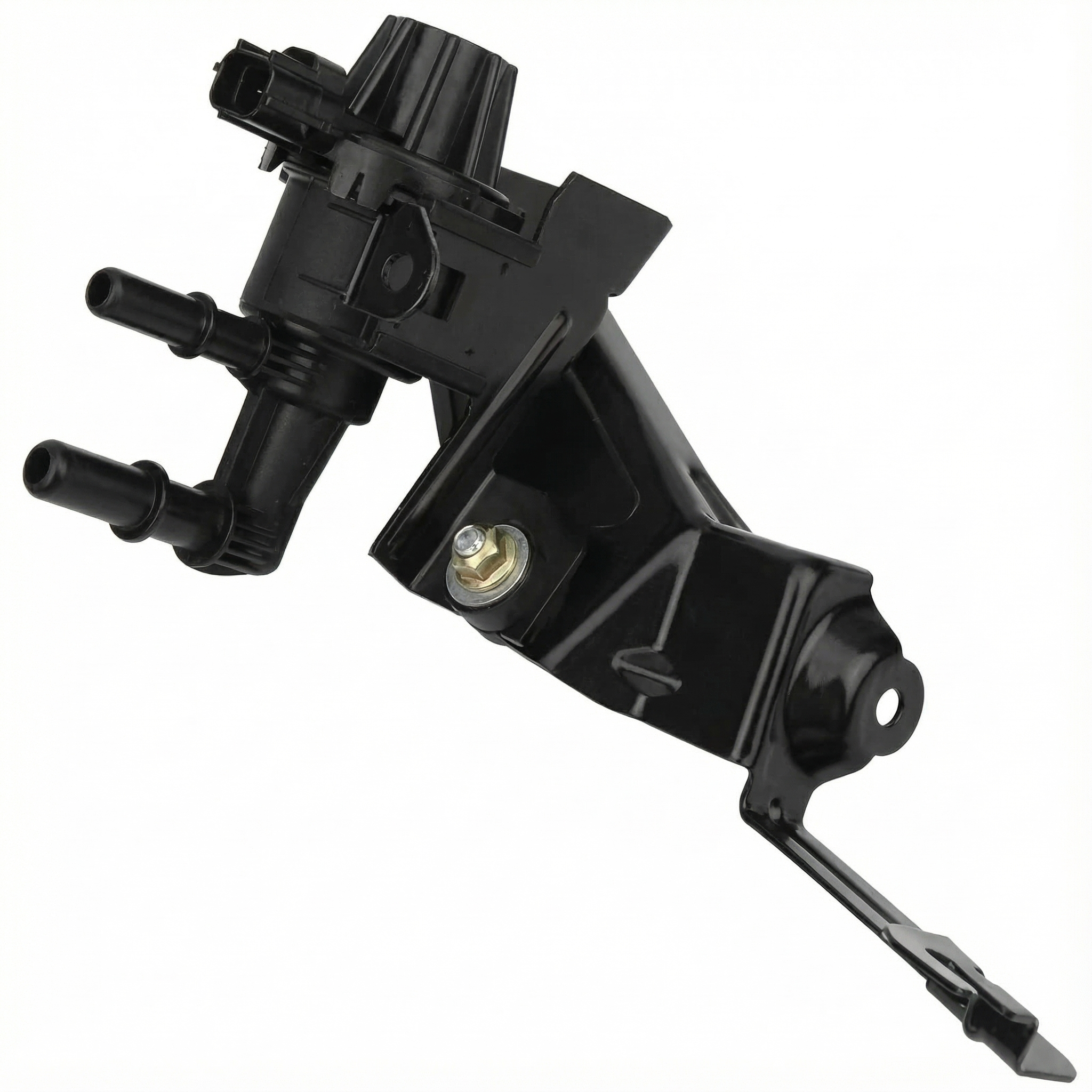
- Vapor Canister Purge Solenoid Valve
(OEM #PE01-18-751)— This is the component that fails over 90% of the time for a P0496 code, getting stuck in the open position.
Trusted brands: Mazda (OEM), Dorman (e.g., 911-706), Bosch, Standard Motor Products (e.g., CP759)
OEM price range: $112-$145
Aftermarket price range: $75-$150
Related Codes That Often Appear With This One
- P0172 — System Too Rich (Bank 1). A stuck-open purge valve can allow excess fuel vapors into the engine, creating a rich air-fuel mixture that may trigger this code.
- P0507 — Idle Control System RPM Higher Than Expected. The un-metered air (fuel vapor) entering the intake from a stuck purge valve can sometimes cause the idle speed to be erratic or higher than normal.
- P0171 — System Too Lean (Bank 1). Paradoxically, while a rich condition occurs after refueling, during normal driving the un-metered air from the stuck valve can be interpreted by the PCM as a vacuum leak, causing it to register a lean code.
- P0451 — Evaporative Emission System Pressure Sensor/Switch Range/Performance. This code can appear alongside P0496 if the system is struggling to regulate pressure due to the constant flow through the stuck purge valve.
Platform-Specific Known Issues
- A very common symptom tied to this code on the CX-9 is difficulty starting the engine immediately after refueling. This is caused by the stuck-open purge valve allowing an overly rich mixture of fuel vapors to enter the engine.
- A Reddit user with a 2023 CX-9 reported P0496 and P0451 codes appearing just hours after purchase, following a dealer fill-up, highlighting how quickly the symptom can manifest.
Mechanic-Grade Diagnostic Values
- Purge Solenoid Valve Coil Resistance — expected: 15 to 30 Ohms. Failure: A reading far outside this range, such as infinite resistance (open circuit) or zero resistance (short circuit), indicates a faulty solenoid.
- Voltage at Purge Solenoid Connector (Key On, Engine Off) — expected: One pin should have battery voltage (approx. 12V), the other is the ground-side control from the PCM.. Failure: No voltage suggests a wiring or fuse issue upstream. Voltage on both pins may indicate a wiring short.
Hidden / Shadow Codes Worth Checking
- P0496:00: The ':00' is a Failure Type Byte used by some manufacturers, including Mazda, on CAN bus vehicles. For this DTC, a '00' suffix typically means the fault has no specific sub-type identified, simply that the high purge flow condition was detected. (see via Advanced OBD-II scanners that can read manufacturer-specific or enhanced DTCs.)
Wiring & Ground Locations
- Purge Solenoid Valve — Mounted on a bracket on the valve cover.. Knowing the physical location is the first step to performing visual inspection, electrical tests, and replacement.
- Engine Compartment Ground Points — Multiple ground points exist in the engine bay. A wiring diagram is needed to trace the specific ground for the purge valve circuit.. A corroded or loose ground connection for the purge valve circuit could cause erratic operation or failure, leading to a P0496 code, although this is less common than valve failure.
OEM Part Supersession History
PE01-18-751→PE01-18-751— No supersession found. The part number appears to be consistent for the specified model years.
Heads up: Multiple parts vendors list this same part number for the entire 2016-2023 CX-9 range, as well as many other Mazda models.
Diagnostic Flowchart
Other Known Issues on This Vehicle
Issues unrelated to this code that are worth knowing about as an owner of this generation:
- Cracked Cylinder Head Coolant Leak 🔴 High — Well-documented on 2016-2020 models. Can occur outside of powertrain warranty, leading to very expensive repairs ($7,000+). Mazda has issued warranty extensions for some vehicles. (Ref: TSB 01-002/23 (supersedes 01-007/22 and 01-013/21).)
- Excessive Oil Consumption due to Faulty Valve Stem Seals 🟠 Medium — Primarily affects 2021 models, causing low oil level warnings between changes. A class-action lawsuit was settled regarding this issue. (Ref: TSB 01-012/21, updated by later bulletins like 01-004/26 and related to Special Service Program SSPD5.)
- Plugged Heater Core 🟡 Low — Can occur due to debris in the cooling system, leading to poor cabin heat. The repair is labor-intensive (7+ hours). Mazda made production changes to the coolant to mitigate this. (Ref: TSB 07-007/19)
Used vs. New Parts: Buying Guide for This Vehicle
When a used part is the smart pick: Given the relatively low cost of a new aftermarket part and the fact that this is a known wear-and-tear component, buying a used purge valve is generally not recommended. The labor to replace it again if the used part fails quickly would negate any initial savings. A new aftermarket or OEM part is a smarter investment for this repair.
Donor-vehicle mileage cap: roughly under 30000 miles for the part to have meaningful remaining life.
What to inspect on the donor part:
- If buying used is unavoidable, source from a vehicle with the lowest possible mileage.
- Visually inspect the plastic housing for any cracks or heat-related stress marks.
- Ensure the electrical connector pins are clean, straight, and free of corrosion.
- Perform the 'blow-through' test at the junkyard; if air passes through, the part is already failed and worthless.
Aftermarket brands forum-validated for this vehicle:
- Dorman
- Standard Motor Products (SMP)
- Bosch
Brands owners have reported issues with on this vehicle:
- No-name, unbranded parts from online marketplaces should be avoided, as quality control can be inconsistent.
Real Owner Stories
Aggregated from forums and TSBs cited above. Mileages and costs reflect what owners reported in those sources.
2023 Mazda CX-9 2.5L Turbo — 15000 miles
Symptoms: Check engine light came on a couple of hours after purchase, throwing codes P0496 and P0451. Checked gas cap, not loose.
What fixed it: The owner took the vehicle back to the dealership; the issue was suspected to be related to the evaporative emissions charcoal canister.
Source hint: Reddit thread in r/MechanicAdvice titled 'Evap code P0496 p0451'
2012 Mazda CX-9
Symptoms: Hard to start after fillups. The purge solenoid stays stuck open, and when filling the tank, vapors go right into the intake manifold, making it too rich to start.
What fixed it: Replacement of the purge solenoid.
Source hint: Mazdas247.com: A thread titled 'CX-9 hard to start after fillups'
2016 Mazda CX-9 2.5L Turbo
Symptoms: Problem starting after re-fueling; the intake fills with vapors as the vehicle is being refueled, equivalent to a flooded engine.
What fixed it: Replacement of the purge valve.
Source hint: Mazda Forum: A 2016 thread titled 'Problem Starting After Re-fueling'
Related OBD-II Codes
Frequently Asked Questions
Why does my CX-9 struggle to start only after I fill up the gas tank?
Is there a TSB for the coolant leak issue on my 2016-2020 CX-9?
I have a 2021 CX-9 and keep getting low oil warnings. Is this related to P0496?
Can I test the purge valve on my 2.5L Turbo myself?
Does the 2023 CX-9 have known issues with P0496 so early in its life?
What aftermarket brands are recommended for replacing the CX-9 purge solenoid?
Helpful Videos
Used OEM Parts in Stock
New Aftermarket Parts Available


The information in this article is provided for general reference and educational purposes only. Vehicle specifications, procedures, and part compatibility can vary by production date, trim level, and region. Always consult your vehicle's factory service manual and verify part numbers before purchasing or performing repairs. Safety-critical components such as airbags, seat belts, and braking systems should be installed by a qualified professional.
- Mazda CX-9:
- 🧭 Diagnostic Flowchart
- 🎬 Helpful Videos
- 🛍️ Shop This Part
- What's Unique About the 2016-2023 Mazda CX-9
- Symptoms You May Notice
- Most Likely Causes
- Rare But Worth Checking
- Diagnosis Steps
- Parts You'll Likely Need
- Related Codes That Often Appear With This One
- Platform-Specific Known Issues
- Mechanic-Grade Diagnostic Values
- Hidden / Shadow Codes Worth Checking
- Wiring & Ground Locations
- OEM Part Supersession History
- Other Known Issues on This Vehicle
- Used vs. New Parts: Buying Guide for This Vehicle
- Real Owner Stories
- 2023 Mazda CX-9 2.5L Turbo — 15000 miles
- 2012 Mazda CX-9
- 2016 Mazda CX-9 2.5L Turbo
- Related OBD-II Codes
- Frequently Asked Questions
- 🎟️ Get 5% Off