

P0496 on 2003-2011 Saab 9-3 2.0L Turbo: EVAP High Purge Flow Causes and Fixes
On a 2003-2011 Saab 9-3 2.0L Turbo, code P0496 is almost always caused by a faulty EVAP canister purge solenoid valve that is stuck open. This is a common, inexpensive, and easy DIY fix, with the part typically costing between $25 and $75. The most classic symptom, besides the check engine light, is difficulty starting the engine immediately after refueling.
- P0496 on your Saab 9-3 almost certainly means the EVAP purge solenoid valve has failed and is stuck open.
- The most telling symptom is difficulty starting the car immediately after you get gas.
- This is a beginner-friendly DIY repair that can be completed in under 30 minutes with basic tools.
- Do not be distracted by a lean code like P2187 appearing at the same time; fixing the P0496 issue by replacing the purge valve will likely clear both codes.
- The replacement part is inexpensive and widely available from brands like ACDelco and Bosch due to its use across many GM vehicles.
What's Unique About the 2003-2011 Saab 9-3
The 2003-2011 Saab 9-3 is a GM-era vehicle, sharing its Epsilon platform and many components with other General Motors vehicles like the Opel Vectra and Chevrolet Malibu. This is beneficial for this specific issue, as the primary culprit, the EVAP purge solenoid, is a widely available and affordable GM/ACDelco or Bosch part. The failure of this valve is a very common issue on many GM vehicles from this period.
Symptoms You May Notice
- Check Engine Light is on
- Difficulty starting the engine, especially right after filling the gas tank. This is the most definitive symptom, caused by excess fuel vapors flooding the intake manifold.
- Rough or unstable idle.
- Slight decrease in fuel economy
- Possible fuel odor
- Hesitation or stumbling on acceleration
- Replacing the gas cap. A bad gas cap typically causes large or small leak codes (like P0455 or P0442), not a P0496 flow code.
- Replacing oxygen sensors or the Mass Air Flow (MAF) sensor. A stuck-open purge valve creates a vacuum leak that can trigger a lean code (like P2187). Some may mistakenly address the lean code first, but replacing the purge valve often resolves both issues.
Most Likely Causes
- Faulty EVAP Canister Purge Solenoid Valve 🔴 High Probability → Shop Vapor Canister This is a very common failure item on GM-platform vehicles of this era. The valve's internal components can wear out or get stuck from fuel vapor contaminants over time, causing it to fail in the open position.
How to confirm: With the engine off, disconnect the electrical connector and the hose leading from the valve toward the charcoal canister. Try to blow through the valve; if air passes through, it is stuck open and faulty. Alternatively, with the engine running and the electrical connector unplugged, feel for suction at the valve's port with your finger; any vacuum indicates it's stuck open. This test takes only a few minutes to perform.
Typical fix: Replace the EVAP canister purge solenoid valve.
Est. part cost: $25-$75
Rare But Worth Checking
- Leaking EVAP hose or connection: While less common than a failed valve, a cracked or disconnected hose in the EVAP system, particularly between the purge valve and the intake manifold, can also create an improper vacuum flow.
- Faulty Fuel Tank Pressure (FTP) Sensor: → Shop Fuel Tank In rare cases, the sensor that monitors EVAP system pressure can fail and send incorrect data to the ECU, falsely triggering the P0496 code. This is more likely if you have other FTP-specific codes present.
- Clogged EVAP Charcoal Canister: → Shop Vapor Canister A restriction or blockage in the charcoal canister or its vent valve could potentially cause pressure issues that trigger the code, though this is not a common cause for P0496 specifically.
Diagnosis Steps
- Verify the code with an OBD-II scanner. Confirm P0496 is present and note any other codes, especially P2187.
- Locate the EVAP canister purge solenoid valve. On the 2.0L turbo engine (B207), it is located at the front of the engine, mounted on a bracket next to the oil dipstick, just under the plastic engine cover.
- Visually inspect the valve and its connected hoses for any obvious cracks, damage, or loose connections.
- Perform a functional test. Disconnect the electrical plug and the purge line (the hose running from the solenoid towards the back of the car). The electrical connector may have a locking tab.
- Start the engine. Place your finger over the port on the solenoid where the hose was connected. If you feel any suction, the valve is stuck open and must be replaced.
- Alternatively, with the engine off, attempt to blow through the valve from the inlet port. If air passes through, it is stuck open and faulty.
- If no vacuum is present and the valve is closed, the valve is likely functioning correctly. The next step would be to use a smoke machine to check the entire EVAP system for leaks, though this is a less common cause for this specific code.
Parts You'll Likely Need
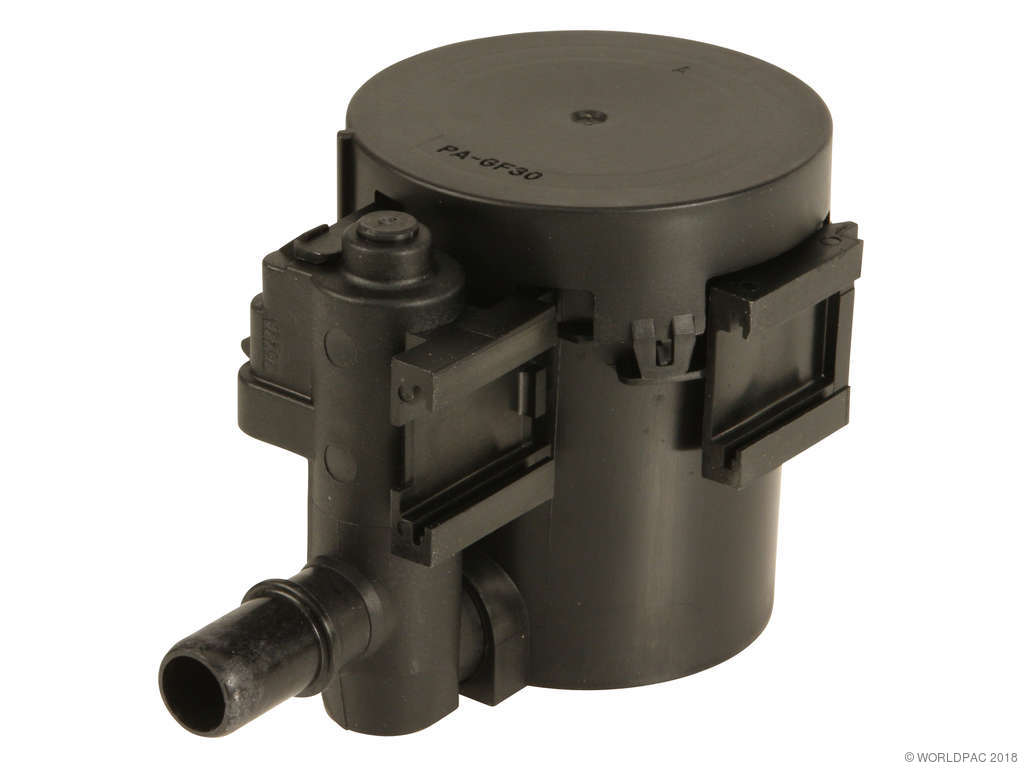
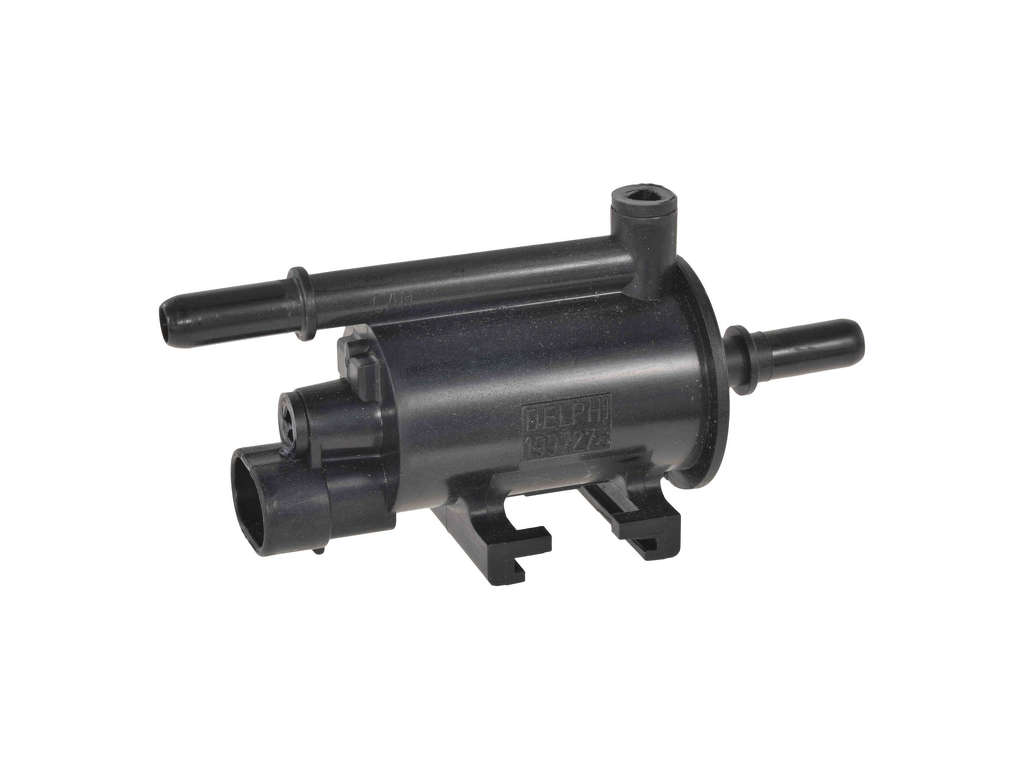
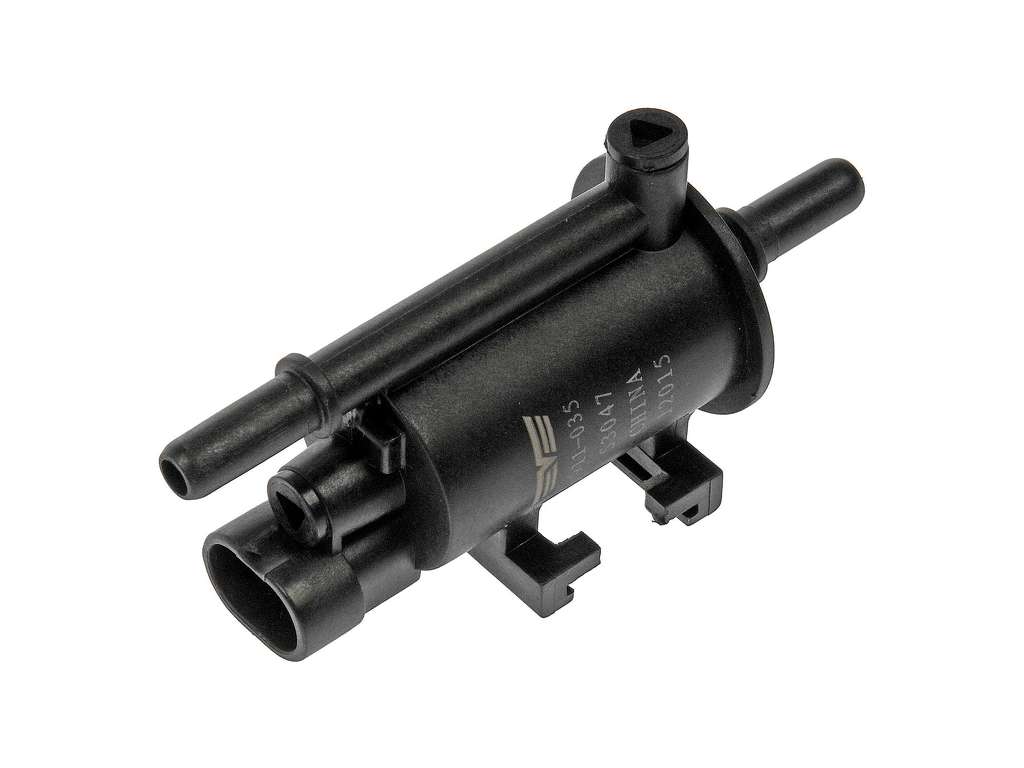
- EVAP Canister Purge Solenoid Valve
(OEM #12787706)— This valve is the overwhelming cause of P0496 on this vehicle, as it fails by sticking in the open position. Note that this part is sometimes also referred to as a Turbo Boost Pressure Control Valve or APC Solenoid by parts suppliers, which can be confusing.
Trusted brands: ACDelco (GM Original Equipment), Bosch (Often the OEM supplier), Pierburg, Standard Motor Products, Dorman
OEM price range: $50-$100
Aftermarket price range: $25-$75
Related Codes That Often Appear With This One
- P2187 — System Too Lean at Idle. This is a very common companion code. The stuck-open EVAP purge valve creates a vacuum leak, allowing unmetered air into the intake manifold, which leads to a lean condition at idle that the fuel trims cannot compensate for.
Platform-Specific Known Issues
- Owner experiences shared on forums like SaabCentral and Reddit consistently point to the purge solenoid as the fix for the P0496 and P2187 code combination.
- Some owners recommend sticking to OEM brands like Bosch, Pierburg, or ACDelco for the replacement part, as some aftermarket versions have been reported to have a shorter lifespan.
Mechanic-Grade Diagnostic Values
- EVAP Canister Purge Valve Coil Resistance — expected: 20 - 36 Ohms. Failure: A reading of infinity (open circuit) or near-zero Ohms (short circuit) indicates a failed solenoid coil.
- ECU Fault Trigger Condition — expected: With the purge valve commanded closed, the fuel tank pressure should remain stable.. Failure: If the tank pressure drops to -1000 Pa within 4 seconds, the ECU determines there is flow during a non-purge condition and sets DTC P0496.
- Fuel Tank Pressure (FTP) Sensor Voltage (Key On, Engine Off) — expected: ~1.5 Volts with the gas cap removed (atmospheric pressure).. Failure: A voltage that is significantly different from 1.5V at atmospheric pressure, or a voltage that does not change when vacuum is applied to the system, points to a faulty FTP sensor (a rare cause).
Scan Tool Commands That Help
- Saab Tech2: EVAP Service Bay Test — This function allows a technician to manually run the entire EVAP system integrity test without driving the vehicle. The tool commands the vent and purge valves to check for leaks or unexpected flow, which can be used to verify a P0496 fault or confirm a repair has been successful.
- Saab Tech2: Engine Output Controls > EVAP System > Purge Solenoid — This bidirectional control allows the technician to command the purge solenoid on and off (typically in PWM percentages) while the engine is running. This is used to verify the solenoid clicks and responds to commands from the ECU, helping to isolate a faulty valve from a wiring or ECU driver issue.
Wiring & Ground Locations
- G7 — On the engine control module's top right attachment lug, located at the front of the engine.. This is a primary grounding point for the Trionic T8 engine control module, which controls the EVAP purge solenoid. A poor connection here could cause erratic behavior in various engine management systems, including the EVAP system.
- G2 — On the side of the left-hand structural member (strut tower area) by the connector bracket in the engine bay.. This is a main chassis grounding point near the battery. While not directly for the purge valve, ensuring all main grounds are clean and tight is a critical step in diagnosing any electrical fault.
Real Owner Repair Stories
- Reddit r/saab (2006 Saab 9-3 2.8L V6 (Aero)) — Check Engine Light with codes P0496 and P2187. Owner noted, 'Fuel economy is down, car won't hit full boost so it's down on power. No signs of a misfire, though.'
❌ Tried (didn't work) The owner had previously replaced the fuel pressure sensor within the last year, ruling that out as an immediate cause for the lean code.
✅ What actually fixed it The community and owner concluded the issue was a faulty EVAP purge valve causing both the flow code (P0496) and the subsequent lean condition at idle (P2187).
OEM Part Supersession History
12787706→12787706 (current)— No supersession found. This part number remains consistent for the entire model range.
Heads up: This part is often mislabeled by suppliers as a 'Turbo Boost Pressure Control Valve' or 'APC Solenoid'. While it looks similar, its function in the EVAP system is distinct. Ensure you are purchasing the EVAP purge solenoid, which matches this part number.
Diagnostic Flowchart
Other Known Issues on This Vehicle
Issues unrelated to this code that are worth knowing about as an owner of this generation:
- Intake Valve Carbon Buildup / Wear 🟠 Medium — More common on 2007-2009 models, especially those with over 50,000 miles. Can cause cold start issues, misfires (P0300), and low compression. (Ref: Saab TSB 12/17/2013)
- Column Integrated Module (CIM) Failure 🟠 Medium — A common electrical failure causing issues with steering wheel controls, horn, and airbag lights. Can also lead to starting problems as it's part of the immobilizer system.
- Faulty Fuel Level Sending Unit 🟡 Low — Very common across all years. The fuel gauge becomes erratic or reads empty when the tank is full due to worn contacts on the sender in the tank.
- Valve Cover Gasket Oil Leak 🟡 Low — A frequent and minor issue, especially on cars approaching 100,000 miles. Causes a smell of burning oil as oil drips onto the exhaust or transmission.
- Direct Ignition Cassette (DIC) Failure 🟠 Medium — A known weak point on many Saab models. Failure can cause a no-start condition or random engine shutdown.
- Turbocharger Failure 🔴 High — Can occur between 100,000-150,000 kilometers (60k-90k miles), often due to bearing wear or oil sludge issues. Symptoms include power loss and blue exhaust smoke.
Used vs. New Parts: Buying Guide for This Vehicle
When a used part is the smart pick: For this specific repair, buying a used part is not recommended. The EVAP purge solenoid is a known common failure item with a relatively short lifespan. The low cost of a new, warrantied aftermarket part (typically $25-$50) makes it a much smarter investment than risking a premature failure with a used part of unknown age and condition.
Donor-vehicle mileage cap: roughly under 50000 miles for the part to have meaningful remaining life.
What to inspect on the donor part:
- If buying used is unavoidable, visually inspect for cracks in the plastic housing.
- Check for corrosion on the electrical pins.
- Attempt to blow through the valve; if any air passes, it is already faulty.
- Ask for the donor vehicle's mileage; lower is always better.
OEM-only on this vehicle (don't cheap out):
- For this P0496 repair, no parts require strictly OEM sourcing. Quality aftermarket is sufficient.
Aftermarket brands forum-validated for this vehicle:
- ACDelco (GM Original Equipment)
- Bosch
- Standard Motor Products (SMP)
- Dorman
Brands owners have reported issues with on this vehicle:
- No-name, unbranded parts from online marketplaces should be avoided, as their internal components may not meet the required specifications, leading to premature failure.
Real Owner Stories
Aggregated from forums and TSBs cited above. Mileages and costs reflect what owners reported in those sources.
2007 Saab 9-3 2.0T
Symptoms: Car shut off randomly after filling up with a full tank of gas, hard time starting after being filled up, struggled to start, wheel locked up mid-turn and car started slowly turning off with gauges going limp.
What fixed it: Changing out the evap purge valve.
Source hint: reddit.com - r/saab - Car dying after filling up full tank of gas
2004 Saab 9-3 2.0L Turbo
Symptoms: Check engine light came on.
What fixed it: The owner replaced the canister purge valve solenoid and reset the computer by disconnecting and reconnecting the battery.
Cost: $20-$42
Source hint: youtube.com - 2004 Saab 9-3: Canister Purge Valve Replacement
2006 Saab 9-3 2.8L
Symptoms: Owner describes having both P2187 and P0496 codes simultaneously.
What fixed it: The community pointed towards the common causes of a vacuum leak or faulty purge solenoid.
Source hint: Reddit r/saab - Thread '2006 2.8L 9-3 codes P2187, P0496'
Related OBD-II Codes
Frequently Asked Questions
Why does my Saab 9-3 struggle to start only after I fill up the gas tank?
Where is the purge solenoid located on the B207 2.0L turbo engine?
Are there specific brands I should look for when replacing the purge valve?
Can I test the purge valve myself before buying a new one?
Does the P0496 code relate to the common Saab 9-3 fuel gauge issues?
Does TSB 12/17/2013 relate to my P0496 EVAP code?
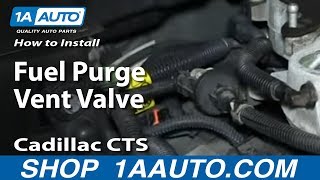
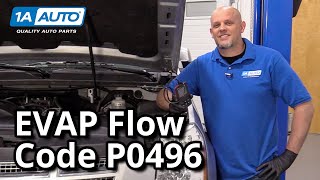
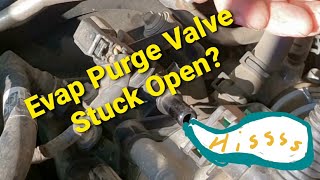
Helpful Videos

We Have This Part in Stock


The information in this article is provided for general reference and educational purposes only. Vehicle specifications, procedures, and part compatibility can vary by production date, trim level, and region. Always consult your vehicle's factory service manual and verify part numbers before purchasing or performing repairs. Safety-critical components such as airbags, seat belts, and braking systems should be installed by a qualified professional.
- Saab 9-3:
- 🧭 Diagnostic Flowchart
- 🎬 Helpful Videos
- 🛍️ Shop This Part
- What's Unique About the 2003-2011 Saab 9-3
- Symptoms You May Notice
- Most Likely Causes
- Rare But Worth Checking
- Diagnosis Steps
- Parts You'll Likely Need
- Related Codes That Often Appear With This One
- Platform-Specific Known Issues
- Mechanic-Grade Diagnostic Values
- Scan Tool Commands That Help
- Wiring & Ground Locations
- Real Owner Repair Stories
- OEM Part Supersession History
- Other Known Issues on This Vehicle
- Used vs. New Parts: Buying Guide for This Vehicle
- Real Owner Stories
- 2007 Saab 9-3 2.0T
- 2004 Saab 9-3 2.0L Turbo
- 2006 Saab 9-3 2.8L
- Related OBD-II Codes
- Frequently Asked Questions
- 🎟️ Get 5% Off