

P0496 on 2012-2019 VW Beetle 2.5L: Causes and Fixes for EVAP Purge Flow
On a 2012-2019 VW Beetle with the 2.5L engine, code P0496 almost always means the EVAP Purge Valve (N80) is stuck open. A classic symptom is difficulty starting the engine right after refueling. It's an affordable, beginner-friendly DIY fix, with a quality replacement part costing around $30-$80.
- P0496 on your Beetle means fuel vapors are entering the engine when they shouldn't, almost always due to a stuck-open EVAP Purge Valve (N80).
- The most telling symptom is the engine struggling to start or running rough immediately after you fill up the gas tank.
- This is a very common, inexpensive, and easy DIY repair. The N80 valve is located on top of the engine and can be replaced in under 30 minutes with basic tools.
What's Unique About the 2012-2019 Volkswagen Beetle
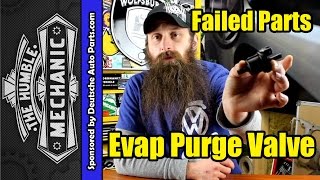
On this generation of the VW Beetle with the 2.5L engine, the P0496 code is overwhelmingly caused by a single, well-documented failure point: the EVAP Purge Valve, which Volkswagen calls the 'N80 valve'. This part is known to fail frequently across many VW and Audi models from this era that share this engine design. The failure is so common that a key symptom—difficulty starting immediately after filling the gas tank—is widely reported by owners as the tell-tale sign of a stuck-open N80 valve. This happens because the open valve allows raw fuel vapors to flood the intake manifold after a fill-up, creating a rich condition that makes the engine hard to start until the excess vapor is cleared.
Symptoms You May Notice
- Check Engine Light is on.
- Difficulty starting the engine, especially right after refueling (extended crank, stumbling, or stalling).
- Rough or erratic idle.
- Slightly increased fuel consumption.
- A faint smell of fuel around the car.
- Audible rapid clicking from the N80 valve that is louder or more erratic than usual.
- Replacing the gas cap. A loose or faulty gas cap typically causes a large leak code (like P0455) or a small leak code (P0456), not a P0496 'flow during non-purge' code.
Most Likely Causes
- Faulty EVAP Purge Valve (N80 Valve) 🔴 High Probability → Shop Vapor Canister The N80 purge valve is a well-documented common failure item on VW 2.5L engines from this period. The internal diaphragm can fail, or it can get clogged with debris from the charcoal canister over time, causing it to stick open.
How to confirm: With the engine off, disconnect the valve's electrical connector and hoses. It is a normally-closed valve. Try to blow through it; if any air passes through, it is faulty and stuck open. Alternatively, with the engine running, disconnect the hose leading from the valve to the charcoal canister and place a piece of paper or your finger over the valve's port; if you feel suction, the valve is stuck open and must be replaced.
Typical fix: Replace the EVAP Purge Valve. It is located on top of the engine under the plastic cover, making it a very accessible, beginner-friendly job that typically takes less than 30 minutes.
Est. part cost: $25-$80
Rare But Worth Checking
- Cracked or disconnected EVAP hose: A crack in a hose, particularly the corrugated plastic line between the purge valve and the intake manifold, can become brittle from engine heat and cause a vacuum leak that could trigger this code. This is far less common than a failed valve for P0496.
- Faulty Fuel Tank Pressure (FTP) Sensor: → Shop Fuel Tank The ECU relies on the FTP sensor to detect the unwanted vacuum. In rare cases, a faulty sensor could send incorrect readings, triggering the code even if the purge valve is working correctly.
- Wiring short to the purge valve: → Shop Vapor Canister If the wiring harness for the purge valve has a short to a power source, it could hold the valve open constantly. This is very uncommon but worth checking with a multimeter if a new valve doesn't solve the issue.
- Failing Charcoal Canister: → Shop Vapor Canister In some instances, the charcoal canister itself can break down internally, sending small charcoal pellets into the EVAP lines. These pellets can travel to the N80 valve and force it to stick open. If you replace the N80 valve and find black granules inside, the charcoal canister is the root cause and will also need to be replaced to prevent repeat failure of the new valve.
Diagnosis Steps
- Read the trouble codes with an OBD-II scanner to confirm P0496 is present.
- Check the gas cap to ensure it is tight, though this is not the likely cause.
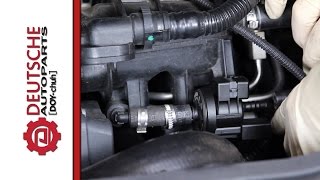
- Locate the N80 purge valve on top of the engine, under the plastic engine cover.
- Visually inspect the valve, its electrical connector, and the attached hoses for any obvious cracks, damage, or loose connections. Pay close attention to the corrugated plastic line.
- With the engine off, disconnect the valve's electrical connector and hoses.
- Attempt to blow through the valve. It should be completely sealed. If air passes through, the valve has failed and is stuck open. This is the most definitive test.
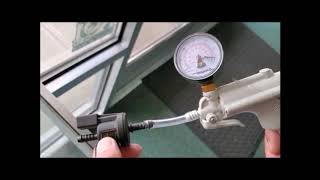
- Alternatively, use a hand vacuum pump on the valve's port. It should hold vacuum. If the vacuum level drops, the valve is leaking internally and must be replaced.
- If the valve tests good, inspect the EVAP lines for black charcoal granules, which would indicate a failed charcoal canister that needs replacement.
- If the valve and lines are clear, the issue may be a wiring problem or a faulty sensor, which may require further, more complex diagnosis with a multimeter or smoke machine.
Parts You'll Likely Need
- EVAP Canister Purge Valve (N80 Valve)
(OEM #06E906517A)— This is the component that fails in over 95% of P0496 cases on this vehicle. It gets stuck open, allowing fuel vapor to flow when it is commanded closed.
Trusted brands: Bosch (OEM supplier), Pierburg, Genuine Volkswagen
OEM price range: $50-$80
Aftermarket price range: $25-$50
Related Codes That Often Appear With This One
- P0441 — P0441 indicates 'Incorrect Purge Flow'. While P0496 specifically points to flow when there should be none, P0441 is a more general code for the same system. They often appear together and point to the same failed N80 valve.
- P0172 — P0172 means 'System Too Rich (Bank 1)'. A stuck-open purge valve allows un-metered fuel vapor into the engine, which can create a rich condition and trigger this code alongside P0496.
Technical Service Bulletins (TSBs) & Recalls
- While not for P0496 specifically, TSB #V011305 was issued for 2012-2013 Beetles with the 2.5L engine for a related code, P0441. It notes that while a DMTL pump could be the cause, the diagnostic procedure often leads to replacing the purge valve if the pump tests okay.
- VW Technical Tip 01-19-06 (NHTSA ID: 10181040), while written for Jetta models, provides the definitive diagnostic procedure for a stuck-open N80 valve causing P0496 and is directly applicable to the Beetle 2.5L. It instructs technicians to check for vacuum at the valve when it should be closed, confirming a leak.
- Manufacturer TSB Bulletin #VIN4APIN20190617 notes that a customer reported a MIL-on condition with P0496 alongside other codes like P1429 and P0556.
- Manufacturer TSB Bulletin #VIN4APIN20200803 and Bulletin #VIN4APIN20200720 both document instances where customers reported a MIL-on with P0496 and U0284, sometimes occurring alongside engine oil leaks.
- Manufacturer TSB Bulletin #VIN4APIN20200624 and Bulletin #VIN4APIN20200617 further confirm the P0496 code appearing with various other fault codes such as P2440 and U0284.
Platform-Specific Known Issues
- Charcoal Canister Degradation: → Shop Vapor Canister A known, though less common, failure pattern on VWs involves the charcoal canister breaking down. Small black carbon pellets can travel through the EVAP lines and jam the N80 purge valve open. If you find these granules when replacing the valve, the canister must also be replaced to prevent a recurring P0496 code.
Mechanic-Grade Diagnostic Values
- N80 Purge Valve Coil Resistance — expected: 15 to 25 Ohms across the two pins.. Failure: A reading of infinite resistance (open circuit), zero resistance (short circuit), or a value significantly outside the 15-25 Ohm range indicates a failed coil. Note that some sources cite a wider range up to 35 Ohms for similar VW engines.
- N80 Purge Valve Connector Voltage — expected: Approximately 12V (battery voltage) at Pin 1 of the harness connector with Key On, Engine Off.. Failure: No voltage or significantly low voltage points to a wiring issue, fuse, or problem with the power supply from the ECU/fuel pump relay, not the valve itself.
- N80 Purge Valve Vacuum Test (Engine Off) — expected: The valve should be normally closed and hold vacuum without leaking down when tested with a hand vacuum pump.. Failure: If the vacuum gauge shows a loss of vacuum, the valve is leaking internally and is faulty.
Scan Tool Commands That Help
- VCDS (VAG-COM) or OBDeleven: Engine (01) -> Output Tests -> Evaporative Emission (EVAP) Canister Purge Regulator Valve (N80) — This bidirectional command manually activates the N80 valve, causing it to click audibly if the coil and wiring are functional. This is a quick way to confirm the electrical circuit is working before performing mechanical tests like the blow-through or vacuum test.
- VCDS (VAG-COM) or OBDeleven: Engine (01) -> Basic Settings -> Group 070 (Evaporative Emission System Test) — After a repair, this function initiates the complete ECU-controlled EVAP system test. Running this can confirm the fix is successful and help the EVAP readiness monitor to set for an emissions inspection. The test will report 'EVAP OK' or 'EVAP not OK'.
Wiring & Ground Locations
- N80 Valve Connector (T2bv) — On the N80 valve itself, located on the top of the 2.5L engine, under the plastic engine cover.. This 2-pin connector is where voltage and resistance tests are performed. Pin 1 is the 12V power supply (often a Red/Green wire) from a fuse powered by the fuel pump relay. Pin 2 is the ground signal, which is pulsed by the Engine Control Module (ECM) to open the valve.
- Ground Point 640 — In the engine compartment, on the left side chassis rail, below the battery tray area.. This is a primary ground connection point for multiple engine management components. A corroded or loose ground here can cause intermittent and difficult-to-diagnose electrical issues for the entire EVAP system, even if the N80 valve itself is good.
- ECM Ground Point 32 — In the center plenum chamber at the base of the windshield, near the Engine Control Module (ECM).. This is the specific ground reference for the ECM. A poor connection here could affect the ECM's ability to properly control the ground-side switching of the N80 valve, potentially causing it to behave erratically.
Real Owner Repair Stories
- YouTube video comment section / VW Atlas forum threads (2021 VW Atlas 3.6L V6 (shares EVAP system design principles)) — Check Engine Light with code P0496, engine stalling at low speeds.
❌ Tried (didn't work) Replacing only the N80 purge valve. The code returned after a short period.
✅ What actually fixed it The root cause was the charcoal canister failing internally. The final repair required replacing BOTH the charcoal canister and the N80 purge valve, and then blowing out the EVAP lines with compressed air to clear them of charcoal debris before installing the new parts.
"I Checked Everything" — The Actual Cause
- A common scenario for P0496 is that a smoke test of the EVAP system will show no external leaks. This is because the failure is an *internal* leak within the N80 purge valve. The valve is stuck open, allowing vacuum from the intake manifold to pull on the EVAP system when it shouldn't, but the system itself is not leaking to the atmosphere. This is why the 'blow-through' or 'hand vacuum' test on the valve itself is the definitive diagnostic step, not a smoke test.
OEM Part Supersession History
06E906517A→This part number remains the standard replacement. The Bosch equivalent is 0280142431.— N/A
Heads up: While physically similar, ensure the replacement part is specified for the 2.5L engine. Some purge valves for other VW engines (e.g., 2.0T) may have different internal flow characteristics or connector keying, even if they look identical.
Diagnostic Flowchart
Other Known Issues on This Vehicle
Issues unrelated to this code that are worth knowing about as an owner of this generation:
- Timing Chain Tensioner Failure 🔴 High — Medium frequency, typically appearing after 60,000-100,000 miles. Risk increases with poor oil change history. Symptoms include a brief rattle on cold starts. (Ref: No official recall, but updated parts were released. Failure can cause catastrophic engine damage if the chain jumps time.)
- Leaking Engine Vacuum Pump 🟠 Medium — Common issue where the pump's seals fail, causing a significant oil leak on the driver's side of the engine, often misdiagnosed as a rear main seal leak. (Ref: No recall, but it's a widely recognized problem. The fix is to replace the entire pump assembly as the seal is not sold separately by VW.)
- Ignition Coil and Spark Plug Failure 🟡 Low — High frequency, often occurring between 30,000 and 60,000 miles. Leads to misfire codes (P0300-P0305), rough idle, and poor acceleration.
- PCV Valve Failure 🟠 Medium — Common failure due to a torn internal diaphragm, causing vacuum leaks, rough idle, and potential oil consumption issues.
- Frozen Windows in Winter 🟡 Low — Common complaint for owners in cold climates. The frameless door windows can freeze to the rubber seals, preventing the door from opening easily.
Used vs. New Parts: Buying Guide for This Vehicle
When a used part is the smart pick: Never. The N80 purge valve is a known high-failure-rate wear item that is inexpensive to buy new. A used part has unknown remaining life and may be clogged with charcoal debris from its donor vehicle. The low cost of a new, quality aftermarket part makes buying used a poor value proposition.
What to inspect on the donor part:
- Not applicable as buying used is not recommended.
OEM-only on this vehicle (don't cheap out):
- While not strictly OEM-only, it is highly recommended to avoid no-name, unbranded purge valves from online marketplaces. These are notorious for premature failure.
Aftermarket brands forum-validated for this vehicle:
- Bosch (often the original OEM supplier)
- Pierburg
Brands owners have reported issues with on this vehicle:
- Unbranded, 'white-box' parts sold on sites like Amazon or eBay without a reputable brand name attached.
Real Owner Stories
Aggregated from forums and TSBs cited above. Mileages and costs reflect what owners reported in those sources.
2013 VW Beetle 2.5L
Symptoms: Check Engine Light with code P0496 for high purge flow; hard starting after refueling.
What fixed it: The N80 purge valve was tested with a handheld vacuum pump, confirmed to be leaking, and replaced with a Bosch OEM part (VW part # 06E906517A).
Source hint: YouTube comment from NoNonsenseKnowHow regarding VW BEETLE 2.5L P0496 PURGE VALVE replacement
2012-2019 VW Beetle 2.5L
Symptoms: P0496 code accompanied by hard starting after refueling.
What fixed it: Replacement of the N80 purge valve (part no. 06E906517A).
Source hint: vwvortex.com threads across Jetta, Golf, and Beetle forums for the 2.5L engine
2012-2019 VW Beetle 2.5L
Symptoms: EVAP codes and general reliability concerns regarding the N80 valve.
What fixed it: Replacing the N80 valve, which is described as a common and easy-to-fix issue.
Source hint: reddit.com/r/Volkswagen thread about 2.5L engine reliability
Related OBD-II Codes
Frequently Asked Questions
My 2013 Beetle 2.5L is having trouble starting only after I fill up the gas tank. Is this related to P0496?
Is there a specific TSB for the N80 purge valve issue on my Beetle?
Where is the N80 purge valve located on the 2.5L engine, and is it hard to replace?
What specific part number should I look for when replacing the purge valve on my 2.5L Beetle?
I replaced the N80 valve but the P0496 code came back. Could it be the charcoal canister?
Can I use a used N80 valve from a Jetta or Golf to save money?
Helpful Videos

Used OEM Parts in Stock
New Aftermarket Parts Available

The information in this article is provided for general reference and educational purposes only. Vehicle specifications, procedures, and part compatibility can vary by production date, trim level, and region. Always consult your vehicle's factory service manual and verify part numbers before purchasing or performing repairs. Safety-critical components such as airbags, seat belts, and braking systems should be installed by a qualified professional.
- Volkswagen Beetle:
- 🧭 Diagnostic Flowchart
- 🎬 Helpful Videos
- 🛍️ Shop This Part
- What's Unique About the 2012-2019 Volkswagen Beetle
- Symptoms You May Notice
- Most Likely Causes
- Rare But Worth Checking
- Diagnosis Steps
- Parts You'll Likely Need
- Related Codes That Often Appear With This One
- Technical Service Bulletins (TSBs) & Recalls
- Platform-Specific Known Issues
- Mechanic-Grade Diagnostic Values
- Scan Tool Commands That Help
- Wiring & Ground Locations
- Real Owner Repair Stories
- "I Checked Everything" — The Actual Cause
- OEM Part Supersession History
- Other Known Issues on This Vehicle
- Used vs. New Parts: Buying Guide for This Vehicle
- Real Owner Stories
- 2013 VW Beetle 2.5L
- 2012-2019 VW Beetle 2.5L
- 2012-2019 VW Beetle 2.5L
- Related OBD-II Codes
- Frequently Asked Questions
- 🎟️ Get 5% Off