

P0496 on 2013-2017 Volkswagen Beetle Convertible: EVAP Purge Flow Fault Causes and Fixes
P0496 on a VW Beetle almost always means the EVAP Purge Valve (N80 valve) is stuck open, allowing fuel vapors into the engine when it's not commanded. This is a simple, inexpensive fix, typically costing $30-$80 for the part. A classic symptom is difficulty starting the engine right after refueling, which may be accompanied by a rough idle.
- P0496 means your Beetle's engine is getting fuel vapors when it shouldn't be.
- The most likely cause is a faulty EVAP Purge Valve (N80 valve) that is stuck open.
- A key symptom to watch for is your car having trouble starting immediately after you fill it up with gas.
- Replacing the N80 valve is a straightforward and inexpensive DIY job for most owners, often taking less than 30 minutes.
- Always check the simple things first: make sure your gas cap is tight and its seal is intact.
- Use a quality OEM or Bosch replacement part, as cheap aftermarket valves are known to fail quickly.
What's Unique About the 2013-2017 Volkswagen BEETLE CONVERTIBLE
On this generation of Volkswagen, including the Beetle, the P0496 code is overwhelmingly caused by a failed EVAP Purge Valve, often referred to by its VW-specific name, the 'N80 valve'. While other causes are possible, the N80 valve is a very common failure point and the first thing to check. The issue is common enough that many owners report experiencing a hard start or extended crank immediately after filling the gas tank, which is a classic symptom of a stuck-open purge valve flooding the engine with vapors.
🎬 Watch: How a stuck valve causes hard starts after refueling.Diagnostic Flowchart
Tap your situation to follow the diagnostic path that matches what you're seeing on this vehicle.
Symptoms You May Notice
- Check Engine Light is on
- Difficulty starting the engine, especially right after refueling.
- Rough, unstable, or surging idle.
- Slightly reduced fuel efficiency.
- Possible faint fuel smell near the engine.
- Engine hesitation when accelerating from a stop.
- Replacing the charcoal canister before testing the purge valve. The purge valve is a much more frequent, less expensive, and easier to replace failure point.
- Replacing the gas cap without checking for proper fitment. An ill-fitting aftermarket cap can cause persistent EVAP issues, though usually not a P0496 code.
- Assuming an expensive repair is needed. Forum users report dealership quotes of up to $1000 for this issue, while the DIY repair is often under $100.
Most Likely Causes
- Faulty EVAP Purge Valve (N80 Valve) 🔴 High Probability → Shop Vapor Canister The N80 purge valve is a known common failure item on many Volkswagen and Audi models of this era. It can get stuck open internally, allowing un-commanded fuel vapor to enter the intake manifold, which the ECU detects as incorrect flow.
How to confirm: Disconnect the valve's electrical connector and the outlet hose (the one going to the charcoal canister). With the engine running, there should be no vacuum felt at the outlet port. Alternatively, remove the valve completely. If you can blow air through it in either direction, it is stuck open and faulty. A new valve should be sealed shut when unpowered.
Typical fix: Replace the EVAP Purge Valve (N80 Valve). This is a beginner-friendly DIY job that often takes less than 30 minutes.
Est. part cost: $30 - $80 - Leaking or Disconnected EVAP System Hose 🟡 Medium Probability Over time, rubber and plastic hoses in the engine bay can become brittle from heat cycles and crack, causing vacuum leaks. A crack or split in the hose between the purge valve and the intake manifold can cause this code.
How to confirm: Visually inspect all EVAP hoses connected to the purge valve, charcoal canister, and intake manifold for cracks, breaks, or loose connections. A smoke test is the most effective way to find leaks that are not easily visible.
Typical fix: Replace the damaged hose section and secure clamps.
Est. part cost: $10 - $50 - Loose or Faulty Gas Cap ⚪ Low Probability → Shop Fuel Tank Cap While more commonly associated with small leak codes (like P0442 or P0456), a very poor seal can sometimes contribute to general EVAP system faults. However, P0496 specifically points to a flow condition, making the purge valve itself the primary suspect.
How to confirm: Ensure the gas cap is tightened until it clicks. Inspect the cap's seal for cracks or damage. If the seal is worn, replace the cap.
Typical fix: Tighten or replace the gas cap. It is recommended to use an OEM part, as some aftermarket caps do not seal correctly.
Est. part cost: $15 - $40
Rare But Worth Checking
- Faulty Fuel Tank Pressure Sensor: → Shop Fuel Tank The sensor can send incorrect data to the computer, making it think there is a purge flow issue when there isn't one. This is less common than a mechanical failure of the purge valve.
- Damaged Charcoal Canister: → Shop Vapor Canister A cracked or internally saturated charcoal canister can cause flow problems. Sometimes, charcoal pellets can break loose and travel down the lines, lodging in the purge valve and forcing it open. If charcoal particles are found in the EVAP lines, the canister and purge valve should be replaced.
- Wiring Issue in the Purge Valve Circuit: → Shop Vapor Canister A short circuit or open circuit could prevent the purge valve from being controlled by the ECU, though a stuck-open mechanical failure is more common for P0496. This is an uncommon electrical failure compared to the mechanical failure of the valve itself.
Diagnosis Steps
- Read the code with an OBD-II scanner to confirm P0496 is present.
- Check the gas cap to ensure it is tight and the seal is intact.
- Locate the EVAP Purge Valve (N80 valve) in the engine bay. On the 2.5L engine, it is located on top of the engine, under the plastic engine cover, and is a small solenoid with two hoses and an electrical connector.
- Disconnect the electrical connector and the two hoses from the purge valve. Note the arrow on the valve indicating the direction of flow towards the intake manifold.
- Attempt to blow air through the valve. If air can pass through, the valve is stuck open and must be replaced. It should be sealed shut when unpowered.
- If the valve tests good, carefully inspect the EVAP hoses for any visible cracks, brittleness, or loose connections.
- If charcoal particles are visible in the hoses, the charcoal canister has likely failed and will need to be replaced along with the purge valve.
- If no visible issues are found, the next step would be to test the fuel tank pressure sensor and the purge valve's electrical circuit with a multimeter.
- If all else fails, a smoke test may be required to find a hard-to-see leak in the EVAP system.
Parts You'll Likely Need
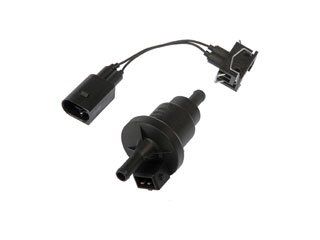
- EVAP Canister Purge Valve (N80 Valve)
(OEM #06E906517A)— This is the most common cause for code P0496 on this vehicle, as it fails by sticking open. It is strongly recommended to use an OEM or reputable brand like Bosch, as some aftermarket parts have a high failure rate.
Trusted brands: Bosch, Genuine Volkswagen, FCP Euro, ECS Tuning
OEM price range: $50-$90
Aftermarket price range: $25-$60
Related Codes That Often Appear With This One
- P0441 — This code indicates 'Incorrect Purge Flow' and is often set alongside P0496, as both point to a problem with the purge valve's operation.
- P0456 — This code for a 'Very Small EVAP Leak' can sometimes appear if the issue is related to a failing seal or hose, though P0496 specifically points to a flow problem when the system is not purging.
Technical Service Bulletins (TSBs) & Recalls
- VIN4APIN20200803: Customer states MIL-on with P0496.
- VIN4APIN20200720: Customer states MIL-on with P0496.
- VIN4APIN20200624: Customer states MIL-on with P0496.
- VIN4APIN20200617: Customer states MIL-on with P0496.
- 01-19-09TT (for VW Atlas): While not for the Beetle specifically, this VW Tech Tip addresses P0496 and details diagnostic procedures like checking for charcoal debris from a failed canister, which is a relevant potential cause.
Platform-Specific Known Issues
- NHTSA Technical Service Bulletins for the 2013 and 2014 VW Beetle list customer complaints of the Malfunction Indicator Lamp (MIL) being on with code P0496 stored, confirming it is a documented issue for this platform. [VIN4APIN20200803, VIN4APIN20200720, VIN4APIN20200624, VIN4APIN20200617]
- A VW Tech Tip (01-19-09TT) for other models like the Atlas mentions P0496 and provides diagnostic steps that are broadly applicable, such as checking for charcoal particles in the EVAP line leading to the N80 valve.
Mechanic-Grade Diagnostic Values
- N80 Purge Valve internal resistance — expected: 22 to 30 Ohms. Failure: A reading outside this range indicates a faulty valve solenoid coil. Some sources cite a slightly wider range of 15-35 Ohms, but a reading of infinity (open circuit) or zero (short circuit) is a definitive failure.
- N80 Purge Valve connector voltage (Key On, Engine Off) — expected: Approximately 12V (battery voltage) at Pin 1. Failure: Significantly low or no voltage at Pin 1 suggests a problem with the power supply from the Fuel Pump relay or a wiring issue. Pin 2 is the ground side, which is pulse-width modulated by the ECU when the engine is running to control the valve.
Scan Tool Commands That Help
- VCDS (VAG-COM) or similar VW-specific scanner: Engine (01) -> Basic Settings -> Group 070 (EVAP System Test) — This function initiates a complete EVAP system test, including the purge valve (N80) and vent valve. It's used to verify the entire system's integrity after a repair or as a comprehensive diagnostic step. The test will run and report 'EVAP OK' or 'EVAP not OK'.
- VCDS (VAG-COM) or similar VW-specific scanner: Engine (01) -> Output Tests -> EVAP Canister Purge Regulator Valve (N80) — This allows a technician to manually cycle the N80 valve. You should hear an audible clicking from the valve as it opens and closes. This test confirms the ECU can command the valve and that the valve's solenoid is not completely seized, but it does not test for leaks.
Wiring & Ground Locations
- N80 Valve Connector — On the EVAP Purge Valve (N80) itself, located on top of the engine under the plastic cover for the 2.5L engine.. Testing the 2-pin connector is crucial for differentiating a failed valve from a wiring problem. With the key on, Pin 1 should have battery voltage supplied from the fuel pump relay via a fuse. Pin 2 is the ground signal controlled by the Engine Control Module (ECM). No voltage on Pin 1 points to a power supply issue, while correct voltage but a non-functioning valve points to a bad valve or an open in the ground wire to the ECM.
Real Owner Repair Stories
- Reddit user on r/VWatlas (2021 VW Atlas V6) — Check Engine Light with P0496, engine randomly turning off in traffic or when idling.
❌ Tried (didn't work) Replaced the canister purge valve (N80) with an OEM part.
✅ What actually fixed it The issue persisted after replacing the purge valve. The final resolution for a similar issue described by another user in the thread involved replacing both the purge valve and the charcoal canister, suggesting charcoal pellets had contaminated the system.
When the Usual Fixes Don't Work
- While the vast majority of P0496 codes on this platform are fixed by replacing the N80 purge valve, there are documented cases where this does not solve the problem. In one such instance involving a VW Atlas, a user replaced the purge valve, but the code and stalling symptoms returned. The discussion pointed towards a secondary failure of the charcoal canister, which can break down internally and send charcoal pellets into the EVAP lines. These pellets can then hold the *new* purge valve open, causing the same P0496 fault to reappear. This highlights the importance of checking the EVAP lines for black charcoal particles during the initial repair. If particles are found, the charcoal canister must be replaced along with the purge valve to achieve a permanent fix.
OEM Part Supersession History
6E906517→06E906517A— Standard part revision and improvement by Volkswagen/Audi.
Heads up: The part is a common failure item, and using a non-OEM or low-quality aftermarket version is a common trap. Many forum and repair site users strongly recommend using a Genuine VW or OEM-supplier part (like Bosch) as cheap alternatives are known to fail quickly, causing the code to return.
Helpful Videos


Used OEM Parts in Stock
New Aftermarket Parts Available


The information in this article is provided for general reference and educational purposes only. Vehicle specifications, procedures, and part compatibility can vary by production date, trim level, and region. Always consult your vehicle's factory service manual and verify part numbers before purchasing or performing repairs. Safety-critical components such as airbags, seat belts, and braking systems should be installed by a qualified professional.
- Volkswagen BEETLE CONVERTIBLE:
- 🧭 Diagnostic Flowchart
- 🎬 Helpful Videos
- 🛍️ Shop This Part
- What's Unique About the 2013-2017 Volkswagen BEETLE CONVERTIBLE
- Symptoms You May Notice
- Most Likely Causes
- Rare But Worth Checking
- Diagnosis Steps
- Parts You'll Likely Need
- Related Codes That Often Appear With This One
- Technical Service Bulletins (TSBs) & Recalls
- Platform-Specific Known Issues
- Mechanic-Grade Diagnostic Values
- Scan Tool Commands That Help
- Wiring & Ground Locations
- Real Owner Repair Stories
- When the Usual Fixes Don't Work
- OEM Part Supersession History
- 🎟️ Get 5% Off