

P0500 on 1997-2004 Dodge Dakota: Causes, Fixes, and Speed Sensor Guide
On a 1997-2004 Dakota, P0500 with an ABS light and dead speedometer is almost always a failed rear differential speed sensor. It's a ~$30 part and a 30-minute DIY fix. Ensure you buy the correct part number for your year and ABS system.
- On a 1997-2004 Dakota, P0500 almost always points to the rear differential speed sensor, especially when the ABS light is also on.
- Do not confuse this with the transmission output sensor, which causes different symptoms and sets a P0720 code.
- The fix is typically a cheap and easy DIY replacement of the sensor.
- Wiring damage near the sensor connector is the second most likely cause and should be inspected carefully.
- The sensor can be difficult to remove due to rust; be prepared to use force and clean the mounting hole thoroughly.
What's Unique About the 1997-2004 Dodge Dakota
Unlike many vehicles where a P0500 code points to a sensor on the transmission, on the 2nd generation Dodge Dakota, the primary source for the vehicle speed signal is the ABS speed sensor located on top of the rear differential housing. While there is a separate transmission output sensor, it primarily controls shift timing and typically sets a P0720 code if it fails. Therefore, for P0500 accompanied by a dead speedometer and ABS light, the diagnostic process must start at the rear axle, not the transmission.
Symptoms You May Notice
- Check Engine Light is on
- ABS warning light is on
- BRAKE warning light is on
- Speedometer is inoperative or reads 0 MPH
- Speedometer works only above a certain speed (e.g., 15 or 35 MPH)
- Odometer does not accumulate miles
- Cruise control will not engage
- Harsh or erratic automatic transmission shifting
- In some cases, erratic 4WD engagement
- Replacing the transmission output speed sensor. On this truck, the transmission output sensor is for transmission functions and typically sets a P0720 code, not P0500. The speedometer and P0500 are tied to the rear axle sensor.
Most Likely Causes
- Failed Rear Differential Speed Sensor 🔴 High Probability This sensor is exposed to intense heat from the differential and contamination from road debris, leading to a very high failure rate over time. The internal electronics simply wear out or the housing cracks.
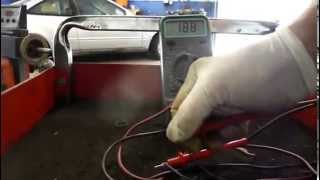
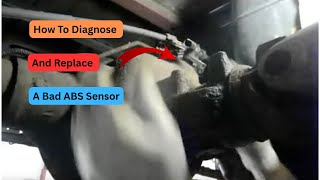
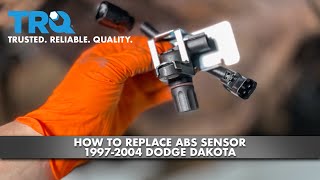
How to confirm: The sensor is located on the top of the rear differential housing. A visual inspection may not reveal failure. You can test the sensor with a multimeter; resistance should be between 1600 and 2300 ohms. Alternatively, set the multimeter to AC volts, and with the rear wheels spinning, it should generate a small AC voltage (over 100mV). 🎬 Watch: How to diagnose and test a Dodge rear ABS sensor However, the most common diagnostic step is replacement due to the low cost and extremely high probability of failure.
Typical fix: Replace the rear differential speed sensor. This is a simple unbolt-and-unplug procedure.
Est. part cost: $25-$50 - Damaged Wiring or Connector for Rear Speed Sensor 🟡 Medium Probability The wiring harness runs along the frame and axle, making it susceptible to chafing, corrosion, or damage from road debris or flexing over time. Forum users frequently report finding broken wires right at the sensor connector pigtail.
How to confirm: Visually inspect the wiring harness from the sensor connector up towards the main frame. Tug gently on the wires at the connector to check for breaks inside the insulation. Use a multimeter to check for continuity between the sensor connector and the ABS module connector. The signal wires go to the Controller Antilock Brake (CAB) module, not directly to the PCM.
Typical fix: Repair the broken wire(s) using solder and heat shrink tubing. If the connector itself is damaged, replace it with a new pigtail (e.g., Dorman 645-538).
Est. part cost: $10-$25 for a pigtail
Rare But Worth Checking
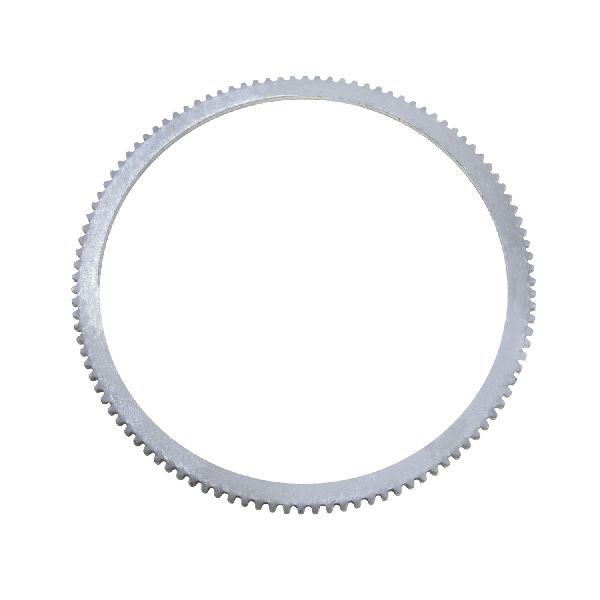
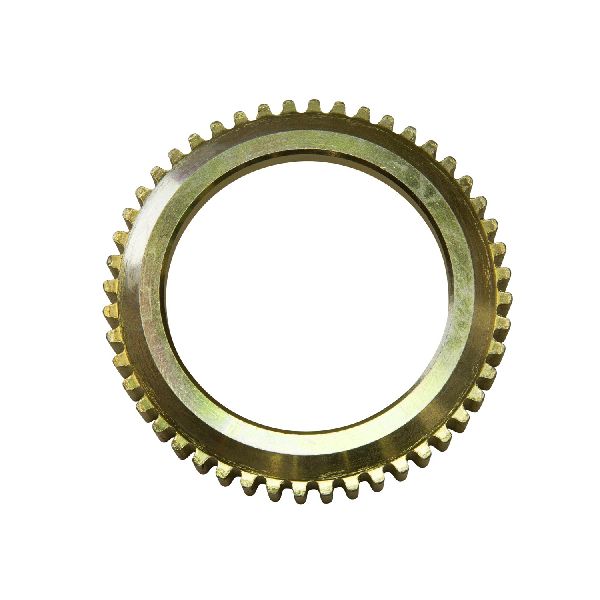
- Metal Shavings on Sensor Tip: The sensor is magnetic and can collect metallic debris from normal differential wear. If enough debris collects, it can interfere with the sensor's ability to read the tone ring inside the differential. When replacing the sensor, always wipe the mounting area clean and inspect the old sensor's tip. A large amount of shavings is a red flag indicating you should inspect the differential fluid and check for more serious internal wear.
- Faulty ABS Control Module: → Shop ABS Control Module The rear speed sensor signal goes to the Controller Antilock Brakes (CAB) module first, which then relays the information to the PCM. In rare cases, the ABS module itself can fail, preventing the signal from being processed and sent. This usually requires advanced diagnostics to confirm and is a much more expensive repair.
- Faulty Powertrain Control Module (PCM): This is the least likely cause. The PCM is the last component in the chain. All other possibilities, especially the sensor and wiring, should be exhaustively ruled out before considering a PCM failure.
Diagnosis Steps
- Confirm the presence of code P0500 using an OBD-II scanner. Note if the ABS and BRAKE lights are also on, which is typical for this failure.
- Locate the speed sensor on the top, forward-facing part of the rear differential housing.
- Inspect the wiring harness connected to the sensor. Look for any signs of cracking, chafing, melting on the exhaust, or corrosion. Pay close attention to the wires right at the connector, as this is a common failure point.
- Disconnect the sensor. Inspect the connector pins for corrosion or damage.
- Given the high failure rate and low cost, the most common and time-effective next step is to replace the sensor. It is held on by a single bolt, typically 13mm or 14mm.
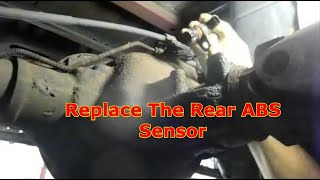
- The old sensor may be seized in the differential housing due to rust. 🎬 See this step-by-step sensor replacement walkthrough Gently twist and pull with large pliers or channel locks to remove it. It may break apart during removal. Be sure to retrieve all pieces.
- Clean the mounting surface and the hole thoroughly before installing the new sensor to ensure a proper fit.
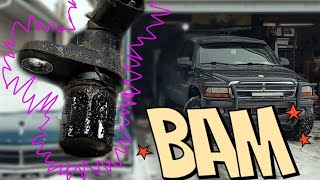
- Install the new sensor, reconnect the wiring, and clear the OBD-II codes with your scanner. 🎬 Watch: How to fix P0500 and clear the code
- Test drive the vehicle. The speedometer should now function, and the warning lights should remain off. If the problem persists, the issue is likely in the wiring harness or, rarely, the ABS module.
Parts You'll Likely Need
- Rear ABS Wheel Speed Sensor
(OEM #Varies: 56028187AE (or AC/AD) for 1999+ with 4-wheel ABS; 56027985 for earlier models/RWAL. Verify by VIN.)— This is the primary sensor for vehicle speed on this platform and has a very high failure rate. Part number varies by year and ABS system.
Trusted brands: Mopar, Dorman (p/n 970-024), NGK/NTK, Standard Motor Products (p/n ALS203), Delphi
OEM price range: $45-$60
Aftermarket price range: $25-$45
Related Codes That Often Appear With This One
- ABS Light — The rear differential sensor is the primary input for the Rear-Wheel Anti-Lock (RWAL) or four-wheel ABS system. When it fails, the ABS system is disabled and the light comes on.
Technical Service Bulletins (TSBs) & Recalls
- TSB 08-18-98: Addresses an updated rear wheel speed sensor design to improve sealing against moisture intrusion, which could be a contributing factor to failure.
Platform-Specific Known Issues
- Owner Experience: A common story on forums involves the original sensor being so rusted into the differential housing that it cannot be pulled out in one piece. Owners report having to break the plastic top off and then use pliers and picks to break apart and remove the metal body of the sensor from the hole. Thoroughly cleaning the bore with a wire brush or sandpaper before installing the new sensor is critical.
Mechanic-Grade Diagnostic Values
- Rear Differential Speed Sensor Resistance — expected: 1600 - 2300 Ohms. Failure: An open circuit (infinite resistance) or a reading significantly outside the specified range.
- Rear Differential Speed Sensor AC Voltage Output — expected: Greater than 100mV AC, increasing with wheel speed.. Failure: No AC voltage produced when the rear wheels are spinning.
- Wiring to Sensor (at ABS module connector) — expected: Continuity (less than 5 ohms) on both wires from sensor plug to ABS module plug.. Failure: High resistance or an open circuit on either wire.
Hidden / Shadow Codes Worth Checking
- ABS Code 35 (or similar): On older models using scanners like the DRB III, an ABS-specific code (like code 35) may be present, explicitly indicating a 'missing rear speed signal'. This is the root cause that triggers the generic P0500 in the PCM. (see via An advanced scan tool capable of communicating with the Controller Antilock Brake (CAB) module, such as a dealer-level DRB III or modern equivalent.)
Wiring & Ground Locations
- Rear Speed Sensor Connector — On top of the rear differential housing.. This is the primary connection point. The pigtail is a common failure point due to exposure and vibration. Wires can break internally right at the connector.
- Controller Antilock Brake (CAB) Module Connector — Typically located in the engine bay, often near the hydraulic unit.. The rear speed sensor wires terminate here. For a '99 model with 4-wheel ABS, the wires are Pin 1 (Red w/ Violet tracer) and Pin 8 (White w/ Violet tracer). Testing for the signal or resistance at this connector can confirm the integrity of the harness from the axle.
- G100 / G101 — Front of the left front fender / left front of engine compartment.. These are major chassis and engine grounds. While not directly for the sensor circuit, a poor main ground can cause floating voltages and erratic behavior in multiple electronic modules, including the ABS and PCM.
- PCM Ground — The PCM is grounded through its case to the body and via specific ground wires in its connector, often terminating at a bolt on the engine block or inner fender.. A faulty PCM ground is a rare but possible cause for the PCM misinterpreting data from the ABS module, though it would likely cause many other codes and symptoms.
Real Owner Repair Stories
- DodgeDakota.net forum user 'buford' (2000 Dodge Dakota 4.7 2WD) — ABS and parking brake light on, speedometer didn't work until 35 MPH.
❌ Tried (didn't work) Replaced the rear speed sensor on the differential, which made the ABS/brake lights go off.
✅ What actually fixed it After replacing the sensor, the speedometer quit entirely and the Check Engine Light came on with P0500. The user's post ends here seeking a solution, highlighting a scenario where the initial fix alters the symptoms without a complete resolution, pointing towards a potential wiring or module issue. - DodgeForum.com user 'dgilfillen' (1999 Dodge Dakota 5.2L Manual Transmission, 4-wheel ABS) — Check engine, ABS, and brake light on. Speedometer not working. Code P0500.
❌ Tried (didn't work) The previous owner had already replaced the rear differential sensor., Confirmed sensor resistance was within spec (1994 ohms)., Pulled sensor to inspect for metal debris (it was clean).
✅ What actually fixed it The resolution is not posted in the thread, but the diagnostic path correctly identified that the signal goes to the ABS controller, not the PCM, and that the front wheel sensors do not affect the speedometer. This case demonstrates the importance of verifying wiring integrity to the ABS module when a known-good sensor doesn't fix the issue.
OEM Part Supersession History
56028187AD→56028187AE— Likely a minor revision for improved durability, sealing, or manufacturing process.
Heads up: 56028187AE is generally backward compatible with applications calling for the AD version. However, the critical distinction is between this part number (for 4-wheel ABS) and 56027985 (for RWAL systems). They are not interchangeable.
Model Year Variations Within This Range
- 1997-2004: The primary variation is the speed sensor part number based on the type of ABS. Trucks with Rear-Wheel-Only ABS (RWAL) use a different sensor (e.g., 56027985) than trucks with 4-wheel ABS (e.g., 56028187AE). The connectors and electrical properties differ, making them non-interchangeable. Visual identification or checking by VIN is crucial.
- 1998-2000 vs 2001-2004: There were changes in the ABS module (Controller Antilock Brake - CAB) and PCM during this generation. While the fundamental cause (rear sensor) remains the same for P0500, the specific pinouts at the module connectors and diagnostic procedures with a dealer scan tool may vary slightly.
Diagnostic Flowchart
Other Known Issues on This Vehicle
Issues unrelated to this code that are worth knowing about as an owner of this generation:
- Cracked Dashboard 🟠 Medium — Extremely common across all 1997-2004 models. The plastic becomes brittle from sun exposure and temperature cycles, leading to large cracks and disintegration.
- Intake Manifold Plenum Gasket Leak (V8 Models) 🔴 High — A notorious design flaw on the 3.9L, 5.2L, and 5.9L Magnum engines. The steel bottom plate of the aluminum intake manifold allows the gasket to fail, causing oil consumption, engine pinging, and fouled spark plugs. (Ref: TSB 09-05-00 describes a diagnostic procedure for this issue.)
- Premature Ball Joint Failure 🔴 High — Upper and lower ball joints, particularly on 4WD models, are known to wear out quickly, causing clunking noises, steering wander, and uneven tire wear. In severe cases, it can lead to wheel separation. (Ref: NHTSA Recall 04V596000 (DaimlerChrysler Recall D47/B47) was issued for upper ball joints on 2000-2003 4x4 models.)
- Heater Core Failure 🟠 Medium — The heater core is prone to clogging or leaking. This is a labor-intensive repair, as it requires the removal of the entire dashboard for access.
Used vs. New Parts: Buying Guide for This Vehicle
When a used part is the smart pick: For this specific repair, a used part is almost never a smart choice. The primary failure part, the rear ABS sensor, is a low-cost electronic component with a high failure rate due to heat and exposure. The risk of getting a used sensor that is already near the end of its life is very high, making the small cost savings impractical.
Donor-vehicle mileage cap: roughly under 10000 miles for the part to have meaningful remaining life.
What to inspect on the donor part:
- Not applicable for the sensor. For a larger component like a replacement rear axle, ensure the tone ring is not damaged and the sensor wiring pigtail is intact.
OEM-only on this vehicle (don't cheap out):
- No parts for this specific P0500 repair are strictly OEM-only. However, due to the high failure rate, it is wise to avoid no-name, unbranded sensors.
Aftermarket brands forum-validated for this vehicle:
- Standard Motor Products (SMP)
- Dorman
- Delphi
- NTK/NGK
Brands owners have reported issues with on this vehicle:
- Unbranded, 'white-box' parts from online marketplaces with no warranty or clear manufacturer identity.
Real Owner Stories
Aggregated from forums and TSBs cited above. Mileages and costs reflect what owners reported in those sources.
1999 Dodge Dakota Sport 5.2L V8
Symptoms: Check engine light, ABS light, and parking brake light on. The speedometer was inoperative and the odometer stopped accumulating miles.
What fixed it: Replaced the rear speed sensor (also the ABS sensor) located on the rear differential.
Source hint: YouTube comment by Seastar Laru on 'P0500 - Fix & Code clearing - 1999 Dodge Dakota Sport'
1999 Dodge Dakota Manual Transmission
Symptoms: Speedometer not working and code P0500 present. User confirmed the sensor resistance measured 1994 ohms.
What fixed it: Replacement of the rear axle speed sensor.
Source hint: DodgeForum.com thread '1999 dakota manual trans code p0500 speedometer not working'
2000-2004 Dodge Dakota
Symptoms: The original sensor was so rusted into the differential housing that it could not be pulled out in one piece. The plastic top broke off during removal.
What fixed it: Used pliers and picks to break apart and remove the metal body of the sensor from the hole, followed by cleaning the bore with a wire brush before installing a new sensor.
Source hint: vehicle_specific_issues: Owner Experience
Related OBD-II Codes
Frequently Asked Questions
My speedometer only starts working once I hit 15 or 35 MPH. Is this related to code P0500?
Does TSB 08-18-98 apply to the speed sensor issues on my Dakota?
I have ABS and BRAKE warning lights on along with the Check Engine light. Are these separate problems?
Can I test the rear speed sensor with a multimeter before buying a new one?
Is there a specific replacement connector pigtail if my wiring is damaged?
Does the Dodge Durango share this same P0500 speed sensor issue?
Helpful Videos
We Have This Part in Stock


The information in this article is provided for general reference and educational purposes only. Vehicle specifications, procedures, and part compatibility can vary by production date, trim level, and region. Always consult your vehicle's factory service manual and verify part numbers before purchasing or performing repairs. Safety-critical components such as airbags, seat belts, and braking systems should be installed by a qualified professional.
- Dodge Dakota:
- 🧭 Diagnostic Flowchart
- 🎬 Helpful Videos
- 🛍️ Shop This Part
- What's Unique About the 1997-2004 Dodge Dakota
- Symptoms You May Notice
- Most Likely Causes
- Rare But Worth Checking
- Diagnosis Steps
- Parts You'll Likely Need
- Related Codes That Often Appear With This One
- Technical Service Bulletins (TSBs) & Recalls
- Platform-Specific Known Issues
- Mechanic-Grade Diagnostic Values
- Hidden / Shadow Codes Worth Checking
- Wiring & Ground Locations
- Real Owner Repair Stories
- OEM Part Supersession History
- Model Year Variations Within This Range
- Other Known Issues on This Vehicle
- Used vs. New Parts: Buying Guide for This Vehicle
- Real Owner Stories
- 1999 Dodge Dakota Sport 5.2L V8
- 1999 Dodge Dakota Manual Transmission
- 2000-2004 Dodge Dakota
- Related OBD-II Codes
- Frequently Asked Questions
- 🎟️ Get 5% Off