

P0500 on 1995-2000 Ford Contour: Vehicle Speed Sensor Malfunction Causes and Fixes
This code indicates a problem with the Vehicle Speed Sensor (VSS) or its circuit. On the 1995-2000 Ford Contour, this often leads to an erratic or non-functional speedometer and harsh automatic transmission shifting. The most common fix is replacing the VSS itself, but chronic wiring harness degradation on this platform means the wiring should be inspected thoroughly before replacing parts.
- P0500 on a Ford Contour points to a fault with the Vehicle Speed Sensor (VSS) system.
- Symptoms are significant and include a non-working speedometer, poor automatic transmission shifting, and no cruise control.
- The two most likely causes are a failed VSS sensor or, equally likely on this platform, deteriorated and shorting wires in the engine harness leading to the sensor.
- Before replacing parts, always inspect the wiring and connector for damage, as this is a chronic, well-documented problem on 1995-2000 Contours.
- Driving with this code is not recommended due to unpredictable shifting and lack of a functional speedometer.
What's Unique About the 1995-2000 Ford Contour
The first-generation Ford Contour, a platform shared with the Mercury Mystique and European Ford Mondeo, uses a single transmission-mounted Vehicle Speed Sensor for the primary speed reading to the PCM. Unlike later vehicles that may rely solely on wheel speed sensors, this single point of failure is critical. A widespread and well-documented issue on this platform is the premature degradation of engine wiring harness insulation, especially on 1995-1998 models. The insulation becomes brittle and flakes off, exposing bare wires that can short circuit. This makes wiring faults a highly probable cause for P0500, sometimes even more so than the sensor itself. Forum discussions frequently highlight owners finding crumbled wiring at the VSS connector.
Symptoms You May Notice
- Check Engine Light is on
- Erratic or non-functional speedometer and/or odometer
- Harsh, erratic, or delayed shifting in automatic transmissions (sometimes called 'bang shift')
- Cruise control does not work
- ABS warning light may illuminate
- Vehicle may feel like it has a loss of power or hesitation
- Flashing 'O/D Off' (Overdrive Off) light on the instrument cluster
- Replacing the instrument cluster. While a faulty speedometer gauge can happen, the P0500 code is set by the PCM not receiving a signal. If the cruise control also fails and the transmission shifts poorly, the problem is almost certainly upstream in the VSS, wiring, or PCM, not the cluster itself. However, see the edge case regarding a faulty cluster output circuit.
Most Likely Causes
- Failed Vehicle Speed Sensor (VSS) 🔴 High Probability → Shop Drive Shaft Sensor Like many electronic sensors from this era, the VSS can fail internally over time due to heat and vibration. The original design used a plastic pin that could break; newer replacements use a more durable metal pin. It's the most frequently cited cause of P0500 on this vehicle and a relatively inexpensive part to replace.
How to confirm: Test the sensor's internal resistance with a multimeter; it should be between 190 and 250 ohms. Alternatively, test the sensor's signal output with a scan tool or oscilloscope while rotating the wheels. The frequency should increase smoothly with speed (approx. 25 Hz at 10 MPH). A lack of signal, an erratic signal, or out-of-spec resistance indicates a failed sensor.
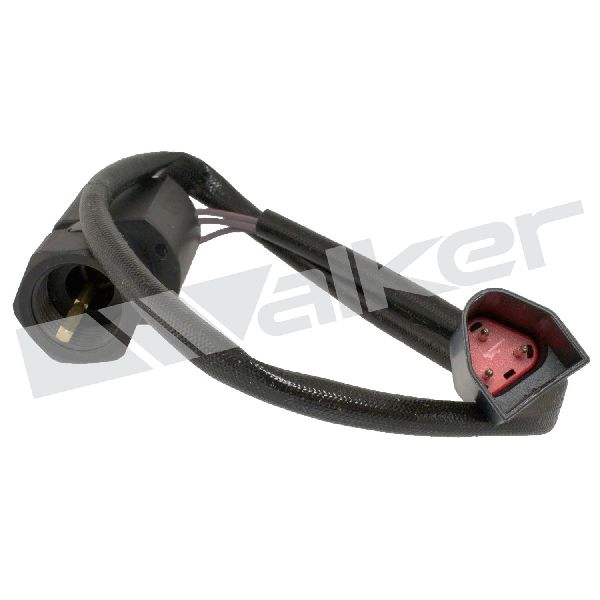
Typical fix: Replace the Vehicle Speed Sensor. The sensor is located on the rear of the transaxle.
Est. part cost: $25-$60 - Damaged or Corroded Wiring/Connector 🔴 High Probability The wiring harness in the engine bay is notorious for insulation that becomes brittle, cracks, and flakes off, especially on pre-1999 models. This exposes the copper wires, leading to shorts to ground or open circuits. The VSS connector and its pigtail are common victims. A recall (99M03) was issued for this on 1995-97 models but the problem is known to exist on other years as well.
How to confirm: Visually inspect the wiring harness leading to the VSS for any signs of cracking, melting, or fraying. Pay close attention to the insulation right at the connector. Check the connector for a secure fit and look for corrosion on the pins. Use a multimeter to check for continuity and proper voltage at the connector. Wiggling the harness while testing can help identify intermittent breaks.
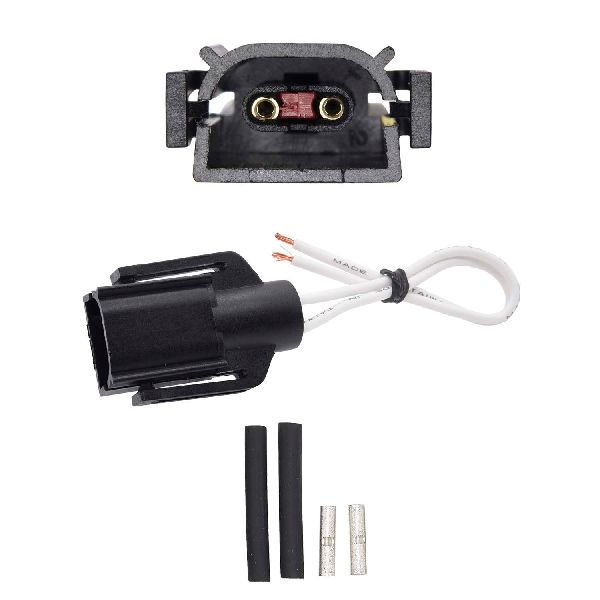
Typical fix: Repair the damaged section of wiring with new wire and heat-shrink connectors. If insulation is bad in many places, some owners use liquid electrical tape to re-insulate the wires. Replace the sensor connector pigtail if it is damaged.
Est. part cost: $5-$30
Rare But Worth Checking
- Damaged VSS Drive Gear: The VSS is driven by a plastic gear inside the transmission. While less common, this gear can strip or break, causing the sensor to stop spinning and sending a signal. This is more likely if transmission work has been done recently or if the transmission has high mileage. Be careful when removing the VSS not to let a broken gear fall into the transmission.
- Faulty Powertrain Control Module (PCM): This is extremely rare. Before condemning the PCM, all other possibilities, including the sensor, wiring, and instrument cluster, must be exhaustively ruled out. One forum user documented a case where the PCM was the final point of failure after replacing the VSS twice and running a new, shielded signal wire directly to the PCM. A faulty PCM is a last resort diagnosis.
- Faulty Splice in VSS Circuit: In one documented case on a similar Ford platform, a P0500 code with a working speedometer was traced to a faulty T-tap splice from a previously installed aftermarket accessory on the VSS signal wire going to the PCM. This highlights the need to check for any non-factory modifications on the circuit.
- Poor Fuse Connection: In one owner-reported case, an intermittent speedometer failure was traced not to the VSS or its wiring, but to a poor connection at the fuse box for a seemingly unrelated circuit (the brake lights). This highlights that electrical issues on this aging platform can have non-obvious root causes.
Diagnosis Steps
- Use an OBD-II scanner to confirm P0500 is the only code present. If other codes are present, address them first.
- Observe the speedometer while driving. Does it work at all, is it erratic, or is it dead? Note if the automatic transmission is shifting harshly or if the O/D light is flashing.
- CRITICAL: Thoroughly inspect the VSS connector and the first 6-12 inches of its wiring harness for obvious damage, such as cracked/flaking insulation, corrosion, or melted sections. This is a very common failure point on this car.
- If wiring appears intact, test the VSS. Disconnect the sensor and measure its resistance between the two signal pins. It should be between 190-250 Ohms.
- If resistance is good, test the circuit. With the key on, check for voltage at the connector's power wire and check for continuity to ground on the ground wire. The VSS ground (Black/Orange wire) splices with several other sensors and grounds at the main battery ground (G1).
- If power and ground are present, test the signal output. Using a scan tool, monitor the VSS PID while driving. The speed should read smoothly. If using a multimeter set to AC Hz, the frequency should increase steadily with speed (approx. 25 Hz at 10 MPH). An erratic or zero reading points to a bad sensor or a break in the signal wire.
- If the sensor and wiring test good, the issue may lie with the VSS drive gear within the transmission or, in very rare cases, the PCM.
Parts You'll Likely Need
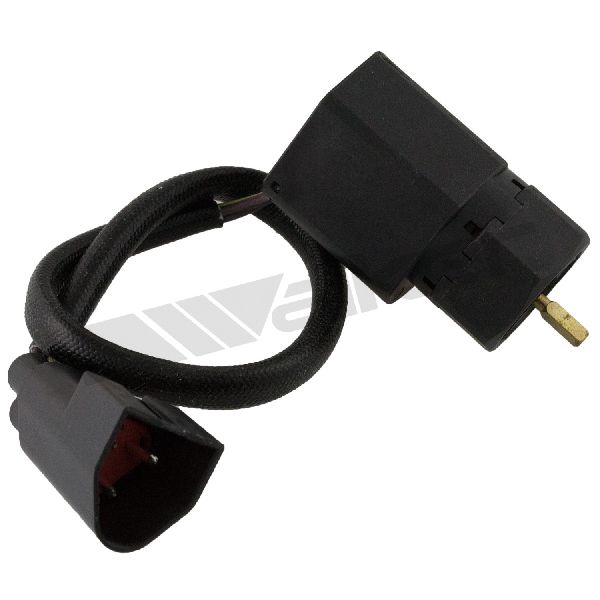
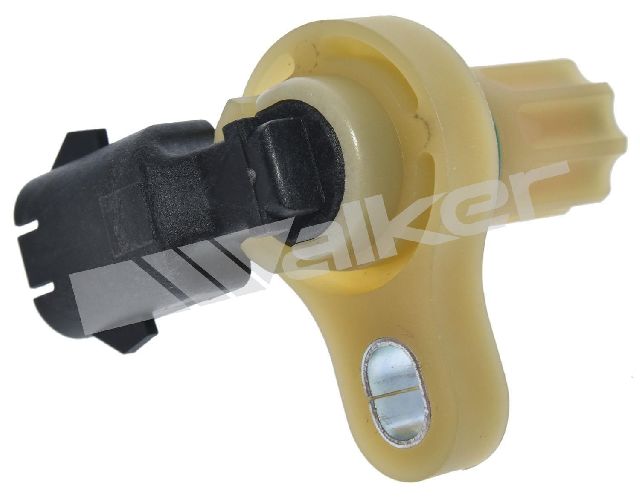
- Vehicle Speed Sensor (VSS)
(OEM #F5RZ-9E731-AC (Motorcraft DY-1123))— This is the most common failure point for code P0500. The internal electronics of the sensor fail over time, or the original plastic drive pin breaks. The updated Motorcraft part uses a more durable metal pin.
Trusted brands: Motorcraft, Standard Motor Products (SMP), Dorman
OEM price range: $45-$70
Aftermarket price range: $20-$50 - Turbine Shaft Speed Sensor (TSS)
(OEM #1S7Z-7M101-KA)— While not the direct cause of P0500, this sensor is often replaced at the same time or misdiagnosed. A failing TSS is a common cause of the harsh 1-2 'bang shift' on the CD4E transmission. If you have both P0500 and severe shifting issues, investigating both sensors is wise.
Trusted brands: Motorcraft, NGK, Rostra
OEM price range: $25-$40
Aftermarket price range: $15-$30
Technical Service Bulletins (TSBs) & Recalls
- While no specific TSB for P0500 was found, Ford issued recall 99M03 for 1995-1997 models to address the degrading engine wiring harness, which is a primary cause of VSS circuit faults.
- A TSB exists for incorrect TSS sensor installation on the CD4E transaxle, which can cause shifting problems sometimes associated with VSS issues. It provides a chart to select the correct sensor if the wrong one was installed during service.
Platform-Specific Known Issues
- Owners report that on some early models with a speedometer cable, the VSS assembly is different. However, most 1996-2000 models are fully electronic.
- Deteriorated wiring insulation is a chronic, well-documented problem on these cars due to age and poor material quality from the factory, which can cause intermittent shorts in the VSS circuit and many other electrical gremlins.
- The VSS signal wire (White/Blue on some models) is shared with other components and splices into the main harness, creating multiple potential points of failure between the sensor and the PCM.
- On other Ford models of this era, such as the Taurus, owners have reported the AODX transmission kicking in and out while experiencing a P0500 code (NHTSA ODI #10069274).
Mechanic-Grade Diagnostic Values
- Vehicle Speed Sensor (VSS) internal resistance — expected: 190 - 250 Ohms. Failure: A reading outside this range, or an open/infinite reading, indicates a failed sensor.
- Vehicle Speed Sensor (VSS) signal output frequency — expected: Signal should start near 0 Hz and increase smoothly with speed. Example: ~25 Hz at 10 MPH, increasing by ~20 Hz for each subsequent 10 MPH.. Failure: A reading of 0 Hz while moving, or an erratic/jumpy frequency that doesn't correspond to vehicle speed.
Wiring & Ground Locations
- G1 — The main battery ground connection point.. The VSS ground wire (Black/Orange) splices in with the grounds for the PCM, MAF sensor, and IMRC, and they all terminate at G1. A poor connection at this primary ground point can cause issues with the VSS and other sensors.
- VSS Connector Pins — On the VSS sensor body, located on the rear of the transaxle.. Knowing the wire functions is critical for testing. For the V6 ATX, wires are typically Green/Red (power), White/Blue (signal to PCM), and Black/Orange (ground). Testing for power, ground, and signal integrity at these pins is a core diagnostic step.
- General Engine Bay Grounds — Various points including a starter bolt, inner fender wells, and the radiator support.. This platform is known for electrical issues due to age. While the VSS has a specific ground path, verifying all major engine and chassis grounds are clean and tight is a wise step in chasing any electrical gremlin, including an intermittent P0500.
Real Owner Repair Stories
- Ford Contour Enthusiasts Group (contour.org) forum user (1998 Ford Mystique 2.5L Automatic) — Check Engine Light with VSS error code. Scan tool showed erratic speed readings (0-60 mph) even when in park, but the dashboard speedometer ALWAYS read correctly.
❌ Tried (didn't work) Replaced the VSS (twice)., Checked all grounds and battery cables., Spliced in a new, shielded coaxial wire directly from the VSS to the PCM to bypass the factory harness.
✅ What actually fixed it The user concluded the PCM itself was faulty, as the erratic speed signal persisted at the PCM even with a new sensor and a direct, shielded wire. The final post indicated the next step was to replace the PCM. - Ford Contour Enthusiasts Group (contour.org) forum user (1996 Mercury Mystique ATX) — Speedometer suddenly stopped working. No Check Engine Light or other warning lights came on.
❌ Tried (didn't work) Checked all fuses visually., Replaced all fuses in the fuse box.
✅ What actually fixed it The problem was a fuse for the brake lights that was not making good contact in the fuse box. Despite looking fine and feeling snug, reseating it properly restored speedometer function. - Ford Contour Enthusiasts Group (contour.org) forum user (1998 Ford Contour SVT) — Intermittent loss of speedometer reading while driving at highway speeds. The speedometer would drop to 0 and then mysteriously start working again after 30-40 miles.
❌ Tried (didn't work) Initial diagnosis pointed to wiring, but the user opted to replace the sensor first.
✅ What actually fixed it Replacing the Vehicle Speed Sensor (VSS) resolved the issue. The user noted the original sensor had a plastic pin that can break off, while the new replacement part used a more robust metal pin.
Documented NHTSA Reports
- In NHTSA ODI #11553968, a mechanic diagnosed a P0500 code on a Ford vehicle and related the failure to a wheel speed sensor failure, though the vehicle was not repaired at that time.
When the Usual Fixes Don't Work
- In one well-documented case, a P0500 code where the speedometer worked perfectly was not fixed by replacing the VSS multiple times. The owner ran a dedicated new wire from the sensor to the PCM, bypassing the entire factory harness for that circuit, and the problem of an erratic speed signal at the PCM persisted. This strongly pointed to an extremely rare internal failure of the PCM's input circuit, proving that even after ruling out the sensor and wiring, the PCM can be the true culprit.
OEM Part Supersession History
Unknown (likely F5RZ-9E731-AA or similar)→F5RZ-9E731-AC (Motorcraft DY-1123)— Design improvement.
Heads up: The original sensor design used a plastic drive pin which was prone to breaking off. The updated DY-1123 part uses a more durable metal pin. The parts are interchangeable, but the newer design is highly preferred.
Model Year Variations Within This Range
- 1995 (early models): Early 1995 models used a mechanical speedometer cable driven from the transmission. Late 1995 and all 1996-2000 models use a fully electronic VSS. The diagnosis and parts are completely different for cable-driven models.
- 1995-1998: These model years are most susceptible to the notorious engine wiring harness insulation degradation. While the recall only covered 1995-1997, the problem is widely reported on 1998 models as well. 1999-2000 models used improved wiring insulation, making wiring failures less likely, though still possible with age.
Diagnostic Flowchart
Other Known Issues on This Vehicle
Issues unrelated to this code that are worth knowing about as an owner of this generation:
- Cracking/Deteriorating Engine Wiring Harness Insulation 🔴 High — Extremely common on 1995-1998 models, leading to shorts, sensor failures, and no-start conditions. Less common but still present on 99-00 models. (Ref: Recall 99M03 was issued for 1995-1997 models, but many owners report issues on cars outside the recall scope.)
- CD4E Automatic Transmission Failures 🔴 High → Shop Transmission Assembly — The CD4E transmission is known for several failure modes, including harsh shifting ('bang shift'), loss of 2nd/4th gears due to a failed 2-4 band, and internal damage from high line pressure caused by a worn pressure regulator valve.
- Plastic Impeller Water Pump Failure (2.5L V6) 🟠 Medium — The original water pump on the Duratec V6 engine used a plastic impeller that could break apart, causing overheating. While not as frequent on the Zetec I4, it's still a known point of failure. (Ref: A TSB was issued suggesting a restrictor in the heater hose for related heater core leaks.)
Used vs. New Parts: Buying Guide for This Vehicle
When a used part is the smart pick: A used wiring harness pigtail from a junkyard is a smart choice, especially if the connector is damaged. Aim for a donor vehicle from the 1999-2000 model years, as they had improved wiring insulation less prone to cracking.
Donor-vehicle mileage cap: roughly under 150000 miles for the part to have meaningful remaining life.
What to inspect on the donor part:
- For wiring pigtails, bend the wires to ensure the insulation is still flexible and does not crack or flake off.
- Inspect the connector pins for any green or white corrosion.
- Ensure the connector's locking tab is intact and not broken.
OEM-only on this vehicle (don't cheap out):
- Powertrain Control Module (PCM) - Due to programming and security requirements, a used PCM is difficult to implement. A new or professionally remanufactured unit programmed for the specific vehicle is the only reliable option.
Aftermarket brands forum-validated for this vehicle:
- Motorcraft (OEM)
- Standard Motor Products (SMP)
- Dorman
Brands owners have reported issues with on this vehicle:
- No-name, unbranded sensors sold at extreme discounts on online marketplaces are often cited on forums as having poor quality control and a high failure rate.
Real Owner Stories
Aggregated from forums and TSBs cited above. Mileages and costs reflect what owners reported in those sources.
1997 Ford Contour
Symptoms: Broken wires found right at the VSS connector; speedometer was not working.
What fixed it: Bypassing the damaged section of the wiring harness at the VSS connector.
Source hint: DoItYourself.com Community Forums: '97 Ford Contour wiring, speed sensor? Speedometer?'
1995-1997 Ford Contour
Symptoms: Wiring wires cracked, insulation brittle and flaking off under the hood.
What fixed it: Using liquid electrical tape to re-insulate the exposed copper wires where the insulation had crumbled.
Source hint: Ford Contour Enthusiasts Group (contour.org): 'wiring wires cracked insulation brittle'
Ford Contour with CD4E transmission
Symptoms: Speedometer fluctuation and erratic readings.
What fixed it: Replacement of the Vehicle Speed Sensor (VSS).
Source hint: Ford Contour Enthusiasts Group (contour.org): 'CD4E Vehicle Speed Sensor?'
Related OBD-II Codes
Frequently Asked Questions
Is there a recall for the wiring issues causing my P0500 code on a 1996 Ford Contour?
My automatic transmission is 'bang shifting' and the O/D light is flashing. Is this related to P0500?
How can I test if the Vehicle Speed Sensor itself is bad on my Contour?
I heard the original VSS has a design flaw. What should I look for in a replacement?
Where is the VSS located on the 1995-2000 Ford Contour?
Can I use parts from a Mercury Mystique to fix my P0500 code?
Helpful Videos
We Have This Part in Stock


The information in this article is provided for general reference and educational purposes only. Vehicle specifications, procedures, and part compatibility can vary by production date, trim level, and region. Always consult your vehicle's factory service manual and verify part numbers before purchasing or performing repairs. Safety-critical components such as airbags, seat belts, and braking systems should be installed by a qualified professional.
- Ford Contour:
- 🧭 Diagnostic Flowchart
- 🎬 Helpful Videos
- 🛍️ Shop This Part
- What's Unique About the 1995-2000 Ford Contour
- Symptoms You May Notice
- Most Likely Causes
- Rare But Worth Checking
- Diagnosis Steps
- Parts You'll Likely Need
- Technical Service Bulletins (TSBs) & Recalls
- Platform-Specific Known Issues
- Mechanic-Grade Diagnostic Values
- Wiring & Ground Locations
- Real Owner Repair Stories
- Documented NHTSA Reports
- When the Usual Fixes Don't Work
- OEM Part Supersession History
- Model Year Variations Within This Range
- Other Known Issues on This Vehicle
- Used vs. New Parts: Buying Guide for This Vehicle
- Real Owner Stories
- 1997 Ford Contour
- 1995-1997 Ford Contour
- Ford Contour with CD4E transmission
- Related OBD-II Codes
- Frequently Asked Questions
- 🎟️ Get 5% Off