

P0500 on 1995-2001 Ford Explorer: Vehicle Speed Sensor Malfunction Causes and Fixes
On a 1995-2001 Ford Explorer, code P0500 is almost always caused by a failed vehicle speed sensor (VSS), typically located on the rear differential. This sensor provides the speed signal for the speedometer, ABS, and transmission. A failure results in a dead or erratic speedometer, harsh shifting, and an ABS light. It's an inexpensive part, around $20-$40, and is a very easy DIY replacement that can solve these alarming symptoms.
- P0500 on a '95-'01 Explorer almost always points to the Vehicle Speed Sensor (VSS) on the rear differential.
- Symptoms like a dead speedometer, ABS light, and harsh shifting are classic signs, often mistaken for transmission failure.
- The most common VSS location is on top of the rear differential, held by one bolt, making it a very easy and fast DIY fix.
- Before replacing the sensor, always inspect the electrical connector and nearby wiring for corrosion or damage, as this is another common point of failure.
- This is a cheap fix; a new sensor typically costs under $50, and a new connector pigtail is under $30.
What's Unique About the 1995-2001 Ford Explorer
The 1995-2001 Ford Explorer (second generation) most commonly uses a single sensor on top of the rear differential to provide speed signals for the speedometer, transmission, and the Rear Anti-lock Brake System (RABS). Because this one sensor serves multiple systems, its failure often causes a distinct and alarming combination of symptoms—a dead speedometer, harsh shifting, a flashing O/D light, and an ABS light—that can be mistaken for a major transmission failure when it's actually a simple, inexpensive sensor swap. The signal from this sensor is often processed by the Generic Electronic Module (GEM) or Programmable Speedometer/Odometer Module (PSOM) in the instrument cluster before being sent to the PCM.
Symptoms You May Notice
- Erratic, jumping, or completely dead speedometer.
- Harsh, delayed, or incorrect automatic transmission shifting.
- Flashing "O/D OFF" (Overdrive Off) light on the dashboard.
- ABS warning light is illuminated.
- Cruise control does not work.
- Check Engine Light is on.
- Odometer not working or displaying dashes.
- Transmission Failure: The severe shifting problems caused by a bad VSS signal often lead owners to believe they have a catastrophic transmission failure, when it's just a lack of speed data.
Most Likely Causes
- Failed Vehicle Speed Sensor (VSS) 🔴 High Probability → Shop Drive Shaft Sensor The sensor is exposed to the elements on the rear axle, making it susceptible to heat, moisture, road salt, and physical damage over time. The internal magnet can weaken or the coil can fail.
How to confirm: The most common location is on top of the rear differential housing, held by a single 8mm or 10mm bolt. Test the sensor's resistance with a multimeter; it should be between 1,200-2,500 ohms. You can also test for AC voltage output while spinning the rear wheels; it should produce at least 0.5V AC. Given the low cost and high failure rate, many owners opt to replace it as the first step.
Typical fix: Replace the Vehicle Speed Sensor. This is a 15-minute job for most DIYers.
Est. part cost: $20-$50 - Damaged Wiring or Corroded Connector 🟡 Medium Probability The wiring to the VSS runs under the vehicle and is exposed to road debris, moisture, and corrosion, especially at the connector itself. The wires can become brittle and break internally right at the connector.
How to confirm: Visually inspect the wiring harness leading to the VSS for any signs of chafing, breaks, or melting. Unplug the sensor and check the two terminals in the connector for green or white corrosion or pushed-out pins. Gently tug on each wire at the back of the connector to ensure they are not broken internally.
Typical fix: Clean the connector terminals with an electrical contact cleaner. If the connector or wiring is damaged, replace the pigtail connector or repair the broken wires. A common pigtail replacement is Dorman 645-213 or Motorcraft WPT118.
Est. part cost: $15-$30 for a new pigtail connector
Rare But Worth Checking
- Damaged VSS Drive Gear: On older models or those with a transmission-mounted sensor, a plastic drive gear can fail. This is less common for the differential-mounted sensor on most Explorers of this era, which uses a tone ring on the differential carrier.
- Faulty Instrument Cluster (PSOM): → Shop Instrument Cluster In rare cases, if the VSS and wiring are confirmed to be good but symptoms persist (especially if the speedometer works but shifting is bad), the fault may lie within the Programmable Speedometer/Odometer Module (PSOM) inside the instrument cluster. The PSOM processes the VSS signal before sending it to the PCM, and a failure on this output circuit can cause a P0500 code.
- Powertrain Control Module (PCM) Issue: This is extremely rare. The PCM should only be considered a potential cause after all other possibilities (sensor, wiring, cluster) have been exhaustively ruled out.
- Metal Shavings on Sensor Tip: The VSS is magnetic and can collect metallic debris from normal differential wear. A heavy accumulation can interfere with the sensor's ability to read the tone ring. When removing the old sensor, inspect its tip. If it's covered in metal shavings, it indicates a potential issue inside the differential that should be investigated further, though simply cleaning the sensor may temporarily resolve the P0500 code.
Diagnosis Steps
- Read the codes with an OBD-II scanner to confirm P0500 is present. Note any other codes, like ABS-specific codes.
- Visually inspect the Vehicle Speed Sensor (VSS) and its electrical connector. On most 1995-2001 Explorers, it is located on the top of the rear differential housing.
- Check the wiring leading to the sensor for any obvious damage, such as breaks, chafing against the frame, or melting near the exhaust.
- Disconnect the sensor and inspect the terminals in the connector for corrosion or moisture. Clean as necessary and apply dielectric grease upon reassembly.
- Inspect the tip of the sensor for a heavy accumulation of metallic shavings. Clean it off and test drive. If the problem is resolved, be aware of potential wear inside the differential.
- Given the high failure rate and low cost of the sensor, the most common and cost-effective next step is to replace the VSS. It is typically held in by a single 8mm or 10mm bolt.
- After replacing the sensor, clear the P0500 code with the scanner and perform a test drive to see if the speedometer, shifting, and O/D light return to normal operation.
- If the problem persists, use a multimeter to test the old or new sensor for resistance (should be ~1200-2500 Ohms) and the harness for proper voltage and ground.
- If the sensor and wiring are good, the problem may be in the instrument cluster (PSOM) or, very rarely, the PCM.
Parts You'll Likely Need
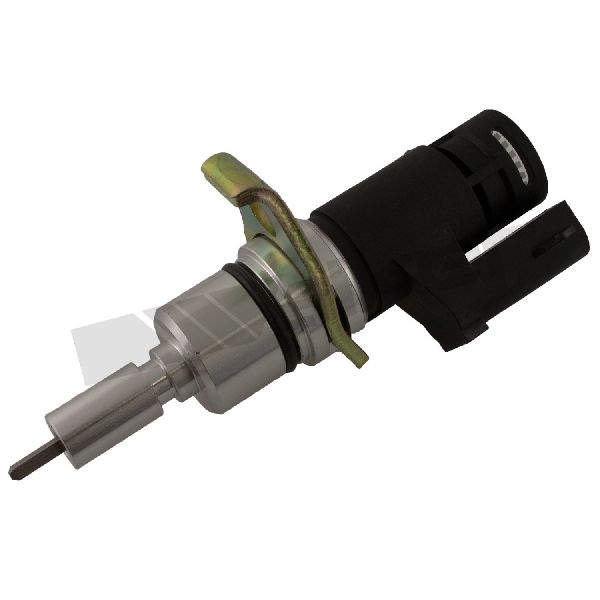
- Vehicle Speed Sensor (VSS) / ABS Sensor
(OEM #F85Z-9E731-AB / Motorcraft DY1123)— This is the primary component that fails and is responsible for generating the vehicle speed signal. Its failure is the direct cause of the P0500 code and associated symptoms on this vehicle.
Trusted brands: Motorcraft, Standard Motor Products (SMP), Delphi, Dorman
OEM price range: $40-$70
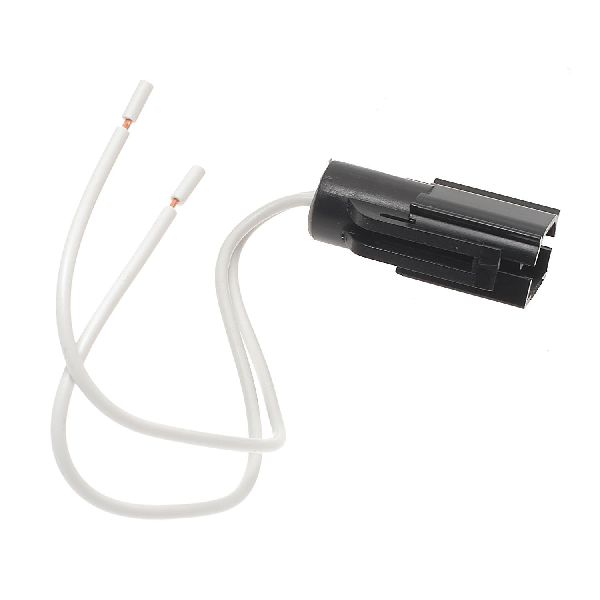
Aftermarket price range: $20-$40 - VSS Pigtail Connector
(OEM #Motorcraft WPT118 / Dorman 645-213)— The connector is a common failure point due to corrosion or wire fatigue from vibration and exposure.
Trusted brands: Dorman, Motorcraft, Standard Motor Products
OEM price range: $25-$40
Aftermarket price range: $15-$25
Related Codes That Often Appear With This One
- P1502 - Vehicle Speed Sensor Intermittent
Platform-Specific Known Issues
- On many 1995-2001 Explorers, the rear differential-mounted sensor serves a dual purpose as both the VSS for the powertrain and the wheel speed sensor for the Rear ABS (RABS) system. A failure will trigger both the P0500 code and the ABS light.
- On 4WD models, there is also an Output Shaft Speed (OSS) sensor on the transmission or transfer case that primarily provides data for transmission control. While the rear differential sensor is the most common cause of P0500, a faulty OSS sensor can also cause shifting problems.
Mechanic-Grade Diagnostic Values
- Vehicle Speed Sensor (VSS) resistance — expected: 1,200 - 2,500 Ohms (1.2kΩ - 2.5kΩ). Failure: A reading of 0 ohms (short) or infinite/OL (open circuit).
- Vehicle Speed Sensor (VSS) AC Voltage Output — expected: At least 0.5V AC when drive wheels are spinning at idle speed.. Failure: No AC voltage or voltage that does not increase with wheel speed indicates a failed sensor.
- VSS Harness Connector - Continuity to Ground — expected: Less than 5.0 Ohms from the ground pin at the connector to a clean chassis ground.. Failure: Higher resistance indicates a poor ground connection, which can cause signal issues.
- VSS Harness Connector - Check for Short to Ground — expected: Greater than 100 Ohms between the signal wire and ground.. Failure: Resistance less than 100 Ohms indicates a short to ground in the harness.
Wiring & Ground Locations
- VSS Signal Wire — In the two-wire harness leading to the sensor on the rear differential.. This wire, typically Gray/Black, carries the AC sine wave signal to the PSOM/GEM. A break or short on this wire is a common cause of P0500 after the sensor itself has been ruled out.
- VSS Signal Return/Ground Wire — In the two-wire harness leading to the sensor on the rear differential.. This wire, often Pink/Orange, provides the ground reference for the VSS signal. A poor connection here will corrupt the signal.
- Remote VSS Test Port — A small, gray two-wire connector located near the driver's side fender well or firewall on some models.. This connector provides a convenient, under-hood location to perform resistance and voltage tests on the rear VSS without needing to lift the vehicle, greatly speeding up initial diagnosis.
- G104 / G108 — G104 is at the rear of the left front fender. G108 is at the left radiator support.. These are common grounding points for the engine compartment and powertrain-related systems. While not directly for the VSS, a corroded ground at these locations can introduce electrical noise that may interfere with various sensor readings.
Real Owner Repair Stories
- Ford Truck Enthusiasts Forums (1997 Ford F-250 HD (similar platform/system)) — Erratic transmission shifting.
❌ Tried (didn't work) Initial diagnosis was uncertain if the sensor was the cause.
✅ What actually fixed it The user was advised that the VSS produces an AC sine wave signal and that testing voltage is the correct procedure. A healthy sensor should produce 1.24V AC at idle in drive and rise with speed (e.g., 6.5V at road speed). This confirmed the diagnostic path is voltage testing, not just resistance. - Ford Truck Enthusiasts Forums (1997 Ford Explorer) — Speedometer failure, no 4th gear, P0500 code.
❌ Tried (didn't work) Initial checks did not immediately reveal the problem.
✅ What actually fixed it The technician found a short circuit in the wiring harness leading from the VSS. Correcting the shorted wires resolved all symptoms, including the lack of 4th gear and the P0500 code, without replacing the sensor itself.
OEM Part Supersession History
F85Z-2L373-AC→F85Z-9E731-AB— Part number consolidation and update.
Heads up: F85Z-9E731-AB is the primary service part number but has been discontinued by Ford. It is interchangeable with a wide range of other part numbers including F85Z2L373AB and aftermarket crosses like Standard Motor Products ALS177 and Dorman 970-012.
Model Year Variations Within This Range
- 1995-2001 (4WD models): On some 4WD models, the primary VSS for the speedometer may be located on the transfer case, not the rear differential. It's crucial to visually confirm the sensor's location before ordering parts. If a sensor is on the transfer case, another sensor will still be on the differential for the RABS system.
- 1995: 1995 was a transition year for Ford from OBDI to OBDII. While most Explorers will be OBDII, some very early production 1995 models could have OBDI diagnostics, which may affect code reading and diagnostic procedures.
Diagnostic Flowchart
Other Known Issues on This Vehicle
Issues unrelated to this code that are worth knowing about as an owner of this generation:
- 4.0L SOHC Timing Chain Cassette Failure 🔴 High — Very common, especially on higher mileage engines (75k-150k miles). Characterized by a rattling or 'marbles in a can' noise from the engine, particularly at startup or around 2000-3000 RPM. (Ref: Multiple TSBs were issued over the years to address tensioner and guide designs. Repair is extremely labor-intensive as one chain is at the rear of the engine, requiring engine removal.)
- 5R55E Automatic Transmission Failures 🔴 High → Shop Transmission Assembly — Widespread issues including harsh shifting, loss of gears (especially reverse), and complete failure, often related to worn servo bores in the case, valve body problems, or solenoid failures.
- Cracked Plastic Intake Manifold 🟠 Medium — The composite plastic intake manifold, particularly on the 5.0L V8 and early 4.0L SOHC, is prone to cracking, causing coolant leaks often near the thermostat housing. (Ref: Ford eventually released a redesigned intake with an aluminum coolant crossover to address this.)
- Heater Blend Door Actuator Failure 🟡 Low — A very common problem where the plastic blend door or its actuator fails, resulting in the HVAC system being stuck on full heat.
- Sway Bar Link Failure 🟡 Low — The original front and rear sway bar links were prone to premature wear and breaking, causing clunking noises over bumps.
Used vs. New Parts: Buying Guide for This Vehicle
When a used part is the smart pick: For this specific P0500 repair, buying a used part is generally not recommended for the sensor itself due to its low cost and high failure rate. However, sourcing a used instrument cluster (for a PSOM fault) or a section of the wiring harness from a junkyard can be a cost-effective solution if those are the confirmed failure points.
Donor-vehicle mileage cap: roughly under 150000 miles for the part to have meaningful remaining life.
What to inspect on the donor part:
- For a wiring harness: Check for intact insulation, no signs of melting or previous repairs, and clean connector pins.
- For an instrument cluster: Ensure the clear plastic is not cracked, and if possible, verify the mileage on the donor vehicle is similar to yours to avoid odometer discrepancies (though it may require programming).
- Check the donor vehicle for signs of water leaks (stained headliner, musty smell) before pulling any electronic modules like a GEM.
OEM-only on this vehicle (don't cheap out):
- Generic Electronic Module (GEM): While a used OEM part is viable, avoid no-name aftermarket modules as they can have compatibility and software issues.
Aftermarket brands forum-validated for this vehicle:
- Standard Motor Products (SMP)
- Delphi
- Motorcraft (OEM)
Brands owners have reported issues with on this vehicle:
- Ultra-cheap, unbranded sensors from online marketplaces often have high rates of out-of-box failure or short lifespans.
Documented NHTSA Reports
NHTSA records provide additional context for P0500 diagnostics across similar Ford platforms. For instance, NHTSA ODI #11553968 describes a situation where a mechanic retrieved DTC code P0500 and related the failure specifically to a wheel speed sensor failure. Additionally, NHTSA ODI #10069274 notes a case where a vehicle experienced a P0500 code alongside a transmission that would "kick in and out," highlighting the strong link between speed sensor data and transmission performance.
Real Owner Stories
Aggregated from forums and TSBs cited above. Mileages and costs reflect what owners reported in those sources.
1999 Ford Explorer XLT 2WD 5.0L
Symptoms: ABS light on, OBD II Code P0500, and NO Speed-O.
What fixed it: The owner replaced the sensor on the 3rd member (rear differential) and both front wheel speed sensors, though the P0500 and speedometer issue persisted, suggesting further diagnosis of the module or wiring was required.
Source hint: 2CarPros
1999 Ford Ranger (Platform Mate)
Symptoms: No speedometer, ABS light on, and the vehicle won't shift out of first gear.
What fixed it: Replacing the rear differential sensor.
Source hint: Reddit thread where a user with a '99 Ranger describes P0500 symptoms
2001 Ford Explorer
Symptoms: P0500 code, flashing O/D light, and ABS light.
What fixed it: Replacing the rear differential VSS.
Source hint: ExplorerForum.com thread titled 'P0500 code - speed sensor A circuit malfunction'
Related OBD-II Codes
Frequently Asked Questions
Where is the Vehicle Speed Sensor (VSS) located on my 1995-2001 Ford Explorer?
Why is my ABS light on at the same time as the P0500 code and a flashing O/D light?
What are the resistance specifications for testing the VSS on a Ford Explorer?
My 4WD Explorer is shifting poorly but the speedometer works; could it be a different sensor?
Are there specific replacement wiring parts if my VSS connector is corroded?
Can I just clean the sensor instead of replacing it?
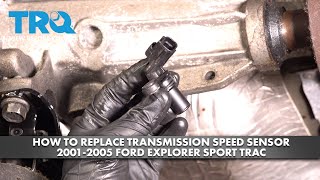
Helpful Videos
Used OEM Parts in Stock
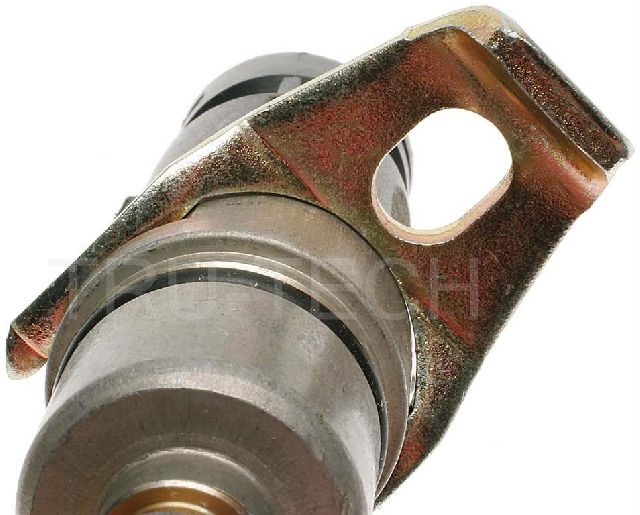
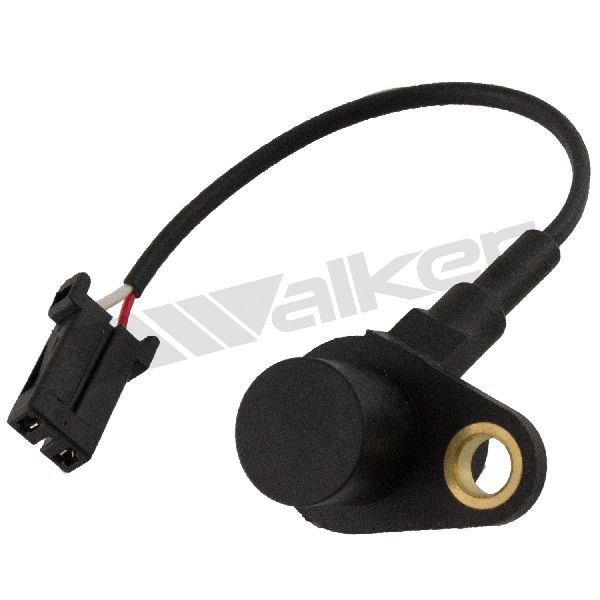
New Aftermarket Parts Available


The information in this article is provided for general reference and educational purposes only. Vehicle specifications, procedures, and part compatibility can vary by production date, trim level, and region. Always consult your vehicle's factory service manual and verify part numbers before purchasing or performing repairs. Safety-critical components such as airbags, seat belts, and braking systems should be installed by a qualified professional.
- Ford Explorer:
- 🧭 Diagnostic Flowchart
- 🎬 Helpful Videos
- 🛍️ Shop This Part
- What's Unique About the 1995-2001 Ford Explorer
- Symptoms You May Notice
- Most Likely Causes
- Rare But Worth Checking
- Diagnosis Steps
- Parts You'll Likely Need
- Related Codes That Often Appear With This One
- Platform-Specific Known Issues
- Mechanic-Grade Diagnostic Values
- Wiring & Ground Locations
- Real Owner Repair Stories
- OEM Part Supersession History
- Model Year Variations Within This Range
- Other Known Issues on This Vehicle
- Used vs. New Parts: Buying Guide for This Vehicle
- Documented NHTSA Reports
- Real Owner Stories
- 1999 Ford Explorer XLT 2WD 5.0L
- 1999 Ford Ranger (Platform Mate)
- 2001 Ford Explorer
- Related OBD-II Codes
- Frequently Asked Questions
- 🎟️ Get 5% Off