

P0500 on 2004-2008 Ford F-150: Vehicle Speed Sensor Malfunction Causes and Fixes
This code indicates a malfunction with the Vehicle Speed Sensor (VSS). On this F-150, the most likely cause is a failed VSS located on the rear differential, which is an inexpensive part and easy to replace. This single sensor provides the speed signal for the speedometer, ABS, cruise control, and transmission shifting.
- P0500 on a 2004-2008 F-150 almost always points to the rear differential speed sensor.
- Symptoms are not just a Check Engine Light; expect a dead speedometer, ABS light, and poor shifting.
- The most common fix is replacing the rear speed sensor, which is a simple and inexpensive DIY job requiring basic hand tools.
- Before replacing the sensor, always inspect the wiring harness for obvious damage, as this is another common point of failure.
What's Unique About the 2004-2008 Ford F-150
For the 2004-2008 F-150, the vehicle speed reading originates from a single sensor on the rear differential, which also serves as the rear ABS sensor. This signal is sent to the ABS module first, which then distributes the information to the PCM and the instrument cluster. A failure in this single sensor or its wiring can therefore cause issues with the speedometer, transmission shifting, cruise control, and ABS, all at the same time. Unlike some newer vehicles that use multiple wheel speed sensors for this data, this generation relies heavily on this one critical sensor for primary vehicle speed information. This centralized design makes the rear differential sensor a common point of failure for multiple, seemingly unrelated symptoms.
Symptoms You May Notice
- Inaccurate or completely dead speedometer/odometer
- ABS warning light illuminated
- Check Engine Light on
- Harsh or erratic automatic transmission shifting
- Cruise control not working or disengaging intermittently
- Traction control system disabled or acting erratically
- Flashing Overdrive (O/D) light on the gear selector
- Replacing the transmission output shaft speed sensor (OSS). On many 2WD trucks, this sensor exists, but for 4x4 models and most 2WDs in this generation, the primary speed signal for the PCM and speedometer comes from the rear differential VSS/ABS sensor, not the transmission sensor. Replacing the OSS will not fix a P0500 code on these vehicles.
- Replacing the front wheel speed sensors. While these are part of the ABS system, they do not provide the primary signal for the speedometer or trigger a P0500 code. Their failure would typically set other ABS-specific codes.
Most Likely Causes
- Failed Rear Differential Vehicle Speed Sensor (VSS) 🔴 High Probability → Shop Drive Shaft Sensor The sensor is exposed to weather, road debris, and heat from the differential, leading to failure over time. It's a very common failure point on these trucks, with many owner reports online confirming it as the first part to check. This is reinforced by NHTSA ODI #11553968, where a technician diagnosed a P0500 code specifically as a wheel speed sensor failure.
How to confirm: The sensor can be tested with a multimeter for resistance (values vary, but an open or shorted sensor is bad), or by monitoring the VSS PID with a capable scan tool while driving. A visual inspection may reveal cracks in the plastic housing or corrosion on the pins. The most definitive test is measuring AC voltage output while spinning the rear wheels; it should produce a small AC voltage that increases with speed.
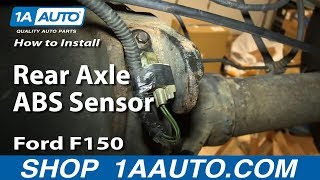
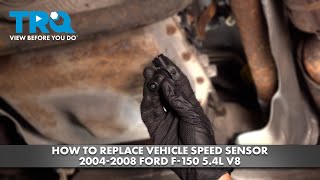
Typical fix: Replace the sensor. It is held in by a single 8mm or 10mm bolt 🎬 Watch: Step-by-step guide to replacing the vehicle speed sensor. on top of the rear differential housing. The old sensor may be stuck and require gentle prying to remove.
Est. part cost: $15-$40 - Damaged Wiring or Connector to VSS 🟡 Medium Probability The wiring runs along the frame rail and axle, where it is susceptible to chafing, corrosion, or damage from road debris, exhaust heat, or improper jacking. A common failure point is the harness near the sensor connector itself, which can become brittle or corroded.
How to confirm: Visually inspect the entire harness from the VSS sensor on the differential up to the main vehicle harness. Look for breaks, chafing, melted sections near the exhaust, or corrosion in the connector pins. A wiggle test on the connector while monitoring the live data can also pinpoint an intermittent connection. One owner on Ford-Trucks.com found that driving through high water led to water ingress in the wiring loom, causing the issue days later.
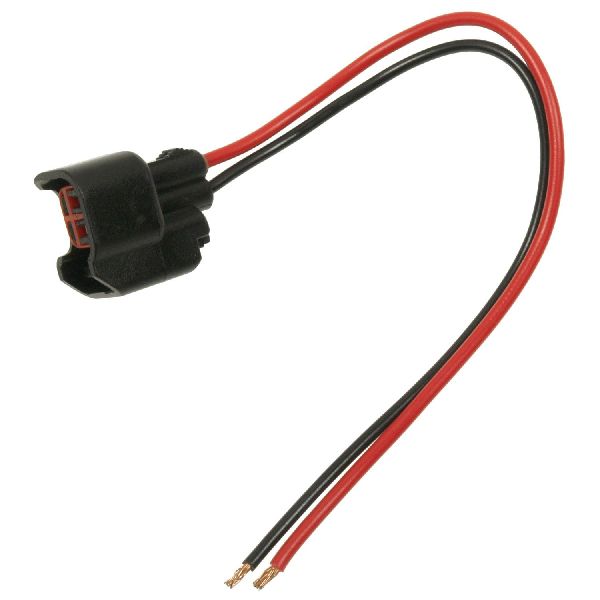
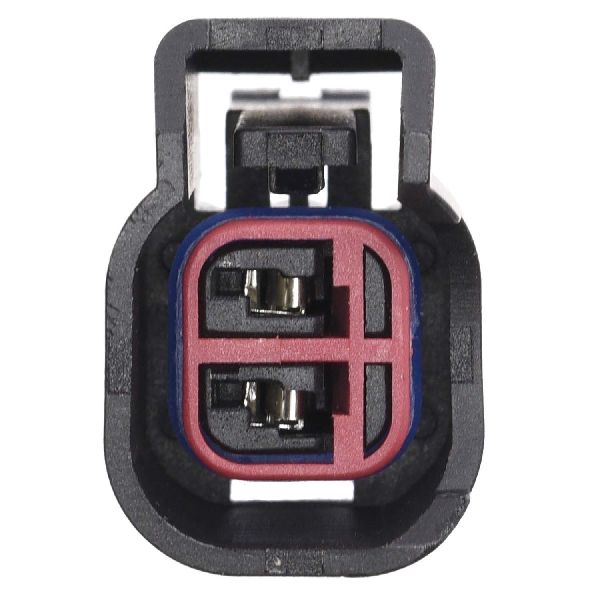
Typical fix: Repair the damaged section of wire. If the connector is damaged, replace the connector pigtail. It is critical to ensure the new wires 🎬 See how to repair damaged wiring and the sensor connector. are connected correctly, as aftermarket pigtails may not have the same wire colors.
Est. part cost: $10-$35 for a pigtail connector - Damaged Tone Ring in Rear Differential ⚪ Low Probability This is less common, but can happen if there is a failure inside the differential (like a bearing failure) or if metallic debris enters the housing and damages the teeth of the ring.
How to confirm: Remove the VSS and use a small inspection camera or mirror to inspect the tone ring inside the differential. Look for broken/missing teeth, significant rust/debris buildup, or warping. The ring should be clean and all teeth should be uniform.
Typical fix: This is a major repair requiring disassembly of the differential to replace the tone ring. This is often best left to a professional. Attempting to repair a cracked tone ring in place is not recommended as it is a sensitive component.
Est. part cost: $50-$150 for the part, plus significant labor
Rare But Worth Checking
- Faulty ABS Control Module: → Shop ABS Control Module The VSS signal routes through the ABS module before going to the PCM. If the speedometer works but the P0500 code is present and the transmission shifts poorly, it could indicate the ABS module is receiving the signal but not correctly relaying it to the PCM. A failed ABS module is a known issue on these trucks and can also cause a dead speedometer and ABS light.
- Faulty Powertrain Control Module (PCM): This is extremely rare. Before condemning the PCM, all other possibilities including wiring, the sensor, and the ABS module must be exhaustively ruled out.
- Incorrect Tire Size Programmed: If significantly different sized tires were installed and the PCM was not recalibrated, it can cause a discrepancy between the VSS reading and other sensors, potentially triggering the code. This is uncommon for setting a P0500 specifically but can cause related symptoms.
- Faulty Instrument Cluster: → Shop Instrument Cluster In some cases, a fault within the instrument cluster itself (specifically the PSOM - Programmable Speedometer/Odometer Module on older models) can cause issues with speed signal processing, though this is more common on the prior generation F-150. For the 2004-2008 models, this is less likely but still possible if other symptoms point to cluster failure.
Diagnosis Steps
- Scan for Codes: Use an OBD-II scanner to confirm P0500 is present. Use a more advanced scanner (like FORScan) to check for any other accompanying codes from the ABS and Transmission Control (TCM) modules, especially C1155 or C1230.
- Live Data Monitoring: Use a scan tool capable of reading live data. Monitor the Vehicle Speed (VSS) PID from the PCM. Also monitor the rear wheel speed sensor PID from the ABS module. If both read 0 MPH while driving, there is a total loss of signal from the sensor.
- Visual Inspection: Get under the truck and visually inspect the Vehicle Speed Sensor on top of the rear differential. Check its connector for corrosion, damage, or looseness. Follow the wiring harness from the sensor as far as you can, looking for obvious signs of damage, chafing against the frame, or melting near the exhaust.
- Sensor Test: Unplug the sensor. You can test the sensor itself with a multimeter set to Ohms; resistance should be within a specific range (consult a service manual, but typically 800-2500 Ohms). An open (infinite resistance) or shorted (zero resistance) sensor is bad. A more effective test is to set the multimeter to AC Volts, connect probes to the sensor pins, and have a helper spin the rear wheels. You should see a small AC voltage that increases with speed.
- Wiring Test: With the sensor unplugged and the key on, check the connector for reference voltage and ground from the ABS module. If voltage/ground is missing, there is a problem in the wiring harness between the ABS module and the sensor. Check for continuity on both wires between the sensor connector and the ABS module connector.
- Inspect Tone Ring: If the sensor and wiring are good, remove the sensor (one bolt) and visually inspect the tone ring 🎬 Watch: How to remove and replace the rear axle sensor. inside the differential with a flashlight and mirror. Look for damaged or missing teeth, or heavy metallic debris stuck to it.
- ABS Module/PCM: If all previous steps check out, the issue may lie with the ABS module or, rarely, the PCM. This level of diagnosis often requires professional-grade scan tools to monitor module communication and is typically best left to a professional.
Parts You'll Likely Need
- Rear ABS / Vehicle Speed Sensor
(OEM #Motorcraft DY-1123 (Cross-references: F85Z9E731AB, ALS177, 5S4725))— This is the most common failure point for a P0500 code on this vehicle. It's an exposed sensor that fails from age and environmental factors.
Related Codes That Often Appear With This One
- C1155 — This is a Ford-specific code for the 'Rear Wheel Speed Sensor Input Circuit Failure'. Since the VSS on the differential is also the rear wheel speed sensor for the ABS, this code is very commonly seen with P0500 and confirms the fault is with that specific sensor or its circuit.
- C1230 — This is another Ford code for 'Rear Wheel Speed Sensor Input Circuit Failure'. It is functionally similar to C1155 and points to the same component.
- P1000 — This is not a fault code, but an informational code indicating that the OBD-II system checks are not yet complete since the codes were last cleared. It will be present after clearing the P0500 code until the truck has been driven enough to complete a full drive cycle.
Technical Service Bulletins (TSBs) & Recalls
- TSB 01-21-13: While for a slightly older model, it notes that DTC P0500 could be related to electrical issues stemming from the ignition switch, indicating the sensitivity of the vehicle's electrical system.
Platform-Specific Known Issues
- Wiring Harness Chafe Point: Owners have reported the wiring harness for the VSS can rub against the frame or the emergency brake cable bracket, eventually wearing through the insulation and causing a short or open circuit. Careful inspection of the harness along its entire path from the axle is recommended.
- Water Intrusion in Harness: A user on Ford-Trucks.com reported that after driving through high water, the P0500 code appeared. The cause was found to be water trapped inside the wiring loom near the sensor connector, which caused an intermittent short. Draining the loom and cleaning the connections resolved the issue.
Mechanic-Grade Diagnostic Values
- Rear Differential VSS/ABS Sensor Resistance — expected: 1500 Ohms. Some sources suggest a wider range of 780-1900 Ohms is acceptable.. Failure: An open circuit (infinite resistance) or a shorted circuit (near zero ohms) indicates a failed sensor.
- Front Wheel Speed Sensor Resistance — expected: Approximately 650 Ohms. A service manual indicates a range of 300-500 Ohms is also possible.. Failure: A reading significantly different from the other front sensor, or an open/shorted circuit. Note: Front sensors do not cause P0500 but are useful for general ABS diagnosis.
- VSS AC Voltage Output — expected: A small, fluctuating AC voltage that increases in both voltage and frequency as the wheel is spun.. Failure: No AC voltage produced while spinning the wheels indicates a dead sensor.
- FORScan Live Data PIDs — expected: Monitor 'VSS - Vehicle Speed Sensor' from the PCM and 'WS_LR - Wheel Speed Left Rear' from the ABS module. Both should read above 0 MPH when driving.. Failure: If WS_LR shows a speed but VSS reads 0, the fault is likely between the ABS module and the PCM. If both read 0, the fault is at the sensor or its wiring to the ABS module.
Scan Tool Commands That Help
- FORScan: ABS Module Configuration (As-Built format) — This is used when replacing the ABS module with a used unit. The Vehicle Identification Number (VIN) from the donor vehicle must be overwritten with the truck's actual VIN to prevent a VIN mismatch DTC and ensure proper function.
- FORScan: ABS Service Bleed — After replacing the ABS hydraulic unit (pump), this procedure must be run to cycle the internal valves and solenoids to purge any trapped air from the brake system, which cannot be removed by manual bleeding alone.
Wiring & Ground Locations
- Rear VSS/ABS Sensor Connector — On top of the rear differential housing.. This is the primary point of failure. The two wires carry the raw speed signal to the ABS module. Check for corrosion, damage, or a loose connection here first.
- ABS Control Module Connector (C135) — Under the hood on the driver's side, mounted to the frame rail.. This is the central hub for the speed signal. The signal from the rear VSS arrives here and is then sent out to the PCM. A bad connection or corrosion in this large connector can cause a P0500. The signal from the rear VSS arrives on Pins 25 & 38. The processed signal is sent to the PCM from this module on a Gray/Black wire.
- PCM Connector (C175b) — In the engine bay, typically on the passenger side firewall.. The final destination for the VSS signal is the PCM. A break in the Gray/Black wire between the ABS module and this connector will cause a P0500 code even if the speedometer works (as the cluster gets its signal separately from the ABS module).
- Ground G103 — On the fender near the battery.. This is a primary ground point for several engine bay components, including the ABS module. A corroded or loose ground here can cause intermittent and difficult-to-diagnose electrical issues, including sensor signal problems.
Real Owner Repair Stories
- Ford Truck Enthusiasts Forums (Ford F-series truck (specific year not mentioned, but same VSS-to-ABS-to-PCM logic)) — Flashing O/D light, P0500 code present. Speedometer was working correctly.
❌ Tried (didn't work) Repairing wires near the VSS connector that were visibly damaged., Replacing the VSS sensor on the rear differential.
✅ What actually fixed it The owner discovered a faulty T-Tap splice on the Gray/Black VSS signal wire between the ABS module and the PCM. The splice was for an aftermarket trailer brake controller. The wire had pulled out of the splice, interrupting the signal to the PCM but not to the instrument cluster, which explained why the speedometer still worked but the P0500 code was set and the transmission shifted poorly. - F150 Forum (2005 F-150 4x4 Lariat) — ABS light on at startup.
❌ Tried (didn't work) Testing resistance of front wheel speed sensors (both read ~650 ohms, which was good).
✅ What actually fixed it The owner tested the rear differential speed sensor and found it had infinite resistance (an open circuit). Replacing the rear sensor fixed the ABS light. This confirms that a failed rear sensor is a common cause for ABS faults on this platform. - NHTSA ODI #10069274 (Ford Taurus) — While a different model, this Ford owner reported the transmission "kicks in and out" while experiencing a P0500 code, illustrating how a faulty speed sensor can directly impact transmission behavior across Ford platforms.
When the Usual Fixes Don't Work
- A common diagnostic assumption is that if the speedometer is dead, the rear VSS must be bad. However, a documented case showed a working speedometer but a P0500 code with harsh shifting. The cause was a break in the specific wire from the ABS module to the PCM. The ABS module was still getting a good signal from the sensor and sending it to the instrument cluster, but the PCM was not receiving it. This highlights that the fault can be isolated to a single branch of the signal path after the ABS module.
OEM Part Supersession History
F85Z-9E731-AB→Motorcraft DY-1123— Standard part number update and consolidation.
Heads up: These parts are generally cross-compatible. However, owners have reported that some budget aftermarket sensors may not perform as reliably as the OEM Motorcraft part, leading to the code returning. It is often recommended to use a trusted brand like Motorcraft, Standard Motor Products (SMP), or Delphi.
Diagnostic Flowchart
Other Known Issues on This Vehicle
Issues unrelated to this code that are worth knowing about as an owner of this generation:
- Ford 5.4L 3-Valve Engine Issues (Cam Phasers, Spark Plugs) 🔴 High — Extremely common, especially on higher-mileage engines. The cam phaser rattle ('Triton tick') can start as early as 60,000 miles. Spark plug breakage is almost guaranteed if original plugs are removed after 100,000 miles without following the specific TSB procedure. (Ref: TSB 08-7-6 (updated spark plug removal procedure), TSB 06-19-12 (DTCs related to generator possibly affecting cam sensors).)
- Fuel Pump Driver Module (FPDM) Failure 🔴 High — Very common. The module is mounted directly to the steel frame above the spare tire, causing the aluminum housing to corrode due to galvanic corrosion. This leads to no-start or stalling conditions. Failure is common after 5-7 years, especially in rust belt states.
- Cracked Exhaust Manifolds 🟠 Medium — Common. The factory cast iron manifolds are prone to cracking, causing an exhaust leak, often heard as a ticking noise when the engine is cold which may disappear as the manifold heats up and expands.
- Window Regulator Failure 🟠 Medium — Frequently reported. The plastic components in the window regulator assembly can break, causing the window to fall down into the door and become inoperable.
- Ignition Coil Failure 🟡 Low — Common as a maintenance item. The coil-on-plug units can fail, causing engine misfires (P030x codes). This is a typical wear-and-tear item but happens frequently enough to be considered a platform issue.
Used vs. New Parts: Buying Guide for This Vehicle
When a used part is the smart pick: For the ABS Control Module. A new module can be very expensive, so a used unit from a donor vehicle with a warranty is a smart financial choice. However, it absolutely requires reprogramming with a tool like FORScan to input your truck's VIN.
Donor-vehicle mileage cap: roughly under 150000 miles for the part to have meaningful remaining life.
What to inspect on the donor part:
- For an ABS Module, ensure the donor vehicle was not in a major front-end collision.
- Check that the electrical connector pins on the module are clean, straight, and free of corrosion.
- Verify the part number on the used module matches the original exactly.
Aftermarket brands forum-validated for this vehicle:
- For the VSS/ABS Sensor: Motorcraft (OEM), Standard Motor Products (SMP), Delphi, NTK.
Brands owners have reported issues with on this vehicle:
- Unnamed, 'white-box' or ultra-low-cost sensors from online marketplaces have a higher reported failure rate and may not have the correct resistance or magnetic properties, causing the code to return.
Real Owner Stories
Aggregated from forums and TSBs cited above. Mileages and costs reflect what owners reported in those sources.
2005 Ford F-150
Symptoms: No speedometer or odometer functionality, ABS light on, and the overdrive (OD) light was blinking.
What fixed it: Replacing the sensor on the rear differential and splicing in a new connector pigtail after finding water intrusion in the wiring loom.
Source hint: ford-trucks.com - Thread titled 'P0500, no speedo or odometer, no ABS, blinking OD'
2004-2008 Ford F-150
Symptoms: Intermittent cruise control issues and rough transmission shifting.
What fixed it: Replacing the rear axle speed sensor.
Source hint: f150online.com - A user confirmed that replacing the rear axle speed sensor fixed intermittent cruise control and improved shifting smoothness
NHTSA Reported Case
Symptoms: Issues with the instrument panel and a Check Engine Light.
What fixed it: According to NHTSA ODI #11553968, a dealer diagnosed the vehicle with DTC P0500 and related the failure to a wheel speed sensor failure.
Related OBD-II Codes
Frequently Asked Questions
Is the Vehicle Speed Sensor (VSS) located on the transmission of my 2004-2008 F-150?
Can driving through high water cause the P0500 code on my truck?
Does TSB 01-21-13 apply to my P0500 issue?
Will a bad rear axle speed sensor affect my cruise control or shifting?
Could my Lincoln Mark LT have the same P0500 problem as the F-150?
What should I look for when inspecting the tone ring inside the differential?
Other Known Issues on This Vehicle
Issues unrelated to this code that are worth knowing about as an owner of this generation:
- Ford 5.4L 3-Valve Engine Issues (Cam Phasers, Spark Plugs) 🔴 High — Extremely common, especially on higher-mileage engines. The cam phaser rattle ('Triton tick') can start as early as 60,000 miles. Spark plug breakage is almost guaranteed if original plugs are removed after 100,000 miles without following the specific TSB procedure. (Ref: TSB 08-7-6 (updated spark plug removal procedure), TSB 06-19-12 (DTCs related to generator possibly affecting cam sensors).)
- Fuel Pump Driver Module (FPDM) Failure 🔴 High — Very common. The module is mounted directly to the steel frame above the spare tire, causing the aluminum housing to corrode due to galvanic corrosion. This leads to no-start or stalling conditions. Failure is common after 5-7 years, especially in rust belt states.
- Cracked Exhaust Manifolds 🟠 Medium — Common. The factory cast iron manifolds are prone to cracking, causing an exhaust leak, often heard as a ticking noise when the engine is cold which may disappear as the manifold heats up and expands.
- Window Regulator Failure 🟠 Medium — Frequently reported. The plastic components in the window regulator assembly can break, causing the window to fall down into the door and become inoperable.
- Ignition Coil Failure 🟡 Low — Common as a maintenance item. The coil-on-plug units can fail, causing engine misfires (P030x codes). This is a typical wear-and-tear item but happens frequently enough to be considered a platform issue.
Used vs. New Parts: Buying Guide for This Vehicle
When a used part is the smart pick: For the ABS Control Module. A new module can be very expensive, so a used unit from a donor vehicle with a warranty is a smart financial choice. However, it absolutely requires reprogramming with a tool like FORScan to input your truck's VIN.
Donor-vehicle mileage cap: roughly under 150000 miles for the part to have meaningful remaining life.
What to inspect on the donor part:
- For an ABS Module, ensure the donor vehicle was not in a major front-end collision.
- Check that the electrical connector pins on the module are clean, straight, and free of corrosion.
- Verify the part number on the used module matches the original exactly.
Aftermarket brands forum-validated for this vehicle:
- For the VSS/ABS Sensor: Motorcraft (OEM), Standard Motor Products (SMP), Delphi, NTK.
Brands owners have reported issues with on this vehicle:
- Unnamed, 'white-box' or ultra-low-cost sensors from online marketplaces have a higher reported failure rate and may not have the correct resistance or magnetic properties, causing the code to return.
Real Owner Stories
Aggregated from forums and TSBs cited above. Mileages and costs reflect what owners reported in those sources.
2005 Ford F-150
Symptoms: No speedometer or odometer functionality, ABS light on, and the overdrive (OD) light was blinking.
What fixed it: Replacing the sensor on the rear differential and splicing in a new connector pigtail after finding water intrusion in the wiring loom.
Source hint: ford-trucks.com - Thread titled 'P0500, no speedo or odometer, no ABS, blinking OD'
2004-2008 Ford F-150
Symptoms: Intermittent cruise control issues and rough transmission shifting.
What fixed it: Replacing the rear axle speed sensor.
Source hint: f150online.com - A user confirmed that replacing the rear axle speed sensor fixed intermittent cruise control and improved shifting smoothness
Related OBD-II Codes
Frequently Asked Questions
Is the Vehicle Speed Sensor (VSS) located on the transmission of my 2004-2008 F-150?
Can driving through high water cause the P0500 code on my truck?
Does TSB 01-21-13 apply to my P0500 issue?
Will a bad rear axle speed sensor affect my cruise control or shifting?
Could my Lincoln Mark LT have the same P0500 problem as the F-150?
What should I look for when inspecting the tone ring inside the differential?
Helpful Videos
We Have This Part in Stock


The information in this article is provided for general reference and educational purposes only. Vehicle specifications, procedures, and part compatibility can vary by production date, trim level, and region. Always consult your vehicle's factory service manual and verify part numbers before purchasing or performing repairs. Safety-critical components such as airbags, seat belts, and braking systems should be installed by a qualified professional.
- Ford F-150:
- 🧭 Diagnostic Flowchart
- 🎬 Helpful Videos
- 🛍️ Shop This Part
- What's Unique About the 2004-2008 Ford F-150
- Symptoms You May Notice
- Most Likely Causes
- Rare But Worth Checking
- Diagnosis Steps
- Parts You'll Likely Need
- Related Codes That Often Appear With This One
- Technical Service Bulletins (TSBs) & Recalls
- Platform-Specific Known Issues
- Mechanic-Grade Diagnostic Values
- Scan Tool Commands That Help
- Wiring & Ground Locations
- Real Owner Repair Stories
- When the Usual Fixes Don't Work
- OEM Part Supersession History
- Other Known Issues on This Vehicle
- Used vs. New Parts: Buying Guide for This Vehicle
- Real Owner Stories
- 2005 Ford F-150
- 2004-2008 Ford F-150
- NHTSA Reported Case
- Related OBD-II Codes
- Frequently Asked Questions
- Other Known Issues on This Vehicle
- Used vs. New Parts: Buying Guide for This Vehicle
- Real Owner Stories
- 2005 Ford F-150
- 2004-2008 Ford F-150
- Related OBD-II Codes
- Frequently Asked Questions
- 🎟️ Get 5% Off