

P0500 on 2009-2014 Ford F-150: Vehicle Speed Malfunction Causes and Fixes
On a 2009-2014 F-150, code P0500 is almost always caused by a faulty ABS wheel speed sensor or its wiring, not a traditional transmission-mounted speed sensor. Expect to pay $30-$60 for a new sensor. Diagnosis involves checking for ABS codes and using a scan tool to watch live data from each wheel sensor.
- For a 2009-2014 F-150, P0500 points to a problem in the ABS system, not the transmission.
- The most likely cause is a single faulty ABS wheel speed sensor or its wiring.
- Do not replace the transmission's output speed sensor to fix this code; it is the wrong part.
- Diagnosis requires a scan tool that can read live data from the ABS module to identify which wheel sensor is failing.
- Symptoms include an inoperative speedometer, erratic shifting, and ABS/Traction Control lights.
What's Unique About the 2009-2014 Ford F-150
A critical point of confusion for the P0500 code on the 12th generation F-150 (2009-2014) is the source of the speed signal. Many owners and even some technicians mistakenly look for a single Vehicle Speed Sensor (VSS) on the transmission or rear differential, a setup common on older trucks. However, these trucks derive their primary speed signal from the ABS wheel speed sensors. The ABS module acts as the central processor, gathering inputs from all four wheels, determining an average vehicle speed, and then broadcasting that speed value over the CAN bus to the PCM, instrument cluster, and other modules. Therefore, diagnosing a P0500 code on this platform is more about troubleshooting the ABS system (sensors, wiring, module) than the transmission itself.
Symptoms You May Notice
- Check Engine Light is on
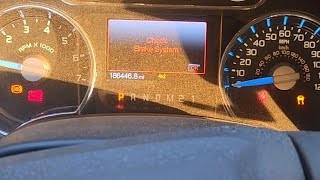
- ABS and/or Traction Control warning lights are on
- Speedometer is inaccurate or reads zero
- Transmission shifts harshly, erratically, or at the wrong times
- Cruise control does not work
- Flashing Overdrive (O/D) light or Wrench light
- "Hill Descent Control Fault" message on the instrument cluster
- Replacing the Output Shaft Speed (OSS) sensor on the transmission. While this sensor exists, it is used internally by the transmission for shift strategy and does not provide the primary vehicle speed signal to the PCM for this generation of F-150. Replacing it will not fix a P0500 code.
- Replacing the rear differential speed sensor. While some older Fords used a sensor on the rear differential for vehicle speed, on the 2009-2014 models, speed is calculated from all four wheel sensors, not a single sensor on the driveline.
Most Likely Causes
- Faulty ABS Wheel Speed Sensor 🔴 High Probability → Shop ABS Wheel Speed Sensor The wheel speed sensors are exposed to harsh conditions (water, dirt, road salt, debris) which can lead to internal failure over time. The front sensor wiring also flexes with the steering, increasing the chance of a break.
How to confirm: Use a scan tool capable of reading live ABS data (like FORScan for Fords). Drive the vehicle and monitor the speed reading from all four sensors. The faulty sensor will read erratically, lag behind the others, or show zero speed. Often, a specific ABS code (like C1145, C1155, etc.) will point directly to the failing sensor. NHTSA ODI #11553968 documents a case where a dealer mechanic retrieved code P0500 and specifically related the failure to a wheel speed sensor.
Typical fix: Replace the faulty wheel speed sensor. 🎬 Watch: How to diagnose and replace a front ABS sensor The front sensors are often sold as a harness assembly.
Est. part cost: $30-$60 - Damaged Wheel Speed Sensor Wiring or Connector 🔴 High Probability → Shop ABS Wheel Speed Sensor Wiring harnesses, especially for the front wheels, are susceptible to damage from road debris, corrosion, or fatigue from suspension and steering movement. Aftermarket modifications like lift kits or even previous repairs can sometimes lead to improperly secured harnesses that chafe against the frame or suspension components.
How to confirm: Visually inspect the wiring harness leading to each wheel speed sensor for any signs of chafing, breaks, melting, or corrosion in the connector. Wiggle the connector and wiring while monitoring live sensor data to see if the signal drops out. A user on Ford Truck Enthusiasts found that a poorly installed T-tap splice from an aftermarket brake controller on the VSS signal wire to the PCM was the cause of his P0500.
Typical fix: Repair the broken wire or replace the pigtail connector. In some cases, the entire sensor and harness assembly is replaced. Motorcraft pigtail connectors like WPT-1254 or WPT-984 are common replacements.
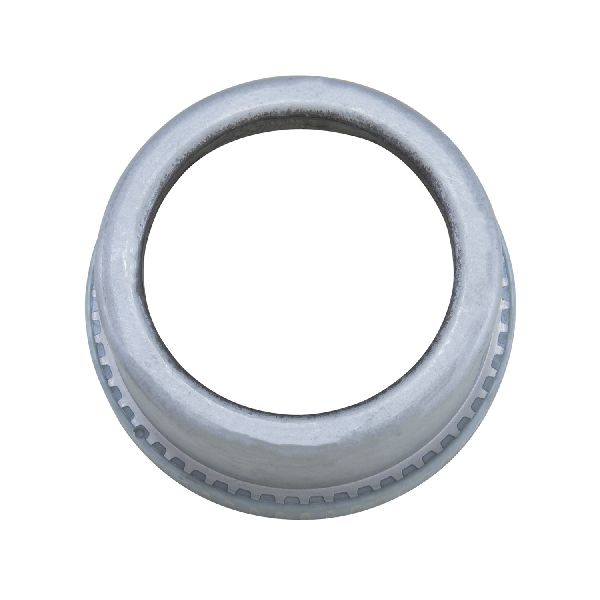
Est. part cost: $15-$40 for a pigtail - Damaged ABS Tone Ring 🟡 Medium Probability On the rear axle, the tone rings can become cracked, damaged by debris, or covered in rust, leading to an incorrect signal. For the front wheels on this generation, the magnetic encoder is integrated into the wheel hub/bearing assembly and is not serviceable or visually inspectable.
How to confirm: For the rear, remove the wheel speed sensor and visually inspect the tone ring through the mounting hole. Look for missing teeth, cracks, or heavy corrosion. For the front, if a new sensor doesn't fix the issue and wiring is good, the hub itself is the likely culprit.
Typical fix: Clean the rear tone ring if it's just dirty. If a rear ring is damaged, the axle shaft may need replacement. If a front ring is damaged, the entire wheel hub and bearing assembly must be replaced.
Est. part cost: $150-$300 for a wheel hub assembly - Faulty ABS Control Module ⚪ Low Probability → Shop ABS Control Module
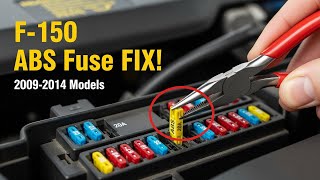
How to confirm: This is a process-of-elimination diagnosis. If all wheel speed sensors, wiring, and tone rings have been confirmed to be good, but the vehicle speed signal is still absent or incorrect (and no other communication codes are present), the ABS module itself may be the cause. This often requires advanced diagnostics to confirm power, ground, and CAN bus communication 🎬 Check this guide to find and replace ABS module fuses at the module.
Typical fix: Replace and program the ABS control module.
Est. part cost: $200-$700+
Rare But Worth Checking
- Faulty Powertrain Control Module (PCM): This is extremely rare. Before condemning the PCM, all other possibilities related to the ABS system and the communication network between the ABS module and PCM must be exhaustively ruled out.
- CAN Bus Communication Failure: A break in the communication wiring between the ABS module and the PCM can cause this code. This will usually be accompanied by other communication-related (U-prefix) trouble codes, such as U0121 (Lost Communication with ABS Module).
- Cross-Manufacturer Transmission Issues: → Shop Transmission Assembly While involving a different Ford model, NHTSA ODI #10069274 notes that a P0500 code can sometimes coincide with a transmission that "kicks in and out," suggesting that speed sensor faults can significantly impact shift quality across various Ford platforms.
Diagnosis Steps
- Scan for Codes: Use an OBD-II scanner that can read codes from all modules, including the PCM and ABS (e.g., FORScan). Document all P, C, and U codes present.
- Check for ABS Codes: Pay close attention to any C-codes. A code for a specific wheel speed sensor (e.g., C1155 for Front Left) is your primary lead and the most likely cause.
- Monitor Live Data: Access the live data stream for the ABS module. Watch the output from all four wheel speed sensors while driving slowly (5-10 mph). All four should read nearly identically. A sensor that reads 0, is erratic, or lags behind the others is the faulty one.
- Visual Inspection: Based on the live data, inspect the suspect wheel speed sensor and its wiring harness. Look for obvious damage, corrosion on the connector pins, or signs of the harness rubbing against suspension components or the frame. Check for broken plastic clips that could let the wire hang loose.
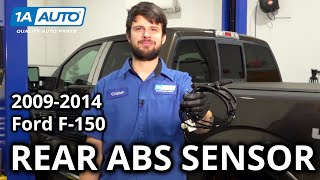
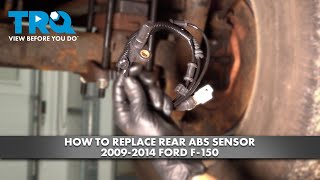
- Inspect the Tone Ring (Rear Only): If a rear sensor is suspect and the sensor/wiring appear intact, remove the sensor and inspect the tone ring on the axle shaft 🎬 See this walkthrough for replacing a rear ABS sensor for damage, rust buildup, or debris.
- Test the Circuit: If no visual faults are found, use a multimeter to check for proper voltage and ground at the sensor connector and test for continuity on the signal wires between the sensor and the ABS module. Be aware that disconnecting the sensor with the key on can set additional faults.
- Isolate the Fault: If all sensors, wiring, and tone rings are confirmed good, the fault may lie with the ABS control module or the communication line to the PCM.
Parts You'll Likely Need
- ABS Wheel Speed Sensor
(OEM #Motorcraft BRAB-391 (Front, fits many 2011-2014 models) or BRAB-319. Part numbers can vary by year, drivetrain (2WD/4WD), and specific options like Hill Descent Control. Always verify with VIN.)— This is the most common failure point for a P0500 code on this vehicle, as it's the source of the speed signal.
Trusted brands: Motorcraft, Bosch, Delphi, Standard Motor Products (SMP)
OEM price range: $50-$80
Aftermarket price range: $30-$60
Related Codes That Often Appear With This One
- C1145, C1155, C1165, C1175 — These are ABS codes that point to a specific wheel speed sensor circuit failure (Front Right, Front Left, Rear Right, Rear Left, respectively). They are extremely helpful in pinpointing the exact cause of the P0500.
- B1342 — This is an ABS module fault code. If seen with P0500, it strongly suggests the problem lies within the ABS module itself or its internal power supply.
- C1299 — This ABS code indicates a failure in the left rear wheel speed sensor circuit. It often appears alongside P0500 and helps confirm the fault location.
Technical Service Bulletins (TSBs) & Recalls
- TSB 15-0137: While not directly for P0500, this TSB addresses a common issue where the fuel pump fuse (F27) in the battery junction box overheats. This can cause a no-start or stall and may trigger a variety of seemingly unrelated DTCs due to voltage fluctuations. It's a critical reliability fix for this platform.
Platform-Specific Known Issues
- Wiring harness routing is critical. A common owner-reported failure is damage to the front ABS sensor wire after it comes loose from its mounting clips and makes contact with the tire or suspension components. This can happen after suspension work or just due to age and vibration.
- Corrosion within the ABS sensor connector is another frequent point of failure, especially in regions that use road salt. It's recommended to app
Mechanic-Grade Diagnostic Values
- ABS Wheel Speed Sensor Resistance — expected: 780 - 1900 ohms. A key indicator is that all sensors should have similar readings.. Failure: A reading of infinite resistance (open circuit), zero resistance (short circuit), or a value significantly different from the other sensors on the vehicle.
- ABS Module Ground Resistance — expected: Less than 1.0 ohm.. Failure: Resistance greater than 1.0 ohm indicates a poor ground connection, which can cause communication failures and various ABS codes. One owner reported a reading of 70 ohms at the ground terminal, which was traced to a corroded ground point.
- ABS Module Power Supply — expected: Battery voltage (approx. 12V) at Pin 1 (Yellow-Red wire) of connector C135 with key on.. Failure: Low or no voltage indicates a problem with the power supply circuit, such as a blown fuse or a break in the wire.
Scan Tool Commands That Help
- FORScan: ABS Module Configuration (AS-BUILT format) — When replacing the ABS module with a used unit, the VIN from the donor vehicle will be stored, causing a mismatch code. This function allows you to write your truck's VIN to the used module to clear the fault.
- FORScan: PCM - Module Configuration (Tire Size) — If oversized or undersized tires have been installed, the PCM must be recalibrated. An incorrect tire size can cause the reported wheel speed to conflict with other sensor data, potentially triggering a P0500. This function allows you to input the new tire circumference to correct the speedometer and shift points.
- FORScan / IDS: ABS Service Bleed — After replacing the ABS hydraulic control unit (HCU) or if air has entered the ABS module, a standard brake bleed is insufficient. This automated procedure cycles the internal ABS valves and pump to purge all trapped air from the system.
- FORScan / IDS: Run Self-Test — After performing a repair, running the ABS module self-test will confirm if the fault has been resolved and can help verify communication with the module.
Wiring & Ground Locations
- ABS Module — Under the hood on the driver's side, mounted to the hydraulic control unit, in front of the brake master cylinder.. This is the central computer for the wheel speed sensors. All sensor wiring terminates here, and it sends the final speed signal to the PCM.
- C135 — The main electrical connector at the ABS control module.. This is the primary point for testing power, ground, and individual wheel speed sensor circuits going into the module. Corrosion or pushed-out pins here can cause a P0500.
- G108 — On the driver's side (Left) fender, near the air intake tube.. This is a primary ground point for the ABS module. A corroded or loose connection here can cause high resistance in the ground circuit, leading to module communication errors and codes like P0500.
- Power Distribution Box Fuses — Under-hood fuse box above the radiator.. The ABS module and pump are protected by several fuses. A blown fuse will cut power and cause a P0500. Key fuses for 2009-2014 models include Fuse #36 (30A), Fuse #47 (60A for the pump), and Fuse #54.
Real Owner Repair Stories
- Ford F150 Forum (2014 F-150 XLT) — Brake warning message, check advancetrac message, ABS light on.
❌ Tried (didn't work) Attempting to read/erase codes with FORScan, but it was unable to communicate with the ABS module.
✅ What actually fixed it The owner performed pinpoint tests from the service manual and found high resistance (70 ohms vs. spec of <0.5 ohms) on the ABS module ground circuit. The ground point (G108) near the driver's side front of the engine bay was corroded. Cleaning the ground connection restored communication and resolved the issue. - Ford Truck Enthusiasts Forum (2010 F-150 XLT SCREW, 5.4L, 4x4) — Check brake system message, ABS and brake lights on, ABS/traction control inoperative, code C1165 (right rear sensor input circuit failure).
❌ Tried (didn't work) Visual inspection of wiring showed no obvious issues.
✅ What actually fixed it The user replaced the right rear wheel speed sensor to fix the C1165 code, which is a direct cause for a P0500. The forum provided guidance on how to test and replace the sensor. - NHTSA ODI #11553968 — An owner reported that their vehicle displayed warning lights on the instrument panel. Upon taking it to a local dealer, a mechanic diagnosed the issue and retrieved DTC P0500, attributing the failure to a wheel speed sensor.
Diagnostic Flowchart
Other Known Issues on This Vehicle
Issues unrelated to this code that are worth knowing about as an owner of this generation:
- Molded Lead Frame (6R80 Transmission) Failure 🔴 High — Common, especially on 2011-2013 models. Can occur anywhere from 70k to 150k+ miles. Symptoms include sudden, harsh downshifting to 1st or 2nd gear at highway speeds, erratic speedometer, and wrench light. (Ref: Ford Customer Satisfaction Program 19N01 extended the warranty for this part to 10 years/150,000 miles, but has since expired for most vehicles.)
- Fuse 27 (Fuel Pump) Relocation 🔴 High — Very common across all 2009-2014 models. The original fuse location in the Battery Junction Box overheats, melts the fuse and holder, causing a crank-no-start or stalling condition. (Ref: TSB 15-0137 provides instructions for a relocation kit (Part No. EL3Z-14293-A) to move the fuse to a more robust location.)
- 5.4L 3V Cam Phaser / VCT Solenoid Failure 🔴 High — Extremely common on 2009-2010 models with the 5.4L engine. Causes a distinct diesel-like ticking or knocking sound at idle that may quiet down with RPMs. If ignored, can lead to catastrophic engine failure.
- 3.5L EcoBoost Intercooler Condensation 🟠 Medium — Primarily affects 2011-2012 models, especially in humid climates. Moisture can build up in the intercooler and be ingested by the engine during hard acceleration, causing a sudden shudder, misfire, and loss of power. (Ref: Ford issued TSBs to address this, including revised intercooler designs and PCM calibrations.)
- Electric Power Assisted Steering (EPAS) Failure 🔴 High — A known issue where the electronic steering rack can fail suddenly, resulting in a complete loss of power steering and a "Service AdvanceTrac" message. It is a costly repair. (Ref: Multiple recalls and customer satisfaction programs have been issued for various model years within this generation.)
- Brake Vacuum Pump Failure (3.5L EcoBoost) 🟠 Medium — Some 2013-2014 models with the 3.5L EcoBoost may experience a failure of the mechanical brake vacuum pump, leading to a hard brake pedal and reduced braking assist. (Ref: TSB SSM 50876 addresses service for the brake vacuum pump.)
Used vs. New Parts: Buying Guide for This Vehicle
When a used part is the smart pick: A used ABS module from a junkyard can be a cost-effective option, but ONLY if you have access to FORScan or a dealer-level scan tool. The module is vehicle-specific and MUST be reprogrammed with your truck's VIN and 'As-Built' data to function correctly and avoid a persistent VIN mismatch error code. Wiring pigtails are also excellent candidates for used parts.
Donor-vehicle mileage cap: roughly under 150000 miles for the part to have meaningful remaining life.
What to inspect on the donor part:
- For ABS modules, check for a matching part number. Note the VIN of the donor vehicle if possible.
- Inspect the connector pins on the module for any signs of corrosion, moisture, or damage.
- For wiring pigtails, ensure there is enough wire length for splicing and that the connector's locking tabs and seals are intact.
OEM-only on this vehicle (don't cheap out):
- ABS Control Module: While used OEM is an option with programming, avoid aftermarket new modules. They have a high failure rate and often cause communication issues. The safest, though most expensive, option is a new Motorcraft module from a dealer. A highly recommended alternative is sending your original module to a specialized repair service.
Aftermarket brands forum-validated for this vehicle:
- Standard Motor Products (SMP)
- Bosch
- Delphi
Brands owners have reported issues with on this vehicle:
- Ultra-cheap, no-name sensors from online marketplaces often have high failure rates or incorrect internal resistance, leading to immediate or premature failure.
Real Owner Stories
Aggregated from forums and TSBs cited above. Mileages and costs reflect what owners reported in those sources.
2014 Ford F-150
Symptoms: ABS, Parking Brake, and Hill Descent lights came on. Code C1155 was present. Lights would return specifically when reaching 35km/h even after a sensor change.
What fixed it: The source indicates this required further investigation into the wiring or the wheel hub/bearing assembly as the sensor alone did not resolve it.
Source hint: F150Forum.com thread titled 'c1155'
2011-2013 Ford F-150 (6R80 Transmission) — ~110000 miles
Symptoms: Sudden, harsh downshifting to 1st or 2nd gear at highway speeds, erratic speedometer, and wrench light.
What fixed it: Replacement of the Molded Lead Frame in the 6R80 transmission.
Source hint: Known issues section regarding Molded Lead Frame failure
Ford F-150
Symptoms: The speedometer and ABS were receiving a signal, but the PCM was not, resulting in a P0500 code.
What fixed it: Repairing a faulty T-tap splice on the signal wire that had been installed for an aftermarket Banks Brake system.
Source hint: Ford-Trucks.com thread 'p0500-vss-fault-fixed-with-help-of-ae'
Related OBD-II Codes
Frequently Asked Questions
My 2014 F-150 has ABS and Hill Descent lights on with code C1155; will a new sensor fix it?
Is the P0500 code on my F-150 caused by a sensor on the transmission?
Could a faulty fuel pump fuse cause the various warning lights associated with P0500?
What specific part should I look for if my front ABS sensor wiring is damaged?
Why did my speedometer stop working and my transmission start shifting harshly?
Can aftermarket parts like a brake controller cause a P0500 code?
Helpful Videos

We Have This Part in Stock

The information in this article is provided for general reference and educational purposes only. Vehicle specifications, procedures, and part compatibility can vary by production date, trim level, and region. Always consult your vehicle's factory service manual and verify part numbers before purchasing or performing repairs. Safety-critical components such as airbags, seat belts, and braking systems should be installed by a qualified professional.
- Ford F-150:
- 🧭 Diagnostic Flowchart
- 🎬 Helpful Videos
- 🛍️ Shop This Part
- What's Unique About the 2009-2014 Ford F-150
- Symptoms You May Notice
- Most Likely Causes
- Rare But Worth Checking
- Diagnosis Steps
- Parts You'll Likely Need
- Related Codes That Often Appear With This One
- Technical Service Bulletins (TSBs) & Recalls
- Platform-Specific Known Issues
- Mechanic-Grade Diagnostic Values
- Scan Tool Commands That Help
- Wiring & Ground Locations
- Real Owner Repair Stories
- Other Known Issues on This Vehicle
- Used vs. New Parts: Buying Guide for This Vehicle
- Real Owner Stories
- 2014 Ford F-150
- 2011-2013 Ford F-150 (6R80 Transmission) — ~110000 miles
- Ford F-150
- Related OBD-II Codes
- Frequently Asked Questions
- 🎟️ Get 5% Off