

P0500 on 2010-2017 GMC Terrain: Causes and Fixes for Vehicle Speed Sensor Fault
On a 2010-2017 GMC Terrain, code P0500 is almost always caused by a problem with the wheel speed sensing system, not a transmission sensor. The most likely culprit is a cracked or damaged magnetic reluctor ring on a wheel hub assembly, which requires replacing the entire hub (~$120-$250 OEM). A failed ABS sensor is the next most likely cause.
- P0500 on a 2010-2017 Terrain indicates a fault with a wheel speed sensor, not a transmission sensor.
- The most common cause is a cracked or damaged magnetic ring on the wheel hub assembly, which is a known issue on this platform.
What's Unique About the 2010-2017 GMC Terrain
The GMC Terrain and its sibling, the Chevy Equinox, are known for a specific failure pattern that triggers the P0500 code. The magnetic reluctor ring (also called a tone ring), which is integrated into the wheel hub and bearing assembly, is prone to cracking or breaking apart due to rust and exposure. This often leads to a misdiagnosis where the wheel speed sensor is replaced, but the problem persists because the damaged ring was the true cause. The issue is so common that experienced technicians and owners often inspect the ring before considering replacing the sensor itself. A video diagnosis on a 2017 Equinox clearly shows how to inspect the ring with a borescope camera to confirm it's broken before disassembly.
Symptoms You May Notice
- Check Engine Light is on
- ABS warning light is on
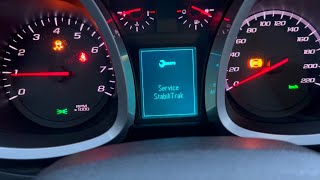
- "Service StabiliTrak" or "Service Traction Control" message is displayed
- Cruise control is inoperative
- Speedometer reads 0 mph or behaves erratically
- Transmission may shift harshly or at incorrect times
- AWD system may be disabled
- Replacing only the ABS wheel speed sensor without first inspecting the magnetic reluctor ring on the wheel hub assembly. If the ring is cracked, a new sensor will not fix the issue.
- Replacing a transmission output speed sensor. On this platform, the vehicle speed is derived from the ABS wheel speed sensors, not a dedicated VSS on the transmission.
Most Likely Causes
- Damaged/Cracked Magnetic Reluctor Ring on Wheel Hub 🔴 High Probability The design exposes the magnetic ring on the hub assembly to the elements, leading to rust buildup underneath, which can crack the ring or cause pieces to break off. This is a well-documented failure on both the Terrain and Equinox.
How to confirm: After identifying the suspect wheel with a scan tool, visually inspect the magnetic ring on the back of the hub assembly. A borescope camera can be used to inspect the ring without removing the wheel hub. Look for visible cracks, missing chunks, or significant rust buildup. In some cases, the ring may be missing entirely.
Typical fix: The reluctor ring is not sold separately from the hub by GM. The entire wheel hub and bearing assembly for the affected wheel must be replaced. 🎬 Watch: How to replace the front wheel bearing
Est. part cost: $120-$250 - Failed ABS Wheel Speed Sensor 🟡 Medium Probability → Shop ABS Wheel Speed Sensor Sensors are exposed to heat, vibration, and moisture at the wheel, which can lead to internal failure or damage over time. They can also be damaged by a failing reluctor ring or a fracturing half-shaft anti-click washer as described in TSB 19-NA-103.
How to confirm: Use a scan tool to monitor live data from all four wheel speed sensors while driving. The sensor with the erratic or dropping signal is the faulty one. If the reluctor ring is visually intact, the sensor is the next likely cause.
Typical fix: Replace the ABS wheel speed sensor on the affected wheel. It is recommended to use an OEM or high-quality aftermarket brand like ACDelco, as cheap sensors can cause issues.
Est. part cost: $30-$60 - Damaged Wiring or Connector ⚪ Low Probability The wiring harness to the wheel speed sensor can be damaged by road debris, improper routing, or corrosion in the connector pins from water intrusion. A common failure point is internal wire breakage inside the insulation near the connector from repeated suspension movement.
How to confirm: Visually inspect the wiring harness from the sensor to its connection point in the wheel well. Check for chafed wires, breaks, or green corrosion inside the connector plug. Gently pull on the wires at the connector; if the insulation stretches, the internal copper wire is broken.
Typical fix: Repair the broken section of wire or replace the connector pigtail. Ensure the harness is properly secured away from moving parts.
Est. part cost: $15-$40
Rare But Worth Checking
- Faulty ABS Control Module: → Shop ABS Control Module This is rare, but if a wheel speed sensor and its wiring check out, and the code persists, the module that interprets the signals could be at fault. This typically requires professional diagnosis and programming.
- Fractured Half Shaft Anti-Click Washer: GM TSB 19-NA-103 describes a condition where an 'anti-click washer' on the front half shaft can fracture. Debris from this washer can damage the nearby wheel speed sensor, causing various ABS/TCS codes including C0500-C050A. The fix is to remove and discard the washer and inspect/replace the WSS if damaged.
Diagnosis Steps
- Connect an OBD-II scanner capable of reading ABS codes and live data.
- Check for any ABS-specific codes (e.g., C0035, C0040) to identify which wheel is reporting the fault. Note any symptom bytes (e.g., 0F, 18, 5A) which provide more detail.
- Access the live data stream for all four wheel speed sensors.
- Safely drive the vehicle while an assistant monitors the data. Observe which sensor's reading drops to zero, jumps erratically, or doesn't match the other three.
- Raise and secure the vehicle to access the suspect wheel.
- Visually inspect the ABS wheel speed sensor and its wiring harness for any signs of physical damage, chafing, or corrosion.
- Carefully inspect the magnetic reluctor ring on the back of the wheel hub assembly. Use a light and mirror or a borescope camera for a clear view. Look for cracks, missing sections, or heavy rust/debris.
- If the ring is damaged, the wheel hub assembly is the cause. If the ring is intact and wiring looks good, the wheel speed sensor is the most likely cause.
- If it is a front wheel, inspect the half shaft for a broken or missing 'anti-click' washer, as noted in TSB 19-NA-103, which could have damaged the sensor.
Parts You'll Likely Need
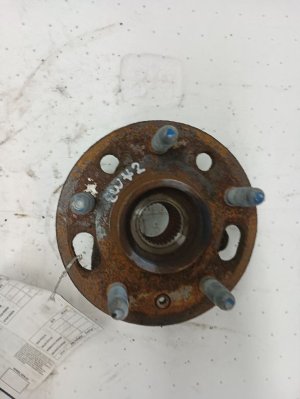
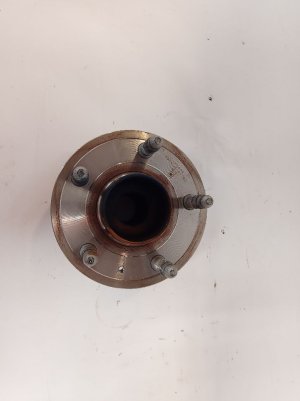
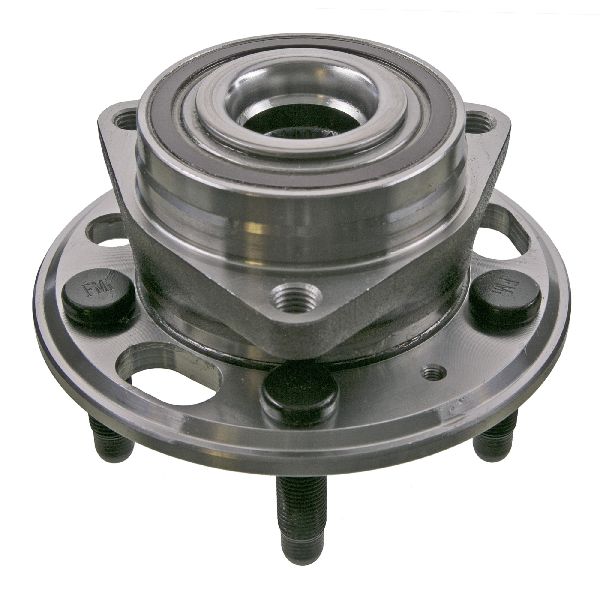
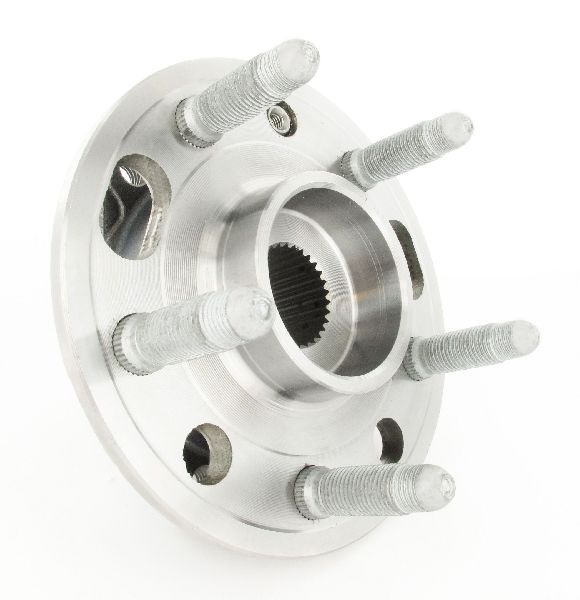
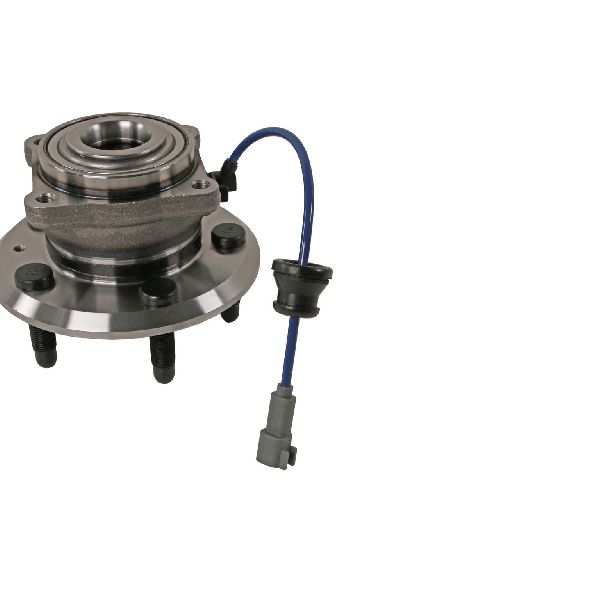
- Front Wheel Hub and Bearing Assembly
(OEM #13546785)— This is the most common failure. The integrated magnetic reluctor ring cracks or breaks, requiring the replacement of the entire assembly.
Trusted brands: ACDelco, Timken, SKF, MOOG
OEM price range: $120-$250
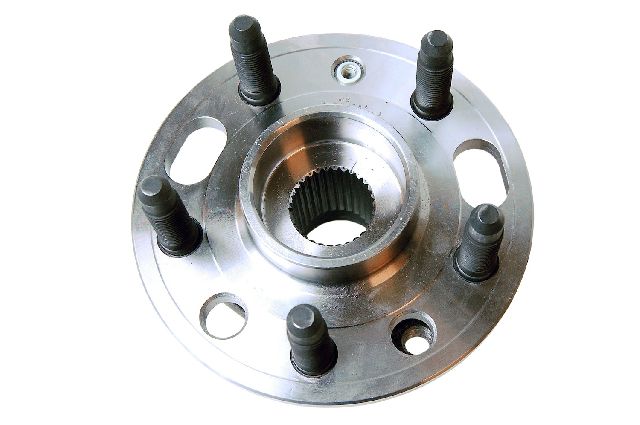
Aftermarket price range: $50-$150 - Rear Wheel Hub and Bearing Assembly
(OEM #25979186)— If the failure is at a rear wheel, its hub assembly must be replaced for the same reason as the front 🎬 Watch: Rear wheel hub replacement on AWD models (damaged reluctor ring).
Trusted brands: ACDelco, Timken, SKF, MOOG
OEM price range: $170-$280
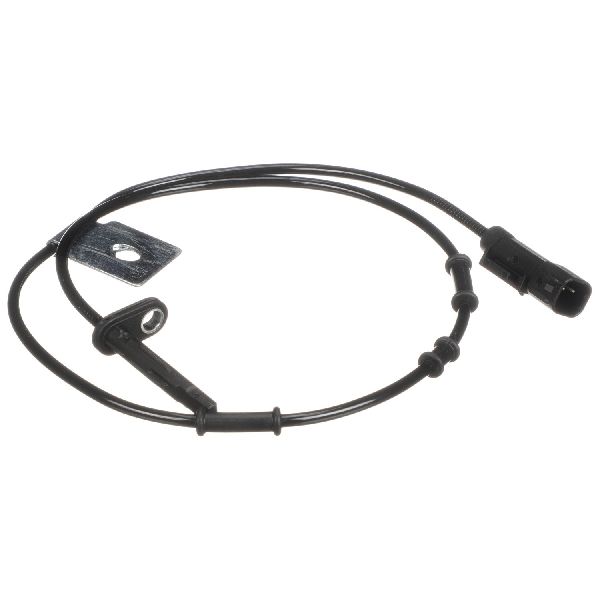
Aftermarket price range: $60-$160 - ABS Wheel Speed Sensor
(OEM #23348259)— If the reluctor ring is intact, the sensor itself is the next most likely part to have failed.
Trusted brands: ACDelco, Delphi, NTK
OEM price range: $40-$70
Aftermarket price range: $20-$45
Related Codes That Often Appear With This One
- C0035 — This is the ABS code for a fault in the Front Left wheel speed sensor circuit, pinpointing the location of the problem.
- C0040 — This is the ABS code for a fault in the Front Right wheel speed sensor circuit, pinpointing the location of the problem.
- C0045 — This is the ABS code for a fault in the Rear Left wheel speed sensor circuit, pinpointing the location of the problem.
- C0050 — This is the ABS code for a fault in the Rear Right wheel speed sensor circuit, pinpointing the location of the problem.
Technical Service Bulletins (TSBs) & Recalls
- TSB 19-NA-103: Notes that a fracturing front half shaft 'anti-click washer' can damage the wheel speed sensor, causing ABS/TCS lights and codes like C0500. The fix is to remove the washer and replace the sensor if damaged.
Mechanic-Grade Diagnostic Values
- Wheel Speed Sensor Resistance — expected: 800 to 1,400 Ohms (typical for passive sensors, compare to a known-good sensor on the same vehicle).. Failure: A reading of open circuit (infinite resistance) or short circuit (zero resistance), or a value significantly different from the other sensors on the vehicle.
- Wheel Speed Sensor AC Voltage Output — expected: At least 200-250 millivolts (0.2-0.25 VAC) when spinning the wheel by hand at about one revolution per second.. Failure: Voltage is significantly below 200mV or is non-existent, indicating a weak or dead sensor, or an excessive air gap.
- Wheel Hub Bearing End Play — expected: Less than 0.005 inches.. Failure: Any perceptible wobble or a measurement greater than 0.005 inches indicates a worn bearing, which can cause the reluctor ring to move erratically and produce a bad signal.
Hidden / Shadow Codes Worth Checking
- C0035/C0040/C0045/C0050 with Symptom Byte '0F': Indicates an 'Erratic Signal'. This strongly points to a physically damaged, cracked, or debris-covered magnetic reluctor ring on the hub assembly. (see via A professional scan tool capable of reading GM-specific chassis codes and symptom bytes, such as a GM Tech2 or GDS2.)
- C0035/C0040/C0045/C0050 with Symptom Byte '18': Indicates 'Signal Amplitude Less Than Minimum'. This can be caused by an excessive air gap between the sensor and ring (due to rust buildup or improper installation) or a failing sensor that is producing a weak signal. (see via A professional scan tool capable of reading GM-specific chassis codes and symptom bytes.)
- C0035/C0040/C0045/C0050 with Symptom Byte '5A': Indicates a 'Signal Rationality Failure / Not Plausible'. The EBCM sees a signal from one wheel that is illogical compared to the others (e.g., one wheel reads 0 mph while the others read 30 mph). This is often caused by a broken or severely damaged encoder ring. (see via A professional scan tool capable of reading GM-specific chassis codes and symptom bytes.)
- C0035/C0040/C0045/C0050 with Symptom Byte '06': Indicates 'Low Voltage/Open' in the sensor circuit. This points directly towards a wiring issue, such as a broken wire, corroded connector, or a complete internal failure of the sensor itself. (see via A professional scan tool capable of reading GM-specific chassis codes and symptom bytes.)
Wiring & Ground Locations
- EBCM Connector — In the engine compartment, attached to the ABS hydraulic modulator valve assembly, near the brake master cylinder.. This is the central connection point for all wheel speed sensors. Checking for power, ground, and signal integrity at this connector can help determine if the fault is with a sensor, wiring, or the module itself.
- G110 / G112 — G110 is on the right rear of the engine. G112 is on the lower left front of the 2.4L engine.. These are engine block grounds. While not the primary ground for the EBCM, poor engine grounds can introduce electrical noise that may interfere with sensitive sensor signals, including wheel speed sensors.
- WSS Connector Pinout (at sensor) — At each wheel hub, connecting the sensor to the body harness.. This is a 2-pin connector. One pin is the 12V power supply from the EBCM, and the other is the signal return. Testing for voltage and signal can be done here, and it is a common point for corrosion and wire damage.
Real Owner Repair Stories
- GM-Trucks.com forum user 'OneShotOneKill' (2007-2013 generation GM truck (similar ABS system)) — ABS and Stabilitrak lights on, DIC messages for 'Service Traction Control' and 'Service Stabilitrak'. Codes C0035, C0040, and C0245 appeared simultaneously.
❌ Tried (didn't work) The user noted that both front hub assemblies had already been replaced within the last 60k miles, suggesting they were not the immediate cause.
✅ What actually fixed it Another user ('Coby7') pointed out that these three codes can set together if there is a significant difference in wheel speed, such as from very low tire pressure on one of the front tires, causing a >25% speed differential. The fix is to correct the tire pressure and clear the codes.
OEM Part Supersession History
13546785→13564982— This part number has been superseded multiple times by GM. This is common for parts that are revised for improved durability or manufacturing efficiency.
Heads up: While listed for the Terrain, part number 13546785 is also used on many other GM vehicles like the Malibu and Impala, sometimes on the rear. Always verify the correct part for the specific axle (front/rear) of your Terrain.
Model Year Variations Within This Range
- 2010-2016: Front wheel hubs for 2010-2016 models are noted as having a pinhole for a brake rotor retaining screw. This feature may not be present on hubs for 2017 models, though the hub is otherwise compatible across the 2010-2017 range.
- 2010-2017: The bolt pattern for the wheels on the 2010-2017 GMC Terrain is 5x120mm. This is different from the second generation (2018+) which uses 5x115mm. This is important when sourcing wheels but does not affect the hub replacement for the P0500 code.
Diagnostic Flowchart
Other Known Issues on This Vehicle
Issues unrelated to this code that are worth knowing about as an owner of this generation:
- Excessive Oil Consumption (2.4L Ecotec) 🔴 High — Very common on 2010-2013 models. Caused by prematurely worn piston rings. Can lead to engine damage if oil level is not monitored closely. (Ref: Multiple Special Coverage Adjustments (e.g., #16118) were issued for certain model years, extending warranties for piston ring replacement.)
- Stretched/Failed Timing Chain (2.4L Ecotec) 🔴 High — Common around 80,000-120,000 miles. Symptoms include a rattling noise on cold starts and codes like P0016/P0017. Can cause catastrophic engine failure if the chain breaks.
- Faulty PCV System / Rear Main Seal Leak 🟠 Medium — A known issue where the PCV orifice in the intake manifold can freeze or clog, leading to excessive crankcase pressure that blows out the rear main seal.
- High-Pressure Fuel Pump Failure (V6) 🟠 Medium — Less common than 2.4L issues, but the V6 engines can experience failure of the high-pressure fuel pump, leading to stalling and drivability problems.
- HVAC System Problems 🟡 Low — Owners report various issues including blend door actuator failures (clicking from dash), heater core blockages, and unpleasant odors from the vents.
Used vs. New Parts: Buying Guide for This Vehicle
When a used part is the smart pick: For this specific repair, obtaining used parts is strongly discouraged. The primary failure part, the wheel hub assembly, is a wear-and-tear item. A used hub from a salvage yard has unknown mileage and is likely suffering from the same rust and environmental exposure that causes the reluctor ring to fail. The cost savings are not worth the risk of premature failure and repeating the labor.
What to inspect on the donor part:
- Not applicable, as used hubs are not recommended.
OEM-only on this vehicle (don't cheap out):
- No parts for this job are strictly OEM-only, as high-quality aftermarket brands offer reliable alternatives.
Aftermarket brands forum-validated for this vehicle:
- Wheel Hub Assemblies: Timken, SKF, MOOG, and FAG are consistently cited as premium, durable brands.
- ABS Sensors: ACDelco (OEM supplier), Delphi, and NTK are reliable choices.
Brands owners have reported issues with on this vehicle:
- Unbranded or 'white box' wheel hub assemblies from online marketplaces should be avoided. These often use lower quality bearings and seals, leading to premature noise, failure, and a repeat of the P0500 code. While brands like Detroit Axle and TRQ are popular due to low cost, they are generally considered a lower tier than premium brands like Timken or SKF.
Real Owner Stories
Aggregated from forums and TSBs cited above. Mileages and costs reflect what owners reported in those sources.
2013 GMC Terrain
Symptoms: Replaced the sensor but the problem remained; ABS and Stabilitrak lights stayed on.
What fixed it: Replacing the wheel hub assembly due to a bad tone ring.
Source hint: reddit.com/r/MechanicAdvice
2011 GMC Terrain
Symptoms: ABS/Stabilitrak lights on and an erratic signal shown on a scan tool.
What fixed it: Identified and replaced a broken magnetic ring on the hub.
Source hint: YouTube - 'GMC TERRAIN ABS STABILITRAK'
2017 Chevrolet Equinox
Symptoms: Service Stabilitrak message displayed; visual inspection via borescope showed a broken tone ring.
What fixed it: Replacement of the wheel hub assembly.
Source hint: YouTube - 'Chevy Equinox/GMC Terrain Service Stabilitrak Diagnosis' by Bill Of All Trades
2013 Chevrolet Equinox
Symptoms: ABS acting up during the winter.
What fixed it: Replacement of the wheel hub assembly due to a cracked reluctor ring caused by rust buildup.
Source hint: Unknown Forum/Blog
Related OBD-II Codes
Frequently Asked Questions
My 2010-2017 GMC Terrain is showing 'Service StabiliTrak' and the speedometer is at zero. Is there a TSB for this?
Can I just replace the magnetic reluctor ring on my Terrain's wheel hub?
I replaced the ABS sensor on my 2013 Terrain but the P0500 code and ABS lights are still there. What else could it be?
Is the P0500 code related to the excessive oil consumption issues on the 2.4L Ecotec engine?
How can I check the reluctor ring without taking the whole wheel hub apart?
What brand of replacement sensor should I use for my GMC Terrain?
Helpful Videos
Used OEM Parts in Stock
New Aftermarket Parts Available


The information in this article is provided for general reference and educational purposes only. Vehicle specifications, procedures, and part compatibility can vary by production date, trim level, and region. Always consult your vehicle's factory service manual and verify part numbers before purchasing or performing repairs. Safety-critical components such as airbags, seat belts, and braking systems should be installed by a qualified professional.
- GMC Terrain:
- 🧭 Diagnostic Flowchart
- 🎬 Helpful Videos
- 🛍️ Shop This Part
- What's Unique About the 2010-2017 GMC Terrain
- Symptoms You May Notice
- Most Likely Causes
- Rare But Worth Checking
- Diagnosis Steps
- Parts You'll Likely Need
- Related Codes That Often Appear With This One
- Technical Service Bulletins (TSBs) & Recalls
- Mechanic-Grade Diagnostic Values
- Hidden / Shadow Codes Worth Checking
- Wiring & Ground Locations
- Real Owner Repair Stories
- OEM Part Supersession History
- Model Year Variations Within This Range
- Other Known Issues on This Vehicle
- Used vs. New Parts: Buying Guide for This Vehicle
- Real Owner Stories
- 2013 GMC Terrain
- 2011 GMC Terrain
- 2017 Chevrolet Equinox
- 2013 Chevrolet Equinox
- Related OBD-II Codes
- Frequently Asked Questions
- 🎟️ Get 5% Off