

P0500 on 2003-2007 Honda Accord: Vehicle Speed Sensor Causes and Fixes
On a 7th generation (2003-2007) Honda Accord, code P0500 is almost always a failed Vehicle Speed Sensor (VSS) or a problem with its wiring connector. The sensor is located on the transmission housing. This is a very DIY-friendly fix, with aftermarket sensors costing around $25-$60 and replacement connectors under $20.
- P0500 on a 2003-2007 Accord means the computer has lost the vehicle speed signal.
- The most likely causes are a bad Vehicle Speed Sensor (VSS) on the transmission or a faulty wiring connector going to it.
- Always inspect the wiring connector first for melting or corrosion, as it's a very common failure point and a cheaper fix than the sensor.
- Symptoms include a dead speedometer, erratic shifting, and no cruise control.
- This is a straightforward DIY repair for most home mechanics, typically requiring only basic hand tools and about an hour of time.
What's Unique About the 2003-2007 Honda Accord
The 2003-2007 Accord uses a single Vehicle Speed Sensor (VSS), also known as the countershaft or output speed sensor, mounted on the transmission to determine vehicle speed. This is unlike many newer cars that rely on ABS wheel speed sensors for this data. For this specific generation, the electrical connector and its wiring are notoriously prone to failure from heat and vibration. It's very common for the connector itself to become brittle and melt, causing a poor connection that is sometimes even more frequent than sensor failure itself.
Symptoms You May Notice
- Speedometer and/or odometer is erratic or completely dead.
- Harsh, late, or unpredictable automatic transmission shifting.
- Cruise control does not work.
- Check Engine Light is illuminated
- ABS or Traction Control light may be on in some cases.
- Hesitation during acceleration.
- Replacing the transmission input shaft (mainshaft) speed sensor instead of the output shaft (countershaft/VSS) sensor. The Accord has two speed sensors on the transmission; the one that controls the speedometer and triggers P0500 is the VSS, also called the countershaft or output shaft speed sensor.
- Assuming the transmission itself is failing due to harsh shifting, when the root cause is simply a lack of speed data from a bad sensor or its wiring.
Most Likely Causes
- Failed Vehicle Speed Sensor (VSS) 🔴 High Probability → Shop Drive Shaft Sensor The VSS is an electronic component that wears out over time due to constant heat cycles and vibration from its location on the transmission housing.
How to confirm: After confirming wiring is intact, use a scan tool to watch for a vehicle speed signal while driving. If the signal remains at 0 mph or is erratic while the car is moving, the sensor is the likely cause.
Typical fix: Replace the Vehicle Speed Sensor. It is located on the back of the transmission and held on by a single 10mm bolt. 🎬 Watch: Step-by-step guide to replacing the vehicle speed sensor. Access is improved by removing the air intake box.
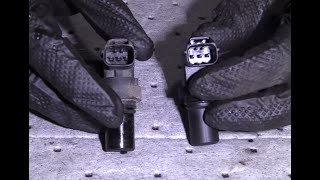
Est. part cost: $25-$60 - Damaged VSS Wiring or Connector 🔴 High Probability The wiring harness connector is located in a high-heat area on the back of the transmission and is known to become brittle, corroded, or melt, causing a poor connection. This is a very common point of failure for this code.
How to confirm: Visually inspect the connector for melted plastic, green or white corrosion on the pins, or frayed/broken wires right at the back of the connector. Wiggle the connector with the engine on to see if the speedometer needle jumps.
Typical fix: Replace the connector pigtail, which involves cutting the old connector off and splicing a new one on. In some cases, simply cleaning the contacts may work temporarily. 🎬 See how to fix P0500 without buying a new sensor.
Est. part cost: $10-$25 - Blown Fuse ⚪ Low Probability
How to confirm: Check the fuse box under the driver's side dash for a blown fuse. On many Hondas of this era, the fuse for the meter assembly is a 7.5A fuse in position #15.
Typical fix: Replace the blown fuse. If it blows again, there is a short circuit in the wiring that must be found.
Est. part cost: $1-$5
Rare But Worth Checking
- Faulty Instrument Cluster: → Shop Instrument Cluster If the VSS and wiring are confirmed good and the PCM is receiving a speed signal (viewable on a high-end scan tool), the instrument cluster (speedometer gauge) itself may be failing to display the speed.
- Faulty Powertrain Control Module (PCM): This is extremely rare. The PCM should only be considered as the cause after all other possibilities, including wiring, the sensor, and the instrument cluster, have been definitively ruled out by a professional.
Diagnosis Steps
- Confirm the P0500 code is present using an OBD-II scanner.
- Visually inspect the Vehicle Speed Sensor's electrical connector, located on the top/back of the transmission. To improve access, remove the air intake tube and air filter box. Look closely for signs of melting, corrosion on the pins, or damaged wires.
- Perform a 'wiggle test': With the vehicle on, have a helper watch the speedometer while you carefully wiggle the VSS connector and harness. If the speedometer needle jumps, the wiring or connector is faulty.
- Check the 7.5A fuse #15 in the under-dash fuse box, which often protects the meter circuit on these vehicles.
- If the wiring appears intact, connect a scan tool with live data capability. Monitor the 'Vehicle Speed' PID while driving. If it remains at 0 mph or is erratic, the problem is likely the sensor or wiring. 🎬 Watch: Professional diagnostic walkthrough for the P0500 circuit malfunction.
- If a scan tool is unavailable, you can test the circuit at the connector. Disconnect the VSS. With the key on, one wire should have ~12V power (Black/Yellow), one should have continuity to ground (Black), and the third is the signal wire (Blue/White).
- If power and ground are present at the connector, the sensor is the most likely culprit. Replace the Vehicle Speed Sensor.
- If power or ground is missing, trace the wiring back to find the open or short circuit.
- After the repair, clear the trouble code and perform a test drive to ensure the speedometer, cruise control, and transmission shifting all function correctly.
Parts You'll Likely Need
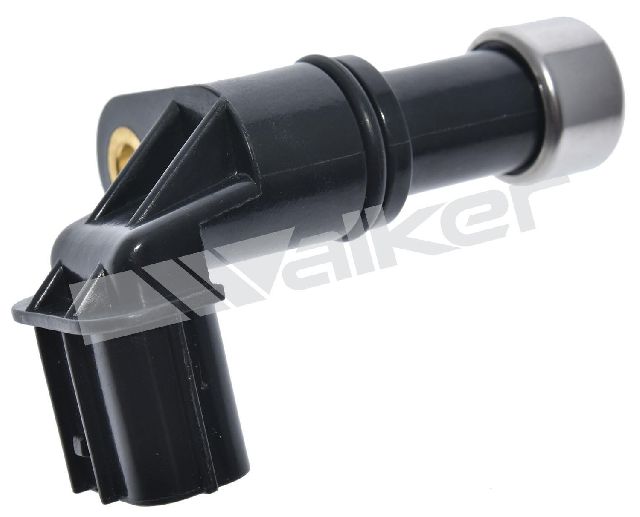
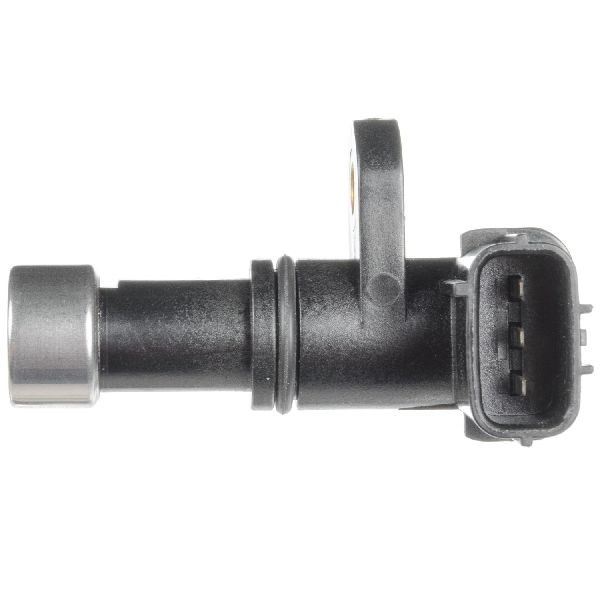
- Vehicle Speed Sensor (VSS) / Countershaft Speed Sensor
(OEM #28820-PWR-013)— This is the sensor that measures the transmission's output speed and sends the signal to the PCM and speedometer. It is the most common part to fail for this code. Note: This part is for the output/countershaft. Do not confuse with the input/mainshaft sensor (28820-PPW-013). Always verify with your vehicle's VIN.
Trusted brands: Honda (OEM - Matsushita), NTK, Standard Motor Products (SMP), Dorman
OEM price range: $80-$150
Aftermarket price range: $25-$60 - Vehicle Speed Sensor Connector Pigtail
(OEM #Dorman 645-916 (aftermarket equivalent))— The factory connector often fails from heat and vibration, causing a poor connection that triggers P0500. Replacing the pigtail by splicing it into the harness is a common and durable fix.
Trusted brands: Dorman, Standard Motor Products (SMP)
Aftermarket price range: $10-$25
Technical Service Bulletins (TSBs) & Recalls
- Honda TSB 04-017: While not directly for P0500, this TSB for certain V6 automatic transmissions involves inspecting the second gear for heat damage through the VSS port, highlighting the high-heat environment the sensor operates in.
Platform-Specific Known Issues
- The electrical connector for the VSS is a significant weak point on this platform and should always be inspected first. Many owners have fixed the P0500 code simply by replacing a melted or corroded connector pigtail. A YouTube video by 'Honda Resource' specifically shows a melted pin inside the connector as the root cause, which is a frequent finding.
Mechanic-Grade Diagnostic Values
- VSS Resistance (AT models) — expected: Approximately 400-600 Ohms. Failure: A reading outside this range indicates a faulty sensor.
- VSS Connector Pin 2 (BLK/YEL) to Body Ground — expected: Battery Voltage (with ignition ON). Failure: No voltage indicates an open in the power wire from the fuse box.
- VSS Signal Wire Voltage (at connector or PCM) — expected: Pulsing voltage between 0V and 5V as the wheel is rotated by hand (vehicle raised).. Failure: No voltage pulse indicates a bad sensor or an open in the signal wire.
- VSS Mounting Bolt Torque — expected: 115 in-lbs. Failure: N/A
Hidden / Shadow Codes Worth Checking
- 17: This is the Honda-specific DTC that corresponds to the generic OBD-II code P0500. It indicates a VSS circuit malfunction. (see via Visible on Honda's HDS (Honda Diagnostic System) scanner and some advanced OBD-II scanners.)
Scan Tool Commands That Help
- Honda HDS (or equivalent): Live Data > Vehicle Speed — This is the primary method to confirm the fault. While driving, the scan tool should display a speed that matches the speedometer. If the reading is 0, erratic, or doesn't match, it confirms a problem in the VSS circuit.
- Instrument Cluster Self-Diagnostic: → Shop Instrument Cluster Gauge Sweep Test — To rule out a faulty speedometer gauge. If the speedometer needle sweeps its full range during the self-test, the gauge itself is likely functional, pointing the diagnosis back toward the sensor, wiring, or PCM.
Wiring & Ground Locations
- VSS Connector Pin 1 (Signal) — Blue/White wire at the VSS connector. This wire runs to the PCM.. This is the signal wire. An open or short on this wire will cause a P0500 code. Continuity should be checked between this pin and the corresponding pin at the PCM.
- VSS Connector Pin 2 (Power) — Black/Yellow wire at the VSS connector.. This wire supplies battery voltage to the sensor. Lack of voltage here means a blown fuse or a break in the power wire.
- VSS Connector Pin 3 (Ground) — Black wire at the VSS connector.. This is the sensor's ground connection. A poor ground will cause incorrect readings.
- G101 — On the intake manifold plenum, on the driver's side for 4-cylinder models.. This is a main ground point for the engine harness and sensor grounds. A loose or corroded G101 can cause various sensor issues, including potentially affecting the VSS circuit.
- PCM Connector Pins (VSS Circuit) — Per Honda's diagnostic chart, the VSS signal and ground wires can be tested at ECM connector terminals. For example, testing is performed between terminals No. 71 and No. 73 on a test pin box connected to the ECM.. Allows for end-to-end testing of the VSS wiring from the PCM side, confirming if the wiring harness is intact without having to physically trace every inch of it.
Real Owner Repair Stories
- Honda-Tech Forum User (1996 Honda Civic (similar VSS system)) — CEL on, speedometer stopped working, P0500 code present.
❌ Tried (didn't work) Initially assumed the sensor was bad and planned to replace it.
✅ What actually fixed it The sensor had gotten wet. The user removed it, cleaned it with carburetor cleaner, dried it off, and reinstalled it, which resolved the problem.
OEM Part Supersession History
28820-PWR-013→N/A— This part number appears to be stable for the specified vehicle range.
Heads up: This part (output/countershaft sensor) is often confused with the input/mainshaft speed sensor (28820-PPW-013). They are not interchangeable. 28820-PWR-013 is the correct part for the speedometer and P0500 code.
Diagnostic Flowchart
Other Known Issues on This Vehicle
Issues unrelated to this code that are worth knowing about as an owner of this generation:
- Automatic Transmission Torque Converter Judder / Premature Failure 🔴 High → Shop Transmission Assembly — Very common, especially on V6 models. Can occur at any mileage but is more frequent over 80,000 miles. Often misdiagnosed as a bad torque converter when it's caused by deteriorated fluid. (Ref: Honda TSB 04-017 addresses heat buildup and gear inspection. Another TSB for later models notes that a software update and fluid change can fix judder caused by fluid deterioration.)
- Radio and HVAC Control Backlight Failure 🟡 Low — Extremely common. The circuit board within the radio unit fails, causing the backlights for the radio display and climate controls to go out. (Ref: Honda issued a warranty extension and TSB 04-027 for this issue, but it has long since expired.)
- Power Steering Feed Hose Leak (V6 Models) 🟠 Medium — Common on V6 models. The power steering fluid feed hose deteriorates from engine heat, causing fluid leaks. (Ref: A recall was issued for this problem (NHTSA ID: #10129443).)
Used vs. New Parts: Buying Guide for This Vehicle
When a used part is the smart pick: A used VSS connector pigtail from a junkyard is a viable option if the donor vehicle's harness is in good condition (not brittle or corroded). Given the low cost of new aftermarket sensors, buying a used sensor is generally not recommended unless for immediate, temporary use.
Donor-vehicle mileage cap: roughly under 120000 miles for the part to have meaningful remaining life.
What to inspect on the donor part:
- For a connector pigtail, ensure the plastic is not brittle or cracked.
- Check that the locking tab on the connector is intact and functional.
- Inspect the wire insulation for at least 6 inches back from the connector for cracks or heat damage.
- Look at the pins inside the connector for any signs of green or white corrosion.
OEM-only on this vehicle (don't cheap out):
- While not strictly 'OEM-only', the genuine Honda (Matsushita) sensor has the highest reputation for longevity. If the budget allows, it is the most reliable choice.
Aftermarket brands forum-validated for this vehicle:
- NTK
- Standard Motor Products (SMP)
Brands owners have reported issues with on this vehicle:
- Unbranded, 'white-box' sensors from online marketplaces are a gamble and have a higher reported failure rate on forums.
Real Owner Stories
Aggregated from forums and TSBs cited above. Mileages and costs reflect what owners reported in those sources.
2003-2007 Honda Accord
Symptoms: The electrical connector for the VSS was found with a melted pin inside the connector.
What fixed it: Replacing the melted or corroded connector pigtail.
Source hint: YouTube video by 'Honda Resource' cited in vehicle_specific_issues
2019 Honda Civic (Diagnostic reference for Accord)
Symptoms: P0500 code present and the speedometer was not functioning (no speedo).
What fixed it: Diagnostic process included testing continuity from the VSS connector to the ECU and checking fuse #15.
Source hint: honda-tech.com thread titled 'P0500 vss and no speedo' (1/10/2019)
Related OBD-II Codes
Frequently Asked Questions
Where is the Vehicle Speed Sensor (VSS) located on my 2003-2007 Accord, and how do I get to it?
My speedometer is dead and the car is shifting harshly; could this be a fuse issue?
Does Honda TSB 04-017 apply to my P0500 code?
I heard the VSS connector is a common problem on these Accords. What should I look for?
What are the specific wire colors for the VSS circuit if I need to test it with a multimeter?
Can I use a used VSS from a junkyard to fix my P0500 code?
Helpful Videos
We Have This Part in Stock


The information in this article is provided for general reference and educational purposes only. Vehicle specifications, procedures, and part compatibility can vary by production date, trim level, and region. Always consult your vehicle's factory service manual and verify part numbers before purchasing or performing repairs. Safety-critical components such as airbags, seat belts, and braking systems should be installed by a qualified professional.
- Honda Accord:
- 🧭 Diagnostic Flowchart
- 🎬 Helpful Videos
- 🛍️ Shop This Part
- What's Unique About the 2003-2007 Honda Accord
- Symptoms You May Notice
- Most Likely Causes
- Rare But Worth Checking
- Diagnosis Steps
- Parts You'll Likely Need
- Technical Service Bulletins (TSBs) & Recalls
- Platform-Specific Known Issues
- Mechanic-Grade Diagnostic Values
- Hidden / Shadow Codes Worth Checking
- Scan Tool Commands That Help
- Wiring & Ground Locations
- Real Owner Repair Stories
- OEM Part Supersession History
- Other Known Issues on This Vehicle
- Used vs. New Parts: Buying Guide for This Vehicle
- Real Owner Stories
- 2003-2007 Honda Accord
- 2019 Honda Civic (Diagnostic reference for Accord)
- Related OBD-II Codes
- Frequently Asked Questions
- 🎟️ Get 5% Off