

P0500 on 1999-2005 Hyundai Sonata: Vehicle Speed Sensor Malfunction Causes and Fixes
On a 1999-2005 Hyundai Sonata, code P0500 is almost always caused by a failed Vehicle Speed Sensor (VSS) on the transmission. This leads to a dead or erratic speedometer, harsh shifting, and the transmission potentially getting stuck in 3rd gear. Replacing the sensor (OEM Part #42621-39052) is a common, DIY-friendly fix with parts costing around $25-$75.
- P0500 on a 1999-2005 Sonata is most likely a bad Vehicle Speed Sensor (VSS), also known as the Output Speed Sensor (OSS).
- Symptoms are severe: harsh shifting, a non-working speedometer, and possible limp mode (stuck in 3rd gear).
- The fix is usually replacing the sensor on top of the transmission (Part #42621-39052), which is an accessible DIY job.
- Ensure you are replacing the correct sensor (Output Speed Sensor), not the nearby Input Speed Sensor.
- Always check the wiring and connector for damage before replacing parts.
What's Unique About the 1999-2005 Hyundai Sonata
On this generation of Sonata, the P0500 code almost always points to the transmission-mounted Vehicle Speed Sensor, often called the Output Speed Sensor (OSS). These cars also have an Input Speed Sensor (ISS), and a common mistake is replacing the wrong one. The ISS and OSS look similar and are mounted near each other, but they trigger different codes. P0500 specifically relates to the main vehicle speed signal the engine computer relies on for speedometer and shifting functions. A key detail for this platform is that the VSS location differs by engine: on the 2.4L I4 engine, it is on the bottom of the transaxle, while on the 2.7L V6, it is on the top of the transaxle housing near the firewall.
Generation note: This range covers the end of the third generation (EF, 1999-2001) and the facelifted fourth generation (2002-2005). The causes and repair procedures for P0500 are consistent across these model years, as they share similar powertrain components like the A4AF3/A4BF3 automatic transmission and the 2.7L Delta V6 or 2.4L Sirius II engines.
Symptoms You May Notice
- Harsh, erratic, or delayed automatic transmission shifting.
- Transmission may feel stuck in one gear (typically 3rd gear, known as limp mode).
- Speedometer reads 0 mph or behaves erratically while driving.
- Cruise control will not engage.
- Check Engine Light is on.
- ABS or Traction Control light may also illuminate in some cases.
- Replacing the Input Speed Sensor (ISS) instead of the Output Speed Sensor (OSS/VSS). They are often located near each other but serve different functions and throw different codes. P0500 is for the OSS. The input sensor is typically black, while the output sensor is often gray or green.
- Assuming the transmission itself has failed due to the harsh shifting symptoms, without first checking for trouble codes.
- Replacing an ABS wheel speed sensor. On this platform, the speedometer and P0500 code are tied to the transmission-mounted VSS, not the ABS sensors.
Most Likely Causes
- Failed Vehicle Speed Sensor (VSS) / Output Speed Sensor (OSS) 🔴 High Probability → Shop Drive Shaft Sensor The sensor is a very common failure point on many Hyundai and Kia vehicles of this era due to age, heat cycles from the transmission, and exposure to the elements.
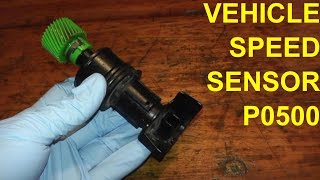
How to confirm: The sensor is the most likely cause if symptoms like a dead speedometer and harsh shifting are present. A diagnostic scan tool can be used to monitor the VSS data stream while driving; if the speed reading is zero or erratic, the sensor has likely failed. You can also test the sensor's internal resistance with a multimeter; it should be between 0.7 and 1.4 kOhms (700-1400 Ohms). You can also inspect the plastic gear on the sensor's tip for stripped or broken teeth.
Typical fix: Replace the Vehicle Speed Sensor located on the transmission housing. Access usually requires removing the air filter box assembly for the V6 engine.
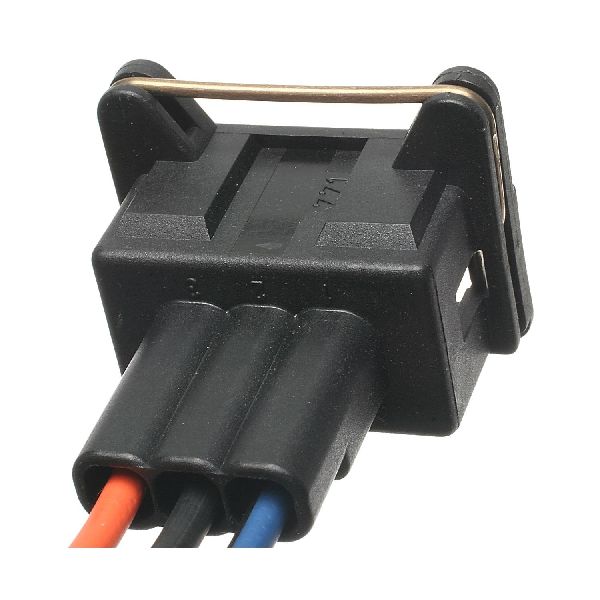
Est. part cost: $25-$75 - Damaged Wiring or Connector 🟡 Medium Probability The wiring harness leading to the sensor is exposed to engine bay heat and vibration, which can cause wires to become brittle, frayed, or corroded over time. The 3-wire pigtail connector can also corrode internally, leading to a poor connection.
How to confirm: Visually inspect the wiring harness and 3-wire connector for the VSS. Look for any signs of breaks, corrosion in the pins, or damage. Wiggle the connector and harness while monitoring live data on a scan tool to see if the signal returns intermittently. Use a multimeter to check for continuity and proper voltage at the connector.
Typical fix: Repair the damaged section of wire or replace the pigtail connector.
Est. part cost: $10-$30
Rare But Worth Checking
- Faulty Powertrain Control Module (PCM): This is very rare. The PCM should only be considered after the sensor and wiring have been thoroughly tested and confirmed to be good.
- Broken Speedometer Drive Gear: The VSS is driven by a plastic gear inside the transmission. While less common than sensor failure, this gear can strip or break, causing a loss of signal.
- Missing or Damaged Tone Ring on CV Axle: In a specific forum case, a user reported that a P0500 code was caused by a replacement CV axle that was missing the tone ring, which is read by a wheel speed sensor. While P0500 on this car is almost always the transmission VSS, it highlights the need to check recent repair work. However, other users clarified that for speedometer issues, the transmission VSS is the correct source, not the wheel sensors.
Diagnosis Steps
- Read the trouble codes with an OBD-II scanner to confirm P0500 is present. Note any other codes like P0501 or P07xx.
- Use the scanner's live data function to monitor 'Vehicle Speed'. If it remains at 0 mph while driving, the signal is lost.
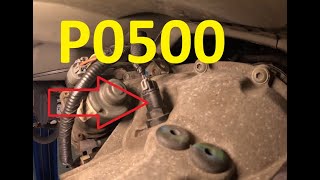
- Turn off the vehicle and locate the Vehicle Speed Sensor (VSS). For the 2.7L V6, it's on top of the transaxle near the firewall. For the 2.4L I4, it's on the bottom of the transaxle.
- Inspect the sensor's 3-wire electrical connector and wiring for any visible damage, corrosion, or loose connections.
- To test the sensor, unplug it and measure the resistance across its terminals with a multimeter. A good sensor should read between 700 and 1400 Ohms (0.7-1.4 kOhms). A reading outside this range indicates a failed sensor.
- If the sensor tests good, check the wiring. With the key on, check for a reference voltage (typically 5V) and a good ground at the connector pigtail.
- If the sensor is bad or wiring checks out, replace the sensor. It is typically held in by a single 10mm bolt.
- After replacing the sensor or repairing wiring, clear the P0500 code with the scanner and perform a test drive to ensure the speedometer and shifting have returned to normal and the Check Engine Light stays off.
Parts You'll Likely Need
- Vehicle Speed Sensor (Output)
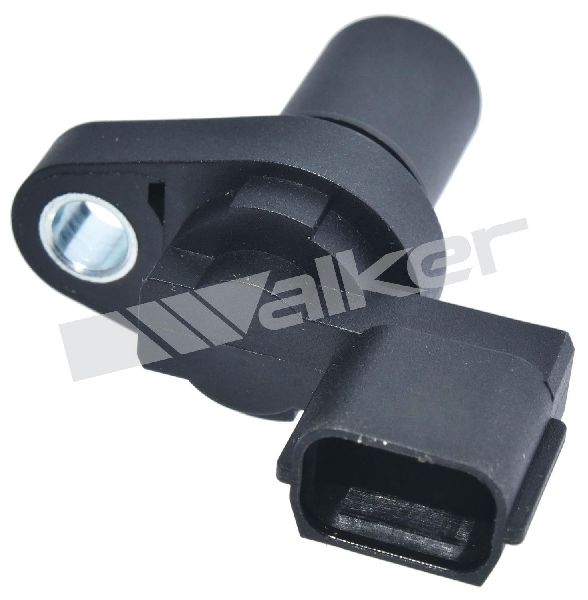
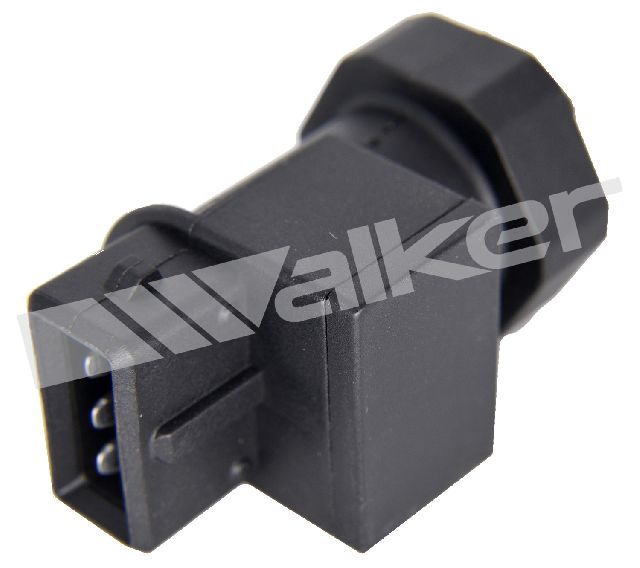
(OEM #42621-39052)— This sensor is the most frequent cause of the P0500 code and its associated symptoms on the 1999-2005 Sonata. This part number is also used on the Santa Fe, Optima, and other related vehicles.
Trusted brands: Hyundai/Kia (OEM), Standard Motor Products, Delphi, Beck/Arnley, NTK
OEM price range: $60-$100
Aftermarket price range: $25-$75
Related Codes That Often Appear With This One
- P0501 - Vehicle Speed Sensor Range/Performance: Often appears with P0500 and points to the same root causes, indicating an erratic signal rather than a complete loss.
- P0732 / P0733 - Gear Ratio Incorrect: These codes can be triggered as a secondary fault because the Transmission Control Module (TCM) cannot verify the correct gear is engaged without a reliable output speed signal.
- P1529 - TCM MIL Request: An informational code indicating the TCM has requested the check engine light. It will always be accompanied by a specific transmission fault code like P0500.
Mechanic-Grade Diagnostic Values
- Vehicle Speed Sensor (Output) Resistance — expected: 0.7 - 1.4 kOhms (700 - 1400 Ohms). Failure: A reading of open loop (OL), 0 Ohms, or a value significantly outside the specified range indicates a faulty sensor.
- ECM Fault-Setting Condition — expected: The ECM expects to see a changing voltage or frequency from the VSS when other parameters are met.. Failure: If the ECM sees Engine RPM > 2500 and Load > 60% with no change in the VSS signal (Vvss = 0), it will log the P0500 fault code.
Scan Tool Commands That Help
- Hyundai GDS (Global Diagnostic System): Live Data Monitoring (Current Data) — To definitively diagnose the VSS, a technician uses the GDS to monitor the 'Vehicle Speed' parameter in the live data stream while driving. If the reading is 0 mph or erratic while the car is moving, it confirms a loss of signal from the sensor or its circuit. The GDS also provides integrated access to workshop manuals and DTC-specific troubleshooting guides.
- Hyundai GDS (Global Diagnostic System): Resetting Adaptive Values — After replacing a transmission sensor, it can be beneficial to use the 'Resetting Adaptive Values' function under 'Vehicle Software Management'. This forces the TCM to relearn shift points with the new, correct speed signal, which can help resolve lingering harsh shifting behavior.
Wiring & Ground Locations
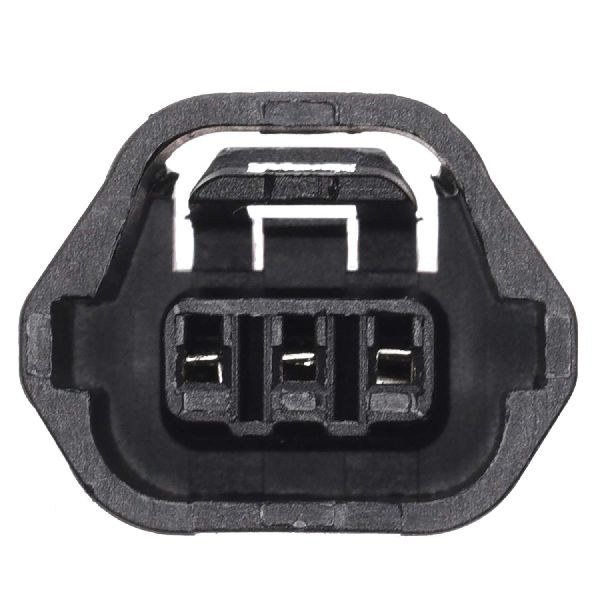
- Vehicle Speed Sensor (VSS) Connector — On the VSS itself. For the 2.7L V6, the sensor is on top of the transmission near the firewall. For the 2.4L I4, it is on the bottom of the transaxle.. This is a 3-wire, weatherproof male connector that is a common point of failure. The pins can corrode, and the pigtail wiring can become brittle and break from heat and vibration, interrupting the signal to the ECM.
- G11 / G16 Ground Point — Located on the center of the firewall in the engine bay.. This is a major grounding point for multiple engine and transmission-related components. While not directly for the VSS, a poor connection here can introduce electrical noise or unstable ground reference for the PCM/TCM, potentially causing erratic sensor readings. It should be checked if multiple, seemingly unrelated electrical faults are present.
Real Owner Repair Stories
- Hyundai-Forums user report (via secondary article) (2000 Hyundai Sonata 2.7L V6) — Vehicle would get stuck in 3rd gear (limp mode) and had a Check Engine Light with codes P1613 (TCM MIL Request) and P0720 (Output Speed Sensor Circuit Malfunction).
❌ Tried (didn't work) The report focused on the successful fix rather than failed attempts.
✅ What actually fixed it Replacing the Output Speed Sensor (VSS) resolved both the P0720 and the informational P1613 code, and corrected the limp mode shifting issue. This is a direct confirmation of the VSS causing the hallmark symptoms.
OEM Part Supersession History
42621-39050→42621-39100, then 42621-39052— Standard part revision and consolidation by Hyundai/Kia.
Heads up: The latest part number, 42621-39052, is the correct service replacement for the entire 1999-2005 model range and is backward compatible.
Model Year Variations Within This Range
- 1999-2005: The location of the Vehicle Speed Sensor (VSS) depends on the engine. On the 2.4L I4 engine, the VSS is located on the bottom of the transaxle. On the 2.7L V6 engine, it is located on the top of the transaxle housing, closer to the firewall.
- 1999-2005: The Input Speed Sensor (ISS) and Output Speed Sensor (OSS/VSS) are visually similar but can sometimes be differentiated by color. The ISS is often black, while the OSS is often gray or green. This is not a universal rule but can be a helpful visual clue during diagnosis.
Diagnostic Flowchart
Other Known Issues on This Vehicle
Issues unrelated to this code that are worth knowing about as an owner of this generation:
- Crankshaft Position Sensor (CPS) Failure 🔴 High — A very common failure item across many Hyundai models of this era. Can fail without warning, causing the engine to stall while driving or fail to start.
- Harsh or Erratic Automatic Shifting (Non-VSS related) 🟠 Medium — Often caused by a faulty Transmission Fluid Temperature (TFT) sensor or other transmission control solenoids.
- Timing Belt Replacement Interval 🔴 High — Both the 4-cylinder and V6 engines are interference designs that use a timing belt. Failure to replace it at the recommended interval (typically 60,000 miles) will result in catastrophic engine damage.
- Carbon Buildup on Throttle Body 🟡 Low — Can cause rough idling, hesitation, or lack of power. A relatively common issue that can be resolved by cleaning the throttle body.
- Failing Coolant Temperature Sensor 🟡 Low — A known issue that can cause erratic idling as the ECU receives incorrect temperature data.
Used vs. New Parts: Buying Guide for This Vehicle
When a used part is the smart pick: For the Vehicle Speed Sensor (VSS), a used OEM part from a reputable salvage yard is a reasonable choice, especially if it comes from a low-mileage donor vehicle. The OEM sensors are generally robust, and a used one can be more reliable than a low-quality new aftermarket part. Given the low cost of new aftermarket sensors ($25-$50), the savings may be minimal, but it's a viable path if you prefer OEM components.
Donor-vehicle mileage cap: roughly under 80000 miles for the part to have meaningful remaining life.
What to inspect on the donor part:
- Check the plastic housing for any cracks or signs of heat damage.
- Ensure the electrical connector pins are clean, straight, and free of corrosion.
- Inspect the plastic drive gear on the tip of the sensor; it should be intact with no stripped or broken teeth.
- If possible, test the resistance with a multimeter before purchase. It should be between 700-1400 Ohms.
OEM-only on this vehicle (don't cheap out):
- Powertrain Control Module (PCM) - Due to programming and security requirements, a used PCM is very difficult to integrate. This part should be sourced new or from a specialized remanufacturer if it is ever needed.
Aftermarket brands forum-validated for this vehicle:
- Delphi
- Standard Motor Products (SMP)
- Beck/Arnley
- NTK
Brands owners have reported issues with on this vehicle:
- No-name, unbranded sensors from online marketplaces often have high failure rates and may not produce a clean signal, leading to the code returning.
Real Owner Stories
Aggregated from forums and TSBs cited above. Mileages and costs reflect what owners reported in those sources.
2001 Hyundai Sonata 2.4L
Symptoms: Check engine light is on and the speedometer will not work. This occurred after the shop replaced the crank sensor.
What fixed it: The right front axle had been replaced with one that was missing the tone ring wheel at the hub.
Source hint: hyundai-forums.com owner report
Related OBD-II Codes
Frequently Asked Questions
Where is the Vehicle Speed Sensor located on my 2.7L V6 Sonata?
Where is the VSS located on the 2.4L 4-cylinder Sonata?
What is the correct resistance range for a healthy speed sensor on this vehicle?
Why does my Sonata shift harshly and stay in 3rd gear when the P0500 code is active?
Can a bad axle cause a P0500 code on a 2001 Sonata?
Is it worth buying a used OEM speed sensor for my 1999-2005 Sonata?
Helpful Videos
We Have This Part in Stock


The information in this article is provided for general reference and educational purposes only. Vehicle specifications, procedures, and part compatibility can vary by production date, trim level, and region. Always consult your vehicle's factory service manual and verify part numbers before purchasing or performing repairs. Safety-critical components such as airbags, seat belts, and braking systems should be installed by a qualified professional.
- Hyundai Sonata:
- 🧭 Diagnostic Flowchart
- 🎬 Helpful Videos
- 🛍️ Shop This Part
- What's Unique About the 1999-2005 Hyundai Sonata
- Symptoms You May Notice
- Most Likely Causes
- Rare But Worth Checking
- Diagnosis Steps
- Parts You'll Likely Need
- Related Codes That Often Appear With This One
- Mechanic-Grade Diagnostic Values
- Scan Tool Commands That Help
- Wiring & Ground Locations
- Real Owner Repair Stories
- OEM Part Supersession History
- Model Year Variations Within This Range
- Other Known Issues on This Vehicle
- Used vs. New Parts: Buying Guide for This Vehicle
- Real Owner Stories
- 2001 Hyundai Sonata 2.4L
- Related OBD-II Codes
- Frequently Asked Questions
- 🎟️ Get 5% Off