

P0500 on 2008-2015 Scion xB: Vehicle Speed Sensor Malfunction Causes and Fixes
On a 2008-2015 Scion xB, code P0500 is most often caused by a broken or corroded ground wire in the engine bay, not a bad sensor. This is a cheap parts fix (~$5) but can take 1-2 hours to diagnose and repair. If not the ground, a faulty wheel speed sensor is the next likely cause.
- Before buying any parts for a P0500 code, inspect all engine bay ground wires, especially on the driver's side frame rail.
- This code disables safety systems like ABS and VSC, so it should be addressed promptly.
- Do not replace the transmission speed sensors; they are not the cause of this code.
- If a wheel speed sensor is bad, use a scanner to identify which one. Remember that replacing a rear sensor requires replacing the entire wheel hub assembly.
What's Unique About the 2008-2015 Scion xB
The second-generation Scion xB is well-known for a specific failure point that triggers the P0500 code: broken ground wires in the engine bay, specifically on the driver's side frame rail. These grounds are essential for the wheel speed sensor circuits and the electric power steering. Many owners and even professional shops mistakenly replace one or more wheel speed sensors, only to find the problem persists because the root cause was a simple, but overlooked, bad ground connection. This issue is so common that it should be the very first thing checked.
Symptoms You May Notice
- Check Engine Light is on
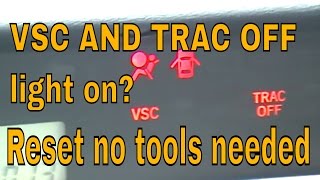
- ABS, VSC, and TRAC OFF warning lights are illuminated
- Speedometer reads 0 MPH or is erratic
- Odometer does not accumulate mileage
- Harsh or improper automatic transmission shifting
- Cruise control is inoperative
- Red steering wheel warning light may be on (due to shared ground with electric power steering)
- Power steering may be lost, making steering difficult
- Replacing one or more wheel speed sensors without first checking the ground wire connections.
- Replacing the input or output speed sensors on the transmission; these are used for internal transmission logic and do not provide the primary speed signal to the ECM for this code on this vehicle.
Most Likely Causes
- Broken or Corroded Ground Wires 🔴 High Probability There are several key ground points in the engine bay that are exposed to the elements and can break or corrode over time, specifically affecting the ABS/VSC system and electric power steering. The wires become brittle and can snap at the terminal.
How to confirm: Visually inspect the ground wires bolted to the frame rails in the engine bay, particularly on the driver's side near the front. There are typically two or three wires bundled together. Look for broken, loose, or heavily corroded connections. Wiggling the wires may temporarily restore function, confirming a bad connection.
Typical fix: Clean the contact point on the frame to bare metal. Crimp a new ring terminal onto the broken wire(s) and securely bolt them back to the chassis. This is a permanent fix.
Est. part cost: $1-$10 - Faulty Wheel Speed Sensor (ABS Sensor) 🟡 Medium Probability → Shop ABS Wheel Speed Sensor Sensors and their wiring are located at the wheels, where they are exposed to water, dirt, and physical damage. The rear sensor connectors are also known to suffer from corrosion.
How to confirm: Use an advanced OBD-II scanner that can read live data from the ABS module. Drive the vehicle and monitor the speed reading from all four sensors. The sensor that provides an erratic or no signal is faulty. You can also test sensor resistance with a multimeter, though live data is more reliable.
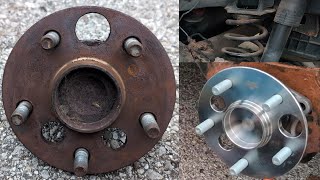
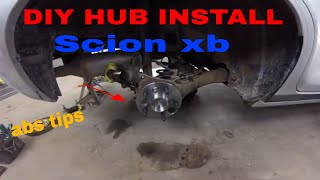
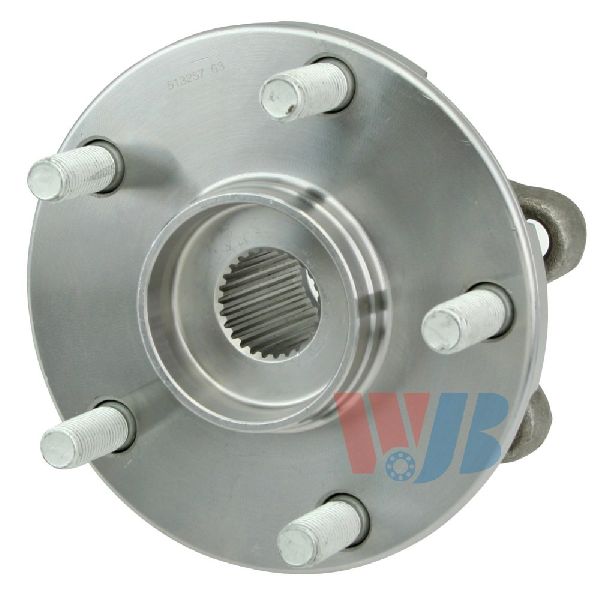
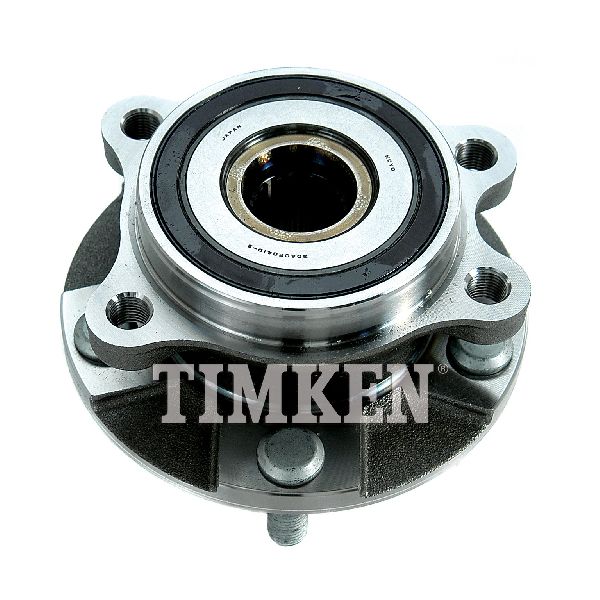
Typical fix: Replace the faulty wheel speed sensor. On the front, this is a simple wire harness. On the rear, the sensor is integrated into the wheel hub and bearing, so the entire hub assembly must be replaced. 🎬 Watch: Step-by-step rear wheel hub bearing replacement guide
Est. part cost: $25-$70 (front, aftermarket), $100-$200 (rear hub, aftermarket) - Damaged Wheel Speed Sensor Wiring ⚪ Low Probability → Shop ABS Wheel Speed Sensor Wiring can become brittle and crack from age and heat, or get damaged by road debris or improper repairs. This is separate from the main ground wire issue.
How to confirm: Visually inspect the entire length of the wiring harness for the suspect wheel speed sensor. Look for breaks, chafing, or corrosion, paying close attention to the connector plugs and where the harness flexes.
Typical fix: Repair the damaged section of wire or replace the harness if the damage is severe.
Est. part cost: $5-$30 - Faulty Instrument Cluster (Combination Meter) ⚪ Low Probability → Shop Instrument Cluster
How to confirm: This is difficult to confirm without ruling out all other causes. A key symptom is having a P0500 code with shifting issues, but the speedometer still works correctly. This indicates the cluster is receiving the speed signal but failing to relay it to the ECM. This can be caused by cracked solder joints on the circuit board.
Typical fix: Send the cluster to a specialized electronics repair service. This is much cheaper than buying a new one from the dealer. A new cluster also requires odometer programming.
Est. part cost: $150-$300 (for repair service)
Rare But Worth Checking
- Improper Aftermarket Stereo Installation: If an aftermarket radio was installed, the installer may have incorrectly tapped into the vehicle's speed signal wire (VSS wire, often purple/white), causing a short or signal interference.
- Faulty ABS/VSC Control Module: This is very rare. The module itself can fail, but it should only be considered after all sensors, wiring, and grounds have been thoroughly checked. In one documented case, a dealer quoted $700+ for this repair when the actual cause was the broken ground wire.
Diagnosis Steps
- Scan for all trouble codes. Note any ABS/Chassis codes (C-codes) or Communication codes (U-codes) in addition to the P0500.
- Thoroughly inspect the main ground wire connections in the engine bay, on the driver's side frame rail. Check for looseness, corrosion, or breaks. Clean and tighten them regardless of appearance. This is the most likely fix.
- If grounds are good, use an advanced scan tool to view live data for all four wheel speed sensors while driving. Identify any sensor that is not reading or is providing erratic data compared to the others.
- If a sensor is identified as faulty, inspect its wiring and connector for damage or corrosion before replacing the part.
- If the front sensor is faulty, replace the sensor harness. If a rear sensor is faulty, replace the entire wheel hub assembly. 🎬 See this walkthrough on replacing the rear hub and fixing ABS issues
- If all sensors and wiring appear to be working correctly, and especially if the speedometer works but other symptoms (like harsh shifting) are present, the instrument cluster becomes a suspect.
- Check for any aftermarket wiring (remote start, stereo) tapped into the VSS wire, typically a purple/white wire behind the instrument cluster.
- As a final, rare step, consider a fault with the ABS module or ECM.
Parts You'll Likely Need
- Front Wheel Speed Sensor (ABS Sensor)
(OEM #89542-12080 (Right), 89543-12080 (Left))— If the ground wire is not the cause, a failed wheel speed sensor is the next most likely culprit. The front sensors are simple harnesses that are easy to replace.
Trusted brands: Denso, Standard Motor Products (SMP), NTK
OEM price range: $220-$250
Aftermarket price range: $25-$70 - Rear Wheel Hub and Bearing Assembly
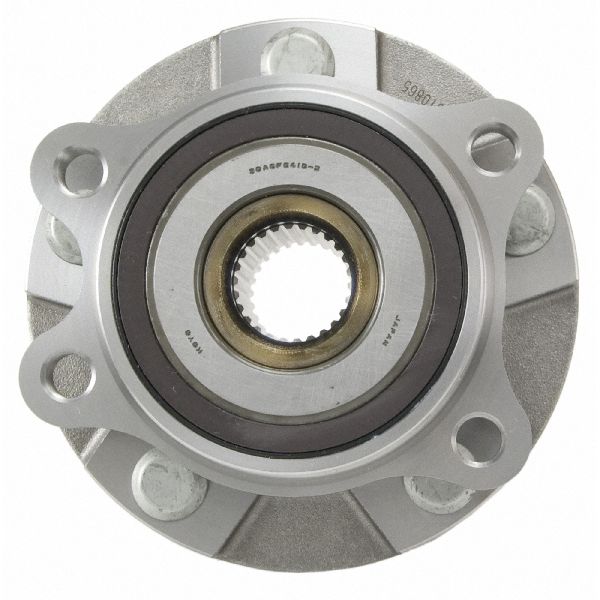
(OEM #42450-12090)— The rear wheel speed sensor is integrated into the hub. If a rear sensor fails, the entire assembly must be replaced.
Trusted brands: Timken, SKF, MOOG, Koyo
OEM price range: $250-$350
Aftermarket price range: $100-$200 - Instrument Cluster (Combination Meter)
(OEM #83800-12N90)— A rare but possible cause is the failure of the cluster's internal circuit board, which processes and relays the speed signal to the ECM. Repair is recommended over replacement.
Trusted brands: Genuine Toyota/Scion (for new part), Tanin Auto Electronix (Repair Service)
OEM price range: $470-$700 (New)
Aftermarket price range: $150-$300 (Repair Service)
Related Codes That Often Appear With This One
- C0210, C0215, etc. — These are specific codes for a fault in a wheel speed sensor circuit (e.g., C0210 for Rear Right). They often appear with P0500 and help pinpoint which sensor or circuit is the problem.
- U0121 — This code means 'Lost Communication With Anti-Lock Brake System (ABS) Control Module'. It can be triggered by the same ground wire issue that causes P0500, as the faulty ground can interrupt communication for the entire module.
- U0155 — This code means 'Lost Communication With Instrument Panel Cluster (IPC) Control Module'. If this code is present with P0500, it strongly points to a faulty instrument cluster as the root cause.
Platform-Specific Known Issues
- A broken ground wire on the driver's side frame rail is a very common cause for P0500 and a host of other electrical issues on this vehicle.
- Rear wheel speed sensors are integrated into the hub assembly, making their replacement more costly and labor-intensive than the front sensors.
Mechanic-Grade Diagnostic Values
- Front or Rear Wheel Speed Sensor Resistance — expected: Approximately 800 - 1,700 Ohms. The key is that values should be similar between the left and right side sensors.. Failure: A reading of infinite resistance (Open Line) or a value that is drastically different from the sensor on the opposite side of the axle indicates a faulty sensor.
- Front or Rear Wheel Speed Sensor AC Voltage Output — expected: Greater than 100mV (0.1V) AC when spinning the wheel by hand.. Failure: No AC voltage is generated when spinning the wheel, even if the resistance test passes. This confirms the sensor is not producing a signal.
- Voltage at ECM Speed Input Pin (SPD) — expected: A pulsing voltage that fluctuates up and down as a wheel is turned slowly.. Failure: No voltage or a steady, non-pulsing voltage indicates the signal from the instrument cluster is not reaching the ECM.
Scan Tool Commands That Help
- Techstream or equivalent advanced scanner: Live Data / Data List Monitoring — Use this to monitor the 'VEHICLE SPD' parameter that the ECM sees and compare it to the individual wheel speed sensor readings from the ABS module. This helps determine where the signal is getting lost. For example, if all four wheel sensors show speed but the ECM's 'VEHICLE SPD' is zero, the problem is likely the instrument cluster or its wiring to the ECM.
Wiring & Ground Locations
- Engine Bay Main Grounds — Bolted to the driver's side frame rail, near the front of the engine bay. It is a bundle of 2-3 black wires with ring terminals.. This is the most common failure point. These specific grounds are for the wheel speed sensor circuits and the electric power steering. When they break or corrode, it causes P0500, along with ABS, VSC, and power steering warning lights.
- VSS Signal Wire (to ECM) — A Purple/White wire. It can be accessed at the main connector for the instrument cluster or at the Engine Control Module (ECM) located behind the glove box.. This is the wire that aftermarket stereos are often incorrectly tapped into, causing signal interference that triggers P0500. It is also the final signal path to the ECM; testing for a pulse here confirms if the entire system (sensors and cluster) is working correctly up to that point.
Real Owner Repair Stories
- YouTube channel 'Scopelitus' (2008 Scion xB, 130,000 miles) — Check Engine Light, ABS light, VSC/TRAC light, red steering wheel warning light. Speedometer read 0 MPH. Codes P0500 and a U-code for lost communication with the brake module.
❌ Tried (didn't work) Shop 1 replaced one front wheel speed sensor., Shop 2 replaced the other front wheel speed sensor., Dealer replaced transmission speed sensors and then quoted $700+ for a new ABS control module.
✅ What actually fixed it The mechanic found two broken ground wires on the driver's side frame rail in the engine bay. He repaired the wires with new ring terminals and cleaned the connection point, which resolved all codes and symptoms. - ScionLife.com forum user (2007 Scion tC (similar electrical architecture)) — P0500 Check Engine Light was on, but the speedometer and cruise control worked perfectly.
❌ Tried (didn't work) Initial diagnosis was confusing because the speedometer worked, which would normally rule out a speed sensor issue.
✅ What actually fixed it The owner remembered they had an aftermarket Pioneer stereo installed years prior. The stereo was tapped into the Vehicle Speed Sensor (VSS) wire. Disconnecting the stereo's VSS tap and repairing the wire fixed the P0500 code.
When the Usual Fixes Don't Work
- In one documented case, a 2008 Scion xB was taken to two independent shops and a dealership for a P0500 code. Both front wheel speed sensors and the transmission speed sensors were replaced, and the dealer ultimately condemned the ABS control module for a $700+ repair. The actual cause was discovered to be broken ground wires on the driver's side frame rail, a fix that costs only a few dollars in materials. This highlights how the most common cause is frequently overlooked, leading to expensive and unnecessary parts replacement.
Model Year Variations Within This Range
- 2011-2015: For the 2011 model year, the Scion xB received a facelift. This included a revised interior with a different gauge cluster design. However, the underlying electrical logic for the speed signal (ABS sensors -> Cluster -> ECM) and the common failure points (driver-side ground wires, wheel speed sensors) remain the same across the entire 2008-2015 generation.
Diagnostic Flowchart
Other Known Issues on This Vehicle
Issues unrelated to this code that are worth knowing about as an owner of this generation:
- Excessive Oil Consumption 🔴 High — Very common across all years. Caused by defective piston ring design. Can start as early as 60,000-80,000 miles. (Ref: T-SB-0094-11 / S-SB-0024-11)
- Water Pump Failure 🟠 Medium — Commonly fails before 100,000 miles. Symptoms include a squealing or grinding noise from the engine and potential coolant leaks.
- Broken/Melting Rear Hatch Handle 🟡 Low — Extremely common. The original plastic handle becomes brittle and breaks from use and sun exposure. Aftermarket replacements often have metal reinforcement.
- Ignition Coil Failure 🟠 Medium — Prone to failure, leading to engine misfires (P030x codes), hesitation, and rough idle.
- Takata Airbag Inflator Recalls 🔴 High — Multiple recalls issued for 2008-2012 models where the front airbag inflators could rupture during deployment, sending shrapnel into the cabin. (Ref: Multiple NHTSA Recalls)
Used vs. New Parts: Buying Guide for This Vehicle
When a used part is the smart pick: A used wheel hub assembly from a low-mileage, non-corroded donor vehicle can be a cost-effective option. However, it's a gamble on the remaining bearing life. A used instrument cluster is generally not recommended.
Donor-vehicle mileage cap: roughly under 80000 miles for the part to have meaningful remaining life.
What to inspect on the donor part:
- For a wheel hub, check for any signs of play or roughness when turning the hub by hand.
- Inspect the ABS sensor wire and connector on the hub for any cracks, corrosion, or damage.
- Prefer donors from dry climates to avoid parts with heavy rust and corrosion.
OEM-only on this vehicle (don't cheap out):
- Instrument Cluster (Combination Meter): Do not buy used. A used cluster will display the mileage from the donor car, which cannot be easily corrected. If your original cluster is faulty, the best option is to send it to a specialized repair service that can fix the internal electronics and retain your car's original mileage.
Aftermarket brands forum-validated for this vehicle:
- Rear Wheel Hub Assembly: Timken, Koyo, MOOG, and SKF are reputable brands frequently recommended by owners for their quality and durability.
Brands owners have reported issues with on this vehicle:
- Unbranded or unusually cheap wheel hub assemblies from online marketplaces like eBay or Amazon are often a gamble and may fail prematurely.
Real Owner Stories
Aggregated from forums and TSBs cited above. Mileages and costs reflect what owners reported in those sources.
2008-2015 Scion xB
Symptoms: The Check Engine Light, ABS, VSC, and TRAC OFF lights were all illuminated. Two different shops and a dealer misdiagnosed the car, recommending new sensors and an expensive ABS module replacement.
What fixed it: Reattaching and cleaning broken ground wires located on the driver's side frame rail in the engine bay.
Cost: $1-$10
Source hint: YouTube: P0500 vss Scion xB vehicle speed sensor
2007 Scion tC 2.4L 2AZ-FE
Symptoms: P0500 code triggered a Check Engine Light, but the speedometer and cruise control continued to function normally.
What fixed it: Disconnecting an aftermarket Pioneer stereo that had been tapped into the VSS wire, which was causing signal interference.
Source hint: ScionLife Forums: P0500 on 2007 tC
2005 Scion xB
Symptoms: Total instrument cluster failure. The dealer quoted a high price for a replacement, and it was noted that a used cluster would display the donor vehicle's mileage.
What fixed it: Replacing the instrument cluster (or repairing the circuit board/capacitors).
Cost: $150-$680
Source hint: ScionLife Forums: xB Instrument cluster failure
Related OBD-II Codes
Frequently Asked Questions
Why are my ABS, VSC, and TRAC OFF lights on at the same time as the P0500 code?
My speedometer works fine, but I still have a P0500 code and harsh shifting. What could be wrong?
Where are the ground wires located that commonly cause this issue on the Scion xB?
Do I need to replace the whole wheel hub if a rear speed sensor fails on my xB?
Can an aftermarket car stereo cause a P0500 code on my Scion?
Why did my power steering get heavy when the Check Engine Light came on?
Helpful Videos
We Have This Part in Stock


The information in this article is provided for general reference and educational purposes only. Vehicle specifications, procedures, and part compatibility can vary by production date, trim level, and region. Always consult your vehicle's factory service manual and verify part numbers before purchasing or performing repairs. Safety-critical components such as airbags, seat belts, and braking systems should be installed by a qualified professional.
- Scion xB:
- 🧭 Diagnostic Flowchart
- 🎬 Helpful Videos
- 🛍️ Shop This Part
- What's Unique About the 2008-2015 Scion xB
- Symptoms You May Notice
- Most Likely Causes
- Rare But Worth Checking
- Diagnosis Steps
- Parts You'll Likely Need
- Related Codes That Often Appear With This One
- Platform-Specific Known Issues
- Mechanic-Grade Diagnostic Values
- Scan Tool Commands That Help
- Wiring & Ground Locations
- Real Owner Repair Stories
- When the Usual Fixes Don't Work
- Model Year Variations Within This Range
- Other Known Issues on This Vehicle
- Used vs. New Parts: Buying Guide for This Vehicle
- Real Owner Stories
- 2008-2015 Scion xB
- 2007 Scion tC 2.4L 2AZ-FE
- 2005 Scion xB
- Related OBD-II Codes
- Frequently Asked Questions
- 🎟️ Get 5% Off