

P0500 on 2013-2018 Toyota RAV4: Vehicle Speed Sensor Causes and Fixes
On a 2013-2018 RAV4, code P0500 is almost always caused by a single faulty ABS wheel speed sensor. Expect to pay $40-$120 for an aftermarket sensor and another $80-$150 for labor. This is a DIY-possible repair, but it disables safety systems like ABS and VSC.
- P0500 on a 2013-2018 RAV4 points to the ABS wheel speed sensing system, not a sensor on the transmission.
- The most likely cause is a single failed ABS wheel speed sensor.
- A scan tool that can read ABS codes and live data is essential for an accurate diagnosis to avoid replacing the wrong part.
- Driving with this code is not recommended as it disables the ABS and VSC safety systems.
- Symptoms almost always include the Check Engine, ABS, and VSC lights being on at the same time.
What's Unique About the 2013-2018 Toyota RAV4
The most important thing to understand about the 2013-2018 RAV4 is that it does not have a single 'Vehicle Speed Sensor' on the transmission that causes this code. The vehicle speed is determined by the four ABS wheel speed sensors, one at each wheel. The Skid Control ECU (ABS module) processes these signals and sends the final speed data to the instrument cluster, which then forwards the signal to the ECM and other modules. This means a P0500 code points to a problem within the ABS system, not a non-existent transmission sensor.
Symptoms You May Notice
- Check Engine Light is on
- ABS and VSC (Vehicle Stability Control) warning lights are on
- Speedometer reads 0 MPH or behaves erratically while driving
- Automatic transmission shifts harshly, late, or unpredictably
- Cruise control does not work
- AWD system may be disabled (if equipped)
- Replacing the wrong wheel speed sensor. It is critical to use a scan tool to identify which specific sensor is failing before buying parts.
- Searching for and replacing a transmission-mounted Vehicle Speed Sensor (VSS). This part is not used for the primary speed signal on this vehicle, and replacing it will not fix a P0500 code.
Most Likely Causes
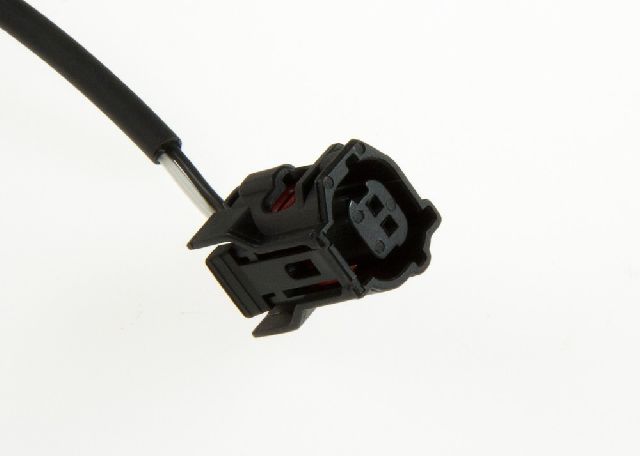
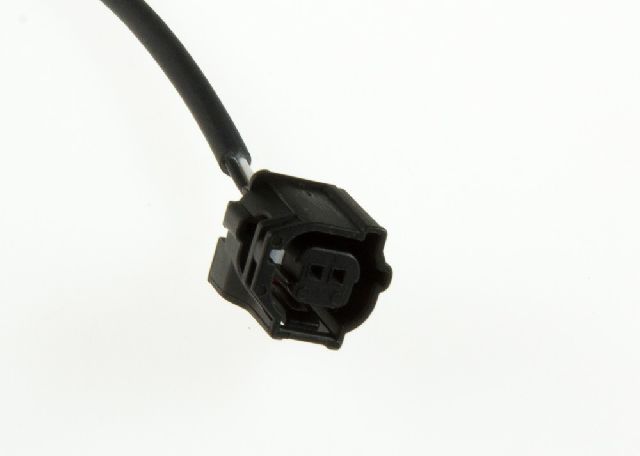
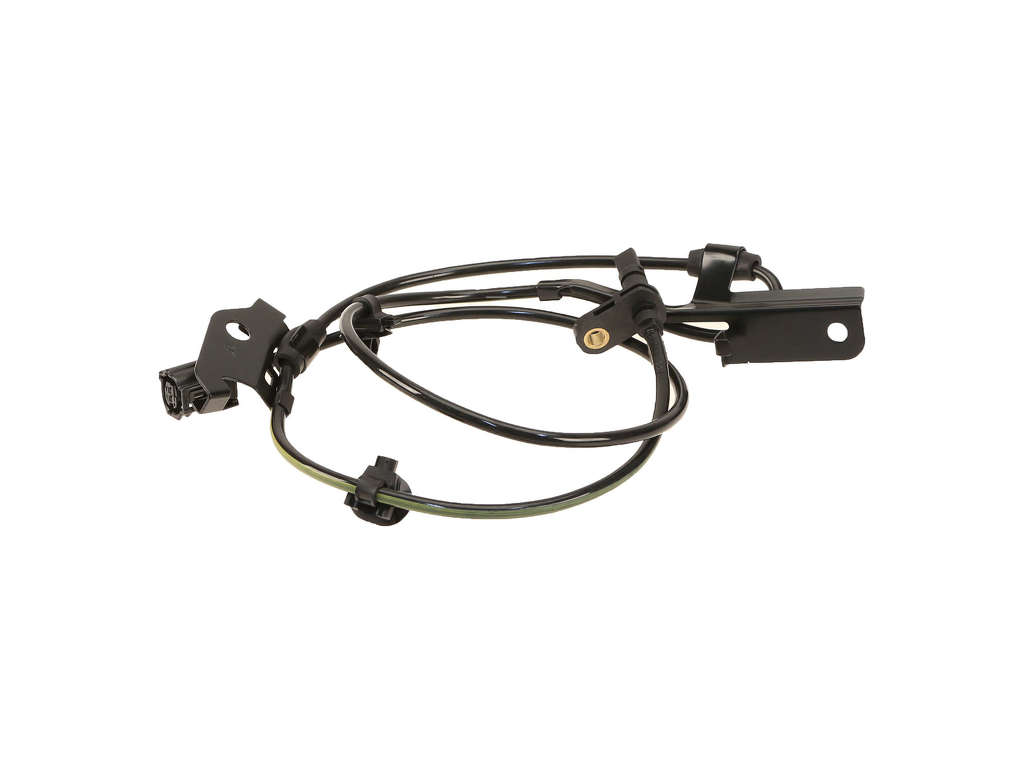
- Faulty ABS Wheel Speed Sensor 🔴 High Probability → Shop ABS Wheel Speed Sensor These sensors are exposed to the elements at the wheel hubs, making them susceptible to damage from road debris, water, and corrosion over time. Peak failures are often seen in vehicles with 120,000 to 180,000 miles.
How to confirm: Use a scan tool that can read live data from the ABS module. Drive the vehicle and monitor the data stream for all four wheel speed sensors. The faulty sensor will show a speed reading that is erratic, lagging, or stuck at zero compared to the others.
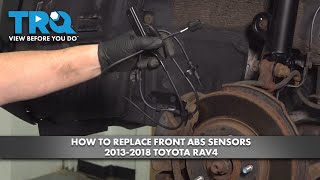
Typical fix: Replace the faulty ABS wheel speed sensor. They are sold individually for each corner of the vehicle. 🎬 Watch: Step-by-step guide to replacing the front ABS sensors.
Est. part cost: $40-$120 - Damaged Wheel Speed Sensor Wiring or Connector 🟡 Medium Probability → Shop ABS Wheel Speed Sensor The wiring harness runs down to the wheel hub and can be damaged by road debris, improper servicing (e.g., during brake jobs), or rodents. Corrosion can also develop inside the connectors, disrupting the signal.
How to confirm: After identifying the suspect wheel with a scan tool, perform a close visual inspection of the wiring harness from the sensor back to the main body. Look for cuts, chafing, corrosion in the connector, or stretched wires. A specific area to check is the EL3 connector, where corrosion has been found to short adjacent pins.
Typical fix: Repair the damaged section of the wire or replace the connector pigtail. In severe cases, a new sensor harness may be needed.
Est. part cost: $15-$50 for a pigtail, more for a full harness.
Rare But Worth Checking
- Faulty Instrument Cluster: → Shop Instrument Cluster On some Toyota models, the speed signal from the ABS module passes through the instrument cluster before reaching the ECM. A failure in the cluster's internal output circuit can cause a P0500 code, sometimes even if the speedometer still works. This is a known issue on platforms like the Tacoma and should be considered if new sensors don't fix the problem. Diagnosis involves testing the output signal from the cluster with an oscilloscope.
- Faulty Skid Control ECU (ABS Module): While rare, the module that processes the sensor inputs can fail internally. This is usually diagnosed after all sensors and wiring have been confirmed to be good.
- Faulty Engine Control Module (ECM): This is the least likely cause. The ECM is the receiving module for the speed signal, and an internal fault can prevent it from processing a good signal.
Diagnosis Steps
- Connect an OBD-II scanner capable of reading codes from all modules, not just the engine. Check for codes in the Engine (ECM) and ABS/VSC modules.
- Document the P0500 code from the ECM and look for any accompanying 'C' codes in the ABS module, which will help pinpoint the faulty wheel circuit.
- Access the live data stream on the scan tool. Select the parameters for all four wheel speed sensors.
- Safely drive the vehicle while an assistant monitors the live data. Compare the speed readings from all four sensors. The failing sensor will read 0, lag behind, or show an erratic signal compared to the others.
- Once the suspect wheel is identified, raise and secure the vehicle. Perform a thorough visual inspection of the sensor and its wiring harness for any obvious damage, corrosion, or loose connections.
- If the wiring appears intact, use a multimeter to test for proper voltage and ground at the sensor connector according to the vehicle's service manual. An oscilloscope can also be used to verify the square wave signal from the sensor.
- If the sensor and wiring test good, the issue may be more complex. The signal path runs through the instrument cluster, which can be a point of failure. Professional diagnosis may be needed to test the cluster's output signal.
Parts You'll Likely Need
- ABS Wheel Speed Sensor
(OEM #Front Left: 89543-0R010 (replaces 89543-42050); Front Right: 89542-0R010; Rear Left: 89546-42040; Rear Right: 89545-42040)— This is the most common failure point for a P0500 code on this vehicle, as it is the component that directly measures wheel rotation for the ABS system.
Trusted brands: Denso, Aisin, TRQ, Standard Motor Products
OEM price range: $150-$250
Aftermarket price range: $40-$120
Related Codes That Often Appear With This One
- C0035 to C0050 — These are ABS-specific codes that point to a fault in a specific wheel speed sensor circuit (e.g., C0035 for Front Left). Seeing one of these C-codes alongside a P0500 is a very strong confirmation that a wheel speed sensor or its wiring is the root cause.
Mechanic-Grade Diagnostic Values
- ABS Wheel Speed Sensor Resistance — expected: 800 - 1,500 Ohms (Ω). Some sources indicate a more specific range of 1.4-1.8 kΩ for front and 0.9-1.3 kΩ for rear sensors.. Failure: A reading of infinite resistance (Open Loop) or zero resistance (short circuit) indicates a failed sensor.
- ABS Wheel Speed Sensor AC Voltage Output — expected: Greater than 100 millivolts (mV) AC while spinning the wheel by hand.. Failure: No AC voltage produced while the wheel is spinning indicates a faulty sensor or a problem with the magnetic tone ring.
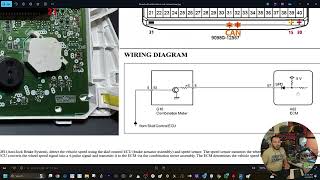
- Instrument Cluster Speed Signal Output (at ECM) — expected: A square wave signal that changes frequency with vehicle speed. This signal is created by the cluster pulling a 5V reference from the ECM to ground.. Failure: If the 5V reference from the ECM is present but there is no signal from the cluster, the cluster's output circuit has failed. This requires an oscilloscope to test. 🎬 See how to test the instrument cluster for a P0500 fault.
Hidden / Shadow Codes Worth Checking
- ABS/VSC 'C' Codes (e.g., C1201, C1202): While not truly 'hidden', these codes are stored in the ABS/VSC module, not the main Engine Control Module (ECM). A basic OBD-II scanner will only show the P0500 from the ECM. A more advanced scanner is required to read the 'C' codes, which are essential as they pinpoint the specific wheel sensor circuit that has the fault. (see via An OBD-II scan tool with the ability to access and read codes from the ABS/VSC (Skid Control) module, such as Toyota's Techstream software.)
Scan Tool Commands That Help
- Toyota Techstream: Live Data / Data List for ABS/VSC Module — This is the primary diagnostic step. It allows a technician to view the speed readings from all four wheels in real-time while driving. The faulty sensor will show a reading of 0 MPH or a value that doesn't match the others, instantly identifying the problem corner.
- Toyota Techstream: Zero Point Calibration — This service function is mandatory after replacing the ABS Actuator/ECU (Skid Control ECU). It calibrates the yaw rate, deceleration, and steering angle sensors to the new module. Failure to perform this calibration will result in the VSC light staying on and the system not functioning correctly.
Wiring & Ground Locations
- GUAGE2 Fuse — In the passenger compartment fuse box, located under the instrument panel on the driver's side.. This 10A fuse powers the combination meter (instrument cluster). A short circuit from improperly installed aftermarket accessories (like a backup camera) can blow this fuse, causing a P0500 and a dead speedometer because the cluster loses power and cannot process or relay the speed signal.
- ABS Module Connector (A64) — On the ABS actuator assembly in the engine compartment.. This is the central connector for all wheel speed sensor inputs. Key pins for testing are: Pin 34 (FL+), Pin 33 (FL-), Pin 17 (FR+), Pin 16 (FR-), Pin 5 (RL+), Pin 4 (RL-), Pin 19 (RR+), Pin 18 (RR-). Testing for signal at these pins can confirm if the signal from the sensor is reaching the module.
- Ground Point EB / EC — General Toyota locations: EB is often under the Data Link Connector 1; EC is on the front right fender.. The ABS module and sensors rely on a clean ground connection. A corroded or loose ground point can introduce electrical noise or an open circuit, leading to sensor signal issues and a P0500 code.
Real Owner Repair Stories
- IH8MUD.com Forum User (Toyota 4x4 (similar system architecture)) — Check Engine Light on, P0500 code stored, speedometer was working correctly, but reverse lights were out.
❌ Tried (didn't work) Clearing the code (it came right back)., Considering replacing the sensor or instrument cluster.
✅ What actually fixed it The user had installed an aftermarket backup camera using vampire taps, which created a short circuit. This blew the 10A 'GUAGE2' fuse on the passenger side fuse panel. Replacing the fuse and properly repairing the wiring for the camera resolved the P0500 code and fixed the reverse lights. - NHTSA ODI #11139910 (Toyota owner report) — An owner of a vehicle with a similar Toyota electrical architecture reported that the speedometer and odometer stopped working at random, with diagnostic trouble codes P0500 and B2283 stored in the system.
OEM Part Supersession History
89543-42050→89543-0R010— Standard part update/revision by Toyota.
Heads up: The new part number is the correct replacement for the original. Using the old number may result in sourcing old stock.
Model Year Variations Within This Range
- 2016-2018: For 2016, Toyota made the 'Toyota Safety Sense P' (TSS-P) package available, which became more common in later years. This system uses the vehicle speed signal for features like Pre-Collision System and Dynamic Radar Cruise Control. A P0500 fault on these models will disable a larger suite of safety and convenience features, potentially displaying more warning messages on the dash compared to earlier models.
Diagnostic Flowchart
Other Known Issues on This Vehicle
Issues unrelated to this code that are worth knowing about as an owner of this generation:
- Torque Converter Shudder 🟠 Medium — Common on 2013-2015 models, typically felt as a brief vibration under light throttle between 25-50 mph. (Ref: T-SB-0023-15 (later revised) and Warranty Enhancement Program ZH1. Fix involves ECM reprogram and/or torque converter replacement.)
- Steering Intermediate Shaft Clunk/Noise 🟡 Low — A clunking or popping noise may develop when turning the steering wheel, especially at low speeds. It is a well-documented complaint among owners. (Ref: A TSB (T-SB-0318-08) was issued for the previous generation with the same issue, and a redesigned shaft is the typical fix.)
- Leaking A/C Evaporator Core 🟠 Medium — A refrigerant leak from the evaporator core located inside the dashboard is a known, and expensive, repair. Symptoms include poor A/C performance and a hissing sound. (Ref: A technical tip, T-TT-0468-17, notes that the HVAC drain tube can become clogged, which may be related.)
- Low-Pressure Fuel Pump Failure 🔴 High — Affects some 2019-2020 models within this body style's later years. The fuel pump can stop operating, leading to a vehicle stall, which can increase the risk of a crash. (Ref: Safety Recall 20TA02 / 20LA01. The fix is a replacement of the fuel pump assembly.)
- Loose Gas Cap Causing EVAP Codes (P0455/P0456) 🟡 Low — A very common cause for the check engine light is a loose or failing gas cap, which creates a leak in the EVAP system. (Ref: Not a TSB, but a common diagnostic finding. Using a genuine OEM replacement cap (Part No. 77300-06040) is often recommended.)
Used vs. New Parts: Buying Guide for This Vehicle
When a used part is the smart pick: For this repair, sourcing a used OEM (Denso or Aisin branded) wheel speed sensor from a reputable auto recycler is a smart way to save money while avoiding the poor quality of cheap, no-name aftermarket parts. Used instrument clusters or ABS modules are also viable, but be aware that a replacement ABS module will require professional programming ('Zero Point Calibration').
Donor-vehicle mileage cap: roughly under 100000 miles for the part to have meaningful remaining life.
What to inspect on the donor part:
- For sensors, check that the wiring pigtail is not brittle, cracked, or repaired.
- Ensure the plastic housing of the sensor is not cracked or showing signs of heat damage.
- For a used wheel bearing/hub, ensure the magnetic encoder ring is clean, free of cracks, and not heavily rusted.
- Verify the donor vehicle's VIN to ensure compatibility, especially for modules which can be build-location specific (Japan vs. North America).
OEM-only on this vehicle (don't cheap out):
- While not strictly 'OEM-only', it is highly advisable to use either genuine Toyota sensors or sensors from the OE manufacturer (Denso/Aisin). Cheap aftermarket sensors are a common cause of repeat failures.
Aftermarket brands forum-validated for this vehicle:
- Denso
- Aisin
- Standard Motor Products (SMP)
- TRQ
Brands owners have reported issues with on this vehicle:
- Unnamed or 'white-box' sensors from online marketplaces. These frequently have incorrect resistance values or use materials prone to rapid corrosion and failure.
Real Owner Stories
Aggregated from forums and TSBs cited above. Mileages and costs reflect what owners reported in those sources.
2015 RAV4 — 96715 miles
Symptoms: Check Engine Light with code P0500. The instrument cluster itself appeared to be working, but it was suspected of not sending the vehicle speed signal to the ECM and other modules.
What fixed it: The issue was traced to the instrument cluster (combination meter). The diagnostician found a problem with the signal output from the cluster and corrected it.
Source hint: Maic Salazar Diagnostics YouTube comment '2015 Rav4 Instrument Cluster test for fault P0500 PART 1'
2013-2018 Toyota RAV4 — ~150000 miles
Symptoms: ABS sensor related code (P0500 context).
What fixed it: Cleaning rust buildup around the ABS sensor mounting point, which was pushing the sensor away from its correct position and causing a faulty reading.
Source hint: HVAC Mechanic YouTube comment on 'Causes and Fixes Toyota P0500 Code: Vehicle Speed Sensor 'A''
2013-2018 Toyota RAV4
Symptoms: Speedometer dropped to zero and the Check Engine Light (CEL) came on.
What fixed it: Identified as a classic P0500 failure mode involving the vehicle speed signal path.
Source hint: Reddit r/AskAMechanic
Related OBD-II Codes
Frequently Asked Questions
My 2015 RAV4 has a P0500 code but the speedometer still works. Is it possible the instrument cluster is the problem?
I'm seeing ABS and VSC lights along with the P0500 code. Does this mean I need a new transmission?
Is there a specific connector I should check for corrosion on my RAV4?
Could a simple gas cap issue be related to my Check Engine Light?
My RAV4 is vibrating between 25-50 mph; could this be related to the P0500 code?
Helpful Videos
We Have This Part in Stock


The information in this article is provided for general reference and educational purposes only. Vehicle specifications, procedures, and part compatibility can vary by production date, trim level, and region. Always consult your vehicle's factory service manual and verify part numbers before purchasing or performing repairs. Safety-critical components such as airbags, seat belts, and braking systems should be installed by a qualified professional.
- Toyota RAV4:
- 🧭 Diagnostic Flowchart
- 🎬 Helpful Videos
- 🛍️ Shop This Part
- What's Unique About the 2013-2018 Toyota RAV4
- Symptoms You May Notice
- Most Likely Causes
- Rare But Worth Checking
- Diagnosis Steps
- Parts You'll Likely Need
- Related Codes That Often Appear With This One
- Mechanic-Grade Diagnostic Values
- Hidden / Shadow Codes Worth Checking
- Scan Tool Commands That Help
- Wiring & Ground Locations
- Real Owner Repair Stories
- OEM Part Supersession History
- Model Year Variations Within This Range
- Other Known Issues on This Vehicle
- Used vs. New Parts: Buying Guide for This Vehicle
- Real Owner Stories
- 2015 RAV4 — 96715 miles
- 2013-2018 Toyota RAV4 — ~150000 miles
- 2013-2018 Toyota RAV4
- Related OBD-II Codes
- Frequently Asked Questions
- 🎟️ Get 5% Off