

P0500 on 1995-2004 Toyota Tacoma: Speed Sensor vs. Instrument Cluster Explained
On a 1995-2004 Tacoma, P0500 is often caused by a faulty instrument cluster, even if your speedometer works. If the speedometer is also dead, the vehicle speed sensor (VSS) on the transmission is the likely culprit. A new VSS costs $25-$100, while a cluster repair is more.
- Before buying any parts, check if your speedometer is working. This is the most important diagnostic step.
- If the speedometer works but the Check Engine Light is on for P0500, the problem is almost certainly the instrument cluster, not the speed sensor.
- If the speedometer is dead or erratic, the VSS on the transmission/transfer case or its wiring is the most likely cause.
- Repairing the original instrument cluster is often a better option than replacing it to avoid odometer and programming issues.
What's Unique About the 1995-2004 Toyota Tacoma
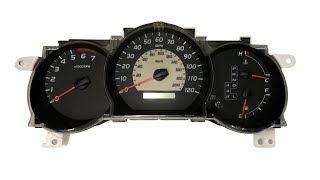
On this generation of Tacoma, the vehicle speed signal takes a unique path: it travels from the speed sensor on the transmission (or transfer case on 4WD models) to the instrument cluster first. The cluster then processes the signal to drive the speedometer needle and sends a conditioned signal to the engine computer (ECM). Because of this design, a common point of failure is the instrument cluster's internal output circuitry. This can cause a P0500 code even when the speedometer needle is working perfectly, a situation that frequently leads to misdiagnosis.
Symptoms You May Notice
- Check Engine Light is on
- Inoperative or erratic speedometer
- Harsh, late, or unpredictable automatic transmission shifting
- Cruise control will not engage or turns off unexpectedly
- On models with ABS, the ABS light may also illuminate 🎬 See a breakdown of common causes for the P0500 code.
- Odometer may stop working
- Replacing the Vehicle Speed Sensor when the speedometer is still working. If the speedometer functions correctly, the VSS is sending a good signal to the cluster. The problem is almost always the cluster's output signal to the ECM.
Most Likely Causes
- Faulty Instrument Cluster 🔴 High Probability → Shop Instrument Cluster The design routes the VSS signal through the cluster to the ECM. The cluster's output circuit, which sends the signal to the ECM, is a known failure point due to aging electronic components or cold solder joints on the circuit board.
How to confirm: The most telling sign is having a P0500 code while the speedometer is still working correctly. Tapping firmly on the dashboard above the cluster may cause the Check Engine Light to turn off or the code to clear temporarily. Advanced diagnosis involves using an oscilloscope to check for a valid square wave signal on the output wire from the cluster to the ECM (often a violet and white wire at pin 19 🎬 Watch this guide to troubleshooting the speed sensor circuit. of connector C9). A weak, noisy, or absent signal here with a working speedometer confirms a bad cluster.
Typical fix: The instrument cluster must be removed and sent to a specialized repair service (like Tanin Auto Electronix or Atlanta Speedometer) to have the faulty internal circuit board components replaced or re-soldered. Alternatively, replace the entire cluster with a new or used unit, but this may cause mileage discrepancies.
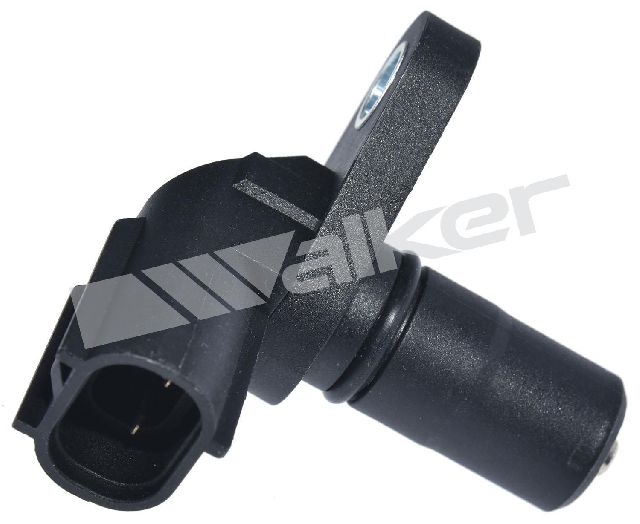
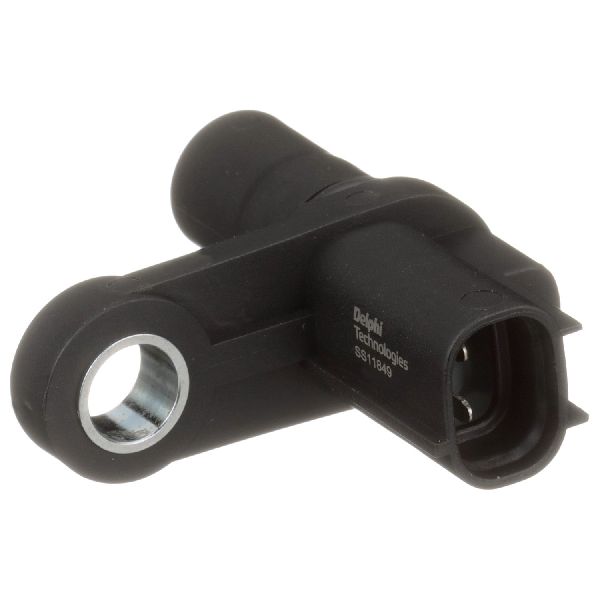
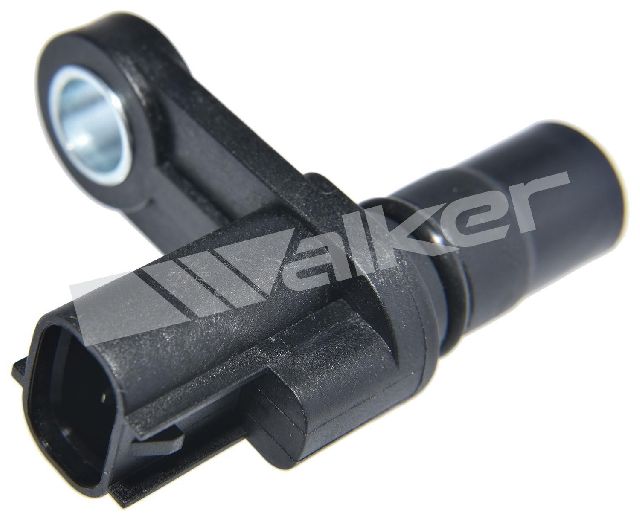
Est. part cost: $150-$400 for repair service, $300+ for a used cluster - Failed Vehicle Speed Sensor (VSS) 🟡 Medium Probability → Shop Drive Shaft Sensor The sensor is exposed to heat and the elements on the transmission or transfer case, leading to eventual failure. The plastic gear that drives it can also become brittle and break.
How to confirm: This is the most likely cause if the speedometer is NOT working or is behaving erratically along with the P0500 code. The sensor is located on the tail section of the transmission on 2WD/PreRunner models and on the transfer case for 4WD models. It can be tested with a multimeter for a proper signal as the wheels are turned.
Typical fix: Replace the Vehicle Speed Sensor. It is typically held in by a single 10mm or 12mm bolt.
Est. part cost: $25-$100 - Damaged VSS Wiring or Connector ⚪ Low Probability Wiring near the transmission and exhaust can be damaged by road debris, heat, or animal nesting. The connector itself can also corrode.
How to confirm: Visually inspect the wiring harness leading to the VSS for any breaks, chafing, or corrosion at the connector. Check for continuity and voltage with a multimeter from the sensor to the instrument cluster.
Typical fix: Repair the damaged section of wire or replace the connector pigtail.
Est. part cost: $5-$25 - Broken VSS Drive Gear ⚪ Low Probability The plastic gear inside the transmission or transfer case that spins the VSS can become brittle with age and strip or break.
How to confirm: Remove the VSS and inspect the driven gear on the sensor and the drive gear inside the transmission housing. If the gear is visibly damaged or does not spin when the vehicle is moved, it has failed. The sensor itself may come with or without the gear.
Typical fix: Replace the VSS drive gear, which is located inside the transmission or transfer case.
Est. part cost: $15-$40
Rare But Worth Checking
- Faulty ECM: This is extremely rare. The Engine Control Module should only be considered after all other possibilities, including the instrument cluster and wiring, have been exhaustively tested and ruled out.
- ABS System Fault: On some models, particularly later ones with ABS and automatic transmissions, the speed signal is derived from the wheel speed sensors and processed by the ABS control unit before being sent to the cluster. A fault in the ABS system or a bad wheel speed sensor could theoretically cause a P0500, but this is less common for this specific issue on this platform.
Diagnosis Steps
- Scan for trouble codes. Confirm P0500 is the primary code.
- Observe the speedometer while driving. Does it work correctly, is it erratic, or is it completely dead?
- If the speedometer works: The VSS is likely good. The primary suspect is the instrument cluster. Try tapping the dash above the cluster to see if it affects the Check Engine Light. The definitive test is to probe the speed signal output wire from the cluster to the ECM (often a violet/white wire on pin 19 of connector C9) with an oscilloscope for a clean digital signal while driving. If the signal is absent or weak, the cluster needs repair.
- If the speedometer does NOT work (or is erratic): The primary suspect is the VSS or its wiring.
- Locate the VSS. On 2WD/PreRunner models, it's on the driver's side of the transmission's tail housing. On 4WD models, it's on the transfer case.
- Inspect the VSS connector and wiring for visible damage, corrosion, or loose connections.
- If wiring looks good, remove the VSS (usually one 12mm bolt) and inspect the sensor and its driven gear for physical damage.
- If no physical damage is found, test the VSS signal output. With a multimeter set to AC volts, you should see voltage increase as you spin the wheels. If no signal is generated, the sensor is bad.
- If the sensor tests good but the speedometer is dead, the problem lies in the wiring between the sensor and the instrument cluster.
Parts You'll Likely Need
- Vehicle Speed Sensor (VSS)
(OEM #83181-35040 (Common for many models, but verify with VIN). Note: 83181-12070 from pass 1 may be for other Toyota models.)— This is the most common part to fail when the speedometer is also inoperative. It is a straightforward replacement. Part number 83181-35040 is frequently cited for 1st Gen Tacomas and 4Runners.
Trusted brands: Denso, Aisin, Standard Motor Products (SMP), Beck/Arnley
OEM price range: $80-$150
Aftermarket price range: $25-$75 - Instrument Cluster Repair Service — This is the required fix when the P0500 code is present but the speedometer works, indicating a failure of the cluster's internal output circuit. Sending the original cluster for repair avoids mileage programming issues.
Trusted brands: Tanin Auto Electronix, Circuit Board Medics (cboardrepair.com), Atlanta Speedometer
Aftermarket price range: $150-$400
Platform-Specific Known Issues
- A known issue on first-generation Tacomas is the failure of the instrument cluster's internal circuit board, which prevents the speed signal from being relayed to the ECM, triggering a P0500 code even with a functional speedometer.
- Early models (approx. 1995-1996) may use a mechanical speedometer cable driven by a gear in the transmission, rather than a fully electronic sensor. In these cases, a P0500 code is less likely or would point to a different failure mode, possibly in the cluster where the cable input is converted to an electronic signal.
Mechanic-Grade Diagnostic Values
- VSS Signal at ECM (Oscilloscope) — expected: A clean 0-5V or 0-12V square wave that increases in frequency as vehicle speed increases.. Failure: A flat line, a noisy signal, or a signal with very low amplitude (e.g., under 500mV) while the speedometer is working indicates a faulty instrument cluster output.
- VSS Signal at Sensor (Multimeter) — expected: AC voltage that increases as the wheels are turned.. Failure: No AC voltage generated indicates a failed sensor.
- Continuity Check on V-W wire — expected: Near 0 ohms of resistance between the instrument cluster connector (C9, pin 19) and the ECM connector (E7, pin 8).. Failure: High resistance or an open circuit (infinite resistance) indicates a break in the wire.
Scan Tool Commands That Help
- Techstream or advanced OBD-II scanner: Live Data Monitoring — Use this to compare the 'Vehicle Speed' PID in the Engine Control Module data list against the wheel speed sensor data in the ABS module data list. If the ABS module shows speed but the ECM shows 0 mph, it strongly points to a problem with the signal path between the ABS/Cluster and the ECM.
Wiring & Ground Locations
- Connector C9, Pin 19 — On the back of the instrument cluster (combination meter).. This is the specific pin that outputs the conditioned speed signal to the ECM. The wire is typically Violet with a White stripe (V-W). Probing this pin is the definitive test for a faulty cluster output.
- Connector E7, Pin 8 — At the Engine Control Module (ECM), which is located behind the passenger side kick panel.. This is the specific pin where the ECM receives the vehicle speed signal from the instrument cluster. A weak or absent signal here triggers the P0500 code.
- Ground G202 — Located at the left end of the dash.. This is a potential ground point for the instrument cluster. A poor ground can cause erratic behavior in the cluster's electronics, including the speed signal output circuit.
- J/B 3 (Junction Block 3) — Behind the dash, to the left of the steering column.. The VSS signal from the transmission passes through this junction block on its way to the instrument cluster. A poor connection here could interrupt the signal before it even reaches the cluster.
Real Owner Repair Stories
- TacomaWorld user 'Steve933' (Year not specified, 1st Gen Tacoma) — Persistent P0500 Check Engine Light, but the speedometer worked perfectly and there were no shifting issues or ABS lights.
❌ Tried (didn't work) Initially ruled out the cluster because the speedometer worked., Checked ECM connectors.
✅ What actually fixed it Replacing the entire speedometer cluster. The user discovered the cluster was receiving the speed signal and displaying it, but the internal circuit board was failing to forward the signal to the ECM. - YouTube channel 'Cody's Auto Diagnostics & Programming LLC' (Toyota Tacoma (year appears to be early 2000s)) — P0500 code present, speedometer works, but scan tool shows 0 mph for vehicle speed in the ECM data.
❌ Tried (didn't work) Confirmed wheel speed sensors were working via ABS data list., Confirmed speedometer needle was functional.
✅ What actually fixed it Diagnosed a faulty instrument cluster. An oscilloscope test at the ECM showed a very weak/unreadable signal. A wiggle test on the cluster's main connector caused the signal to drop out and return, confirming an internal cluster fault (likely a bad pin connection or cold solder joint). The final recommendation was to replace or repair the cluster.
OEM Part Supersession History
83181-35040→83181-35070— Standard part revision/update.
Heads up: The parts are generally interchangeable for the specified applications. 83181-35040 is a widely cited number for many Toyota trucks of this era, including Hilux, 4Runner, and Tacoma.
Model Year Variations Within This Range
- Approx. 1995-1997 (non-ABS or early ABS models): These models are more likely to have a direct VSS on the transmission/transfer case that sends its signal to the cluster. Some very early models may even have a mechanical speedometer cable.
- Approx. 1998-2004 (especially with Automatic Transmission and ABS): On these models, the primary vehicle speed signal may be generated by the ABS module using data from the wheel speed sensors. The signal path is: Wheel Speed Sensors -> ABS Module -> Instrument Cluster -> ECM. A P0500 on these trucks still frequently points to the cluster, but the ultimate origin of the signal is the ABS system, not a single VSS on the transmission.
- 2001-2004: A known issue on these specific years is a failed power supply on the instrument cluster circuit board that causes the speedometer, tachometer, and odometer to fail simultaneously.
Diagnostic Flowchart
Used vs. New Parts: Buying Guide for This Vehicle
When a used part is the smart pick: A used instrument cluster from a junkyard can be a cost-effective option, especially if you can find one from a vehicle with similar or lower mileage. It can be a good troubleshooting step to swap in a known-good used cluster to confirm the diagnosis before spending money on a repair service.
Donor-vehicle mileage cap: roughly under 150000 miles for the part to have meaningful remaining life.
What to inspect on the donor part:
- Verify the part number on the used cluster matches your original.
- Inspect the clear plastic lens for deep scratches or fogging.
- Check the connectors on the back for any bent or corroded pins.
- Ask the seller if the donor vehicle had a working speedometer before being dismantled.
OEM-only on this vehicle (don't cheap out):
- While not strictly 'OEM-only', sending your original instrument cluster for repair is often superior to buying a used one. This guarantees you keep your original, correct mileage and avoids potential programming issues.
Aftermarket brands forum-validated for this vehicle:
- For VSS replacement: Denso, Aisin, Standard Motor Products (SMP), Delphi.
- For cluster repair: Tanin Auto Electronix, Atlanta Speedometer, Circuit Board Medics.
Brands owners have reported issues with on this vehicle:
- Unbranded, no-name vehicle speed sensors from online marketplaces can have high failure rates and are often not worth the initial savings.
Real Owner Stories
Aggregated from forums and TSBs cited above. Mileages and costs reflect what owners reported in those sources.
2005 Toyota Tacoma Pre-Runner V6 Access Cab
Symptoms: The Check Engine Light was on with a P0500 code, but there were no other symptoms. The speedometer worked fine, the transmission shifted normally, and the ABS light was not on.
What fixed it: The instrument cluster was identified as the culprit. It was correctly displaying the speed but was failing to forward the speed signal to the ECM. Repairing the cluster's internal circuit board resolved the issue.
Source hint: Tacoma World
Symptoms: An intermittent P0500 Check Engine Light appeared, even though the speedometer was working correctly.
What fixed it: The owner diagnosed the instrument cluster as the cause and successfully fixed it by re-soldering components on the internal circuit board.
Source hint: TacomaWorld forum thread titled 'Fixing A P0500 Check Engine Light By Re-Soldering The Instrument Cluster'
Symptoms: A persistent P0500 code was present with a functional speedometer.
What fixed it: In this case, swapping the instrument cluster did not fix the issue. The problem required more complex diagnosis of the ABS system and associated wiring to find the root cause.
Source hint: TacomaWorld forum thread titled 'Need help finding P0500 VSS "A"'
Documented NHTSA Reports
Cross-Manufacturer Reference: Speedometer and Odometer Failure
Symptoms: An owner of a similar Toyota model reported that the speedometer and odometer stopped working at random, accompanied by DTCs P0500 and B2283.
Context: While reported on a Corolla, this empirical data reinforces the link between P0500 and total instrument cluster failure.
Source: NHTSA ODI #11139910
Related OBD-II Codes
Frequently Asked Questions
My speedometer works perfectly on my Tacoma, but the Check Engine Light is on for a P0500 code. What's the most likely problem?
My speedometer is dead or jumps around, and I have a P0500 code. What should I check first?
Where is the Vehicle Speed Sensor (VSS) located on a 1995-2004 Tacoma?
Is there a simple way to check if the instrument cluster is the cause of my P0500 code?
What is the typical repair for a P0500 caused by the instrument cluster?
My ABS light came on at the same time as the P0500 Check Engine Light. Are these related?
Does this P0500 instrument cluster issue affect other Toyota trucks like the 4Runner or Tundra?
Helpful Videos

We Have This Part in Stock


The information in this article is provided for general reference and educational purposes only. Vehicle specifications, procedures, and part compatibility can vary by production date, trim level, and region. Always consult your vehicle's factory service manual and verify part numbers before purchasing or performing repairs. Safety-critical components such as airbags, seat belts, and braking systems should be installed by a qualified professional.
- Toyota Tacoma:
- 🧭 Diagnostic Flowchart
- 🎬 Helpful Videos
- 🛍️ Shop This Part
- What's Unique About the 1995-2004 Toyota Tacoma
- Symptoms You May Notice
- Most Likely Causes
- Rare But Worth Checking
- Diagnosis Steps
- Parts You'll Likely Need
- Platform-Specific Known Issues
- Mechanic-Grade Diagnostic Values
- Scan Tool Commands That Help
- Wiring & Ground Locations
- Real Owner Repair Stories
- OEM Part Supersession History
- Model Year Variations Within This Range
- Used vs. New Parts: Buying Guide for This Vehicle
- Real Owner Stories
- 2005 Toyota Tacoma Pre-Runner V6 Access Cab
- Documented NHTSA Reports
- Cross-Manufacturer Reference: Speedometer and Odometer Failure
- Related OBD-II Codes
- Frequently Asked Questions
- 🎟️ Get 5% Off