

P0500 on 2000-2007 Volvo V70 2.4L: Vehicle Speed Signal Fault Causes and Fixes
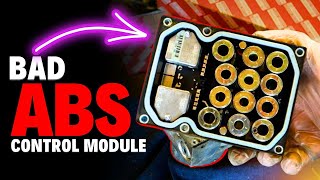
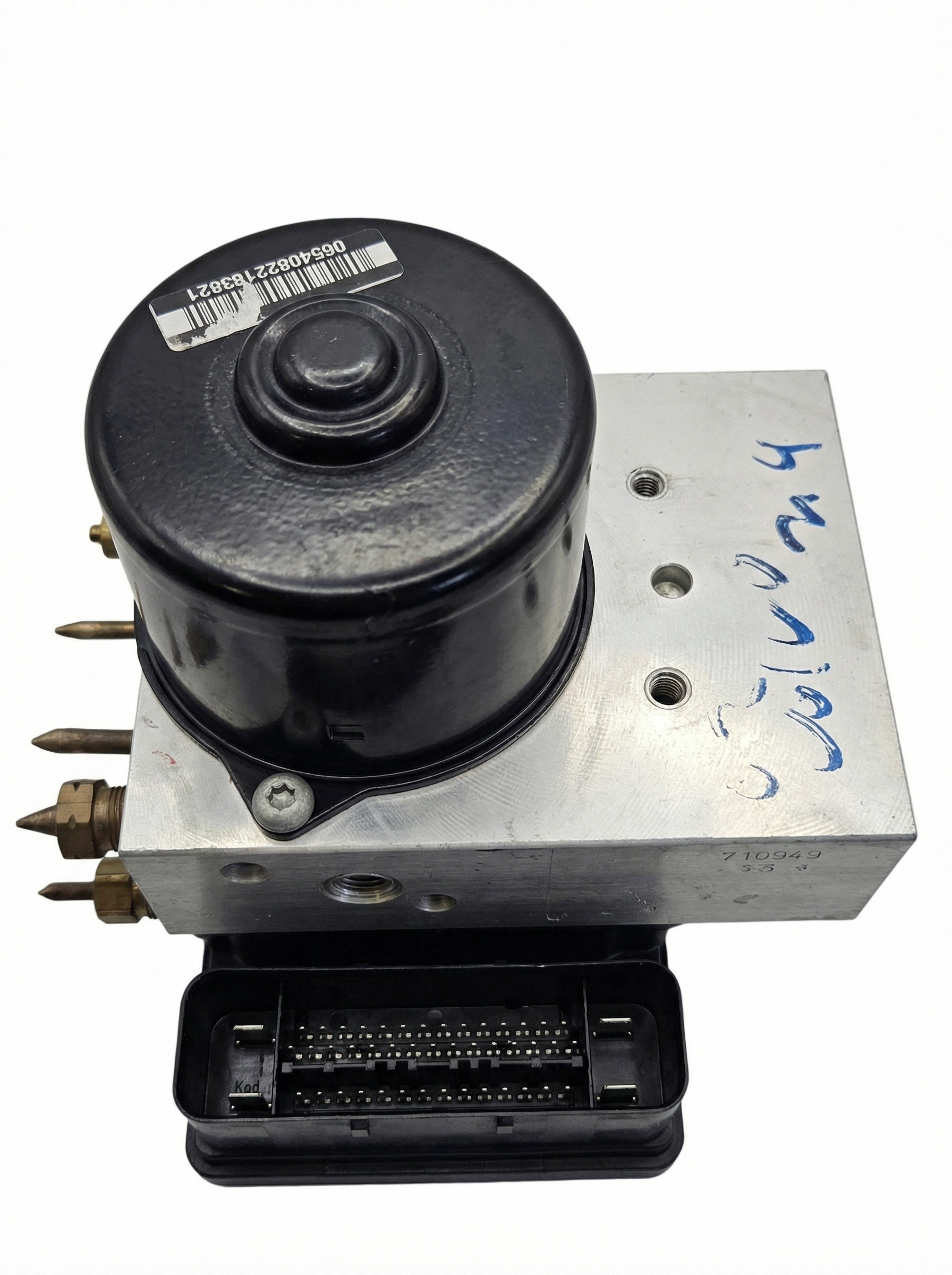
On a 2000-2007 Volvo V70, P0500 is almost always caused by a failed ABS control module. The speedometer and cruise control will also stop working. The most common and cost-effective fix is to have the original ABS module rebuilt by a specialist for $100-$250. The module is held on by four E5 External Torx bolts.
- P0500 on your V70 is an ABS system problem, not a simple sensor on your transmission.
- The most likely cause is a failed ABS control module, a very common issue for this car.
- Symptoms almost always include an inoperative speedometer and ABS/TRACS warning lights.
- Before buying any parts, use a scanner that can read Volvo-specific codes from the ABS module to confirm the diagnosis.
- Having your original ABS module rebuilt is the most reliable and cost-effective solution if it is found to be faulty.
What's Unique About the 2000-2007 Volvo V70
This entire generation of Volvo (the P2 platform) is known for a very high failure rate of the ABS control module. The electronic module, typically an ATE Teves unit, develops microscopic cracks in its internal solder joints over time from engine heat and vibration. This causes intermittent and eventually permanent faults, with P0500 being a direct consequence as the module can no longer send the speed signal it calculates. The problem is so common that numerous independent shops (like XeMODeX, Midwest ABS, BBA Reman) specialize in rebuilding these specific modules.
Symptoms You May Notice
- Check Engine Light is on
- ABS and/or TRACS/STC/DSTC warning light is on
- "Anti-Skid Service Required" or similar message in the instrument cluster
- Speedometer does not work or drops to zero intermittently
- Odometer does not accumulate mileage
- Cruise control is inoperative
- Automatic transmission may exhibit harsher shifting or enter 'limp mode'
- Trip computer functions that rely on speed/distance may be inoperative
- Replacing a wheel speed sensor without checking for ABS module codes first. If the module is bad, a new sensor won't fix the issue.
- Replacing the entire ABS hydraulic unit when only the electronic module needs to be rebuilt.
- Assuming a generic 'Vehicle Speed Sensor' on the transmission needs to be replaced, as this part does not serve this function on this car.
Most Likely Causes
- Failed ABS Control Module 🔴 High Probability → Shop ABS Control Module The original ATE electronic modules are infamous for internal solder joint failures due to heat cycles and vibration. This is the most common cause for P0500 on this platform.
How to confirm: Scan the ABS module for codes using a Volvo-specific scanner like VIDA. Codes for internal module failure (ABS-0050), pump motor faults (like BCM-0070), or communication loss are strong indicators. Symptoms often worsen when the engine bay is hot. Tapping on the module with a screwdriver handle may temporarily restore function, confirming an internal connection issue. The module is located on the ABS pump assembly, under the brake fluid reservoir.
Typical fix: Remove the electronic portion of the ABS module (held by four E5 External Torx screws) and send it to a specialist for rebuilding. This is far more economical than buying a new unit from the dealer. The hydraulic part of the unit can remain on the car, allowing it to be driven (with no ABS) while the module is out for repair. Reputable rebuilders include XeMODeX and Midwest ABS.
Est. part cost: $100-$250 for a rebuild service - Faulty Wheel Speed Sensor 🟡 Medium Probability → Shop ABS Wheel Speed Sensor Sensors are exposed to the elements at the wheel hubs and can fail due to corrosion, physical damage, or internal faults. A bad sensor prevents the ABS module from calculating vehicle speed. Cracked or corroded ABS tone rings can also cause erratic signals.
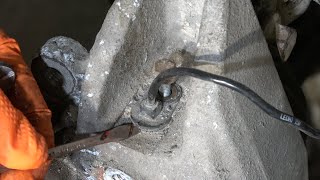
How to confirm: Scan the ABS module for codes. A specific code like 'BCM-0022' (Right front wheel sensor) will point directly to the faulty sensor. 🎬 See how to replace a front ABS speed sensor Use a scan tool to monitor live data from all four sensors while driving; the faulty sensor will show an erratic or zero reading compared to the others. These are active Hall Effect sensors and cannot be reliably tested with a multimeter's resistance function.
Typical fix: Replace the failed wheel speed sensor and clean the mounting surface and tone ring.
Est. part cost: $40-$100 for an aftermarket sensor, $120-$180 for OEM. - Damaged Wiring or Connectors ⚪ Low Probability Wiring to the wheel speed sensors can be damaged by road debris or improper suspension work. The main connector to the ABS module can also suffer from corrosion, though this is less common than module failure.
How to confirm: Visually inspect the wiring harness leading to each wheel speed sensor for breaks, chafing, or corrosion. Unplug and inspect the main connector at the ABS module for bent or corroded pins. Wiggling the harness while monitoring live data can help identify intermittent connection issues.
Typical fix: Repair the damaged section of wiring or clean/replace the affected connector.
Est. part cost: $5-$50
Rare But Worth Checking
- Failing Instrument Cluster (DIM): → Shop Instrument Cluster The Driver Information Module (DIM) on these Volvos is another known failure point, prone to its own internal solder joint issues. While it typically causes other issues like flickering lights, scrambled text, or total power loss to the cluster, it communicates on the same network. A faulty DIM could theoretically interfere with the speed signal communication, but this is highly unlikely to be the root cause of a P0500 code without other significant DIM symptoms also being present.
Diagnosis Steps
- Use an OBD-II scanner capable of reading Volvo-specific codes from all modules, not just the engine. A tool like VIDA is ideal. Pull codes from both the Engine (ECM) and Brake Control (BCM/ABS) modules.
- If you have codes for a specific wheel speed sensor in the BCM (e.g., BCM-0022), proceed to Step 3. If you have codes pointing to an internal module fault (e.g., BCM-0070), pump motor fault, or communication loss, the ABS module is the likely culprit. Proceed to Step 5.
- Visually inspect the wiring and connector for the indicated wheel speed sensor. Also inspect the ABS tone ring on the axle for cracks or heavy rust.
- Use the scanner's live data function to monitor the output from all four wheel speed sensors while driving slowly. Confirm that the suspect sensor is not reading or is providing an erratic signal compared to the others. If it is, replace the sensor.
- If the ABS module is suspected, inspect its main electrical connector for corrosion or damage. With the key on, you can gently tap the module with a screwdriver handle to see if the speedometer or ABS light flickers, which strongly points to a bad internal solder connection.
- To remove the module for repair, disconnect the battery. Unplug the large connector. Remove the four mounting bolts using an E5 External Torx socket. Carefully lift the module off the hydraulic block. The car can be driven with the module removed, but without ABS, speedometer, or stability control.
- If all sensors and wiring appear good, but the P0500 code persists alongside ABS module codes, the ABS module has failed and needs to be rebuilt or replaced.
Parts You'll Likely Need
- ABS Control Module Rebuild Service
(OEM #Common units include 8619538, 9472969, 8602266. Match the number on your specific unit.)— This is the most common failure point for P0500 on this vehicle. Rebuilding is the standard, cost-effective repair.
Trusted brands: ATE (Original Equipment), Bosch (Original Equipment)
OEM price range: $800-$1200 for a new unit
Aftermarket price range: $100-$250 for a rebuild service from specialists like XeMODeX or Midwest ABS. - Front or Rear Wheel Speed Sensor
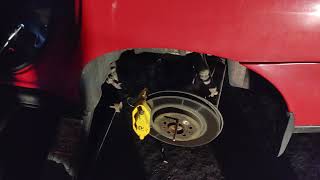
(OEM #e.g., 30773738, 30773739)— The second most likely cause. A failed sensor will stop 🎬 Watch: How to replace a rear wheel speed sensor the ABS module from being able to calculate vehicle speed.
Trusted brands: Bosch, ATE, Delphi, Vemo
OEM price range: $120-$180
Aftermarket price range: $40-$100 - E5 External Torx Socket — This specific tool is required to remove the four bolts holding the electronic ABS module to the hydraulic pump assembly.
Trusted brands: Facom, Lisle, CTA Tools
Aftermarket price range: $5-$15
Related Codes That Often Appear With This One
- BCM-0070 — This is a Volvo-specific ABS code for 'Pump Motor Supply Voltage, Faulty Signal'. It almost always indicates an internal failure of the ABS control module.
- BCM-0100 — A Volvo-specific code for 'Engine control module (ECM), communication fault'. This often accompanies P0500, indicating the ABS module is not successfully sending the speed signal to the ECM.
- C003x / C004x — These are generic ABS codes for specific wheel speed sensor circuits (e.g., C0035 for Front Right). Their presence helps pinpoint a sensor or its wiring as the root cause, rather than the module itself.
Platform-Specific Known Issues
- The electronic control module portion of the ABS unit is highly prone to failure from cracked internal solder joints due to its location in the hot engine bay. This is a well-documented, widespread issue across the entire Volvo P2 platform (S60, V70, XC70, S80, XC90) of this era.
Mechanic-Grade Diagnostic Values
- Wheel Speed Sensor Type — expected: 2-wire Hall Effect (Active) Sensor. Failure: These sensors cannot be reliably tested for resistance with a multimeter. A reading of open circuit is common and does not indicate a fault. Diagnosis requires monitoring live data with a scan tool or using an oscilloscope to check for a square wave signal.
- ABS Module Connector Power — expected: Battery Voltage (approx. 12V) at the two large power pins in the main connector.. Failure: No voltage indicates a problem with the vehicle's power supply or fuse to the module, not the module itself.
Hidden / Shadow Codes Worth Checking
- BCM-0022: Wheel Sensor, right front Mechanical Error. This is a Volvo-specific code pointing to a specific wheel sensor or its associated reluctor ring/wiring, as opposed to a general module failure. (see via Volvo-specific scan tool like VIDA/DiCE.)
- BCM-0070: Pump Motor Supply Voltage, Faulty Signal. This code almost always points to an internal failure (cracked solder joints) within the ABS control module itself, not the physical pump motor. (see via Volvo-specific scan tool like VIDA/DiCE.)
- ABS-0050: Control Module, Faulty Signal. This is a direct indictment of the ABS module, indicating an internal processing or communication fault. (see via Volvo-specific scan tool like VIDA/DiCE.)
- Unconfirmed DTCs: In VIDA, faults can be logged as 'unconfirmed' if they are detected intermittently but not long enough to be considered a permanent, 'confirmed' fault. These can be useful for tracking down elusive, temporary issues that may not trigger a warning light immediately. (see via Volvo VIDA software, under the 'DTCs' tab.)
Scan Tool Commands That Help
- Volvo VIDA: Live Data Monitoring — To diagnose a suspected wheel speed sensor fault. The 'Brake control module' data list will show the reported speed from all four wheels simultaneously. While driving slowly, a faulty sensor will read 0 or have an erratic value compared to the other three.
- Volvo VIDA: ABS Brake Bleeding Function — After replacing the hydraulic unit or opening brake lines, this function cycles the ABS pump and valves to purge trapped air from the hydraulic block, which is impossible to do with a standard manual bleed.
- Volvo VIDA: BCM Reload / Programming — Required when installing a NEW ABS control module. On later P2 models (approx. 2005+), this is also necessary to make a USED module work, as the module is coded to the car's original VIN.
Wiring & Ground Locations
- ABS Module Connector — On the ABS pump assembly, typically below the master cylinder and brake fluid reservoir in the engine bay.. This is the central connection point. It has four large pins for main power and ground, and numerous smaller pins for wheel speed sensor inputs and CAN bus communication to other modules. A wiring diagram is needed to identify specific sensor pins.
Real Owner Repair Stories
- YouTube user 'Built for Speed' (Volvo S60R (P2 Platform)) — ABS and Brake warning lights on dash, BCM internal fault codes.
❌ Tried (didn't work) A DIY repair attempt by opening the module and re-soldering/bending contact pins provided only a temporary fix. The problem returned.
✅ What actually fixed it The problem was permanently resolved by sending the original ABS module to a professional rebuilding service (XeMODeX) for repair.
OEM Part Supersession History
Multiple→Multiple— Standard part evolution and revisions.
Heads up: For 1999-2001 FWD models with STC, part numbers 9472088, 9472401, 9472866, 9472971, 9496440, 9496946, and 8619538 are generally interchangeable. However, modules for STC (Stability Traction Control) and DSTC (Dynamic Stability Traction Control) are NOT interchangeable. A DSTC module has different hardware and software to account for a yaw rate sensor.
Model Year Variations Within This Range
- 2000-2004 (approx.): These earlier P2 models often used an ATE Teves Mk20 or similar ABS module. A replacement module with a matching part number from another vehicle would often work without special programming.
- 2005-2007 (approx.): Later P2 models used a more advanced ABS module (e.g., ATE Teves Mk25) that is coded to the vehicle's VIN. A used module from a junkyard will NOT work without being reprogrammed by a specialist. A new module requires a software download from Volvo via VIDA. This makes rebuilding the original module even more critical for these later years.
Diagnostic Flowchart
Other Known Issues on This Vehicle
Issues unrelated to this code that are worth knowing about as an owner of this generation:
- Electronic Throttle Module (ETM) Failure 🔴 High — Extremely common on 1999-2002 models. Less common on later models with updated contactless sensors. Failure can occur anytime after 60k miles. (Ref: Volvo offered an extended warranty (10 years/200,000 miles) and software updates in some markets, but this has long expired.)
- Driver Information Module (DIM) Failure 🟠 Medium — Very common on 2002-2004 models. Caused by failing microprocessors and solder joints. Symptoms include flickering, scrambled text, or a completely dead instrument cluster.
- Clogged PCV/Breather System 🔴 High — Commonly requires service every 80k-120k miles. A clogged system builds crankcase pressure, which can blow out engine seals (like the rear main seal), leading to major oil leaks and expensive repairs.
- Front Strut Spring Seat Failure 🟠 Medium — The upper rubber spring seats degrade and collapse, typically after 100k miles, causing clunking noises from the front suspension, especially over bumps. (Ref: Volvo released an updated, more durable part (PN 30683637).)
- Automatic Transmission Issues (AW55-50/51SN) 🔴 High → Shop Transmission Assembly — Common issues include harsh shifting, 'shift flares', or a neutral condition when stopping. Often caused by wear in the valve body bores. Regular fluid changes are critical. Software updates can sometimes help. (Ref: Multiple software-related TSBs were issued to address shift quality.)
- Upper Engine Torque Mount Failure 🟡 Low — The rubber bushing in the upper engine mount wears out, causing increased vibration in the cabin at idle and a 'thunk' when accelerating or shifting. An easy and inexpensive part to replace.
Used vs. New Parts: Buying Guide for This Vehicle
When a used part is the smart pick: A used ABS module from a junkyard is NOT recommended for this repair. The failure rate is extremely high, so a used part is likely to fail soon, if it hasn't already. Furthermore, on 2005+ models, a used module will not function without being reprogrammed to the car's VIN.
What to inspect on the donor part:
- The only viable 'used' option is having your ORIGINAL module professionally rebuilt. This is the most common and reliable repair.
- When sending your module for rebuild, ensure the main connector and housing are not physically cracked or damaged.
OEM-only on this vehicle (don't cheap out):
- ABS Control Module: While the part is OEM, the recommended path is not a new dealer part (which is cost-prohibitive) but a rebuild of the original OEM unit. This preserves the vehicle's specific programming.
Aftermarket brands forum-validated for this vehicle:
- XeMODeX (Rebuild Service)
- Midwest ABS (Rebuild Service)
- BBA Reman (Rebuild Service)
Brands owners have reported issues with on this vehicle:
- Unknown or unverified eBay/Amazon rebuild services. Stick to established specialists with lifetime warranties.
Real Owner Stories
Aggregated from forums and TSBs cited above. Mileages and costs reflect what owners reported in those sources.
2000-2007 Volvo V70 2.4L
Symptoms: P0500 code stored; forum members noted that a fault was stored in the BCM (ABS module) and required a Volvo-specific reader to see the full picture.
What fixed it: Used a Volvo-specific code reader for proper diagnosis of the BCM fault.
Source hint: Volvo Owners Club Forum
2001-2009 Volvo S60
Symptoms: ABS controller failure, which is a known issue on this shared platform.
What fixed it: Removed the electronic portion of the ABS module (held by four E5 External Torx screws) and sent it to a specialist for rebuilding.
Source hint: Turbobricks forum discussions and vehicle_specific_issues
Related OBD-II Codes
Frequently Asked Questions
Can I still drive my V70 if I remove the ABS module for repair?
Is there a specific part number for the updated front strut spring seats on the V70?
Why is my speedometer dropping to zero intermittently on my V70?
Can I test the wheel speed sensors on my 2000-2007 V70 with a standard multimeter?
Which scan tool is recommended for diagnosing P0500 on this Volvo platform?
Are there reputable places to send my ABS module for a rebuild instead of buying a new one?
Helpful Videos
Used OEM Parts in Stock
New Aftermarket Parts Available


The information in this article is provided for general reference and educational purposes only. Vehicle specifications, procedures, and part compatibility can vary by production date, trim level, and region. Always consult your vehicle's factory service manual and verify part numbers before purchasing or performing repairs. Safety-critical components such as airbags, seat belts, and braking systems should be installed by a qualified professional.
- Volvo V70:
- 🧭 Diagnostic Flowchart
- 🎬 Helpful Videos
- 🛍️ Shop This Part
- What's Unique About the 2000-2007 Volvo V70
- Symptoms You May Notice
- Most Likely Causes
- Rare But Worth Checking
- Diagnosis Steps
- Parts You'll Likely Need
- Related Codes That Often Appear With This One
- Platform-Specific Known Issues
- Mechanic-Grade Diagnostic Values
- Hidden / Shadow Codes Worth Checking
- Scan Tool Commands That Help
- Wiring & Ground Locations
- Real Owner Repair Stories
- OEM Part Supersession History
- Model Year Variations Within This Range
- Other Known Issues on This Vehicle
- Used vs. New Parts: Buying Guide for This Vehicle
- Real Owner Stories
- 2000-2007 Volvo V70 2.4L
- 2001-2009 Volvo S60
- Related OBD-II Codes
- Frequently Asked Questions
- 🎟️ Get 5% Off