

P0501 on 2010-2012 Audi A5 Cabriolet: Vehicle Speed Sensor Causes and Fixes
On a 2010-2012 Audi A5, code P0501 is almost always caused by a faulty wheel speed sensor, which doubles as the vehicle speed sensor. Expect ABS and stability control warning lights. A single sensor replacement is the most common fix. Be aware that the sensor can seize in the hub, complicating removal.
- P0501 on your Audi A5 points to a problem with a wheel speed (ABS) sensor, not a transmission sensor.
- The most common symptoms are the trifecta of Check Engine, ABS, and ESP/Traction Control lights.
- A DIY-er can replace a wheel speed sensor, but proper diagnosis to identify the correct faulty sensor requires a scan tool that can read live ABS data.
- The Left Front wheel speed sensor is a common starting point for diagnosis on this platform.
- Be prepared for the sensor to be seized in the hub; removal may require drilling out the old sensor.
- Driving with this fault is possible but not recommended as key safety systems are disabled.
What's Unique About the 2010-2012 Audi A5 CABRIOLET
Unlike older vehicles that used a single speed sensor on the transmission, the 2010-2012 Audi A5 (B8) platform integrates this function into the ABS system. The P0501 code is triggered by the engine computer when it receives an implausible speed reading from the ABS control module. This means the root cause is almost always one of the four wheel speed sensors or the associated wiring. It is critical to distinguish this from other B8 platform mates like the S4 with an S-Tronic transmission, where P0501 points to a failure of a speed sensor located inside the transmission's mechatronics unit, a significantly more involved repair.
Diagnostic Flowchart
Tap your situation to follow the diagnostic path that matches what you're seeing on this vehicle.
Symptoms You May Notice
- Check Engine Light is on
- ABS, ESP, or Traction Control warning lights are illuminated on the dashboard
- Parking Brake Malfunction warning on the instrument cluster
- Speedometer works erratically or not at all
- Cruise control is inoperative
- Automatic transmission may shift erratically or harshly
- In-motion automatic door locking feature becomes inoperable
- Replacing a transmission-mounted vehicle speed sensor. This vehicle does not have one; it uses the wheel speed sensors for this function.
- Replacing the instrument cluster. While the cluster processes and displays the speed, it's rarely the root cause of the P0501 code itself unless accompanied by other cluster-specific faults.
Most Likely Causes
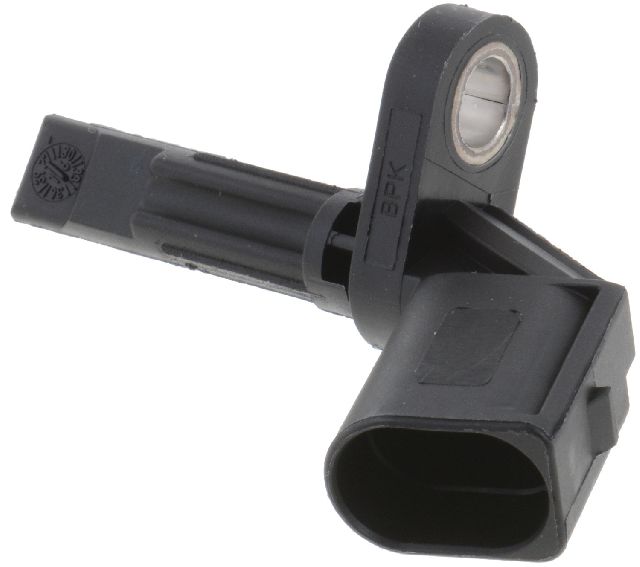
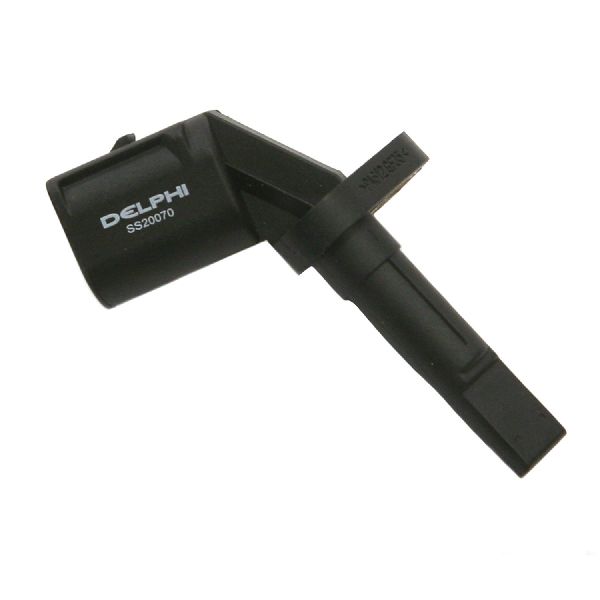
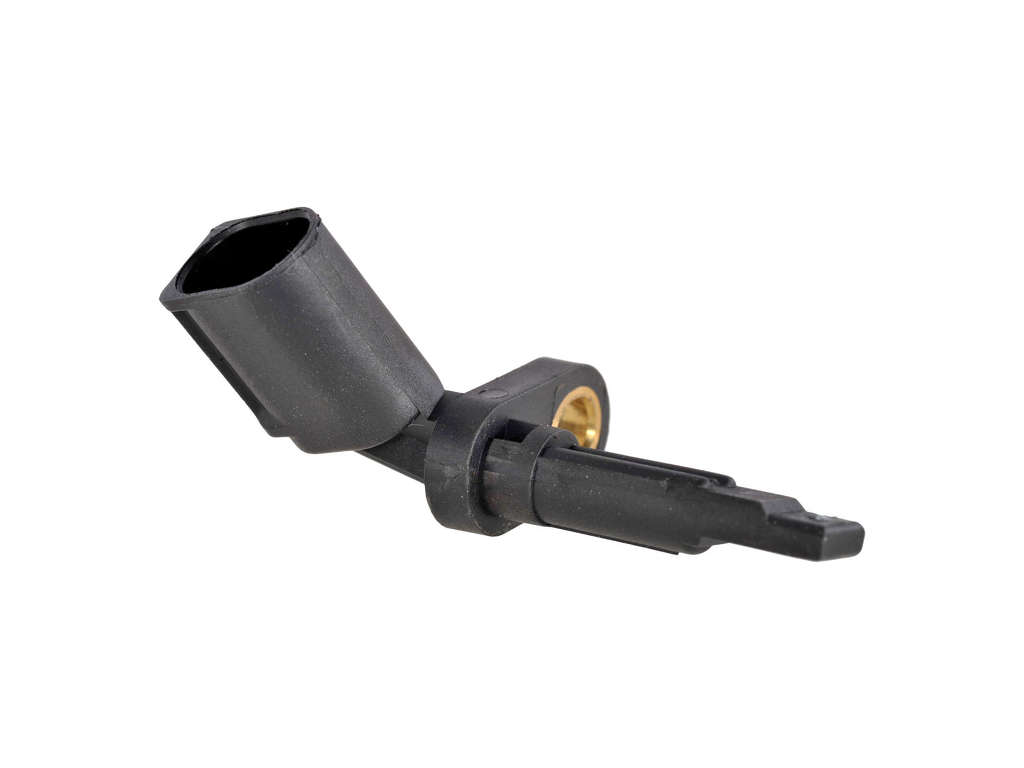
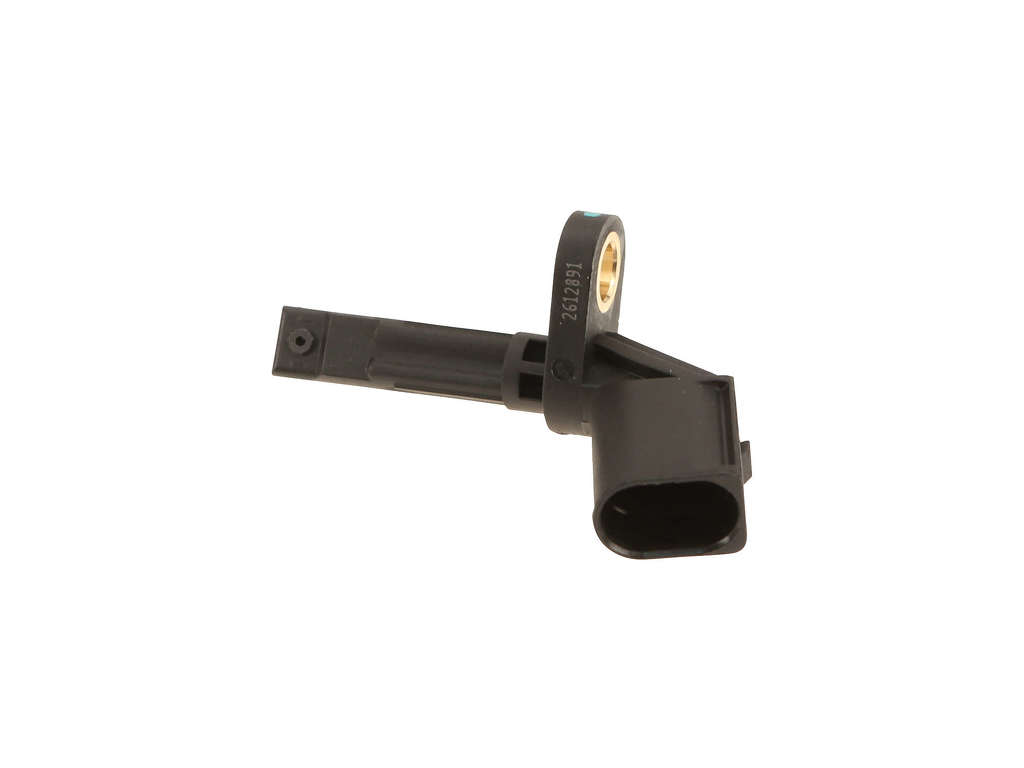
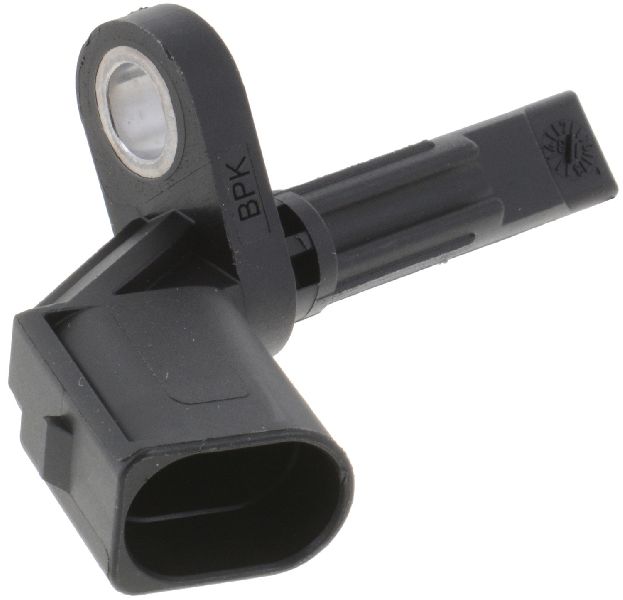
- Faulty Wheel Speed Sensor 🔴 High Probability → Shop ABS Wheel Speed Sensor Wheel speed sensors are exposed to harsh conditions (water, debris, heat) near the wheels, leading to eventual failure. The plastic body of the sensor can become brittle and often seizes inside the metal wheel hub, making removal difficult.
How to confirm: Use a diagnostic scan tool (like VCDS) that can read live data from the ABS module. Monitor the speed readings from all four wheels while driving. The sensor that shows an erratic, implausible, or zero reading is the faulty one. According to Ross-Tech, the Left Front sensor is a common starting point for diagnosis.
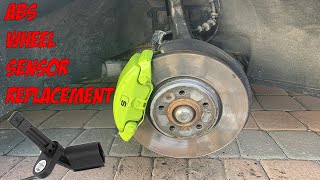
Typical fix: Replace the faulty wheel speed sensor. They are held in by a single bolt (typically 10mm). Be prepared for the sensor to be stuck; it may need to be carefully drilled and pried out of the hub. 🎬 See this walkthrough for replacing a stuck wheel speed sensor.
Est. part cost: $40-$100 - Damaged Wiring or Connector 🟡 Medium Probability Wiring near the wheels is susceptible to damage from road debris, corrosion, improper routing, or stress from suspension movement.
How to confirm: Visually inspect the wiring harness leading to each wheel speed sensor for breaks, chafing, or corrosion at the connector. A multimeter can be used to check for continuity between the sensor connector and the ABS module connector.
Typical fix: Repair the damaged section of wire or replace the connector pigtail.
Est. part cost: $15-$50 - Faulty ABS Control Module ⚪ Low Probability While less common, internal failure of the ABS module can cause it to stop processing or sending speed data correctly. Forum users report intermittent failures (speedometer works when cold, fails when hot) that were ultimately traced to the ABS module.
How to confirm: This is a diagnosis of exclusion. If all four wheel speed sensors and their wiring test good, but the P0501 code persists (often with other communication codes), the ABS module is the likely culprit. A specialized scan tool is needed to confirm communication with the module.
Typical fix: Replace or send out the ABS control module for repair. This requires coding the new module to the vehicle.
Est. part cost: $300-$1200
Rare But Worth Checking
- Dirty or Damaged Tone Ring: The toothed ring that the wheel speed sensor reads can become contaminated with metallic debris or rust, causing an implausible signal. It's worth inspecting and cleaning the tone ring when replacing a sensor.
- Faulty Control Module on Data Bus: In a documented case on a similar platform (Audi TT Roadster), a P0501 code with a working speedometer was caused by a faulty headlight control module that had gotten wet. The faulty module was corrupting the speed signal on the vehicle's data bus, preventing the ECU from receiving it. Unplugging the faulty module resolved the code.
Diagnosis Steps
- Connect an OBD-II scanner capable of reading ABS codes (like VCDS/VAG-COM). Note the P0501 code and any accompanying ABS-specific 'C' or VAG codes.
- Access the live data stream for the ABS module.
- Slowly drive the vehicle while observing the speed readings from all four wheel speed sensors. Pay close attention to the Left Front sensor first, as it's a common culprit for this code.
- Identify the sensor that is reading 0 MPH, a different speed than the others, or has an erratic signal.
- Raise the vehicle and visually inspect the identified faulty sensor and its wiring harness for any visible damage, corrosion, or loose connections.
- If wiring appears intact, prepare to replace the faulty wheel speed sensor. Be aware that the sensor is likely seized in the hub. Apply penetrating oil. If it breaks during removal, the remaining plastic piece will need to be carefully drilled and chiseled out.
- While the sensor is out, inspect the ABS tone ring inside the hub. Clean away any rust or metallic debris with a small pick and compressed air.
- Install the new sensor and secure it with its retaining bolt.
- If the sensor and wiring are confirmed to be good but the problem persists, further diagnostics on the ABS control module and other modules on the CAN bus (like the headlight control module) are required.
- Clear all fault codes and perform a test drive to ensure the repair was successful and the ABS/ESP lights have extinguished.
Parts You'll Likely Need
- Wheel Speed Sensor (ABS Sensor)
(OEM #Front Right: WHT003856A; Front Left: WHT003857A; Rear Right: WHT003858A; Rear Left: WHT003859A.)— This is the most common failure point for a P0501 code on this vehicle, as it is the component that generates the speed signal.
Trusted brands: Bosch, ATE, Delphi, NTK
OEM price range: $100-$160
Aftermarket price range: $40-$90
Related Codes That Often Appear With This One
- P2159 — This code for 'Vehicle Speed Sensor 'B' Range/Performance' is often seen with P0501, as noted in TSB A351619 2032211-, indicating a system-wide issue with speed signal processing.
- C-codes (e.g., C0035-C0051) or other manufacturer-specific ABS codes — The ABS module will often store a specific C-code or a VAG-specific fault that points directly to the faulty wheel speed sensor (e.g., '00287 - ABS Wheel Speed Sensor; Rear Right (G44)'). This is extremely helpful for diagnosis.
Technical Service Bulletins (TSBs) & Recalls
- A351619 2032211- (2010 STEERING, dated 2016-01-11): Mentions DTC P0501 with DFCC 8098 (Vehicle speed sensor ‘A’ range/performance) alongside other input/turbine and vehicle speed sensor codes. This TSB is most relevant to S-Tronic models where internal transmission sensors can fail.
Platform-Specific Known Issues
- A Technical Service Bulletin (TSB #A351619 2032211-) issued by Audi for the 2010 model year groups DTC P0501 with other speed sensor codes (P2765, P2159), suggesting a potential for related electrical or control module faults that can trigger multiple codes simultaneously. This TSB is particularly relevant for platform mates with S-Tronic transmissions.
- As a convertible, the A5 Cabriolet can be susceptible to water leaks, particularly around the convertible top seals. In a documented case on the similar Audi TT Roadster, water ingress damaged the headlight control module, which then corrupted the speed signal on the data bus and triggered a P0501 code, even though the speed sensor itself was good.
Mechanic-Grade Diagnostic Values
- Wheel Speed Sensor Type — expected: Active (Hall Effect) Sensor.. Failure: Attempting to measure resistance with a multimeter is an invalid test for this type of sensor and may yield misleading results. Diagnosis must be done by observing the digital signal via scan tool live data or an oscilloscope.
- Live Data (VCDS/Scan Tool) — expected: All four wheel speed sensors should report a speed that matches the other three and the vehicle's actual speed.. Failure: One sensor reads 0, a wildly different speed, or has an erratic signal compared to the others while the vehicle is in motion. In one documented case, a faulty sensor read 54km/h while the vehicle was stationary.
Hidden / Shadow Codes Worth Checking
- 00283 / 00285 / 00287 / 00290: These are VAG-specific codes for Front Left (G47), Front Right (G45), Rear Right (G44), and Rear Left (G46) wheel speed sensors, respectively. They provide the exact location of the fault, which P0501 does not. (see via An Audi/VW-specific scan tool like VCDS (VAG-COM) or ODIS is required to read these from the ABS Control Module (Address 03).)
- 00287 - Mechanical Malfunction: A sub-fault indicating the issue is not an electrical failure of the sensor itself, but a problem with the physical interaction between the sensor and the tone ring. (see via This detailed fault description is visible in an Audi/VW-specific scan tool like VCDS. It strongly suggests checking the ABS tone ring (part of the wheel bearing) for damage/debris or excessive wheel bearing play.)
Scan Tool Commands That Help
- VCDS (VAG-COM): ABS Module Live Data / Measuring Value Blocks — This is the primary diagnostic step. Use this to monitor the output from all four wheel speed sensors simultaneously while driving to identify which sensor is providing an implausible signal.
- VCDS (VAG-COM): Selective Output Tests — After checking sensor data, this function can be used to test various outputs of the ABS control module to help verify the module's integrity, though it does not directly test sensor inputs.
Wiring & Ground Locations
- J104 — The ABS Control Module itself, typically located in the engine bay on the hydraulic block.. This is the module that receives signals from all four wheel speed sensors and communicates vehicle speed to the PCM. Internal or connector faults here can trigger P0501.
- T38a — The 38-pin main electrical connector at the J104 ABS Control Module.. This is the central connection point for all wheel speed sensor wiring. Corrosion or pin damage here can cause sensor signal loss.
- G671 — Earth point 1, located on the front of the left longitudinal member (frame rail) in the engine bay.. This is a primary ground point for the ABS system. A corroded or loose ground here can cause erratic behavior and fault codes for the entire ABS system.
Real Owner Repair Stories
- AudiWorld Forums user (Audi A8 (similar ABS system)) — ABS/ESP lights and various warnings (00287, 00290), particularly when wet or damp. The faults became permanent over time.
❌ Tried (didn't work) Replacing both rear ABS sensors., Swapping new sensors to the front (where they worked) and old front sensors to the rear (where the fault remained), proving the sensors were good., Checking wiring continuity from the sensor connector into the trunk.
✅ What actually fixed it The ABS control module was sent to a specialist for repair. The specialist found and fixed internal faults related to the rear sensor inputs. Reinstalling the repaired module permanently fixed the issue. - YouTube video by U101700 (Audi/VW vehicle with similar ABS system) — ABS and traction control lights on, code 00287 for rear right sensor. Live data showed 0 speed from that sensor.
❌ Tried (didn't work) The owner had already replaced the wheel speed sensor., The owner had also replaced the wheel bearing.
✅ What actually fixed it The technician confirmed wiring continuity was good. The final fix was replacing the ABS pump/module with a used unit and copying the coding from the old module. This restored the signal from the rear right sensor. - YouTube video by 'Repairs' channel (2008 VW Golf Plus (similar system)) — ABS fault code 00287 with 'Mechanical Malfunction' description.
❌ Tried (didn't work) The technician noted that replacing the sensor would have been incorrect because live data showed all four sensors were producing a signal, which ruled out a dead sensor or broken wire.
✅ What actually fixed it Based on the 'Mechanical Malfunction' code, the technician correctly identified the cause as a perished magnetic ABS ring on the back of the wheel bearing. Replacing the wheel bearing assembly (which includes the ring) resolved the fault.
When the Usual Fixes Don't Work
- In multiple documented cases, replacing the wheel speed sensor did not resolve the P0501 code or its associated VAG-specific codes (like 00287). The actual root cause was found to be either a faulty ABS control module with an internal failure on a specific sensor's circuit, or a damaged magnetic tone ring which is integrated into the wheel bearing. This demonstrates that while the sensor is the most common cause, a diagnosis of exclusion is critical, and a VAG-specific scanner that can read detailed sub-codes like 'Mechanical Malfunction' is invaluable in avoiding unnecessary sensor replacement.
OEM Part Supersession History
WHT003857A→WHT003857B— Manufacturer revision, likely for improved durability or performance.
Model Year Variations Within This Range
- 2010-2012: These models are all part of the pre-facelift 'B8.0' generation. They utilize hydraulic power steering, which was changed to electromechanical steering for the 'B8.5' facelift in model year 2013. While the ABS system is fundamentally the same, it's a key identifier for this specific vehicle range.
Helpful Videos

We Have This Part in Stock


The information in this article is provided for general reference and educational purposes only. Vehicle specifications, procedures, and part compatibility can vary by production date, trim level, and region. Always consult your vehicle's factory service manual and verify part numbers before purchasing or performing repairs. Safety-critical components such as airbags, seat belts, and braking systems should be installed by a qualified professional.
- Audi A5 CABRIOLET:
- 🧭 Diagnostic Flowchart
- 🎬 Helpful Videos
- 🛍️ Shop This Part
- What's Unique About the 2010-2012 Audi A5 CABRIOLET
- Symptoms You May Notice
- Most Likely Causes
- Rare But Worth Checking
- Diagnosis Steps
- Parts You'll Likely Need
- Related Codes That Often Appear With This One
- Technical Service Bulletins (TSBs) & Recalls
- Platform-Specific Known Issues
- Mechanic-Grade Diagnostic Values
- Hidden / Shadow Codes Worth Checking
- Scan Tool Commands That Help
- Wiring & Ground Locations
- Real Owner Repair Stories
- When the Usual Fixes Don't Work
- OEM Part Supersession History
- Model Year Variations Within This Range
- 🎟️ Get 5% Off