

P0501 on 2013-2014 Audi S5: Internal Transmission Fault vs. Wheel Speed Sensor
On a 2013-2014 Audi S5, P0501 is rarely a simple wheel speed sensor issue. It most often indicates a failure of an internal sensor module within the S-Tronic transmission's mechatronics unit, especially if seen with codes like P2159 or P2765. This is a complex repair requiring a specialist and a specific mechatronics repair kit.
- On a 2013-2014 Audi S5, P0501 is a serious code that usually points to an internal transmission problem, not a simple sensor.
- Before buying any parts, perform a full system scan. If P0501 is paired with codes like P2159 or P2765, the problem is inside the transmission.
- Do not replace the external ABS wheel speed sensors unless live data proves one has failed and no other transmission codes are present.
- This repair is not DIY-friendly and should be handled by a qualified Audi or transmission specialist.
What's Unique About the 2013-2014 Audi S5

Unlike most vehicles where P0501 suggests an inexpensive, external wheel speed sensor, on the B8.5 generation Audi S5, it's a well-documented platform issue tied to the DL501 S-Tronic automatic transmission. An official Audi Technical Service Bulletin (TSB A351619) directly links P0501 with other internal transmission sensor codes, confirming the problem often lies deep within the gearbox on a specific printed circuit board in the mechatronics unit. Mistaking this for a simple ABS sensor fault can lead to incorrect and costly repairs, a common frustration shared by owners in forums.
Diagnostic Flowchart

Tap your situation to follow the diagnostic path that matches what you're seeing on this vehicle.
Symptoms You May Notice

- Check Engine Light illuminated
- "Gearbox Malfunction: you can continue to drive" message on the instrument cluster
- Flashing PRNDS indicator (limp mode)
- Harsh, erratic, or delayed transmission shifting, especially a clunk or lurch between 1st and 2nd gear
- ABS and/or Electronic Stability Control (ESC) warning lights on
- Speedometer may be inaccurate or non-functional
- Sudden, unexpected shifts, for example from 3rd to 7th gear
- Replacing one or more external ABS wheel speed sensors without checking for the cluster of transmission-related fault codes. If the internal mechatronics board is the true cause, this will not fix the issue and will waste money.
Most Likely Causes

- Internal Mechatronics Sensor Module Failure 🔴 High Probability The printed circuit board (PCB) housing the speed sensors inside the DL501 transmission is a known failure point due to heat, vibration, and contamination from clutch wear products over time.
How to confirm: Scan the vehicle with an Audi-specific tool (like VCDS). The presence of P0501 along with other codes like P2159 (Vehicle Speed Sensor 'B'), P0716 (Input/Turbine Speed Sensor 'A'), and/or P2765 (Input/Turbine Speed Sensor 'B') is a strong confirmation of this internal failure, as outlined in TSB A351619 2032211.
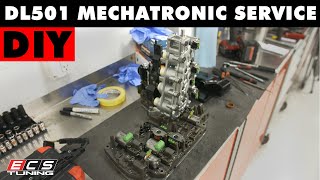
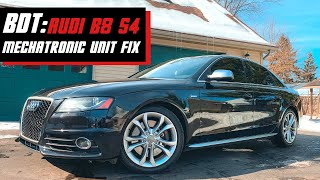
Typical fix: The transmission's mechatronics unit must be removed 🎬 Watch: Step-by-step guide to removing and servicing the mechatronics unit. to replace the faulty sensor module and circuit boards. This is typically sold as a 'Mechatronics Repair Kit' (part number 0B5398009F). After installation, a transmission adaptation procedure must be performed.
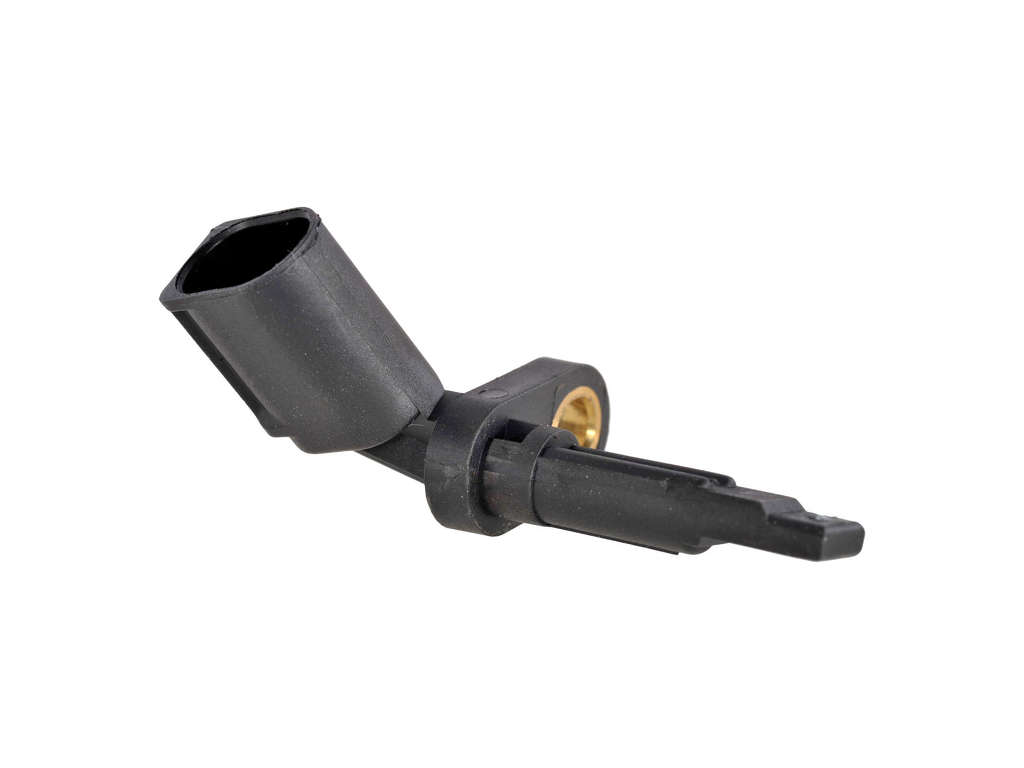
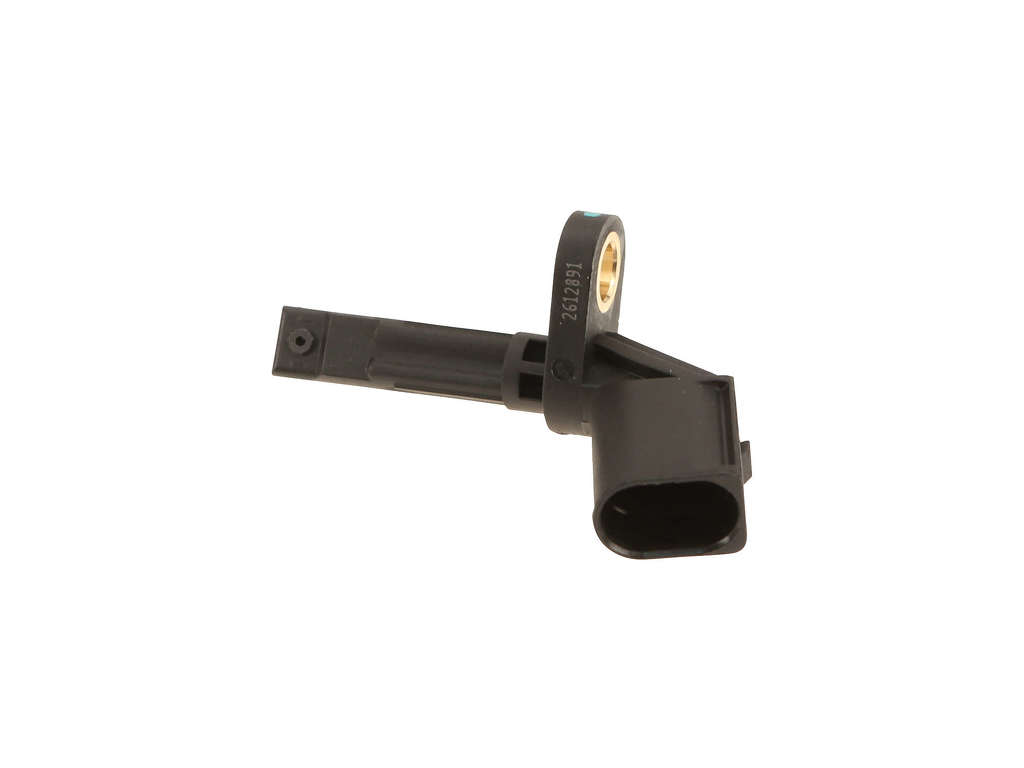
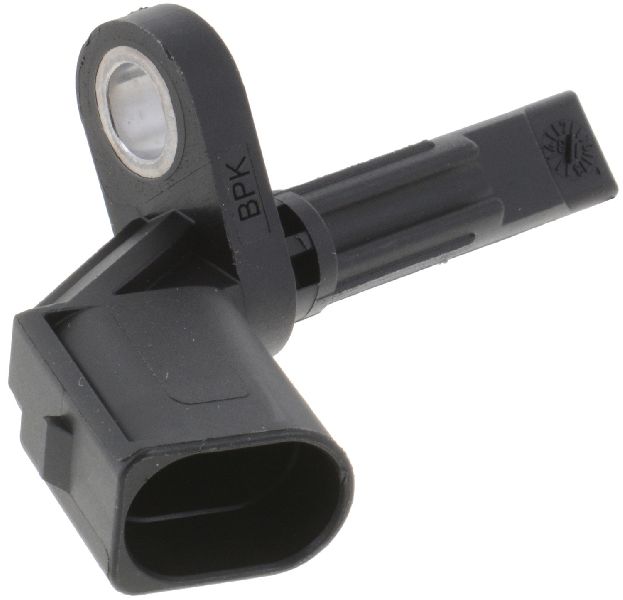
Est. part cost: $400-$800 - Faulty ABS Wheel Speed Sensor ⚪ Low Probability → Shop ABS Wheel Speed Sensor These sensors are exposed to the elements and can fail from corrosion, damage, or an accumulation of dirt and grease on the sensor or sensor ring. However, this is a much less common cause for P0501 on this specific vehicle compared to the internal transmission issue.
How to confirm: This is the likely cause only if P0501 appears *without* other transmission codes. Use a scan tool to monitor live data from all four wheel speed sensors while driving. A sensor that reads 0, has an erratic signal, or differs significantly from the others is faulty.
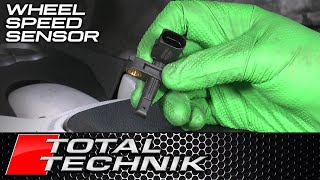
Typical fix: Replace the faulty ABS wheel speed sensor 🎬 See this walkthrough on how to replace an ABS wheel sensor. at the corresponding wheel hub. Before replacing, inspect the sensor and ring for debris.
Est. part cost: $40-$150 - Damaged Wiring or Connectors ⚪ Low Probability Audi issued a TSB (45 13 07 2033412/2) for the B8 platform regarding ABS sensor wiring insulation being damaged where it passes through the driver's side bulkhead, leading to corrosion and signal faults.
How to confirm: Visually inspect the wiring harness for the ABS sensors, particularly near the firewall, for any signs of chafing, breaks, or corrosion. Also inspect the main harness connector at the transmission for damage or corrosion.
Typical fix: Repair the damaged section of the wiring harness using a wiring harness repair kit (e.g., VAS 1978B) or clean/replace the corroded connector.
Est. part cost: $10-$100
Rare But Worth Checking
- Faulty ABS Control Module:
Diagnosis Steps
- Perform a full system scan using an Audi-specific diagnostic tool like VCDS or an equivalent professional scanner.
- Analyze the stored codes. If P0501 is present with P2159, P2765, P0716, or P179E, the cause is almost certainly the internal mechatronics sensor board. Proceed to transmission repair.
- If P0501 is the only code present, access the live data for all four ABS wheel speed sensors.
- Drive the vehicle slowly (or spin the wheels with the car on a lift) and observe the speed readings from each sensor. A sensor that shows no reading, an erratic reading, or a reading that differs significantly from the others is faulty.
- If a wheel speed sensor is suspect, visually inspect its wiring and connector for any signs of damage, corrosion, or chafing, paying close attention to the bulkhead area as noted in TSB 45 13 07 2033412/2.
- If the wiring is intact, replace the faulty ABS wheel speed sensor.
- After any repair, clear all fault codes and perform a test drive to ensure the issue is resolved.
- If the mechatronics repair kit was installed, a 'basic setting' or 'adaptation' procedure must be performed using an Audi-specific scan tool. This is a critical final step. 🎬 Watch: How to perform the mechatronic adaptation using VCDS.
Parts You'll Likely Need
- Mechatronics Repair Kit
(OEM #0B5398009F)— This is the most common fix for the P0501 code on this vehicle when it appears with other transmission speed sensor codes. It contains the replacement circuit boards (PCBs) and speed sensor for the inside of the transmission mechatronics unit.
Trusted brands: Audi Genuine, Vemo
OEM price range: $600-$800
Aftermarket price range: $400-$600 - ABS Wheel Speed Sensor
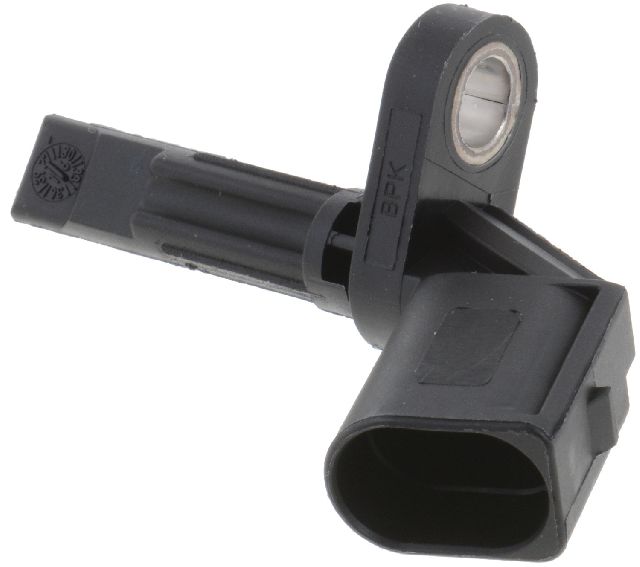
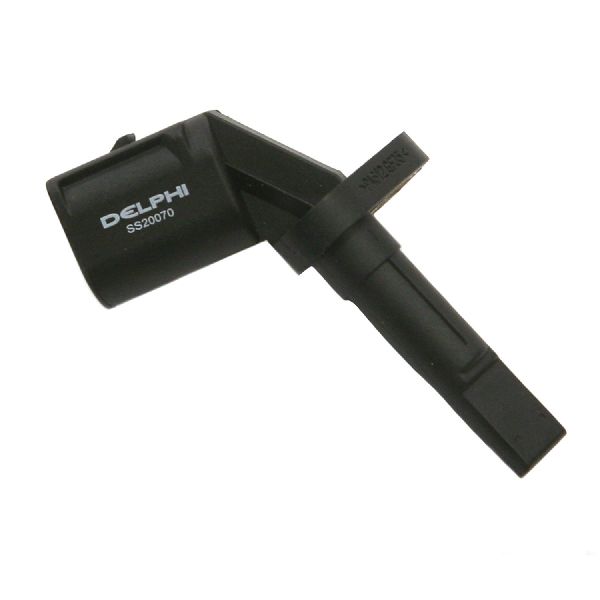
(OEM #4M0-927-803-C)— This is the correct part to replace if diagnosis confirms a single external wheel speed sensor has failed (typically when P0501 appears alone).
Trusted brands: Bosch, Hella, Delphi, Standard Motor Products
OEM price range: $120-$180
Aftermarket price range: $40-$90
Related Codes That Often Appear With This One
- P2159 — Vehicle Speed Sensor 'B' Range/Performance. This sensor is part of the same internal module (G676) as Sensor 'A' (P0501) within the transmission. TSB A351619 explicitly groups these codes together.
- P2765 — Input/Turbine Speed Sensor 'B' Circuit. This is another sensor located on the same faulty printed circuit board inside the mechatronics unit.
- P0716 — Input/Turbine Speed Sensor 'A' Circuit Range/Performance. Also located on the same internal circuit board, its failure is commonly associated with P0501.
- P179E — Drive Position Sensor Electrical Error. This code also points to a fault within the mechatronics unit and is often seen as part of the same failure event.
Technical Service Bulletins (TSBs) & Recalls
- A351619 2032211: Links DTC P0501 (with specific DFCC 8098) and P2159 with other internal sensor codes like P2765 and P0716, pointing to a fault requiring replacement of the G676 sensor module and circuit board inside the transmission.
- 45 13 07 2033412/2: Notes that for 2009-2014 models (including A4/S4, A5/S5, Q5), the ABS wheel speed sensor wiring can be damaged where it passes through the left side bulkhead, causing signal faults.
Platform-Specific Known Issues
- The DL501 S-Tronic transmission has a widely recognized issue with the internal printed circuit boards of its mechatronics unit failing, which generates a specific cluster of speed sensor codes, including P0501.
- Owner experiences shared on forums like Audi-Sport.net describe the sudden onset of the 'Gearbox Malfunction' light and erratic shifting behavior that ultimately required the mechatronics repair.
- A Reddit user with a 2011 S4 described a similar failure, noting jerky take-offs from 1st to 2nd gear before the main fault appeared, and discovered an aftermarket circuit board had already been installed, indicating a previous repair attempt.
Mechanic-Grade Diagnostic Values
- Transmission Fluid Temperature for Adaptation — expected: Between 40°C and 60°C. Failure: Adaptation procedures may not run or complete successfully if the temperature is outside this range.
- Clutch Valve Calibration Pressure (VCDS) — expected: Up to 19.6 - 20 bar (approx. 294 PSI). Failure: Failure to reach target pressures during the clutch valve calibration can indicate a hydraulic leak or a failing mechatronics pressure valve.
- Clutch Engagement Point Adaptation (VCDS) — expected: Clutch 1 upper adaptation: ~7.63 bar; Clutch 2 upper adaptation: ~8.77 bar (example values). Failure: Values significantly outside of a typical range, or a failure for the adaptation status to change to 'Engagement point adapted', can indicate worn clutches or mechatronic issues.
Scan Tool Commands That Help
- VCDS (or equivalent): Basic Settings: Erase counter for start/stop processes — This is one of the first steps in the DL501 adaptation process, used to clear old clutch engagement learning data before performing new calibrations.
- VCDS (or equivalent): Basic Settings: Clutch Valve Calibration — Performed with the engine running, this function calibrates the operating range and pressure limits of the clutch control valves in the mechatronics unit.
- VCDS (or equivalent): Basic Settings: Distance Sensor Calibration — This calibrates the sensors that track the physical position of the gear shift forks. The gearbox will be heard shifting through gears during this procedure.
- VCDS (or equivalent): Basic Settings: Clutch Engagement Point Adaptation — This is a critical final step after other calibrations. The TCU physically 'feels' for the clutch bite point to ensure smooth take-offs. The process is finished when the measuring block status shows 'successfully'.
Wiring & Ground Locations
- Main Earth Point — In the passenger's side kick panel area, near the fuse carriers.. A poor ground connection at this common location can cause a variety of difficult-to-diagnose electrical faults in modules controlled in this area, including the transmission and ABS systems.
- Transmission Harness Connector — At the transmission housing, secured with a twist-lock mechanism.. This is the main electrical interface for the mechatronics unit. Damage, corrosion, or improper seating of this connector can interrupt signals from the internal speed sensors, causing codes like P0501.
- Blue/White (bl/ws) Signal Wire — Runs from the ECM to the instrument cluster, and from the instrument cluster to the central locking module.. On some Audi models, this wire is identified as carrying the VSS signal. A fault along this wire could explain why the speedometer works but other systems that rely on the speed signal (like cruise control or in-motion door locks) do not.
Real Owner Repair Stories
- YouTube channel 'Arkeyfix' (2013 Audi S5 3.0T) — Received a "Transmission Malfunction" message on the dashboard. The logged fault codes pointed to the G676 sensor, which is part of the assembly that triggers P0501.
❌ Tried (didn't work) The video series is a direct documentation of the successful repair, not a list of failed attempts.
✅ What actually fixed it The owner performed a complete DIY replacement of the internal G676 sensor. This was a highly involved repair that required full disassembly of the transmission to access the sensor, which is located in the rear section of the gearbox.
OEM Part Supersession History
0B5398009A, 0B5398009B, 0B5398009C, 0B5398009D, 0B5398009E→0B5398009F— Progressive updates by the manufacturer to improve the reliability of the mechatronics internal circuit boards and sensors.
Heads up: While all versions are intended for the DL501, using the latest 'F' revision is highly recommended for any repair to benefit from the most recent durability improvements.
Model Year Variations Within This Range
- 2013+: The B8.5 models (2013+) are noted to have revised mechatronics components and updated circuit boards compared to the earlier B8 models (2008-2012). This makes the later models less susceptible to the common mechatronics failure that causes P0501, although the fault can still occur.
Helpful Videos
We Have This Part in Stock


The information in this article is provided for general reference and educational purposes only. Vehicle specifications, procedures, and part compatibility can vary by production date, trim level, and region. Always consult your vehicle's factory service manual and verify part numbers before purchasing or performing repairs. Safety-critical components such as airbags, seat belts, and braking systems should be installed by a qualified professional.
- Audi S5:
- 🧭 Diagnostic Flowchart
- 🎬 Helpful Videos
- 🛍️ Shop This Part
- What's Unique About the 2013-2014 Audi S5
- Symptoms You May Notice
- Most Likely Causes
- Rare But Worth Checking
- Diagnosis Steps
- Parts You'll Likely Need
- Related Codes That Often Appear With This One
- Technical Service Bulletins (TSBs) & Recalls
- Platform-Specific Known Issues
- Mechanic-Grade Diagnostic Values
- Scan Tool Commands That Help
- Wiring & Ground Locations
- Real Owner Repair Stories
- OEM Part Supersession History
- Model Year Variations Within This Range
- 🎟️ Get 5% Off