

P0501 on 2006-2010 Dodge Charger: Causes and Fixes for Limp Mode
On a 2006-2010 Dodge Charger, code P0501 is almost always caused by a rusted, damaged, or detached ABS tone ring on a rear axle shaft. This triggers limp mode and multiple warning lights. The fix is to replace the tone ring, which is an affordable part, but labor can be moderate.
- P0501 on a 2006-2010 Charger is an ABS-related issue, not a transmission sensor problem.
- Before buying any parts, visually inspect the toothed/magnetic rings on the rear axle shafts; they are the most likely cause.
- The vehicle will likely be in 'limp mode,' making it unsafe for normal driving.
- If a tone ring has failed, you can use an aftermarket part or an OEM part from Mercedes-Benz (A 230 357 01 82 64) for the repair.
- Always check for ABS-specific codes ('C' or 'U' codes) in addition to the P0501, as they will help pinpoint which wheel is having the issue.
What's Unique About the 2006-2010 Dodge Charger
The 2006-2010 Dodge Charger (LX platform) is highly prone to a specific failure that causes the P0501 code: the ABS tone rings on the rear axle shafts corrode, crack, and fall off. These toothed rings are what the wheel speed sensors read to determine wheel rotation. When a ring fails, the sensor sends a bad signal to the ABS module, which in turn sends faulty data to the PCM, triggering the code and often forcing the car into limp mode. This tone ring failure is far more common than the wheel speed sensor itself failing on this platform.
Symptoms You May Notice
- Check Engine Light is on
- ABS, ESP, and/or Traction Control warning lights are on
- Vehicle is stuck in a low gear ('limp mode') and cannot accelerate past a low speed 🎬 Watch: How limp mode is caused by this common failure. (e.g., 20-30 mph)
- Speedometer reads zero or behaves erratically
- Harsh or erratic automatic transmission shifting
- Cruise control is inoperative
- Replacing the transmission output speed sensor. On this vehicle, the transmission sensors are not the primary source for the vehicle speed signal used by the PCM for this function.
- Replacing the PCM. This is a very expensive and rare cause of this specific code.
Most Likely Causes
- Rusted, Damaged, or Detached Rear ABS Tone Ring 🔴 High Probability The design of the rear axle shafts on the LX platform leaves the metal tone rings exposed to the elements, leading to corrosion, cracking, and eventual failure. This is a widely documented issue across the entire platform.
How to confirm: Visually inspect the CV axle shafts behind the rear wheels. Look for a toothed metal ring on the shaft, just inboard of the hub. Check if it is cracked, heavily rusted, has a visible gap, or is missing entirely. Often, the broken ring will be loose on the axle shaft.
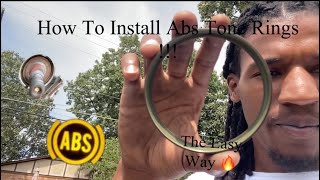
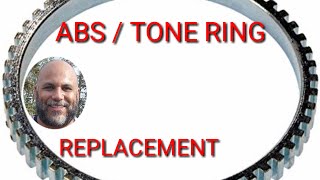
Typical fix: Replace the failed tone ring. 🎬 See this walkthrough on installing new ABS tone rings. This requires removing the wheel, brake caliper, rotor, and hub to access the axle shaft. The old, rusted ring is chiseled off, and the axle surface is cleaned. A new ring is then carefully pressed or heated and tapped into place.
Est. part cost: $15-$50 for a single ring - Faulty Wheel Speed Sensor 🟡 Medium Probability → Shop ABS Wheel Speed Sensor
How to confirm: Scan the ABS module for specific wheel speed sensor codes (e.g., C1020, C102B). You can test the sensor with a multimeter or by swapping it with a known good sensor to see if the code clears. A quick test involves plugging in a new sensor and passing a magnet over its tip while monitoring live data on a scan tool to see if it registers a speed.
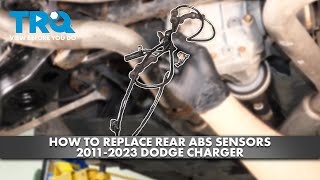
Typical fix: Replace the faulty wheel speed sensor. It is typically held in by a single bolt behind 🎬 Watch: Step-by-step guide to replacing the rear ABS sensors. the wheel hub/brake rotor. The sensor can sometimes seize in the knuckle and require careful extraction.
Est. part cost: $25-$75 per sensor - Damaged Wiring or Connector ⚪ Low Probability
How to confirm: Visually inspect the wiring harness leading to each wheel speed sensor for any signs of fraying, corrosion, or damage from road debris or heat. Check for a secure connection at the sensor and where the harness connects to the main body.
Typical fix: Repair the damaged section of wire or replace the connector pigtail.
Est. part cost: $10-$30 for repair materials
Rare But Worth Checking
- Faulty ABS Control Module: This is uncommon and should only be considered after confirming all wheel speed sensors, tone rings, and wiring are in perfect condition. A faulty module will typically store internal error codes and may cause communication issues with the scan tool.
- Incorrect Tire Size: If you have recently installed tires that are a different size from the factory originals without recalibrating the computer, it can cause the wheel speed sensors to report conflicting data, potentially triggering a P0501 code.
- Blown Fuse: A blown fuse related to the ABS system can cause a loss of power to the module or sensors, leading to this code. Check fuses F5 and F6 in the front fuse box (under the hood).
Diagnosis Steps
- Scan for Codes: Use an OBD-II scanner that can read ABS codes. Note all codes present. P0501 will often be accompanied by ABS-specific 'C' or 'U' codes pointing to a specific wheel.
- Visual Inspection: Raise the rear of the vehicle safely. Remove the rear wheels.
- Inspect Tone Rings: Carefully inspect the ABS tone rings on both rear axle shafts. Look for cracks, severe rust, or a ring that has completely detached from the axle. This is the most likely cause.
- Inspect Wheel Speed Sensors: While inspecting the tone rings, check the condition of the wheel speed sensors and their wiring. Ensure they are securely mounted and the wires are not damaged.
- Test Sensors (If Rings are OK): If the tone rings appear intact, test the wheel speed sensor indicated by the ABS codes. You can use a multimeter to check for resistance or an AC voltage signal while spinning the wheel. A more straightforward method is to swap the sensor with a new one or use the magnet test described in the 'how_to_confirm' section.
- Check Wiring: If sensors and rings are good, trace the wiring harness from the sensors back as far as possible, looking for any damage.
- Check Fuses: Check all fuses related to the ABS and powertrain control systems in the vehicle's fuse boxes, particularly F5 and F6 in the underhood fuse box.
- Address the Fault: Based on your findings, replace the faulty component.
Parts You'll Likely Need
- Rear ABS Tone Ring
(OEM #A 230 357 01 82 64)— This is the most common failure point for code P0501 on this platform. The original rings rust and break.
Trusted brands: Dorman, TRQ, Mercedes-Benz (OEM)
OEM price range: $30-$45
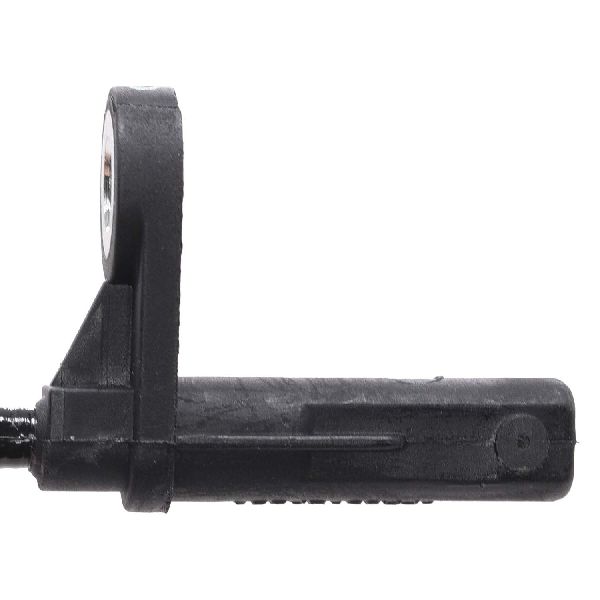
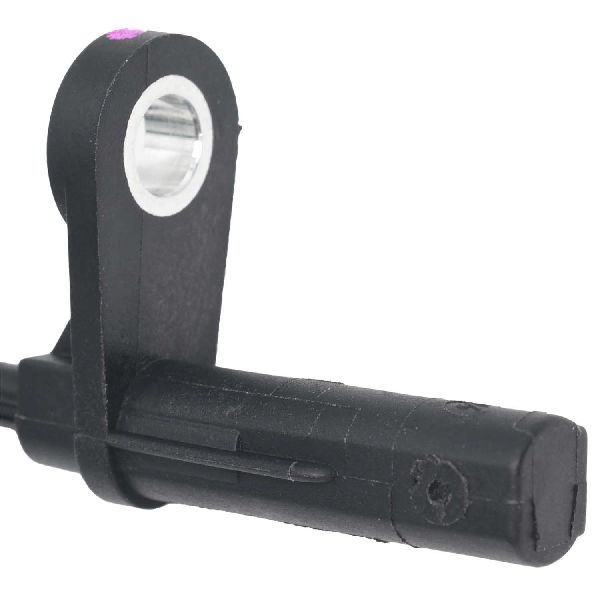
Aftermarket price range: $15-$30 - Rear Wheel Speed Sensor
(OEM #Mopar 04779456AB (Rear Right), Mopar 04779457AB (Rear Left))— If the tone ring is intact, the sensor itself is the next most likely component to fail.
Trusted brands: Mopar, NGK/NTK, Delphi, Duralast
OEM price range: $50-$90
Aftermarket price range: $25-$60
Related Codes That Often Appear With This One
- U140B — This code indicates an implausible right rear wheel speed signal, often appearing with P0501 when the right rear tone ring or sensor fails.
- U140C — This code indicates an implausible left rear wheel speed signal, often appearing with P0501 when the left rear tone ring or sensor fails.
- C1020 — This is an ABS code for the Right Rear Wheel Speed Sensor Circuit, directly pointing to the area of the fault.
- C102B — This is an ABS code for the Left Rear Wheel Speed Sensor Circuit, directly pointing to the area of the fault.
Platform-Specific Known Issues
- A unique and helpful fix is that the rear axle design is shared with some Mercedes-Benz models. As a result, the Mercedes-Benz OEM ABS tone ring (part number A 230 357 01 82 64) is a direct fit and often more readily available and affordable than sourcing an aftermarket Dodge-specific part, as Dodge does not sell the ring separately from the axle.
Mechanic-Grade Diagnostic Values
- Rear Wheel Speed Sensor Resistance — expected: 1200 - 2700 Ohms. Failure: A reading of infinite resistance (open circuit) or zero resistance (short circuit). However, a sensor can still be bad even if its resistance is within spec.
- Rear Wheel Speed Sensor AC Voltage Output — expected: Minimum of 0.25 Volts AC (250 millivolts AC). Failure: Voltage is less than 0.25V AC when spinning the wheel by hand at approximately half a revolution per second. No voltage indicates a dead sensor or a problem with the tone ring.
Scan Tool Commands That Help
- Any scan tool with live data: Live Data Monitoring of all four wheel speeds — This is the primary diagnostic step after reading codes. While driving slowly in a straight line, all four sensors should read nearly identical speeds. A sensor that reads zero, or a speed that differs significantly (e.g., more than 5 mph) from the others, indicates the location of the fault.
- Any scan tool with live data + a magnet: New Sensor Circuit Test — After identifying a faulty sensor but before installing the new one, plug the new sensor into the vehicle's harness connector. While watching that wheel's speed on the scan tool, pass a magnet back and forth over the sensor tip. If the scan tool shows a fluctuating speed reading, it confirms the wiring and ABS module are good, and the problem was isolated to the old sensor.
Wiring & Ground Locations
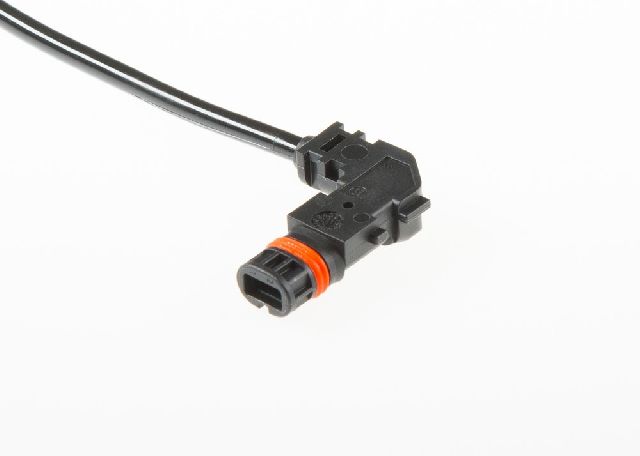
- Rear Wheel Speed Sensor Connector — The connectors for the rear sensors are located near the fuel tank on the passenger side; you may need to pull them down to access them.. This is where you will perform electrical tests (resistance, voltage) or plug in a new sensor to test the circuit. A service manual diagram provides the following pinout for a 2008 model: Pin 1: Right Rear WSS Supply (Dark Green/Light Blue), Pin 2: Right Rear WSS Signal (Dark Green/Orange), Pin 3: Left Rear WSS Supply (Dark Green/Gray), Pin 4: Left Rear WSS Signal (Dark Green/Yellow).
Real Owner Repair Stories
- Reddit user 'thomps22' in r/Dodge (2008 Dodge Charger RT) — Stuck in limp mode with codes P0501, C1020 (Left Rear Wheel Speed Sensor Circuit), and C102B (Right Rear Wheel Speed Sensor Circuit).
❌ Tried (didn't work) The user was asking for help before trying any fixes.
✅ What actually fixed it The accepted solution, identified as a very common problem on the LX platform, was that the magnetic ABS tone rings on the rear half-shafts (axles) had likely come loose or broken. The fix is to replace the tone rings, which requires some mechanical skill.
OEM Part Supersession History
4779456AA, 4779246AC→04779456AB— Standard part revision and consolidation by the manufacturer.
Heads up: The newest part number (04779456AB) is the correct replacement for the earlier versions for the rear right sensor.
Model Year Variations Within This Range
- 2006-2010: The ABS Control Module has numerous part numbers that vary based on model year, drivetrain (AWD vs RWD), and specific options like Electronic Stability Program (ESP). For example, part numbers 68028991AA, 68037140AA, and 68048305AC all apply to some 2008-2010 models. If the module is suspected as the final point of failure, it is critical to match the part number exactly from the original unit.
Diagnostic Flowchart
Other Known Issues on This Vehicle
Issues unrelated to this code that are worth knowing about as an owner of this generation:
- Shifter Stuck in Park ('Pink Thingy' Failure) 🔴 High — Extremely common on 2005-2007 models. A small plastic hook for the park interlock lever inside the shifter assembly becomes brittle and breaks, preventing the shifter from moving out of Park. (Ref: No recall, but it is a widely known failure. Aftermarket metal replacement parts (e.g., Dorman 924-706) are the preferred permanent fix.)
- Front Suspension Clunking/Noise (Tension Strut Failure) 🟠 Medium — Very common. The fluid-filled bushings on the front tension struts (also called tension arms) fail, causing a clunking or popping noise from the front end, especially over bumps or during braking. (Ref: While TSBs exist for later models (e.g., 02-005-14 for 2011+), this is a known wear item on the 2006-2010 generation.)
- Premature Engine Failure (5.7L HEMI Valve Seat Drop) 🔴 High — A known, though not universal, issue on pre-2009 5.7L HEMI engines. An intake valve seat can dislodge from the aluminum cylinder head, typically due to localized overheating, causing catastrophic engine damage. Onset is often over 100,000 miles. (Ref: Chrysler issued a TSB acknowledging the issue but never a recall. The cause is debated but often linked to cooling system issues or design tolerances.)
- Transmission Shift Quality Issues 🟡 Low → Shop Transmission Assembly — Owners have reported harsh downshifts (particularly 4-3) and other erratic shifting behavior. This can often be resolved with a software update to the Powertrain or Transmission Control Module.
Used vs. New Parts: Buying Guide for This Vehicle
When a used part is the smart pick: For this repair, sourcing a complete, low-mileage rear axle shaft (half-shaft) from a salvage yard can be a smart choice. It often comes with the tone ring already installed, potentially saving labor compared to pressing a new ring onto your old axle. This is only recommended if the donor part is from a dry, non-salt-belt climate.
Donor-vehicle mileage cap: roughly under 80000 miles for the part to have meaningful remaining life.
What to inspect on the donor part:
- Visually inspect the tone ring on the donor axle. Ensure it has no visible cracks, heavy rust scaling, or gaps between it and the axle shaft.
- Check the CV boots for any rips or tears, as this allows grease to escape and contaminants to enter.
- Confirm the donor vehicle was not from a northern/salt-belt region to minimize the risk of corrosion.
- Spin the axle and ensure the tone ring rotates true without any wobble.
OEM-only on this vehicle (don't cheap out):
- No parts for this specific repair are strictly OEM-only. The tone ring itself is not sold separately by Mopar, making aftermarket or the specified Mercedes-Benz part the only options.
Aftermarket brands forum-validated for this vehicle:
- Tone Ring: Dorman (e.g., 917-539, though this is often listed for the front, the principle applies) and the OEM Mercedes-Benz ring are widely used and trusted.
- Sensor: NGK/NTK, Delphi, and Standard Motor Products (SMP) are reputable brands for wheel speed sensors.
Brands owners have reported issues with on this vehicle:
- No specific brands were consistently cited as problematic for this part, but ultra-low-cost, unbranded parts from online marketplaces carry a higher risk of premature failure or incorrect readings.
Real Owner Stories
Aggregated from forums and TSBs cited above. Mileages and costs reflect what owners reported in those sources.
2008 Dodge Charger RT
Symptoms: Stuck in limp mode; CEL on with codes P0501, C1020, C102B.
What fixed it: The problem was identified as detached magnetic tone rings on the half shaft, which is a known issue for the LX platform.
Source hint: Reddit r/Dodge
2009 Dodge Charger
Symptoms: Vehicle was stuck in limp mode with multiple warning lights on the dashboard.
What fixed it: The issue was resolved by replacing a cracked and missing rear ABS tone ring.
Source hint: ChargerForums.com
Related OBD-II Codes
Frequently Asked Questions
My 2008 Charger is stuck in limp mode with a P0501 code. Is this a common problem?
The dealership said I need to buy a whole new axle shaft because Dodge doesn't sell the ABS tone ring by itself. Is there a cheaper fix?
Besides the Check Engine Light, what other warning lights are common with a P0501 code on this car?
My scanner shows codes C1020 and C102B along with P0501. What does that mean?
How can I check the ABS tone rings myself?
I have a 2007 Chrysler 300 with these exact symptoms. Does this information apply to my car?
Helpful Videos
We Have This Part in Stock


The information in this article is provided for general reference and educational purposes only. Vehicle specifications, procedures, and part compatibility can vary by production date, trim level, and region. Always consult your vehicle's factory service manual and verify part numbers before purchasing or performing repairs. Safety-critical components such as airbags, seat belts, and braking systems should be installed by a qualified professional.
- Dodge Charger:
- 🧭 Diagnostic Flowchart
- 🎬 Helpful Videos
- 🛍️ Shop This Part
- What's Unique About the 2006-2010 Dodge Charger
- Symptoms You May Notice
- Most Likely Causes
- Rare But Worth Checking
- Diagnosis Steps
- Parts You'll Likely Need
- Related Codes That Often Appear With This One
- Platform-Specific Known Issues
- Mechanic-Grade Diagnostic Values
- Scan Tool Commands That Help
- Wiring & Ground Locations
- Real Owner Repair Stories
- OEM Part Supersession History
- Model Year Variations Within This Range
- Other Known Issues on This Vehicle
- Used vs. New Parts: Buying Guide for This Vehicle
- Real Owner Stories
- 2008 Dodge Charger RT
- 2009 Dodge Charger
- Related OBD-II Codes
- Frequently Asked Questions
- 🎟️ Get 5% Off