

P0501 on 1997-2008 Ford F-150: Vehicle Speed Sensor Causes and Fixes
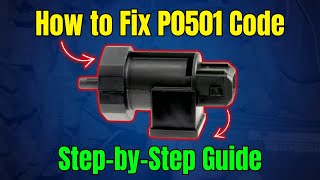
On a 1997-2008 Ford F-150, code P0501 is most often caused by a failed speed sensor. For 2004-2008 models, this is the ABS sensor on the rear differential, a ~$25 part that's easy to replace. For 1997-2003 trucks, it's typically the sensor on the transmission or transfer case.
- For 2004-2008 F-150s, the problem is almost always the ABS sensor on top of the rear differential.
- For 1997-2003 F-150s, the problem is likely the speed sensor on the transmission.
- Symptoms to watch for are an erratic speedometer and harsh transmission shifting.
- This is a very DIY-friendly repair that usually requires only basic hand tools and takes less than an hour.
- Before buying parts, remove and inspect the sensor's magnetic tip for metal shavings, which is a strong indicator of failure.
What's Unique About the 1997-2008 Ford F-150
The key challenge with this code on the F-150 is the change in sensor location between generations. The 10th generation (1997-2003) typically uses a Vehicle Speed Sensor (VSS) on the transmission or transfer case. The 11th generation (2004-2008) switched to using the rear wheel speed sensor, mounted on top of the rear differential, as the primary source for vehicle speed. This rear sensor is technically part of the ABS system but provides the VSS signal for the speedometer and transmission, making it a very common and simple fix on the newer trucks in this range.
Generation note: This range covers two F-150 generations, and the cause of P0501 is different for each: - 10th Generation (1997-2003): The primary vehicle speed signal usually comes from a sensor on the tail-shaft of the transmission (or transfer case on 4x4 models). - 11th Generation (2004-2008): The primary vehicle speed signal comes from the ABS wheel speed sensor located on the top of the rear differential housing. This sensor reads a tone ring inside the differential.
Symptoms You May Notice
- Erratic or non-working speedometer.
- Harsh, late, or incorrect automatic transmission shifting.
- ABS and/or brake warning light is on.
- Cruise control will not engage.
- Check Engine Light is illuminated.
- Traction control system disabled or warning light on.
- Replacing the transmission or rebuilding the differential when the issue is just a simple, inexpensive sensor.
- Replacing a wheel bearing hoping to fix an ABS light, when the actual fault is the rear differential speed sensor.
- Replacing the instrument cluster without first verifying the integrity of the speed sensor and its circuit.
Most Likely Causes
- Failed Rear Differential ABS/Speed Sensor (2004-2008 models) 🔴 High Probability This sensor's magnetic tip can become coated with fine metallic particles from normal differential wear, which disrupts the signal. Its location on top of the axle housing also exposes it to moisture and debris, leading to corrosion and failure.
How to confirm: Visually inspect the sensor on top of the rear differential. Remove the single 8mm or 10mm bolt, pull the sensor out, and check the magnetic tip for a paste-like coating of metal shavings. A clean sensor can still be internally faulty.
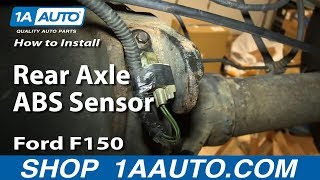
Typical fix: Replace the sensor. It is held in by one bolt and an electrical connector. The area should be cleaned thoroughly before installing the new sensor. This is often a sub-30-minute repair. 🎬 See how to replace the 2004 rear speed sensor
Est. part cost: $20-$50 - Failed Transmission/Transfer Case VSS (1997-2003 models) 🔴 High Probability → Shop Transmission Assembly Internal failure of the sensor due to age and heat cycles is common. The plastic gears that sometimes drive these sensors can also wear out or break, leading to a loss of signal.
How to confirm: Locate the sensor on the driver's side of the transmission's tail housing. Use a scan tool to monitor the VSS signal while driving. If the signal is erratic or drops to zero while the truck is moving, the sensor is likely bad.
Typical fix: Unplug the electrical connector, remove the single retaining bolt, and replace the sensor.
Est. part cost: $25-$60 - Damaged Wiring or Corroded Connector 🟡 Medium Probability The wiring harness to either sensor location is exposed to road debris, moisture, and heat from the exhaust, which can lead to chafing, breaks, or corrosion inside the connector. This is a known issue on many Ford trucks of this era.
How to confirm: Visually inspect the entire length of the wiring from the sensor as far as you can trace it. Unplug the connector and check for green or white corrosion on the pins. Perform a wiggle test on the harness while monitoring the VSS signal on a scan tool to see if the reading cuts out.
Typical fix: Repair the broken section of wire or replace the connector pigtail.
Est. part cost: $10-$30
Rare But Worth Checking
- Incorrect Tire Size Programmed in PCM: If you have recently installed significantly different sized tires and had the vehicle programmed, an incorrect setting can cause the PCM to see a conflict between wheel speed and engine RPM, triggering a P0501.
- Faulty Instrument Cluster: On 2004-2008 models, the instrument cluster is a known failure point and can cause a wide range of electrical issues, including disrupting the VSS signal. Symptoms often include erratic gauges, a dim odometer display, or intermittent power to windows and radio.
- Damaged Tone Ring in Differential: The sensor reads a toothed reluctor ring (tone ring) inside the differential. If this ring is damaged, has broken teeth, or is excessively rusty, it can produce an erratic signal. This usually requires opening the differential to inspect and replace.
- Failing Powertrain Control Module (PCM): → Shop Engine Control Module (ECM) This is the least likely cause. All other possibilities, especially the sensor and wiring, should be exhaustively ruled out before considering a faulty PCM.
Diagnosis Steps
- Read All Codes: Use an OBD-II scanner capable of reading ABS codes. Check for any other codes, especially from the ABS module. An ABS code like C0035 can point you directly to the faulty sensor.
- Live Data Test: Use a scanner that can display live data. Monitor the 'Vehicle Speed' PID while driving. Compare the scanner's reading to your phone's GPS speed. If the scanner reading is erratic, jumps to zero, or doesn't match the GPS, the sensor or its circuit is faulty.
- Identify Your Sensor: Determine your truck's generation. For a 2004-2008, locate the sensor on top of the rear differential. For a 1997-2003, find the sensor on the transmission tail housing (driver's side).
- Visual Inspection: Inspect the identified sensor and its wiring harness. Look for obvious signs of damage, such as frayed wires, melted insulation, or a connector full of corrosion or dirt. Pay close attention to where the harness might rub against the frame or exhaust.
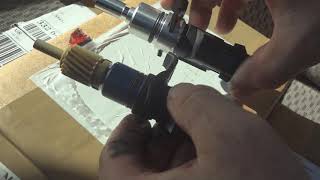
- Inspect the Sensor Tip (Rear Diff Sensor): For 2004-2008 models, remove the sensor (one 8mm or 10mm bolt). Check the magnetic tip for a build-up of metallic sludge. A heavy accumulation indicates a problem. Clean it and reinstall to see if the code clears, but replacement is often necessary.
- Test the Circuit: If the sensor and wiring look good, use a multimeter to check for proper voltage and ground at the sensor connector. You can also check the sensor's resistance. This step may require a wiring diagram for your specific year and model.
- Inspect Tone Ring (If Necessary): If all else fails, the tone ring inside the differential (on 2004-2008 models) may be damaged. This requires removing the differential cover for a visual inspection.
Parts You'll Likely Need
- Rear Axle ABS Speed Sensor (2004-2008)
(OEM #6L3Z-9E731-A)— This is the most common failure point for the 11th generation F-150 that causes a P0501 code.
Trusted brands: Motorcraft (DY1123), Dorman (970-012), Standard Motor Products (ALS197)
OEM price range: $40-$60
Aftermarket price range: $20-$40 - Transmission Output Speed Sensor (1997-2003)
(OEM #F85Z-7M101-AA (Varies by transmission))— This is the primary vehicle speed sensor for the 10th generation F-150 and is a frequent cause of P0501.
Trusted brands: Motorcraft (DY1075), Delphi, NTK
OEM price range: $45-$70
Aftermarket price range: $25-$50
Related Codes That Often Appear With This One
- P0500 — P0500 indicates a total loss of the VSS signal, while P0501 indicates an erratic or out-of-range signal. A failing sensor can trigger either code depending on its failure mode.
- C0035 to C0050 — These are ABS codes related to specific wheel speed sensors. If one of these appears with P0501, it points directly to a problem in that specific wheel speed sensor circuit, which may be the root cause.
- P0720 — This code relates to the Output Shaft Speed (OSS) sensor. On some models, the VSS and OSS are the same sensor, or their signals are compared. A fault in one can trigger a code for the other.
Platform-Specific Known Issues
- Rear Differential Sensor Contamination: On 2004-2008 models, owners frequently report that the rear differential sensor becomes covered in metallic paste from normal gear wear. A user on F150Forum.com mentioned, 'Pulled the sensor and it was covered in gray gunk. Cleaned it off, cleared the code, and the speedometer worked perfectly again.' While cleaning is a temporary fix, the sensor often needs replacement soon after.
- Wiring Harness Abrasion: The wiring harness leading to the rear speed sensor on 11th-gen trucks can rub against the frame or brake lines, eventually wearing through the insulation and causing a short. A thread on Ford-Trucks.com detailed a user finding the wires bare and touching the axle housing, which caused an intermittent P0501 code that was difficult to track down.
Mechanic-Grade Diagnostic Values
- Rear Differential ABS/Speed Sensor Resistance (2004-2008) — expected: 800 - 2,000 Ohms. Failure: An open circuit (infinite resistance) or a reading significantly outside the expected range indicates a failed sensor. Some forum users have reported values between 1200-2000 Ohms as normal.
- Transmission/Transfer Case VSS Resistance (1997-2003) — expected: 800 - 3,500 Ohms. Failure: A resistance reading outside of this range, or a reading that is not steady while wiggling the harness, points to a faulty sensor or wiring.
- VSS AC Voltage Output (All Years) — expected: A smoothly increasing AC voltage from 0V up to approximately 3.5V as speed increases from 0 to 30 MPH.. Failure: No voltage, or an erratic, jumping voltage reading while the wheels are spinning at a steady rate, indicates a problem with the sensor or the tone ring.
Wiring & Ground Locations
- Main Chassis Ground — On the passenger side inner fender, near the battery. A small black wire from the main harness grounds here.. A poor ground at this location can cause intermittent power resets to various modules, including the PCM, leading to erratic sensor readings and seemingly random electrical issues.
- Engine-to-Firewall Ground Strap — Typically runs from a bolt on the rear of a cylinder head or intake manifold to the firewall.. This strap ensures the engine block has a solid ground reference to the body/chassis, which is critical for all engine-mounted sensors. A corroded or loose strap can introduce electrical noise into sensor circuits.
- Frame Ground Strap — Woven copper strap connecting the vehicle body to the frame, often found in multiple locations including near the front core support and under the cab.. Ensures all components mounted to the frame (like the rear axle) have a consistent ground path to the rest of the vehicle's electrical system.
Real Owner Repair Stories
- Go-Parts.com Owner Story Compilation (2008 Ford F-150, 115,000 miles) — Check Engine Light and ABS light were on. The speedometer worked intermittently, and the transmission shifted very hard from 1st to 2nd gear.
❌ Tried (didn't work) Ignoring the problem until shifting got worse., A transmission fluid flush suggested by a repair shop.
✅ What actually fixed it The owner replaced the rear differential speed sensor (Motorcraft DY1123) for $25. The repair took 20 minutes and immediately fixed the warning lights, the harsh shifting, and the speedometer issues. - NHTSA ODI #11449362 — An owner reported that after attempting to reprogram the PCM with no success, the transmission slammed really hard and the check engine light came on with code P0501.
OEM Part Supersession History
4L3Z-9E731-AA→6L3Z-9E731-A— Standard part number revision and update by Ford.
Heads up: The parts are interchangeable for the 2004-2008 F-150 models. The newer part number is the correct service replacement.
Model Year Variations Within This Range
- 1997-2003: The primary vehicle speed reading is generated by a sensor on the transmission (or transfer case for 4x4 models). This sensor is a different part and in a different location than on later models.
- 2004-2008: The primary vehicle speed reading is generated by the ABS sensor located on top of the rear differential. This system integrates the VSS function into the ABS system.
Diagnostic Flowchart
Other Known Issues on This Vehicle
Issues unrelated to this code that are worth knowing about as an owner of this generation:
- Ford 5.4L 3V Cam Phaser Failure (2004-2008) 🔴 High — Very common, often appears after 80,000 miles. Causes a diesel-like ticking/knocking noise at idle. (Ref: TSB 06-19-8)
- Ford 5.4L 3V Spark Plug Breakage (2004-2008) 🔴 High — Extremely common during spark plug changes. The two-piece spark plug design separates, leaving the lower portion seized in the cylinder head.
- Ford 4.6L/5.4L 2V Spark Plug Ejection (1997-2003) 🔴 High — Common on higher-mileage engines due to insufficient thread engagement in the aluminum cylinder heads, causing the spark plug to be violently blown out.
- Instrument Cluster Failure (2004-2008) 🟠 Medium — Widespread issue causing erratic gauges, dead odometer displays, and intermittent electrical problems with windows, radio, and warning lights.
- Leaking Exhaust Manifolds (Both Gens) 🟠 Medium — Common for the factory cast iron manifolds to warp or for the mounting studs to break, causing an exhaust leak and a ticking noise, especially when cold.
- 4x4 IWE Solenoid/Vacuum Leak (2004-2008) 🟠 Medium — A faulty IWE (Integrated Wheel End) solenoid or cracked vacuum lines can cause the 4x4 system to fail to engage or cause a grinding noise from the front hubs.
Used vs. New Parts: Buying Guide for This Vehicle
When a used part is the smart pick: For this repair, a used part is generally not recommended. The primary failure items are inexpensive electronic sensors. The cost savings of a used sensor are minimal compared to the risk of it failing soon after installation. A used wiring pigtail could be a viable option if a new one is unavailable.
Donor-vehicle mileage cap: roughly under 80000 miles for the part to have meaningful remaining life.
What to inspect on the donor part:
- For a wiring pigtail, ensure the insulation is not brittle, cracked, or melted.
- Check connector pins for any signs of green or white corrosion.
- Ensure the connector's locking tab is intact and functional.
Aftermarket brands forum-validated for this vehicle:
- Motorcraft (OEM)
- Standard Motor Products (SMP)
- NTK
- Dorman
Brands owners have reported issues with on this vehicle:
- No-name, unbranded sensors from online marketplaces often have high failure rates and should be avoided.
Real Owner Stories
Aggregated from forums and TSBs cited above. Mileages and costs reflect what owners reported in those sources.
2004-2008 Ford F-150
Symptoms: Pulled the sensor and it was covered in gray gunk.
What fixed it: Cleaned the metallic paste off the sensor tip and cleared the code.
Source hint: F150Forum.com mentioned in the 'Rear Differential Sensor Contamination' section
2004-2008 Ford F-150
Symptoms: Intermittent P0501 code that was difficult to track down.
What fixed it: Repaired the wiring harness where wires were bare and touching the axle housing due to rubbing against the frame.
Source hint: Ford-Trucks.com thread detailed in the 'Wiring Harness Abrasion' section
Ford F-150
Symptoms: The transmission slammed really hard and the check engine light came on with code P0501.
What fixed it: NHTSA ODI #11449362 notes that reprogramming the PCM did nothing for this specific owner's vehicle speed sensor fault.
Related OBD-II Codes
Frequently Asked Questions
Where is the speed sensor located on my 2005 Ford F-150?
My 2001 F-150 has a P0501 and the speedometer is jumping. Where should I look?
Can I just clean the rear differential sensor on my 2006 F-150 to fix P0501?
Is there a specific TSB for the 5.4L engine issues mentioned in the known issues?
Why is my ABS light on at the same time as the P0501 code?
Could a wiring issue cause an intermittent P0501 on my 11th-gen truck?
Helpful Videos
We Have This Part in Stock

The information in this article is provided for general reference and educational purposes only. Vehicle specifications, procedures, and part compatibility can vary by production date, trim level, and region. Always consult your vehicle's factory service manual and verify part numbers before purchasing or performing repairs. Safety-critical components such as airbags, seat belts, and braking systems should be installed by a qualified professional.
- Ford F-150:
- 🧭 Diagnostic Flowchart
- 🎬 Helpful Videos
- 🛍️ Shop This Part
- What's Unique About the 1997-2008 Ford F-150
- Symptoms You May Notice
- Most Likely Causes
- Rare But Worth Checking
- Diagnosis Steps
- Parts You'll Likely Need
- Related Codes That Often Appear With This One
- Platform-Specific Known Issues
- Mechanic-Grade Diagnostic Values
- Wiring & Ground Locations
- Real Owner Repair Stories
- OEM Part Supersession History
- Model Year Variations Within This Range
- Other Known Issues on This Vehicle
- Used vs. New Parts: Buying Guide for This Vehicle
- Real Owner Stories
- 2004-2008 Ford F-150
- 2004-2008 Ford F-150
- Ford F-150
- Related OBD-II Codes
- Frequently Asked Questions
- 🎟️ Get 5% Off