

P0501 on 1996-2000 Honda Civic: Vehicle Speed Sensor Failure Causes and Fixes
On a 1996-2000 Honda Civic, code P0501 is almost always caused by a failed Vehicle Speed Sensor (VSS) located on the transmission. This results in a dead or bouncing speedometer. A new sensor is inexpensive (~$20-$50 aftermarket) and is an easy DIY replacement (Difficulty: 1/5).
- P0501 on a '96-'00 Civic almost always points to the Vehicle Speed Sensor (VSS) on the transmission.
- The most obvious symptom is a speedometer that doesn't work or bounces erratically.
- Before buying a new sensor, check the wiring connector for corrosion and check the 7.5A #15 fuse under the dash.
- If O2 sensor codes (P0135, P0141) are also present, you likely have the common 'Fuse 15' wiring short.
- Replacing the VSS is a very easy DIY job that requires basic tools and can be done in under an hour.
What's Unique About the 1996-2000 Honda Civic
Unlike modern vehicles that may use multiple ABS wheel speed sensors to determine vehicle speed, the 1996-2000 (6th generation) Civic relies on a single Vehicle Speed Sensor mounted on the transmission. This single point of failure makes diagnosis straightforward. The failure of this specific sensor is a very common and well-documented issue for this generation of Civic and its platform mates like the Acura Integra. The primary symptoms are a faulty speedometer and potential shifting issues in automatic models.
Symptoms You May Notice
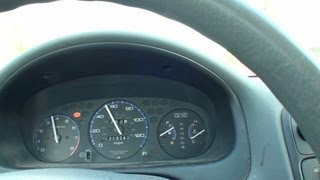
- Erratic or completely dead speedometer (needle jumps or stays at 0 MPH).
- Check Engine Light illuminated.
- Harsh, late, or erratic shifting on automatic transmission models.
- Cruise control will not function.
- Odometer stops accumulating miles when the speedometer is at zero.
- Replacing ABS wheel speed sensors (if equipped). This generation Civic uses a transmission-mounted VSS for the speedometer and ECU, not the ABS sensors.
Most Likely Causes
- Failed Vehicle Speed Sensor (VSS) 🔴 High Probability → Shop Drive Shaft Sensor The VSS is a known common failure point on this generation of Civic due to age, heat cycles, and internal wear of the sensor's magnetic components or plastic gear. It is considered a high-failure rate item by many mechanics.
How to confirm: A definitive test is to unplug the VSS. If a bouncing speedometer needle stops jumping and stays at zero during a test drive, the sensor is bad. A diagnostic scan tool can also monitor the VSS output; if it's erratic or zero while the car is moving, the sensor is bad. You can also test the sensor with a multimeter.
Typical fix: Replace the Vehicle Speed Sensor on the transmission.
Est. part cost: $20-$60 - Damaged VSS Wiring or Connector 🟡 Medium Probability The wiring harness connector leading to the VSS is exposed to engine bay heat and moisture. This can cause the plastic to become brittle and the pins inside to corrode, leading to a poor connection. In some cases, a pin can corrode so badly it breaks off inside the connector.
How to confirm: Visually inspect the VSS connector and its wiring for any signs of green or white corrosion, breaks, or loose pins. Wiggle the connector with the engine running to see if it affects the speedometer. In one documented case by EricTheCarGuy, the signal pin had completely rotted off the sensor and was stuck inside the harness connector. 🎬 Watch EricTheCarGuy diagnose this exact VSS and connector issue.
Typical fix: Clean the connector terminals with electrical contact cleaner. If a pin is broken or the connector is damaged, replace the pigtail connector.
Est. part cost: $10-$25 - Blown Fuse ⚪ Low Probability This is often related to a notorious issue known as the 'Fuse 15 Problem' on 1996-2000 Civics, where a wiring harness on the back of the engine block chafes against a bracket, causing a short that blows the fuse.
How to confirm: Check fuse #15 (7.5A) in the under-dash fuse/relay box to see if it has blown. If other codes like P0135 or P0141 (O2 sensor heater circuits) are present along with P0501, a blown fuse #15 is highly likely.
Typical fix: Replace the blown fuse. If it blows again, this indicates a short circuit in the wiring harness on the back of the engine that must be located and repaired.
Est. part cost: $1-$5
Rare But Worth Checking
- Faulty Instrument Cluster: If replacing the VSS and checking the wiring does not solve the problem, the issue may be cracked solder joints on the circuit board of the speedometer itself. This is a known secondary cause, often requiring the cluster to be removed and re-soldered.
- Defective ECU: An internal fault in the Engine Control Unit (ECU) is extremely rare but possible. This should only be considered after all other possibilities have been exhaustively ruled out.
Diagnosis Steps
- Read the code with an OBD-II scanner to confirm P0501 is present. Note any other codes, such as P0135 or P0141.
- Locate the Vehicle Speed Sensor (VSS) on the top of the transmission, near the firewall, typically below the air intake tube.
- Visually inspect the VSS electrical connector and wiring for any obvious damage, corrosion (green crust), or loose connections. Pay close attention to the pins inside the connector.
- Check the 7.5A fuse #15 in the fuse box located under the driver's side dashboard. If blown, investigate for a short circuit, especially if O2 sensor codes are also present.
- Quick Sensor Test: If the speedometer is behaving erratically (bouncing), unplug the VSS electrical connector and take a short, slow test drive. If the needle now stays steady at 0 MPH instead of bouncing, the VSS is faulty and sending bad signals.
- Multimeter Test: Disconnect the VSS connector. Set a multimeter to DC volts. With the ignition ON, probe the harness terminals. You should find a ground pin, a power pin (approx. 12V), and a signal pin (approx. 5V or 9V reference from the ECU). If power/ground is missing, check the wiring and Fuse 15 again. If power/ground is good, the VSS is the prime suspect.
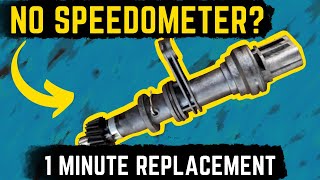
- If tests point to the VSS, replace the sensor. It is held in by a single 10mm or 12mm bolt. A small amount of grease on the new 🎬 See this step-by-step VSS replacement for manual transmissions. O-ring can help with installation.
- After replacement, clear the trouble code with the scanner and perform a test drive to ensure the speedometer works correctly and the code does not return.
- If the problem persists after replacing the VSS, the next step is to investigate the instrument cluster for bad solder joints or test the VSS circuit for continuity back to the ECU.
Parts You'll Likely Need
- Vehicle Speed Sensor (VSS)
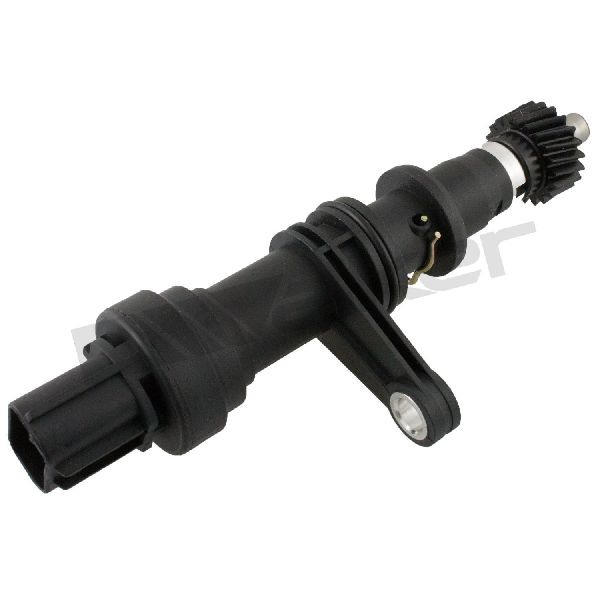
(OEM #78410-S04-951 (Nippondenso/Denso, for automatic transmission) or 78410-S04-902 (Matsushita, for manual transmission). Note that 78410-S04-952 is an interchangeable part number.)— This sensor is the most common point of failure for the P0501 code on this vehicle.
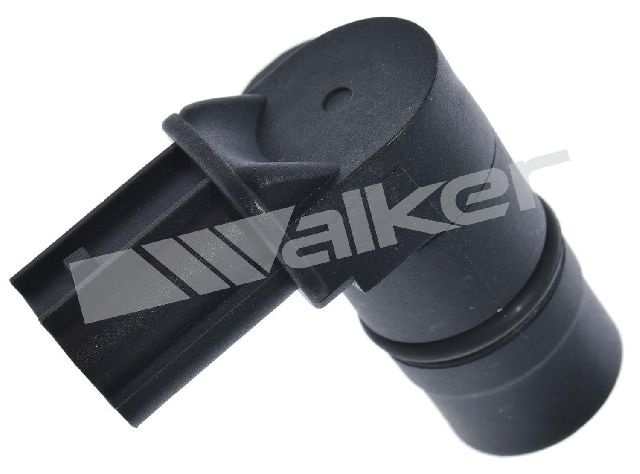
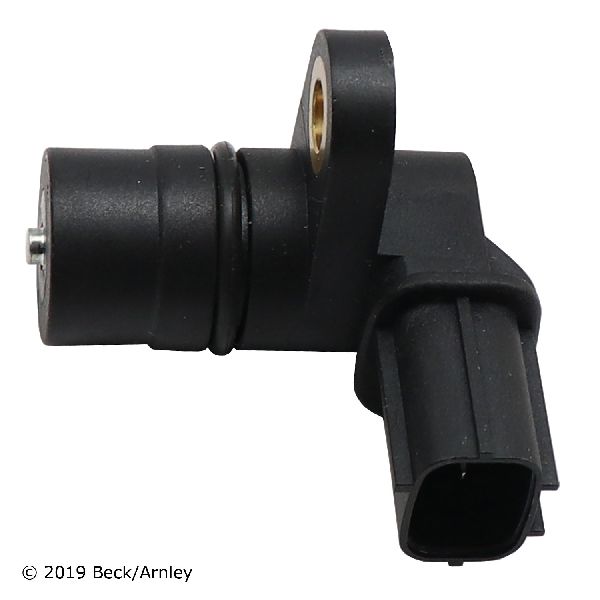
Trusted brands: Honda (OEM - Denso or Matsushita), Denso (OEM supplier), Standard Motor Products (SMP), Walker Products
OEM price range: $100-$200
Aftermarket price range: $20-$60
Related Codes That Often Appear With This One
- P0135 (O2 Sensor Heater Circuit Malfunction Bank 1 Sensor 1)
- P0141 (O2 Sensor Heater Circuit Malfunction Bank 1 Sensor 2)
- Note: When P0501 appears with these O2 sensor codes, it strongly points to the 'Fuse 15 Problem,' a common short circuit that cuts power to all these components.
Platform-Specific Known Issues
- The 'Fuse 15' Problem: A well-known issue on 1996-2000 Civics where the engine wiring harness, located behind the intake manifold support bracket, rubs through and shorts to ground. This blows the 7.5A fuse #15, which powers the VSS, O2 sensor heaters, and alternator. This results in codes P0501, P0135, and P0141 appearing simultaneously. The fix requires repairing the frayed wires and protecting the harness from future chafing.
- Connector Pin Corrosion: Due to its location, the VSS connector is susceptible to moisture intrusion. This causes the metal pins to corrode, sometimes to the point of breaking off completely, which results in a total loss of signal. A thorough inspection of the connector's interior is crucial.
Mechanic-Grade Diagnostic Values
- VSS Harness Power Pin Voltage — expected: Battery Voltage (approx. 12V) with ignition ON. Failure: Low or no voltage indicates a wiring or fuse issue (check Fuse 15). A user reported seeing only 5.5V on this pin, indicating a problem upstream.
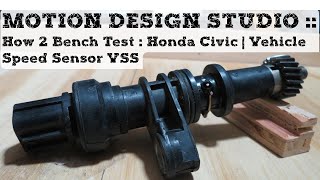
- VSS Signal Output Voltage (Dynamic Test) — expected: Pulses between 0V and 5V as a front wheel is rotated by hand (vehicle jacked up, ignition ON).. Failure: No voltage pulses or a steady, non-fluctuating voltage indicates a failed VSS. 🎬 Watch how to bench test your sensor using a multimeter.
- VSS Harness Ground Pin Continuity — expected: Near 0 ohms of resistance between the ground pin and the chassis or battery negative terminal.. Failure: High resistance (OL) indicates a broken ground wire or a bad ground connection at G101.
Wiring & Ground Locations
- VSS Connector (Harness Side) — On top of the transmission, near the firewall.. This 3-pin connector provides power, ground, and a path for the signal. The pins are: 1 (BLK/YEL) - Power from Fuse 15, 2 (BLU/WHT) - Signal to ECU and Cluster, 3 (BLK) - Ground.
- ECU Pin C10 (OBD2A) / C26 (OBD2B) — At the Engine Control Unit (ECU), typically located behind the passenger side kick panel.. This is the specific pin where the VSS signal (BLU/WHT wire) terminates at the ECU. Checking for the pulsing 0-5V signal here can confirm if the wiring from the sensor to the ECU is intact.
- G101 (Main Engine Ground) — Bolted to the thermostat housing on the cylinder head.. This is the primary ground termination point for the ECU and many sensors, including the VSS. A loose or corroded G101 ground can cause a host of intermittent electrical issues, including a P0501 code.
Real Owner Repair Stories
- EricTheCarGuy (YouTube) (1998 Honda Civic) — Bouncing speedometer needle, harsh transmission shifting, P0501 code present.
❌ Tried (didn't work) Initially suspected the VSS itself due to high failure rate.
✅ What actually fixed it The signal pin on the VSS had completely corroded and broken off, remaining stuck inside the wiring harness connector. The ultimate fix was replacing the VSS and thoroughly cleaning the corrosion out of the female connector terminal to ensure a good connection with the new sensor. - Honda-Tech.com user 'madnad' (1999 Honda Civic HX CVT, 239k miles) — P0501, speedometer and odometer intermittently drop to zero.
❌ Tried (didn't work) Visual inspection of connector showed no major corrosion.
✅ What actually fixed it The problem started after hosing down the engine bay, pointing to a moisture-related failure. The final fix was replacing the VSS (the one with the gear). The user also noted that an incompatible aftermarket sensor was initially purchased, highlighting the need to match the part correctly.
OEM Part Supersession History
78410-S04-901→78410-S04-902— Standard part revision.
Heads up: This is the part for manual transmissions (made by Matsushita).78410-S04-951→78410-S04-952— Standard part revision.
Heads up: This is the part for automatic transmissions (made by Nippondenso/Denso). It is physically different from the manual sensor and they are not interchangeable.
Model Year Variations Within This Range
- 1996-1998 vs 1999-2000: The ECU pinouts changed between the OBD2A (96-98) and OBD2B (99-00) wiring systems. While the VSS sensor and its function remained the same, the specific pin location at the ECU for the VSS signal wire is different. This is critical for anyone performing a continuity test from the sensor to the ECU.
Diagnostic Flowchart
Used vs. New Parts: Buying Guide for This Vehicle
When a used part is the smart pick: A used OEM instrument cluster from a junkyard is a very common and smart repair if the issue is cracked solder joints on your original speedometer. It is often cheaper and faster than attempting a micro-solder repair. For this generation, the cluster is plug-and-play with no immobilizer programming needed, but the odometer mileage will be from the donor car.
Donor-vehicle mileage cap: roughly under 180000 miles for the part to have meaningful remaining life.
What to inspect on the donor part:
- For a VSS: Ensure the plastic connector housing isn't cracked and the pins look clean and free of green corrosion.
- For an Instrument Cluster: Check the clear plastic lens for deep scratches or hazing. Ask the seller to confirm it came from a car with the same transmission type (manual vs. automatic) to ensure the gear indicator display is correct, although many are interchangeable.
Aftermarket brands forum-validated for this vehicle:
- Denso (OEM supplier)
- Standard Motor Products (SMP)
- Beck/Arnley
- Walker Products
Brands owners have reported issues with on this vehicle:
- Ultra-cheap, no-name sensors from online marketplaces can have incorrect gear shapes or poor internal electronics, leading to premature failure or incorrect speed readings right out of the box.
Real Owner Stories
Aggregated from forums and TSBs cited above. Mileages and costs reflect what owners reported in those sources.
1996 Honda Civic EX
Symptoms: Check Engine Light with code P0501.
What fixed it: A user suggested checking if fuse #15 (7.5A) in the under-dash fuse/relay box is blown. Another user suggested the VSS is mounted on top of the transaxle and to ensure its cable is securely plugged in, or replace the sensor if the problem persists.
Source hint: DTC Code P0501 - HondaCivicForum.com
Related OBD-II Codes
Frequently Asked Questions
I have a P0501 code along with O2 sensor codes like P0135 and P0141 on my '98 Civic. What's the first thing I should check?
My speedometer needle is jumping erratically. How can I quickly test if the Vehicle Speed Sensor is bad?
Will a bad VSS on my automatic 1999 Civic affect how it shifts?
Where is the Vehicle Speed Sensor located on a 1996-2000 Honda Civic?
I pulled the VSS connector and it looks like there's green crust inside. Is that the problem?
My cruise control stopped working at the same time the check engine light for P0501 came on. Are these related?
Helpful Videos
We Have This Part in Stock


The information in this article is provided for general reference and educational purposes only. Vehicle specifications, procedures, and part compatibility can vary by production date, trim level, and region. Always consult your vehicle's factory service manual and verify part numbers before purchasing or performing repairs. Safety-critical components such as airbags, seat belts, and braking systems should be installed by a qualified professional.
- Honda Civic:
- 🧭 Diagnostic Flowchart
- 🎬 Helpful Videos
- 🛍️ Shop This Part
- What's Unique About the 1996-2000 Honda Civic
- Symptoms You May Notice
- Most Likely Causes
- Rare But Worth Checking
- Diagnosis Steps
- Parts You'll Likely Need
- Related Codes That Often Appear With This One
- Platform-Specific Known Issues
- Mechanic-Grade Diagnostic Values
- Wiring & Ground Locations
- Real Owner Repair Stories
- OEM Part Supersession History
- Model Year Variations Within This Range
- Used vs. New Parts: Buying Guide for This Vehicle
- Real Owner Stories
- 1996 Honda Civic EX
- Related OBD-II Codes
- Frequently Asked Questions
- 🎟️ Get 5% Off