

P0501 on 2008-2016 Hyundai Genesis Coupe: Causes and Fixes for Vehicle Speed Sensor Issues
Code P0501 on a Genesis Coupe almost always points to a problem with the wheel speed sensing system, not a transmission sensor. The most likely cause is a faulty wheel speed sensor at one of the corners of the car. Expect to pay $40-$80 for a new sensor, and it's a DIY-friendly job (2/5 difficulty).
- P0501 on a Genesis Coupe is a wheel speed issue, not a transmission sensor issue.
- The most likely fix is replacing a single faulty wheel speed sensor.
- A scanner that can read live data from all four wheels is the most effective diagnostic tool.
- Check for damage to the sensor wiring in the wheel well before replacing parts.
- Be aware of the open safety recall on the ABS module for 2011-2015 models, as it could be related.
What's Unique About the 2008-2016 Hyundai Genesis Coupe
The key difference for the Genesis Coupe is that P0501 does not point to a transmission-mounted speed sensor, a common misdiagnosis on other vehicles. The problem lies within the ABS/wheel speed sensor system. The ECM is downstream from the ABS module, so a fault with a wheel speed sensor, its wiring, or the ABS module itself will cause the ECM to lose its vehicle speed reference and set this code. This makes diagnosing P0501 a chassis and ABS issue first, and a powertrain issue second.
Generation note: The 2008-2016 range covers the first generation (BK1, 2010-2012) and the facelifted second generation (BK2, 2013-2016). The underlying system for vehicle speed detection is the same for both. A notable safety recall for the ABS module (Recall 251) affects 2011-2015 models, which includes vehicles from both generations. The BK1 and BK2 generations have different part numbers for wheel speed sensors.
Symptoms You May Notice
- Check Engine Light (MIL) is on
- ABS and/or Traction Control (ESC) warning lights are illuminated
- Speedometer works erratically or not at all
- Cruise control is inoperative
- Harsh or improper shifting on automatic transmission models
- ABS and traction control systems are disabled
- Replacing the transmission output speed sensor. The Genesis Coupe's ECM does not use this sensor for the primary vehicle speed reading that triggers P0501.
Most Likely Causes
- Faulty Wheel Speed Sensor (WSS) 🔴 High Probability → Shop ABS Wheel Speed Sensor These sensors are exposed to the elements at the wheel hubs and can fail from moisture, dirt, and vibration over time. It's a common failure point on many vehicles, including the Genesis Coupe, and frequently discussed in owner forums.
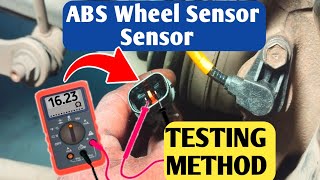
How to confirm: Use an OBD-II scanner with live data capability to monitor the speed of all four wheels while driving. The sensor that provides an erratic or no reading is the faulty one. You can also test the sensor's resistance with a multimeter, though specific resistance values can be hard to find; comparing to a known-good sensor on the car is a reliable method. 🎬 See: How to test a wheel speed sensor with a multimeter
Typical fix: Replace the faulty wheel speed sensor. They are typically held in by a single 10mm bolt, but may be seized in the hub. The electrical connector is often located in the wheel well. Soaking the old sensor with penetrating oil can help with removal.
Est. part cost: $40-$80 - Damaged Wiring or Connector for a Wheel Speed Sensor 🟡 Medium Probability → Shop ABS Wheel Speed Sensor The wiring harness runs down to the wheel hub and is susceptible to damage from road debris, improper jacking, or corrosion, especially in regions that use road salt. Owners have reported wires rubbing on the tire and wearing through, causing a short.
How to confirm: Visually inspect the entire length of the wiring harness for the suspect wheel speed sensor. Look for breaks, chafing, or corrosion at the connector pins. A continuity test with a multimeter can confirm a broken wire. One owner found the prongs inside the connector itself were damaged.
Typical fix: Repair the damaged section of wire or replace the pigtail connector. In some cases, the entire ABS harness for that corner may need to be replaced. Ensure the repaired harness is properly secured away from moving parts.
Est. part cost: $15-$50 for a pigtail, more for a full harness section. - Faulty or Damaged Wheel Hub Assembly ⚪ Low Probability → Shop Hub Assembly The magnetic reluctor ring that the wheel speed sensor reads is integrated into the wheel hub assembly. Rust or physical damage to the hub or this ring can cause an incorrect signal. This is less common than sensor or wire failure but is the next logical component to inspect.
How to confirm: After confirming the sensor and wiring are good, remove the sensor and inspect the reluctor ring on the hub for rust, debris, or damage. Check for excessive play in the wheel bearing, as a worn bearing can also affect the sensor reading.
Typical fix: Replace the entire wheel hub assembly.
Est. part cost: $100-$200
Rare But Worth Checking
- Faulty ABS/ESC Control Module: While not common, the module that processes the sensor signals can fail. A recall (Safety Recall 251) was issued for 2011-2015 models for a potential electrical short in the ABS module, which could cause various system failures. If multiple speed sensors show issues or communication is lost, the module is a suspect.
- Incorrect Tire Sizes: If you have recently installed tires that are a significantly different overall diameter from the factory size, the differing rotation speeds between axles can confuse the ABS module and trigger a P0501 code.
- Faulty Powertrain Control Module (PCM): → Shop Engine Control Module (ECM) This is extremely rare. The PCM is the last component to suspect after all other possibilities related to the speed sensing system have been thoroughly ruled out.
Diagnosis Steps
- Scan for Codes: Use an OBD-II scanner. Note the P0501 code. Crucially, use a scanner capable of reading Chassis (C-codes) to check for specific wheel speed sensor faults (e.g., C1206 for Right Front Wheel Speed Sensor Circuit). This is the most important step to avoid guessing.
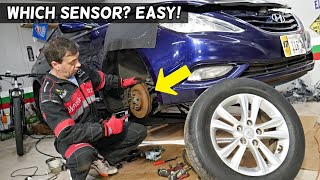
- Live Data Analysis: Use the scanner's live data function to monitor the speed from all four wheel sensors while driving. Look for a sensor that reads 0 mph, drops out, or shows a speed inconsistent with the others. This will pinpoint the faulty corner. 🎬 Watch: How to find which ABS sensor is bad
- Visual Inspection: Raise and safely support the vehicle. Inspect the suspect wheel speed sensor, its wiring, and connector. Look for obvious damage, corrosion, or loose connections. Check that the harness is properly routed and not rubbing on the tire or suspension components.
- Test the Sensor (if needed): If live data is inconclusive, disconnect the sensor and test its internal resistance with a multimeter. Compare the reading to the manufacturer's specification or to a known-good sensor on another wheel.
- Inspect the Hub: If the sensor and wiring are good, remove the sensor and inspect the reluctor ring on the wheel hub for damage, rust, or debris.
- Check for Recalls: Verify if your vehicle is affected by Safety Recall 251 concerning the ABS module, as this could be a related factor.
Parts You'll Likely Need
- Wheel Speed Sensor
(OEM #Front Left: 59810-2M000, Rear Left: 59910-2M000. Part numbers may vary by year and specific trim, always verify with VIN.)— This is the most frequent failure point that leads to a P0501 code on this platform.
Trusted brands: Hyundai (OEM), Bosch, Delphi, NTK, Standard Motor Products (SMP), Duralast
OEM price range: $90-$150
Aftermarket price range: $40-$80 - Wheel Hub Assembly — Required if the integrated reluctor ring is damaged or if the wheel bearing has failed, causing sensor misalignment.
Trusted brands: Timken, SKF, MOOG
OEM price range: $200-$300
Aftermarket price range: $100-$200
Related Codes That Often Appear With This One
- C1200-C1212 — These are ABS-specific codes for individual wheel speed sensor circuit faults. If you have a scanner that can read Chassis (C-codes), you will likely find one of these pointing to the specific corner causing the problem. For example, C1207 or C1208 would point to a rear wheel speed sensor.
Technical Service Bulletins (TSBs) & Recalls
- TSB 21-AT-018H: Solenoid Replacement for 2~3, 3~4 or 4~5 Harsh Upshift
Platform-Specific Known Issues
- Safety Recall 251 (NHTSA Campaign 24V421000): Affects 2011-2015 models. An electrical short can develop in the ABS module, increasing the risk of an engine compartment fire. While the primary concern is fire risk, a malfunctioning module could also cause data communication issues leading to a P0501 code.
- TSB 21-AT-018H: While not directly for P0501, this TSB addresses harsh upshifting in 2013-2016 automatic models by replacing specific transmission solenoids. Since harsh shifting is a primary symptom of P0501 on automatic cars, this TSB is relevant context for owners experiencing that symptom.
Mechanic-Grade Diagnostic Values
- Wheel Speed Sensor Internal Resistance — expected: 800 - 2,000 Ohms (Ω). Failure: A reading of OL (Open Loop/Open Circuit) or a value significantly outside the expected range. The most reliable test is comparing the resistance of the suspect sensor to a known-good sensor on another wheel; the readings should be very close.
- Wheel Speed Sensor Signal (Active Sensor) — expected: The Genesis Coupe uses active sensors which are supplied voltage by the ABS module. The sensor returns a square wave signal that increases in frequency with wheel speed. This is best observed with an oscilloscope or a scan tool's live data graph.. Failure: A missing, erratic, or flat-line signal when the wheel is spinning.
Hidden / Shadow Codes Worth Checking
- C1200-C1212 (example: C0040, C0045): While P0501 is a generic engine code, the ABS module stores more specific Chassis (C) codes that pinpoint the exact wheel causing the fault (e.g., C0040 for Right Front, C0045 for Left Rear). These are the 'hidden' codes essential for diagnosis. (see via An OBD-II scanner with the ability to read ABS or Chassis (C-prefix) trouble codes. Basic code readers will only show the P0501.)
Scan Tool Commands That Help
- Hyundai GDS (Global Diagnostic System): Live Data Monitoring ('Current Data') — This is the primary diagnostic step. Use it to view the 'WHEEL SPD SENSOR' parameter for all four wheels simultaneously while driving. This allows you to see which sensor is dropping out, reading zero, or providing an erratic signal compared to the others.
- Hyundai GDS (or advanced aftermarket scanner): Active Test / Actuation Test — After confirming a sensor signal is lost, an active test can help differentiate between a wiring/module issue and a sensor issue. For example, a signal generator can be used to send a fake wheel speed signal up the harness; if the scan tool sees this signal, it confirms the wiring and ABS module are good, isolating the fault to the sensor or tone ring.
Wiring & Ground Locations
- ABS Fuse — In the instrument panel fuse box, located behind a cover on the driver's side of the dashboard.. A 7.5A fuse labeled 'ABS' provides power to the ABS/ESP control module. While a blown fuse is uncommon without other issues, it's a primary power source to check.
- Wheel Speed Sensor Connector — The sensor plugs into a harness connector typically located in the wheel well, attached to the frame.. This 2-pin connector is a common point of failure due to corrosion or damaged pins. Testing for voltage and continuity should be done at this connector.
- Chassis Grounds — Key grounding points are located on the chassis rails in the engine bay, near the ECU, and on the starter motor bolt.. A poor or corroded chassis ground can cause a host of floating electrical issues, including erratic sensor readings and multiple, seemingly unrelated trouble codes. If you have P0501 along with other electrical gremlins, cleaning the main ground points is a valid diagnostic step.
Real Owner Repair Stories
- Hyundai-Forums.com user (Hyundai Genesis Coupe (year not specified)) — Check Engine Light with code P0501.
❌ Tried (didn't work) Initial diagnosis was unclear.
✅ What actually fixed it The owner discovered that the ABS sensor wire on one of the wheels had been rubbing against the tire, eventually wearing through the insulation and causing a short circuit. Repairing the damaged wire resolved the code.
OEM Part Supersession History
Varies by corner and model year→Varies— Standard part revisions and supplier changes.
Heads up: Hyundai and Kia often share part numbers for components like wheel speed sensors. You may receive a part in a Kia-branded box that is identical to the Hyundai part. However, part numbers are different between BK1 (2010-2012) and BK2 (2013-2016) models and must be verified by VIN.
Model Year Variations Within This Range
- 2009-2011 vs 2013-2016: The layout and labeling of the interior fuse panel differ between these two periods. For example, on 2009-2011 models, the ABS fuse is simply labeled 'ABS', while on 2013+ models, the labeling scheme was updated. This is important when trying to locate the correct fuse during diagnosis.
Diagnostic Flowchart
Other Known Issues on This Vehicle
Issues unrelated to this code that are worth knowing about as an owner of this generation:
- Manual Transmission Grind / Lockout 🟠 Medium → Shop Transmission Assembly — Common, especially on earlier BK1 (2010-2012) models. Often occurs when shifting into 2nd gear, but can affect others. Caused by prematurely wearing synchronizers.
- Timing Chain Issues (BK1 2.0T) 🔴 High — A known issue on the 2010-2012 2.0T Theta engine. The original timing chain can stretch, leading to noise, and if ignored, catastrophic engine failure. An upgraded, stronger chain was used in BK2 models and is a common preventative fix for BK1s.
- Wastegate Rattle (BK2 2.0T) 🟡 Low — Very common on 2013-2014 2.0T models. An audible rattle comes from the electronic wastegate actuator arm. Hyundai has generally considered this a noise of normal operation and not a critical failure, though it is annoying to owners.
- Taillight Gasket Leaks 🟡 Low — Common across all years, especially on BK2 models. The foam gaskets for the taillights degrade, allowing water to leak into the trunk and pool in the spare tire well.
- Harsh Automatic Shifting 🟠 Medium — Reported on both 6-speed and 8-speed automatic transmissions. Can manifest as flares or harsh shifts between certain gears. Solenoid failure is a common cause. (Ref: TSB 21-AT-018H describes a procedure for replacing solenoids to fix 2-3, 3-4, or 4-5 harsh upshifts on 2013-2016 models.)
- Interior Trim / Paint Peeling 🟡 Low — Commonly reported issue where the clear coat on interior 'chrome' plastic pieces (door handles, steering wheel trim) flakes off. Exterior paint, particularly on 2013 models, has also been reported to chip and peel prematurely.
Used vs. New Parts: Buying Guide for This Vehicle
When a used part is the smart pick: A used OEM sensor from a reputable salvage yard can be a cost-effective option, especially for an older vehicle that may not be kept long-term. Given the high cost of OEM new parts, a low-mileage used part is a reasonable compromise.
Donor-vehicle mileage cap: roughly under 80000 miles for the part to have meaningful remaining life.
What to inspect on the donor part:
- Check for a clean, undamaged sensor head.
- Ensure the wiring pigtail is not brittle, cracked, or repaired.
- Inspect the connector pins for any signs of green or white corrosion or physical damage.
- If possible, test the resistance with a multimeter before purchase to ensure it's not an open circuit.
OEM-only on this vehicle (don't cheap out):
- ABS Control Module
Aftermarket brands forum-validated for this vehicle:
- Mando (often the Original Equipment supplier)
- Bosch
- NTK
- Delphi
- Duralast (often has a limited lifetime warranty)
Brands owners have reported issues with on this vehicle:
- Unbranded, 'white-box' parts from online marketplaces like eBay or AliExpress. These often have higher failure rates and may not meet the precise signaling requirements of the ABS system, a problem noted on other vehicle makes.
Real Owner Stories
Aggregated from forums and TSBs cited above. Mileages and costs reflect what owners reported in those sources.
2010-2016 Hyundai Genesis Coupe
Symptoms: Check engine code P0501 for speed sensor; discovered an ABS sensor wire had rubbed through on the tire.
What fixed it: Repaired the damaged section of the wiring harness.
Source hint: Hyundai-Forums.com thread titled 'check-engine-code-p0501-speed-sensor'
2010-2016 Hyundai Genesis Coupe
Symptoms: ABS speed sensor issue where the sensor and wiring appeared okay, but the system was still failing.
What fixed it: Identified and repaired damaged prongs inside the electrical connector itself.
Source hint: r/genesiscoupe on Reddit thread titled 'abs_speed_sensor_issue'
Related OBD-II Codes
Frequently Asked Questions
Does Safety Recall 251 for the ABS module affect my 2013 Hyundai Genesis Coupe?
My automatic Genesis Coupe is shifting very harshly along with the P0501 code; is there a specific fix for this?
Can I just replace the sensor, or do I need to replace the whole wheel hub assembly?
Why are my ABS and Traction Control lights on at the same time as the P0501 code?
Is there a common wiring problem I should look for on my Genesis Coupe?
Helpful Videos


The information in this article is provided for general reference and educational purposes only. Vehicle specifications, procedures, and part compatibility can vary by production date, trim level, and region. Always consult your vehicle's factory service manual and verify part numbers before purchasing or performing repairs. Safety-critical components such as airbags, seat belts, and braking systems should be installed by a qualified professional.
- Hyundai Genesis Coupe:
- 🧭 Diagnostic Flowchart
- 🎬 Helpful Videos
- What's Unique About the 2008-2016 Hyundai Genesis Coupe
- Symptoms You May Notice
- Most Likely Causes
- Rare But Worth Checking
- Diagnosis Steps
- Parts You'll Likely Need
- Related Codes That Often Appear With This One
- Technical Service Bulletins (TSBs) & Recalls
- Platform-Specific Known Issues
- Mechanic-Grade Diagnostic Values
- Hidden / Shadow Codes Worth Checking
- Scan Tool Commands That Help
- Wiring & Ground Locations
- Real Owner Repair Stories
- OEM Part Supersession History
- Model Year Variations Within This Range
- Other Known Issues on This Vehicle
- Used vs. New Parts: Buying Guide for This Vehicle
- Real Owner Stories
- 2010-2016 Hyundai Genesis Coupe
- 2010-2016 Hyundai Genesis Coupe
- Related OBD-II Codes
- Frequently Asked Questions
- 🎟️ Get 5% Off