

P0501 on 2011-2014 Hyundai Sonata: Vehicle Speed Sensor Causes and Fixes
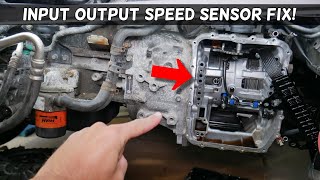
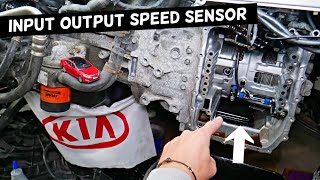
On a 2011-2014 Sonata, P0501 is almost always a failed output speed sensor. Crucially, this sensor is located inside the transmission, making replacement a complex job requiring removal of the valve body. Expect a shop repair to cost between $450 and $700.
- P0501 on a 2011-2014 Sonata points to the transmission output speed sensor, not an ABS wheel sensor.
- The most critical factor is that the sensor is located *inside* the transmission, making this a difficult and labor-intensive repair.
- This is not a beginner-friendly DIY job; professional service is strongly recommended due to the complexity of removing the transmission's valve body.
- When performing the repair, it is best practice to replace the input sensor and the internal wiring harness (P/N 46307-3B650) at the same time.
What's Unique About the 2011-2014 Hyundai Sonata
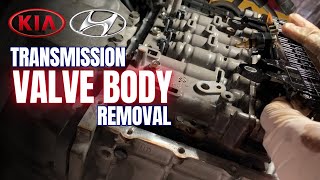
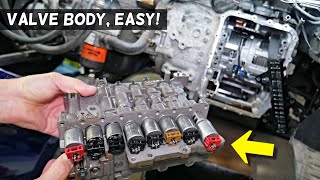
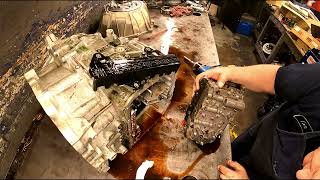
The most critical issue for the 2011-2014 (YF generation) Sonata is that the input and output speed sensors are located *inside* the A6MF1 6-speed automatic 🎬 Watch: A6MF1 transmission disassembly guide transmission case. Unlike many vehicles where the sensor is an easy-to-access external part, fixing a P0501 code on this Sonata requires a technician to drain the fluid, drop the transmission pan, and remove the entire valve body 🎬 See how to remove the valve body to access and replace the sensors and their internal harness. This makes the repair significantly more labor-intensive and expensive than owners of other vehicles might expect for a speed sensor code.
Symptoms You May Notice
- Check Engine Light is on
- Erratic, harsh, or delayed automatic transmission shifting
- Transmission stuck in one gear (limp mode)
- Speedometer reads 0 mph or behaves erratically
- Odometer is not working
- Cruise control is inoperative
- ABS and/or ESC warning lights may illuminate in some cases
- Replacing the ABS wheel speed sensors. P0501 on this platform is a powertrain code for the transmission's output speed sensor, not the wheel speed sensors used by the ABS and traction control systems. While a faulty wheel speed sensor can cause similar symptoms, it will typically set a 'C' chassis code (e.g., C1206).
Most Likely Causes
- Failed Output Vehicle Speed Sensor (VSS) 🔴 High Probability → Shop Drive Shaft Sensor The sensor is an electronic component located inside the transmission that can fail over time due to constant heat cycles and exposure to transmission fluid.
How to confirm: A professional technician will use a scan tool to monitor live data from the output speed sensor while driving. If the sensor's output is erratic, drops to zero, or doesn't change with vehicle speed, it has failed. This is the most definitive test. Resistance of a good sensor should be approximately 5.8m ohms.
Typical fix: Replace the output speed sensor. Since the sensor is internal, this involves draining the transmission fluid, removing the pan and valve body, replacing the sensor (and often the input sensor and harness at the same time), and reassembling with new fluid and gaskets.
Est. part cost: $40-$80 - Damaged Internal Wiring Harness 🟡 Medium Probability The wiring harness that connects the speed sensors is also located inside the transmission and is subjected to the same heat and fluid environment. It can become brittle, and the plastic connectors can crack, leading to a poor connection or short circuit.
How to confirm: During the sensor replacement process, the technician will visually inspect the internal harness for signs of cracking, brittleness, or damage to the connectors. It is often replaced preventatively.
Typical fix: The internal transmission wiring harness is typically replaced at the same time as the speed sensors, as it is a common failure point and requires the same amount of labor to access. The harness often comes with the input and output sensors pre-installed.
Est. part cost: $60-$120 - Damaged External Wiring or Connector ⚪ Low Probability Less common, but the main wiring harness connector on the outside of the transmission can be damaged by road debris, corrosion, or improper servicing.
How to confirm: Visually inspect the main electrical connector on the transmission case for damage, corrosion, or loose pins. Test for continuity between the PCM and the transmission connector.
Typical fix: Repair the damaged section of the wiring harness or clean/replace the connector pigtail.
Est. part cost: $20-$100
Rare But Worth Checking
- Faulty Powertrain Control Module (PCM): → Shop Engine Control Module (ECM) This is very rare. The PCM should only be considered a cause after all sensors and wiring have been thoroughly tested and confirmed to be in good working order.
- Faulty Instrument Cluster: In some cases, a failure in the instrument cluster can cause communication issues related to vehicle speed, but this is unlikely to be the primary cause of a P0501 code and would likely present with other cluster-wide problems.
Diagnosis Steps
- Connect an OBD-II scanner to confirm the P0501 code is present and check for any other related powertrain or chassis codes.
- Use the scanner's live data function to monitor the 'Vehicle Speed' PID, as well as 'Transmission Input Speed' and 'Transmission Output Speed' if available. Observe if the output speed reading is 0 mph or erratic while driving.
- Because the sensor is internal, external testing is limited. The next step is to inspect the main transmission wiring harness connector for any visible damage, corrosion, or loose pins.
- If the external wiring is okay, the issue is almost certainly internal to the transmission.
- At this point, professional service is required. A technician will drain the transmission fluid and remove the transmission oil pan.
- The valve body assembly will be unbolted and carefully removed to gain access to the speed sensors and internal harness.
- Inspect the old sensors and harness for visible damage, such as cracked plastic or brittle wires.
- Replace the output speed sensor, and it is highly recommended to also replace the input speed sensor and the internal harness at the same time due to the high labor cost to access them.
- Reinstall the valve body, transmission pan with a new gasket, and refill with the correct type of Hyundai SP-IV automatic transmission fluid.
- Use a scan tool like the Hyundai GDS to perform the 'Resetting Auto T/A Values' procedure to ensure the transmission relearns shift points with the new components.
- Clear the trouble code and perform a test drive to confirm the speedometer is working correctly and the code does not return.
Parts You'll Likely Need
- Transmission Speed Sensor (Output)
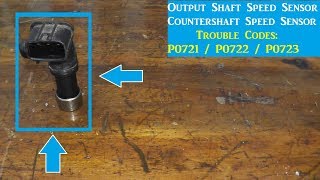
(OEM #42621-3B100)— This is the sensor that measures the transmission's output shaft speed, which is used to determine vehicle speed. It is the most common failure point for code P0501.
Trusted brands: Hyundai (OEM), Standard Motor Products
OEM price range: $40-$70
Aftermarket price range: $25-$50 - Internal Transmission Wire Harness
(OEM #46307-3B650 (This harness often includes both input and output sensors))— This harness connects the internal sensors to the main transmission connector. It lives in a harsh environment and often becomes brittle. It is best practice to replace it with the sensors since the labor to access it is the same.
Trusted brands: Hyundai (OEM), Transtar
OEM price range: $80-$150
Aftermarket price range: $60-$100 - Hyundai SP-IV Automatic Transmission Fluid
(OEM #00232-19045)— The transmission must be drained to perform the repair and refilled with the correct OEM-spec fluid. Using the wrong fluid can cause shifting problems.
Trusted brands: Hyundai (OEM)
OEM price range: $12-$20 per quart (5-6 quarts needed)
Aftermarket price range: $8-$15 per quart
Related Codes That Often Appear With This One
- P0722 - Output Speed Sensor Circuit No Signal (A more specific code for the same part)
- P0717 - Input/Turbine Speed Sensor Circuit No Signal
- Various ABS/ESC codes (e.g., C1200-C1212) if the PCM detects a major discrepancy between the transmission speed and wheel speeds.
Technical Service Bulletins (TSBs) & Recalls
- TSB 17-ST-002: Details the warranty extension for the common steering coupler failure, a critical issue for YF Sonata owners.
- TSB 13-AT-013: Addresses issues with the transmission inhibitor switch (range sensor) which can cause starting and gear indication problems.
- TSB 20-AT-008H: Provides procedures for diagnosing and replacing various transmission solenoids, which requires the same valve body removal as the speed sensors.
- TSB 14-AT-015: Describes the procedure for resetting and relearning transmission adaptive values after a repair, which is a crucial final step.
- TSB 16-AT-003: Provides detailed diagnostic procedures for speed sensor codes P0717, P0721, and P0722, recommending replacement of the sensor and valve body harness if tests fail.
Platform-Specific Known Issues
- source — A user with a 2011 Sonata reported a P0501 code along with ABS/ESC lights. Another user confirmed that on the YF Sonata, the speed sensor signal for the speedometer comes from the transmission output sensor, not the ABS sensors, reinforcing the internal transmission repair as the correct fix.
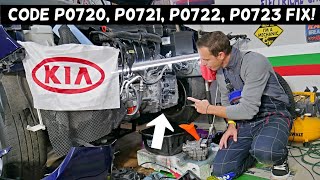
- source — A YouTube video for a Kia Optima with the same A6MF1 transmission shows the complete process of dropping the valve body to replace the internal input/output speed sensors, visually confirming the complexity of the job that also applies to the Sonata.
Mechanic-Grade Diagnostic Values
- Output Speed Sensor (OSS) Resistance — expected: Approximately 5.8m ohms. Failure: A reading significantly different from the specification indicates a faulty sensor.
- Input Speed Sensor (ISS) Resistance — expected: Approximately 3.8m ohms. Failure: While not the direct cause of P0501, this is often replaced at the same time. A bad reading confirms the need for replacement.
- Output Speed Sensor Signal Voltage (at PCM/TCM) — expected: At LOW: 0.59V ~ 0.84V (5.9 ~ 8.4mA). At HIGH: 1.18V ~ 1.68V (11.8 ~ 16.8mA).. Failure: Voltage outside these ranges indicates a wiring or sensor issue.
- Transmission Fluid Temperature Sensor Resistance — expected: 2.51K Ohms @ 68°F (20°C). Failure: An incorrect temperature reading can affect shift logic, though it won't directly cause P0501, it's a key health indicator checked during this repair.
Scan Tool Commands That Help
- Hyundai GDS (Global Diagnostic System): Resetting Auto T/A Values — This function must be used after replacing the transmission, valve body, speed sensors, or PCM/TCM. It erases the old learned shift adaptations, allowing the transmission to relearn shift points with the new components for optimal shift quality.
- Hyundai GDS (Global Diagnostic System): Current Data -> Output Speed Sensor — This is the primary diagnostic step. A technician monitors the live data stream from the OSS while driving. The reading should increase smoothly with vehicle speed. If it is zero, erratic, or does not correlate with actual speed, it confirms a fault in the sensor or its circuit.
Wiring & Ground Locations
- Main Transmission Ground Strap — Bolted from the transmission case to the vehicle's frame rail in the engine compartment.. A poor ground connection at this point can cause a host of electrical issues, including erratic sensor readings. Early 2011 Sonatas were known to have issues where this ground bolt was attached to a painted surface, causing poor contact over time.
- Dash Fuse Box, Connector C — Located in the dash fuse box inside the vehicle.. This connector contains the main 12V+ power feed (Pin 2, Red wire) for various systems, including those that power the transmission control circuits.
- Ghg01 Ground Point — Located on the left side of the engine compartment.. This is a primary grounding point for multiple engine and transmission-related components. Verifying it is clean and tight is a crucial step in diagnosing any electrical fault.
Real Owner Repair Stories
- Hyundai-Forums.com user (2011 Hyundai Sonata) — Car was completely dead, would not take a charge or jump start.
❌ Tried (didn't work) Attempting to jump start the battery., Attempting to charge the battery.
✅ What actually fixed it The dealer found that the main ground strap for the electrical system was bolted to a painted section of the frame, creating a poor connection. The fix was to clean the paint from the contact area to ensure a solid metal-to-metal ground connection.
OEM Part Supersession History
46307-3B610, 46307-3B620→46307-3B650— Updated design for improved durability and reliability.
Heads up: The older part numbers have been replaced by 46307-3B650. It is crucial to use the latest revision (3B650) when performing the repair to ensure compatibility and longevity.42620-3B100→42621-3B100 (Output Sensor), 42620-3B101 (Input Sensor)— Part numbers were updated and specified for Input vs. Output.
Heads up: The Pass 2 OEM part number for the output sensor is 42621-3B100. An older, more generic number was 42620-3B100 which was superseded by 42620-3B101 (Input Sensor). Ensure you are ordering 42621-3B100 for the output sensor.
Diagnostic Flowchart
Other Known Issues on This Vehicle
Issues unrelated to this code that are worth knowing about as an owner of this generation:
- Theta II Engine Seizure/Failure 🔴 High — Widespread across 2.0L and 2.4L GDI engines. Failures can occur at any mileage but often reported between 60,000 and 100,000 miles. Led to massive recalls and a class-action lawsuit. (Ref: Recalls 15V-568, 17V-226, and others. Hyundai extended the powertrain warranty for affected vehicles.)
- Steering Coupler Degradation 🟠 Medium — Extremely common. The flexible rubber coupler in the electronic power steering (MDPS) motor disintegrates over time, causing a distinct clicking or clunking noise when turning the wheel. (Ref: TSB 17-ST-002 extended the warranty for the coupler to 10 years/100,000 miles. The part is inexpensive, but labor can be significant.)
- Transmission Shift Cable Detachment 🔴 High → Shop Transmission Assembly — Common enough to trigger a large-scale recall. The cable can detach from the shift lever, causing the gear indicator to be incorrect and creating a rollaway risk. (Ref: Recall 14V-352 (Hyundai recall number 123).)
- Inhibitor Switch (Range Sensor) Malfunction 🟡 Low — A known issue where a faulty or misadjusted inhibitor switch can cause no-start conditions in Park/Neutral, incorrect gear display, and trigger various trouble codes. (Ref: TSB 13-AT-013 and 12-AT-022-1 address this issue with codes like P0705-P0708.)
Used vs. New Parts: Buying Guide for This Vehicle
When a used part is the smart pick: For this specific repair, using used parts is strongly discouraged. The primary cost is the extensive labor required to access the internal transmission components. Installing a used sensor or harness of unknown age and condition carries a high risk of premature failure, which would require repeating the entire expensive repair. The only scenario where a used part makes sense is if you are replacing the entire transmission assembly with a warrantied, low-mileage unit from a reputable salvage yard.
Donor-vehicle mileage cap: roughly under 60000 miles for the part to have meaningful remaining life.
What to inspect on the donor part:
- For a complete transmission: check the donor vehicle's history for accidents or flood damage.
- Ask the salvage yard for the mileage of the donor vehicle.
- Inspect the transmission fluid on the dipstick (if possible); it should be reddish-pink and not smell burnt.
- Ensure the salvage yard offers at least a 90-day warranty on the part.
OEM-only on this vehicle (don't cheap out):
- Internal Transmission Wire Harness (P/N: 46307-3B650) - Aftermarket versions may not have the same heat and oil resistance, leading to premature failure.
- Transmission Fluid (Hyundai SP-IV) - Using non-OEM fluid is a major cause of shifting problems in these transmissions.
Aftermarket brands forum-validated for this vehicle:
- Standard Motor Products (SMP) - A well-regarded brand for sensors if an OEM part is unavailable.
Brands owners have reported issues with on this vehicle:
- Unbranded, no-name sensors and harnesses from online marketplaces. The quality control is often non-existent, and the risk of early failure is extremely high for a part that requires this much labor to install.
Real Owner Stories
Aggregated from forums and TSBs cited above. Mileages and costs reflect what owners reported in those sources.
2011 Hyundai Sonata
Symptoms: Check engine light with code P0501, along with ABS and ESC warning lights. The speedometer was not functioning correctly.
What fixed it: Internal transmission repair to replace the speed sensor, as the signal for the speedometer on this model comes from the transmission output sensor rather than ABS sensors.
Source hint: Hyundai-Forums.com thread titled 'P0501 code - speed sensor - where is it located please'
2011-2015 Kia Optima (Platform Mate)
Symptoms: Erratic shifting and speed sensor codes related to the A6MF1 transmission.
What fixed it: Dropping the valve body to replace the internal input and output speed sensors.
Source hint: YouTube video for a Kia Optima with the same A6MF1 transmission
Related OBD-II Codes
Frequently Asked Questions
Can I replace the speed sensor on my 2011-2014 Sonata without opening the transmission?
My speedometer is at 0 mph and my ABS light is on; does this mean I have a bad wheel speed sensor?
Is there a specific TSB for diagnosing speed sensor codes like P0501 on this model?
What kind of transmission fluid should I use when refilling after the sensor repair?
Is there a software procedure required after replacing the VSS?
Should I replace the internal wiring harness while I'm replacing the sensor?
Helpful Videos
We Have This Part in Stock

The information in this article is provided for general reference and educational purposes only. Vehicle specifications, procedures, and part compatibility can vary by production date, trim level, and region. Always consult your vehicle's factory service manual and verify part numbers before purchasing or performing repairs. Safety-critical components such as airbags, seat belts, and braking systems should be installed by a qualified professional.
- Hyundai Sonata:
- 🧭 Diagnostic Flowchart
- 🎬 Helpful Videos
- 🛍️ Shop This Part
- What's Unique About the 2011-2014 Hyundai Sonata
- Symptoms You May Notice
- Most Likely Causes
- Rare But Worth Checking
- Diagnosis Steps
- Parts You'll Likely Need
- Related Codes That Often Appear With This One
- Technical Service Bulletins (TSBs) & Recalls
- Platform-Specific Known Issues
- Mechanic-Grade Diagnostic Values
- Scan Tool Commands That Help
- Wiring & Ground Locations
- Real Owner Repair Stories
- OEM Part Supersession History
- Other Known Issues on This Vehicle
- Used vs. New Parts: Buying Guide for This Vehicle
- Real Owner Stories
- 2011 Hyundai Sonata
- 2011-2015 Kia Optima (Platform Mate)
- Related OBD-II Codes
- Frequently Asked Questions
- 🎟️ Get 5% Off