

P0501 on 2004-2009 Toyota Prius: Speed Sensor Range/Performance Causes and Fixes
On a Gen 2 Prius, P0501 is almost always caused by a failing ABS wheel speed sensor. This will also trigger ABS, BRAKE, and VSC warning lights. An ABS-capable scan tool is needed to identify which wheel is at fault by looking for an accompanying 'C' code (e.g., C0035-C0050). Expect to pay $40-$120 for an aftermarket sensor and spend about an hour replacing it. In some cases, especially with a blank dashboard, the issue can be a well-documented combination meter failure.
- P0501 on a Gen 2 Prius points to the ABS system, not a transmission sensor.
- You MUST use a scan tool that can read ABS codes to diagnose this properly. A basic engine code reader is not enough.
- The most likely cause is a single bad ABS wheel speed sensor or its wiring.
- If your entire dashboard is dark or the car won't turn off, the problem is likely the common combination meter failure, not the sensor itself.
What's Unique About the 2004-2009 Toyota Prius
The Gen 2 Prius relies on its four ABS wheel speed sensors for vehicle speed data, not a traditional transmission sensor. This data is critical for the hybrid system's operation, regenerative braking, cruise control, and vehicle stability control (VSC). Therefore, a P0501 code is almost always a symptom of a fault in the ABS system. Additionally, this Prius generation is known for a very common instrument cluster (combination meter) failure, which can cause a cascade of electrical issues, including speed-related faults, a dead dashboard, and the inability to turn the car off normally.
Symptoms You May Notice
- Check Engine Light is on
- ABS, VSC, and BRAKE warning lights are illuminated on the dashboard
- Speedometer is inaccurate, reads 0 MPH, or behaves erratically
- Cruise control will not engage or turns off unexpectedly
- Noticeable decrease in fuel economy
- In cases related to combination meter failure, the entire dash display is blank, the car may not power off with a single press of the button, the reverse beeper is silent, and the rear hatch may not open.
- Replacing the wrong wheel speed sensor because a proper ABS scan was not performed to retrieve the specific 'C' code.
- Assuming the transmission is failing due to the P-code, when the issue is actually in the ABS system.
- Replacing the ECM when the fault lies with a sensor or the combination meter.
- Replacing a wheel speed sensor when the actual problem is a broken wire further up the harness.
Most Likely Causes
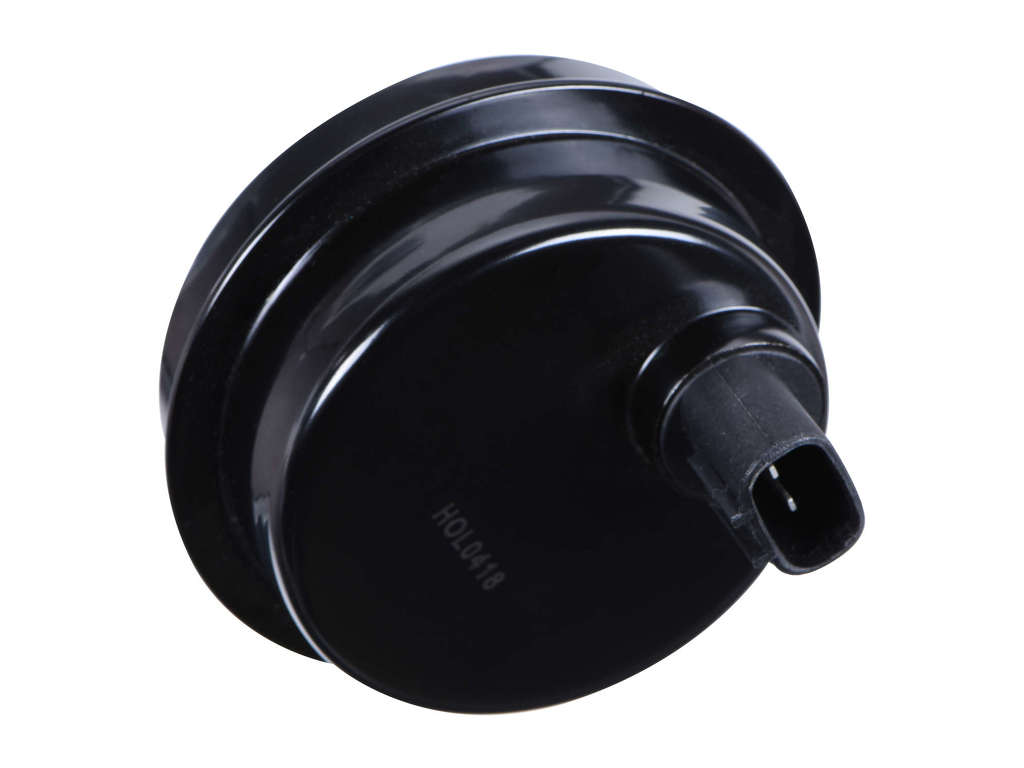
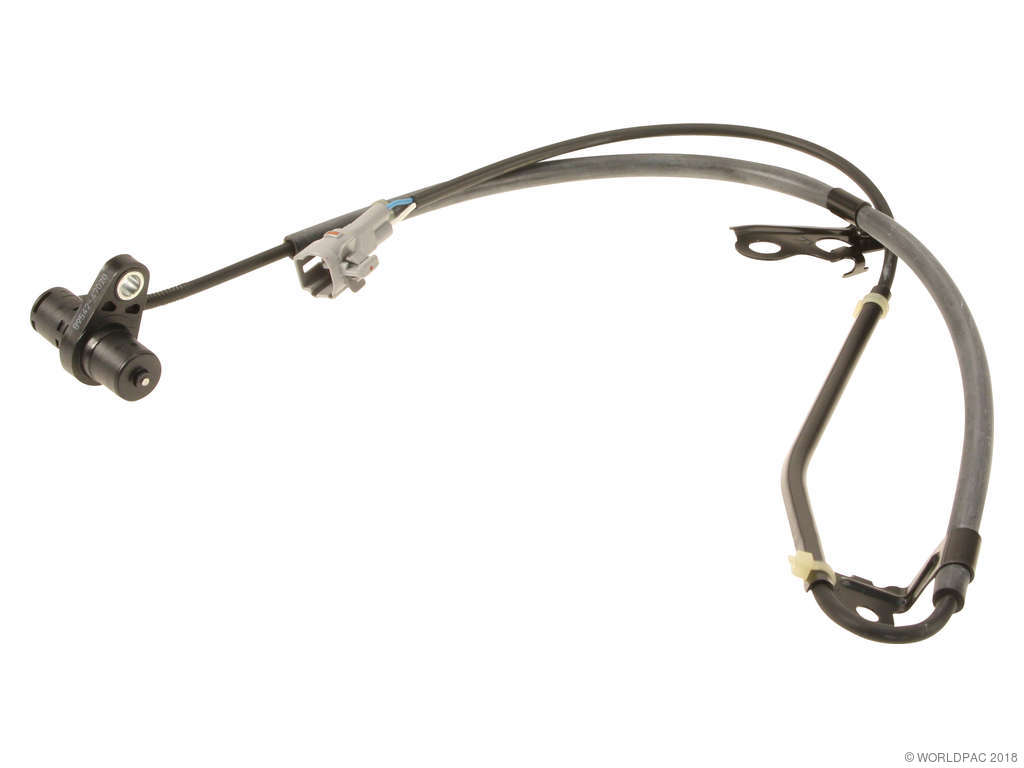
- Faulty ABS Wheel Speed Sensor 🔴 High Probability → Shop ABS Wheel Speed Sensor The vehicle uses these four sensors to determine speed, making any single sensor failure a primary trigger for this code. They are exposed to the elements and can fail from contamination or internal electronics failure over time.
How to confirm: Use an ABS-capable scan tool to read codes from the Skid Control/ABS module. A 'C' code (e.g., C0035 for Front Right, C0040 for Rear Left) will pinpoint the exact wheel sensor that has failed. Alternatively, graph the live data from all four wheel sensors while driving; the faulty sensor will show an erratic, dropping, or zero reading compared to the others.
Typical fix: Replace the faulty wheel speed sensor and clear the codes. It is a single bolt and an electrical connector. Access may require removing the wheel and inner fender liner. 🎬 See how to replace a front ABS wheel speed sensor.
Est. part cost: $40-$120 for an aftermarket sensor, $180-$300 for OEM. - Damaged Wheel Speed Sensor Wiring 🟡 Medium Probability → Shop ABS Wheel Speed Sensor The wiring harness leading to each wheel hub is exposed to road debris, moisture, and constant suspension movement, which can cause wires to fray, break, or corrode over time, especially at the connector.
How to confirm: After identifying the suspect corner with a scan tool, visually inspect the entire length of the sensor's wiring harness for breaks, chafing, or corrosion at the connector. Perform a continuity test on the wires with a multimeter from the sensor connector to the ABS module connector.
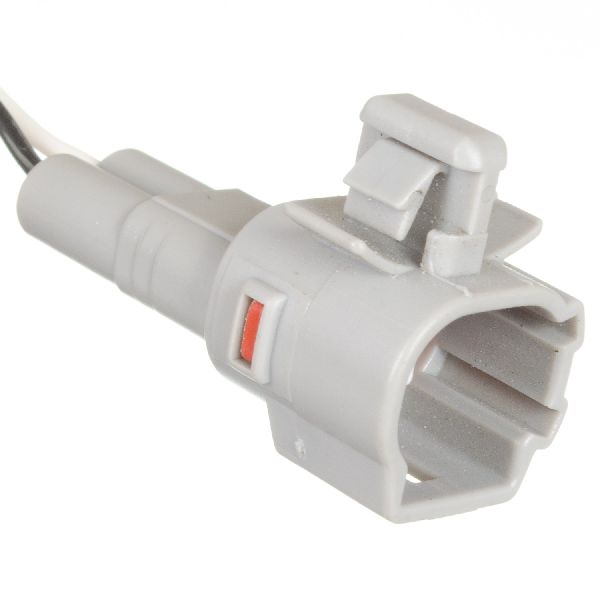
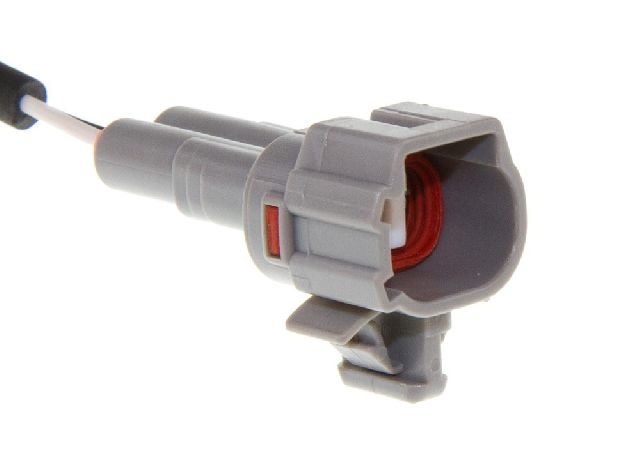
Typical fix: Repair the damaged section of the wire or replace the pigtail connector. In severe cases, the entire sensor with its integrated harness needs replacement.
Est. part cost: $10-$30 for a pigtail, or the cost of a new sensor if integrated. - Failing Combination Meter (Instrument Cluster) ⚪ Low Probability This is a widely documented design flaw in the Gen 2 Prius due to a failing capacitor on the circuit board. Toyota acknowledged the issue with TSB T-SB-0172-09 Rev2 and a warranty extension program that is now expired.
How to confirm: This is the likely cause if you experience P0501 along with a completely blank/dark instrument display, the car failing to power off with a single button press, or a B1271 trouble code. The issue is often intermittent and may be worse in cold weather.
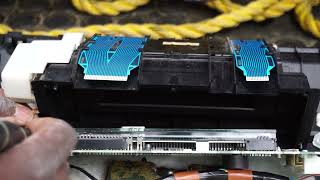
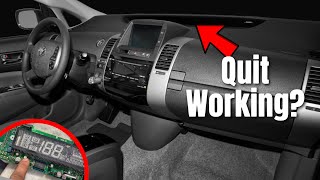
Typical fix: The combination meter must be removed from the dashboard, and the circuit board repaired by replacing a specific capacitor (typically a 100uF 16v capacitor is replaced with a 220uF 16v unit). This can be a DIY repair for those comfortable with soldering, 🎬 Watch this step-by-step guide to repairing the combination meter circuit board. or sent to a specialized electronics repair service.
Est. part cost: $1 for a capacitor if doing a DIY repair, or $100-$250 for a professional mail-in repair service.
Rare But Worth Checking
- Damaged ABS Tone Ring: The toothed ring on the wheel hub or axle can get covered in rust/debris or damaged during other repairs (like a wheel bearing replacement), causing an incorrect signal. It's worth inspecting when you have the sensor out.
- Failing Skid Control / ABS Module: This is very rare. The computer module that interprets the sensor signals can fail, but all other causes should be ruled out first due to the high cost of replacement and programming requirements.
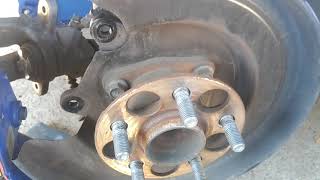
- Incorrect Wheel Bearing/Hub Assembly: Using a cheap, poor-quality aftermarket wheel bearing and hub assembly can lead to premature failure or have a misaligned/damaged tone ring, which will trigger speed sensor codes. 🎬 Watch this rear wheel bearing and speed sensor replacement walkthrough. One owner on PriusChat reported repeated failures of non-OEM hub assemblies.
Diagnosis Steps
- Connect an OBD-II scanner capable of reading ABS/Chassis codes.
- Scan for codes in both the Engine (ECM) and ABS/Skid Control modules.
- If a 'C' code (e.g., C0035-C0050) is present, it will identify the specific wheel causing the fault. Proceed to inspect that sensor and its wiring.
- If no 'C' code is present but symptoms persist, access the live data stream on the scanner.
- Monitor the speed readings from all four wheel sensors while driving the vehicle. Identify the sensor that reads 0 MPH, drops out, or shows a speed that is wildly different from the others.
- Once the suspect wheel is identified, raise and secure the vehicle. Visually inspect the sensor and its wiring harness for any physical damage, corrosion, or loose connections. Ensure the sensor is bolted securely.
- If the wiring looks good, remove the 10mm bolt holding the sensor. Remove the sensor and inspect it and the tone ring (on the hub/axle) for metal debris, rust, or physical damage.
- If all sensors and wiring appear functional, and you are experiencing other symptoms like a blank dashboard that won't turn off, investigate the combination meter as the potential cause.
- For a suspected combination meter failure, try the workaround mentioned on some forums: with the foot off the brake, press the power button once, wait a few seconds, then press the brake and double-tap the power button. This may temporarily restore function and confirm the diagnosis.
Parts You'll Likely Need
- ABS Wheel Speed Sensor
(OEM #89542-47020 (Front Right), 89543-47020 (Front Left), 89516-47060 (Rear Left), 89516-47090 (Rear Right))— This is the most frequent failure point for a P0501 code on this vehicle.
Trusted brands: Denso (OEM), Standard Motor Products, Dorman, Beck/Arnley
OEM price range: $180-$300
Aftermarket price range: $40-$120 - Combination Meter Repair Service
(OEM #83291-47360 (2006-2009 example))— If the dashboard is blank or acting erratically along with the P0501 code, a repair of the known-to-fail combination meter is the likely solution.
Trusted brands: Yazaki (OEM Manufacturer), Auto Be Yours (Mail-in service), Art's Automotive (Walk-in service, Berkeley CA)
OEM price range: $800+
Aftermarket price range: $100-$250 (For repair service)
Related Codes That Often Appear With This One
- C0035 to C0050 — These are ABS codes that specify which wheel speed sensor circuit is having a problem (e.g., C0035 - Front Right, C0040 - Rear Left). If you have P0501, you almost certainly have one of these codes stored in the ABS module, which is the key to diagnosis.
- B1271 — This body code points to a communication fault with the combination meter. If you see this with P0501 and a blank dashboard, the combination meter is the primary suspect.
Technical Service Bulletins (TSBs) & Recalls
- T-SB-0172-09 Rev2: Addresses the intermittent failure of the combination meter display, especially in cold weather, a potential cause of electrical and communication faults. It provides updated part numbers for a revised meter.
Platform-Specific Known Issues
- The 2004-2009 Prius is known for combination meter (instrument cluster) failure, which can cause a blank display, inability to turn the car off, and various communication codes, including P0501. Toyota issued a Technical Service Bulletin (T-SB-0172-09 Rev2) for this issue, which was also covered by a now-expired warranty enhancement program.
Mechanic-Grade Diagnostic Values
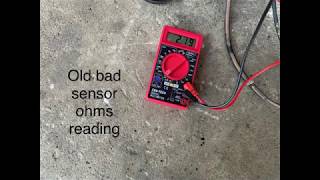
- ABS Wheel Speed Sensor Resistance — expected: 1.4 to 1.8 kΩ (1400-1800 Ohms). Failure: A reading of 'OL' (Open Loop/very high resistance) or near 0 Ω indicates a failed sensor. Readings outside the specified range suggest a faulty sensor.
- ABS Wheel Speed Sensor AC Voltage Output — expected: Greater than 100mV (0.1V) AC when spinning the wheel by hand.. Failure: No voltage or significantly lower voltage compared to other sensors while spinning the wheel at a similar speed indicates a faulty sensor or a problem with the tone ring/air gap.
- Combination Meter Repair Capacitor — expected: Replace the original 100uF capacitor with an upgraded 220uF 16V capacitor.. Failure: The original capacitor fails, causing intermittent or total loss of the instrument display.
Scan Tool Commands That Help
- Toyota Techstream: Active Test: ABS WARN LIGHT — To verify if the ABS warning light on the combination meter is functioning correctly. If the light can be turned on and off with the scan tool, but it remains illuminated during normal operation with no codes, it points towards a fault in the Skid Control ECU itself rather than the meter.
Wiring & Ground Locations
- Skid Control ECU — Located behind the dashboard, near the steering column. It is described as having a 'waffle iron' pattern on its metal enclosure.. This ECU is the central computer for the ABS and VSC systems. It receives signals from all four wheel speed sensors and communicates vehicle speed to the main ECM. A failure or bad connection here can cause a P0501 code.
- Skid Control ECU Connector — The harness connects directly to the Skid Control ECU located under the driver's side dash.. Technicians may need to access specific pins on this connector to test for continuity or voltage from the wheel speed sensor circuits directly at the module, bypassing the vehicle's wiring harness to isolate a fault.
- Front Wheel Speed Sensor Wiring Colors (at ECU) — At the Skid Control ECU connector.. Wiring diagrams indicate the front right sensor wires are Pink (+) and Blue (-), while the front left are Red (+) and Green (-). This is crucial for tracing wires and performing pin-out diagnostics at the ECU connector.
Real Owner Repair Stories
- PriusChat forum user (2004-2009 Toyota Prius (Gen 2)) — ABS, VSC, and ECB warning lights illuminated. ABS code C0205/32 present.
❌ Tried (didn't work) Replacing the wheel speed sensor with a cheap aftermarket part did not resolve the issue.
✅ What actually fixed it The user noted that a common problem is corrosion buildup on the sensor's mounting surface. This increases the air gap between the sensor and the tone ring, causing a weak or erratic signal. Cleaning the 'crud' from the mounting point to ensure the sensor sits flush can resolve the issue without replacing the sensor. - SuperJETT on PriusChat (2008 Toyota Prius) — Brake error, VSC, and ABS lights on. No engine OBD codes, indicating the fault is in the brake ECU.
❌ Tried (didn't work) The previous owner had snapped the mounting bolt for a wheel speed sensor and siliconed it in place. The user cleaned this and re-secured it with JB Weld, but the fault persisted.
✅ What actually fixed it The user diagnosed the issue by testing the AC voltage output from each sensor while spinning the wheel. Three sensors produced ~0.33V, while the suspect sensor only produced 0.115V. This confirmed the sensor itself was faulty, despite having correct resistance. The final fix was replacing the faulty wheel speed sensor.
Model Year Variations Within This Range
- 2004 vs 2005-2009: There is conflicting information regarding the compatibility of the ABS Actuator Assembly. Some parts suppliers list a single part for 2004-2009, while others differentiate between 2004 and 2005-2009 models. Forum discussions suggest that while the front-end body panels are different, the brake actuators are physically interchangeable and will function without codes, but it's a point of uncertainty to be aware of when sourcing used parts.
Diagnostic Flowchart
Other Known Issues on This Vehicle
Issues unrelated to this code that are worth knowing about as an owner of this generation:
- Brake Actuator Assembly Failure 🔴 High — Very common, typically occurs over 100,000 miles. Symptoms include a loud, frequent buzzing/honking noise from the engine bay and ABS/BRAKE/VSC lights. (Ref: T-SB-0307-08 / BR001-07 addressed a noise, but a wider warranty enhancement program (now expired) covered full failure. Common codes are C1256 and C1391.)
- Inverter Coolant Pump Failure 🔴 High — Extremely common. Failure of the electric pump causes the hybrid system to overheat, triggering a Master Warning Light and code P0A93. (Ref: Subject of Toyota Safety Recall C0U and Limited Service Campaign SSC-A0E.)
- Excessive Oil Consumption 🟠 Medium — Common on higher-mileage (100k+) engines. Caused by carbon buildup on low-tension piston rings. Toyota considers consumption up to 1.1 quarts per 600 miles to be 'normal'.
- Hybrid Battery (HV) Pack Degradation 🔴 High — Inevitable with age and mileage, typically after 10-15 years or 150,000+ miles. Leads to decreased fuel economy, warning lights, and code P0A80.
- HID Headlight Failure 🟡 Low — Common on models equipped with optional High-Intensity Discharge headlights. One or both headlights may fail intermittently or completely. The cause can be the bulb or the electronic ballast. (Ref: NHTSA opened a preliminary investigation but no major recall was issued.)
Used vs. New Parts: Buying Guide for This Vehicle
When a used part is the smart pick: For the expensive ABS Actuator Assembly, a tested, low-mileage used OEM unit is a practical and cost-effective repair strategy, often saving thousands over a new part. A used Combination Meter can also be a viable option if it's confirmed to be from a vehicle that did not exhibit the blank-dash symptoms.
Donor-vehicle mileage cap: roughly under 120000 miles for the part to have meaningful remaining life.
What to inspect on the donor part:
- For ABS Actuators: Verify the part comes with a warranty or return policy. Ask the seller for the VIN of the donor car to check its history and mileage. Visually inspect for corrosion or damage to connectors.
- For Combination Meters: Ask if the unit was tested before removal. Look for any signs of previous repair attempts (e.g., pry marks on the casing, non-factory soldering).
- For Wheel Speed Sensors: Due to their low cost and high failure rate from exposure, buying new aftermarket sensors is generally recommended over used ones.
OEM-only on this vehicle (don't cheap out):
- ABS Actuator Assembly: While used OEM is a good strategy, avoid unverified aftermarket actuator assemblies. The complexity and safety-critical nature of this part make OEM (new or used) the most reliable choice.
Aftermarket brands forum-validated for this vehicle:
- Denso (for Wheel Speed Sensors - often the OEM supplier)
- Standard Motor Products (SMP)
- Beck/Arnley
Brands owners have reported issues with on this vehicle:
- Unnamed, 'white box' eBay or Amazon wheel speed sensors have been reported by forum users to be dead on arrival or fail quickly.
Real Owner Stories
Aggregated from forums and TSBs cited above. Mileages and costs reflect what owners reported in those sources.
2004-2009 Toyota Prius 1.5L
Symptoms: The dashboard display went completely blank/dark, and the car would not power off with a single press of the button.
What fixed it: The combination meter was repaired by replacing a specific capacitor on the circuit board (upgrading the 100uF 16v capacitor to a 220uF 16v unit).
Cost: $100-$250
Source hint: PriusChat: T-SB-0172-09 Combination Meter - Intermittent Display
2004-2009 Toyota Prius 1.5L
Symptoms: ABS lights illuminated on the dashboard; a mechanic diagnosed a fault specifically at the right-front wheel.
What fixed it: Replacement of the front right wheel speed sensor.
Source hint: PriusChat: RF Wheel Speed Sensor Fault
2004-2009 Toyota Prius 1.5L
Symptoms: P0501 code, inconsistent braking, and a reduction in MPG following the installation of a new part.
What fixed it: Identified a failed aftermarket wheel bearing as the root cause.
Source hint: PriusChat: The great speed sensor mystery
2004-2009 Toyota Prius 1.5L
Symptoms: Combination meter failed to light up; used a specific sequence of power button presses to get the display to temporarily function.
What fixed it: Diagnostic confirmation of combination meter failure using a non-standard power-button sequence.
Source hint: Reddit r/prius: Possible faulty combination meter work around
Related OBD-II Codes
Frequently Asked Questions
Is there a TSB for the blank dashboard and P0501 code on my Gen 2 Prius?
My speedometer reads 0 MPH and the ABS/VSC lights are on. How can I tell which wheel sensor is bad?
Can a bad wheel bearing cause a P0501 code on this car?
Is there a workaround if my combination meter fails and I can't turn the car off?
How much does it cost to fix the combination meter issue that causes P0501?
Will a faulty wheel speed sensor affect my fuel economy?
Helpful Videos
We Have This Part in Stock


The information in this article is provided for general reference and educational purposes only. Vehicle specifications, procedures, and part compatibility can vary by production date, trim level, and region. Always consult your vehicle's factory service manual and verify part numbers before purchasing or performing repairs. Safety-critical components such as airbags, seat belts, and braking systems should be installed by a qualified professional.
- Toyota Prius:
- 🧭 Diagnostic Flowchart
- 🎬 Helpful Videos
- 🛍️ Shop This Part
- What's Unique About the 2004-2009 Toyota Prius
- Symptoms You May Notice
- Most Likely Causes
- Rare But Worth Checking
- Diagnosis Steps
- Parts You'll Likely Need
- Related Codes That Often Appear With This One
- Technical Service Bulletins (TSBs) & Recalls
- Platform-Specific Known Issues
- Mechanic-Grade Diagnostic Values
- Scan Tool Commands That Help
- Wiring & Ground Locations
- Real Owner Repair Stories
- Model Year Variations Within This Range
- Other Known Issues on This Vehicle
- Used vs. New Parts: Buying Guide for This Vehicle
- Real Owner Stories
- 2004-2009 Toyota Prius 1.5L
- 2004-2009 Toyota Prius 1.5L
- 2004-2009 Toyota Prius 1.5L
- 2004-2009 Toyota Prius 1.5L
- Related OBD-II Codes
- Frequently Asked Questions
- 🎟️ Get 5% Off