

P0502 on 2014-2016 Chevrolet Corvette: VSS Circuit Low Voltage Causes and Fixes
On a 2014-2016 Corvette with a manual transmission, code P0502 is most often caused by water intrusion into the vehicle speed sensor connector located on the differential. This commonly causes an inability to shift into reverse and may disable Active Rev Matching. Inspecting, cleaning, and sealing the sensor connector is the primary fix.
- For a 2014-2016 manual Corvette, P0502 is very likely caused by moisture in the VSS connector on the differential.
- A key symptom, besides the check engine light, is being unable to shift into reverse.
- Before buying any parts, first inspect, clean, and dry the VSS connector. Apply dielectric grease to the seal before reconnecting.
- The correct OEM replacement sensor is GM part #24296964.
- Check the wiring harness for any signs of melting from contact with the exhaust.
What's Unique About the 2014-2016 Chevrolet CORVETTE
For the C7 Corvette (2014-2019), this code is the subject of a specific Manufacturer Technical Service Bulletin (TSB PI11489B). The bulletin highlights that on manual transmission models, the P0502 code, along with an intermittent inability to shift into reverse, is frequently caused by water getting into the transmission output speed sensor's electrical connector. The sensor's location on top of the differential makes it susceptible to water spray from the rear wheels. This makes checking for moisture and corrosion at the sensor a critical first step, unique to this platform's known issues. Some owners also report that the wiring harness can be damaged by heat from the exhaust if not routed correctly.
Diagnostic Flowchart
Tap your situation to follow the diagnostic path that matches what you're seeing on this vehicle.
Symptoms You May Notice
- Check Engine Light (Malfunction Indicator Lamp) is on.
- Intermittently unable to shift into reverse (on manual transmission models).
- Inaccurate or non-functional speedometer.
- "SERVICE TRACTION SYSTEM" message on the dashboard.
- Cruise control may not work.
- Active Rev Match (ARM) feature is disabled or functions erratically.
- Shifter can be forced into reverse with extra effort, overriding the electronic lockout.
- Replacing the VSS without first checking for water intrusion or corrosion in the connector, which is the most likely cause according to GM's TSB.
- Confusing the transmission output Vehicle Speed Sensor (VSS) with one of the four wheel speed sensors used for the ABS system. The P0502 code specifically refers to the VSS on the differential for manual transmission models.
Most Likely Causes
- Water Intrusion at VSS Connector 🔴 High Probability This is a documented issue in GM Technical Service Bulletin #PI11489B for manual transmission Corvettes. The sensor's location on the differential makes it vulnerable to water kicked up by the tires.
How to confirm: Visually inspect the vehicle speed sensor connector, located on top of the passenger side of the differential, for signs of moisture, green/white corrosion, or backed-out pins.
Typical fix: Disconnect the battery. Unplug the connector, clean the terminals on both the sensor and the harness side with electrical contact cleaner, and let it dry completely. Apply a generous amount of dielectric grease to the connector seal (not directly on the pins) to prevent future water intrusion, then reconnect. If corrosion is severe, the connector pigtail may need replacement.
Est. part cost: $5-$25 - Failed Vehicle Speed Sensor (VSS) 🔴 High Probability → Shop Drive Shaft Sensor The sensor itself can fail electronically. It is a common failure point across many vehicles and is often replaced as a precaution even when the connector is the main issue.
How to confirm: After confirming the wiring and connector are clean and dry, test the sensor. A diagnostic scan tool can monitor the VSS output. Alternatively, with the rear wheels raised and the ignition on, a multimeter can check for an AC voltage signal from the sensor while spinning the wheels. A healthy sensor should produce a rising AC voltage as wheel speed increases. 🎬 See this diagnostic case study on troubleshooting P0502 sensor signals. A resistance check across the sensor's terminals should be between 1,300-1,500 ohms.
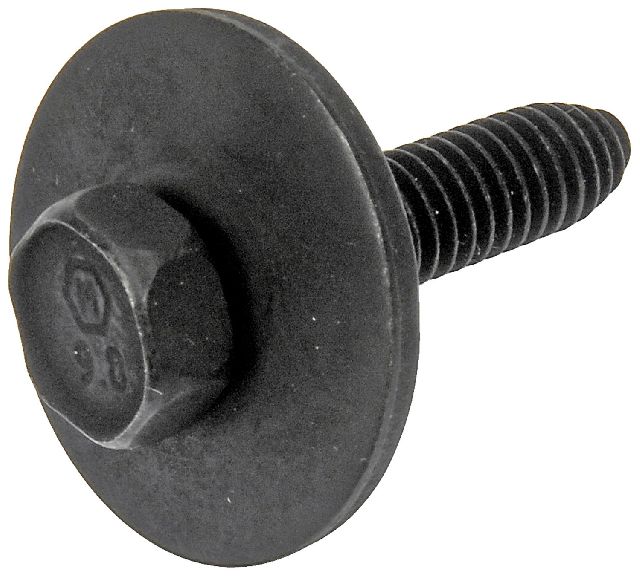
Typical fix: Replace the vehicle speed sensor. It is held in by a single 10mm bolt on top of the differential. The OEM part is GM #24296964 (superseding 19355499 and 19299231).
Est. part cost: $40-$80 - Damaged Wiring or Loose Connection 🟡 Medium Probability The wiring harness to the sensor is routed near the exhaust and drivetrain components. Forum users have reported the harness melting from contact with the exhaust or wires being pulled during drivetrain service.
How to confirm: Perform a continuity test on the VSS signal and ground wires between the sensor connector and the ECM. Check for opens, shorts to ground, or high resistance. Visually inspect the harness for any signs of melting, chafing, or pinching, particularly where it passes near the exhaust.
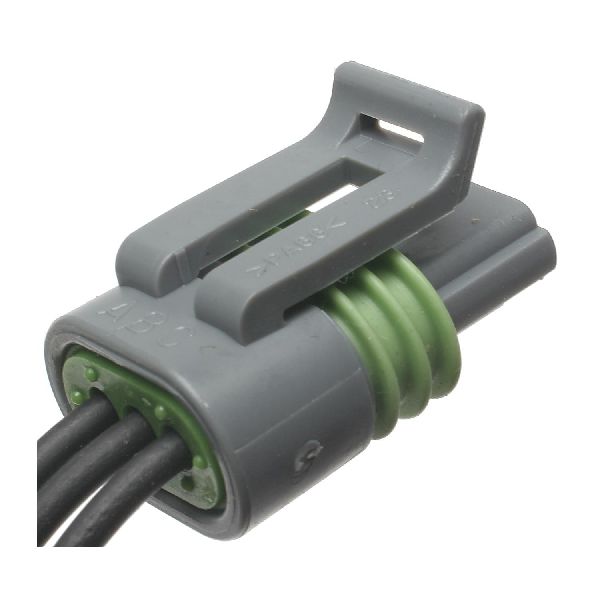
Typical fix: Repair the damaged section of the wiring harness. If the connector itself is damaged, it can be replaced with a pigtail (e.g., ICT Billet WPVSS30).
Est. part cost: $15-$50 - Outdated ECM Calibration ⚪ Low Probability TSB #PI11489B notes that for some 2015-2016 models, an updated ECM calibration may be required to prevent the code from being set, especially if the sensor and wiring have been confirmed to be good.
How to confirm: A GM dealership or a qualified shop with access to GM's service information system (SPS) can check if the vehicle has the latest ECM software by checking the VIN against available updates.
Typical fix: Reprogram the Engine Control Module (ECM) with the latest software calibration. This is typically a dealer-only service.
Est. part cost: $100-$250
Rare But Worth Checking
- Faulty Engine Control Module (ECM): → Shop Engine Control Module (ECM) This is extremely rare. The ECM should only be considered after all other possibilities, including the sensor, connector, wiring, and software calibrations, have been thoroughly ruled out.
Diagnosis Steps
- Scan the vehicle for DTCs to confirm P0502 is present and check for any other related codes.
- Raise the rear of the vehicle and safely support it on jack stands.
- Locate the Vehicle Speed Sensor (VSS) and its electrical connector. On the C7 Corvette, it is on the top, passenger side of the rear differential housing.
- Disconnect the negative battery terminal.
- Unplug the connector and meticulously inspect both the harness side and sensor side for any signs of water, green/white corrosion, or backed-out pins, as noted in TSB #PI11489B.
- If moisture or corrosion is found, use an electrical contact cleaner and a small brush to thoroughly clean the terminals. Allow it to dry completely.
- Apply dielectric grease to the inside of the connector's weather seal to prevent future moisture intrusion. Reconnect the connector firmly.
- Reconnect the battery, clear the codes, and test drive the vehicle to see if the code returns. Check for proper reverse gear engagement.
- If the code returns, inspect the wiring harness leading to the sensor for any signs of heat damage from the exhaust, chafing, or physical damage.
- If wiring is intact, test the sensor. With a multimeter set to Ohms, check the resistance between the two pins on the sensor itself. It should be approximately 1,300-1,500 Ohms.
- If the resistance is out of spec, replace the Vehicle Speed Sensor (GM Part #24296964).
- If the code persists after replacing the sensor, the vehicle may need an ECM software update from a GM dealership, as recommended by the TSB for some model years.
Parts You'll Likely Need
- Vehicle Speed Sensor (Manual Transmission Output)
(OEM #GM 24296964 (supersedes 19355499, 19299231))— This sensor is the primary component that fails or is affected by water intrusion, leading to the P0502 code and associated symptoms on this vehicle.
Trusted brands: ACDelco (GM Genuine), Dorman (917-680)
OEM price range: $60-$90
Aftermarket price range: $30-$60 - Electrical Contact Cleaner & Dielectric Grease — Required for cleaning corrosion from the connector, which is a very common cause of this code according to a manufacturer TSB.
Trusted brands: CRC, Permatex
OEM price range: $15-$25
Aftermarket price range: $10-$20 - VSS Connector Pigtail
(OEM #ACDelco PT2386 (verify fitment))— If the connector or wiring is too corroded or damaged to be cleaned, a replacement pigtail is needed to splice into the harness.
Trusted brands: ACDelco, ICT Billet (WPVSS30), EFI Connection (100-00333)
OEM price range: $20-$40
Aftermarket price range: $10-$25
Related Codes That Often Appear With This One
- P18C9: This code can sometimes appear alongside P0502, particularly on Z06 models during track use, indicating a related drivetrain sensor issue.
Technical Service Bulletins (TSBs) & Recalls
- PI11489B: Malfunction Indicator Lamp (MIL) Illuminated, Intermittently Unable to Shift into Reverse, DTC P0502 Set. This is the most relevant and current TSB for this issue.
- PI1489A: Predecessor to PI11489B, also linking P0502 to the reverse shift issue.
- PI1489: Defines the code as Vehicle Speed Sensor (VSS) Circuit Low Voltage.
Platform-Specific Known Issues
- A General Motors TSB (#PI11489B) directly addresses P0502 on 2014-2016 Corvettes with manual transmissions. It identifies the primary cause as water intrusion into the manual transmission output speed sensor connector, which can also lead to an inability to shift into reverse.
- The same TSB also mentions that customer driving habits, such as slipping the clutch for an extended period on a hill, could potentially induce this code.
- Some owners on CorvetteForum have had to have the VSS wiring harness replaced and rerouted because it was making contact with the exhaust pipe, melting the insulation and causing a short.
Mechanic-Grade Diagnostic Values
- Vehicle Speed Sensor (VSS) Resistance — expected: 1,300-1,500 Ohms at 77°F (25°C). Failure: A reading outside this range indicates a faulty sensor.
- VSS Circuit Continuity at ECM Connector X1 — expected: 1,300-1,500 Ohms between VSS High Signal (Pin 71, Gry/Blk wire) and VSS Low Signal (Pin 72, Pur/Wht wire).. Failure: Resistance higher than 1,500 Ohms suggests an open or high resistance in the harness. No continuity indicates a broken wire.
- VSS Circuit Short to Ground at ECM Connector X1 — expected: More than 10 Ohms between Pin 71 and chassis ground, and more than 10 Ohms between Pin 72 and chassis ground.. Failure: A reading of less than 10 Ohms indicates a short to ground in the respective wire.
Scan Tool Commands That Help
- GM GDS2 (or equivalent professional scan tool): ECM Live Data > Vehicle Speed Sensor Parameter — Use this to monitor the speed signal being received by the ECM in real-time while driving or spinning the rear wheels. Dropouts or erratic readings that don't correspond to wheel speed point to an issue with the sensor or wiring.
Wiring & Ground Locations
- VSS Connector at ECM — The Engine Control Module (ECM) is located in the front passenger-side wheel well. The VSS wires connect to the black X1 connector.. Testing at the ECM pins allows for a complete end-to-end check of the entire VSS circuit, ruling out wiring issues between the sensor and the control module.
- G106 — On the right side of the engine block, above the starter.. This is a primary ground for the PCM/ECM. A poor connection here can cause a variety of erratic sensor readings and codes, including P0502, due to an unstable ground reference.
- G104 — On the frame, just forward of the battery.. This is the main battery-to-chassis ground. While less direct, a poor main ground can introduce electrical noise and voltage stability issues across the entire vehicle, potentially affecting sensitive sensor signals.
Real Owner Repair Stories
- CorvetteForum user reports (C7 Corvette (year not specified)) — Check Engine Light with P0502, intermittent loss of speedometer, and other electrical warnings.
❌ Tried (didn't work) Initial diagnosis pointed to the sensor itself.
✅ What actually fixed it The wiring harness for the VSS had melted due to contact with the hot exhaust pipe. The fix involved repairing the melted wires, wrapping the harness section with a heat-protective sleeve, and using zip ties to secure it away from the exhaust. - CorvetteForum user report (C7 Corvette (year not specified)) — P0502 code appeared immediately after a clutch replacement.
❌ Tried (didn't work) Replacing the VSS sensor., Cleaning the VSS connector.
✅ What actually fixed it The VSS wiring harness was found to be pinched between the torque tube and the transmission tunnel during reassembly. Freeing the pinched harness and repairing the damaged wires resolved the code. - CorvetteForum user report (2015-2016 Corvette) — Persistent P0502 code and inability to shift into reverse.
❌ Tried (didn't work) Replacing the vehicle speed sensor., Thoroughly cleaning the connector and applying dielectric grease.
✅ What actually fixed it The issue was finally resolved by taking the vehicle to a GM dealer to have the Engine Control Module (ECM) reprogrammed with the latest software calibration, as recommended by TSB PI1489B.
When the Usual Fixes Don't Work
- While the vast majority of P0502 issues on the C7 Corvette are resolved by cleaning the connector or replacing the sensor, there are documented cases where these steps do not fix the problem. In these instances, the root cause was found to be either an outdated ECM software calibration requiring a dealer reflash or physical damage to the wiring harness (melting/pinching) far from the sensor itself. This highlights the importance of performing a full circuit diagnostic and checking for TSBs if the common fixes fail.
OEM Part Supersession History
19299231→19355499, then 24296964— Standard part revision and improvement by the manufacturer.
Heads up: All parts are reported to be interchangeable. The latest part number, 24296964, is the recommended replacement.
Model Year Variations Within This Range
- 2015-2016: TSB #PI11489B specifically calls out the possibility of needing an updated ECM calibration for 2015-2016 models if the code persists after the sensor and wiring have been verified as good. This is noted as a potential final fix step for these years.
Helpful Videos
We Have This Part in Stock



The information in this article is provided for general reference and educational purposes only. Vehicle specifications, procedures, and part compatibility can vary by production date, trim level, and region. Always consult your vehicle's factory service manual and verify part numbers before purchasing or performing repairs. Safety-critical components such as airbags, seat belts, and braking systems should be installed by a qualified professional.
- Chevrolet CORVETTE:
- 🧭 Diagnostic Flowchart
- 🎬 Helpful Videos
- 🛍️ Shop This Part
- What's Unique About the 2014-2016 Chevrolet CORVETTE
- Symptoms You May Notice
- Most Likely Causes
- Rare But Worth Checking
- Diagnosis Steps
- Parts You'll Likely Need
- Related Codes That Often Appear With This One
- Technical Service Bulletins (TSBs) & Recalls
- Platform-Specific Known Issues
- Mechanic-Grade Diagnostic Values
- Scan Tool Commands That Help
- Wiring & Ground Locations
- Real Owner Repair Stories
- When the Usual Fixes Don't Work
- OEM Part Supersession History
- Model Year Variations Within This Range
- 🎟️ Get 5% Off