

P0502 on 2008-2014 Dodge Avenger: Causes and Fixes for Low Speed Sensor Signal
This code almost always points to a faulty transmission output speed sensor. Expect symptoms like a dead speedometer and harsh shifting. A replacement sensor is inexpensive, and it's a DIY-friendly job for many owners.
- P0502 on a 2008-2014 Avenger means the computer isn't getting a speed signal from the transmission.
- The most common symptoms are a dead speedometer and the transmission going into 'limp mode'.
- The fix is almost always replacing the transmission output speed sensor, which is located on the side of the transmission behind the driver's wheel.
- Before buying parts, check the sensor's wiring and connector for any visible damage or corrosion.
- This is a highly DIY-able repair that can be done with basic tools in about an hour.
What's Unique About the 2008-2014 Dodge Avenger
For the 2008-2014 Dodge Avenger, it's crucial to distinguish between the transmission speed sensors and the ABS wheel speed sensors. This P0502 code specifically relates to the vehicle speed signal generated from the transmission. Owners often first suspect the wrong sensor, especially if they also have ABS or traction control lights on. The Avenger uses both an input and an output transmission speed sensor; P0502, tied to overall vehicle speed and the speedometer, typically points to a failure of the output sensor or its circuit. Critically, this vehicle was offered with both a 4-speed (40TE/41TE) and a 6-speed (62TE) automatic transmission, which have different sensor locations and specifications.
Symptoms You May Notice
- Check Engine Light is on
- Speedometer reads 0 mph or is erratic.
- Harsh, jerky, or delayed automatic transmission shifting.
- Vehicle stuck in 'limp mode' (usually locked in 2nd gear).
- Cruise control is inoperative.
- ABS or Traction Control light may illuminate.
- Replacing a wheel speed (ABS) sensor. The ABS sensors are for the anti-lock brake system and are not the source of the primary vehicle speed signal on this car. If ABS/Traction lights are on, it's wise to scan the ABS module for codes, but P0502 itself points to the transmission sensor.
- Replacing the transmission input speed sensor. While it can cause shifting issues and limp mode, the output speed sensor is responsible for the speedometer reading and is the more common culprit for P0502. Code P0717 specifically points to the input sensor.
- Incorrectly identifying the transmission. The 4-speed (40TE/41TE) and 6-speed (62TE) transmissions have different sensor locations. The 4-speed's sensors are accessed from the top after removing the airbox, while the 6-speed's output sensor is best accessed from the driver's side wheel well.
Most Likely Causes
- Faulty Transmission Output Speed Sensor 🔴 High Probability → Shop Transmission Assembly The output speed sensor is the primary source for the vehicle speed signal used by the PCM and speedometer. It is a common failure point due to heat and vibration over time, leading to an internal short or weak signal.
How to confirm: Scan for other transmission-related codes (like P0721/P0722). Test the sensor's output with a multimeter or oscilloscope while rotating the wheels. A steady 0V or constant low-voltage reading while moving indicates a missing signal. For the 62TE transmission, the sensor should have a resistance of approximately 1590 Ohms at 72°F (22°C). A reading that is wildly different or open indicates a failed sensor.
Typical fix: Replace the transmission output speed sensor.
Est. part cost: $20-$60 - Damaged Wiring or Corroded Connector 🟡 Medium Probability The wiring harness to the sensor is located under the vehicle and is exposed to road debris, moisture, and heat, which can lead to corrosion, breaks, or shorts to ground. On 62TE models, the connectors for the input, output, and transfer speed sensors are identical and can be easily cross-connected during service, which will cause multiple gear ratio codes.
How to confirm: Visually inspect the wiring harness and connector leading to the output speed sensor for any signs of damage, chafing, or green/white corrosion on the pins. Perform a continuity test on the wires between the sensor and the PCM. Check for the correct reference voltage (often 5V) and a good ground at the connector.
Typical fix: Repair the damaged section of wiring or replace the connector pigtail.
Est. part cost: $15-$40
Rare But Worth Checking
- Faulty Powertrain Control Module (PCM): → Shop Engine Control Module (ECM) This is very rare. The PCM's input circuit can fail, but this should only be considered after thoroughly testing the sensor and wiring and confirming they are good.
- Faulty Instrument Cluster: → Shop Instrument Cluster On some older Chrysler vehicles, the speed signal routes through the instrument cluster. While less common on this Avenger platform, a failure in the cluster's circuit board can theoretically cause this code. This is unlikely and difficult to diagnose without professional tools.
- Metal Debris on Sensor: The speed sensor is magnetic and can attract metallic particles from normal transmission wear. A significant buildup can interfere with the sensor's ability to read the reluctor ring, weakening the signal. Cleaning the sensor tip during inspection is a good practice. Heavy metal shavings are a sign of more serious internal transmission problems.
Diagnosis Steps
- Scan the PCM for stored trouble codes to confirm P0502 is present and see if any other codes are stored. Note any freeze-frame data.
- Observe live data on a scan tool to see what vehicle speed the PCM is reporting. It will likely be zero or erratic.
- Identify the vehicle's transmission (4-speed or 6-speed) to determine the correct sensor location. 4-cylinder and 2.7L V6 models usually have the 4-speed, while 3.5L/3.6L V6 models have the 6-speed.
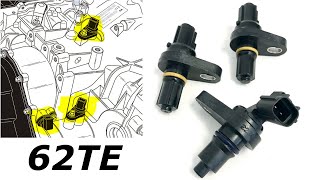
- Locate the transmission output speed sensor. For 6-speed (62TE), it's on the rear of the transmission, accessed by removing the driver's side front wheel. For 4-speed (40TE/41TE), it's on the left side of the case, often accessed from above.
- Visually inspect the sensor's connector and wiring harness for any obvious damage, corrosion, or loose connections.
- If the wiring looks good, disconnect the sensor. For 62TE transmissions, test the sensor's resistance with a multimeter. It should be around 1590 Ohms at room temperature. An open or shorted reading indicates a bad sensor.
- Check for reference voltage and a good ground at the connector with a multimeter. If voltage or ground is missing, there is a wiring issue between the PCM and the sensor that needs to be traced and repaired.
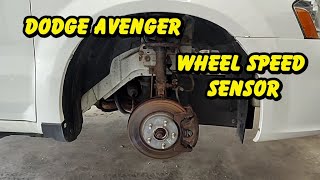
- If wiring and power/ground are good but the sensor resistance is out of spec, replace the output speed sensor. It is typically held in by a single 8mm or 10mm bolt. 🎬 See this output speed sensor replacement walkthrough
- Before installing the new sensor, clean the mounting area and the tip of the sensor if any metallic debris is present.
- After replacing the sensor or repairing the wiring, clear the trouble codes and perform a test drive to ensure the speedometer works, the transmission shifts correctly, and the code does not return.
Parts You'll Likely Need
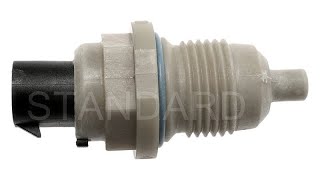
- Automatic Transmission Output Speed Sensor
(OEM #04800879)— This sensor provides the main vehicle speed signal to the PCM. Its failure is the most common cause of code P0502, a non-functional speedometer, and related shifting problems.
Trusted brands: Mopar, NGK/NTK, Dorman, Standard Motor Products
OEM price range: $45-$70
Aftermarket price range: $20-$40
Related Codes That Often Appear With This One
- P0721 / P0722 — These codes point more specifically to the Output Speed Sensor circuit performance or lack of signal, strongly indicating the sensor or its wiring is the root cause.
- P0717 — This code points to the Input Speed Sensor. If you have shifting problems but the speedometer works, this code is more likely. Sometimes it can appear with P0502 if there are multiple transmission issues.
Platform-Specific Known Issues
- The location of the output speed sensor is on the side of the transmission, making it necessary to remove the driver's side front wheel for easiest access. The input sensor, by contrast, is on top of the transmission under the airbox.
Mechanic-Grade Diagnostic Values
- 62TE Transmission Output Speed Sensor Resistance — expected: Approx. 1590 Ohms @ 72°F (22°C). Failure: A reading that is significantly higher, lower, or shows an open circuit (infinite resistance). One real-world failure showed a reading of 0.427 Ohms.
- 62TE Transfer Shaft Speed Sensor Resistance — expected: Approx. 1424 Ohms @ 72°F (22°C). Failure: A reading that is significantly out of spec. This sensor is different from the input/output sensors.
- VSS Signal Voltage (General) — expected: A square wave (Hall-effect) or AC sine wave (magnetic) that changes in frequency and/or amplitude with wheel speed.. Failure: A constant low voltage (near 0V) while the wheels are turning.
Wiring & Ground Locations
- 62TE Output Speed Sensor Connector — On the rear of the 6-speed transmission, typically accessed from the driver's side wheel well. It is often the rearmost of two similar sensors.. This is the primary connection point to test the sensor and harness. The connector is identical to the input and transfer speed sensor connectors, making it easy to cross-connect them by mistake, which will cause multiple gear ratio codes.
- 62TE Output Speed Sensor Wires (2009 example) — In the harness connector for the output speed sensor.. For a 2009 model, the wire colors are Dark Green/Violet for both the signal and ground wires, making it critical to use a wiring diagram to trace them back to the PCM if a wiring fault is suspected. This highlights the need for a proper diagram as colors can be identical.
- Battery Ground Connection — The main battery ground cable connects to the chassis near the driver's side front wheel well, close to where the battery is located behind the inner fender liner.. A poor main ground connection on this vehicle is a known issue that can cause a myriad of bizarre electrical problems, including sensor signal faults. While not a direct cause of P0502, verifying the main ground is clean and tight is a crucial step when diagnosing any electrical code on this platform.
Real Owner Repair Stories
- Reddit user cowboycolts (2013 Dodge Avenger) — Horn would honk randomly when locking the door, or honk continuously while parked. Car also started jittering while driving. These are classic signs of a failing TIPM.
❌ Tried (didn't work) Jiggling wires going into the TIPM or hitting it would temporarily stop/start the horn., Removing the fuse for the horn did not stop it, indicating a short within the power module itself.
✅ What actually fixed it The user sent the TIPM (Totally Integrated Power Module) to a rebuilding service (MAKS TIPM Rebuilders) for about $250. This resolved the electrical issues. While the user's primary symptoms were not P0502, this story confirms that bizarre electrical behavior, which *could* include sensor circuit faults, is often traced back to a faulty TIPM on this platform.
OEM Part Supersession History
04800879→Current part number appears to be 04800879BC or simply 4800879 depending on the vendor.— Standard part revision or update.
Heads up: Part number 04800879 is listed for a wide range of Chrysler vehicles, including older models with 47RE/48RE transmissions. For the 62TE transmission in the Avenger, the input and output sensors are often identical, but it is crucial to verify fitment for the specific transmission (4-speed vs. 6-speed) as they may differ.
Model Year Variations Within This Range
- 2008-2014: The most significant variation is the transmission. Models with the 2.4L I4 or 2.7L V6 typically used the 4-speed 40TE/41TE automatic, while models with the 3.5L or 3.6L V6 used the 6-speed 62TE automatic. The location of the output speed sensor is different between these two transmissions, and the diagnostic procedure (resistance check) is specific to the 62TE's sensor type.
Diagnostic Flowchart
Other Known Issues on This Vehicle
Issues unrelated to this code that are worth knowing about as an owner of this generation:
- Electronic Throttle Body Failure 🔴 High — Common on the 2.4L engine across all model years. Often occurs between 60,000-100,000 miles. (Ref: TSB #9004268 addresses throttle body parts clarification.)
- Totally Integrated Power Module (TIPM) Failure 🔴 High — Widespread issue causing a variety of random electrical problems (horn, wipers, fuel pump, stalling). Can occur at any mileage.
- Front Subframe/Crossmember Corrosion 🔴 High — Common in regions using road salt. The design can trap moisture from the A/C drain, causing it to rust from the inside out. Can lead to catastrophic failure. (Ref: Safety Recall N52 / NHTSA 13V-385 addresses this for some vehicles, involving inspection and rust-proofing or replacement.)
- HVAC Blend Door Actuator Failure 🟡 Low — Very common. Owners report a persistent clicking sound from the dashboard as the plastic gears inside the actuator strip.
- Premature Alternator Failure 🟠 Medium — Alternators, particularly the decoupler pulley, are known to fail more frequently than average, often around 80,000-100,000 miles, causing charging system and battery issues.
- Transmission Shifting Issues / Limp Mode 🟠 Medium → Shop Transmission Assembly — Aside from sensor failures, the 4-speed and 6-speed automatic transmissions can suffer from internal issues leading to harsh shifting and limp mode. (Ref: TSB 21-006-12 REV. A addresses a transmission vibration issue by replacing the clutch and damper assembly.)
Used vs. New Parts: Buying Guide for This Vehicle
When a used part is the smart pick: A used sensor from a junkyard is generally not recommended. The part is inexpensive new, a common failure item, and the labor to access it makes it unwise to install a part with unknown history. A used wiring harness pigtail is a viable option if your connector is damaged and you are comfortable splicing wires.
Donor-vehicle mileage cap: roughly under 80000 miles for the part to have meaningful remaining life.
What to inspect on the donor part:
- For a pigtail connector, ensure the plastic is not brittle or cracked.
- Check for at least 6 inches of clean, uncorroded wire attached to the pigtail.
- Avoid any parts from vehicles with obvious signs of flood or fire damage.
OEM-only on this vehicle (don't cheap out):
- Totally Integrated Power Module (TIPM). While repair services exist, buying a used TIPM is risky as it may have the same internal faults. If replacing, OEM is the safest bet, though professional repair/rebuild of your original unit is often a better value.
Aftermarket brands forum-validated for this vehicle:
- NGK/NTK
- Standard Motor Products (SMP)
- Dorman
Brands owners have reported issues with on this vehicle:
- No-name, unbranded sensors from online marketplaces should be avoided. The cost savings are minimal and the risk of premature failure or incorrect readings is high.
Real Owner Stories
Aggregated from forums and TSBs cited above. Mileages and costs reflect what owners reported in those sources.
2008-2014 Dodge Avenger
Symptoms: The speedometer reads 0 mph or is erratic, and the vehicle is stuck in 'limp mode' (usually locked in 2nd gear). The Cruise control is also inoperative.
What fixed it: Replacement of the transmission output speed sensor.
Source hint: Article Context - Symptoms and Common Causes
2008-2014 Dodge Avenger 2.4L — ~80000 miles
Symptoms: Check engine light with P0502, harsh, jerky, or delayed automatic transmission shifting.
What fixed it: Repairing the damaged section of wiring or replacing the connector pigtail due to corrosion or heat damage.
Source hint: Article Context - Common Causes
Related OBD-II Codes
Frequently Asked Questions
Is there a recall for the transmission issues on my 2008-2014 Dodge Avenger?
Where is the output speed sensor located on my Avenger with the 6-speed (62TE) transmission?
My speedometer is at zero and the car is stuck in 2nd gear. Is this common for the Avenger?
Can I use a speed sensor from a Jeep Compass to fix my Avenger's P0502 code?
I just serviced my 62TE transmission and now I have multiple gear ratio codes and P0502. What happened?
What should the resistance be for a healthy output speed sensor on the 62TE transmission?
Helpful Videos

We Have This Part in Stock

The information in this article is provided for general reference and educational purposes only. Vehicle specifications, procedures, and part compatibility can vary by production date, trim level, and region. Always consult your vehicle's factory service manual and verify part numbers before purchasing or performing repairs. Safety-critical components such as airbags, seat belts, and braking systems should be installed by a qualified professional.
- Dodge Avenger:
- 🧭 Diagnostic Flowchart
- 🎬 Helpful Videos
- 🛍️ Shop This Part
- What's Unique About the 2008-2014 Dodge Avenger
- Symptoms You May Notice
- Most Likely Causes
- Rare But Worth Checking
- Diagnosis Steps
- Parts You'll Likely Need
- Related Codes That Often Appear With This One
- Platform-Specific Known Issues
- Mechanic-Grade Diagnostic Values
- Wiring & Ground Locations
- Real Owner Repair Stories
- OEM Part Supersession History
- Model Year Variations Within This Range
- Other Known Issues on This Vehicle
- Used vs. New Parts: Buying Guide for This Vehicle
- Real Owner Stories
- 2008-2014 Dodge Avenger
- 2008-2014 Dodge Avenger 2.4L — ~80000 miles
- Related OBD-II Codes
- Frequently Asked Questions
- 🎟️ Get 5% Off