

P0502 on 1998-2011 Ford Ranger: Vehicle Speed Sensor Circuit Low Causes and Fixes
On most 1998-2011 Ford Rangers, P0502 is caused by a failed vehicle speed sensor (VSS) located on top of the rear differential. It's an easy, 30-minute DIY fix with a part costing between $20 and $50. This sensor failure will cause the speedometer to stop working and may lead to ABS light illumination and harsh shifting on automatic models.
- P0502 on a Ranger almost always points to a bad speed sensor.
- Your first step is to check if the sensor is on the rear differential (most common) or on the side of the transmission.
- The replacement is a simple, one-bolt job perfect for a beginner DIYer.
- Be gentle when removing the old sensor, as it is likely brittle and may break.
- This single sensor failure will cause the speedometer, odometer, ABS, and cruise control to stop working, and can cause shifting problems.
What's Unique About the 1998-2011 Ford Ranger
For the Ford Ranger of this era, the primary Vehicle Speed Sensor (VSS) is most often the same sensor used for the rear Anti-lock Brake System (ABS). This sensor is mounted directly on top of the rear differential, where it is exposed to road debris, water, and heat, making it a very common failure point. Some Ranger configurations, however, use an Output Shaft Speed (OSS) sensor on the transmission instead, particularly certain 4WD or automatic models. The key to diagnosis is first identifying which sensor your specific truck uses for the speedometer signal. For 1998-2000 models, both RABS and 4WABS systems use the rear differential sensor for the speedometer. From 2001 onward, the signal from the rear axle sensor is used for the speedometer, ABS, GEM, and PCM.
Generation note: This guide covers the end of the second-generation (1998-2000) and the entire third-generation (2001-2011) North American Ford Ranger. The primary cause and fix are consistent across these years, with the main variation being the location of the speed sensor (rear differential vs. transmission) depending on the truck's specific configuration (RWD/4WD, ABS type). A key change occurred in 1998, when the VSS signal source moved from a transmission-mounted sensor to the rear differential ABS sensor.
Symptoms You May Notice
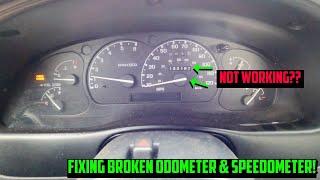
- Speedometer reads 0 MPH or is completely inoperative.
- Odometer does not accumulate mileage.
- ABS warning light is illuminated on the dashboard.
- Harsh, erratic, or delayed shifting on automatic transmission models.
- Cruise control will not engage or function.
- Check Engine Light is on.
- Replacing the transmission's Output Shaft Speed (OSS) sensor when the vehicle actually uses the rear differential sensor for the speedometer. For 1998-2000 Rangers, both RABS and 4WABS systems use the rear axle sensor for the speedometer.
- Replacing wheel speed sensors at the front wheels; for this code, the primary signal comes from the rear axle or transmission, not the front hubs.
Most Likely Causes
- Failed Rear Differential Speed Sensor (VSS/ABS Sensor) 🔴 High Probability The sensor is mounted on top of the rear axle housing, exposing it to constant heat, moisture, and road grime, which leads to internal electronic failure.
How to confirm: Visually locate the sensor on the top of the rear differential 'pumpkin'. It will have a two-wire connector and be held in by a single bolt. If your truck has this sensor, it is the most likely cause. Testing involves checking for AC voltage output while spinning the rear wheels (should be ~0.3-1.5V AC) or checking resistance (typically 800-1400 ohms, though specs vary). A user on the ScannerDanner forum noted a faulty sensor producing ~3V AC while a good replacement produced over 6V AC on the highway.
Typical fix: Replacement of the sensor. The old sensor often becomes brittle and may break during removal, requiring careful extraction of the remaining plastic piece from the differential housing.
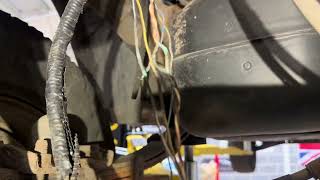
Est. part cost: $20-$60 - Damaged Wiring or Corroded Connector 🟡 Medium Probability The wiring harness leading to the rear differential or transmission is routed under the truck and is susceptible to chafing, breaking from road debris, or corrosion at the connector plug. A large connector under the driver's seat is a known point for water intrusion and corrosion that can disrupt the VSS signal.
How to confirm: Visually inspect the entire length of the wiring harness from the sensor to where it joins the main loom. Check for frayed wires, melted insulation, or green/white corrosion inside the connector plug itself. Pay special attention to the connector under the driver's seat. Gently tug on the wires at the connector to ensure they haven't broken internally.
Typical fix: Repair the broken section of wire with a new piece of wire and weatherproof connectors. Clean corroded terminals in the connector with an electrical contact cleaner or replace the connector pigtail if damage is severe.
Est. part cost: $5-$30 - Failed Transmission Output Shaft Speed (OSS) Sensor ⚪ Low Probability → Shop Transmission Assembly On some models (often 4WD or certain 2WD automatics), this sensor is used instead of the rear differential sensor for the VSS signal. It is also prone to heat and fluid-related failure over time.
How to confirm: Check the rear differential first. If there is no sensor there, locate the OSS on the driver's side of the transmission, near the tail shaft. If present, this is your primary speed sensor. A resistance test on a good OSS sensor should show about 500 Ohms.
Typical fix: Unplug the connector, remove the single mounting bolt (T27 or T30 Torx), and replace the sensor.
Est. part cost: $25-$70
Rare But Worth Checking
- Metal Debris on Sensor Tip: The speed sensor is magnetic. If there are metal shavings from normal gear wear or a failing differential, they can collect on the sensor tip and disrupt the signal. When you remove the old sensor, check its tip. A small amount of fine paste is normal, but large chips or flakes indicate a more serious mechanical problem in the differential.
- Faulty Instrument Cluster: → Shop Instrument Cluster In rare cases, the instrument cluster itself can fail, preventing it from displaying the speed signal it receives from the PCM. This is usually suspected only after a new sensor and verified wiring do not solve the problem. A known symptom can be the speedometer working intermittently while the odometer continues to function correctly.
- Faulty Powertrain Control Module (PCM): → Shop Engine Control Module (ECM) This is extremely rare. The PCM's internal circuit for reading the VSS signal can fail, but this should be the last item to consider after all other possibilities have been exhausted.
Diagnosis Steps
- Scan for all codes in the PCM and ABS modules. Note any other codes, especially ABS-related ones like C1155.
- Determine your vehicle's sensor location. Look at the top of your rear differential housing (the 'pumpkin'). If you see a sensor with a 2-wire connector held by one bolt, that is your primary VSS. If not, locate the sensor on the driver's side of the transmission housing.
- Visually inspect the sensor's wiring harness and connector. Look for obvious signs of damage, such as chafing, breaks, or corrosion. Don't forget to check the large multi-pin connector under the driver's seat, as it is a known failure point for corrosion.
- If the wiring looks good, replace the sensor. It is the most common point of failure and relatively inexpensive. It is held by a single 10mm bolt or a T27/T30 Torx screw.
- Be prepared for the old sensor to break during removal. Use a small pry bar gently. If the body breaks off, you may need to carefully use pliers, a pick, or even drill a small hole and use a wood screw to extract the remaining piece from the differential housing. Do not expect to access it from inside by removing the differential cover, as the exciter ring is in the way.
- Clean the mounting surface before installing the new sensor. A light coat of clean motor oil or grease on the new sensor's O-ring can help it slide in easily.
- After installation, clear the codes with a scanner and perform a test drive to confirm the speedometer works and the Check Engine Light does not return.
Parts You'll Likely Need
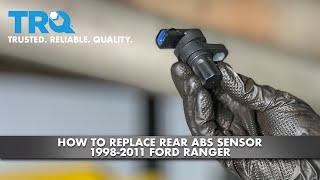
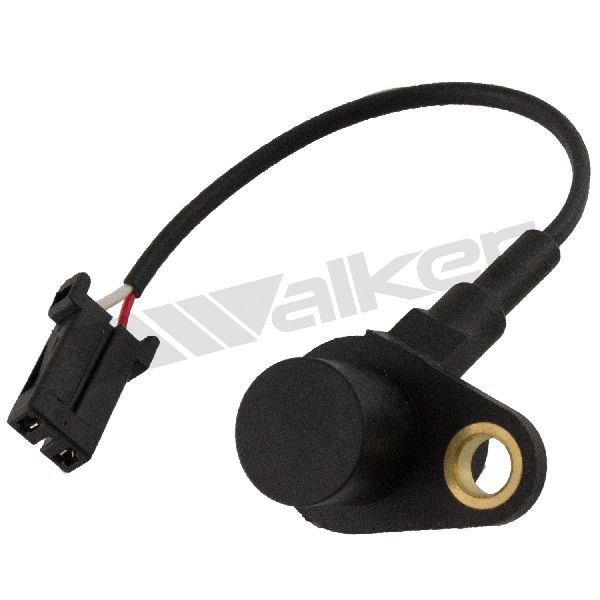
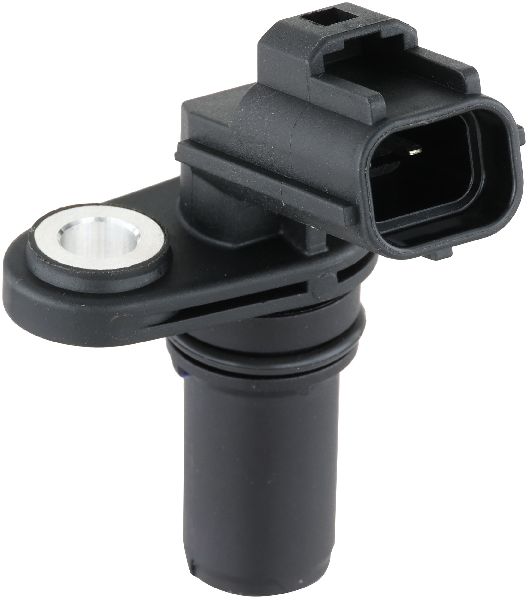
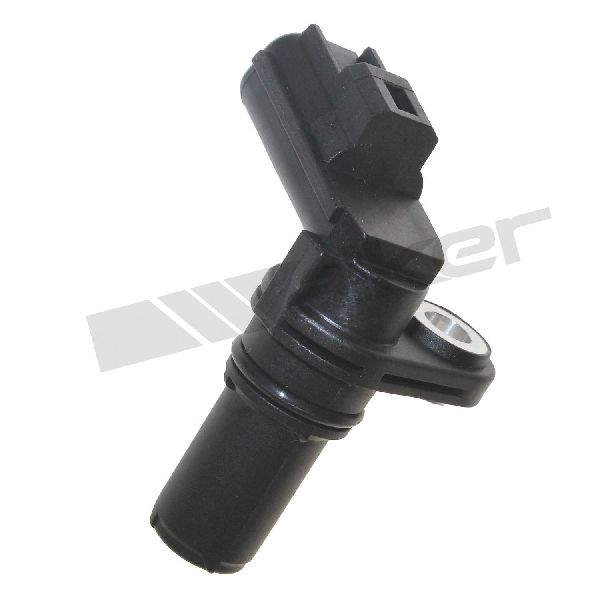
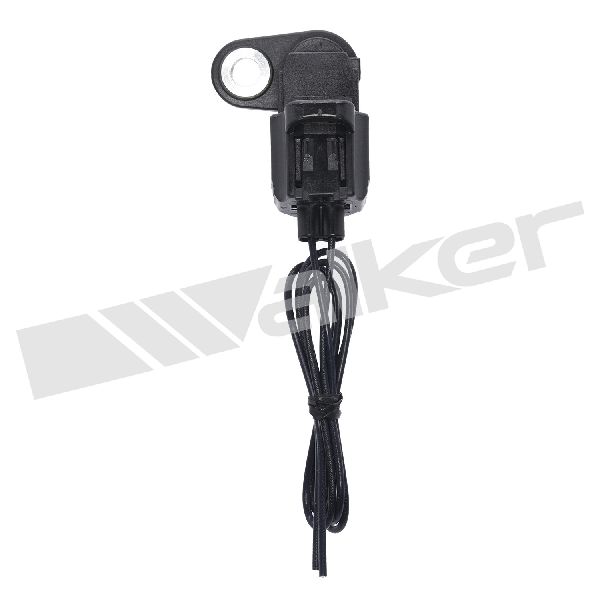
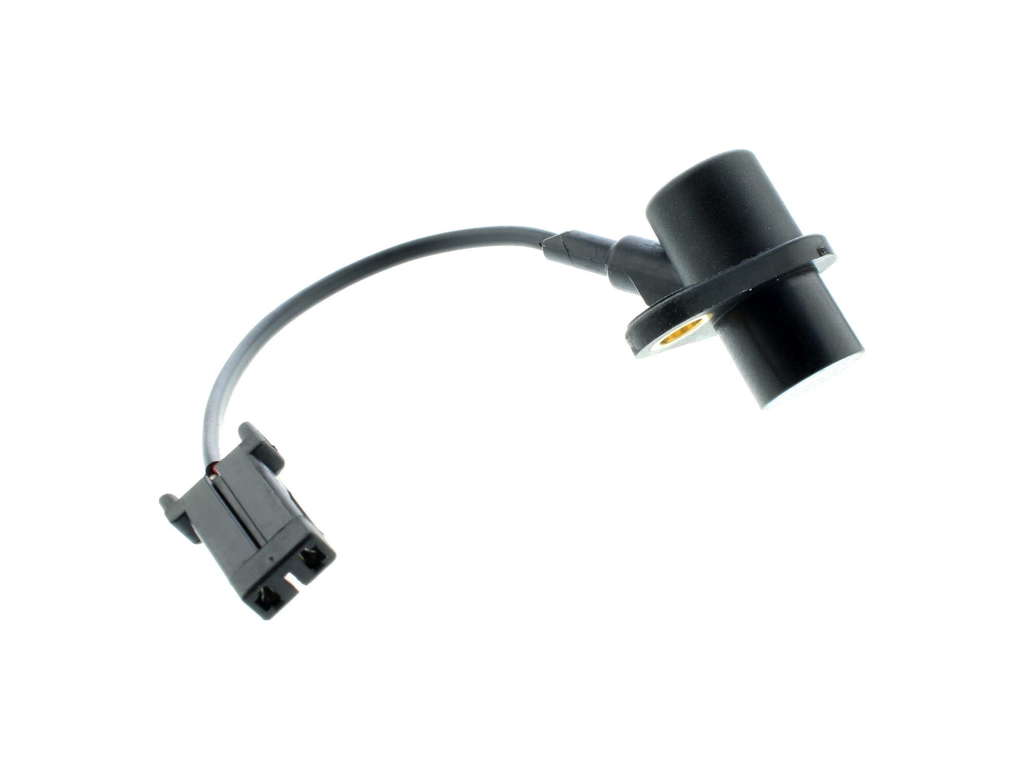
- Vehicle Speed Sensor (Rear ABS Sensor)
(OEM #F85Z-9E731-AB / DY1123 (Motorcraft))— This is the most common failure item for code P0502 on this platform, typically located on the rear differential.
Trusted brands: Motorcraft, Standard Motor Products (SMP), Delphi, TRQ
OEM price range: $50-$80
Aftermarket price range: $20-$50
Related Codes That Often Appear With This One
- C1155 — This is a Ford-specific ABS code for 'Rear Wheel Speed Sensor Input Circuit Failure'. Since the VSS and rear ABS sensor are often the same part, this code frequently appears with P0502.
- P0720 — This code indicates a fault with the Output Shaft Speed (OSS) sensor circuit. If your truck uses the OSS as the primary VSS, you may see this code alongside or instead of P0502.
Platform-Specific Known Issues
- The plastic body of the rear differential speed sensor often becomes brittle from heat and age, causing it to break apart during removal. It's common for the lower portion to get stuck in the differential housing, requiring careful extraction with pliers or a pick.
- A forum user on The Ranger Station detailed a method for removing a broken sensor by drilling a small hole into the stuck plastic piece and threading a wood screw into it to gain leverage for pulling it out.
Mechanic-Grade Diagnostic Values
- Rear Differential VSS/ABS Sensor Resistance — expected: Approximately 1200 ohms. Some sources suggest a range of 800-1400 ohms.. Failure: An open circuit (infinite resistance) or a reading significantly outside the expected range.
- Transmission OSS Sensor Resistance — expected: Approximately 500 ohms.. Failure: A reading significantly different from 500 ohms.
- Rear Differential VSS/ABS Sensor AC Voltage Output — expected: A fluctuating AC voltage that increases with speed. A good sensor should produce over 6V AC at highway speeds.. Failure: Voltage near 0V AC while wheels are spinning, or a weak signal (e.g., only 2.8-3.4V AC at highway speed) can be enough to set the P0502 code.
Wiring & Ground Locations
- VSS Signal Connector (Under Driver Seat) — A large, multi-pin electrical connector located under the driver's seat, where the chassis harness connects to the cab harness.. This connector is a known weak point for water intrusion and corrosion, which can interrupt the VSS signal traveling from the sensor to the instrument cluster and PCM.
- G100 — On the left-hand (driver's side) front of the engine compartment.. This is a primary chassis ground. A poor connection here can cause various electrical issues, though it's not directly in the VSS circuit.
- G101 — On the engine block, location varies by engine size (e.g., near the starter motor).. This is the main engine-to-chassis ground. A bad ground here can cause widespread electrical problems, including sensor signal issues.
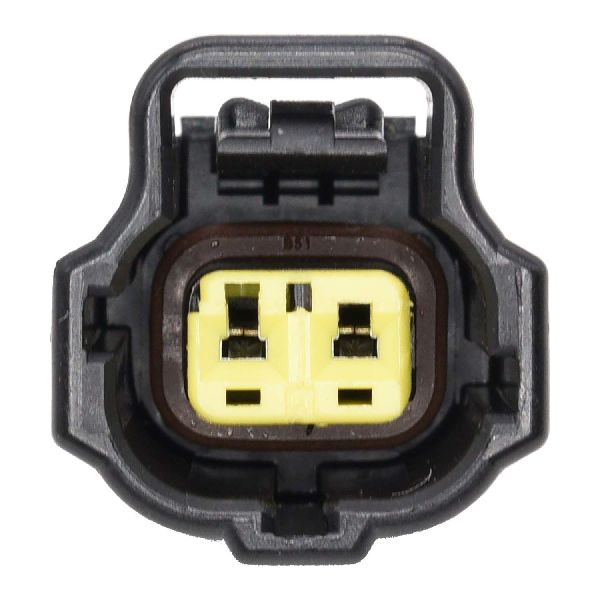
- VSS Connector Pins (at sensor) — The two-wire connector at the rear differential or transmission sensor.. These are the pins for testing sensor resistance and AC voltage output directly at the source. The wires are typically Gray/Black and Pink/Orange.
Real Owner Repair Stories
- ScannerDanner Forum (GM Vehicle (similar VR sensor system)) — Intermittent P0502 code, speedometer drops out when the code is present.
❌ Tried (didn't work) Confirmed wiring was functional., Monitored sensor output and saw a signal, but it was weak.
✅ What actually fixed it Replacing the VSS sensor. The old OEM sensor was only producing 2.8-3.4V AC at highway speed, which was too low and triggered the code. The new aftermarket sensor produced over 6V AC under the same conditions, which resolved the issue. - Ranger-Forums user (2000 Ford Ranger) — Speedometer not working until hitting 60mph.
✅ What actually fixed it The issue was traced to the large electrical connector under the driver's seat, which is prone to corrosion. Cleaning the connector and applying dielectric grease is the recommended fix if the sensor and other wiring check out.
OEM Part Supersession History
F85Z-9E731-AB→This part number is often listed as discontinued but is widely cross-referenced by aftermarket manufacturers. The Motorcraft service part is DY1123.— Part update and consolidation.
Heads up: The OEM part F85Z-9E731-AB is also listed as a replacement for F85Z-2L373-AC. The key is ensuring the replacement is for the rear differential application, as transmission sensors are different.
Model Year Variations Within This Range
- 1998-2000: The VSS signal from the rear differential sensor is routed to either the RABS module or the 4WABS module. This module then sends a processed signal to the GEM (Generic Electronic Module), which in turn sends the final speed signal to the speedometer and PCM.
- 2001-2011: The system was simplified. The rear differential sensor signal is used more directly by the ABS module, PCM, and instrument cluster without the complex routing through the GEM seen in earlier models.
- Pre-1998: Models before 1998 typically used a VSS located on the transmission or transfer case, which often had a physical gear driven by the output shaft. The switch to using the rear differential ABS sensor as the primary VSS was a key change for the 1998 model year.
Diagnostic Flowchart
Other Known Issues on This Vehicle
Issues unrelated to this code that are worth knowing about as an owner of this generation:
- 4.0L SOHC V6 Timing Chain Cassette Failure 🔴 High — Common on 1997-2004 models, particularly around 70k-150k miles. A rattling or plastic slapping noise from the engine, especially on cold starts between 2500-3000 RPM, is the primary symptom. Failure can lead to engine damage as it is an interference engine. (Ref: Ford issued TSB 04-15-04 for this issue, though it was often customer-pay outside of warranty.)
- Frame and Leaf Spring Shackle Rust 🔴 High — Very common in regions that use road salt. The rear of the frame and the leaf spring shackles/hangers are particularly susceptible to severe corrosion, which can compromise structural integrity. Visual inspection is critical. (Ref: No official recall was issued for most models, but it is a widely documented problem.)
- HVAC Blend Door Actuator Failure 🟠 Medium — Common across many Ford models of this era. Symptoms include a clicking/ticking sound from behind the dashboard when changing temperature settings, or the inability to switch between hot and cold air. The plastic gears inside the actuator strip or the door itself breaks.
Used vs. New Parts: Buying Guide for This Vehicle
When a used part is the smart pick: A used sensor is generally not recommended. The part is inexpensive new (around $20-$50 for quality aftermarket), and it's a common failure item due to heat and exposure. The risk of a used part failing soon after installation is high, and the labor to replace it again outweighs the small cost savings.
Donor-vehicle mileage cap: roughly under 50000 miles for the part to have meaningful remaining life.
What to inspect on the donor part:
- Check for a clean, un-corroded electrical connector.
- Inspect the plastic housing for cracks or brittleness.
- Ensure the mounting tab is intact.
- If possible, test the resistance with a multimeter before purchase; it should be within the 800-1400 ohm range.
OEM-only on this vehicle (don't cheap out):
- No parts for this specific repair require OEM-only sourcing. Quality aftermarket sensors are widely available and perform well.
Aftermarket brands forum-validated for this vehicle:
- Motorcraft (OEM)
- Standard Motor Products (SMP)
- Delphi
- NTK
- Dorman
Brands owners have reported issues with on this vehicle:
- No-name, ultra-low-cost brands from online marketplaces may have poor quality control, leading to inaccurate readings or premature failure.
Real Owner Stories
Aggregated from forums and TSBs cited above. Mileages and costs reflect what owners reported in those sources.
1998-2011 Ford Ranger
Symptoms: The speedometer went out and the owner replaced the speed sensor on the transmission. It worked for a few months but then failed again.
What fixed it: Replacing the VSS (Vehicle Speed Sensor).
Source hint: Ranger-Forums owner report
1998-2011 Ford Ranger
Symptoms: The rear differential speed sensor became brittle from heat and age and broke apart during an attempted removal, leaving the lower portion stuck in the housing.
What fixed it: Drilling a small hole into the stuck plastic piece and threading a wood screw into it to gain leverage for pulling it out.
Source hint: TheRangerStation.com forum thread
1998-2011 Ford Ranger
Symptoms: The vehicle was throwing a P0502 code. Testing showed the faulty OEM sensor was only outputting a low AC voltage of 2.8-3.4V.
What fixed it: Replacing the VSS with a new aftermarket sensor that produced a stronger signal of over 6V.
Source hint: ScannerDanner.com Forum
Related OBD-II Codes
Frequently Asked Questions
Where is the speed sensor located on my 1998-2011 Ford Ranger?
My speedometer is stuck at 0 MPH and my ABS light is on. Is this related to P0502?
What should the resistance and voltage readings be for a healthy Ranger speed sensor?
Is there a specific wiring spot I should check if the sensor itself isn't the problem?
What is the best way to remove the sensor if it breaks off in the differential housing?
Does the Mazda B-Series suffer from the same P0502 issues as the Ranger?
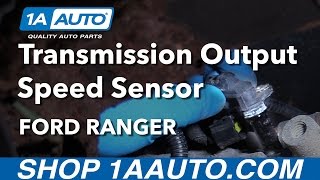
Helpful Videos
We Have This Part in Stock

The information in this article is provided for general reference and educational purposes only. Vehicle specifications, procedures, and part compatibility can vary by production date, trim level, and region. Always consult your vehicle's factory service manual and verify part numbers before purchasing or performing repairs. Safety-critical components such as airbags, seat belts, and braking systems should be installed by a qualified professional.
- Ford Ranger:
- 🧭 Diagnostic Flowchart
- 🎬 Helpful Videos
- 🛍️ Shop This Part
- What's Unique About the 1998-2011 Ford Ranger
- Symptoms You May Notice
- Most Likely Causes
- Rare But Worth Checking
- Diagnosis Steps
- Parts You'll Likely Need
- Related Codes That Often Appear With This One
- Platform-Specific Known Issues
- Mechanic-Grade Diagnostic Values
- Wiring & Ground Locations
- Real Owner Repair Stories
- OEM Part Supersession History
- Model Year Variations Within This Range
- Other Known Issues on This Vehicle
- Used vs. New Parts: Buying Guide for This Vehicle
- Real Owner Stories
- 1998-2011 Ford Ranger
- 1998-2011 Ford Ranger
- 1998-2011 Ford Ranger
- Related OBD-II Codes
- Frequently Asked Questions
- 🎟️ Get 5% Off