

P0502 on 2001-2005 Honda Civic: Vehicle Speed Sensor Causes and Fixes
On a 7th generation (2001-2005) Honda Civic, code P0502 is almost always caused by a failed Vehicle Speed Sensor (VSS) on the transmission. This will cause your speedometer to stop working and, on automatic models, create harsh, erratic shifting. A new sensor is the typical fix, but the retaining bolt is notorious for seizing and breaking during removal.
- P0502 on a 2001-2005 Civic almost always means the Vehicle Speed Sensor (VSS) on the transmission has failed.
- Key symptoms are a dead or erratic speedometer and, for automatics, harsh shifting.
- The repair involves replacing the sensor, but be very careful with the 12mm retaining bolt as it is known to seize and break.
- Always inspect the wiring and connector for damage before replacing the sensor.
- The correct OEM part number is 78410-S5A-912, which supersedes 78410-S5A-911.
What's Unique About the 2001-2005 Honda Civic
For the 7th generation Honda Civic (2001-2005), the P0502 code is a very common and well-documented issue. The primary cause is typically the failure of the VSS sensor itself, which is mounted on top of the transmission. Unlike some other vehicles where wiring is the more frequent culprit, on these Civics, the sensor is the most common point of failure. The repair is straightforward, but a common frustration is the single 12mm retaining bolt seizing and breaking during removal. Owners frequently report success after replacing the sensor, confirming it as the primary failure point.
Symptoms You May Notice
- Check Engine Light is on
- Speedometer is inoperative or reads 0 mph, sometimes erratically jumping.
- Erratic or harsh shifting (on automatic transmission models).
- Cruise control will not engage.
- Odometer may not accumulate mileage
- Flashing 'D' (Drive) indicator light on the instrument cluster
- Replacing the instrument cluster. While the speedometer is in the cluster, the signal originates from the VSS. A P0502 code points to a problem with the sensor or its circuit, not the gauge itself.
- Replacing ABS wheel speed sensors. The P0502 code specifically refers to the main Vehicle Speed Sensor 'A' on the transmission, not the individual wheel speed sensors used for the anti-lock brake system.
Most Likely Causes
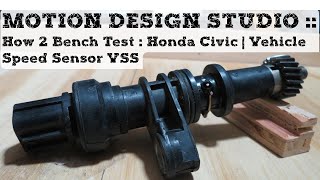
- Failed Vehicle Speed Sensor (VSS) 🔴 High Probability → Shop Drive Shaft Sensor The electronic component within the sensor is known to fail 🎬 See how to bench test your Civic speed sensor over time due to heat cycles and vibration from the transmission. It is the most cited cause of P0502 in owner forums for this vehicle.
How to confirm: After confirming the wiring and connector are intact, the most practical test is to replace the sensor. A scan tool with live data can also be used to monitor the VSS output while driving; a reading of zero or an erratic signal confirms the failure.
Typical fix: Replace the Vehicle Speed Sensor.
Est. part cost: $25-$160 - Damaged Wiring or Connector 🟡 Medium Probability The wiring harness to the sensor is located in the engine bay and is exposed to heat and potential physical damage. The connector's pins can also corrode over time, leading to a poor connection and low voltage signal.
How to confirm: Visually inspect the wiring harness leading to the VSS for any signs of cracking, fraying, or melting. Check the electrical connector for corrosion, moisture, or bent/broken pins. A multimeter can be used to check for power, ground, and signal continuity at the connector pigtail.
Typical fix: Repair the damaged section of wiring or replace the connector pigtail.
Est. part cost: $5-$30
Rare But Worth Checking
- Faulty Powertrain Control Module (PCM): → Shop Engine Control Module (ECM) This is extremely rare. The PCM should only be considered after the VSS and its entire circuit have been thoroughly tested and confirmed to be in good working order.
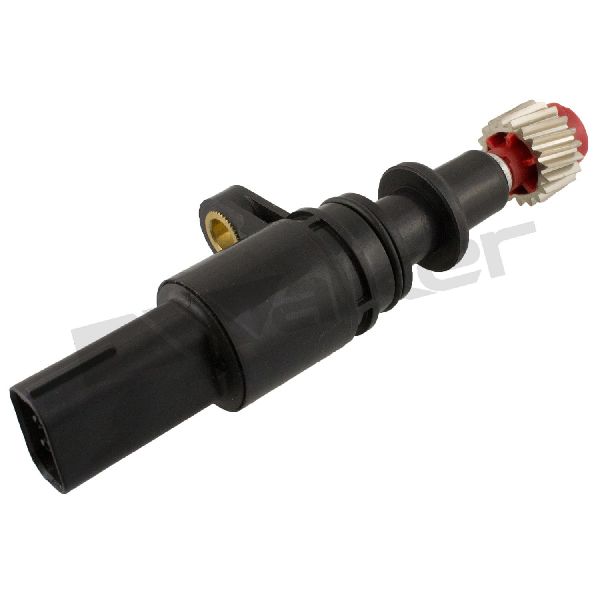
- Broken VSS Drive Gear: The plastic gear on the end of the VSS that engages with the transmission can sometimes break or strip, though this is less common than electronic failure of the sensor itself. When replacing the sensor, inspect the old gear for damage.
- Incorrectly Sized Tires: While less likely to cause a 'low input' code, significantly different tire sizes than stock can cause a mismatch between the VSS reading and wheel speed sensor readings, potentially triggering a fault.
Diagnosis Steps
- Scan the vehicle for trouble codes to confirm P0502 is the primary code.
- Locate the Vehicle Speed Sensor on the top of the transmission housing, towards the back of the engine bay. You will likely need to remove the air intake assembly for access.
- Carefully inspect the 3-pin electrical connector and wiring harness attached to the VSS. Look for any signs of corrosion, damage, or loose connections.
- If wiring appears OK, test the circuit. With the key on and the VSS connector unplugged, test the harness-side plug. Pin 2 (Black/Yellow) should have battery voltage (~12V). Pin 1 (Black) should have continuity to ground (near 0 Ohms).
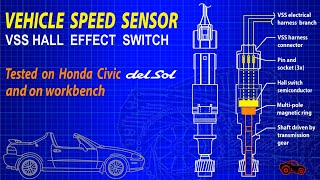
- If power and ground are good, test the sensor's signal output. Reconnect the sensor, raise the front wheels, and put the transmission in neutral. Back-probe the signal wire (Pin 3, Blue/White). As you spin a front wheel by hand, the voltage should pulse between approximately 0V and 5V. If there is no pulsing signal, the sensor has failed. 🎬 Watch how to perform Hall Effect sensor tests
- Before attempting to remove the sensor, liberally apply penetrating oil to the 12mm retaining bolt and let it soak. This bolt is notoriously prone to seizing and breaking.
- Using a 12mm wrench or socket, carefully attempt to loosen the bolt. If it breaks, the sensor and broken bolt will need to be extracted, possibly with locking pliers or other extraction tools.
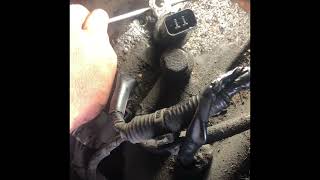
- Once the bolt is out, pull the sensor straight up out of the transmission. It may be stuck; gentle twisting and prying may be necessary. 🎬 Watch this step-by-step VSS replacement walkthrough
- Install the new sensor, ensuring the O-ring is properly seated. Reinstall the retaining bolt.
- Reconnect the electrical connector and reinstall the air intake assembly.
- Clear the trouble code with a scan tool and perform a test drive to confirm the speedometer works correctly and the transmission shifts smoothly.
Parts You'll Likely Need
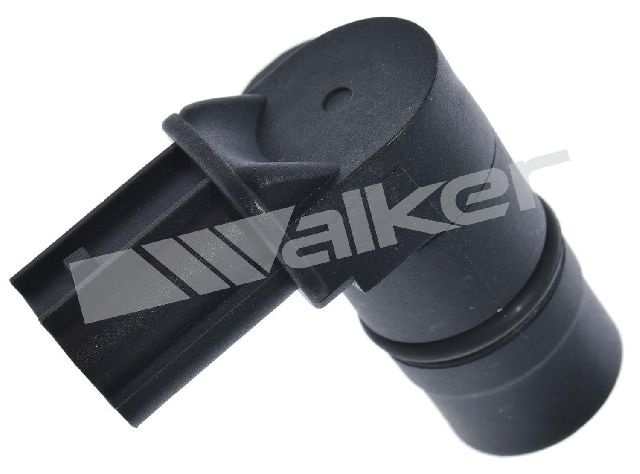
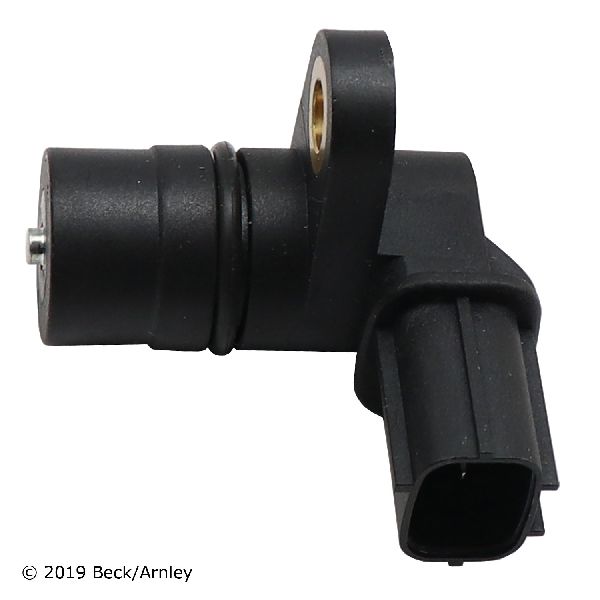
- Vehicle Speed Sensor
(OEM #78410-S5A-912)— This is the component that fails most frequently, causing the P0502 code on this specific vehicle. The OEM part is made by Matsushita/ND.
Trusted brands: Honda (Genuine OEM), Denso (OEM Manufacturer), NTK, Walker Products, Standard Motor Products (SMP)
OEM price range: $100-$160
Aftermarket price range: $25-$90
Platform-Specific Known Issues
- The 12mm bolt that holds the VSS in place is known to rust and break off during removal. It is highly recommended to use penetrating oil and caution when attempting to loosen it.
- On automatic transmission models, a failing VSS can cause harsh and erratic shifting that mimics more severe transmission problems. Diagnosing P0502 should be the first step if these symptoms appear.
Mechanic-Grade Diagnostic Values
- VSS Connector Pin 2 (Black/Yellow) to Chassis Ground — expected: ~12V (Battery Voltage) with Key On, Engine Off. Failure: 0V or significantly low voltage indicates a power supply issue from the fuse or a wire break.
- VSS Connector Pin 1 (Black) to Chassis Ground — expected: Near 0 Ohms (Good Continuity). Failure: High or infinite resistance indicates a bad ground connection.
- VSS Connector Pin 3 (Blue/White) Signal Wire — expected: Pulsing voltage between ~0V and 5V when a front wheel is spun by hand (Key On).. Failure: A steady voltage or no voltage indicates a failed sensor.
Wiring & Ground Locations
- VSS Connector (C112) — On top of the transmission housing, plugged into the Vehicle Speed Sensor.. This 3-pin connector is the primary interface for the sensor. Pin 1 is Ground (Black), Pin 2 is Power (Black/Yellow), and Pin 3 is Signal (Blue/White). It is a common point of failure due to corrosion or broken wires.
- G101 — Bolted to the thermostat housing on the engine block.. This is a critical engine and PCM ground point. A poor G101 ground can cause a host of erratic sensor readings and electrical issues across the system, including an unstable ground reference for the VSS.
- PCM Connector A, Pin 18 — The PCM is located behind the glove box.. The Blue/White VSS signal wire terminates at Pin 18 of Connector A on the PCM. This is the final destination for the speed signal before the computer processes it.
Real Owner Repair Stories
- Honda-Tech Forum User (Honda Civic (EM1 chassis with B20B swap, similar generation electronics)) — Speedometer and odometer did not work. Needle would flip to 60mph then rest at 18mph on startup. Code 17 (OBD1 equivalent of VSS fault) was present.
❌ Tried (didn't work) Replacing the VSS initially cleared the code, but the speedometer issue remained.
✅ What actually fixed it The user later found that the pins in the VSS connector were not fully seated, causing a poor connection. Pushing the pins in all the way resolved the issue, though it then triggered a P0500 code, indicating further circuit diagnosis was needed. This highlights the importance of checking the connector integrity.
OEM Part Supersession History
78410-S5A-911→78410-S5A-912— Standard part revision by the manufacturer.
Heads up: The parts are interchangeable for the 2001-2005 Civic with automatic transmission.
Diagnostic Flowchart
Other Known Issues on This Vehicle
Issues unrelated to this code that are worth knowing about as an owner of this generation:
- Automatic Transmission Failure 🔴 High → Shop Transmission Assembly — Very common, especially in 2001-2002 models, but affects the entire generation. Often occurs under 100,000 miles. Caused by overheating and premature wear of internal clutch packs and torque converter failure.
- D17 Engine Head Gasket Failure 🔴 High — A well-documented weak point for the 1.7L D17 engine. A single overheating event can cause the gasket to fail, leading to coolant loss, misfires, and engine damage.
- Manual Transmission Input Shaft Bearing (ISB) Failure 🟠 Medium → Shop Transmission Assembly — Common on manual transmission models, typically after 100,000 miles. Presents as a grinding or growling noise when in neutral with the clutch released, which disappears when the clutch pedal is pressed.
- Cracked Exhaust Manifold 🟠 Medium — The factory exhaust manifold, which has an integrated catalytic converter, is prone to cracking. This results in an exhaust leak (ticking noise when cold) and can trigger catalyst efficiency codes. (Ref: Honda extended the warranty on this component for some vehicles, but that has since expired.)
- Front Lower Control Arm (Compliance) Bushing Failure 🟡 Low — The large rubber compliance bushings on the front lower control arms frequently tear, causing a clunking or popping noise from the front suspension, especially when braking or going over bumps.
Used vs. New Parts: Buying Guide for This Vehicle
When a used part is the smart pick: A used OEM VSS from a low-mileage donor car can be a cost-effective alternative to a new aftermarket part, as OEM electronics often have better longevity. It is also a good source for a replacement connector pigtail if yours is damaged, as these can be difficult to find new.
Donor-vehicle mileage cap: roughly under 80000 miles for the part to have meaningful remaining life.
What to inspect on the donor part:
- Inspect the connector for any signs of corrosion (green or white crust) on the pins.
- Check the wiring pigtail for brittleness, cracking, or previous repairs.
- Ensure the plastic housing of the sensor is not cracked or showing signs of heat damage.
- If possible, check the donor vehicle's history to ensure it wasn't in a flood.
Aftermarket brands forum-validated for this vehicle:
- Denso
- NTK
- Standard Motor Products (SMP)
- Walker Products
Brands owners have reported issues with on this vehicle:
- Unbranded, 'white box' parts from online marketplaces are a gamble and have a high failure rate according to forum discussions.
Real Owner Stories
Aggregated from forums and TSBs cited above. Mileages and costs reflect what owners reported in those sources.
2004 Honda Civic EX coupe
Symptoms: Car has been kind of stuttering sometimes for about a month. Odometer sometimes will shoot up to 80 then down to 0, most of the time it goes right back to normal but the other day it stayed at 0 for about 15 min.
What fixed it: The user identified the P0502 code and sought the location of the VSS for replacement, as replacing the sensor is the most cited fix for these symptoms.
Source hint: Honda-Tech Forum: P0502, 04 civic ex coupe
2003 Honda Civic
Symptoms: Owner experienced speed sensor problems and detailed a diagnostic process starting with the replacement of the VSS.
What fixed it: Replacement of the Vehicle Speed Sensor (VSS).
Source hint: Honda Civic Forum: Hardest Speed Sensor Problem Ever
Related OBD-II Codes
Frequently Asked Questions
Where is the Vehicle Speed Sensor located on my 2001-2005 Civic?
Why is my automatic transmission shifting harshly along with the P0502 code?
Is there a specific part number for the VSS on the Acura 1.7 EL or Honda Stream?
What is the most common reason the VSS bolt breaks during repair?
Can a P0502 code cause my 'D' indicator light to flash?
Is the cracked exhaust manifold on this generation covered by a warranty?
Helpful Videos
We Have This Part in Stock


The information in this article is provided for general reference and educational purposes only. Vehicle specifications, procedures, and part compatibility can vary by production date, trim level, and region. Always consult your vehicle's factory service manual and verify part numbers before purchasing or performing repairs. Safety-critical components such as airbags, seat belts, and braking systems should be installed by a qualified professional.
- Honda Civic:
- 🧭 Diagnostic Flowchart
- 🎬 Helpful Videos
- 🛍️ Shop This Part
- What's Unique About the 2001-2005 Honda Civic
- Symptoms You May Notice
- Most Likely Causes
- Rare But Worth Checking
- Diagnosis Steps
- Parts You'll Likely Need
- Platform-Specific Known Issues
- Mechanic-Grade Diagnostic Values
- Wiring & Ground Locations
- Real Owner Repair Stories
- OEM Part Supersession History
- Other Known Issues on This Vehicle
- Used vs. New Parts: Buying Guide for This Vehicle
- Real Owner Stories
- 2004 Honda Civic EX coupe
- 2003 Honda Civic
- Related OBD-II Codes
- Frequently Asked Questions
- 🎟️ Get 5% Off