

P0502 on 2016-2021 Honda Civic: CVT Speed Sensor Circuit Low Input Causes and Fixes
On a 2016-2021 Honda Civic with a CVT, code P0502 most often points to a faulty CVT drive pulley speed sensor on the transmission or its wiring. For all models, issues with wheel speed sensors can cause similar symptoms but may throw different codes. Expect to pay $50-$120 for the CVT sensor.
- For 2016-2021 Civics with a CVT, P0502 almost always points to the speed sensor on the transmission, not the wheel speed sensors.
- Symptoms include an inoperative speedometer, erratic shifting, a flashing 'D' light, and disabled cruise control.
- The most likely fix is replacing the CVT drive pulley speed sensor (Part No. 28810-5DJ-004).
- Before replacing the sensor, always inspect the wiring and connector for damage, as this is a common point of failure.
- This repair is generally DIY-friendly with basic tools and can be completed in under two hours.
What's Unique About the 2016-2021 Honda Civic
While many modern cars derive the main vehicle speed reading from the ABS wheel speed sensors, 10th generation Civics with a CVT also have a dedicated speed sensor on the transmission itself. The code P0502 specifically points to a fault in this CVT speed sensor circuit. 🎬 Watch: Diagnosing CVT speed sensor circuit open or short faults. This is different from a general ABS fault, which would typically trigger ABS-specific codes. Therefore, diagnosis on a CVT model should start at the transmission, not the wheels. A failure in this circuit directly impacts the transmission's ability to function correctly.
Symptoms You May Notice
- Check Engine Light is on
- Inaccurate or inoperative speedometer (stuck at 0 mph)
- Erratic or harsh shifting (for CVT models)
- Flashing 'D' (Drive) indicator light
- Cruise control will not engage
- ABS or Traction Control warning lights may illuminate
- Replacing a wheel speed sensor. While a bad wheel speed sensor can cause speedometer issues, the P0502 code on a CVT Civic points more directly to the transmission speed sensor.
Most Likely Causes
- Faulty CVT Drive Pulley Speed Sensor 🔴 High Probability This sensor is a primary input for CVT operation, and electronic failures can occur over time. It is the most common point of failure for this specific code.
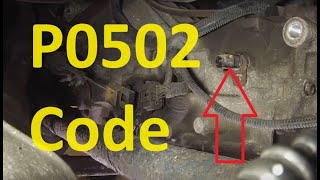
How to confirm: After confirming no wiring issues, replacing the sensor is the most common fix. A diagnostic scan tool can be used to monitor the sensor's output; a lack of signal while the vehicle is moving confirms a bad sensor. The sensor is typically located on the top or side of the transmission housing.
Typical fix: Replace the CVT drive pulley speed sensor on the transmission.
Est. part cost: $50 - $120 - Damaged Wiring or Connector 🟡 Medium Probability The wiring harness leading to the transmission can be exposed to heat, moisture, and road debris, leading to corrosion, shorts, or open circuits.
How to confirm: Visually inspect the wiring harness and connector for any signs of damage, fraying, or corrosion. Use a multimeter to check for continuity and proper voltage at the connector according to the factory service manual. Pay close attention to the area where the harness may rub against other components.
Typical fix: Repair the damaged section of the wiring harness or replace the connector pigtail.
Est. part cost: $10 - $50
Rare But Worth Checking
- Faulty Powertrain Control Module (PCM): → Shop Engine Control Module (ECM) This is very rare. The PCM is the last thing to suspect after all other possibilities, including wiring and the sensor itself, have been thoroughly ruled out.
- Faulty ABS Wheel Speed Sensor: → Shop ABS Wheel Speed Sensor While the primary vehicle speed is often derived from wheel speed sensors, a fault here would more commonly throw an ABS-specific code. However, if the ABS module fails to communicate speed data to the PCM, it could potentially cause related issues.
- Internal Transmission Mechanical Failure: → Shop Transmission Assembly Extremely rare, but a mechanical issue inside the transmission, such as a damaged reluctor ring (the part the sensor reads), could cause the sensor to stop reading. This would likely be accompanied by metallic debris in the transmission fluid and other severe symptoms.
Diagnosis Steps
- Use an OBD-II scanner to confirm that P0502 is the only code present. Note any other codes.
- For CVT models, locate the CVT drive pulley speed sensor. It is typically on the top or side of the transmission case, often held by a single 10mm bolt.
- Visually inspect the sensor's connector and wiring harness for any obvious signs of damage, corrosion, or loose connections. Ensure the harness is securely clipped and not rubbing against anything.
- If the wiring appears intact, use a multimeter to test for the correct reference voltage and ground at the sensor connector, following the vehicle's service manual.
- If possible, use a scan tool with live data capability to monitor the output from 'Vehicle Speed Sensor A' while driving or safely spinning the wheels. A reading of 0 mph while moving indicates a problem with the sensor or its circuit.
- If wiring and power are good but the sensor provides no signal, the sensor itself is likely faulty.
- Replace the CVT speed sensor. This usually involves removing one bolt and pulling the sensor out of the transmission case. 🎬 See this walkthrough on how to replace the sensor.
- Clear the code and perform a test drive to ensure the speedometer works correctly, the 'D' light is not flashing, and the code does not return.
Parts You'll Likely Need
- CVT Drive Pulley Speed Sensor
(OEM #28810-5DJ-004)— This is the sensor that directly reports transmission speed to the PCM on CVT models and is the most common cause of code P0502. It is also referred to as a 'Pick Up Assembly'.
Trusted brands: Honda (Genuine)
OEM price range: $70-$120
Aftermarket price range: $50-$90 - ABS Wheel Speed Sensor
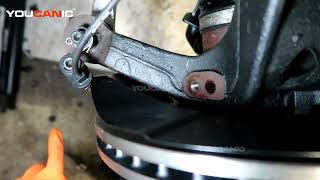
(OEM #57455-TBA-A03)— While less likely to be the direct cause of P0502, a faulty wheel speed sensor can cause similar symptoms and is a common failure point for speedometer issues in general. 🎬 Watch: How to replace a front ABS wheel speed sensor.
Trusted brands: Honda (Genuine), Bosch, NTK
OEM price range: $60-$100
Aftermarket price range: $30-$70
Mechanic-Grade Diagnostic Values
- CVT Speed Sensor Connector Voltage (VCC line) — expected: Approximately 5V. Failure: Voltage significantly lower than 5V or 0V indicates an open or short in the power supply wire from the PCM.
- Sensor Signal Voltage (Live Data) — expected: A fluctuating voltage or frequency that increases with vehicle speed. A healthy sensor typically shows 0.5–5V alternating with wheel speed.. Failure: A constant reading of 0V or <0.2V while the vehicle is moving indicates a faulty sensor or a break in the signal wire.
Scan Tool Commands That Help
- Honda Diagnostic System (HDS): Clear DTCs — Used after disconnecting the sensor or performing a repair to see if the code immediately returns upon turning the ignition on, which helps differentiate between a hard fault and an intermittent one.
- Honda Diagnostic System (HDS): SCS Mode — The Service Check Short (SCS) function can be used to retrieve codes via blinking lights on the dash (like the 'D' indicator) if a scanner is not fully communicating. It is a fundamental diagnostic step in Honda's troubleshooting flowchart.
- Honda Diagnostic System (HDS) or equivalent: Live Data / Data List — To monitor the 'Vehicle Speed' parameter from the CVT speed sensor while driving. This is the most direct way to confirm if the sensor is sending a signal to the PCM. A reading of 0 while moving confirms a fault in the circuit.
Wiring & Ground Locations
- CVT Speed Sensor Connector — On the CVT speed sensor (28810-5DJ-004), which is located on the side or top of the transmission housing.. This is a 3-pin connector that provides power, ground, and signal for the sensor. Checking for 5V reference and ground at this connector is a primary diagnostic step.
- G101 — Typically located on the thermostat housing on Honda engines.. This is a primary power and logic ground termination point for the ECU/PCM. A poor connection at G101 can cause a wide range of erratic sensor readings and codes, including P0502, due to an unstable ground reference for the entire engine management system.
- Transmission to Chassis Ground — A braided strap or heavy gauge wire running from a bolt on the transmission case to a point on the vehicle's chassis/frame rail.. While G101 is the main PCM ground, a corroded or loose transmission ground can also cause electrical noise and shifting issues that may be related. Ensuring this ground is clean and tight is good practice during any transmission-related electrical diagnosis.
Real Owner Repair Stories
- 2CarPros Forum User (2006 Honda Civic (Older generation, but same code and CVT principle)) — Flashing 'D' light, no speed reading from drive pulley input sensor.
❌ Tried (didn't work) Initial diagnosis was confusing due to intermittent ground readings at the ECM connector.
✅ What actually fixed it The user found that the speed sensors on the transmission were physically scratched and damaged. After replacing both the short and long sensors, the issue was resolved. The root cause of the physical damage was suspected to be a recently broken engine mount causing drivetrain misalignment.
Model Year Variations Within This Range
- 2019-2021: The 2019 model year received a facelift which included revised front/rear styling, new wheel designs, and the addition of a volume knob to the infotainment system. The Honda Sensing suite of safety features also became standard on all trims. However, the core powertrain, including the 2.0L and 1.5T engines and the CVT, remained mechanically unchanged, so the cause and fix for P0502 are identical across the 2016-2021 range.
Diagnostic Flowchart
Other Known Issues on This Vehicle
Issues unrelated to this code that are worth knowing about as an owner of this generation:
- A/C Condenser Failure 🔴 High — Very common across all 10th gen model years. The condenser develops tiny leaks, causing the A/C to stop blowing cold air. (Ref: Honda TSB 19-091; Honda extended the warranty for the A/C condenser to 10 years with unlimited mileage.)
- Oil Dilution (1.5L Turbo Engine) 🔴 High — Most prominent in pre-2019 models, especially in colder climates and on vehicles used for short trips. Unburned fuel mixes with engine oil. (Ref: Honda issued software updates and extended warranties for affected models. Owners report a strong fuel smell in the oil and rising oil levels on the dipstick.)
- Low-Pressure Fuel Pump Failure 🔴 High — Affects certain 2018-2020 models. The fuel pump impeller can fail, causing the engine to stall while driving. (Ref: NHTSA recalls 20V-314, 21V-215, and others. Dealers will replace the fuel pump assembly free of charge.)
- Sticky Steering 🟠 Medium — Some 2017-2018 models were subject to a TSB for the steering gearbox. The issue can cause the steering to feel notchy or stick unexpectedly. (Ref: A recall was issued for later models, but earlier 10th gen cars may experience similar symptoms. The TSB repair involved replacing the steering gear unit.)
- A/C Compressor Shaft Seal Leak 🟠 Medium — Affects 2016-2021 models. The new refrigerant and oil can cause the compressor shaft seal to swell and leak, leading to A/C failure. (Ref: Honda extended the warranty on the A/C compressor shaft seal to 10 years with no mileage limit.)
Used vs. New Parts: Buying Guide for This Vehicle
When a used part is the smart pick: For this repair, a used OEM sensor from a low-mileage donor vehicle is a reasonable choice. Since it's an external electronic part, it's easy to access and replace if the used part is faulty. It is significantly cheaper than a new OEM part.
Donor-vehicle mileage cap: roughly under 60000 miles for the part to have meaningful remaining life.
What to inspect on the donor part:
- Inspect the plastic connector housing for cracks or brittleness.
- Ensure the mounting tab is intact.
- Check the sensor tip for any signs of physical damage, like scratches or gouges, which could indicate internal transmission problems in the donor car.
- If possible, test the resistance of the used sensor before purchase, though specific values are not widely published.
OEM-only on this vehicle (don't cheap out):
- Powertrain Control Module (PCM). Due to programming and security requirements, a used PCM is difficult to integrate into a different vehicle and should be avoided.
Aftermarket brands forum-validated for this vehicle:
- NTK
- Bosch
Brands owners have reported issues with on this vehicle:
- Unnamed, no-brand sensors from online marketplaces should be treated with caution, as their internal electronics may not meet OEM specifications for voltage and signal clarity, potentially causing intermittent issues or failing prematurely.
Real Owner Stories
Aggregated from forums and TSBs cited above. Mileages and costs reflect what owners reported in those sources.
2006 Honda Civic (CVT)
Symptoms: The 'D' light was flashing and the owner was seeking diagnostic flow steps for code P0502.
What fixed it: Following diagnostic flow steps to check the CVT speed sensor circuit.
Source hint: https://www.2carpros.com/questions/2006-honda-civic-code-p0502-which-sensor-should-i-be-looking-at-and-how-can-i-test
Related OBD-II Codes
Frequently Asked Questions
My 2016-2021 Civic has a flashing 'D' indicator and the speedometer is stuck at 0. Is this related to P0502?
Where is the sensor located on my Civic's CVT transmission?
Are there any extended warranties for the 2016-2021 Civic that I should know about while fixing this?
Can I use an aftermarket sensor like NTK or Bosch for this repair?
Does the oil dilution issue on my 1.5L Turbo engine cause the P0502 code?
Is it safe to buy a used speed sensor for my Civic to save money?
Helpful Videos
We Have This Part in Stock

The information in this article is provided for general reference and educational purposes only. Vehicle specifications, procedures, and part compatibility can vary by production date, trim level, and region. Always consult your vehicle's factory service manual and verify part numbers before purchasing or performing repairs. Safety-critical components such as airbags, seat belts, and braking systems should be installed by a qualified professional.
- Honda Civic:
- 🧭 Diagnostic Flowchart
- 🎬 Helpful Videos
- 🛍️ Shop This Part
- What's Unique About the 2016-2021 Honda Civic
- Symptoms You May Notice
- Most Likely Causes
- Rare But Worth Checking
- Diagnosis Steps
- Parts You'll Likely Need
- Mechanic-Grade Diagnostic Values
- Scan Tool Commands That Help
- Wiring & Ground Locations
- Real Owner Repair Stories
- Model Year Variations Within This Range
- Other Known Issues on This Vehicle
- Used vs. New Parts: Buying Guide for This Vehicle
- Real Owner Stories
- 2006 Honda Civic (CVT)
- Related OBD-II Codes
- Frequently Asked Questions
- 🎟️ Get 5% Off