

P0502 on 2011-2015 Kia Sorento: Vehicle Speed Sensor Circuit Low Input Causes and Fixes
This code typically points to a faulty wheel speed sensor, which the Sorento uses to determine vehicle speed. The speedometer may stop working and the ABS/ESC lights will likely come on. Replacing the failed wheel speed sensor is the most common fix. Check for accompanying 'C' codes (e.g., C1206) to identify the specific faulty wheel.
- P0502 on a 2011-2015 Sorento means there's a problem with a wheel speed sensor circuit, not a transmission sensor.
- Symptoms include an inoperative speedometer and ABS/ESC warning lights.
- The most likely cause is a single failed wheel speed sensor, which is a straightforward and affordable DIY repair for many.
- Before buying parts, use a scanner that can read ABS 'C' codes (like C1206) to identify which specific wheel sensor is at fault.
- Always inspect the wiring and especially the inside of the connector for corrosion before replacing the sensor itself.
What's Unique About the 2011-2015 Kia Sorento
Unlike many older vehicles that use a single Vehicle Speed Sensor (VSS) on the transmission, the 2011-2015 Kia Sorento primarily relies on the individual ABS wheel speed sensors to determine how fast the vehicle is moving. The PCM compares the signals from these sensors to get a vehicle speed reading. This means a P0502 code is more likely related to a fault in the ABS system, such as a bad wheel speed sensor or its wiring, rather than a transmission-mounted sensor.
Symptoms You May Notice
- Check Engine Light is on
- ABS and/or Electronic Stability Control (ESC) warning lights are on
- Speedometer reads 0 MPH or is inaccurate.
- Cruise control does not work.
- Harsh or erratic automatic transmission shifting.
- Odometer may not function correctly
- Replacing the transmission output speed sensor. On this vehicle, the primary speed signal comes from the wheel speed sensors, not a dedicated VSS on the transmission for the purpose of this code.
Most Likely Causes
- Faulty Wheel Speed Sensor 🔴 High Probability → Shop ABS Wheel Speed Sensor Wheel speed sensors are exposed to harsh conditions in the wheel well, making them susceptible to damage from road debris, moisture, and corrosion over time. Water intrusion into the sensor housing is a common failure mode, especially on rear 2WD models.
How to confirm: Use an OBD-II scanner capable of reading live ABS data to monitor the output from all four wheel speed sensors while driving. The sensor that provides no reading or a reading that is inconsistent with the others is faulty. A resistance check with a multimeter can also be performed; a healthy sensor should show a specific resistance value (one owner reported ~640-660 ohms on good sensors).
Typical fix: Replace the faulty wheel speed sensor. Sensors are replaced individually. On AWD models, the rear sensor is often a separate component, while on some FWD models it may be integrated with the hub bearing assembly.
Est. part cost: $30-$80 - Damaged Wiring or Connector 🟡 Medium Probability The wiring harness leading to the wheel speed sensor can be damaged by road debris, improper servicing (like during a brake job), or animal activity. Connectors are particularly vulnerable to corrosion from water and road salt, leading to a poor connection and a low voltage signal.
How to confirm: Visually inspect the wiring harness from the sensor to its connection point in the wheel well for any signs of chafing, breaks, or green/white corrosion inside the connector pins. Perform a continuity test on the wires with a multimeter.
Typical fix: Repair the damaged section of the wiring harness or replace the connector pigtail. If the connector is corroded, cleaning with electrical contact cleaner may work, but replacement is often a more permanent solution. Splicing is not recommended as a long-term fix due to corrosion risk.
Est. part cost: $15-$40 - Damaged or Debris-Covered Tone Ring ⚪ Low Probability The tone ring (or reluctor ring), which the sensor reads, is part of the wheel hub or CV axle. While generally protected, rust jacking or severe impacts can cause it to crack, become contaminated with metallic debris, or bend.
How to confirm: Visually inspect the tone ring on the wheel hub or CV axle after removing the wheel speed sensor. Check for cracks, missing teeth, or heavy rust/debris that could interfere with the sensor's magnetic reading.
Typical fix: If the tone ring is integrated into the wheel hub/bearing assembly, the entire hub assembly must be replaced. If it is part of the CV axle, the axle needs replacement.
Est. part cost: $100-$200
Rare But Worth Checking
- Faulty ABS Control Module: → Shop ABS Control Module This is rare and should only be considered after all other possibilities (sensor, wiring, hub) have been definitively ruled out. A module failure will often be accompanied by other ABS-related trouble codes and potentially a loss of communication with the module.
- Faulty Powertrain Control Module (PCM): → Shop Engine Control Module (ECM) A PCM failure is extremely unlikely to be the cause of an isolated P0502 code. This is a last-resort diagnosis.
- Incorrect Wheel or Tire Size: If tires of a significantly different size than OEM are installed, the rotational speeds can conflict with what the PCM expects to see, potentially triggering a speed sensor code. This is uncommon but possible.
Diagnosis Steps
- Connect an OBD-II scanner to the vehicle and confirm the presence of the P0502 code.
- Check for any accompanying 'C' (Chassis) codes, which can point to a specific wheel speed sensor (e.g., C1206 for Rear Left Wheel Speed Sensor Circuit).
- Use the scanner's live data function to monitor the vehicle speed as reported by the PCM and the individual speeds of all four wheels.
- Drive the vehicle slowly (or raise the vehicle on a lift and spin the wheels by hand) and observe the speed readings. Identify any sensor that does not report speed or reports erratically.
- Visually inspect the wiring and connector for the suspect wheel speed sensor for any signs of damage, corrosion, or loose connections. Pay close attention to the inside of the connector.
- If the wiring appears intact, test the sensor itself. This can be done by checking for a proper signal with an oscilloscope or by measuring resistance with a multimeter (if specifications are available). A reading around 640-660 ohms has been reported by owners on good sensors.
- If the sensor tests bad, replace it.
- If the sensor tests good, perform a continuity and short-to-ground test on the wiring harness between the sensor and the ABS module.
- If wiring is faulty, repair or replace the damaged section.
- After the repair, clear the trouble codes and perform a test drive to ensure the speedometer, ABS, and ESC systems are functioning correctly.
Parts You'll Likely Need
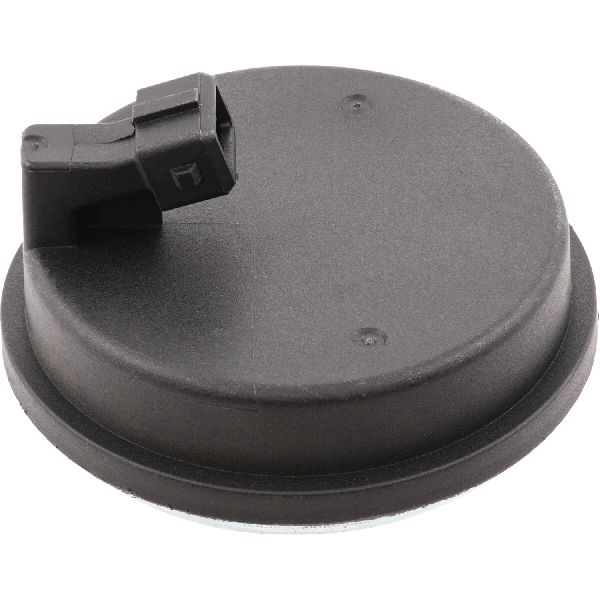
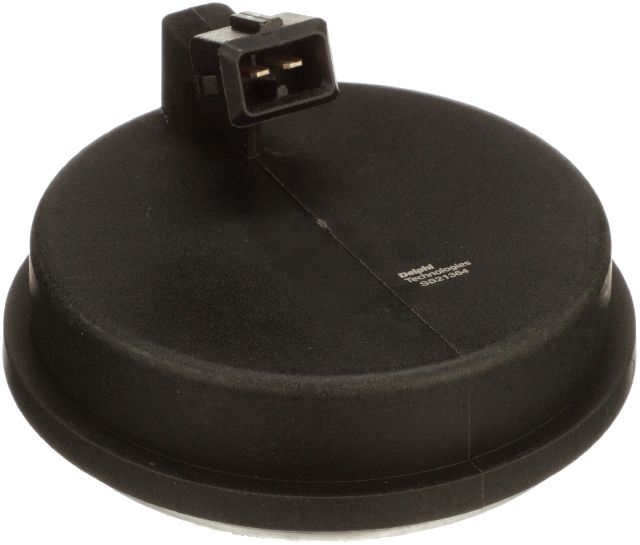
- ABS Wheel Speed Sensor
(OEM #Front Left (2011-2012): 95670-2P000; Front Left (2013-2015): 95670-2W000. Note: Part numbers vary significantly by year, position, and drivetrain (AWD/FWD). Always verify with VIN.)— This is the most frequent failure point for a P0502 code on this platform, as it provides the raw data for vehicle speed calculation.
Trusted brands: Kia (OEM), Mando, Bosch, Delphi, Standard Motor Products (SMP)
OEM price range: $70-$140
Aftermarket price range: $30-$80
Related Codes That Often Appear With This One
- C1200-C1211 — These are wheel speed sensor-specific codes from the ABS module. A 'C' code will often be present along with the 'P' code, pinpointing which wheel sensor is having an issue (e.g., C1206 for Rear Left Wheel Speed Sensor Circuit).
Technical Service Bulletins (TSBs) & Recalls
- TSB CHA 059 / Service Campaign SC148: Pertains to 2011-2015 2WD models, particularly in coastal states. Water can enter the rear wheel speed sensor housing, interrupting the signal and illuminating ABS/ESC lights. The fix involves inspecting, cleaning, sealing, or replacing the housing covers.
Mechanic-Grade Diagnostic Values
- Wheel Speed Sensor Resistance — expected: ~640 - 660 Ω (ohms). Failure: A significantly lower reading (e.g., in the 200s) or an open circuit (infinite resistance) indicates a failed sensor or integrated hub sensor.
- Sensor Reference Voltage (at connector, Key On Engine Off) — expected: 5V or 12V. Failure: Missing voltage points to a wiring or module issue upstream of the sensor.
- Sensor Ground Circuit Resistance (at connector) — expected: < 1 Ω (ohm). Failure: High resistance indicates a poor ground connection, which can cause a low signal.
- Sensor AC Voltage Signal (while spinning wheel) — expected: A fluctuating AC voltage that increases with wheel speed (e.g., 0.5V to 5V).. Failure: A constant low voltage (near 0V) or no signal indicates a failed sensor or a problem with the tone ring.
Hidden / Shadow Codes Worth Checking
- C1206, C1207, C1208, C1209, C1210, C1211: These are chassis codes specific to the rear wheel speed sensor circuits (Left, Right). A P0502 code is often a secondary code triggered by one of these primary ABS faults. (see via An OBD-II scanner capable of reading ABS/Chassis ('C') codes is required. Basic engine code readers will not see these.)
Scan Tool Commands That Help
- Advanced OBD-II Scanner (e.g., Autel, Launch, GDS): Live Data > ABS/ESC Module > Wheel Speed Sensors — This is the primary diagnostic step. It allows you to view the speed reading from all four wheels simultaneously while driving or spinning the wheels on a lift. The sensor that reads 0 MPH or has an erratic signal while the others report speed is the source of the fault.
Wiring & Ground Locations
- ABS Control Module — In the engine bay, mounted on the ABS pump assembly, typically near the driver's side frame rail.. This is the destination for all wheel speed sensor signals. Testing for signal and power/ground at the module connector is the final step to confirm a wiring fault or condemn the module itself.
- Front Wheel Speed Sensor Connector — Located in the wheel well, up behind the fender liner. The liner must be partially pulled back to access the connector.. This connector is a common point for corrosion or damage. It's a key location for testing the sensor vs. the body harness.
Real Owner Repair Stories
- YouTube user 'check out this' (2013 Kia Sorento FWD) — ABS, Traction Control, and Downhill Assist lights were all on.
❌ Tried (didn't work) The user went straight to testing after reading forums.
✅ What actually fixed it The user tested the resistance of the rear wheel speed sensors and found one side was reading in the 200-ohm range, while the good side was around 600 ohms. On the FWD model, the sensor is integrated into the wheel hub bearing. Replacing the entire rear wheel hub assembly (Part WJB WA512326 was used) fixed the issue.
Model Year Variations Within This Range
- 2011-2012 vs 2013-2015: The part numbers for the front wheel speed sensors changed after the 2013 model year refresh. For example, the front left sensor for 2011-2012 is often listed as 95670-2P000, while for 2013-2015 it is 95670-2W000. The parts are not interchangeable. Always verify with VIN.
- 2011-2015: On Front-Wheel Drive (FWD) models, the rear wheel speed sensor is often integrated into the wheel hub/bearing assembly and is not sold separately. On All-Wheel Drive (AWD) models, the rear sensor is typically a separate, replaceable component.
Diagnostic Flowchart
Other Known Issues on This Vehicle
Issues unrelated to this code that are worth knowing about as an owner of this generation:
- Theta II Engine Seizure and Fire Risk 🔴 High — Widespread across multiple model years, particularly with the 2.4L GDI engine. Can occur at various mileages, often preceded by knocking noises or oil consumption. (Ref: Multiple recalls (e.g., NHTSA 17V-224) and a large class-action settlement provide warranty extensions (up to lifetime for short block) and a Knock Sensor Detection System (KSDS) software update.)
- Failing Door Latch Actuators 🟠 Medium — Extremely common issue where doors, particularly the 2011 model year, fail to open from the outside handle. (Ref: Customer Satisfaction Program CS1603 (also listed as TSB BOD150) was issued for 2011 models, extending the rear door latch warranty to 10 years/unlimited miles and providing a fix for front latches.)
- Brake Fluid Leak in HECU 🔴 High — Affects 2014-2015 models. A leak inside the Hydraulic Electronic Control Unit (HECU) can cause an electrical short, increasing the risk of an engine compartment fire. (Ref: NHTSA Recall 20V-519.)
- Peeling Exterior Paint 🟡 Low — Common complaint, especially on white-painted vehicles, where the paint bubbles and peels off in large sections.
- Brake-Shift Interlock Failure 🟠 Medium — On 2011-2013 models, the mechanism can chip or crack, allowing the transmission to be shifted out of Park without depressing the brake pedal. (Ref: NHTSA Recall.)
Used vs. New Parts: Buying Guide for This Vehicle
When a used part is the smart pick: For this repair, buying a used ABS sensor or wiring harness from a junkyard is generally not recommended. The low cost of new aftermarket parts outweighs the risk of getting a used part that has been exposed to the elements and may have a short remaining lifespan.
Donor-vehicle mileage cap: roughly under 40000 miles for the part to have meaningful remaining life.
What to inspect on the donor part:
- If buying a used wheel hub assembly (for FWD rear), ensure the donor vehicle has low mileage and shows no signs of impact damage.
- Inspect the wiring pigtail for any brittleness, cracking, or previous repairs (splices).
- Check the connector pins for any green or white corrosion.
OEM-only on this vehicle (don't cheap out):
- ABS Control Module. Due to programming and security requirements, a new or professionally remanufactured and programmed module is the only reliable option if the original fails.
Aftermarket brands forum-validated for this vehicle:
- NTK
- Bosch
- Delphi
- WJB (for hub assemblies)
Brands owners have reported issues with on this vehicle:
- Unbranded, low-cost sensors from online marketplaces are a gamble; they may have poor fitment or fail prematurely.
Real Owner Stories
Aggregated from forums and TSBs cited above. Mileages and costs reflect what owners reported in those sources.
2011 Kia Sorento AWD
Symptoms: ABS and ESC lights came on, and the speedometer stopped working (stayed at 0 MPH).
What fixed it: Replacement of the rear wheel speed sensor after checking resistance (good sensors read ~640-660 ohms).
Source hint: Reddit r/MechanicAdvice thread titled '2011 kia sorento awd rear wheel speed sensor'
2011-2015 Kia Sorento 2WD
Symptoms: ABS/ESC lights illuminated due to signal interruption from the rear wheel speed sensor.
What fixed it: Inspecting, cleaning, and sealing the rear wheel speed sensor housing covers to prevent water intrusion.
Source hint: TSB CHA 059 / Service Campaign SC148
Related OBD-II Codes
Frequently Asked Questions
I have a 2013 2WD Sorento and my ABS light is on. Is there a specific service campaign for this?
Can I just replace the sensor on my FWD Sorento, or do I need the whole hub?
What resistance should I look for when testing the wheel speed sensors on my 2011 Sorento?
My 2015 Sorento has a P0502 and I heard about a fire risk. Are they related?
Are there any specific aftermarket brands recommended for replacing the hub assembly?
Can I use a used ABS Control Module from a junkyard to fix my P0502?
Helpful Videos

We Have This Part in Stock


The information in this article is provided for general reference and educational purposes only. Vehicle specifications, procedures, and part compatibility can vary by production date, trim level, and region. Always consult your vehicle's factory service manual and verify part numbers before purchasing or performing repairs. Safety-critical components such as airbags, seat belts, and braking systems should be installed by a qualified professional.
- Kia Sorento:
- 🧭 Diagnostic Flowchart
- 🎬 Helpful Videos
- 🛍️ Shop This Part
- What's Unique About the 2011-2015 Kia Sorento
- Symptoms You May Notice
- Most Likely Causes
- Rare But Worth Checking
- Diagnosis Steps
- Parts You'll Likely Need
- Related Codes That Often Appear With This One
- Technical Service Bulletins (TSBs) & Recalls
- Mechanic-Grade Diagnostic Values
- Hidden / Shadow Codes Worth Checking
- Scan Tool Commands That Help
- Wiring & Ground Locations
- Real Owner Repair Stories
- Model Year Variations Within This Range
- Other Known Issues on This Vehicle
- Used vs. New Parts: Buying Guide for This Vehicle
- Real Owner Stories
- 2011 Kia Sorento AWD
- 2011-2015 Kia Sorento 2WD
- Related OBD-II Codes
- Frequently Asked Questions
- 🎟️ Get 5% Off