

P0502 on 2002-2004 Oldsmobile Bravada: Speed Sensor Circuit Low Causes and Fixes
On a 2002-2004 Bravada, code P0502 is most often caused by a failed vehicle speed sensor (VSS) located on the transfer case. This typically results in a dead speedometer and erratic shifting. Replacing the sensor is a common DIY fix, with the part costing between $15 and $50.
- P0502 on a 2002-2004 Bravada almost always points to a problem with the main Vehicle Speed Sensor (VSS) or its wiring.
- Key symptoms are an inoperative speedometer, erratic transmission shifting, and ABS/Brake lights on the dash.
- The correct sensor to check is located on the rear output housing of the transfer case, not on the wheels or other positions on the transfer case.
- Before replacing the sensor, always inspect the wiring and connector for damage, as this is also a common point of failure.
- Replacing the VSS is a relatively simple and inexpensive DIY job for most home mechanics.
What's Unique About the 2002-2004 Oldsmobile Bravada
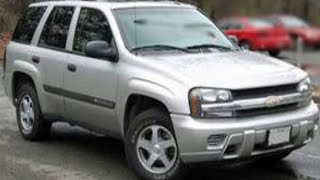
The 2002-2004 Bravada is an all-wheel-drive (AWD) vehicle based on the GMT360 platform, shared with the Chevy Trailblazer and GMC Envoy. For these trucks, the primary Vehicle Speed Sensor (VSS) that triggers this code is not on the transmission itself, but on the output housing of the transfer case. It's crucial to identify the correct sensor, as these vehicles have multiple speed sensors, including two others on the transfer case and individual wheel speed sensors for the ABS. The VSS for the speedometer is the one on the rear of the transfer case with two wires (typically purple and yellow).
Symptoms You May Notice
- Speedometer is dead or reads 0 MPH while moving.
- Check Engine Light is on.
- ABS and/or Brake warning lights are illuminated on the dash.
- Cruise control will not engage.
- Automatic transmission shifts harshly, erratically, or at the wrong times.
- AWD warning light may be on.
- Vehicle may stall intermittently, as a loss of VSS signal can disrupt the Powertrain Control Module (PCM).
- Replacing a wheel speed sensor. The P0502 code specifically refers to the main Vehicle Speed Sensor ('A' circuit), not the individual wheel speed sensors used by the ABS, although a faulty VSS will cause the ABS light to come on.
- Condemning the transmission. The harsh and erratic shifting is a symptom caused by the lack of a speed signal, not usually an internal transmission failure.
- Replacing the wrong speed sensor on the transfer case. The AWD models have three sensors on the transfer case; the main VSS for the speedometer is on the rear tail housing.
Most Likely Causes
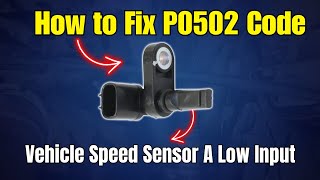
- Failed Vehicle Speed Sensor (VSS) 🔴 High Probability → Shop Drive Shaft Sensor The sensor is an electronic component exposed to significant heat from the transmission/transfer case and road debris under the vehicle, leading to eventual electronic failure. A failing sensor can produce a weak or intermittent AC voltage signal that drops below the PCM's required threshold.
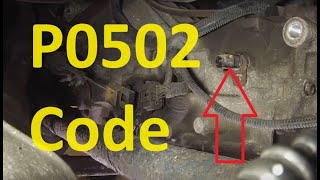
How to confirm: Use a scan tool to monitor VSS data while driving. If the reading stays at or near zero, 🎬 See this breakdown of P0502 causes and common fixes. and the wiring tests good, the sensor has failed. The sensor is located on the rear output housing of the transfer case. A good sensor should produce a steadily increasing AC voltage as the vehicle moves.
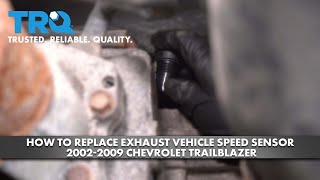
Typical fix: Replace the vehicle speed sensor. It is typically held in by a single 10mm or 13mm bolt. 🎬 Watch: Step-by-step guide to replacing the vehicle speed sensor.
Est. part cost: $15-$50 - Damaged Wiring or Connector 🟡 Medium Probability The wiring harness to the VSS runs along the underside of the vehicle and is susceptible to damage from road debris, heat from the exhaust, and corrosion from moisture, which can cause a short or open in the circuit.
How to confirm: Visually inspect the wiring harness and connector leading to the VSS for any signs of fraying, chafing, melting, or corrosion in the connector pins. Perform a continuity test on the signal and ground wires (often yellow and purple) between the sensor connector and the PCM.
Typical fix: Repair the damaged section of wire or replace the connector pigtail.
Est. part cost: $10-$30 - Metal Debris on Sensor Tip ⚪ Low Probability The VSS is a magnetic sensor that reads a reluctor wheel inside the transfer case. Over time, fine metallic particles from normal wear can accumulate on the sensor's magnetic tip, disrupting the signal.
How to confirm: Remove the VSS and inspect the tip for a build-up of metallic shavings or sludge.
Typical fix: Wipe the sensor tip clean with a rag and reinstall it. If the problem returns, it may indicate excessive internal wear in the transfer case.
Est. part cost: $0
Rare But Worth Checking
- Faulty Powertrain Control Module (PCM): → Shop Engine Control Module (ECM) This is very uncommon. The PCM should only be considered after the sensor and its entire circuit have been thoroughly tested and confirmed to be good.
- Damaged Reluctor Ring: The toothed ring inside the transfer case that the sensor reads can become damaged or clogged with debris, though this is rare. This would typically require significant internal transfer case service.
- Faulty Instrument Cluster: → Shop Instrument Cluster On some GM vehicles, the VSS signal is processed by the instrument cluster before being sent to other modules. A fault within the cluster can interrupt this signal, causing a P0502 code even if the sensor and wiring to the cluster are good.
Diagnosis Steps
- Connect an OBD-II scanner and confirm P0502 is the primary code. Note any other codes present.
- Use the scanner's live data function to monitor 'Vehicle Speed'. Drive the vehicle slowly (if safe) or raise the drive wheels off the ground. Observe if the speed reading changes from 0 MPH. If it doesn't, the problem is with the sensor or its circuit.
- Safely raise and support the vehicle. Locate the Vehicle Speed Sensor on the rear output housing of the transfer case. It is the rearmost sensor.
- Visually inspect the sensor's electrical connector and wiring harness for obvious damage, such as breaks, corrosion, or heat damage from the nearby exhaust.
- If the wiring looks good, remove the sensor (usually one bolt) and inspect its tip for metallic debris. Clean if necessary.
- With the key off and sensor disconnected, set a multimeter to Ohms (Ω) to test the sensor's internal resistance. While specific values for OEM are not published, a typical passive sensor should read between 800 and 1,700 Ohms. An open circuit (OL) or a short (near 0 Ohms) indicates a failed sensor.
- To test the AC signal output, reconnect the sensor, set the multimeter to AC Volts (V~), and back-probe the two wires at the connector. Safely spin the drive wheels. The voltage should start low (e.g., >100mV AC) and increase steadily with wheel speed. If no AC voltage is produced, the sensor is bad.
- If the sensor tests good, check the wiring harness for continuity and shorts to ground between the VSS connector and the PCM. The VSS High signal wire (Yellow) and VSS Low signal wire (Purple) are the ones to test.
- If the wiring and sensor are confirmed to be good, the final step would be to test the PCM, which is rarely the cause.
Parts You'll Likely Need
- Vehicle Speed Sensor (VSS)
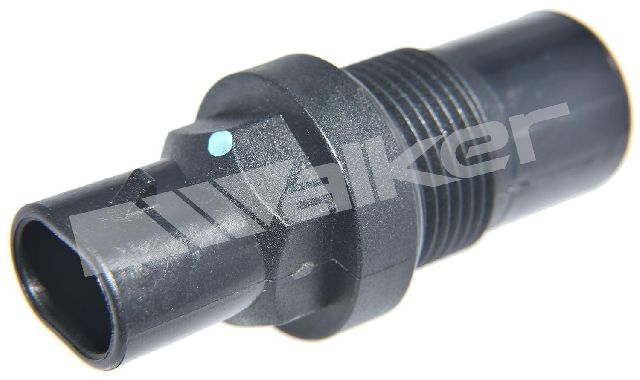
(OEM #ACDelco 213-1701 (GM 19302667))— This sensor is the most common failure point for code P0502. It is an electronic component that fails over time due to heat cycles and vibration.
Trusted brands: ACDelco, Delphi, Dorman, NTK
OEM price range: $40-$70
Aftermarket price range: $15-$50
Technical Service Bulletins (TSBs) & Recalls
- NHTSA Recall 04V289000: While not for P0502 specifically, this recall addresses an issue where an electrical spike from the air suspension system could disrupt the PCM, causing the vehicle to stall. This highlights the sensitivity of the platform's electronics.
Mechanic-Grade Diagnostic Values
- Vehicle Speed Sensor (VSS) AC Voltage Output — expected: Greater than 100mV (0.1V) AC when spinning the wheels by hand, increasing with speed.. Failure: A constant voltage near 0V AC while wheels are spinning indicates a failed sensor.
- Vehicle Speed Sensor (VSS) Resistance — expected: 800 - 1,700 Ohms (Ω) is a typical range for a good passive sensor.. Failure: A reading of OL (Open Loop/infinite resistance) or near 0 Ohms (short circuit) indicates a failed sensor.
Wiring & Ground Locations
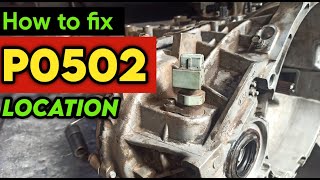
- VSS Connector (at Transfer Case) — On the rear output housing of the transfer case, it is the rearmost electrical connector. 🎬 Watch: How to locate and swap the transfer case sensor.. This is the primary connection point for the sensor. It is exposed to road debris and heat, making it a common point of failure due to corrosion or physical damage.
- PCM VSS Input Pins — On the Powertrain Control Module (PCM), located on the upper left side of the engine. The VSS High signal is a Yellow wire and the VSS Low signal is a Purple wire.. These are the destination pins for the VSS signal. Testing for continuity between the sensor connector and these pins is essential to rule out a wiring problem.
- G108 — Ground point located on the lower left side of the engine block.. This is a primary ground for the Powertrain Control Module. While not directly for the VSS circuit, a poor PCM ground can cause a variety of erratic sensor readings and codes, including P0502.
Real Owner Repair Stories
- YouTube user TheJ20Jeepster (2002 Chevrolet Suburban 1500 (similar GM truck platform)) — P0502 code, speedometer at zero, transmission would not up-shift.
❌ Tried (didn't work) The owner was about to replace the vehicle speed sensor.
✅ What actually fixed it Upon inspection, the electrical connector for the VSS on the transfer case had been knocked loose and was unplugged, likely by a stick from the road. Plugging the connector back in securely resolved all symptoms. - GMTNation forum user (GMC Envoy (platform mate to Bravada)) — Vehicle stalled, then upon restart had ABS and brake lights on, no speedometer, and threw code P0502.
❌ Tried (didn't work) Replaced the VSS sensor, which did not fix the problem., Replaced two of the three speed sensors on the transfer case.
✅ What actually fixed it The user's problem was intermittent and related to battery resets, but the key takeaway from the thread was the confirmation that there are three separate speed sensors on the transfer case, and it is critical to identify and test the correct one (the rear output VSS) for a P0502 code. The issue was not fully resolved in the thread, highlighting the diagnostic complexity.
OEM Part Supersession History
12376520, 88984527, 89048516, 97361874→GM 19302667 (also sold as ACDelco 213-1701)— Part consolidation and potential design updates over the years.
Diagnostic Flowchart
Other Known Issues on This Vehicle
Issues unrelated to this code that are worth knowing about as an owner of this generation:
- Failing Instrument Cluster Stepper Motors 🟠 Medium → Shop Instrument Cluster — Very common. Gauges (speedometer, tachometer, etc.) may stick, read incorrectly, or fail completely. Usually occurs after 50,000 miles. (Ref: While no specific recall, this is a widely documented failure of the Xc5.168 stepper motors used by GM during this era. Repair services replace them with improved X27.168 motors.)
- Rear Air Suspension Failure 🔴 High — Extremely common. The rubber air springs develop dry rot and leak, causing the compressor to overwork and fail. The rear of the vehicle will sag noticeably. (Ref: NHTSA Recall 04V289000 addresses a potential electrical spike from the ECAS module causing a stall, but not the mechanical failure itself. Many owners opt for a coil spring conversion kit.)
- Failing Engine Fan Clutch 🟠 Medium — Common failure item. A bad fan clutch can fail to engage (causing overheating at low speeds/idle) or seize (causing a loud roaring noise and reduced power/fuel economy).
- Cracked Exhaust Manifold (4.2L LL8 Engine) 🟠 Medium — A frequent issue on the 4.2L I6 engine. Results in a loud ticking noise, especially when cold, that may quiet down as the engine warms and the crack seals itself.
- Faulty Ignition Switch 🟠 Medium — Common problem where failed electrical contacts inside the switch can cause various intermittent electrical issues, including stalling or problems with accessories.
Used vs. New Parts: Buying Guide for This Vehicle
When a used part is the smart pick: A used OEM vehicle speed sensor from a reputable junkyard is a reasonable choice for this repair. The part is not a high-wear item, and failure is typically electronic. A used OEM part is often more reliable than a low-quality new aftermarket part.
Donor-vehicle mileage cap: roughly under 150000 miles for the part to have meaningful remaining life.
What to inspect on the donor part:
- Ensure the donor vehicle was not in a severe accident that could have damaged the transfer case area.
- Inspect the plastic housing of the used sensor for cracks or signs of extreme heat exposure.
- Check the connector pins for any corrosion or damage before purchasing.
Aftermarket brands forum-validated for this vehicle:
- ACDelco (OEM)
- Delphi
- NTK
Brands owners have reported issues with on this vehicle:
- No-name, unbranded sensors sold at a very low price point may have a higher failure rate or produce a weak signal, leading to a repeat of the problem.
Real Owner Stories
Aggregated from forums and TSBs cited above. Mileages and costs reflect what owners reported in those sources.
GMT360 Platform Vehicle
Symptoms: An intermittent P0502 code was triggered, with a technician noting the original OEM sensor was outputting a voltage that was too low (2.8-3.4v AC) at highway speeds, which was below the PCM's threshold.
What fixed it: Replacing the weak OEM sensor with a new aftermarket sensor that produced a stronger signal (over 6v AC) resolved the issue.
Source hint: ScannerDanner Forum - 'P0502 code with bad attitude'
Related OBD-II Codes
Frequently Asked Questions
Where is the Vehicle Speed Sensor located on my 2003 Oldsmobile Bravada?
My speedometer is dead but my Check Engine Light is not on. Could it still be a P0502 issue?
I replaced the VSS, but the P0502 code came back. What should I check next?
Why are my ABS and AWD lights on at the same time as the Check Engine Light for P0502?
My Bravada is shifting very hard. Can a bad speed sensor really cause that?
Does the NHTSA recall for stalling (04V289000) apply to fixing a P0502 code?
Helpful Videos
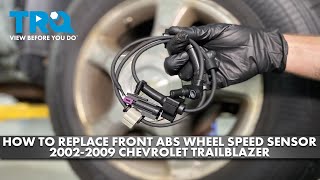
We Have This Part in Stock

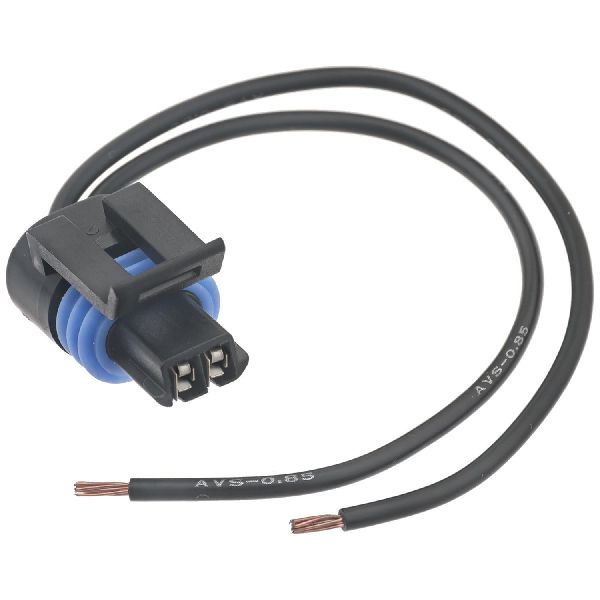
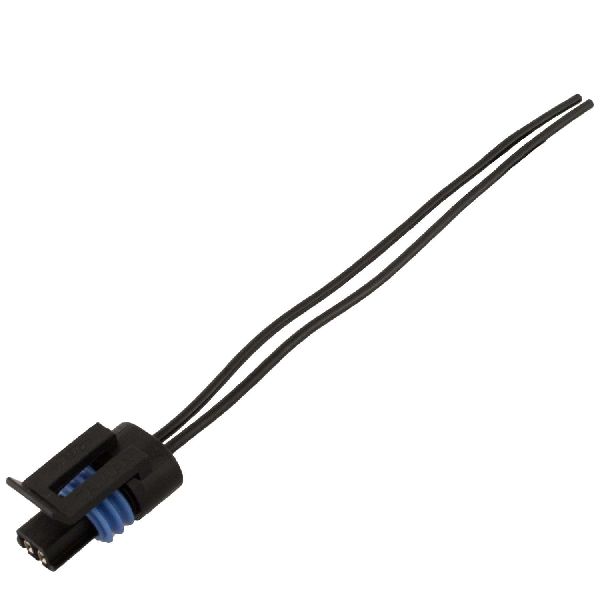
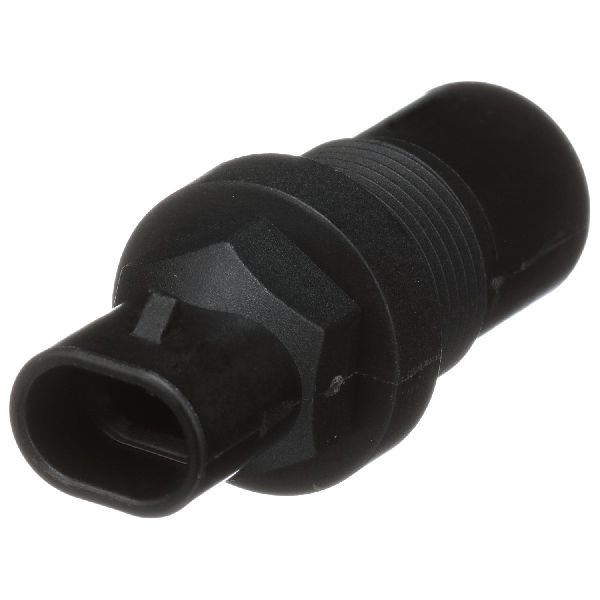

The information in this article is provided for general reference and educational purposes only. Vehicle specifications, procedures, and part compatibility can vary by production date, trim level, and region. Always consult your vehicle's factory service manual and verify part numbers before purchasing or performing repairs. Safety-critical components such as airbags, seat belts, and braking systems should be installed by a qualified professional.
- Oldsmobile Bravada:
- 🧭 Diagnostic Flowchart
- 🎬 Helpful Videos
- 🛍️ Shop This Part
- What's Unique About the 2002-2004 Oldsmobile Bravada
- Symptoms You May Notice
- Most Likely Causes
- Rare But Worth Checking
- Diagnosis Steps
- Parts You'll Likely Need
- Technical Service Bulletins (TSBs) & Recalls
- Mechanic-Grade Diagnostic Values
- Wiring & Ground Locations
- Real Owner Repair Stories
- OEM Part Supersession History
- Other Known Issues on This Vehicle
- Used vs. New Parts: Buying Guide for This Vehicle
- Real Owner Stories
- GMT360 Platform Vehicle
- Related OBD-II Codes
- Frequently Asked Questions
- 🎟️ Get 5% Off