

P0504 on 2007-2011 Hyundai Santa Fe: Brake Switch 'A'/'B' Correlation Causes and Fixes
On a 2007-2011 Santa Fe, P0504 almost always means a faulty brake light switch. This was a widespread issue leading to a major safety recall. The part is inexpensive (~$15-$45) and the fix is a simple DIY job for most owners. Before replacing the switch, check the floor for a broken plastic pad from the brake pedal, another common cause.
- P0504 on a 2007-2011 Santa Fe is a critical safety issue that should be addressed immediately, as your brake lights may not work.
- First, check if your vehicle is part of Hyundai's safety recall (NHTSA #13V113000) for a free repair.
- The problem is almost always a faulty brake light switch, which is an inexpensive part and simple to replace for a DIY repair.
- Symptoms are distinct and often include the ESC light coming on, inability to shift from Park, and non-functional cruise control, in addition to the Check Engine Light.
What's Unique About the 2007-2011 Hyundai Santa Fe
This is one of the most common and well-documented issues for this generation of Hyundai Santa Fe. The original brake light switches were prone to failure, leading Hyundai to issue a massive safety recall (NHTSA Campaign ID: 13V113000). The failure is so common that for this specific vehicle, a P0504 code is almost certainly a bad brake light switch, not a complex wiring or computer issue. Before attempting any repairs, owners should check if their vehicle's VIN is covered by the recall for a free replacement at a dealership.
Symptoms You May Notice
- Check Engine Light is on.
- Electronic Stability Control (ESC) warning light is on (often the first and most common symptom).
- Brake lights do not illuminate when the pedal is pressed.
- Brake lights stay on continuously.
- Inability to shift the transmission out of Park without using the manual override.
- Cruise control cannot be set or will not disengage when the brake pedal is pressed.
- For vehicles with push-button start, intermittent no-start condition or inability to start.
- ABS warning light may also illuminate.
- Replacing the ABS module or PCM when the issue is the inexpensive brake light switch.
- Assuming a complex wiring problem exists before replacing the known high-failure rate switch.
- Overlooking the disintegrated brake pedal stopper pad on the floor mat, leading to a new switch being installed that does not solve the problem because it cannot be properly actuated.
Most Likely Causes
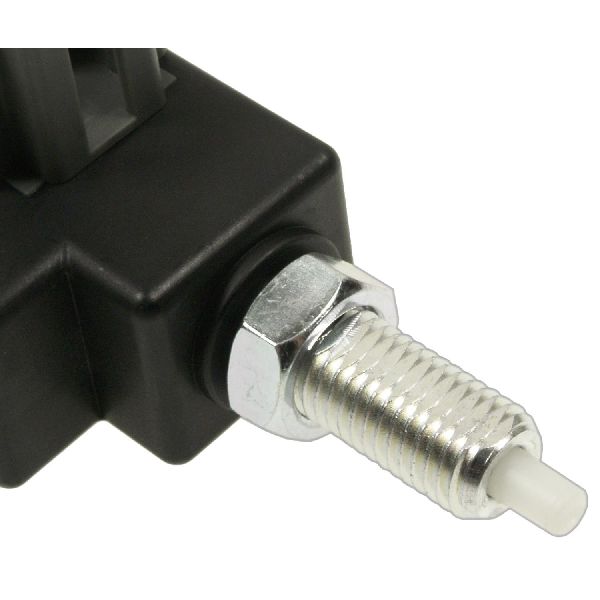
- Faulty Brake Light Switch (Stop Lamp Switch) 🔴 High Probability → Shop Brake Light Switch The original equipment switch was the subject of a major safety recall (NHTSA #13V113000, Hyundai Campaign 110) due to high failure rates. The internal contacts wear out or fail, causing the signal mismatch that the PCM detects as a P0504 fault.
How to confirm: First, check if your VIN is part of the recall for a free fix. If not, use a test light or multimeter to verify power is present at the switch but does not pass through correctly when the pedal is pressed, as shown in diagnostic videos. Often, simply replacing the switch is the most effective diagnostic step due to its extremely low cost and high failure rate on this specific model.
Typical fix: Replace the brake light switch. Ensure you use the updated part number specified by the recall/TSB, often part number 93810-3K000-QQH or a superseding number.
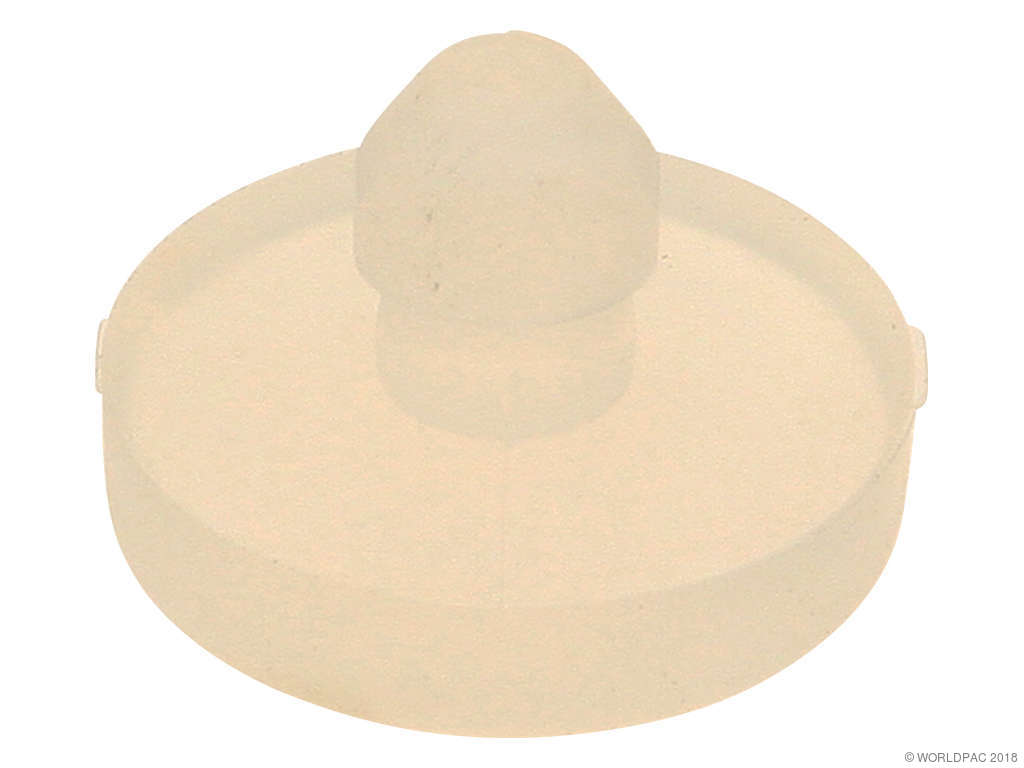
Est. part cost: $15-$45 - Damaged Brake Pedal Stopper Pad 🟡 Medium Probability → Shop Brake Pedal On many Hyundai/Kia models, a small plastic/rubber pad on the brake pedal arm presses against the switch plunger. Over time, this pad becomes brittle and disintegrates. If it falls out, the switch plunger is no longer depressed when the pedal is released. The car then thinks the brakes are always on, which can cause the brake lights to stay on, drain the battery, and may trigger a P0504 correlation fault.
How to confirm: This is a simple visual inspection. Look for small, broken blue or white plastic pieces on the driver's side floor mat. If you find them, look up at the brake pedal arm where it would contact the brake light switch; you will see an empty hole where the stopper pad should be.
Typical fix: Insert a new stopper pad into the brake pedal arm. It's a simple press-fit installation. The OEM part number is typically 32876-36000, which has been superseded by 32876-25000.
Est. part cost: $2-$10 - Misadjusted Brake Light Switch ⚪ Low Probability → Shop Brake Light Switch
How to confirm: Visually inspect the switch located at the top of the brake pedal arm. Ensure it is properly seated and that the plunger is fully depressed when the brake pedal is released and fully extended when the pedal is pressed. An incorrectly adjusted switch can fail to make contact or stay permanently activated, leading to a correlation error.
Typical fix: Loosen the switch's mounting nuts or use the specific quarter-turn adjustment procedure to set its position until it operates correctly. The goal is to have the plunger fully depressed when the pedal is at rest, with minimal to no gap.
Est. part cost: $0 - Blown Fuse ⚪ Low Probability
How to confirm: Locate and inspect the fuses related to the stop lamps (often labeled 'STOP' or similar) in the vehicle's interior and engine bay fuse panels. Check for continuity with a multimeter or visually inspect for a broken filament.
Typical fix: Replace the blown fuse with one of the same amperage rating. If the new fuse blows immediately, it indicates a short circuit that needs to be traced, possibly in the switch or wiring.
Est. part cost: $1-$5
Rare But Worth Checking
- Wiring Harness Issue: While rare, the wiring or connector for the brake light switch could be damaged, loose, or corroded. This would typically require a visual inspection and testing for continuity with a multimeter. This is unlikely to be the cause unless there is evidence of rodent damage or previous improper repairs.
- Faulty Powertrain Control Module (PCM): This is extremely unlikely and should only be considered after all other possibilities, especially the brake switch and stopper pad, have been exhaustively ruled out.
Diagnosis Steps
- Check your VIN with a Hyundai dealer or on Hyundai's official recall website to see if your vehicle is covered under the stop lamp switch recall (NHTSA Campaign ID: 13V113000). If it is, the repair will be performed for free.
- Visually inspect the driver's side floor mat for small, brittle pieces of plastic. If found, inspect the brake pedal arm for a missing stopper pad (a small hole will be visible). If the pad is missing, it must be replaced (Part No. 32876-36000 or 32876-25000).
- If the stopper pad is intact, have an assistant stand behind the vehicle. Check if the brake lights illuminate when you press the pedal and turn off when you release it.
- If the lights are not working correctly, the next step is to test the switch. It is located in a tight space above the brake pedal.
- Disconnect the electrical connector from the switch. Using a test light or multimeter, check for battery voltage at the power supply pin on the connector side.
- If power is present, the most likely cause is a failed switch. Given the low cost and extremely high failure rate, replacing the switch (Part No. 93810-3K000 or superseded) is the most practical next step.
- Install the new switch, ensuring it is adjusted correctly. The plunger should be fully depressed when the pedal is at rest. For some models, there is a specific adjustment gap of 1.0-2.0mm.
- Clear the trouble codes with an OBD-II scanner and test drive the vehicle to ensure the code does not return and all functions (brake lights, cruise control, shifting from park) work correctly.
Parts You'll Likely Need
- Stop Lamp Switch (Brake Light Switch)
(OEM #93810-3K000 / 93810-3K000-QQH)— This is the component that fails and is the subject of the recall. It is the direct cause of the P0504 code in the vast majority of cases for this vehicle.
Trusted brands: Genuine Hyundai, Beck/Arnley, Standard Motor Products (Intermotor)
OEM price range: $15-$30
Aftermarket price range: $10-$25 - Brake Pedal Stopper Pad
(OEM #32876-36000 (superseded by 32876-25000))— This small plastic pad often disintegrates with age, preventing the brake switch from being depressed when the pedal is released. This causes brake lights to stay on and can trigger a P0504 code.
Trusted brands: Genuine Hyundai, Dorman
OEM price range: $2-$8
Aftermarket price range: $2-$5
Related Codes That Often Appear With This One
- C0040 — This is an ABS/Traction Control code for 'Brake Pedal Switch 'A' Circuit'. Seeing it with P0504 strongly confirms the fault is with the brake switch or its circuit, as multiple control modules are reporting a problem with the same input.
- P0703 — This code is for 'Brake Switch B Circuit Malfunction'. It specifically points to the circuit that informs the transmission and cruise control systems. When seen with P0504, it further isolates the problem to the brake switch assembly.
Technical Service Bulletins (TSBs) & Recalls
- TSB 13-01-021 (and its revisions like 15-01-008, 17-01-021) - Describes the service procedure for the stop lamp switch replacement under Hyundai Campaign 110.
- NHTSA Campaign 13V113000 - The master recall document detailing the defect, risks, and affected vehicles, including the 2007-2011 Santa Fe.
Platform-Specific Known Issues
- A major safety recall (NHTSA Campaign ID: 13V113000, Hyundai Campaign 110) was issued for the 2007-2011 Santa Fe specifically to address the failing stop lamp switch that causes this code. The recall was expanded multiple times and affected over 1.7 million Hyundai and Kia vehicles.
Mechanic-Grade Diagnostic Values
- Brake Switch Signal Voltage (at ECM connector or switch connector) — expected: The two signals (often labeled STP and ST1-) should have opposite states. One should be at battery voltage (9-14V) and the other near 0V. When the pedal is pressed, the voltages should swap.. Failure: If both signals are high, both are low, or one signal does not change state when the pedal is moved, it indicates a correlation fault.
- Brake Light Switch Continuity — expected: The switch has two pairs of terminals (e.g., 1-2 and 3-4). One pair should have continuity (below 1 Ω) when the plunger is free (pedal pressed) and the other pair should have continuity when the plunger is pushed in (pedal released).. Failure: If a circuit shows high resistance (10 kΩ or higher) when it should have continuity, or has continuity when it should be open, the switch is faulty.
- Brake Light Switch Adjustment Gap — expected: 1.0 ~ 2.0mm (0.04 ~ 0.08 in) between the switch and the bracket/stopper when the pedal is fully released.. Failure: An incorrect gap can cause the switch to not activate or to remain activated, leading to a correlation error.
Scan Tool Commands That Help
- Professional Scan Tool / Hyundai GDS: Live Data Monitoring for 'Brake Switch A' and 'Brake Switch B' (or similar PIDs like 'STOP LIGHT SW'). — This is the primary diagnostic step after reading the code. Observing the live status of both switch signals while pressing and releasing the brake pedal can instantly confirm the correlation failure. If one signal doesn't change or they don't change in opposition, the fault is confirmed.
Wiring & Ground Locations
- Stop Lamp Switch Connector — Directly above the brake pedal arm, attached to the pedal bracket.. This is the main connector to test for power, ground, and signal output from the switch. A technician in a video demonstrated checking the white wire for power from the fuse.
- Smart Junction Block (SJB) / BCM — Typically located behind the driver's side of the dashboard or in the kick panel area.. The brake switch signals are sent to the Body Control Module (BCM) or Smart Junction Block, which then communicates the brake status to the PCM, ABS, and other modules. A wiring diagram for a similar year Santa Fe shows the Stop Lamp Switch signal routing through this area.
Real Owner Repair Stories
- YouTube channel 'fsteddie98' (2007 Hyundai Santa Fe) — Check Engine Light and ESC light were on. Brake lights did not work.
❌ Tried (didn't work) The technician first checked fuses, which were good.
✅ What actually fixed it Using a scan tool, the technician observed the 'brake light switch' status in live data, which remained 'off' even when the pedal was pressed. A test light confirmed power was going into the switch but not coming out on the signal wire when the pedal was pressed. Replacing the brake light switch resolved all symptoms and codes. - NHTSA ODI #11140455 — An owner reported that their check engine light came on and the diagnostic code P0504 revealed that it was the brake light switch.
- NHTSA ODI #10521032 — A driver noted the ESC OFF light appeared on the dash followed by the check engine light; the code was P0504 for the brake switch. They noted this condition is covered under other Hyundai campaigns but not for their specific VIN.
OEM Part Supersession History
93810-3K000-QQH→93810-3K000— Part number consolidation and updates following the recall.
Heads up: Part number 93810-3K000 is shown to supersede the -QQH version and is also listed as a replacement for several other older part numbers like 93810-2H000 and 93810-38110, indicating broad compatibility for this updated switch.32876-36000→32876-25000— Standard part update and consolidation across multiple Hyundai/Kia models.
Heads up: Part number 32876-25000 is the correct and current replacement for the original brake pedal stopper pad and fits a wide range of Hyundai vehicles from 1991-2021.
Diagnostic Flowchart
Other Known Issues on This Vehicle
Issues unrelated to this code that are worth knowing about as an owner of this generation:
- Faulty Fuel Level Sensor/Sending Unit 🟠 Medium — Extremely common. The fuel gauge becomes erratic or reads empty after filling up. Often triggers code P0463.
- Leaking Valve Cover Gaskets 🟠 Medium — Common on V6 models, especially as they age. Oil leaks onto the exhaust manifold, causing a burning oil smell, and can also leak onto and damage the alternator.
- Failing Crankshaft Position Sensor 🔴 High — A known failure point that can cause the engine to stall while driving or result in a no-start condition.
- Worn Suspension Components 🟡 Low — Sway bar end links and bushings are known to wear out, causing clunking or rattling noises from the front suspension, particularly over bumps.
- Automatic Transmission Issues 🔴 High — Some owners report harsh shifting, slipping, or hesitation, particularly in earlier years of the generation.
Used vs. New Parts: Buying Guide for This Vehicle
When a used part is the smart pick: For this specific repair, buying a used part is NEVER recommended. The primary cause of the P0504 code is a faulty brake light switch, which was subject to a massive safety recall due to its high failure rate. A used switch from a junkyard is highly likely to be the same defective original design or a part that is already near the end of its service life.
What to inspect on the donor part:
- Not applicable. Do not buy this part used.
OEM-only on this vehicle (don't cheap out):
- While not strictly 'OEM-only', it is critical to purchase a NEW brake light switch. The Genuine Hyundai replacement part is inexpensive and is the updated design intended to fix the original flaw. The brake pedal stopper is also extremely cheap and should always be bought new.
Aftermarket brands forum-validated for this vehicle:
- Beck/Arnley
- Standard Motor Products (Intermotor)
- Dorman (for the stopper pad)
Brands owners have reported issues with on this vehicle:
- Unnamed, no-brand parts from online marketplaces should be avoided due to the safety-critical nature of the brake light switch.
Real Owner Stories
Aggregated from forums and TSBs cited above. Mileages and costs reflect what owners reported in those sources.
2007-2011 Hyundai Santa Fe
Symptoms: The Check Engine Light and the ESC light both came on. The vehicle could not be shifted out of Park without using the manual override.
What fixed it: The issue was a widespread defect in the stop lamp switch. The vehicle was repaired for free under Hyundai Campaign 110, which involved replacing the faulty switch with an updated part.
Source hint: NHTSA Campaign 13V113000
2007-2011 Hyundai Santa Fe
Symptoms: Found small, broken pieces of plastic on the driver's side floor mat. The brake lights were stuck on, draining the battery, and the ESC light was illuminated.
What fixed it: A visual inspection confirmed the brake pedal stopper pad had disintegrated. A new stopper pad (part no. 32876-25000) was pressed into the hole on the brake pedal arm, which resolved all symptoms.
Cost: $2-$10
Source hint: Common Cause: Damaged Brake Pedal Stopper Pad
2007-2011 Hyundai Santa Fe
Symptoms: Customer complaint was that the Check Engine Light and ESC light were on.
What fixed it: Diagnostic scan found trouble codes for the brake light switch in both the ABS and PCM modules. Replacing the faulty brake light switch cleared the codes and the warning lights.
Source hint: youtube_comment from fsteddie98
2007-2011 Hyundai Santa Fe
Symptoms: Brake lights would not light with the brake pedal depressed. Cruise control would turn on but not allow the driver to set a speed.
What fixed it: Diagnosis revealed a faulty brake switch A/B. OBD codes P0571 and P0504 were recorded, requiring replacement of the switch assembly.
Source hint: NHTSA ODI #10475283
Related OBD-II Codes
Frequently Asked Questions
I have a 2009 Santa Fe with the ESC and Check Engine lights on. Is this related to a recall?
I found small, broken blue plastic pieces on my driver's side floor mat. Could this cause the P0504 code?
My 2011 Santa Fe has a push-button start and sometimes it won't start. The ESC light is also on. Could P0504 be the cause?
I'm replacing the brake light switch myself to fix a P0504. Is there a specific part number I should use for my 2010 Santa Fe?
My cruise control stopped working, and now the Check Engine Light is on with code P0504. Are these problems related?
My wife's 2010 Kia Sorento has the exact same symptoms (P0504, ESC light). Is it the same problem?
We Have This Part in Stock


The information in this article is provided for general reference and educational purposes only. Vehicle specifications, procedures, and part compatibility can vary by production date, trim level, and region. Always consult your vehicle's factory service manual and verify part numbers before purchasing or performing repairs. Safety-critical components such as airbags, seat belts, and braking systems should be installed by a qualified professional.
- Hyundai Santa Fe:
- 🧭 Diagnostic Flowchart
- 🛍️ Shop This Part
- What's Unique About the 2007-2011 Hyundai Santa Fe
- Symptoms You May Notice
- Most Likely Causes
- Rare But Worth Checking
- Diagnosis Steps
- Parts You'll Likely Need
- Related Codes That Often Appear With This One
- Technical Service Bulletins (TSBs) & Recalls
- Platform-Specific Known Issues
- Mechanic-Grade Diagnostic Values
- Scan Tool Commands That Help
- Wiring & Ground Locations
- Real Owner Repair Stories
- OEM Part Supersession History
- Other Known Issues on This Vehicle
- Used vs. New Parts: Buying Guide for This Vehicle
- Real Owner Stories
- 2007-2011 Hyundai Santa Fe
- 2007-2011 Hyundai Santa Fe
- 2007-2011 Hyundai Santa Fe
- 2007-2011 Hyundai Santa Fe
- Related OBD-II Codes
- Frequently Asked Questions
- 🎟️ Get 5% Off