

P0504 on 2007-2009 Hyundai Tucson: Brake Switch Correlation Causes and Fixes
On a 2007-2009 Tucson, P0504 almost always means the brake light switch has failed. This was part of a massive recall, so first check if your vehicle had the free repair. If not, a new switch costs about $15 and is an easy DIY fix.
- P0504 on your Tucson is almost certainly a failed brake light switch.
- This was a major safety recall. Before paying for any repairs, check if your vehicle is eligible for a free replacement switch from a Hyundai dealer.
- Do not drive the vehicle if your brake lights are not working, as this is extremely dangerous.
- If you must fix it yourself, the brake light switch is a very inexpensive part (around $15) and is easy to replace with basic tools.
- This code is directly linked to other issues like the ESC light being on and being unable to shift out of park.
What's Unique About the 2007-2009 Hyundai Tucson
The 2007-2009 Hyundai Tucson (JM generation) was part of a massive safety recall for a faulty brake light switch. This isn't just a random part failure; it was a widespread, documented issue affecting millions of Hyundai and Kia vehicles, making it the number one suspect for this code. The failure of this specific component can cause a cascade of seemingly unrelated electronic issues, from the ESC light illuminating and the cruise control not working, to the inability to shift out of park.
Symptoms You May Notice
- Brake lights do not illuminate when the pedal is pressed
- Brake lights stay on even when the pedal is released
- Electronic Stability Control (ESC) warning light is on
- Inability to shift the automatic transmission out of the 'Park' position
- Cruise control does not work or will not disengage when the brake pedal is pressed
- Check Engine Light is on
- Engine may stall when braking at highway speeds.
- Replacing the ESC module or other expensive electronic components before checking the simple and inexpensive brake light switch.
- Replacing the transmission's park-lock solenoid when the issue is caused by the brake switch not sending the correct signal to release the interlock.
Most Likely Causes
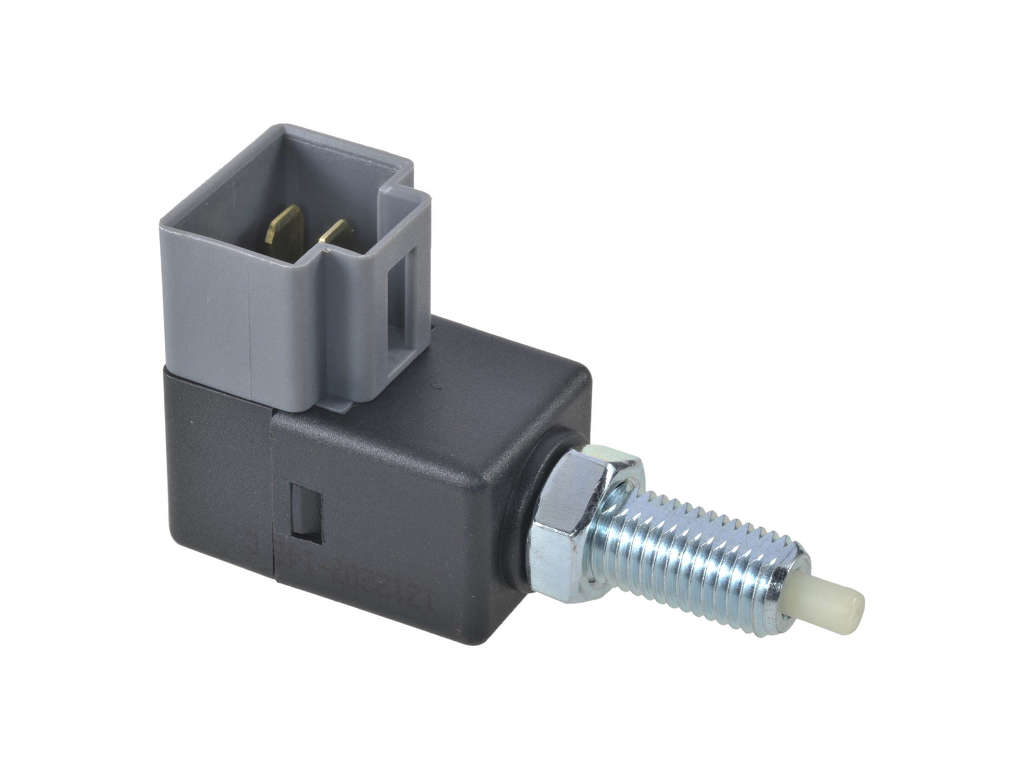
- Faulty Brake Light Switch 🔴 High Probability → Shop Brake Light Switch This part was subject to a massive safety recall (NHTSA campaign 09V122000, Hyundai recall 092, and the expanded 13V113000/110) for a high failure rate due to intermittent internal contact issues across millions of Hyundai vehicles, including the 2007-2009 Tucson.
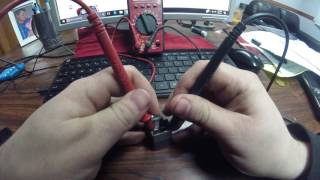
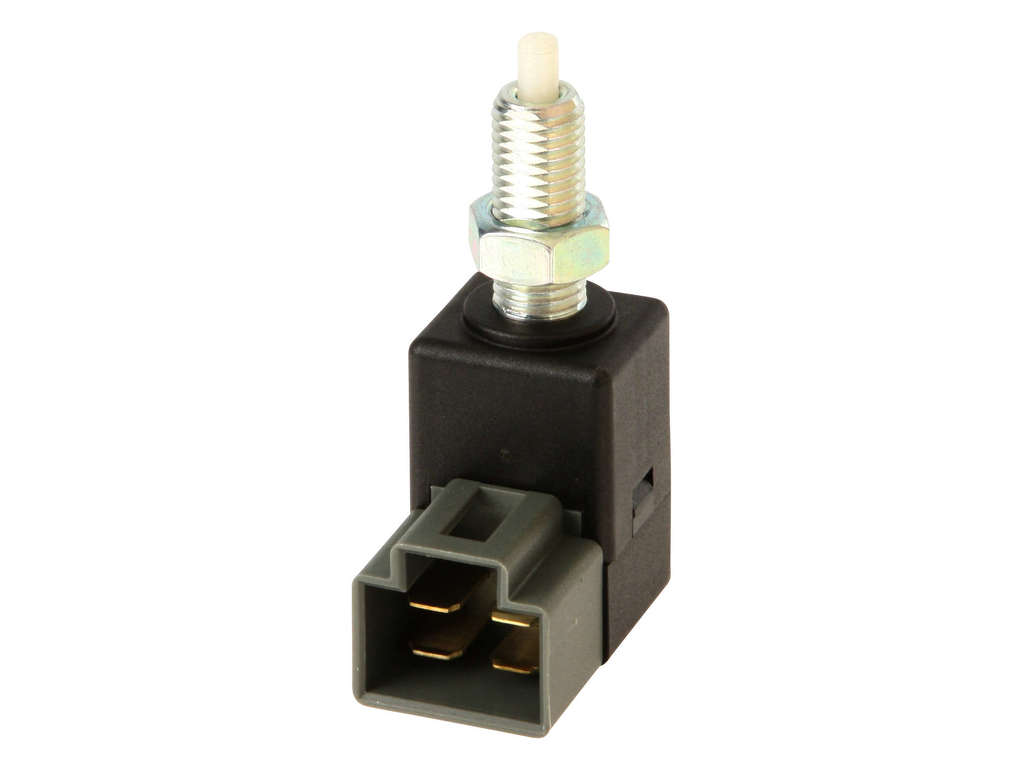
How to confirm: First, check with a Hyundai dealer or online using your VIN to see if the recall was performed on your vehicle. If not, test the switch with a multimeter; 🎬 See how to test your Hyundai brake light switch with a multimeter. the two circuits should show opposite states (one open, one closed) depending on whether the pedal is pressed or released. The switch has four pins; continuity should flip between two pairs of pins as the plunger is operated.
Typical fix: Replace the brake light switch. If the recall is still open for your vehicle, a Hyundai dealer will perform this repair for free. The replacement is a simple DIY job, located above the brake pedal arm.
Est. part cost: $10-$25 - Improperly Adjusted Brake Light Switch 🟡 Medium Probability → Shop Brake Light Switch
How to confirm: Visually inspect the switch located on the bracket above the brake pedal. Ensure the switch's plunger is fully depressed when the pedal is at rest and fully released when the pedal is pressed. If there is a gap or it's not making proper contact, it needs adjustment. The TSB for the recall (09-01-018) includes specific instructions for adjustment after replacement.
Typical fix: Loosen the switch's lock nuts, adjust its position until it operates correctly with the pedal movement, and then retighten the nuts. The switch should be threaded into its bracket until the plunger is depressed about 1mm when the pedal is at rest.
Est. part cost: $0 - Blown Fuse or Wiring Issue ⚪ Low Probability
How to confirm: Check the fuse box for the fuse related to the stop lamps. Inspect the wiring harness and connector at the brake light switch for any signs of damage, corrosion, or loose pins. Forum users sometimes report issues with the connector itself becoming loose or damaged.
Typical fix: Replace the blown fuse or repair the damaged wiring/connector.
Est. part cost: $1-$10
Rare But Worth Checking
- Powertrain Control Module (PCM) Failure: This is extremely rare. All other possibilities, especially the brake light switch itself, should be exhaustively ruled out before considering PCM replacement.
Diagnosis Steps
- Check your vehicle's VIN for open recalls. Contact a Hyundai dealer or use Hyundai's recall website to see if NHTSA campaign 09V122000 or Hyundai campaign 110 is active for your car. If so, the repair is free.
- Verify brake light function. Have a helper observe the brake lights as you press and release the pedal. Note if they are inoperative, stuck on, or delayed.
- Scan the vehicle for any other trouble codes, particularly in the ABS/ESC system (e.g., C1513).
- Inspect the stop lamp fuse in the vehicle's fuse panel. Replace if blown.
- Locate the brake light switch above the brake pedal. Visually inspect its mounting and adjustment. Ensure the pedal arm is making solid contact with the switch's plunger.
- Disconnect the switch's electrical connector and inspect for corrosion or damage.
- Using a multimeter, test the two circuits of the 4-pin switch for continuity. The signal outputs should be opposites and flip when the plunger is pressed and released. If the switch tests faulty or intermittently, it is the cause.
- If the switch tests good, check for 12V power at the connector harness. If power is present and the switch is good, the problem is likely in the wiring downstream or, very rarely, the PCM.
Parts You'll Likely Need
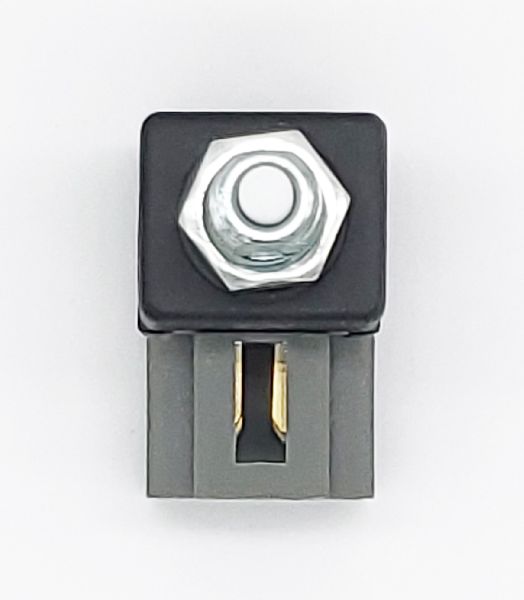
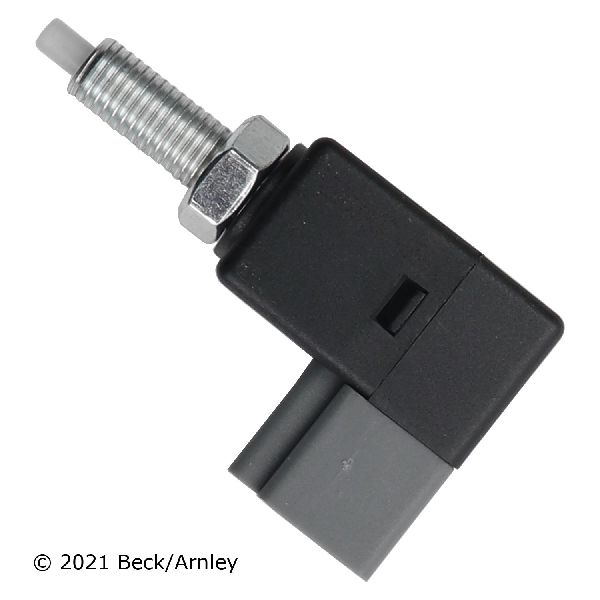
- Stop Lamp Switch Assembly
(OEM #93810-3K000)— This is the component that fails and was the subject of a major safety recall. It contains the two internal circuits that the PCM compares, and when it fails, it triggers the P0504 code. 🎬 Watch: This walkthrough shows you how to fix the P0504 code. This part number supersedes several older, failure-prone versions like 93810-2H000 and 93810-38100.
Trusted brands: Genuine Hyundai (OEM), Beck/Arnley, Standard Motor Products
OEM price range: $12-$20
Aftermarket price range: $8-$18
Related Codes That Often Appear With This One
- C1513 — This is a Hyundai-specific code for a Brake Switch Error, often triggered alongside P0504 by the ABS/ESC control module.
Technical Service Bulletins (TSBs) & Recalls
- 09-01-018 - This Technical Service Bulletin was issued by Hyundai to dealers providing the procedure for replacing the stop lamp switch as part of Recall Campaign 092. It covers multiple models including the Tucson (JM) and details the removal, replacement, and adjustment process.
Platform-Specific Known Issues
- This vehicle was included in Hyundai Safety Recall Campaign 092/110 (NHTSA Campaign ID 09V122000 and 13V113000) to replace the stop lamp switch due to a high rate of failure that could lead to the brake lights not working.
- A forum user on hyundai-forums.com with a 2007 Tucson experienced the classic P0504 with ESC light and inability to shift from park, which was resolved by replacing the recalled brake switch.
Mechanic-Grade Diagnostic Values
- Brake Switch 'A' Circuit Voltage (Stop Lamp Power) — expected: Approx. 0V with pedal released, Battery Voltage (~12V) with pedal depressed.. Failure: Voltage does not change, is always 0V, or is always ~12V.
- Brake Switch 'B' Circuit Voltage (ECM/Cruise Signal) — expected: Battery Voltage (~12V) with pedal released, Approx. 0V with pedal depressed.. Failure: Voltage is the opposite of the expected value or does not change with pedal movement.
- Continuity Test - Brake Light Circuit (Pins 1 & 2) — expected: No continuity (Open) with pedal released. Continuity (Closed) with pedal depressed.. Failure: Continuity state does not change when the switch plunger is operated.
- Continuity Test - ECM/Cruise Circuit (Pins 3 & 4) — expected: Continuity (Closed) with pedal released. No continuity (Open) with pedal depressed.. Failure: Continuity state does not change when the switch plunger is operated.
Scan Tool Commands That Help
- Hyundai GDS (or equivalent professional scanner): Live Data / Data Stream for Brake Switch 1 and Brake Switch 2 PIDs. — This is the most effective way to diagnose an intermittent failure. A technician can watch the live data from both switch circuits on the screen while pressing and releasing the brake pedal. The states should be opposite (e.g., On/Off) and should flip instantly with pedal movement. Any flickering, delay, or failure to change state confirms a faulty switch or wiring.
Wiring & Ground Locations
- Stop Lamp Switch Connector — Directly on the stop lamp switch, located on a bracket above the brake pedal arm.. This 4-pin connector is the central point for all voltage and continuity tests. Damage or corrosion on its pins or wiring is a common cause of failure besides the switch itself.
- G01 (Ground) — Under the right (passenger) side of the center of the dashboard.. While less likely to be the direct cause, a poor main dash ground can create floating voltages and unpredictable behavior in multiple electronic systems, including the modules that read the brake switch signals. This should be checked if other electrical anomalies are present.
Real Owner Repair Stories
- hyundai-forums.com user (2007 Hyundai Tucson) — ESC OFF light illuminated, unable to shift out of Park, P0504 code stored.
❌ Tried (didn't work) Initial diagnosis pointed towards complex electronic modules.
✅ What actually fixed it The user replaced the brake light switch (stop lamp switch) with the updated OEM part (93810-3K000-QQH). This single replacement resolved all symptoms, including the ESC light and the shift interlock problem, and cleared the P0504 code. - YouTube Repair Channel (Hyundai vehicle (similar system)) — Brake lights would not turn off.
❌ Tried (didn't work) The original switch was tested and found to be working electrically with a multimeter off the car.
✅ What actually fixed it After reinstalling the switch, the problem persisted. The final fix was not replacing the part, but correctly adjusting its threaded position on the bracket. The switch was screwed in too far, preventing the plunger from fully extending when the brake pedal was released. Backing the switch out slightly allowed it to function correctly.
Documented NHTSA Reports
- NHTSA ODI #11140455: An owner of a related Hyundai model reported the check engine light came on and the diagnostic code P0504 revealed it was the brake light switch.
- NHTSA ODI #10520867: A report describes occurrences of the check engine light coming on with code P0504 indicating a brake switch malfunction, noting that the light would occasionally go off after several trips.
- NHTSA ODI #10630011: An owner reported that their check engine light and ABS light stayed on; a scan at a parts store revealed code P0504 for a faulty stop lamp brake switch, which had reportedly been replaced once before.
- NHTSA ODI #10712396: A report notes that a mechanic scanned the vehicle for a check engine light and found code P0504, discovering that the ECM detected a fault in the correlation between the two brake switch circuits.
- NHTSA ODI #11671946: An owner reported a brake light switch malfunction causing code P0504, which posed a safety hazard and led to battery drainage.
OEM Part Supersession History
93810-2H000, 93810-38100, 93810-38110, 93810-32000, 93810-32001→93810-3K000 (sometimes listed as 93810-3K000QQH)— The original switch designs were prone to internal contact failure and intermittency, leading to the massive recall. The 93810-3K000 is the revised, more durable design intended to fix the root cause.
Diagnostic Flowchart
Other Known Issues on This Vehicle
Issues unrelated to this code that are worth knowing about as an owner of this generation:
- Subframe and Control Arm Corrosion 🔴 High — Very common in 'Salt Belt' regions, can occur at any mileage. Can lead to catastrophic suspension failure. (Ref: Hyundai Recall 113 (NHTSA 13V-354). Also subject of a class-action lawsuit.)
- Airbag Clock Spring Failure 🔴 High — Common failure leading to an airbag warning light, which disables the driver's airbag. (Ref: Hyundai extended the warranty for this part to 15 years/unlimited miles for the 2007-2012 Veracruz, a platform relative, and many other models of the era, indicating a widespread issue.)
- Rough Shifting / Transmission Issues 🟠 Medium — Owners report issues with delayed or harsh shifting, which can sometimes lead to transmission failure. (Ref: Multiple TSBs exist for transmission issues on related Hyundai models, though not a specific recall for the Tucson's transmission itself.)
Used vs. New Parts: Buying Guide for This Vehicle
When a used part is the smart pick: NEVER. This part fails due to a known, widespread design defect. A used part from a salvage yard is almost guaranteed to be the original failure-prone design and is not worth the labor to install it. The cost of a new, redesigned OEM part is very low (under $25).
OEM-only on this vehicle (don't cheap out):
- Stop Lamp Switch Assembly
Aftermarket brands forum-validated for this vehicle:
- Standard Motor Products (SMP)
- Beck/Arnley
Brands owners have reported issues with on this vehicle:
- Unbranded, no-name parts from online marketplaces. While they may be cheaper, they risk being manufactured to the old, faulty specification or being dead-on-arrival.
Real Owner Stories
Aggregated from forums and TSBs cited above. Mileages and costs reflect what owners reported in those sources.
2007 Tucson
Symptoms: The classic P0504 code appeared along with the ESC warning light, and the vehicle could not be shifted out of the 'Park' position.
What fixed it: The issue was resolved by replacing the recalled brake switch.
Source hint: Forum user report on hyundai-forums.com, cited in the article's vehicle_specific_issues section.
Related OBD-II Codes
Frequently Asked Questions
I heard there was a recall for the brake light switch on my 2007-2009 Tucson. How can I check if my car is affected?
My ESC light is on, I can't shift out of Park, and my brake lights don't work. Is this all related to the P0504 code?
Is replacing the brake light switch a difficult DIY job on my Tucson?
I replaced the brake switch, but the P0504 code came back. What else could be wrong?
What's the best replacement part for the P0504 brake switch? Can I use a cheap one from a junkyard?
My 2008 Kia Sportage has the same P0504 code and symptoms. Is the fix the same as for the Tucson?
Helpful Videos

We Have This Part in Stock


The information in this article is provided for general reference and educational purposes only. Vehicle specifications, procedures, and part compatibility can vary by production date, trim level, and region. Always consult your vehicle's factory service manual and verify part numbers before purchasing or performing repairs. Safety-critical components such as airbags, seat belts, and braking systems should be installed by a qualified professional.
- Hyundai Tucson:
- 🧭 Diagnostic Flowchart
- 🎬 Helpful Videos
- 🛍️ Shop This Part
- What's Unique About the 2007-2009 Hyundai Tucson
- Symptoms You May Notice
- Most Likely Causes
- Rare But Worth Checking
- Diagnosis Steps
- Parts You'll Likely Need
- Related Codes That Often Appear With This One
- Technical Service Bulletins (TSBs) & Recalls
- Platform-Specific Known Issues
- Mechanic-Grade Diagnostic Values
- Scan Tool Commands That Help
- Wiring & Ground Locations
- Real Owner Repair Stories
- Documented NHTSA Reports
- OEM Part Supersession History
- Other Known Issues on This Vehicle
- Used vs. New Parts: Buying Guide for This Vehicle
- Real Owner Stories
- 2007 Tucson
- Related OBD-II Codes
- Frequently Asked Questions
- 🎟️ Get 5% Off