

P0504 on 2006-2009 Land Rover LR3: Brake Switch Correlation Causes and Fixes
On a 2006-2009 Land Rover LR3, code P0504 is almost always caused by a faulty or misadjusted brake light switch. This can cause a cascade of warning lights, including suspension and transmission faults. The fix is typically replacing the inexpensive switch located above the brake pedal. Before replacement, adjustment should be attempted as per a Land Rover TSB.
- P0504 on an LR3 is almost always the brake light switch.
- Expect a 'Christmas tree' of warning lights for suspension, transmission, and HDC, not just a check engine light.
- Always try to adjust the switch before replacing it, as per Land Rover's own technical bulletin (SSM52757).
- The replacement part is inexpensive and the job is simple, making it an excellent first step in diagnosis.
- Ensure you use the correct OEM-spec tail light bulbs, as incorrect bulbs can sometimes cause similar electrical issues.
What's Unique About the 2006-2009 Land Rover LR3
For the LR3 and its platform-mate, the Range Rover Sport, this single, simple brake switch is deeply integrated into multiple complex systems like the air suspension, transmission control, and stability control. A failure often results in a 'Christmas tree' effect on the dashboard, with numerous alarming warnings that seem unrelated to the brakes. Land Rover issued a Technical Service Bulletin (SSM52757) that specifically highlights this code, noting that a primary cause is an *incorrectly adjusted* switch, not necessarily a failed one. The TSB explicitly states that analysis of returned parts often shows no fault, making adjustment a critical first diagnostic step before replacement. One circuit within the switch is for the brake lights, while the other is a signal circuit for the ABS module; a mismatch between these two triggers the fault.
Diagnostic Flowchart
Tap your situation to follow the diagnostic path that matches what you're seeing on this vehicle.
Symptoms You May Notice
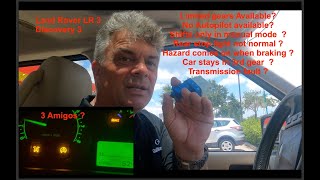
- Multiple warning lights on the instrument cluster, often called the 'Christmas tree' effect (Check Engine, ABS, air suspension fault, HDC fault).
- Difficulty shifting the transmission out of Park, sometimes requiring excessive pedal pressure.
- Brake lights do not work, or they stay on continuously.
- Cruise control is inoperative.
- Air suspension may lower to access height and become disabled.
- A 'Transmission Fault' or 'Special Programs Unavailable' message may appear.
- Transmission may be locked in a single gear (typically 1st) when in Drive, but may allow manual shifting.
- Replacing the ABS module or other control units. Module failure is extremely rare compared to the simple and inexpensive brake switch. This should only be considered after the switch, its adjustment, and all related wiring have been definitively ruled out.
- Replacing brake light bulbs. While using incorrect bulbs can cause issues, a standard bulb failure will not cause a P0504 correlation fault. The issue is more often the bulb *type* being wrong.
Most Likely Causes
- Incorrectly Adjusted Brake Light Switch 🔴 High Probability → Shop Brake Light Switch Land Rover TSB SSM52757 explicitly states that incorrect switch setting is a primary cause and that returned parts often have no fault found. The switch's plunger may not be engaging or disengaging correctly with the brake pedal arm.
How to confirm: Use a diagnostic scan tool to view live data from both brake switch circuits ('A' and 'B') to see if they correlate when the pedal is pressed and released. A 'slow press test' where you apply light, slow pressure to the pedal may trigger the fault when a firm press does not, indicating a marginal adjustment. Physically inspect and follow the official adjustment procedure.
Typical fix: Adjust the brake light switch. For a new switch, the process is typically to pull the plunger fully out, press the brake pedal down, insert the new switch into its bracket, and twist to lock it. Releasing the pedal then automatically sets the correct depth.
Est. part cost: $0 - Faulty Brake Light Switch 🔴 High Probability → Shop Brake Light Switch The brake light switch is a high-use electromechanical part that wears out over time, causing its internal contacts to fail or provide inconsistent signals. It is a very common failure item on the LR3 and its platform mates. Cold weather can exacerbate the issue, causing the switch plunger to return slowly and trigger the fault.
How to confirm: If adjustment doesn't resolve the issue, and live data shows a persistent mismatch, the switch is likely faulty. Testing the switch with a multimeter for continuity on both circuits as the plunger is depressed can also confirm failure. Given the low cost, many owners opt to replace it as a primary diagnostic step.
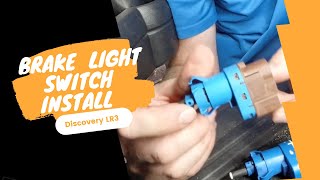
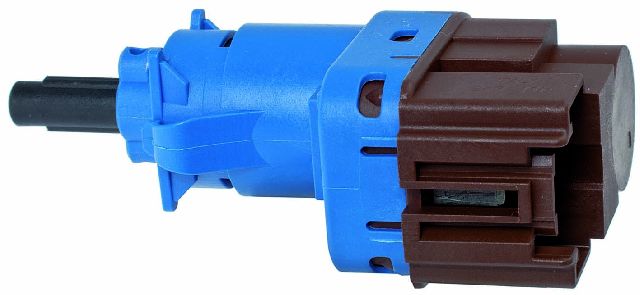
Typical fix: Replace the brake light switch. This is a simple, twist-to-remove part located above the brake pedal, accessed by removing the driver's side lower dash panel.
Est. part cost: $25-$65 - Wiring or Connector Issue ⚪ Low Probability This platform is known for two specific wiring vulnerabilities. First, water ingress from clogged sunroof drains or a bad cowl seal can soak the passenger footwell carpet, leading to corrosion of a factory wire splice in the harness that runs along the passenger door sill. Second, the power feed wire (often red) to the brake switch itself can break or corrode between the fuse box and the switch connector.
How to confirm: If a new, known-good switch doesn't fix the problem, inspect the passenger side footwell. Pull up the door sill trim and carpet to expose the large wiring loom. Carefully unwrap the loom and look for a poorly protected, corroded splice. Also, check for 12V power at the appropriate pins on the brake switch connector; a lack of power points to a broken wire upstream.
Typical fix: For a corroded sill splice, cut out the corroded section of wire, solder in a new piece, and protect the repair with heat-shrink tubing. For a broken power wire, trace the wire back from the switch to find the break and repair it, or run a new fused wire as a bypass.
Est. part cost: $5-$50
Rare But Worth Checking
- Incorrect Rear Light Bulbs: Using non-genuine or incorrect specification bulbs (e.g., LED replacements without proper resistors, or an 1157 bulb instead of a P21/5W) in the tail lights can alter circuit resistance and confuse the control modules, sometimes triggering this fault.
- Blown Fuse: A blown fuse for the brake light circuit can cause a loss of signal and trigger this code. Always check relevant fuses in the Central Junction Box (CJB) before replacing parts. Specifically, check fuse F66 (5A) and F15 (15A) in the passenger compartment fuse box (CJB).
- Weak or Failing Battery: → Shop Vehicle Battery While not a direct cause, the LR3 is highly sensitive to battery voltage. A weak or failing battery can cause a host of seemingly unrelated electronic faults and warning lights. If your battery is over 4-5 years old, it's worth having it professionally tested.
Diagnosis Steps
- Verify the 'Christmas tree' of warning lights on the dash (Suspension, HDC, Transmission Faults). 🎬 See how a failing switch triggers these dashboard warning lights.
- Check brake light operation. Do they illuminate when the pedal is pressed? Do they stay on all the time?
- Scan the vehicle for all fault codes using a Land Rover-specific tool if possible. Note P0504 and any related codes like C1A96.
- With a scan tool, monitor the live data for 'Brake Switch A' and 'Brake Switch B'. Confirm they change state in unison as you press and release the pedal. Try the 'slow press test' to see if you can induce a mismatch.
- As per TSB SSM52757, first attempt to adjust the brake light switch. If the switch is old, it's often best to proceed with replacement.
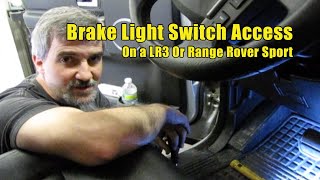
- If replacing, remove the driver's lower dash panel. Locate the switch above the brake pedal arm. 🎬 Watch: How to easily access the switch above the pedal. Disconnect the electrical connector, twist the switch (approx. 45-90 degrees) and pull it out.
- Install the new switch following the self-adjustment procedure: pull plunger out, depress pedal, insert and lock switch, release pedal.
- Clear all fault codes and perform a road test, checking for the return of any warnings and verifying cruise control operation.
- If the problem persists, investigate the wiring. Start with the passenger door sill. Remove the trim, lift the carpet, and inspect the main wiring loom for corroded splices from water damage.
- If the sill wiring is fine, check for a broken power wire at the brake switch connector itself. Specifically, check the Red wire for 12V power from fuse F66P.
Parts You'll Likely Need
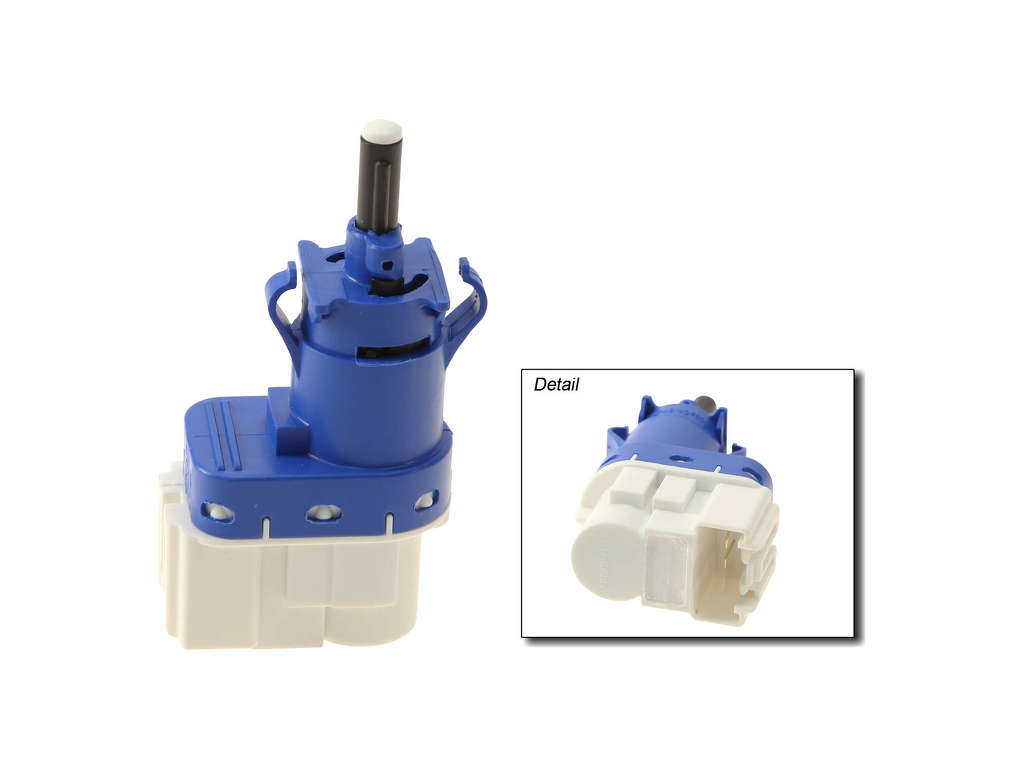
- Brake Light Switch
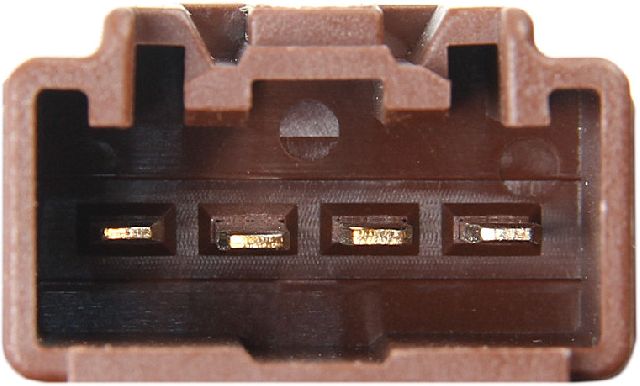
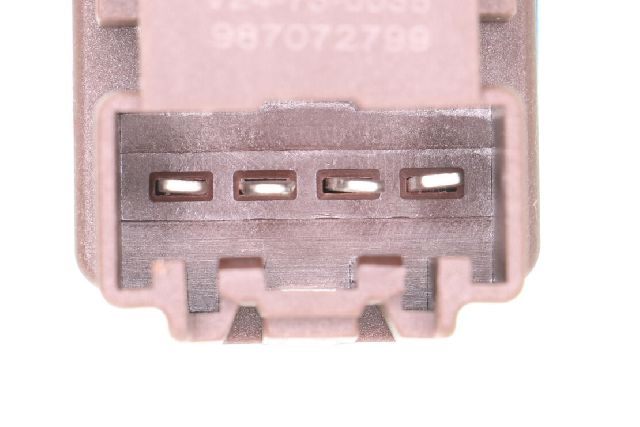
(OEM #XKB500110)— This switch is the most common cause of P0504. It's a high-wear item, and its failure causes the signal correlation error that triggers the code and a cascade of other system warnings. The original part XKB500030 was superseded by XKB500110, which was later superseded by LR072647 and then LR116714.
Trusted brands: Land Rover (Genuine), Facet (OEM quality)
OEM price range: $50-$65
Aftermarket price range: $25-$40
Related Codes That Often Appear With This One
- C1A96-64 — This ABS module code for the brake light switch is often logged alongside P0504, as cited in TSB SSM52757. It specifically points to a signal plausibility failure related to the switch.
Technical Service Bulletins (TSBs) & Recalls
- SSM52757: Mentions DTCs P0504-27, P0504-62, and C1A96-64 are caused by incorrect brake light switch setting, leading to warning lights and difficulty shifting from Park. Crucially, it notes that analysis of returned switches shows no fault, advising adjustment before replacement.
Platform-Specific Known Issues
- A Land Rover Technical Service Bulletin (SSM52757) explicitly states that incorrect switch adjustment is a primary cause for P0504, and that returned parts often have no fault found. This makes adjustment a critical first step.
- The failure of this single switch is notorious for causing a cascade of faults across unrelated systems, such as air suspension, stability control, and transmission, known as the 'Christmas tree' effect.
- Water ingress from clogged sunroof drains is a known issue that leads to corrosion of a wiring splice in the passenger door sill, which can be a secondary cause of P0504 if a new switch does not solve the problem.
Mechanic-Grade Diagnostic Values
- Brake Switch Power Input (both circuits) — expected: Nominal 12V DC. Failure: A significantly lower voltage (e.g., 6.4V as reported by one user) suggests a wiring or ground issue upstream of the switch.
- Brake Switch 'A' (Brake Light) Circuit Logic — expected: Normally Open (NO). Power flows when the pedal is pressed.. Failure: Power present when pedal is not pressed, or no power when pressed.
- Brake Switch 'B' (ABS/DSC Signal) Circuit Logic — expected: Normally Closed (NC). Power flows when the pedal is NOT pressed, and is cut when the pedal is pressed.. Failure: No power when pedal is not pressed, or power remains when pressed. This is a common failure mode leading to the correlation fault.
Hidden / Shadow Codes Worth Checking
- P0504-27 / P0504-62: These are manufacturer-specific sub-codes for the P0504 fault, directly referenced in TSB SSM52757. While public definitions are not detailed, they indicate specific failure types like 'Signal Compare Failure' or 'Circuit Malfunction' related to the brake switch. (see via Land Rover's dealer-level diagnostic system (SDD) or an advanced aftermarket scan tool with JLR-specific software.)
Scan Tool Commands That Help
- Land Rover SDD (Symptom Driven Diagnostics): Datalogger - Live Data Monitoring — To simultaneously view the status of 'Brake Switch A' and 'Brake Switch B' to confirm they are correlating correctly during pedal operation. This is the primary method to diagnose a faulty switch or adjustment issue electronically.
- Land Rover SDD (Symptom Driven Diagnostics): Read All Stored DTCs — After selecting symptoms, the SDD software will read codes from all modules, which is crucial for this fault as it often stores related codes like C1A96 in the ABS module alongside the P0504 in the PCM.
Wiring & Ground Locations
- C0075 — The 4-pin electrical connector that plugs directly into the brake light switch above the brake pedal.. This is the primary connection point to test for power and signal integrity. A broken Red wire providing power from fuse F66P to this connector is a known, though rare, cause of P0504.
- Passenger Sill Splice — In the main wiring loom that runs along the passenger door sill, under the plastic trim and carpet.. This area is prone to water damage from clogged sunroof drains. A corroded factory splice here can cause a multitude of electrical issues, including symptoms that mimic a P0504 fault, by disrupting CAN bus communications.
- SJ813 / SJ814 — These are splice joints or grounding lugs located behind the rear trim panels in the cargo area, near the tail light assemblies.. Poor grounding at the tail lights can cause erratic behavior and, in some cases, contribute to electrical noise that may trigger faults. While not a direct cause of P0504, checking these grounds is good practice if other electrical anomalies are present with the brake lights.
Real Owner Repair Stories
- DiscoWeb.org user 'rangerover' (2006 Land Rover LR3) — Permanent P0504 and C1A96 codes. Shift interlock would not re-engage when taking foot off the brake. Scan tool showed 'Brake Switch' circuit stuck 'active' while 'Brake Lamp Switch' circuit worked correctly.
❌ Tried (didn't work) Replacing the brake light switch (multiple times), Replacing brake light bulbs, Checking fuses, Inspecting passenger side sill wiring for corrosion (none found)
✅ What actually fixed it The red power feed wire to the brake switch was broken or corroded somewhere between the fuse box and the switch connector. A temporary jumper wire was run to the switch to bypass the break, which immediately solved the problem. - YouTube - 'The Car Life' (Land Rover Discovery 3 (LR3)) — Brake lights stuck on, transmission would not shift out of first gear automatically, P0504 code variant 'brake lamp switch circuit general signal failure signal stays high'.
❌ Tried (didn't work) Initial diagnosis pointed to a complex transmission or module issue.
✅ What actually fixed it Replacing the brake light switch (Part # XKB500110) resolved all symptoms. The video confirms the new switch fixed the stuck-on brake lights and allowed the transmission to shift normally again.
When the Usual Fixes Don't Work
- While the vast majority of P0504 cases are the brake switch itself, there are well-documented instances where replacing the switch does not fix the problem. In one such case, after multiple switch replacements failed, the root cause was identified as a broken red power wire leading to the switch connector. The owner had to run a bypass wire from a known-good power source to the switch to finally resolve the fault, proving that a wiring integrity check is a critical step if a new switch doesn't work.
OEM Part Supersession History
XKB500030→XKB500110 -> LR072647 -> LR116714— Standard part evolution and supplier changes.
Heads up: All part numbers in this chain are functionally interchangeable for the 2006-2009 LR3.
Helpful Videos
We Have This Part in Stock


The information in this article is provided for general reference and educational purposes only. Vehicle specifications, procedures, and part compatibility can vary by production date, trim level, and region. Always consult your vehicle's factory service manual and verify part numbers before purchasing or performing repairs. Safety-critical components such as airbags, seat belts, and braking systems should be installed by a qualified professional.
- Land Rover LR3:
- 🧭 Diagnostic Flowchart
- 🎬 Helpful Videos
- 🛍️ Shop This Part
- What's Unique About the 2006-2009 Land Rover LR3
- Symptoms You May Notice
- Most Likely Causes
- Rare But Worth Checking
- Diagnosis Steps
- Parts You'll Likely Need
- Related Codes That Often Appear With This One
- Technical Service Bulletins (TSBs) & Recalls
- Platform-Specific Known Issues
- Mechanic-Grade Diagnostic Values
- Hidden / Shadow Codes Worth Checking
- Scan Tool Commands That Help
- Wiring & Ground Locations
- Real Owner Repair Stories
- When the Usual Fixes Don't Work
- OEM Part Supersession History
- 🎟️ Get 5% Off