

P0504 on 2010-2015 Land Rover LR4: Brake Switch Correlation Fault Causes and Fixes
On a 2010-2015 Land Rover LR4, code P0504 is almost always caused by a misadjusted or faulty brake light switch. This single, inexpensive part can cause a cascade of faults, including 'HDC Fault', 'Suspension Lowered', and 'Transmission Fault'. Land Rover issued a Technical Service Bulletin (SSM52757) stating that incorrect adjustment is a primary cause, so adjustment should be checked before replacing the part. A new genuine switch costs between $30 and $65.
- P0504 on an LR4 points directly to the brake light switch.
- Always attempt to adjust the switch before replacing it, as per Land Rover's own Technical Service Bulletin (SSM52757).
- A single faulty switch can trigger a cascade of seemingly unrelated, serious-looking faults like 'HDC Fault', 'Suspension Lowered', and 'Transmission Fault'.
- The repair is simple, inexpensive, and a very common DIY task for LR4 owners.
- Using a genuine or OEM-quality replacement part (XKB500110) is highly recommended to avoid premature failure.
What's Unique About the 2010-2015 Land Rover LR4
For the Land Rover LR4, this code is very specifically addressed by the manufacturer. Land Rover released Technical Service Bulletin SSM52757, which highlights that an "Incorrect brake light switch setting" is a common cause for P0504. The bulletin even notes that analysis of returned parts often shows no fault with the switch itself, strongly suggesting that proper adjustment is the key to resolving the issue on these vehicles. The TSB explicitly states, "Do not replace the switch before adjustment is carried out.& 🎬 Watch: How to fix the brake switch without buying parts.quot; The switch's signals are critical for the air suspension, Hill Descent Control (HDC), ABS, and transmission control systems, which is why its failure causes such a widespread and alarming array of faults on this specific platform.
Diagnostic Flowchart
Tap your situation to follow the diagnostic path that matches what you're seeing on this vehicle.
Symptoms You May Notice
- Multiple warning lights on the instrument cluster, such as Check Engine, ABS, suspension fault, and 'HDC Fault System Not Available'.
- Air suspension lowers to access height and becomes inoperative.
- Difficulty shifting the transmission out of Park, sometimes requiring extra foot pressure on the brake pedal.
- Brake lights do not work, or they remain on all the time.
- Cruise control cannot be engaged.
- 'Transmission Fault' message may appear on the dash.
- A cascade of faults can be triggered by a slow, light press of the brake pedal that doesn't activate both internal switch circuits simultaneously.
- Replacing brake light bulbs without diagnosing the system. While incorrect or faulty bulbs can cause other electrical issues on Land Rovers, P0504 specifically points to a switch correlation fault, not a circuit integrity problem to the bulbs themselves.
- Assuming a failure of the ABS module, air suspension compressor, or transmission due to the corresponding warning lights, without first checking for this common and inexpensive root cause.
Most Likely Causes
- Incorrectly Adjusted Brake Light Switch 🔴 High Probability → Shop Brake Light Switch Land Rover explicitly identified this as a primary cause in TSB SSM52757, noting that many replaced switches were found to be functional, just improperly set. The switch can become misaligned over time.
How to confirm: Follow the manufacturer's adjustment procedure as referenced in TOPIx section 303-14. If adjustment resolves the symptoms and the code does not return, the cause is confirmed. A scan tool showing live data for both brake switch circuits ('Brake Lamp Switch' and 'Brake Switch') can also confirm if they are activating at different pedal pressures.
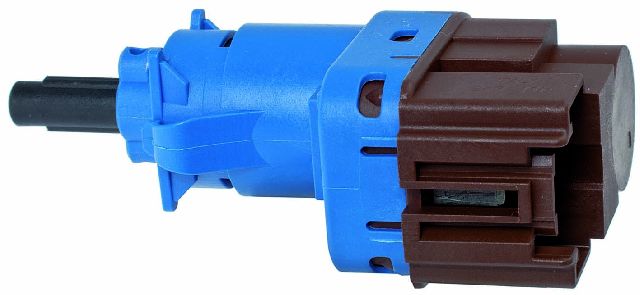
Typical fix: Adjust the brake pedal position switch. The switch has a bayonet-style fitting and is located on a bracket above the brake pedal. The general procedure is to remove the lower dash trim, twist the switch to remove it, pull its self-adjusting plunger fully out, depress the brake pedal, reinstall the switch until it clicks, and then release the pedal to set the correct depth.
Est. part cost: $0 - Faulty Brake Light Switch 🔴 High Probability → Shop Brake Light Switch The brake light switch is a high-use electromechanical part that can wear out over time, causing intermittent or total failure of its internal contacts. Aftermarket switches have a reputation for premature failure, so using a genuine or OEM part is often recommended by owners.
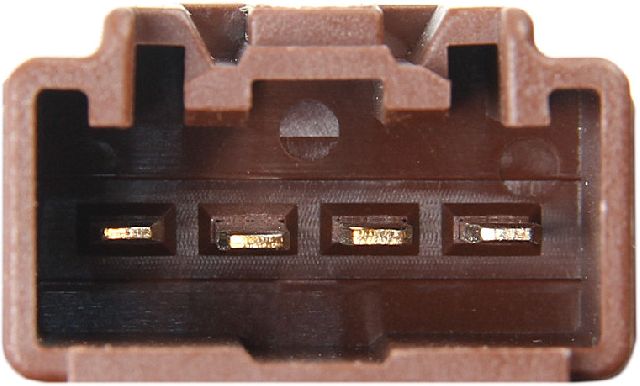
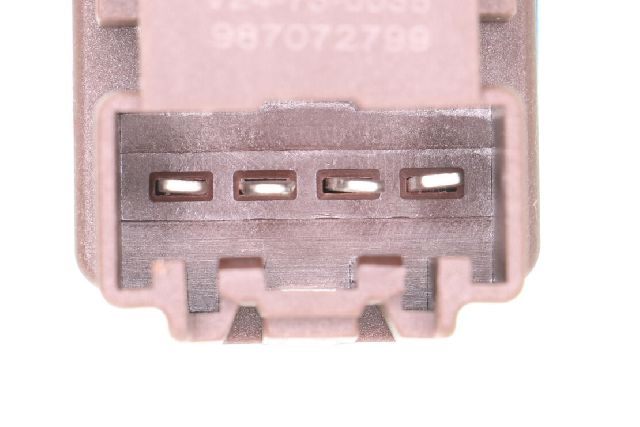
How to confirm: If adjustment does not fix the issue, test the switch with a multimeter to check for correct continuity on its four pins as the plunger is depressed. If either of the two circuits fails to open or close correctly, the switch is bad. Live data from a scan tool showing one circuit as 'active' while the other is 'inactive' when the pedal is released also confirms a faulty switch.
Typical fix: Replace the brake light switch. It is located above the brake pedal arm and is removed by twisting it about 45 degrees and pulling it out. The new switch must be installed and adjusted correctly.
Est. part cost: $30-$65 - Wiring or Connector Issue ⚪ Low Probability While less common, the wiring harness near the pedals can be subject to stress or damage from foot traffic or moisture. Corrosion can affect the connector pins, leading to a poor signal.
How to confirm: Visually inspect the wiring harness and connector for the brake light switch. Check for chafed wires, loose pins, or signs of corrosion. A forum user on DiscoWeb reported resolving P0504 by finding and repairing a broken red power wire between the fuse box and the switch connector. Another user reported measuring low voltage (6.4v) on the power wire to the switch, indicating a high-resistance fault in the circuit.
Typical fix: Repair the damaged section of the wiring harness or clean/replace the connector. In one documented case, the owner jumped the two power circuits at the switch connector as a temporary fix before locating the wire break.
Est. part cost: $5-$50
Diagnosis Steps
- Verify the symptoms. Check if the brake lights function correctly, if the vehicle is hard to shift from Park, and note all warning lights on the dash, such as 'HDC Fault' or 'Suspension Lowered'.
- Scan for trouble codes in all vehicle modules (Engine, ABS, Body Control, Suspension). Confirm the presence of P0504 and note any other codes, especially C1A96-64.
- Attempt to adjust the brake light switch first, as recommended by Land Rover TSB SSM52757. Access the switch by removing the lower dash panel. Twist to remove, pull the plunger fully out, depress the brake pedal, reinstall the switch, and release the pedal to allow it to self-adjust.
- Clear the codes and test drive the vehicle. A slow, light press on the brake pedal is a good way to test if the fault returns, as this can expose a misalignment between the two internal circuits.
- Use a scan tool with live data to monitor the status of both brake switch circuits (often labeled 'Brake Lamp Switch' and 'Brake Switch'). Press and release the brake pedal slowly to see if they change state in unison. A discrepancy confirms the correlation fault.
- Inspect the brake light switch connector and nearby wiring for any visible damage, corrosion, or loose connections. Test for proper voltage at the switch's power feed wire(s).
- If the adjustment fails and wiring appears intact, replace the brake light switch with a new OEM or genuine part.
- After replacement, ensure the new switch is correctly installed and adjusted, then clear codes and re-test.
Parts You'll Likely Need
- Brake Light Switch
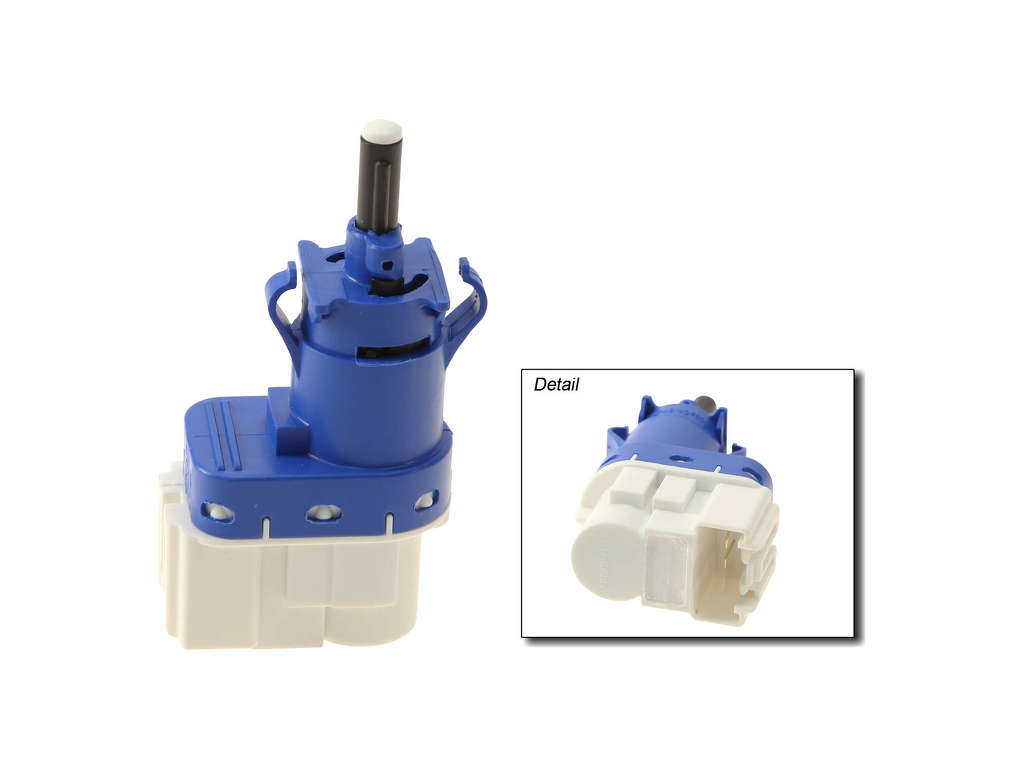
(OEM #XKB500110)— This is the component that fails or becomes misadjusted, directly causing the P0504 code. It contains the two circuits that the vehicle's computers compare. This part number supersedes the older XKB500030.
Trusted brands: Land Rover (Genuine), FoMoCo (Ford Motor Company, often the original part), Facet
OEM price range: $60-$65
Aftermarket price range: $30-$40
Related Codes That Often Appear With This One
- C1A96-64 — This ABS module code for 'Brake Switch Circuit - Signal Plausibility Failure' is explicitly listed alongside P0504 in Land Rover's TSB SSM52757 as having the same root cause of brake switch misadjustment or failure.
- U0132-87 — This code indicates 'Lost communication with ride level control module'. It often appears as a secondary fault when the P0504 code causes the air suspension system to shut down as a safety precaution.
Technical Service Bulletins (TSBs) & Recalls
- SSM52757: States that incorrect brake light switch setting can cause P0504, P0504-27, P0504-62, and C1A96-64, leading to warning lights and difficulty shifting from park. It advises adjusting the switch before replacement, noting that analysis of
Platform-Specific Known Issues
- TSB SSM52757 specifically calls out that 'Incorrect brake light switch setting' is a primary cause for P0504, along with symptoms like being unable to shift from Park and multiple warning lights. The bulletin advises against replacing the switch before an adjustment is attempted.
- A real-world owner experience on DiscoWeb detailed a lengthy diagnosis that ended up being a broken red power wire to the switch, which was fixed by jumping the circuit at the switch connector before a full wire repair could be made.
- Owners on AULRO.com have confirmed that the genuine Land Rover switch is often a FoMoCo (Ford) branded part, and an identical part can sometimes be sourced from a Ford dealer for less cost.
Mechanic-Grade Diagnostic Values
- Brake Light Switch Power Feed Voltage — expected: 12V (Battery Voltage). Failure: Low or no voltage indicates a wiring or fuse issue upstream of the switch. One owner reported finding only 6.4V, which pointed to a high-resistance fault in the wiring.
- Brake Light Switch Continuity — expected: With the switch disconnected, there should be near-zero resistance between the pins of a given circuit when the plunger is depressed, and an open circuit (infinite resistance) when it is released. This should be tested for both internal circuits.. Failure: If a circuit remains open when the plunger is pressed, or closed when it is released, the switch is faulty.
Hidden / Shadow Codes Worth Checking
- P0504-27 / P0504-62: These are manufacturer-specific sub-codes for the generic P0504 fault. Their presence in TSB SSM52757 confirms they are directly related to the brake light switch setting and correlation fault. (see via Visible on Land Rover's dealer-level diagnostic system (SDD/Pathfinder) and some advanced aftermarket scan tools like the GAP IIDTool.)
- P0504-64 / P0504-29: Further manufacturer sub-codes seen by owners. P0504-64 indicates 'Algorithm based failure - signal plausibility failure' and P0504-29 indicates 'General signal failure - signal is invalid'. These point more specifically to how the signals are failing to correlate. (see via Visible on advanced aftermarket scan tools, such as the GAP IIDTool, as reported by owners.)
Scan Tool Commands That Help
- Land Rover SDD / Pathfinder or advanced aftermarket: Live Data Monitoring — This is the most critical diagnostic function. Monitor the status of both brake switch circuits (e.g., 'Brake Lamp Switch' and 'Brake Switch') while slowly pressing and releasing the brake pedal. This allows you to see if the signals are activating and deactivating at different times, which is the direct cause of the correlation fault.
- Land Rover SDD / Pathfinder: Service Functions / Calibrations — While no specific 'brake switch calibration' function typically exists for this part, some service functions related to the ABS or parking brake module may be necessary after extensive electrical work or module replacement. However, for a simple switch replacement, it is not usually required.
Wiring & Ground Locations
- C0040 — This is the connector that plugs into the brake light switch itself, located on a bracket above the brake pedal arm, accessible after removing the lower dash trim panel.. This is the primary point for electrical testing. Technicians will back-probe this connector to check for power, ground, and signal integrity. A poor connection or damaged wire here is a direct cause of the fault.
- Main Ground Points — While multiple ground points exist, key ones for dash-area components are often located in the driver and passenger footwells, behind the kick panels. On an LR3/4, the Central Junction Box (CJB) / Body Control Module (BCM) is behind the glove box, and its associated grounds are critical.. A poor ground connection can cause a voltage drop or intermittent signal, leading to a wide range of electrical faults, including a P0504 code if the brake switch circuits are affected.
Real Owner Repair Stories
- DiscoWeb forum user (2006 Land Rover LR3) — Intermittent HDC/Transmission fault, suspension lowering, and shift-interlock not re-engaging. Scan tool showed P0504 and C1A96, with live data showing one brake switch circuit stuck 'high' or 'active'.
❌ Tried (didn't work) Replacing the brake light switch (twice), Checking and changing brake light bulbs, Checking fuse F66
✅ What actually fixed it The red power wire feeding the brake switch was broken or corroded somewhere between the fuse box and the switch connector. As a temporary fix to get the vehicle running, the user jumped the two power feed circuits together at the switch connector, which resolved the symptoms until a full wire repair could be performed.
OEM Part Supersession History
XKB500030→XKB500110— Standard part revision and update by the manufacturer.
Heads up: The new part number (XKB500110) is a direct replacement for the old one (XKB500030) and they are fully interchangeable.
Helpful Videos
We Have This Part in Stock


The information in this article is provided for general reference and educational purposes only. Vehicle specifications, procedures, and part compatibility can vary by production date, trim level, and region. Always consult your vehicle's factory service manual and verify part numbers before purchasing or performing repairs. Safety-critical components such as airbags, seat belts, and braking systems should be installed by a qualified professional.
- Land Rover LR4:
- 🧭 Diagnostic Flowchart
- 🎬 Helpful Videos
- 🛍️ Shop This Part
- What's Unique About the 2010-2015 Land Rover LR4
- Symptoms You May Notice
- Most Likely Causes
- Diagnosis Steps
- Parts You'll Likely Need
- Related Codes That Often Appear With This One
- Technical Service Bulletins (TSBs) & Recalls
- Platform-Specific Known Issues
- Mechanic-Grade Diagnostic Values
- Hidden / Shadow Codes Worth Checking
- Scan Tool Commands That Help
- Wiring & Ground Locations
- Real Owner Repair Stories
- OEM Part Supersession History
- 🎟️ Get 5% Off