

P0505 on 1997-2005 Chevrolet Malibu: Idle Control System Causes and Fixes
For 1997-2003 models, P0505 is usually a dirty or faulty Idle Air Control (IAC) valve, but a vacuum leak from failed lower intake manifold gaskets on the 3.1L V6 is also a very common culprit. For 2004-2005 models, which lack an IAC valve, the cause is typically a dirty or failing electronic throttle body assembly. Cleaning the respective component is a good first step for both generations.
- First, determine if your Malibu is a 1997-2003 model (Gen 4) or a 2004-2005 model (Gen 5), as the repair is completely different.
- For Gen 4 (97-03), the most likely fix is cleaning or replacing the Idle Air Control (IAC) valve located on the throttle body.
- For Gen 5 (04-05), the fix involves cleaning or replacing the entire electronic throttle body assembly, as there is no separate IAC valve.
- On the 3.1L V6 engine, always suspect a vacuum leak from the lower intake manifold gaskets before replacing any parts.
- After any repair, perform an idle relearn procedure to allow the car's computer to adapt to the new or cleaned part.
What's Unique About the 1997-2005 Chevrolet Malibu
This year range covers two completely different Malibu generations with different idle control systems. The 1997-2003 (Gen 4, N-Body platform) models use a traditional Idle Air Control (IAC) valve to manage idle. In contrast, the 2004-2005 (Gen 5, Epsilon platform) models with the 2.2L Ecotec and 3.5L V6 engines use an electronic 'drive-by-wire' throttle body that has no separate IAC valve; the computer controls idle by making tiny adjustments to the main throttle plate. This fundamental difference means the causes and parts needed for repair are entirely distinct between these two generations.
Generation note: This guide covers the 4th generation (1997-2003) and the 5th generation (2004-2005) of the Chevrolet Malibu. The causes and required parts are different for each generation due to a change from a cable-actuated throttle with an IAC valve to a fully electronic throttle body. The 4th gen is also highly susceptible to vacuum leaks from intake gaskets on the V6, a primary cause of this code.
Symptoms You May Notice
- Engine idles too high (above 1000 RPM) or too low (below 600 RPM).
- Rough, surging, or fluctuating idle speed (hunting).
- Engine stalls when coming to a stop or immediately after starting.
- Difficulty starting the engine.
- Check Engine Light is on.
- Engine jerking or running rough at idle.
- For 1997-2003 3.1L V6 models, a common mistake is replacing the IAC valve multiple times when the true cause is a large vacuum leak from the lower intake manifold gaskets. A new IAC valve cannot compensate for a major vacuum leak.
- For 2004-2005 models, a technician unfamiliar with the platform might waste time looking for a separate IAC valve that does not exist on these engines.
- Forgetting to perform the idle relearn procedure after cleaning or replacing the throttle body on 2004-2005 models. The idle will not correct itself without this step.
Most Likely Causes
- Dirty or Failed Idle Air Control (IAC) Valve (1997-2003 Models) 🔴 High Probability → Shop Idle Air Control Valve Carbon buildup from the PCV system can clog the small passages and pintle of the IAC valve, causing it to stick or respond slowly. Over time, the internal stepper motor can also fail completely.
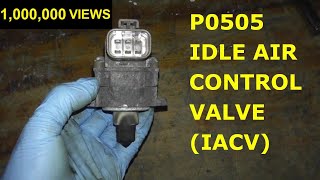
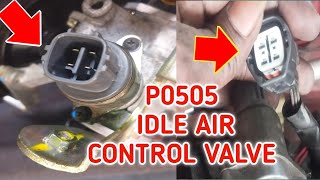
How to confirm: Remove the IAC valve from the throttle body. Have a helper turn the key to the 'ON' position (without starting) to see if the pintle moves. If it doesn't move, or is heavily caked in carbon, it's likely bad. Often, cleaning the valve and passages is the first step. You can also test the valve's internal windings with a multimeter set to resistance (ohms); you should see around 40 to 80 ohms between specific pairs of terminals (A to B, and C to D). 🎬 Watch: How to test and replace the IAC valve.
Typical fix: First, attempt to clean the IAC valve and the port on the throttle body with throttle body cleaner. If this doesn't resolve the issue, replace the IAC valve. Using a quality OEM or aftermarket part (like ACDelco or Delphi) is recommended, as cheap replacements are known to fail prematurely.
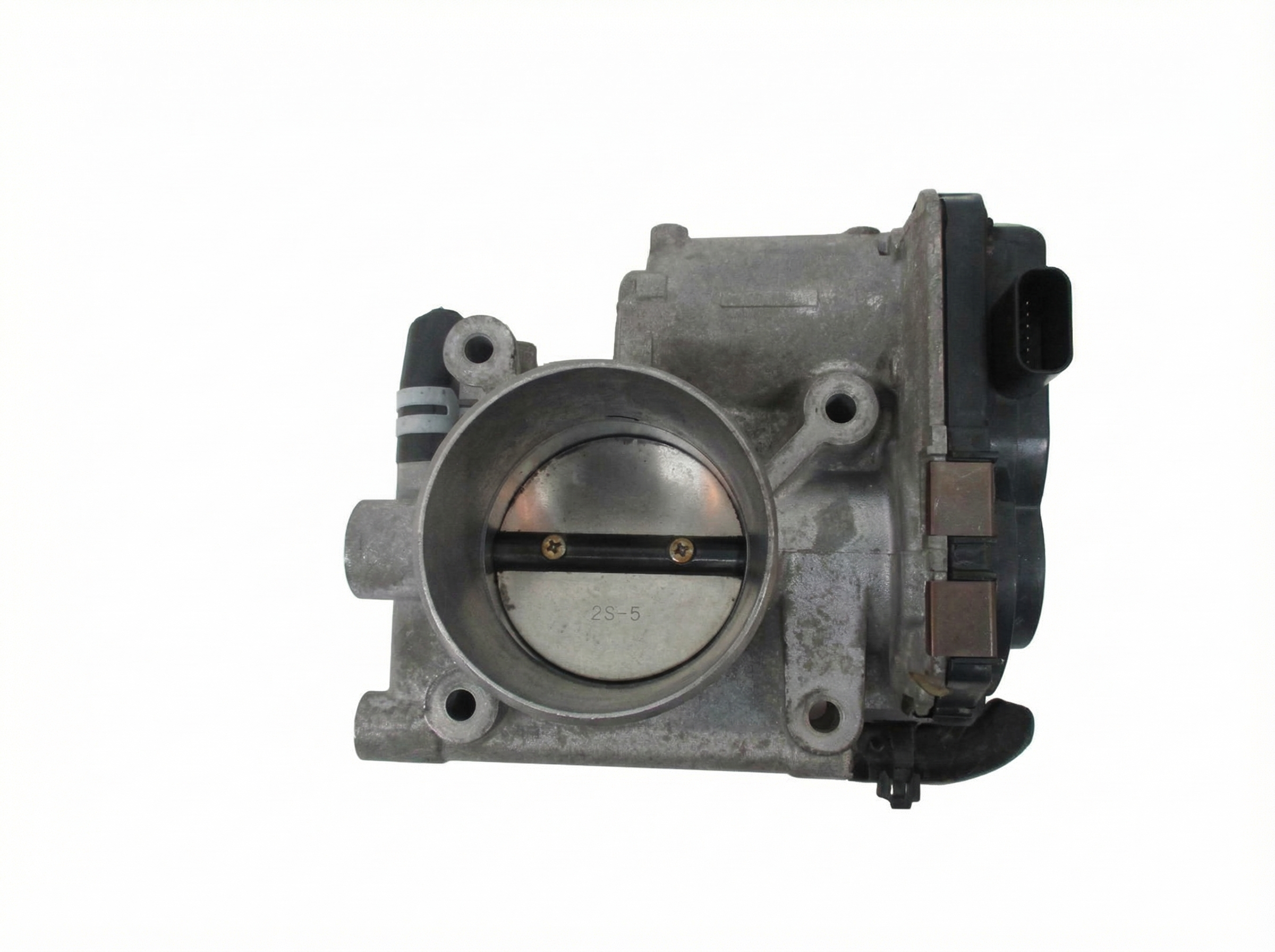
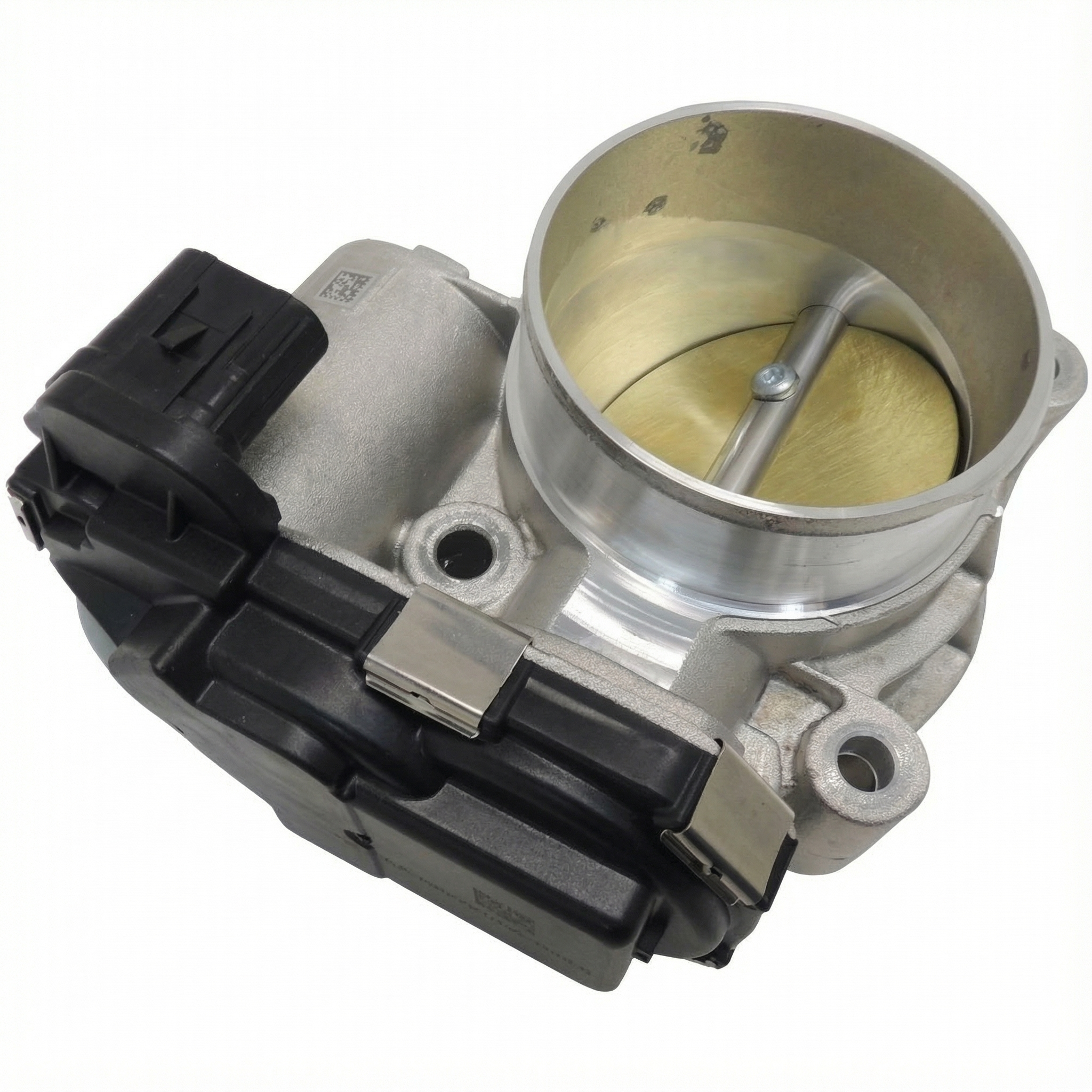
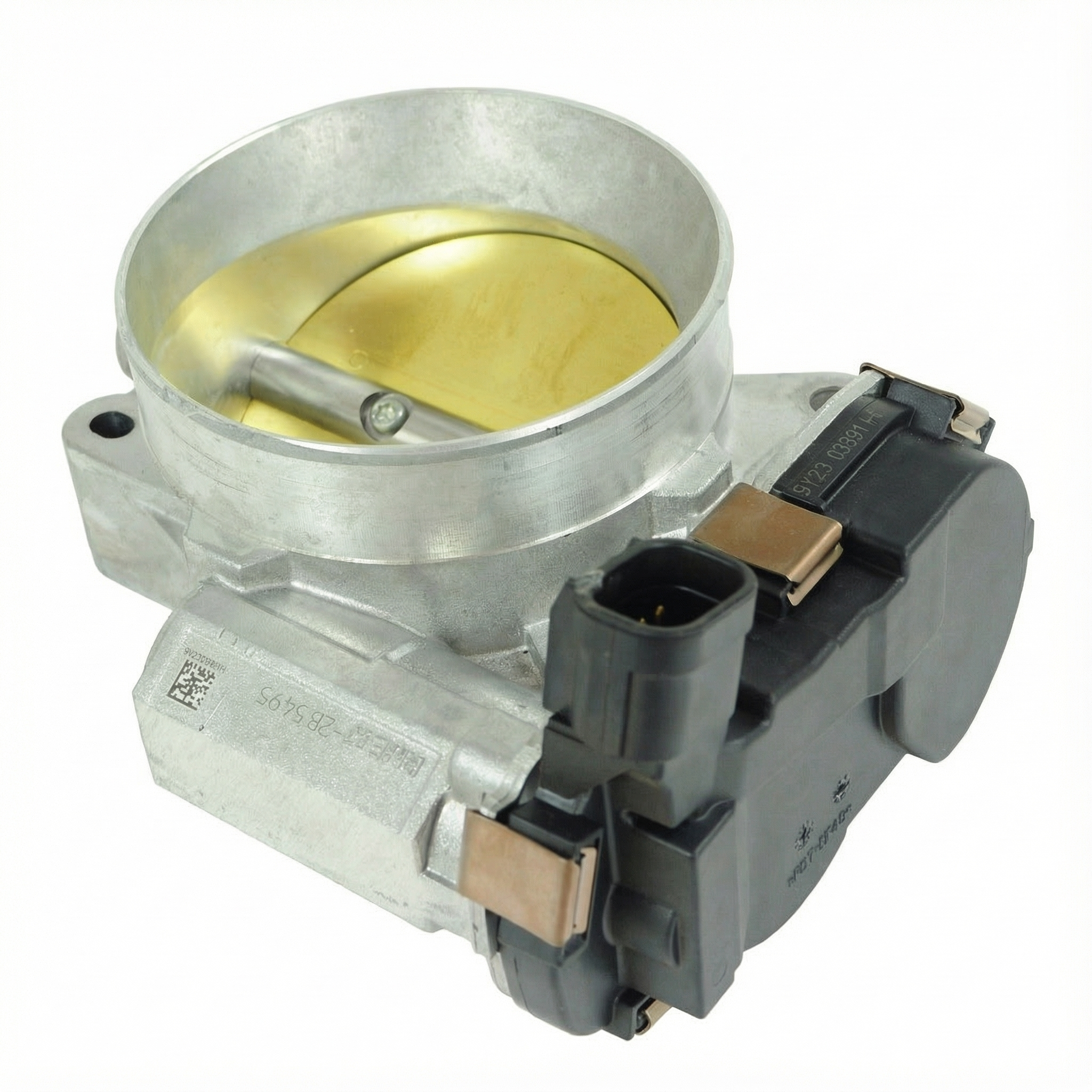
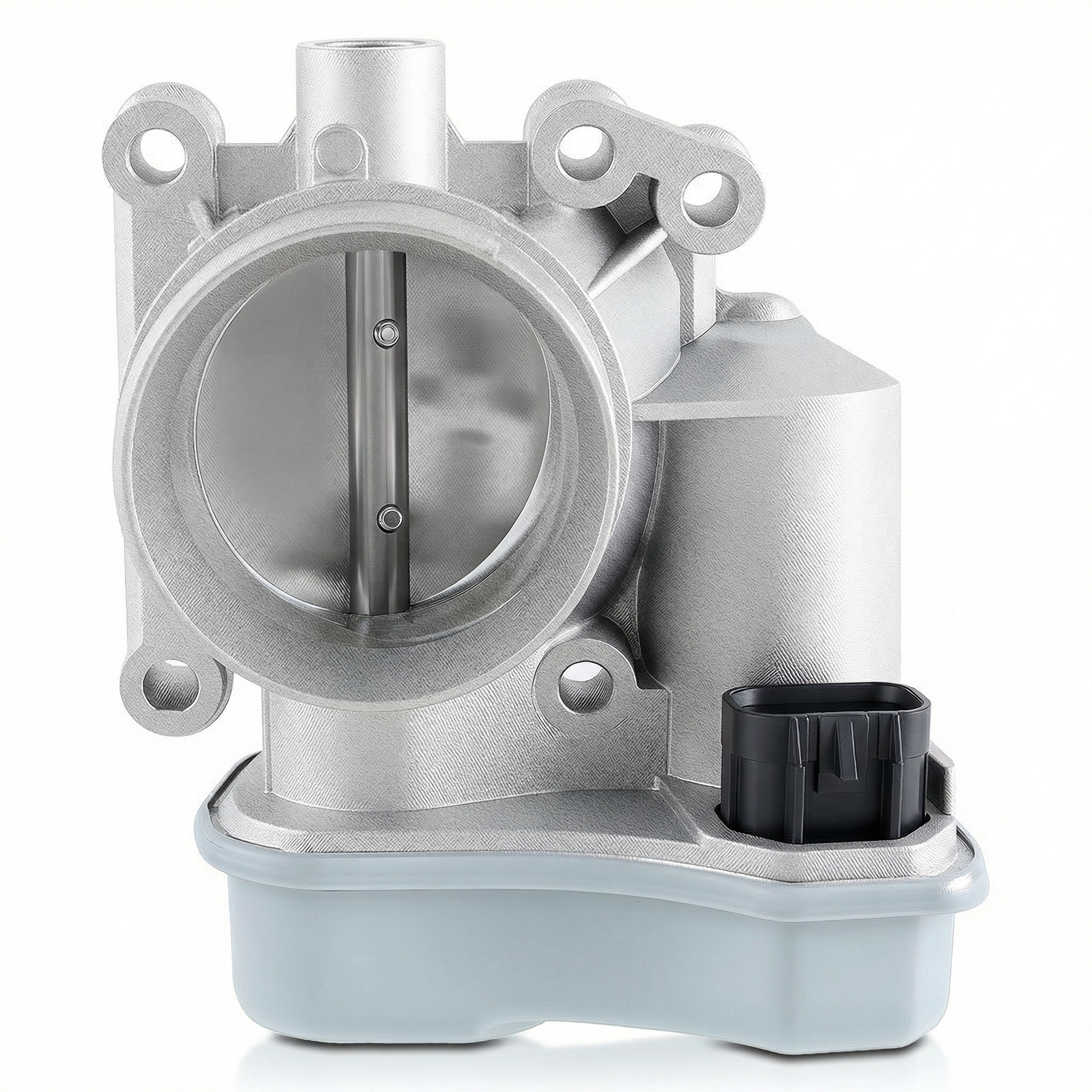
Est. part cost: $40-$90 - Dirty or Failed Electronic Throttle Body (2004-2005 Models) 🔴 High Probability → Shop Fuel Injection Throttle Body These models use the throttle plate itself for idle control. Carbon and grime from the PCV system can build up around the throttle plate, causing it to stick and preventing the fine movements needed to maintain a stable idle.
How to confirm: Remove the air intake tube and visually inspect the throttle body bore and plate for a ring of black carbon buildup. A dirty throttle body is a very common cause for P0505 on these models.
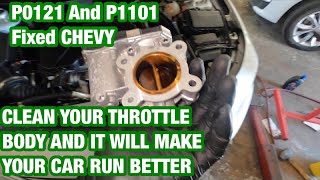
Typical fix: Clean the throttle body thoroughly with throttle body cleaner and a soft cloth or brush. Do not force the throttle plate open manually. After cleaning, a specific 'Idle Relearn Procedure' is required for the computer to adapt to the clean throttle body. If cleaning and relearning don't work, the entire throttle body assembly must be replaced.
Est. part cost: $150-$300 - Vacuum Leak (especially 3.1L V6 Models) 🔴 High Probability On the 3.1L V6 (1997-2003), the lower intake manifold gaskets are a notorious failure point. The original plastic-framed gaskets degrade from heat and exposure to Dex-Cool coolant, creating a significant vacuum leak that the IAC system cannot compensate for, often triggering P0505 or P0507. On all models, aged rubber vacuum hoses can also crack and leak.
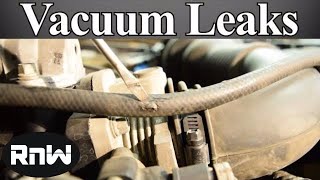
How to confirm: The most effective method is to use a smoke machine to feed smoke into the intake system and watch for where it escapes, paying close attention to the intake manifold area on the 3.1L V6. A less precise method involves spraying starter fluid or brake cleaner around suspected leak areas with the engine running; a change in idle RPM indicates a leak.
Typical fix: Replace the leaking gasket or hose. For the 3.1L V6, this means replacing the lower intake manifold gaskets with an updated steel-framed design, such as the Fel-Pro MS 98014 T, which is specifically engineered to solve this common failure.
Est. part cost: $10-$100
Rare But Worth Checking
- Faulty Powertrain Control Module (PCM): → Shop Engine Control Module (ECM) This is very rare. Before condemning the PCM, all other possibilities, including wiring issues between the PCM and the IAC valve/throttle body, must be exhaustively ruled out.
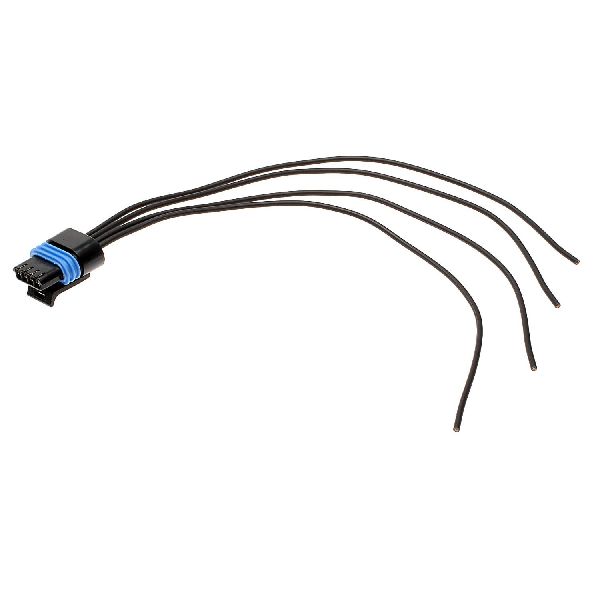
- Wiring or Connector Issue: The wiring harness to the IAC valve or electronic throttle body can become damaged, frayed, or corroded, leading to a loss of signal. Inspect the connector for pushed-out pins and test for proper voltage at the connector with a multimeter.
Diagnosis Steps
- Identify the Generation: Determine if you have a 1997-2003 model (with IAC valve) or a 2004-2005 model (with electronic throttle body). The following steps depend on this.
- Check for Vacuum Leaks: This is a common cause for both systems. Perform a visual inspection of all vacuum hoses. Use a smoke machine for a definitive test, especially around the lower intake manifold gaskets on 3.1L V6 engines.
- For 1997-2003 Models: Inspect and Clean the IAC Valve and Throttle Body. Remove the air intake duct. Unbolt and remove the IAC valve. Clean the valve's pintle and the air passages within the throttle body using throttle body cleaner and a brush.
- For 2004-2005 Models: Inspect and Clean the Electronic Throttle Body. Remove the air intake duct. Carefully clean the bore and edges of the throttle plate with a rag and throttle body cleaner. Do not push the plate open aggressively.
- Test the Component: If cleaning does not work, the component is likely faulty. For 1997-2003 models, test the IAC valve with a multimeter or replace it. For 2004-2005 models, the entire electronic throttle body assembly is typically replaced.
- Perform Idle Relearn Procedure: After cleaning or replacing components (or even disconnecting the battery), an idle relearn is necessary. A common procedure for 2004-2005 models is: Start the engine and let it idle in Park for 3 minutes. Turn the engine off for 60 seconds. Restart and idle for another 3 minutes. The idle should now be normal. If not, a drive cycle with speeds over 45 mph and several decelerations may be needed.
- Check Wiring: If the problem persists, inspect the electrical connector and wiring going to the IAC valve or throttle body for damage, corrosion, or loose pins. Test for 12V power at the appropriate pins with the key on.
Parts You'll Likely Need
- Idle Air Control (IAC) Valve (For 1997-2003 Models)
(OEM #17113209)— This is the primary component responsible for idle control on the earlier generation and is highly prone to failure from carbon buildup or internal motor failure.
Trusted brands: ACDelco (GM Original Equipment), Standard Motor Products (SMP), Delphi
OEM price range: $70-$110
Aftermarket price range: $40-$80 - Electronic Throttle Body Assembly (For 2004-2005 Models)
(OEM #12570800 (ACDelco # 217-2295))— This assembly contains the integrated motor and position sensor that controls idle speed on the later generation. If cleaning and relearning fail, the entire unit must be replaced.
Trusted brands: ACDelco (GM Original Equipment), Hitachi, Cardone (Remanufactured)
OEM price range: $200-$300
Aftermarket price range: $150-$220 - Lower Intake Manifold Gasket Set (For 3.1L V6 Models)
(OEM #MS98014T (Fel-Pro Upgraded Design))— A very common failure point on the 3.1L V6 engine that causes a large vacuum leak, leading to high idle and a P0505 or P0507 code.
Related Codes That Often Appear With This One
- P0506 — This code means 'Idle Air Control System RPM Lower Than Expected' and can appear if the IAC valve is stuck closed or passages are clogged.
- P0507 — This code means 'Idle Air Control System RPM Higher Than Expected' and often points to a stuck-open IAC valve or a significant vacuum leak, especially from the intake manifold gaskets on the 3.1L V6.
- P0171 — This code means 'System Too Lean (Bank 1)' and frequently accompanies a vacuum leak, as unmetered air causes the engine to run lean.
Technical Service Bulletins (TSBs) & Recalls
- GM TSB #00-02-35-003E - This bulletin, and its successors, addresses a clunking noise from the steering system by replacing the upper intermediate steering shaft. While not related to P0505, it's a critical issue for owners of this platform.
Platform-Specific Known Issues
- On 1997-2003 models equipped with the 3.1L V6 engine, the plastic-framed lower intake manifold gaskets are a well-documented, high-failure-rate item that causes vacuum leaks and can trigger a P0505 code.
Mechanic-Grade Diagnostic Values
- IAC Valve Coil Resistance (1997-2003 3.1L V6) — expected: 40 to 80 ohms between terminals A & B, and between terminals C & D.. Failure: A reading outside this range, or any continuity between the two separate coil pairs (e.g., A to C), indicates a failed IAC motor.
- IAC Scan Tool Counts (1997-2003 3.1L V6) — expected: At warm idle in Park, counts should be between 5 and 45.. Failure: If the idle is high and the IAC counts are at or near 0, the PCM is trying to lower the idle but cannot, strongly suggesting a vacuum leak.
- Electronic Throttle Body (ETB) TPS Voltage (2004-2005) — expected: The two internal Throttle Position Sensors (TPS1 and TPS2) should have inverse-sweeping voltage signals. For example, TPS1 might read ~1.0V at idle and ~4.0V at wide-open throttle, while TPS2 reads ~4.0V at idle and ~1.0V at WOT.. Failure: Any glitches, spikes, or dead spots as the throttle plate is moved indicates a failing sensor. A P2135 code is often set when the two signals do not agree.
Scan Tool Commands That Help
- Tech2 / Autel / similar bidirectional scanner: Idle Learn Reset — For 2004-2005 models, this function is used to force the ECM to relearn the throttle's closed position after cleaning or replacement. It is often more effective than the manual relearn procedure, especially if the idle remains very high (2000+ RPM).
- Tech2 / similar bidirectional scanner: IAC Control — For 1997-2003 models, this allows a technician to manually command the IAC pintle to extend and retract, confirming if the valve's motor is responding to PCM commands and helping to isolate a bad valve from a wiring issue.
Wiring & Ground Locations
- G112 — On the left side of the engine for 1997-2003 3.1L V6 models.. A poor engine ground can cause erratic sensor readings and incorrect operation of actuators like the IAC valve, leading to idle control problems.
- G125 — Located on the lower front of the engine.. This is a main engine-to-chassis ground. A loose or corroded connection here can affect the entire engine management system, including the PCM's ability to control idle speed.
- PCM Connector C2 (Clear/Grey) — At the Powertrain Control Module (PCM), located below the left side of the dash for 1997-2003 models.. This connector contains the control wires for the IAC valve. Checking for continuity from the IAC valve connector to the pins on this PCM connector is a critical step to rule out a wiring harness fault.
Real Owner Repair Stories
- Reddit user, AutoMechanics subreddit (2009 Chevrolet Malibu 2.4L (Note: This is a newer generation but the electronic throttle body system and relearn process are very similar to the 2004-2005 models)) — After cleaning the throttle body, the engine idled extremely high, between 2700-3000 RPM. A P0507 code was set.
❌ Tried (didn't work) Manual relearn procedure (3 min idle > 60 sec off > 3 min idle)., Driving cycle with accelerations and decelerations above 44 mph., Disconnecting the battery to clear the ECU.
✅ What actually fixed it Using a bidirectional scan tool (Autel Elite) to perform the 'Idle Learn Reset' function. This immediately brought the idle back to the normal range. - NHTSA ODI #11721239 — An owner reported that their vehicle experienced delayed gear engagement, requiring them to move between park and drive repeatedly. While driving up an incline, the car stopped moving forward and began reversing, with a diagnostic scan revealing P0505 alongside P0507, P0325, P0700, P1101, and P2714.
OEM Part Supersession History
12570800→19420713— Standard part lifecycle update by GM.
Heads up: The original part number 12570800 is widely referenced by aftermarket manufacturers and used part suppliers. The new number, 19420713, is the current official GM replacement. Both should be compatible with the 2004-2005 models.17113209 (IAC Valve)→Discontinued by GM— Vehicle model aging out of official parts support.
Heads up: While the genuine GM part is discontinued, the part number is the standard reference for aftermarket replacements from brands like ACDelco (Professional line), Delphi, and Standard Motor Products.
Model Year Variations Within This Range
- 1997-2003: The 3.1L V6 engine was updated mid-generation. 1997-1999 models used the L82 V6 (VIN 'M'), while 2000-2003 models used the LG8 V6 (VIN 'J'). The LG8 featured an improved intake manifold and sequential fuel injection. While the fundamental cause of P0505 (IAC, vacuum leak) is the same, some sensor locations and wiring may vary slightly between these two engine versions.
Diagnostic Flowchart
Other Known Issues on This Vehicle
Issues unrelated to this code that are worth knowing about as an owner of this generation:
- Lower Intake Manifold Gasket Failure (3.1L V6) 🔴 High → Shop Engine Intake Manifold — Extremely common on 1997-2003 models with the 3.1L V6, often occurring between 80,000 and 150,000 miles. Causes both vacuum and coolant leaks.
- Passlock Anti-Theft System Failure 🟠 Medium — Very common across many GM models of this era, including the Malibu. The system can fail intermittently, causing a no-start condition where the 'Security' light flashes.
- Intermediate Steering Shaft (ISS) Clunk 🟡 Low — A widespread problem causing a clunking or popping noise in the steering column at low speeds. The initial fix was lubrication, but replacement is the permanent solution. (Ref: TSB #00-02-35-003E)
- Premature Wheel Hub / Bearing Failure 🟠 Medium — Front wheel bearings often fail prematurely, causing a loud humming or grinding noise that changes with vehicle speed and when turning.
- Faulty Multifunction (Turn Signal) Switch 🟡 Low — The switch in the steering column can fail, leading to inoperative turn signals, hazard lights, or brake lights that behave erratically.
Used vs. New Parts: Buying Guide for This Vehicle
When a used part is the smart pick: A used electronic throttle body (2004-2005) from a low-mileage donor vehicle can be a cost-effective option, as they are often sold as complete assemblies. Used IAC valves (1997-2003) are generally not recommended due to the high likelihood of wear and carbon fouling.
Donor-vehicle mileage cap: roughly under 80000 miles for the part to have meaningful remaining life.
What to inspect on the donor part:
- For a throttle body, inspect the connector for any bent or corroded pins.
- Check the throttle bore for excessive scoring or damage, though some carbon is expected.
- Ask the seller for the mileage of the donor vehicle if possible.
- Ensure the part number matches your original part (e.g., 12570800).
Aftermarket brands forum-validated for this vehicle:
- ACDelco (GM Original Equipment or Professional line)
- Delphi
- Standard Motor Products (SMP)
- Hitachi (for electronic throttle bodies)
Brands owners have reported issues with on this vehicle:
- Unbranded, 'white-box' parts from online marketplaces should be avoided as their internal electronics and motors are often of poor quality and can fail quickly. Some forum users have expressed negative opinions about the long-term reliability of Dorman products for electronic components compared to OEM or brands like ACDelco.
Real Owner Stories
Aggregated from forums and TSBs cited above. Mileages and costs reflect what owners reported in those sources.
2004-2005 Chevrolet Malibu
Symptoms: Frustration after cleaning the throttle body because the idle did not immediately return to normal.
What fixed it: Performing a specific idle relearn procedure, though some users noted the necessity of a shop's scan tool to complete the process.
Source hint: tahoeyukonforum.com discussion on GM throttle body cleaning
1997-2005 Chevrolet Malibu
Symptoms: P0505 code appearing after an engine rebuild.
What fixed it: Checking for vacuum leaks, as these can trigger the code even when the IAC system itself is functional.
Source hint: reddit.com/r/MechanicAdvice
2004-2005 Chevrolet Malibu
Symptoms: Idle issues caused by the engine computer learning to compensate for carbon buildup over time.
What fixed it: Cleaning the dirty throttle body followed by a relearn cycle to reset the computer's learned values.
Source hint: gm-trucks.com thread regarding dirty throttle bodies
Documented NHTSA Reports
Symptoms: An owner reported delayed gear engagement and the vehicle reversing while driving up an incline.
What fixed it: Diagnostic codes P0325, P0505, P0507, P0700, P1101, and P2714 were identified (NHTSA ODI #11721239).
Related OBD-II Codes
Frequently Asked Questions
My 2001 Malibu with the 3.1L V6 has a P0505 code; could this be related to the intake manifold issues I've heard about?
I have a 2005 Malibu and just cleaned the throttle body to fix P0505. Do I need to do anything else?
What specific replacement part should I use for the IAC valve on my 1999 Malibu?
I'm seeing a P0505 on my 2002 Malibu 3.1L; what is the recommended fix for the intake gasket leak?
Does GM TSB #00-02-35-003E relate to my P0505 idle issues?
How can I test if the IAC valve on my 2000 Malibu is actually bad?
Helpful Videos


Used OEM Parts in Stock
New Aftermarket Parts Available


The information in this article is provided for general reference and educational purposes only. Vehicle specifications, procedures, and part compatibility can vary by production date, trim level, and region. Always consult your vehicle's factory service manual and verify part numbers before purchasing or performing repairs. Safety-critical components such as airbags, seat belts, and braking systems should be installed by a qualified professional.
- Chevrolet Malibu:
- 🧭 Diagnostic Flowchart
- 🎬 Helpful Videos
- 🛍️ Shop This Part
- What's Unique About the 1997-2005 Chevrolet Malibu
- Symptoms You May Notice
- Most Likely Causes
- Rare But Worth Checking
- Diagnosis Steps
- Parts You'll Likely Need
- Related Codes That Often Appear With This One
- Technical Service Bulletins (TSBs) & Recalls
- Platform-Specific Known Issues
- Mechanic-Grade Diagnostic Values
- Scan Tool Commands That Help
- Wiring & Ground Locations
- Real Owner Repair Stories
- OEM Part Supersession History
- Model Year Variations Within This Range
- Other Known Issues on This Vehicle
- Used vs. New Parts: Buying Guide for This Vehicle
- Real Owner Stories
- 2004-2005 Chevrolet Malibu
- 1997-2005 Chevrolet Malibu
- 2004-2005 Chevrolet Malibu
- Documented NHTSA Reports
- Related OBD-II Codes
- Frequently Asked Questions
- 🎟️ Get 5% Off