

P0505 on 1999-2006 Chevrolet Silverado 1500: Idle Control Fault Causes and Fixes
Code P0505 on a 1999-2006 Silverado almost always points to a faulty Idle Air Control (IAC) valve or a throttle body heavily coated in carbon. Cleaning the throttle body is a cheap first step, while a new IAC valve typically costs between $40 and $100.
- P0505 means your truck's computer can't control the idle speed.
- The most likely cause is a dirty throttle body and/or a failing Idle Air Control (IAC) valve.
- Start with the cheapest and easiest fix: remove and thoroughly clean the throttle body and IAC passages.
- If cleaning doesn't work, replacing the IAC valve is the next logical step and is a common DIY repair.
- Don't forget to check for cracked or disconnected vacuum hoses, as this is another common cause.
What's Unique About the 1999-2006 Chevrolet Silverado 1500
The 1999-2006 Silverado (GMT800 platform) uses a traditional cable-operated throttle with a separate Idle Air Control (IAC) valve on most early models (primarily 1999-2002). Unlike newer 'drive-by-wire' systems which became common starting in 2003, the idle is managed by this small electric stepper motor. These IAC valves and the air passages in the throttle body are very prone to carbon buildup from the PCV system, which restricts movement and airflow, making it the most common reason for a P0505 code on this specific generation of truck.
Generation note: This range covers the first-generation GMT800 platform (1999-2006) and the 2007 'Classic' models. A critical variation is the transition from Drive-by-Cable (DBC) with an IAC valve to Drive-by-Wire (DBW) electronic throttle control around 2003. This guide specifically addresses the DBC trucks with a separate IAC valve. If your truck is 2003 or newer and has no physical throttle cable, it is DBW, and a P0505 points to a fault with the electronic throttle body itself, not a separate IAC valve.
Symptoms You May Notice
- Check Engine Light is on.
- Engine idle speed is erratic, surging up and down.
- Idle speed is consistently too high (e.g., over 1000 RPM).
- Idle speed is too low, leading to a rough idle.
- Engine stalls when coming to a stop or when the gas pedal is released.
- Replacing the Throttle Position Sensor (TPS). The TPS reports the throttle angle to the PCM but does not control idle speed. While a faulty TPS can cause other issues, it's not the primary cause for a P0505 code.
Most Likely Causes
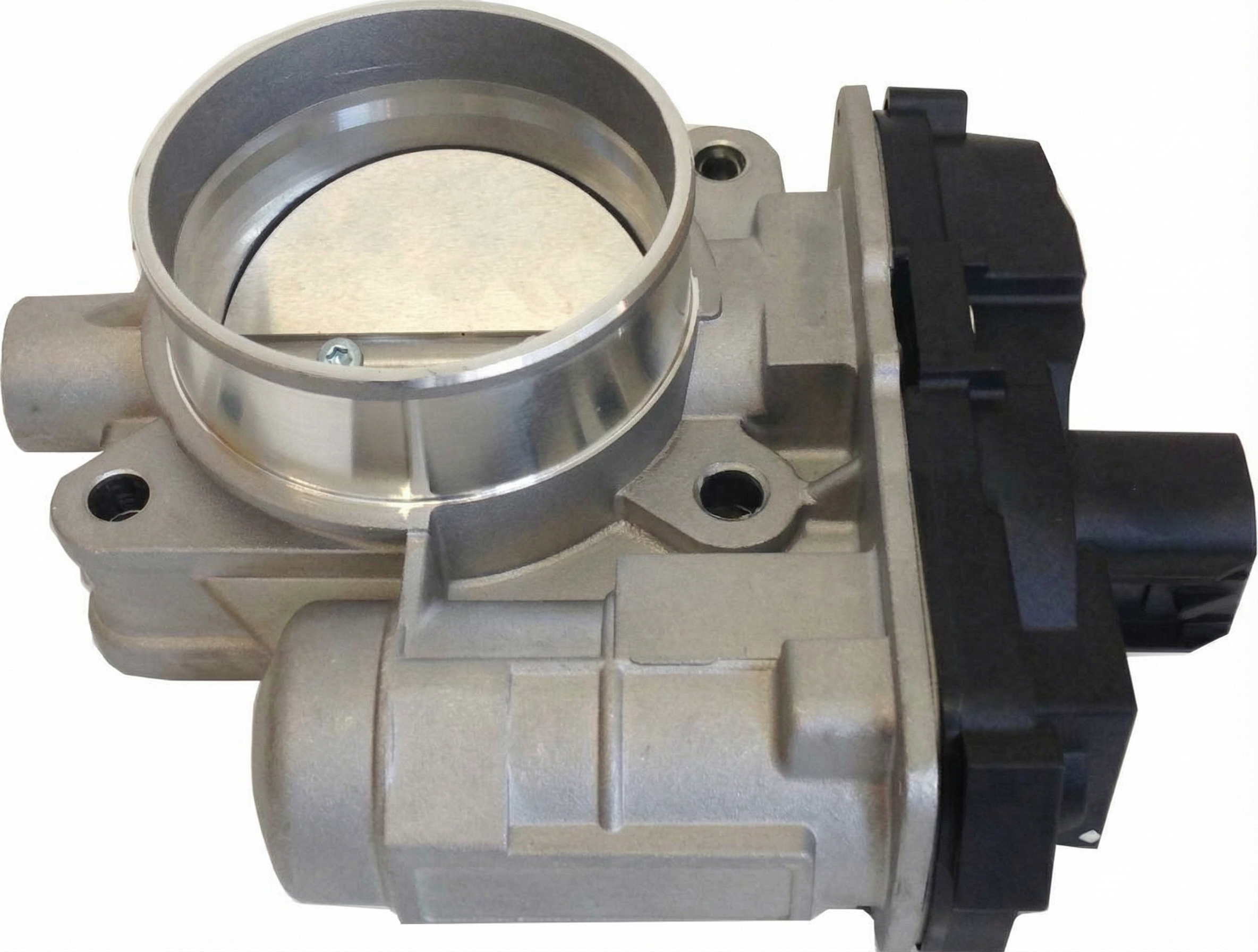
- Dirty Throttle Body and IAC Passages 🔴 High Probability → Shop Fuel Injection Throttle Body The PCV (Positive Crankcase Ventilation) system routes oil vapors and combustion byproducts back into the intake, which causes carbon and sludge to build up directly in the throttle body and the small air passages for the IAC valve. This buildup can restrict the pintle movement or block airflow.
How to confirm: Remove the air intake duct from the throttle body. Visually inspect the throttle plate and the bore for a thick, black layer of carbon. The IAC passages will likely have similar buildup. The engine may stall frequently because the computer has learned to compensate for the dirt, and when the battery is disconnected for other service, it forgets these adaptations and can't maintain idle.
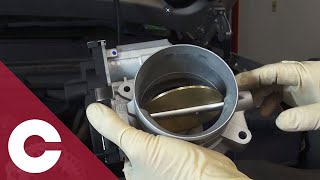
Typical fix: Remove the throttle body and the IAC valve. Thoroughly clean the throttle body bore, throttle plate, and all IAC air passages with throttle body cleaner and a soft brush. Reinstall with a new gasket. 🎬 Watch: How to properly clean your throttle body and passages. Do not use overly harsh carb cleaner which can damage sensors.
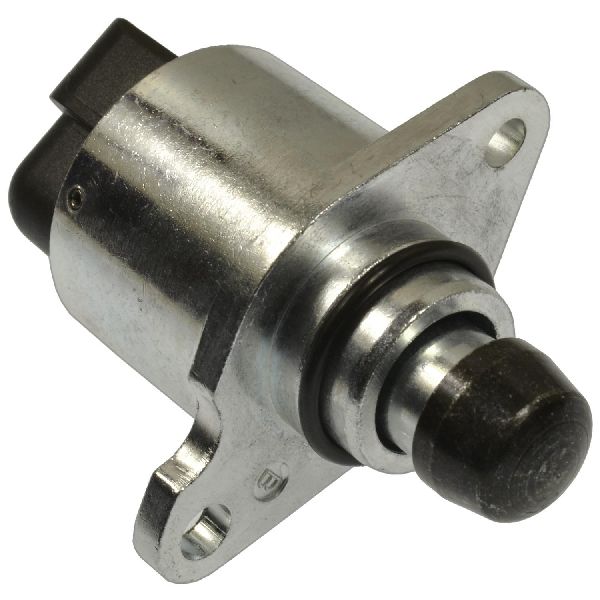
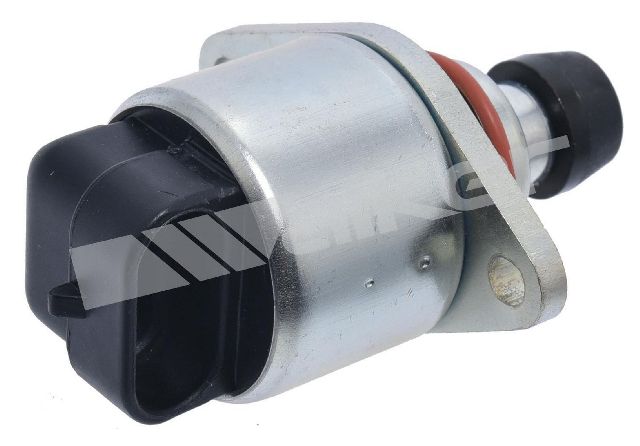
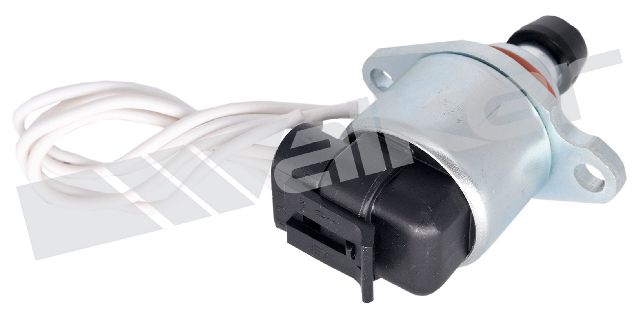
Est. part cost: $5-$15 for cleaner and a gasket. - Faulty Idle Air Control (IAC) Valve 🔴 High Probability → Shop Idle Air Control Valve The electric stepper motor or pintle mechanism inside the IAC valve can fail from age, heat cycles, and contamination from carbon buildup. It can get stuck, become weak, or fail electrically.
How to confirm: After cleaning the throttle body, if the problem persists, the IAC valve is the next logical suspect. Test the valve's coils with a multimeter; resistance between terminals A & B and C & D should be 40-80 ohms, while resistance between non-paired terminals (A-D, B-C) should be infinite. 🎬 Watch: How to test the IAC valve with a multimeter. A scan tool can also be used to command the IAC position and observe the engine's response.
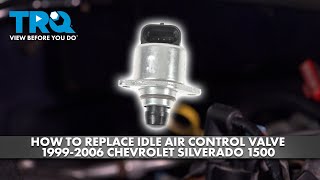
Typical fix: Replace the Idle Air Control valve. It is typically held onto the throttle body with two small Torx screws. 🎬 See this walkthrough for replacing the IAC valve. Using a quality replacement part from brands like ACDelco, Delphi, or Echlin is recommended over generic parts.
Est. part cost: $40-$100 - Vacuum Leak 🟡 Medium Probability The plastic and rubber components in the engine bay become brittle over time. Intake manifold gaskets on Vortec engines are a known failure point. PCV hoses and other vacuum lines can crack, collapse, or become disconnected.
How to confirm: With the engine running, listen for a hissing sound. You can spray short bursts of brake cleaner or starter fluid around suspected areas like the intake manifold gasket, vacuum hose connections, and the PCV valve. If the engine RPM changes, you've found the leak. A smoke test is the most effective method for finding hard-to-detect leaks.
Typical fix: Replace the leaking gasket or hose. Intake manifold gasket replacement is a more involved job but a common repair on these trucks.
Est. part cost: $5-$20 for a hose, $40-$80 for intake gaskets.
Rare But Worth Checking
- Wiring Harness to IAC Valve: The wiring and connector for the IAC valve can become damaged, corroded, or break from engine vibration and heat, causing an intermittent or total loss of connection. Check for chaffed wires or loose pins in the connector before replacing the PCM.
- Faulty Powertrain Control Module (PCM): → Shop Engine Control Module (ECM) While very rare, the driver circuit within the PCM that controls the IAC valve can fail. This should only be considered after all other possibilities (valve, wiring, vacuum leaks) have been exhaustively ruled out.
Diagnosis Steps
- Scan for any other trouble codes to see if other systems are indicating a fault, especially P0171/P0174 which would point towards a vacuum leak.
- Visually inspect all vacuum hoses connected to the intake manifold, the PCV valve and hose, and the air intake duct for cracks, loose fittings, or damage.
- Remove the air intake duct from the throttle body. Inspect the throttle bore and IAC passages for heavy carbon buildup.
- If dirty, remove and thoroughly clean the throttle body and IAC valve. Replace the throttle body gasket.
- After cleaning or replacing parts, perform an idle relearn procedure. This is critical. A common procedure is to start the engine and let it idle in Park for 3 minutes, then turn the ignition off for 60 seconds, then start and idle again for 3 minutes. Sometimes a drive cycle above 44 mph with decelerations is needed for the PCM to fully adapt.
- If the issue persists, inspect the wiring and connector at the IAC valve. With the key on, check for 12V power at the two power feed pins in the connector. Check the IAC motor coils for a resistance of 40-80 ohms across the two pairs of terminals (A-B and C-D).
- If wiring and resistance tests are good, the IAC valve itself is likely faulty and should be replaced.
- If a new, quality IAC valve does not solve the problem, perform a smoke test to find a hard-to-see vacuum leak, such as from the intake manifold gaskets.
- As a final, rare step, inspect the main engine grounds (G103/G104 at the back of the cylinder heads) for corrosion or looseness. If all else fails, the PCM's functionality would need to be tested by a professional.
Parts You'll Likely Need
- Idle Air Control (IAC) Valve
(OEM #ACDelco 217-1806 (for 1999-2002))— This is the most common part to fail, either by getting stuck or the internal motor burning out. It is the primary component responsible for controlling idle speed.
Trusted brands: ACDelco, Delphi, Standard Motor Products (Echlin), Walker
OEM price range: $70-$120
Aftermarket price range: $40-$80 - Throttle Body Gasket
(OEM #Fel-Pro 61015 (common aftermarket))— This gasket should always be replaced whenever the throttle body is removed for cleaning to prevent creating a vacuum leak.
Trusted brands: Fel-Pro, ACDelco, Mahle
OEM price range: $5-$15
Aftermarket price range: $3-$10
Related Codes That Often Appear With This One
- P0506 — This code for 'Idle RPM Lower Than Expected' can appear if the IAC valve is stuck closed or passages are fully clogged.
- P0507 — This code for 'Idle RPM Higher Than Expected' can appear if the IAC valve is stuck open or there is a significant vacuum leak.
- P0171 / P0174 — These 'System Too Lean' codes can be triggered if the root cause of the P0505 is a vacuum leak, as unmetered air is entering the engine.
Technical Service Bulletins (TSBs) & Recalls
- While no TSBs directly address the P0505 code, a highly relevant service document for this platform is Special Coverage Adjustment 07187C for the instrument panel cluster. This is important because a faulty tachometer could mislead a driver about the true idle speed, although it will not cause the P0505 code itself.
Platform-Specific Known Issues
- Owner Experience: A common story on forums involves an owner cleaning a very dirty throttle body, only to find the truck idles extremely high or stalls afterward. This is because the PCM has 'learned' to open the IAC valve wide to compensate for the clogged passages. After cleaning, the same IAC command allows way too much air. This makes the Idle Relearn Procedure absolutely critical on these trucks. Disconnecting the battery for 30 minutes can help reset the learned values, but following the specific drive/idle cycle is often necessary for the PCM to recalibrate to the clean throttle body.
Mechanic-Grade Diagnostic Values
- IAC Valve Coil Resistance — expected: 40 to 80 Ohms between terminals A & B, and between terminals C & D.. Failure: An infinite reading (open circuit) on a coil pair, or any resistance between non-paired terminals (e.g., A to C), indicates a bad valve.
- IAC Connector Voltage — expected: With the key in the 'ON' position (engine off), there should be 12V power present at the two power feed pins of the 4-pin connector.. Failure: Absence of 12V power points to a wiring or PCM driver issue, not a faulty IAC valve.
- Scan Tool IAC Position (Counts/Steps) — expected: 20-40 counts at a fully warmed-up, stable idle in Park with no accessories on.. Failure: Counts near 0 indicate the PCM is commanding the valve fully closed, likely to compensate for a vacuum leak. Counts that are excessively high (e.g., over 100) show the PCM is trying to add air to prevent stalling, pointing to a clogged passage or failing valve.
Scan Tool Commands That Help
- Tech 2 / GDS2 or equivalent: Idle Learn Reset / Throttle/Idle Learn — This function should be used after cleaning the throttle body or replacing the IAC valve to force the PCM to reset its learned idle airflow values immediately. This can resolve a high or unstable idle that persists after repairs.
- Tech 2 / GDS2 or equivalent: IAC Control — This bidirectional test allows a technician to manually command the IAC pintle to extend or retract. Observing the live RPM data for a corresponding change confirms that the PCM driver, wiring, and IAC motor are all functional. No change in RPM indicates a failure in one of those three areas.
Wiring & Ground Locations
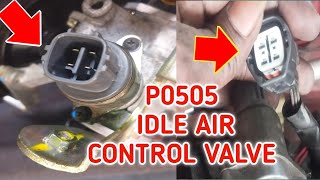
- IAC Connector — Plugged directly into the Idle Air Control valve on the side of the throttle body.. This 4-pin connector provides power and control signals to the IAC's stepper motor. The pins are typically arranged in two pairs (A/B and C/D) for the two motor coils. Checking for 12V power and signal pulses here is a primary diagnostic step.
- G103 / G104 — Main engine grounds located on the rear of the cylinder heads. G103 is typically on the right (passenger side) rear of the block/head, and G104 is on the left (driver side) rear.. The PCM and its sensors rely on a clean ground connection to the engine block. A loose or corroded G103 or G104 can cause erratic sensor readings and faulty PCM calculations, leading to incorrect IAC commands and triggering a P0505.
- G107 — A braided ground strap that typically runs from a bolt on the rear of the left cylinder head (often sharing a bolt with G104) to the firewall.. This ground strap ensures a solid connection between the engine and the vehicle's chassis/body. A poor connection here can create ground loops and electrical noise that may interfere with the PCM's operation.
Real Owner Repair Stories
- Tacoma World Forum (principle applies) (Toyota Tacoma, symptoms and components are analogous to the Silverado.) — High idle and P0505 code after replacing the IAC valve and cleaning the throttle body.
❌ Tried (didn't work) Replacing the IAC valve, Checking for vacuum leaks, Verifying electrical connections
✅ What actually fixed it The throttle body itself was worn out. The shaft that the butterfly plate pivots on had developed excessive play, which prevented the plate from seating correctly. This created a small, consistent air leak that the IAC system could not compensate for. Replacing the entire throttle body assembly resolved the high idle and the code. - GMT800 Forum (2001 Silverado 4.8L) — High idle after warm-up, inconsistent starting.
❌ Tried (didn't work) Using a cheap, generic brand IAC valve which made no difference.
✅ What actually fixed it The owner replaced the cheap IAC valve with a quality part (Napa Echlin brand). This immediately solved the high idle and starting problems, highlighting that low-quality electronic parts can be faulty out of the box and cause identical symptoms to the part they are replacing. - NHTSA ODI #11721239 (Cross-Manufacturer Reference) — While reported on a different model from the same manufacturer, an owner experienced a P0505 alongside codes like P0507 and P0700. The driver noted that the vehicle stopped moving forward and started reversing while driving up an incline after experiencing delayed gear engagement.
"I Checked Everything" — The Actual Cause
- In a documented case, a vehicle passed a smoke test for vacuum leaks and had all electrical systems check out, but the P0505 code and high idle persisted. The root cause was found to be a worn throttle body shaft. The play in the shaft prevented the throttle plate from closing completely, acting as a mechanical vacuum leak that a smoke test wouldn't necessarily reveal. The fix was to replace the entire throttle body assembly.
OEM Part Supersession History
ACDelco 217-1806 (GM 89053319)→N/A, remains the primary service part for its application.
Heads up: This part is specific to the cable-driven throttle bodies used primarily from 1999-2002. It is not compatible with the later Drive-by-Wire (DBW) electronic throttle bodies which do not use a separate IAC valve. Part number 19333273 is listed for some later or different applications and should not be used unless specified for your VIN.
Model Year Variations Within This Range
- 1999-2002 (most models): These years predominantly use a Drive-by-Cable (DBC) throttle body with a separate, replaceable IAC valve (like ACDelco 217-1806). Diagnosis for P0505 focuses on this valve, carbon buildup, and vacuum leaks.
- 2003-2006 (most V8 models): These years transitioned to Drive-by-Wire (DBW) electronic throttle control. These trucks DO NOT have a separate IAC valve. The idle is controlled by the main throttle plate motor. A P0505 on a DBW truck points to a problem with the electronic throttle body assembly itself, its wiring, or the PCM. Cleaning the throttle body and performing an idle relearn is still a valid first step.
Diagnostic Flowchart
Other Known Issues on This Vehicle
Issues unrelated to this code that are worth knowing about as an owner of this generation:
- Instrument Cluster Stepper Motor Failure 🟠 Medium — Extremely common, especially on 2003-2006 models. Gauges (speedometer, tachometer, fuel, etc.) will stick, read incorrectly, or fail completely. (Ref: GM Special Coverage Adjustment 07187C covered some vehicles for a limited time/mileage.)
- Intake Manifold Gasket Leaks 🔴 High → Shop Engine Intake Manifold — Very common failure item on Vortec engines, often occurring after 100,000 miles. Can cause vacuum leaks (leading to lean codes or idle issues like P0505) or coolant leaks.
- Rusted Brake Lines 🔴 High — Widespread issue, particularly in regions with road salt. The factory steel lines corrode and can fail, leading to a sudden loss of braking ability. (Ref: Multiple recalls were issued, but many vehicles may still have original lines.)
- Cracked Dashboard Top 🟡 Low — Very common cosmetic issue where the top of the dashboard develops cracks, especially on the passenger side near the airbag.
- Fuel Pump Failure 🟠 Medium — Common failure after 100,000 miles, leading to a crank-no-start condition or the engine dying while driving.
- Service 4WD Message / Transfer Case Position Sensor Failure 🟡 Low — A frequent issue where the dash switch or the sensor on the transfer case fails, causing an inability to switch 4WD modes or a persistent service message.
Used vs. New Parts: Buying Guide for This Vehicle
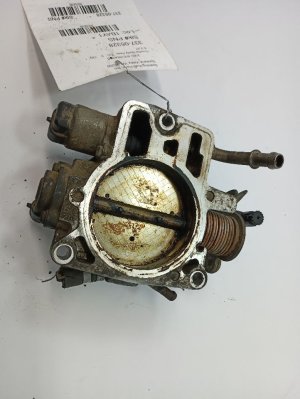
When a used part is the smart pick: A used throttle body assembly from a junkyard can be a cost-effective solution, especially if the root cause is a worn-out throttle shaft and not just a dirty passage. Ensure it comes from a vehicle with similar or lower mileage.
Donor-vehicle mileage cap: roughly under 150000 miles for the part to have meaningful remaining life.
What to inspect on the donor part:
- Inspect the throttle bore for deep scoring or gouges.
- Manually check the throttle plate pivot shaft for excessive side-to-side wiggle, which indicates wear.
- Look for stripped screw heads on the IAC or TPS, which might indicate it has been tampered with.
- Avoid parts from engines that show signs of extreme sludge or overheating.
OEM-only on this vehicle (don't cheap out):
- While not strictly 'OEM-only', it is highly recommended to use an OEM (ACDelco) or a reputable OEM-supplier brand for the Idle Air Control (IAC) valve itself. Cheap, no-name electronic parts are a common source of repeat failures.
Aftermarket brands forum-validated for this vehicle:
- ACDelco (OEM)
- Delphi
- Standard Motor Products (SMP) / Echlin
- Walker Products
Brands owners have reported issues with on this vehicle:
- Unnamed, generic brands from online marketplaces are frequently reported on forums as being defective out of the box or failing prematurely.
Real Owner Stories
Aggregated from forums and TSBs cited above. Mileages and costs reflect what owners reported in those sources.
2003-2006 Chevrolet Silverado 1500
Symptoms: The owner cleaned a very dirty throttle body, but afterward, the truck experienced an extremely high idle and would stall.
What fixed it: Performing the specific Idle Relearn Procedure (3 minutes idling, 60 seconds off, 3 minutes idling) or a drive cycle above 44 mph to allow the PCM to recalibrate to the clean passages.
Source hint: vehicle_specific_issues / GM-Trucks.com thread 'Cleaned TB and idle relearn not working'
1999-2006 Chevrolet Silverado 1500 (Vortec engine)
Symptoms: Symptoms of a vacuum leak that can trigger idle-related codes like P0505.
What fixed it: Replacing the intake manifold gaskets, which are a known failure point on these Vortec engines.
Source hint: TahoeYukonForum.com thread 'Vortec Intake Manifold Leak Symptoms'
Related OBD-II Codes
Frequently Asked Questions
I cleaned my Silverado's throttle body to fix P0505, but now it idles even higher. Did I break something?
Does GM Special Coverage Adjustment 07187C explain why my idle speed looks wrong on the dash?
Which replacement IAC valve brand is recommended for the 1999-2006 Silverado?
Can I use any cleaner to fix the P0505 code on my Vortec engine?
Why does my Silverado stall only after I've disconnected the battery?
What are the specific resistance specs for testing the IAC valve on this truck?
Helpful Videos
Used OEM Parts in Stock
New Aftermarket Parts Available


The information in this article is provided for general reference and educational purposes only. Vehicle specifications, procedures, and part compatibility can vary by production date, trim level, and region. Always consult your vehicle's factory service manual and verify part numbers before purchasing or performing repairs. Safety-critical components such as airbags, seat belts, and braking systems should be installed by a qualified professional.
- Chevrolet Silverado 1500:
- 🧭 Diagnostic Flowchart
- 🎬 Helpful Videos
- 🛍️ Shop This Part
- What's Unique About the 1999-2006 Chevrolet Silverado 1500
- Symptoms You May Notice
- Most Likely Causes
- Rare But Worth Checking
- Diagnosis Steps
- Parts You'll Likely Need
- Related Codes That Often Appear With This One
- Technical Service Bulletins (TSBs) & Recalls
- Platform-Specific Known Issues
- Mechanic-Grade Diagnostic Values
- Scan Tool Commands That Help
- Wiring & Ground Locations
- Real Owner Repair Stories
- "I Checked Everything" — The Actual Cause
- OEM Part Supersession History
- Model Year Variations Within This Range
- Other Known Issues on This Vehicle
- Used vs. New Parts: Buying Guide for This Vehicle
- Real Owner Stories
- 2003-2006 Chevrolet Silverado 1500
- 1999-2006 Chevrolet Silverado 1500 (Vortec engine)
- Related OBD-II Codes
- Frequently Asked Questions
- 🎟️ Get 5% Off