

P0505 on 2004-2008 Chrysler Crossfire: Idle Control System Fault Causes and Fixes
On the 2004-2008 Crossfire, P0505 is almost always caused by a dirty electronic throttle body or a vacuum leak. The M112 engine has no separate IAC valve. Start by cleaning the throttle body and performing a throttle reset procedure. If that fails, check for cracked crankcase breather hoses, which are a very common failure point.
- Do not look for an Idle Air Control (IAC) valve; your Crossfire does not have one. Idle is controlled by the electronic throttle body.
- The most likely cause of P0505 is a simple one: a dirty throttle body or a cracked vacuum hose.
- Always perform the throttle reset procedure after cleaning the throttle body or disconnecting the battery. It costs nothing and is often the final step to fixing the problem.
- Before spending money on an expensive new throttle body, exhaust all possibilities of vacuum leaks, which are a common and inexpensive fix.
What's Unique About the 2004-2008 Chrysler Crossfire
The Chrysler Crossfire is mechanically a Mercedes-Benz SLK320 (R170 platform). Its M112 V6 engine uses a 'drive-by-wire' electronic throttle body to manage idle speed, not a separate Idle Air Control (IAC) valve common on many other vehicles from this era. Therefore, you cannot buy or replace an 'IAC valve'. The problem and solution are almost always centered on the electronic throttle body assembly, its cleanliness, and the integrity of the vacuum system it's connected to, especially the crankcase ventilation hoses.
Symptoms You May Notice
- Check Engine Light is on
- Engine stalls when coming to a stop or at idle
- Idle speed is unusually high (e.g., over 1000 RPM)
- Idle speed is too low or rough, making the car shake
- Fluctuating or surging idle speed
- Hesitation when accelerating from a stop
- Clicking or whining noises from the throttle body when the key is in the 'ON' position
- Replacing the Mass Airflow (MAF) sensor. While a faulty MAF can cause performance issues, it's less likely to be the primary cause of a P0505 code compared to vacuum leaks or a dirty throttle body.
- Looking for a separate Idle Air Control (IAC) valve. Many technicians unfamiliar with the Mercedes-based platform will waste time searching for a part that does not exist on this engine.
Most Likely Causes
- Dirty Electronic Throttle Body 🔴 High Probability → Shop Fuel Injection Throttle Body The PCV (Positive Crankcase Ventilation) system routes oil vapors and blow-by gases into the intake, which can deposit a layer of carbon and grime on the throttle plate and bore over time. This buildup restricts the small amount of air needed for a stable idle, preventing the throttle plate from closing to its proper base position.
How to confirm: Visually inspect the inside of the throttle body by removing the intake tube. Look for a black, sticky film around the throttle plate and where it seats in the bore. The buildup is often heaviest on the backside of the plate.
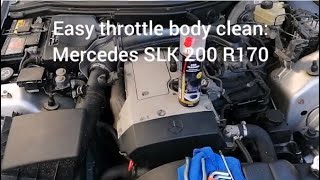
Typical fix: Carefully clean the throttle body bore and plate with a dedicated throttle body cleaner (like CRC brand) and a soft, lint-free cloth. 🎬 Watch: A quick guide to cleaning your throttle body easily. A throttle body relearn procedure must be performed afterward.
Est. part cost: $5-$15 for cleaner - Vacuum Leak 🔴 High Probability The plastic and rubber crankcase breather hoses on the M112 engine become extremely brittle with age and heat cycles, leading to cracks that allow unmetered air into the engine. These hoses are a notorious failure point. Other common failure points are the intake manifold gaskets, the brake booster line, and the small vacuum line for the intake manifold runner flaps.
How to confirm: With the engine running, listen for a distinct hissing sound. A smoke test is the most effective method to pinpoint the exact location of the leak. You can also carefully spray short bursts of brake cleaner around vacuum lines and gaskets; a change in engine idle indicates a leak. The breather hoses are located on the valve covers and run to the intake.
Typical fix: Replace the cracked hose(s), fitting, or gasket. The crankcase breather hoses are often sold as a complete kit. Replacing them is a common maintenance item on the M112 engine.
Est. part cost: $20-$120 depending on the leaking part or hose kit - Failed Throttle Body Relearn/Adaptation 🟡 Medium Probability → Shop Fuel Injection Throttle Body This often occurs after the battery has been disconnected or replaced, or after the throttle body has been cleaned. The ECU's stored adaptive values for the throttle plate position no longer match the physical reality, causing idle issues.
How to confirm: This is a procedural cause. If the P0505 code appeared immediately after a battery change, throttle body cleaning, or if the car was owned by someone with a very different driving style, this is a likely reason.
Typical fix: Perform the throttle reset/relearn procedure. This requires no parts and recalibrates the system by clearing the throttle's learned adaptations.
Est. part cost: $0
Rare But Worth Checking
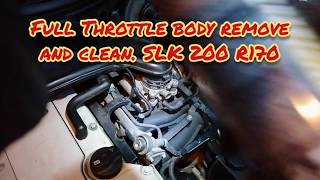
- Failing Electronic Throttle Body Assembly: → Shop Fuel Injection Throttle Body While less common than a dirty throttle body, the internal motor or position sensor can fail. If cleaning, performing the relearn, and checking for vacuum leaks doesn't solve the issue, the unit itself may be faulty. 🎬 See this walkthrough for full throttle body removal and replacement. This is an expensive part, so it should be the last resort after all other diagnostics fail.
- Wiring to Throttle Body: → Shop Fuel Injection Throttle Body The engine harness, specifically the wiring and connector for the throttle body, can become damaged or corroded, leading to intermittent signals and idle control problems. Insulation on Mercedes-Benz wiring from this era is known to become brittle and crack. This is more likely on high-mileage vehicles or those in harsh climates.
Diagnosis Steps
- Confirm the P0505 code is present using an OBD-II scanner.
- Visually inspect all vacuum hoses connected to the intake manifold, paying close attention to the crankcase breather hoses on both valve covers. Look for obvious cracks, swelling, or loose connections. These hoses are often hard and brittle.
- With the engine running, listen for any audible hissing sounds that would indicate a vacuum leak. Use a mechanic's stethoscope or a simple hose to your ear to isolate the sound.
- If a leak is suspected but not visible, use a smoke machine to pressurize the intake system and find the source of the leak. Common leak points are the breather hoses, intake manifold gaskets, and brake booster line.
- If no vacuum leaks are found, remove the intake ducting from the throttle body. Inspect the throttle plate and bore for carbon buildup.
- If dirty, clean the throttle body thoroughly using a dedicated cleaner and a lint-free rag. Manually move the plate to clean all surfaces. Do NOT use abrasive tools or carb cleaner.
- Reconnect the intake ducting. Perform the Throttle Reset procedure: Turn the key to the 'ON' position (do not start). Press the accelerator pedal to the floor and hold for 5-10 seconds. Turn the key to 'OFF' (do not remove), then release the pedal. Wait at least 2 minutes for the ECU to complete the alignment before starting the car.
- Clear the P0505 code and drive the vehicle to see if the code returns. If it does, the issue may be with the throttle body's internal electronics or wiring, which may require professional diagnosis using the specific values in this guide.
Parts You'll Likely Need
- Electronic Throttle Body Assembly
(OEM #A1131410125)— This is only needed if the unit has failed electronically. In most cases, it only needs cleaning. It is replaced as a last resort when cleaning and vacuum leak repairs do not resolve the code.
Trusted brands: Bosch, VDO
OEM price range: $400-$600
Aftermarket price range: $250-$450 - Crankcase Breather Hose Kit
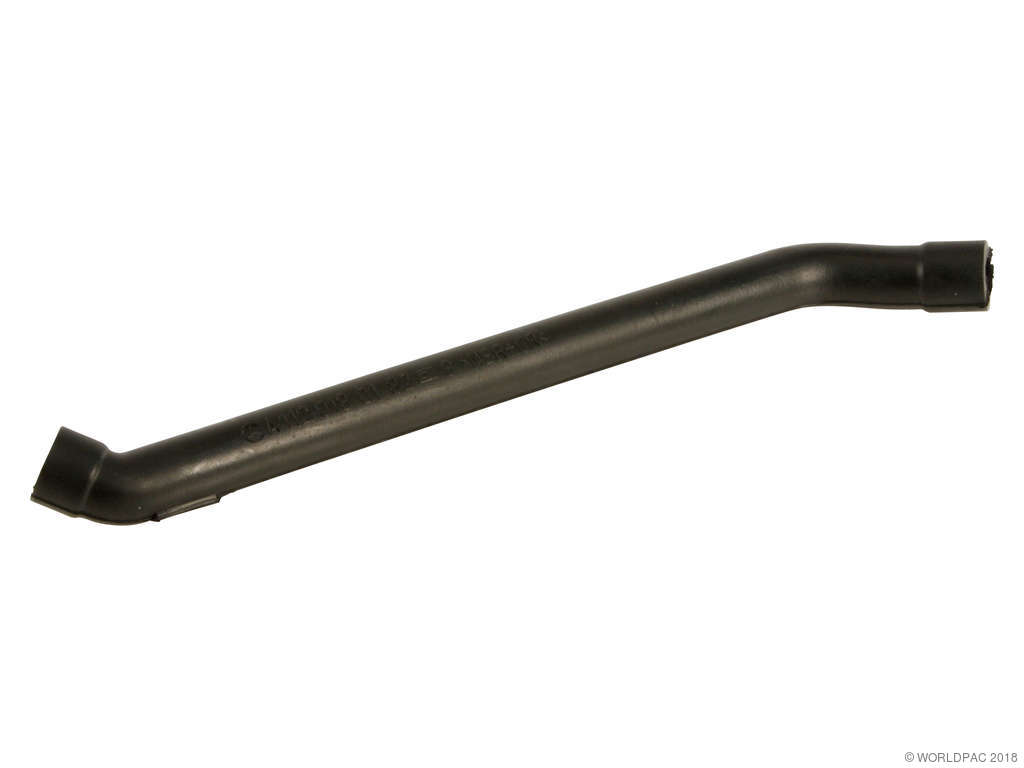
(OEM #A1120180482, A1120180282, A1120180382, A1120180182 (example part numbers, often sold as a kit))— The rubber and plastic hoses for the PCV system become extremely brittle and crack over time, causing unmetered air to enter the engine and disrupt the idle. This is one of the most common causes for P0505 on the M112 engine.
Trusted brands: Rein, CRP Automotive, Mercedes-Benz Genuine
OEM price range: $80-$150 (for kit)
Aftermarket price range: $30-$70 (for kit)
Platform-Specific Known Issues
- Real Owner Experience: Cracked Breather Hoses: Multiple owners on CrossfireForum.org and MBWorld.org report that after cleaning the throttle body with no success, a smoke test revealed leaks in the crankcase breather hoses. These hoses, especially the ones on the driver's side (left) and the larger one running under the MAF sensor, become rock-hard and crack, causing significant vacuum leaks that the ECU cannot compensate for, triggering P0505. Replacing the full set of hoses is the definitive fix.
- Real Owner Experience: Throttle Reset Cures Lag and Idle Issues: Numerous Crossfire owners report that performing the simple key-on, pedal-down throttle reset procedure dramatically improves throttle response and can resolve idle issues, especially after a battery disconnect or if the car has adapted to a passive driving style. One user on CrossfireForum.org noted it was like 'driving a different car' after the reset.
Mechanic-Grade Diagnostic Values
- Throttle Body (M16/6) Potentiometer #1 Signal Voltage (Scan Tool) — expected: 4.0 - 4.6 VDC at Closed Throttle Position (CTP). Voltage should decrease as throttle opens.. Failure: Voltage is outside this range at idle, or does not change smoothly as the pedal is depressed.
- Throttle Body (M16/6) Potentiometer #2 Signal Voltage (Scan Tool) — expected: 0.3 - 0.9 VDC at Closed Throttle Position (CTP). Voltage should increase as throttle opens.. Failure: Voltage is outside this range at idle, or does not change smoothly as the pedal is depressed.
- Throttle Body Connector (M16/6) 5V Reference Voltage — expected: 4.75 - 5.25 Volts between the power supply pin (Pin 4) and ground pin (Pin 6) with key on, engine off.. Failure: Voltage is below 4.75V or above 5.25V, indicating a wiring or ECU issue.
- Throttle Body Connector (M16/6) Signal Wire Test (Manual) — expected: With key on, engine off, one signal wire (Pin 3) should read ~0V and the opposing signal wire (Pin 5) should read ~5V. When the throttle is manually opened, these values should reverse.. Failure: Voltages do not show this opposing relationship or are stuck, indicating a failed potentiometer inside the throttle body.
Hidden / Shadow Codes Worth Checking
- P210184: The throttle valve actuator has a malfunction. There is a signal below the permissible limit value. (see via Mercedes STAR/Xentry or equivalent advanced diagnostic tool.)
- P210185: The throttle valve actuator has a malfunction. There is a signal above the permissible limit value. (see via Mercedes STAR/Xentry or equivalent advanced diagnostic tool.)
- P213629: The values from position sensors 'A/C' of the throttle valve are implausible relative to each other. (see via Mercedes STAR/Xentry or equivalent advanced diagnostic tool.)
- Mercedes Fault Code 6 (on older LED blink systems): Idle speed control inoperative. This is a common code stored in the E-GAS module when it cannot control the throttle actuator correctly. (see via Older Mercedes diagnostic tools or built-in LED blink code reader on pre-OBDII models, but relevant to understanding the fault logic.)
Scan Tool Commands That Help
- Mercedes STAR/Xentry: Default Initialization of new components — After replacing the throttle body assembly, this function is used to clear old adaptations and force the ECU to recognize the new part from a baseline state.
- Mercedes STAR/Xentry: Throttle Valve Actuator Adaptation — To manually trigger the relearn process for the throttle plate's end stops. This can also be done manually without a scan tool, but the STAR function provides confirmation.
- Mercedes STAR/Xentry: Adjust Idle Speed in Park/Neutral — In some cases, especially with aftermarket or larger throttle bodies, the base idle may need to be manually raised by ~50 RPM via the scan tool to achieve stability and prevent stalling.
Wiring & Ground Locations
- Main Engine Ground Strap — A braided copper strap running from a lower bell housing bolt on the driver's side to a mounting point on the chassis, near the steering box.. A corroded or loose main engine ground can cause a host of erratic electronic issues, including incorrect sensor readings and faulty actuator operation, which can trigger a P0505.
- G101 — Right side of the engine compartment. A common grounding point for multiple engine sensors.. This is a key ground point for the engine management system. Corrosion or looseness here can affect the throttle body's reference signals.
- G104 — Top front of the engine.. Another critical engine ground. All grounds (typically brown wires on Mercedes-based platforms) should be checked for tightness and corrosion when diagnosing electronic faults.
- Throttle Body Connector (M16/6) — Plugged directly into the electronic throttle body, located at the rear of the engine, under the main intake snorkel.. This 6-pin connector carries all power, ground, and signal wires for the throttle actuator. The pins are: 1&2 (Motor), 3&5 (Position Sensor Signals), 4 (5V Power), 6 (Sensor Ground). Damage to this connector or its pins is a direct cause of failure.
Real Owner Repair Stories
- MBWorld.org Forums (Mercedes E55 AMG (M113 engine, similar system)) — P0505 code, lumpy idle, hiccup when shifting, slugging forward when letting off gas from WOT.
❌ Tried (didn't work) Smoke test (showed no leaks)
✅ What actually fixed it Using a Mercedes STAR diagnostic tool to perform a 'default initialization' to reset all adaptations, followed by a throttle body reset, and then using the scan tool to set the learned idle 50 RPM higher. This was necessary due to an aftermarket 82mm throttle body. - MBWorld.org Forums (2007 Mercedes SL55 (M113K engine, similar system), 93k miles) — P0505 code, very rough on cold starts, RPM bounce on deceleration, loud constant whistle from throttle body that goes away when gas is tapped.
❌ Tried (didn't work) Smoke test (no leaks found), Removing intake manifolds to verify all hoses were connected.
✅ What actually fixed it The user performed an Electronic Throttle Control (ETC) reset using an iCarsoft scanner, which made the CEL go away on its own. This strongly implies the root cause was an electronic fault or calibration drift within the throttle body itself, not a vacuum leak. - PeachParts Mercedes-Benz Forum (1995 Mercedes E320 (M104 engine, early ETA system)) — High idle at 1500 RPM in drive, cruise control inoperative, Check Engine Light with code 6 (idle speed control inop).
❌ Tried (didn't work) Installing a rebuilt throttle actuator., Clearing codes., Swapping the E-GAS control module with a known good unit.
✅ What actually fixed it The user realized they had forgotten to re-attach the throttle arm return spring during reassembly. Reconnecting the spring immediately resolved the high idle and allowed the system to function correctly.
"I Checked Everything" — The Actual Cause
- In several documented cases, a smoke test reveals no vacuum leaks, yet the P0505 code persists. The cause is often not unmetered air, but a fault within the throttle body assembly itself. This can be a failing internal motor, worn potentiometer tracks causing erratic signals, or a calibration drift. A key symptom is a high-pitched whistle coming directly from the throttle body, which may change or disappear when the gas pedal is tapped. In these instances, performing an electronic throttle reset may provide a temporary fix, but replacement of the throttle body is often the ultimate solution.
- A Mercedes Technical Service Bulletin (TSB) for a similar engine platform notes that if diagnostic tests on components find no faults, the female contacts in the main ECU connector (plugs 'F' and 'M') should be inspected for widening or damage and replaced. This represents a classic 'smoke test clean' scenario where the fault is a poor electrical connection at the control module, not a vacuum leak or a failed part.
OEM Part Supersession History
A1131410125→A1131410125 (current)— This part number has remained stable. The OEM manufacturer is Bosch, with their part number being 0280750017.
Heads up: While other numbers like A1131410126 are sometimes cross-referenced, A1131410125 is the confirmed correct part for this application. Ensure the replacement is from Bosch or a reputable remanufacturer to avoid electronic compatibility issues.
Diagnostic Flowchart
Used vs. New Parts: Buying Guide for This Vehicle
When a used part is the smart pick: A used OEM throttle body from a reputable recycler or a low-mileage donor car can be a smart financial choice. Since the failure is often electronic, testing the part if possible or ensuring a good return policy is key. The cost savings can be significant compared to a new OEM unit.
Donor-vehicle mileage cap: roughly under 80000 miles for the part to have meaningful remaining life.
What to inspect on the donor part:
- Check for a clean throttle plate and bore; excessive carbon may indicate a high-mileage or poorly maintained engine.
- Inspect the electrical connector for any cracks, corrosion, or broken locking tabs.
- If possible, verify the part number on the unit (A1131410125 or Bosch 0280750017).
- Ask for the donor vehicle's mileage and check for any collision damage near the engine that could have impacted the part.
OEM-only on this vehicle (don't cheap out):
- Electronic Throttle Body: While high-quality remanufactured units exist, it is strongly recommended to use either a new Bosch (the original manufacturer) part or a tested used OEM part. Avoid cheap, unbranded new aftermarket throttle bodies, as they are notorious for premature failure and electronic incompatibility issues.
Aftermarket brands forum-validated for this vehicle:
- Bosch (OEM for the throttle body)
- Rein, CRP Automotive (For crankcase breather hose kits)
Brands owners have reported issues with on this vehicle:
- Uro (For some breather hoses, as noted by suppliers who substitute Rein parts for better quality)
- Unbranded/no-name electronic throttle bodies found on auction sites.
Real Owner Stories
Aggregated from forums and TSBs cited above. Mileages and costs reflect what owners reported in those sources.
2004-2008 Chrysler Crossfire M112 3.2L V6
Symptoms: After cleaning the throttle body with no success in fixing the P0505 code, a smoke test was performed which revealed leaks.
What fixed it: Replacing the full set of crankcase breather hoses was the definitive fix. The hoses, especially on the driver's side and under the MAF sensor, were found to be rock-hard and cracked.
Source hint: Real Owner Experience: Cracked Breather Hoses from CrossfireForum.org and MBWorld.org
2004-2008 Chrysler Crossfire M112 3.2L V6
Symptoms: Poor throttle response, idle issues, and general sluggishness, particularly noticeable after a battery disconnect or if the car had adapted to a passive driving style. One owner described it as 'driving a different car' after the fix.
What fixed it: Performing the simple key-on, pedal-down throttle reset procedure dramatically improved throttle response and resolved the idle problems.
Source hint: Real Owner Experience: Throttle Reset Cures Lag and Idle Issues from CrossfireForum.org
2004-2008 Chrysler Crossfire M112 3.2L V6
Symptoms: P0505 code accompanied by a characteristic clicking or whining noise from the throttle body area when the key is in the 'ON' position.
What fixed it: The forum discussion points towards common causes like vacuum leaks or a dirty throttle body, which are the primary fixes for these symptoms.
Source hint: crossfireforum.org - 'Need Help! P0505 idle control!'
Related OBD-II Codes
Frequently Asked Questions
My Crossfire started idling high and threw a P0505 code right after I changed the battery. Is this related?
I hear a hissing sound from my engine along with the P0505 code. What should I check first on my Crossfire?
Is it safe to clean my Crossfire's throttle body myself, and what should I use?
What is the correct throttle reset procedure for the Chrysler Crossfire?
My mechanic said this P0505 issue is common on older Mercedes-Benz cars. Is that true for the Crossfire?
I cleaned the throttle body, but the P0505 code came back. What is the next most likely cause?
Helpful Videos
We Have This Part in Stock



The information in this article is provided for general reference and educational purposes only. Vehicle specifications, procedures, and part compatibility can vary by production date, trim level, and region. Always consult your vehicle's factory service manual and verify part numbers before purchasing or performing repairs. Safety-critical components such as airbags, seat belts, and braking systems should be installed by a qualified professional.
- Chrysler Crossfire:
- 🧭 Diagnostic Flowchart
- 🎬 Helpful Videos
- 🛍️ Shop This Part
- What's Unique About the 2004-2008 Chrysler Crossfire
- Symptoms You May Notice
- Most Likely Causes
- Rare But Worth Checking
- Diagnosis Steps
- Parts You'll Likely Need
- Platform-Specific Known Issues
- Mechanic-Grade Diagnostic Values
- Hidden / Shadow Codes Worth Checking
- Scan Tool Commands That Help
- Wiring & Ground Locations
- Real Owner Repair Stories
- "I Checked Everything" — The Actual Cause
- OEM Part Supersession History
- Used vs. New Parts: Buying Guide for This Vehicle
- Real Owner Stories
- 2004-2008 Chrysler Crossfire M112 3.2L V6
- 2004-2008 Chrysler Crossfire M112 3.2L V6
- 2004-2008 Chrysler Crossfire M112 3.2L V6
- Related OBD-II Codes
- Frequently Asked Questions
- 🎟️ Get 5% Off