

P0505 on 2001-2010 Chrysler PT Cruiser: Idle Control System Fault Causes and Fixes
On a 2001-2010 PT Cruiser, code P0505 is most often caused by a dirty throttle body or a failing Idle Air Control (IAC) valve. Carbon buildup clogs the small air passages for the IAC. Cleaning the throttle body and IAC passages is the best first step. If that doesn't work, a new IAC valve costs between $40 and $120. Ensure you get the correct part, as 2001-2002 models use a different valve than 2003-2010 models.
- Code P0505 on a PT Cruiser almost always relates to the idle air control system.
- Before buying any parts, your first step should be to thoroughly clean the throttle body and IAC passages, as this fixes the problem in many cases.
- If you need to replace the Idle Air Control (IAC) valve, be aware that the part is different for 2001-2002 models versus 2003-2010 models.
- Symptoms like stalling at stops, and a high or surging idle are classic signs of this code.
- This is a very DIY-friendly repair that requires basic tools and can save a significant amount on labor costs.
What's Unique About the 2001-2010 Chrysler PT Cruiser
The Chrysler PT Cruiser, particularly with its 2.4L engine, is well-known for carbon and oil vapor buildup in the throttle body. This accumulation directly impacts the small passages used by the Idle Air Control (IAC) valve, often leading to idle problems long before the valve itself actually fails. While the vehicle spans a single generation, there is a critical parts difference: the IAC valve for 2001-2002 models is different from the one used on 2003-2010 models, making it essential to order the correct part for your year.
Generation note: The 2001-2010 PT Cruiser is a single generation, but it received a facelift for the 2006 model year. More importantly for this code, the Idle Air Control (IAC) valve and its connector are different for the 2001-2002 models compared to the 2003-2010 models. Ensure you purchase the correct part for your specific year.
Symptoms You May Notice
- Engine stalls when idling (e.g., at a stop light or in park).
- Idle speed is erratic, fluctuating up and down (surging).
- Idle speed is consistently too high (engine sounds like it's racing).
- Idle speed is consistently too low, causing rough running and stalling.
- Check Engine Light is illuminated.
- Engine may stumble or die when the air conditioning is turned on.
- Hissing or whistling sounds from the engine bay, indicating a possible vacuum leak.
- Replacing the IAC valve without first cleaning the throttle body. The new valve may not solve the problem if the air passages it relies on are clogged with carbon.
- Replacing the IAC valve when the true cause is a vacuum leak from a cracked hose.
Most Likely Causes
- Dirty Throttle Body and IAC Passages 🔴 High Probability → Shop Fuel Injection Throttle Body The PT Cruiser's PCV (Positive Crankcase Ventilation) system can route oil vapor and carbon back into the intake, which builds up over time and restricts the precise airflow needed for idle control.
How to confirm: Visually inspect the throttle bore and plate for a thick, black layer of carbon. The passages for the IAC valve are small and easily clogged.
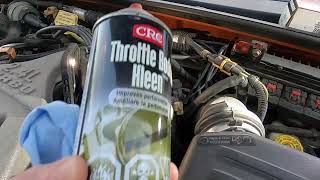
Typical fix: Remove the air intake hose and thoroughly clean the throttle body bore and the IAC valve passages using a dedicated throttle body cleaner and a soft brush or rag. This is often the first and most effective repair attempt.
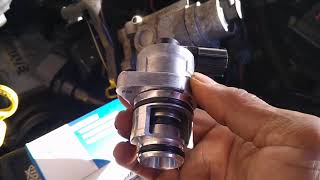
Est. part cost: $5-$15 for a can of throttle body cleaner. - Faulty Idle Air Control (IAC) Valve 🔴 High Probability → Shop Idle Air Control Valve The IAC is a small electric motor that constantly moves to adjust idle. Over time, it can fail electronically or its internal mechanism can stick, especially if carbon buildup is present.
How to confirm: After cleaning the throttle body, if the problem persists, the IAC valve is the next likely culprit. It can be tested by checking for voltage at its connector with the key on. However, intermittent failures are common, and replacement is often the most practical diagnostic step if cleaning doesn't work.
Typical fix: Replace the Idle Air Control valve and the corresponding gasket/seal. Be sure to purchase the correct valve for your model year (2001-2002 vs. 2003-2010).
Est. part cost: $40-$120 - Vacuum Leak 🟡 Medium Probability With age, the numerous plastic and rubber vacuum hoses in the engine bay can become brittle and crack, creating a leak. The intake manifold gasket can also fail, which is a common source of vacuum leaks.
How to confirm: Listen for a hissing sound around the engine bay at idle. A more definitive method is to use a smoke machine to feed smoke into the intake system and watch for where it escapes. Spraying starter fluid or soapy water around suspected areas can also work; a change in idle RPM indicates a leak.
Typical fix: Identify the source of the leak and replace the cracked hose, faulty gasket, or leaking component.
Est. part cost: $5-$50 depending on the failed hose or gasket.
Rare But Worth Checking
- Wiring or Connector Issue: The wiring harness leading to the IAC valve can become damaged or corroded, causing an intermittent connection. Visually inspect the connector and wires for any signs of fraying, breaks, or green corrosion before replacing the IAC valve. A replacement connector pigtail is available if needed.
- Faulty Powertrain Control Module (PCM): → Shop Engine Control Module (ECM) This is very rare. The PCM is the computer that controls the IAC valve. Before condemning the PCM, all other possibilities (cleaning, IAC replacement, vacuum leaks, wiring) must be exhaustively ruled out.
Diagnosis Steps
- Read the code with an OBD-II scanner to confirm P0505 and check for any other related codes.
- Visually inspect all vacuum hoses connected to the intake manifold for cracks, disconnection, or brittleness. Pay close attention to the PCV hose and brake booster line.
- Remove the air intake duct from the throttle body. Inspect the throttle plate and bore for carbon buildup.
- Thoroughly clean the throttle body and IAC air passages with a dedicated throttle body cleaner, a toothbrush, and a clean rag. Manually move the throttle plate to clean behind it.
- Disconnect the battery for 10 minutes to reset the PCM's learned idle values. Reconnect and start the engine to see if the idle has improved.
- If the problem persists, the IAC valve is the most likely cause. It is held by two Torx T-25 screws. A YouTube video from 'Matt's Garage' shows applying penetrating oil to the screw threads to prevent them from breaking in the aluminum throttle body.
- Install the new IAC valve, making sure to use a new gasket or seal. Lubricate the o-rings with vaseline or dielectric grease for easier installation. Ensure you have the correct part for your model year (2001-2002 vs. 2003-2010).
- If the issue is still not resolved, perform a smoke test to definitively check for hard-to-find vacuum leaks.
- As a final, rare step, inspect the wiring and connector at the IAC valve for damage or test for a proper signal from the PCM.
Parts You'll Likely Need
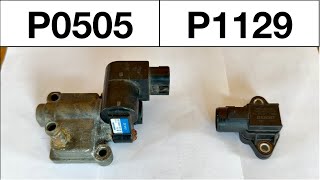
- Idle Air Control Valve (2003-2010)
(OEM #4861325AD)— This is the most common part to fail after a thorough throttle body cleaning does not resolve the issue for these model years. This part number has been superseded by 4593849AA.
Trusted brands: Mopar, Standard Motor Products (AC419), Wells (2H1397), Herko (IAC1060)
OEM price range: $100-$135
Aftermarket price range: $38-$70 - Idle Air Control Valve (2001-2002)
(OEM #4591611AD)— This part is specific to the early model years and will fail for the same reasons as the later version. It is not interchangeable with the 2003+ part.
Trusted brands: Mopar (4591611AD, 4591611AC, 4591611AA), Standard Motor Products (AC420), Walker Products (215-1066), Delphi (CV10162)
OEM price range: $100-$130
Aftermarket price range: $40-$70 - Throttle Body Cleaner — This is essential for the first and most common step: cleaning the carbon buildup that causes poor idle.
Trusted brands: CRC, Berryman, Gumout
Aftermarket price range: $5-$15
Related Codes That Often Appear With This One
- P0507 — Stands for 'Idle Control System RPM Higher Than Expected.' This code is a more specific version of P0505 and often points to a large vacuum leak or a stuck-open IAC valve.
- P0506 — Stands for 'Idle Control System RPM Lower Than Expected.' This code is a more specific version of P0505 and often points to a severely clogged throttle body or a stuck-closed IAC valve.
- P0171 — Stands for 'System Too Lean (Bank 1).' This code is frequently caused by a vacuum leak, which allows unmetered air into the engine, disrupting the air-fuel ratio and causing idle issues.
Mechanic-Grade Diagnostic Values
- IAC Motor Coil Resistance (4-wire stepper motor) — expected: 40 - 80 Ohms between each of the two coil pairs.. Failure: A reading outside this range indicates a faulty internal coil in the IAC motor.
- IAC Connector Power Supply — expected: 12V (Battery Voltage) at the power supply pin(s) with key on, engine off.. Failure: 0V suggests a problem with the wiring, fuse, or the ASD (Auto Shutdown) relay.
- PCM Ground Strap Resistance — expected: Less than 0.1 Ω between the ground point and the negative battery terminal.. Failure: Higher resistance indicates a poor ground, which can cause erratic PCM behavior and incorrect idle commands.
- Scan Tool IAC Duty Cycle (PWM) — expected: A steady duty cycle, typically between 10-30% at idle.. Failure: An erratic or absent signal can point to a faulty PCM driver circuit.
Scan Tool Commands That Help
- Chrysler DRB III / wiTECH: IAC Actuator Test / Idle Speed Control Test — This bidirectional command allows a technician to directly order the IAC valve to open or close. If the engine RPM changes as commanded (e.g., moves to a target of 900 RPM), it confirms the PCM, wiring, and IAC motor are functional, pointing the diagnosis towards a vacuum leak or mechanical blockage.
- OBD-II Scanner with Live Data: Idle Relearn / Memory Reset — After cleaning the throttle body or replacing the IAC valve, the PCM's learned idle trim values must be reset. This is often done by disconnecting the battery for 10-15 minutes. This forces the PCM to relearn the new baseline idle position, which is critical for resolving the code after a repair.
Wiring & Ground Locations
- G102 / Main Engine Ground — On the driver's side of the engine bay, on the strut tower, where the negative battery cable and other grounds attach.. This is a primary ground point for the engine and PCM. Corrosion or looseness here can cause unstable voltage and erratic behavior from the PCM and its controlled components, including the IAC valve.
- G104 — At the front of the right (passenger side) front fender area in the engine bay.. This ground serves various components on the passenger side of the engine bay. A poor connection here has been reported by owners to cause multiple electrical issues, and ensuring it's clean is good practice when diagnosing any electronic fault.
- Cylinder Head to Chassis Ground Strap — A braided strap running from the cylinder head (often near the upper motor mount) to the chassis/strut tower.. This provides a dedicated ground for the cylinder head and its sensors. A missing or corroded strap can cause electrical noise and grounding issues for sensors that the PCM relies on for idle calculations.
- IAC Connector — Plugged directly into the Idle Air Control valve, which is mounted on the throttle body.. This 4-pin connector is the direct link between the PCM and the IAC motor. The pins carry the signals for the two motor coils. Testing for voltage and signal at these pins is a key diagnostic step.
Real Owner Repair Stories
- YouTube - 'PT Cruiser Power Steering Pressure Switch repair' (2001 Chrysler PT Cruiser) — Check Engine Light with code P0551 (Power Steering Pressure Sensor Circuit Malfunction). While not P0505, a faulty PSP switch can cause identical idle-stalling symptoms.
❌ Tried (didn't work) The owner was prepared to replace the switch immediately.
✅ What actually fixed it The owner first disconnected the electrical connector to the Power Steering Pressure Switch and cleaned the contacts thoroughly with electronics cleaner. After reconnecting it and clearing the codes, the problem was resolved without replacing the part. This highlights that a poor connection on this related sensor can cause idle issues.
OEM Part Supersession History
4861325AA, 4861325AB, 4861325AC→4593849AA (Note: This part is now often listed as discontinued by Mopar)— Standard part revision and consolidation for 2003-2010 models.
Heads up: This later-style part is not compatible with 2001-2002 models.4591611AA, 4591611AC→4591611AD— Standard part revision for 2001-2002 models.
Heads up: This early-style part is not compatible with 2003-2010 models due to different electrical connectors and motor design.
Model Year Variations Within This Range
- 2001-2002: Uses a specific Idle Air Control valve (p/n 4591611AD) that is not interchangeable with later models.
- 2003-2010: Uses a different Idle Air Control valve (p/n 4861325AD, superseded by 4593849AA) that is not interchangeable with earlier models.
Diagnostic Flowchart
Other Known Issues on This Vehicle
Issues unrelated to this code that are worth knowing about as an owner of this generation:
- Timing Belt Failure 🔴 High — The 2.4L is an interference engine. The recommended replacement interval is around 102,000 miles, but failure before this can occur. Failure will cause catastrophic engine damage. It is a costly but critical maintenance item, often costing over $1,000 for a shop to perform.
- Front Control Arm Bushing Failure 🟠 Medium — The front lower control arm bushings are a known weak point, often failing prematurely, sometimes as early as 30,000-50,000 miles. This causes clunking noises, poor alignment, and uneven tire wear. Replacement can be difficult due to the design of the arm.
- Automatic Transmission Solenoid Pack Failure 🟠 Medium — The A604/41TE automatic transmission can suffer from solenoid pack failure, leading to harsh shifting, getting stuck in gear (limp mode), or a no-shift condition. This can also be caused by fluid leaking into the electrical connector. Codes like P0700 often accompany this issue.
- TIPM (Totally Integrated Power Module) Electrical Problems 🔴 High — Like many Chrysler products of this era, the PT Cruiser can experience failures of the TIPM, which is the main electrical fuse and relay center. This can cause a wide range of bizarre and hard-to-diagnose electrical issues, including no-start conditions, stalling, and problems with lights or accessories.
- Engine Stalling / Shutting Off While Driving 🔴 High — Particularly noted on the 2006 model, but reported across other years, is a dangerous issue where the engine stalls and shuts off completely while driving. This is a widespread complaint and can be related to the TIPM, fuel system, or other electrical faults.
Used vs. New Parts: Buying Guide for This Vehicle
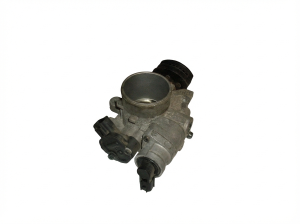
When a used part is the smart pick: A complete used throttle body assembly from a low-mileage donor vehicle can be a cost-effective option. Often, the price for the entire assembly (including the IAC and TPS sensors) from a junkyard is less than a new aftermarket IAC valve alone. This is a good strategy if you suspect multiple issues or want to save time on cleaning.
Donor-vehicle mileage cap: roughly under 80000 miles for the part to have meaningful remaining life.
What to inspect on the donor part:
- Check for minimal carbon buildup inside the throttle bore. A light film is normal, but thick, crusty deposits suggest a hard life.
- Ensure the throttle plate moves smoothly without binding or sticking.
- Inspect the IAC valve connector for any broken plastic tabs or corrosion on the pins.
- Ask for the vehicle's VIN or mileage from the donor car if possible to verify its age and use.
OEM-only on this vehicle (don't cheap out):
- Powertrain Control Module (PCM) - Aftermarket or improperly matched used PCMs often have compatibility issues with the vehicle's immobilizer system.
Aftermarket brands forum-validated for this vehicle:
- Standard Motor Products (SMP)
- Wells
- Delphi
- Hitachi
Brands owners have reported issues with on this vehicle:
- No-name, unbranded parts from online marketplaces are frequently cited in forums as having high failure rates, sometimes failing within weeks or months of installation.
Real Owner Stories
Aggregated from forums and TSBs cited above. Mileages and costs reflect what owners reported in those sources.
2008 PT Cruiser
Symptoms: Check Engine Light with code P0505.
What fixed it: The problem was fixed after the Idle Air Control (IAC) sensor was replaced.
Source hint: youtube_comment from TKA MECH
2001 PT Cruiser
Symptoms: Hissing engine sound.
What fixed it: Identification and repair of a vacuum leak.
Source hint: Chrysler Forums - '2001 PT Cruiser - Hissing engine'
Related OBD-II Codes
Frequently Asked Questions
Are the IAC valves the same for all PT Cruiser model years?
Why does my PT Cruiser's throttle body get so dirty, causing the P0505 code?
I'm replacing the IAC valve myself; is there anything I should watch out for regarding the mounting screws?
Can a vacuum leak cause the hissing sound I hear in my engine bay along with the P0505 code?
Should I reset anything after cleaning or replacing the IAC valve?
What should I use to install the new IAC valve o-rings?
Helpful Videos

Used OEM Parts in Stock
New Aftermarket Parts Available

The information in this article is provided for general reference and educational purposes only. Vehicle specifications, procedures, and part compatibility can vary by production date, trim level, and region. Always consult your vehicle's factory service manual and verify part numbers before purchasing or performing repairs. Safety-critical components such as airbags, seat belts, and braking systems should be installed by a qualified professional.
- Chrysler PT Cruiser:
- 🧭 Diagnostic Flowchart
- 🎬 Helpful Videos
- 🛍️ Shop This Part
- What's Unique About the 2001-2010 Chrysler PT Cruiser
- Symptoms You May Notice
- Most Likely Causes
- Rare But Worth Checking
- Diagnosis Steps
- Parts You'll Likely Need
- Related Codes That Often Appear With This One
- Mechanic-Grade Diagnostic Values
- Scan Tool Commands That Help
- Wiring & Ground Locations
- Real Owner Repair Stories
- OEM Part Supersession History
- Model Year Variations Within This Range
- Other Known Issues on This Vehicle
- Used vs. New Parts: Buying Guide for This Vehicle
- Real Owner Stories
- 2008 PT Cruiser
- 2001 PT Cruiser
- Related OBD-II Codes
- Frequently Asked Questions
- 🎟️ Get 5% Off