

P0505 on 2006-2007 Ford Explorer: Idle Control System Malfunction Causes and Fixes
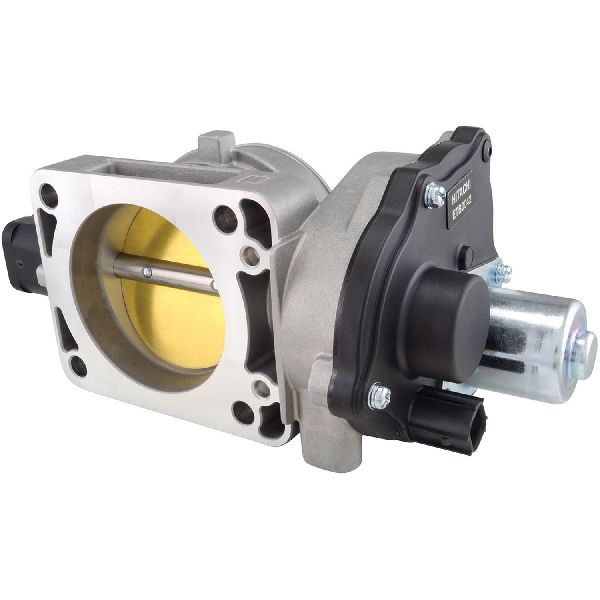
On a 2006-2007 Explorer, P0505 is almost always caused by a dirty Electronic Throttle Body (ETB). A thorough cleaning often resolves the issue for under $20. If the ETB has failed, expect to pay $250-$450 for a replacement part. A PCM reprogram may also be required per Ford TSB 12-7-4.
- The first and most important step is to thoroughly clean the electronic throttle body and its bore. This is the most likely fix and is very inexpensive.
- This vehicle does NOT have a separate Idle Air Control (IAC) valve; do not waste time or money looking for one.
- Always check for vacuum leaks (e.g., cracked hoses) before replacing expensive parts like the throttle body.
- After cleaning or replacing the throttle body, you must perform an idle relearn procedure by disconnecting the battery for 15 minutes and then letting the engine idle to allow the PCM to recalibrate.
What's Unique About the 2006-2007 Ford Explorer
Unlike older vehicles that use a separate Idle Air Control (IAC) valve, the 2006-2007 Ford Explorer (fourth generation) uses an Electronic Throttle Body (ETB) to manage idle speed for both the 4.0L V6 and 4.6L V8 engines. This design is prone to carbon and sludge buildup inside the throttle body bore, which physically restricts the throttle plate's movement and is the most common cause of P0505. Ford issued Technical Service Bulletin (TSB) 12-7-4 for these specific model years related to this code, which recommends cleaning the ETB and, if the issue persists, reprogramming the PCM.
Symptoms You May Notice
- Erratic idle speed (too high, too low, or fluctuating/hunting)
- Engine stalling, especially when coming to a stop or when the A/C is turned on
- Check Engine Light is on
- Difficulty starting the engine (hard starts)
- Hesitation during acceleration
- Shaking or vibration while parked in gear
- Replacing the throttle position sensor (TPS) alone. On this vehicle, the TPS is integrated into the electronic throttle body and is not typically serviced separately.
- Looking for a separate Idle Air Control (IAC) valve. This generation of Explorer does not have one; the function is integrated into the electronic throttle body.
Most Likely Causes
- Dirty or Sticking Electronic Throttle Body 🔴 High Probability → Shop Fuel Injection Throttle Body The design of the intake system can lead to oil vapor and carbon accumulating in the throttle body, restricting the plate's movement and causing idle control issues. This is a well-documented issue for this platform.
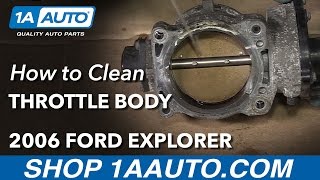
How to confirm: Remove the air intake tube connected to the throttle body and visually inspect the throttle plate and bore for a dark, sticky film or heavy carbon deposits. A video by 1A Auto shows this exact process on a 2006 Explorer. 🎬 Watch: How to clean the throttle body on your Explorer
Typical fix: Remove the throttle body and clean it thoroughly with a dedicated throttle body cleaner and a soft brush. Reinstall and perform an idle relearn procedure. Torque the throttle body bolts to 89 in-lbs.
Est. part cost: $10-$20 for cleaner and a gasket - Vacuum Leak 🟡 Medium Probability Rubber vacuum hoses (especially PCV lines) and intake manifold gaskets become brittle with age and heat cycles, leading to cracks that allow unmetered air to enter the engine, disrupting the air-fuel mixture and idle speed.
How to confirm: Listen for a hissing sound around the engine bay at idle. A professional smoke test is the most reliable method to pinpoint the source of a leak. You can also carefully spray brake cleaner or starter fluid around suspected leak areas; a change in idle RPM indicates you've found the leak.
Typical fix: Replace the cracked vacuum hose or faulty gasket.
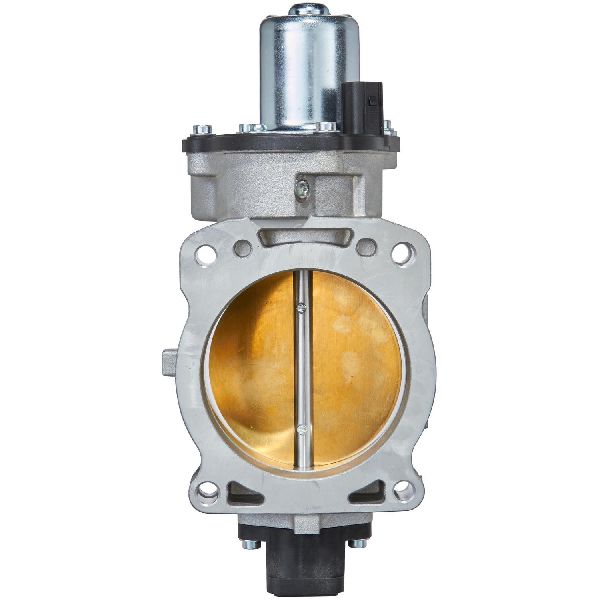
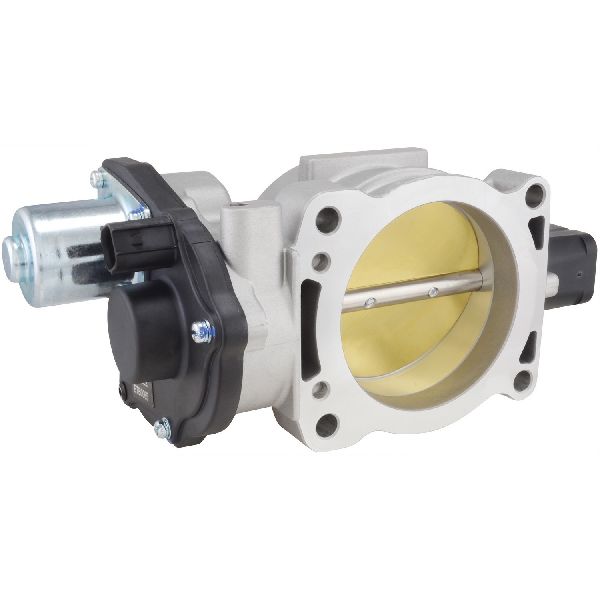
Est. part cost: $10-$100 depending on the leaking component - Failed Electronic Throttle Body (ETB) ⚪ Low Probability → Shop Fuel Injection Throttle Body The internal electric motor or position sensor within the throttle body assembly can wear out over time, leading to a complete failure to control idle. This is usually considered only after a thorough cleaning fails to resolve the issue.
How to confirm: If a thorough cleaning does not resolve the issue and no vacuum leaks are present, the ETB is likely faulty. A scan tool may show erratic throttle position sensor readings or a high ETC_TRIM value (over 3.0 degrees) per TSB 12-7-4.
Typical fix: Replace the entire electronic throttle body assembly.
Est. part cost: $240-$440 for an OEM part
Rare But Worth Checking
- Powertrain Control Module (PCM) Software Issue: → Shop Engine Control Module (ECM) Ford TSB 12-7-4 for the 2006-2007 Explorer explicitly states that a PCM reprogram to the latest calibration may be necessary to correct idle issues, even after cleaning the throttle body. This must be performed by a dealer or a qualified shop with Ford's IDS software.
Diagnosis Steps
- Scan for any other accompanying trouble codes. Address those first if they are present, especially lean codes (P0171/P0174) which point to vacuum leaks.
- Visually inspect all vacuum hoses connected to the intake manifold for cracks, disconnection, or collapse. Pay close attention to the PCV valve and its associated hoses. 🎬 See how to find and fix a PCV vacuum leak
- Perform a smoke test to definitively check for vacuum leaks from hoses, the intake manifold gasket, or the throttle body gasket itself.
- If no vacuum leaks are found, remove the air intake duct from the throttle body.
- Inspect the throttle body bore and plate for carbon and sludge buildup. It will likely be a black, sticky film.
- If dirty, remove the four 8mm bolts holding the throttle body to the intake manifold. Disconnect the electrical connectors.
- Clean the throttle body thoroughly using a dedicated throttle body cleaner, a soft brush (plastic or brass bristle is fine), and a lint-free rag. Open the plate manually to clean the edges and bore completely. Do not spray cleaner directly into the electronic components.
- Reinstall the throttle body with a new gasket and torque the bolts to 89 in-lbs.
- Perform an idle relearn procedure: disconnect the negative battery terminal for at least 15 minutes. Reconnect it, start the engine, and let it idle for 10-15 minutes (with A/C off) to allow the PCM to relearn idle values.
- If the problem persists, use a scan tool to check the 'ETC_TRIM' PID. If the value is 3.0 degrees or greater, the throttle body may be worn out and require replacement, or the PCM may need reprogramming per TSB 12-7-4.
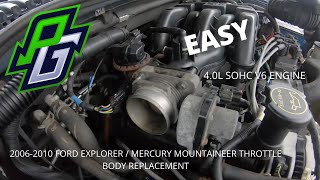
- If all else fails, the electronic throttle body assembly has likely failed and requires replacement. 🎬 Watch this complete guide to replacing the throttle body
Parts You'll Likely Need
- Electronic Throttle Body
(OEM #8L2Z-9E926-A (4.6L V8) / 9W7Z-9E926-A (4.0L V6))— This is the primary component responsible for idle control. It is replaced if a thorough cleaning does not solve the problem.
Trusted brands: Motorcraft
OEM price range: $240-$440
Aftermarket price range: $90-$200 - Throttle Body Gasket
(OEM #6L2Z-9E936-A (fits both V6 and V8))— This gasket should always be replaced whenever the throttle body is removed for cleaning or replacement to prevent vacuum leaks.
Trusted brands: Motorcraft, Fel-Pro
OEM price range: $15-$25
Aftermarket price range: $5-$15 - Throttle Body Cleaner — Required for cleaning the carbon and sludge from the throttle body, which is the most common fix.
Trusted brands: CRC, Berryman, Motorcraft Choke and Linkage Cleaner
Aftermarket price range: $8-$15
Related Codes That Often Appear With This One
- P0506 — This code for 'Idle Control System RPM Lower Than Expected' is often triggered by the same causes, such as a sticking throttle body, and is mentioned in the same TSB (12-7-4).
- P0171 / P0174 — These 'System Too Lean' codes can be caused by a significant vacuum leak, which is also a primary cause for P0505.
- P2111 / P2112 — TSB 12-7-4 notes that these throttle actuator control system codes may appear after clearing the KAM (Keep Alive Memory) or disconnecting the battery on a vehicle with a dirty throttle body.
Technical Service Bulletins (TSBs) & Recalls
- TSB 12-7-4: Supersedes several older bulletins. Addresses DTCs P0505 and P0506 with symptoms of idle fluctuation and hard starts. The primary action is to check the ETC_TRIM PID. If it's 3.0 degrees or greater, the procedure is to remove and clean the throttle body. If the issue is not resolved, a PCM reprogram is recommended. This TSB applies to 2006-2007 Explorer/Mountaineer models with the 4.0L and 4.6L engines, among other Ford vehicles.
- TSB 11-10-21: While issued for other Ford models like the Five Hundred, this bulletin also addresses DTCs P0505 and P0506, recommending updated powertrain control calibration as noted in NHTSA ODI #11052150.
Platform-Specific Known Issues
- Owner Experience: Cleaning is the First and Best Fix: Numerous owners on forums like ExplorerForum.com report that a thorough cleaning of the electronic throttle body completely resolved their P0505 code and associated stalling/rough idle symptoms. Many emphasize that this should be the very first step before considering replacing any parts, as it is inexpensive and highly effective for this specific generation of Explorer.
- TSB 12-7-4: The Official Ford Procedure: Ford's own TSB 12-7-4 directly addresses P0505/P0506 on the 2006-2007 Explorer. The procedure involves checking a specific data point (ETC_TRIM) with a scan tool. If the value is high, it directs technicians to clean the throttle body. If the problem persists, a PCM reprogram is the next step, followed by potential ETB replacement. This confirms the common failure pattern.
- NHTSA Engineering Analysis: NHTSA ODI Investigation #PE11018 for Ford vehicles notes that symptoms associated with DTCs P0505 and P0506 include idle instability and surge conditions, which Ford attributed to changes in idle air flow resulting from the progressive buildup of deposits.
Mechanic-Grade Diagnostic Values
- ETC_TRIM (Electronic Throttle Control Trim) PID — expected: Less than 3.0 degrees at idle. Failure: A value of 3.0 degrees or greater indicates excessive carbon buildup or a worn throttle body.
- TPS Signal Voltage (Key On, Engine Off) — expected: Approx. 0.5V - 1.5V at closed throttle, sweeping smoothly to 4.0V - 5.0V at wide-open throttle.. Failure: Voltage that is stuck, has dropouts, or does not sweep smoothly indicates a faulty internal TPS.
- VREF (Reference Voltage) at ETB Connector — expected: 4.9V - 5.1V (Key On, Engine Off). Failure: Voltage significantly lower or higher than 5.0V points to a wiring issue or a problem within the PCM.
- Signal Return (Ground) to Chassis Ground Resistance — expected: Less than 5.0 Ohms. Failure: High resistance indicates a poor ground connection at the sensor connector or at a main engine ground point (e.g., G102/G104), which can cause erratic sensor readings.
Hidden / Shadow Codes Worth Checking
- Mode $06 Test Data: While not a 'shadow code,' Mode $06 contains non-continuous monitor test results. For the ETB, this includes results for sweep tests and TPS correlation checks. A failing value here can indicate an intermittent problem with the throttle body before a hard code like P0505 sets. (see via A professional scan tool or an advanced OBD-II app that can display Mode $06 data. The specific Test IDs (TID) and Component IDs (CID) are manufacturer-specific.)
Scan Tool Commands That Help
- Ford IDS / FORScan: Reset All Adaptations / Reset Intake Air Throttle Learned Values — This command should be used after cleaning or replacing the electronic throttle body to wipe the old learned values from the PCM and force a new, faster relearn process. This is more reliable than a simple battery disconnect.
- Ford IDS / Advanced Scan Tools: ETCS TAC Test (Throttle Actuator Control Test) — This is a bidirectional test that allows the technician to command the throttle plate to open and close. It is used to verify the functionality of the internal throttle motor and gears when a mechanical failure is suspected.
Wiring & Ground Locations
- G104 — Right front corner of the engine compartment, on the fender apron.. This is a primary engine compartment ground point. Corrosion or a loose connection here can affect the stability of sensor readings, including those from the electronic throttle body.
- G102 — Center rear of the engine compartment (4.0L) or rear of engine compartment (4.6L).. This is another critical ground for the engine management system. A poor connection can cause floating grounds and unpredictable electronic behavior, leading to codes like P0505.
- Electronic Throttle Body Connector — Directly on the electronic throttle body assembly.. This 6-pin connector provides power to the throttle motor and carries signals from the two internal throttle position sensors. The pins should be checked for 5V reference, ground, and the two independent signal voltages during diagnosis. Damaged pins or wiring here are a direct cause of failure.
Real Owner Repair Stories
- Go-Parts technical article citing a documented repair case (2006 Ford Explorer 4.0L V6) — Persistent P0506 (Idle RPM Too Low) and stalling, which has the same root causes as P0505.
❌ Tried (didn't work) Cleaning the original throttle body, Replacing the throttle body with a new unit, Performing a smoke test, which revealed no vacuum leaks
✅ What actually fixed it The root cause was a failing Fuel Rail Pressure Sensor (FRPS). The sensor's diaphragm had ruptured, allowing raw fuel to be sucked into the vacuum line connected to it. This created a rich condition that caused the engine to stumble and stall at idle, which the PCM misinterpreted as an idle control system fault. Replacing the FRPS resolved the issue. - NHTSA ODI #10383032: An owner of a Ford vehicle reported that after the throttle body was replaced for code P0505, the vehicle stalled again. Technicians eventually found a pinpoint leak in the resonator hose (associated with code P0102), demonstrating that secondary air leaks can mimic or follow throttle body issues.
"I Checked Everything" — The Actual Cause
- In a documented case on a 2006 4.0L Explorer with similar idle stalling issues (P0506), a smoke test showed no vacuum leaks. The actual cause was a failed Fuel Rail Pressure Sensor (FRPS) leaking fuel into its vacuum hose, creating an un-commanded rich condition that the PCM could not compensate for at idle, leading to a stall.
When the Usual Fixes Don't Work
- While cleaning the throttle body is the most common fix, it is not a guaranteed solution. In cases where the code persists, technicians should not repeatedly clean the throttle body but should instead investigate less common causes. A documented repair for a similar idle stall on a 2006 Explorer required replacing the Fuel Rail Pressure Sensor (FRPS) after cleaning and replacing the throttle body failed to solve the problem. The faulty FRPS was leaking fuel into the intake, a problem a smoke test for vacuum leaks would not identify.
OEM Part Supersession History
6L2Z-9E926-C, 6L2Z-9E926-CA→8L2Z-9E926-A— Standard part revision and improvement by the manufacturer.
Heads up: The new part number (8L2Z-9E926-A) is fully compatible and is the correct service part for the 4.6L V8 engine.
Model Year Variations Within This Range
- 2006-2007: No significant variations have been identified between the 2006 and 2007 model years for the standard Ford Explorer that would affect the diagnosis or repair of a P0505 code. The causes, parts, and procedures are consistent across both years for both the 4.0L V6 and 4.6L V8 engines.
Diagnostic Flowchart
Other Known Issues on This Vehicle
Issues unrelated to this code that are worth knowing about as an owner of this generation:
- 4.0L SOHC V6 Timing Chain Cassette Failure 🔴 High — Common on engines over 100,000 miles, especially if oil changes were neglected. A rattling noise ('death rattle') on startup or acceleration is the primary symptom. (Ref: No recall, but updated parts kits (e.g., 2U3Z-6D256-AA) were made available.)
- Cracked Rear Liftgate Applique Panel 🟡 Low — Extremely common across most 2006-2010 Explorers/Mountaineers. The plastic panel below the rear window cracks, usually starting near the emblem. (Ref: No recall for the 2006-2010 models, though earlier generations had class-action lawsuits. It is considered a cosmetic issue but can allow water intrusion.)
- 5R55S/W Transmission Solenoid Pack Failure 🟠 Medium — Common issue causing harsh shifting, delayed engagement, or slipping gears, particularly when the transmission is cold. Often does not set a Check Engine Light. (Ref: No recall, but replacing the solenoid block (Part # 9L2Z-7G391-A) is a common repair.)
- Transmission Fluid Leaks 🟠 Medium — Leaks can develop from transmission cooler lines or case seals, leading to low fluid levels and subsequent shifting problems or transmission damage.
Used vs. New Parts: Buying Guide for This Vehicle
When a used part is the smart pick: A used Electronic Throttle Body is generally NOT recommended. The primary cause of P0505 is carbon buildup and mechanical wear over time. A used part from a salvage yard is likely to have similar wear and may fail soon after installation. It should only be considered as a last resort if a new part is unavailable or unaffordable.
Donor-vehicle mileage cap: roughly under 60000 miles for the part to have meaningful remaining life.
What to inspect on the donor part:
- Visually inspect the throttle bore for deep scratches or scoring; light carbon is acceptable as it can be cleaned.
- Manually move the throttle plate (if possible) to feel for any binding, grinding, or excessive looseness in the shaft.
- Check the electrical connector pins to ensure they are straight, clean, and free of any corrosion or damage.
OEM-only on this vehicle (don't cheap out):
- While not strictly 'OEM-only,' using a Motorcraft (Ford's OEM brand) throttle body is the safest option for guaranteed compatibility and longevity.
Aftermarket brands forum-validated for this vehicle:
- Hitachi: Often a Tier 1 Original Equipment supplier to automakers, Hitachi ETBs are generally considered a high-quality alternative to OEM.
Brands owners have reported issues with on this vehicle:
- Dorman (with caution): While Dorman offers a widely available and often cheaper alternative, owner reviews are mixed. Some report issues like bent connector pins out of the box or premature failure. It is a budget option that may carry a higher risk of defects compared to OEM or Hitachi.
Real Owner Stories
Aggregated from forums and TSBs cited above. Mileages and costs reflect what owners reported in those sources.
2006 Ford Explorer 4.0L SOHC V6
Symptoms: Stalling when coming to a stop and a rough, hunting idle.
What fixed it: A 30-minute thorough cleaning of the electronic throttle body.
Source hint: ExplorerForum.com: Multiple threads discuss P0505 on 4th generation Explorers.
2006 Ford Explorer 4.0L SOHC V6 — ~100000 miles
Symptoms: Erratic idle speed and stalling issues.
What fixed it: Cleaning the electronic throttle body as the first step before replacing parts.
Source hint: Ford-Trucks.com Enthusiasts Forums: Discussions for the 4.0L SOHC engine
2006-2007 Ford Explorer
Symptoms: Idle fluctuation and hard starts.
What fixed it: Checking the ETC_TRIM PID; if high, cleaning the throttle body, followed by a PCM reprogram if the issue persists.
Source hint: TSB 12-7-4: Supersedes several older bulletins. Addresses DTCs P0505 and P0506
Ford Owner Report (NHTSA ODI #11052150)
Symptoms: Check engine light and idle instability.
What fixed it: Per NHTSA, symptoms associated with the condition may include codes P0505 or P0506. Ford issued a bulletin that included updated powertrain control calibration to resolve the issue.
Related OBD-II Codes
Frequently Asked Questions
Does TSB 12-7-4 apply to my 2006 Ford Explorer with the 4.0L engine?
What specific data should I look for on a scan tool to see if my Explorer's throttle body is failing?
Is there a specific torque spec for the throttle body bolts on the 2006-2007 Explorer?
My Explorer stalls when I turn on the A/C or come to a stop; is this related to P0505?
How do I perform the idle relearn procedure after cleaning the throttle body?
Could a rattling noise on startup be related to my idle issues?
Helpful Videos

Used OEM Parts in Stock
New Aftermarket Parts Available


The information in this article is provided for general reference and educational purposes only. Vehicle specifications, procedures, and part compatibility can vary by production date, trim level, and region. Always consult your vehicle's factory service manual and verify part numbers before purchasing or performing repairs. Safety-critical components such as airbags, seat belts, and braking systems should be installed by a qualified professional.
- Ford Explorer:
- 🧭 Diagnostic Flowchart
- 🎬 Helpful Videos
- 🛍️ Shop This Part
- What's Unique About the 2006-2007 Ford Explorer
- Symptoms You May Notice
- Most Likely Causes
- Rare But Worth Checking
- Diagnosis Steps
- Parts You'll Likely Need
- Related Codes That Often Appear With This One
- Technical Service Bulletins (TSBs) & Recalls
- Platform-Specific Known Issues
- Mechanic-Grade Diagnostic Values
- Hidden / Shadow Codes Worth Checking
- Scan Tool Commands That Help
- Wiring & Ground Locations
- Real Owner Repair Stories
- "I Checked Everything" — The Actual Cause
- When the Usual Fixes Don't Work
- OEM Part Supersession History
- Model Year Variations Within This Range
- Other Known Issues on This Vehicle
- Used vs. New Parts: Buying Guide for This Vehicle
- Real Owner Stories
- 2006 Ford Explorer 4.0L SOHC V6
- 2006 Ford Explorer 4.0L SOHC V6 — ~100000 miles
- 2006-2007 Ford Explorer
- Ford Owner Report (NHTSA ODI #11052150)
- Related OBD-II Codes
- Frequently Asked Questions
- 🎟️ Get 5% Off