

P0505 on 2004-2008 Ford F-150: Idle Control System Fixes
For the 2004-2008 Ford F-150, code P0505 indicates a problem with the idle control system. On 4.6L V8 and 4.2L V6 engines, this is almost always a faulty Idle Air Control (IAC) valve that needs cleaning or replacement. On 5.4L 3V V8 engines from 2004-2008, which use an electronic throttle body, this code points to a dirty or failing throttle body assembly, often due to carbon and sludge buildup.
- First, confirm your engine size. The fix for a 4.6L V8 is completely different from the fix for a 5.4L V8.
- For 4.6L/4.2L engines, the problem is likely a simple Idle Air Control (IAC) valve that can be cleaned or replaced in under 30 minutes.
- For 5.4L engines, the issue is with the electronic throttle body. Start by cleaning it; if that fails, the entire assembly needs to be replaced.
- Always check for simple vacuum leaks from cracked hoses before replacing expensive parts.
- After any repair, perform an idle relearn procedure by disconnecting the battery for 15 minutes and then letting the truck idle for 10-15 minutes after it warms up.
What's Unique About the 2004-2008 Ford F-150
The key issue for the 2004-2008 F-150 is the type of engine and its corresponding idle control method. The 4.6L V8 and 4.2L V6 engines use a traditional Idle Air Control (IAC) valve, which is a common failure point. However, the popular 5.4L 3V V8 engine, introduced in the new 11th generation body style in 2004, uses an Electronic Throttle Body (ETB) and does not have a separate IAC valve. For the 5.4L engine, P0505 points to a problem with the electronic throttle body itself, often due to carbon buildup or a failing internal motor or sensor.
Generation note: The 2004 model year is a split year. The '2004 Heritage' is a carryover of the 10th generation F-150 and uses an IAC valve on all its engines, including the 5.4L 2V. The 'new' 2004 F-150 marks the beginning of the 11th generation, which runs through 2008. The 5.4L 3V engine with its electronic throttle body was introduced with the 11th generation. The 4.6L V8 and 4.2L V6 engines retained a cable-driven throttle and a separate IAC valve throughout this period.
Symptoms You May Notice
- Engine stalls when coming to a stop or at idle.
- Rough, surging, or unstable idle RPM.
- Idle speed is too high or too low.
- Difficulty starting the engine.
- Check Engine Light is on.
- Engine feels like it's still accelerating when you let off the gas pedal.
- Hesitation when accelerating from a stop.
- Replacing spark plugs or ignition coils. While these can cause a rough idle, they typically set misfire codes (P030x) and won't directly cause a P0505.
- Replacing the Mass Airflow (MAF) sensor. A faulty MAF sensor can cause idle problems, but it will usually set its own specific codes (e.g., P0101, P0102). Owners on forums have reported replacing the MAF with no change to the P0505 issue.
Most Likely Causes
- Faulty or Dirty Idle Air Control (IAC) Valve (4.6L V8 / 4.2L V6 only) 🔴 High Probability → Shop Idle Air Control Valve The IAC valve is prone to carbon buildup over time, which causes the internal plunger or spring to stick, preventing it from accurately controlling airflow. Forum users frequently report that cheap aftermarket IAC valves fail quickly or don't work correctly out of the box.
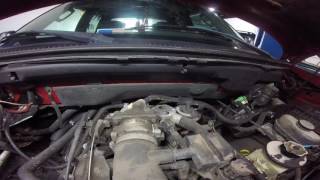
How to confirm: Tap the IAC valve (located on the throttle body, usually held by two 8mm bolts) with a 🎬 Watch: How to locate and replace the IAC valve screwdriver handle; if the idle changes, the valve is likely sticking. You can also remove the valve and inspect it for carbon buildup. A more definitive test involves checking for voltage at the connector with a multimeter and checking the valve's internal resistance.
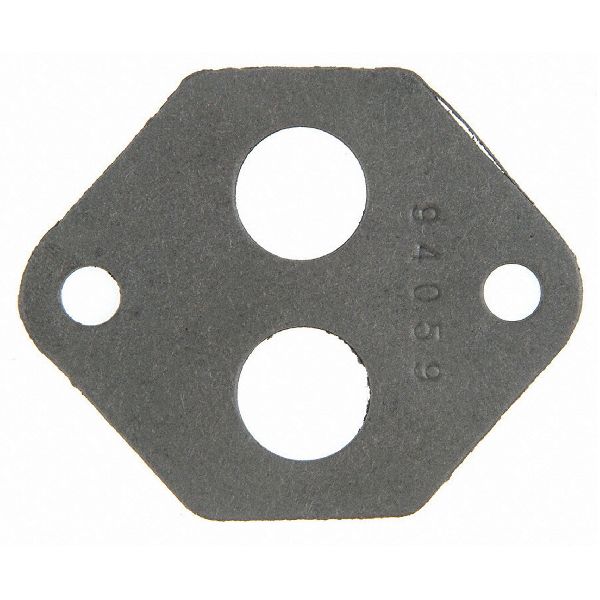
Typical fix: Cleaning the IAC valve with carburetor cleaner can be a temporary fix, but replacement is often the more reliable, long-term solution. Always replace the gasket to prevent vacuum leaks. A relearn procedure is generally not required, as the computer will adapt, but disconnecting the battery for 15 minutes during the repair can speed up the process.
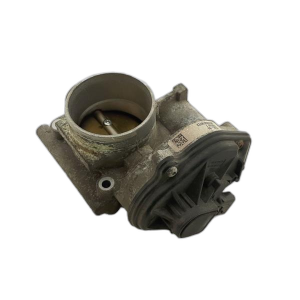
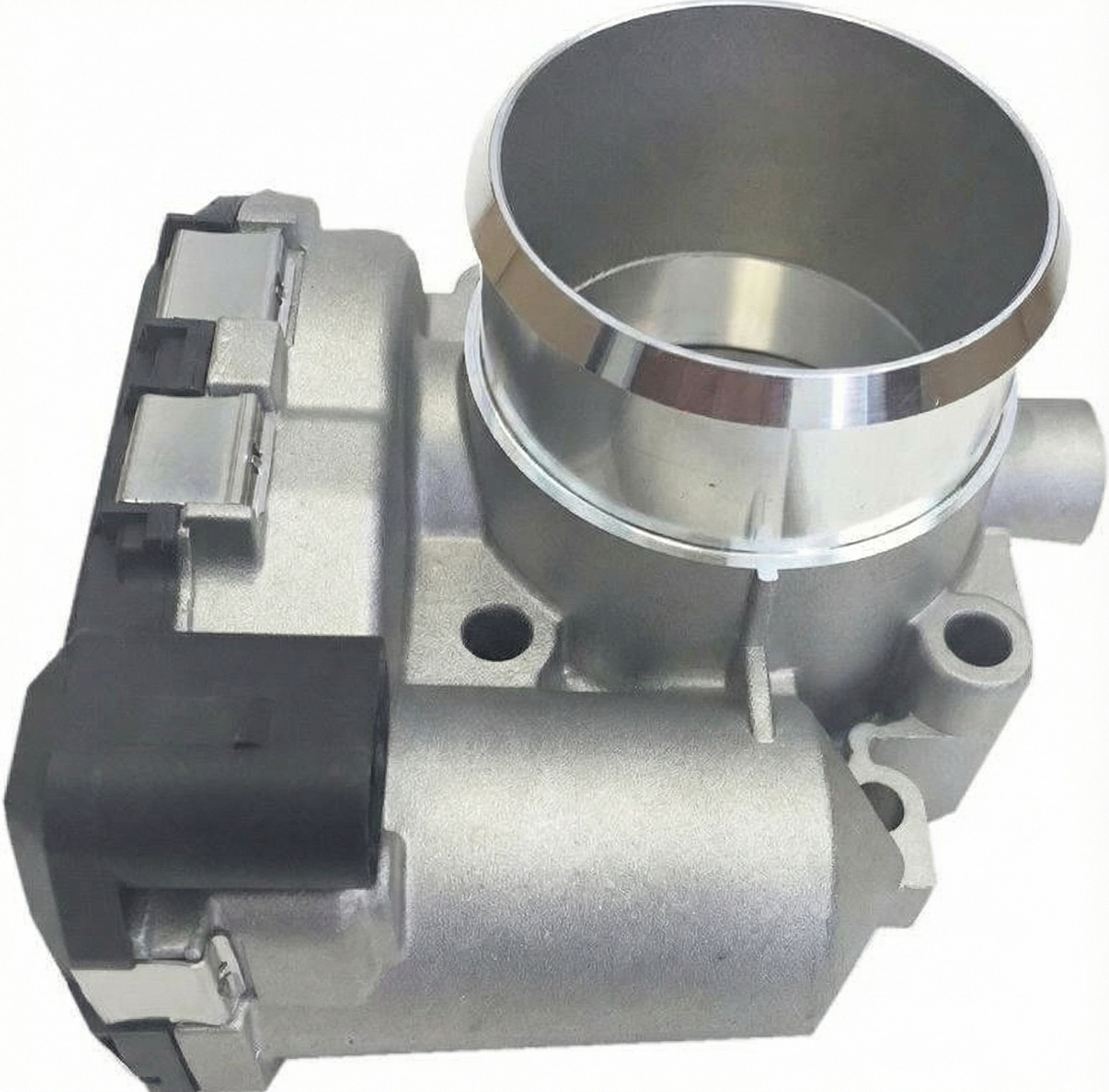
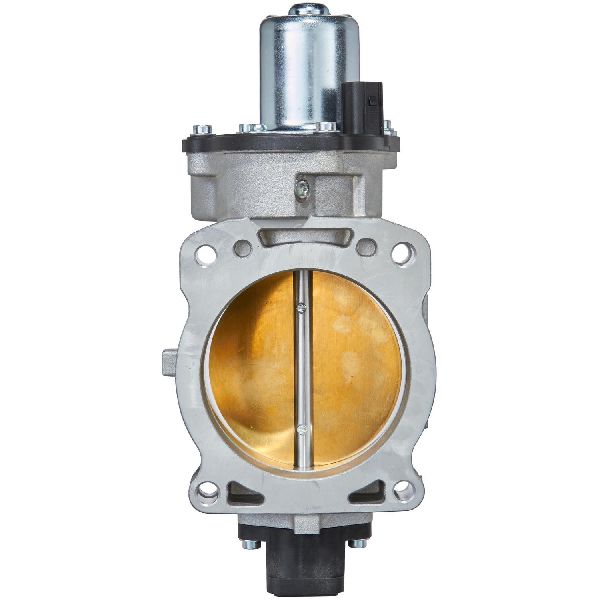
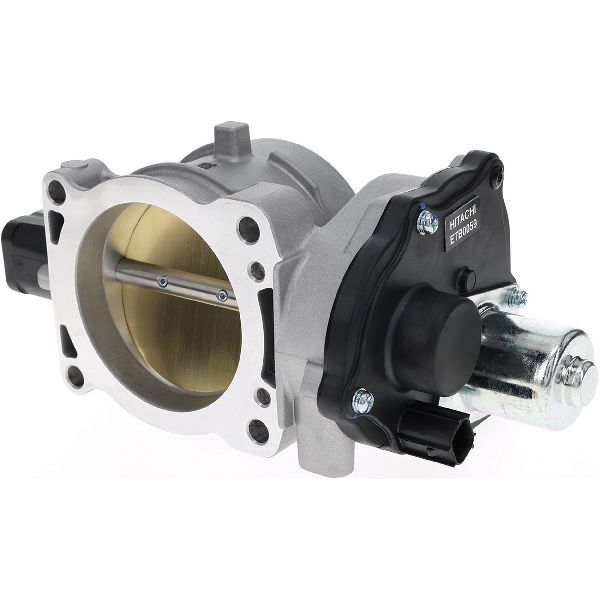
Est. part cost: $50-$150 - Dirty or Failing Electronic Throttle Body (ETB) (5.4L 3V V8 only) 🔴 High Probability → Shop Fuel Injection Throttle Body Carbon and sludge from the PCV system can build up around the throttle plate, preventing it from closing properly to maintain the correct idle airflow. The internal electronics or motor can also fail, sometimes putting the truck into a 'failsafe' or 'limp home' mode. This is a widely documented issue in owner forums and is addressed by Ford TSB 12-7-4. In a cross-manufacturer investigation, NHTSA ODI Investigation #PE11018 noted that Ford attributed similar surge conditions and DTCs P0505 or P0506 to changes in idle air flow resulting from progressive buildup.
How to confirm: Remove the air intake tube and visually inspect the throttle body bore and plate for black carbon buildup. A scan tool may show codes related to the throttle position sensor (like P2135) or throttle actuator control (P2111, P2112) if the electronics are failing. A professional scan tool (like Ford's IDS) can read theETC_TRIMPID; a value over 3.5 degrees strongly indicates excessive buildup requiring cleaning.
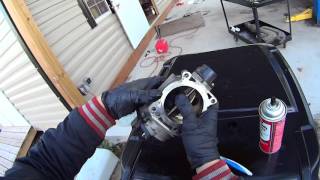
Typical fix: Thoroughly clean the throttle body bore and plate with a dedicated throttle body cleaner and a soft, lint-free cloth. Do not use abrasive brushes. If cleaning doesn't resolve the issue or if sensor-related codes are present, the entire throttle body assembly must be replaced. After cleaning or replacement, a PCM reset and idle relearn procedure is required.
Est. part cost: $150-$350 - Vacuum Leak 🟡 Medium Probability Rubber vacuum hoses and intake gaskets can become brittle and crack over time, allowing unmetered air to enter the engine. The PCV valve hose elbow, especially the one on the passenger side valve cover going to the back of theintake, is a particularly common failure point on Ford trucks of this era and can cause a hissing sound.
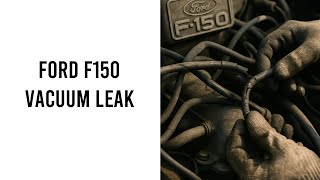
How to confirm: Listen for a hissing sound around the engine bay at idle. You can carefully spray short bursts of carburetor cleaner or use a smoke machine around vacuum lines and gasket mating surfaces; if the engine idle changes, you've found the leak. A smoke test is the most definitive way to find a leak. 🎬 See this guide on finding common F150 vacuum leaks
Typical fix: Replace the cracked hose or faulty gasket. PCV valve hoses are inexpensive and easy to replace. A leaking PCV hose can absolutely cause the idle issues associated with P0505.
Est. part cost: $10-$100
Rare But Worth Checking
- Faulty Powertrain Control Module (PCM): → Shop Engine Control Module (ECM) This is very rare. Before suspecting the PCM, all other possibilities, including wiring issues to the IAC or throttle body, must be exhaustively ruled out. Forum members often caution against blaming the PCM, as it rarely fails. A PCM failure is a last-resort diagnosis.
- Wiring Harness Issues: The wiring or connector to the IAC valve or electronic throttle body can become frayed, corroded, or melted, causing an open or short in the circuit. This will prevent the component from receiving correct signals from the PCM.
Diagnosis Steps
- Identify Your Engine: Determine if you have the 4.2L V6, 4.6L V8, or the 5.4L V8, as the diagnostic path differs significantly.
- Check for Vacuum Leaks: Listen for hissing noises. Inspect all vacuum hoses connected to the intake manifold and throttle body, especially the PCV hose and its connections, which are known to crack and leak. A smoke test is the most effective method.
- For 4.6L/4.2L Engines (IAC Valve): Locate the IAC valve on the side of the throttle body. Tap it to see if the idle changes. If so, remove the two 8mm bolts, disconnect the electrical connector, and either clean it thoroughly with carburetor cleaner or replace it. Replacement is often a more permanent fix than cleaning. Always use a new gasket.
- For 5.4L Engines (Electronic Throttle Body): Remove the air intake ducting. Inspect the throttle plate for heavy carbon buildup. If dirty, clean it carefully with throttle body cleaner and a soft rag. If cleaning doesn't work or other throttle-related codes (P2111, P2112, P2135) are present, the throttle body assembly likely needs replacement.
- Test the Electrical Circuit: If a new IAC or throttle body doesn't fix the issue, use a multimeter to check for proper voltage (approx. 12V) and ground at the component's electrical connector to rule out a wiring problem.
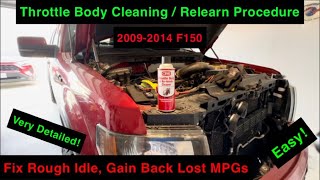
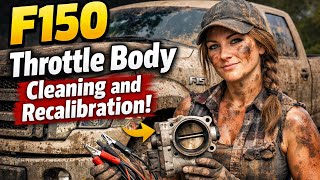
- Perform Idle Relearn: After any cleaning or replacement, disconnect the battery for at least 15 minutes to clear the PCM's memory (Keep Alive Memory). Reconnect it, start the engine, let it warm up to full operating temperature, then let it idle for several minutes with A/C off, followed by several minutes with A/C on. Drive for at least 10 miles to allow the PCM to fully relearn. 🎬 Watch: Step-by-step throttle body cleaning and relearn procedure
Parts You'll Likely Need
- Idle Air Control (IAC) Valve (4.6L/4.2L only)
(OEM #Motorcraft CX-1765 (for 4.2L V6), Motorcraft CX-1948 (for 4.6L V8))— This is the most common failure point for idle issues on the V6 and 2-valve V8 engines. It gets stuck from carbon buildup.
Trusted brands: Motorcraft, Hitachi, Standard Motor Products
OEM price range: $100-$150
Aftermarket price range: $50-$90 - Electronic Throttle Body (5.4L 3V only)
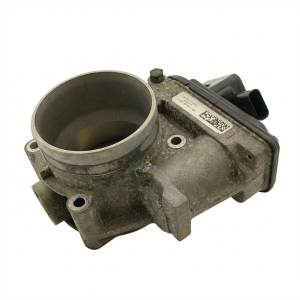
(OEM #Motorcraft 8L3Z-9E926-A (Supersedes older numbers))— On the 3-valve V8, the entire unit controls idle. Carbon buildup or electronic failure requires cleaning or replacement of the assembly. Dorman offers an OE-Fix version (e.g., 977-594) with an improved non-contact sensor.
Trusted brands: Motorcraft, Bosch, Dorman OE Fix
OEM price range: $250-$350
Aftermarket price range: $150-$250
Related Codes That Often Appear With This One
- P0506 — This code means 'Idle Air Control System RPM Lower Than Expected' and points to the same set of faults as P0505, but specifically when the idle is too low. Ford has issued TSBs that group P0505 and P0506 together for the same throttle body issues.
- P0507 — This code means 'Idle Air Control System RPM Higher Than Expected' and points to the same set of faults, but specifically when the idle is too high, often due to a vacuum leak or stuck IAC/throttle plate.
- P2135 — On 5.4L engines, this code for 'Throttle/Pedal Position Sensor/Switch 'A'/'B' Voltage Correlation' often appears with idle issues, indicating a failing electronic throttle body assembly.
- P2111 / P2112 — On 5.4L engines, these codes indicate the Throttle Actuator Control system is stuck open or closed. They can appear alongside P0505, especially after the battery has been disconnected, pointing to a sludged or failing throttle body.
Technical Service Bulletins (TSBs) & Recalls
- TSB 08-18-2: Addresses P0505/P0506, hesitation, and hard starts on 5.4L and 4.6L engines. The fix involves cleaning the throttle body of engine deposits and reprogramming the PCM with an updated calibration that includes a 'sludge compensation strategy'. This TSB notes the condition is common after a battery disconnect or KAM reset.
- TSB 11-10-21: As noted in NHTSA ODI #11052150 regarding idle instability and DTCs P0505 or P0506, Ford issued this bulletin which includes updated powertrain control calibration.
- SSM 46085: A general service message advising technicians that certain PIDs (ETC_ACT, ETC_DSD) in the diagnostic manual should not be used to diagnose electronic throttle body concerns, indicating a revision in diagnostic procedures.
Platform-Specific Known Issues
- 5.4L 3V Throttle Body Sludge and Relearn: → Shop Fuel Injection Throttle Body The 5.4L engine is particularly susceptible to sludge buildup in the throttle body, which can cause P0505/P0506, especially after the battery has been disconnected. Ford released TSB 08-18-2 which involves a PCM reflash to add a 'sludge compensation strategy' in addition to cleaning the throttle body.
- PCV Hose Elbow Failure: → Shop PCV Valve Hose A very common failure is the rubber elbow on the PCV hose, particularly the one connecting to the rear of the intake manifold. It deteriorates from heat and oil, creating a large vacuum leak that causes a high or surging idle.
Mechanic-Grade Diagnostic Values
- Idle Air Control (IAC) Valve Resistance (4.6L/4.2L only) — expected: 6 to 15 Ohms. Failure: A reading of 0 Ohms or infinite resistance (open circuit) indicates a failed internal coil.
- Electronic Throttle Control Trim (ETC_TRIM) PID (5.4L 3V only) — expected: Less than 3.0 - 3.5 degrees at warm idle. Failure: A value greater than 3.5 degrees indicates the PCM is commanding the throttle plate open further than expected to achieve target idle, usually due to carbon buildup restricting the idle air gap.
- Base Idle Speed (IAC disconnected, 4.6L/4.2L only) — expected: 500 - 550 RPM on a fully warmed engine. Failure: If the idle is significantly higher or lower, the throttle stop screw may be misadjusted, preventing the IAC from having the proper range of authority to control idle speed.
- Accelerator Pedal Position (APP) Sensor Potentiometer 1 Voltage (5.4L 3V) — expected: Approx. 3.8V at idle (pedal up), sweeping smoothly to 3.0V at full press.. Failure: Voltage spikes, dropouts, or readings outside this range can cause erratic throttle response that may be confused with an idle control issue.
- Accelerator Pedal Position (APP) Sensor Potentiometer 2 Voltage (5.4L 3V) — expected: Approx. 3.6V at idle (pedal up), sweeping smoothly to 0.8V at full press.. Failure: Voltage spikes, dropouts, or readings outside this range. The PCM compares the two signals for correlation; a mismatch will set codes like P2135.
Hidden / Shadow Codes Worth Checking
- ETC_TRIM (PID): This is not a trouble code, but a live data Parameter ID (PID) that shows the learned angular adjustment the PCM is applying to the electronic throttle plate at idle. A high value indicates the PCM is compensating for an airflow restriction. (see via Requires a professional-grade scan tool like Ford's Integrated Diagnostic System (IDS) or an equivalent high-end scanner capable of reading manufacturer-specific PIDs.)
Scan Tool Commands That Help
- Ford IDS (Integrated Diagnostic System): Datalogger & Module Programming — Use the datalogger to monitor the
ETC_TRIMPID to confirm a dirty throttle body on 5.4L engines. The Module Programming function can be used to update the PCM software, which Ford sometimes recommended in TSBs for idle issues. IDS can also be used to reset the Keep Alive Memory (KAM) and initiate relearn procedures.
Wiring & Ground Locations
- Engine to Firewall Ground Strap — Typically runs from a stud on the firewall to a stud on the rear of the passenger-side cylinder head, just below the intake manifold.. A poor engine ground can cause erratic behavior in all engine sensors and actuators, including the IAC valve or electronic throttle body, leading to incorrect idle control.
- G103 / G104 — Reported to be located on or near the bellhousing, behind the oil pan area.. These are major PCM and sensor ground points. Corrosion or looseness at these locations can cause a wide range of driveability issues, including codes like P0505.
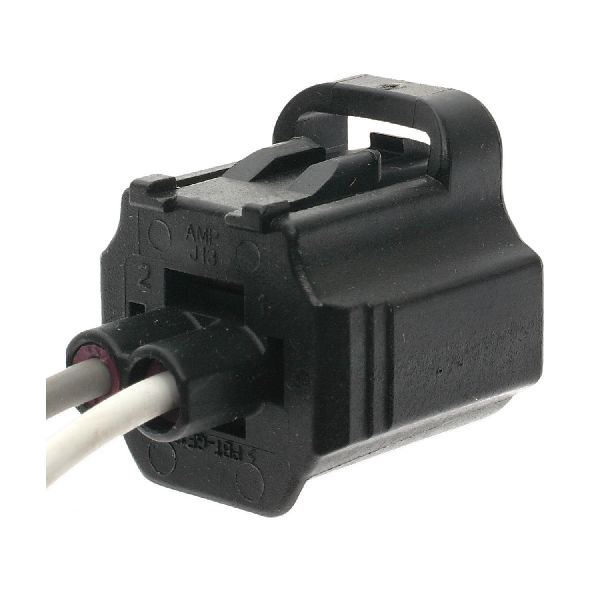
- IAC Valve Connector (4.6L/4.2L) — Two-wire connector on the IAC valve itself.. One pin should have >10.5V with key-on (VPWR), and the other is the control signal from the PCM. Checking for power here is a key step in diagnosing a non-responsive IAC.
Real Owner Repair Stories
- F150online Forums (2003 Ford F-150 (similar IAC system)) — High idle when A/C is off, normal idle when A/C is on.
❌ Tried (didn't work) Replacing the IAC valve multiple times, including with aftermarket parts that tested bad out of the box.
✅ What actually fixed it The underlying issue was an incorrect base idle setting. The final fix required disconnecting the new, functional IAC valve, starting the warm engine, and adjusting the throttle plate stop screw until the base idle was between 500-550 RPM. After reconnecting the IAC, the PCM could then control the idle properly within its intended range. - Ford F150 Forum (Ford F-150 (generation unspecified, but relevant to ETB)) — Poor MPG after cleaning throttle body and performing a relearn procedure.
❌ Tried (didn't work) A standard key/pedal relearn procedure.
✅ What actually fixed it The advice from veteran members was that a simple battery disconnect may not be enough. To ensure a full reset of the Keep Alive Memory (KAM), it's necessary to disconnect both battery terminals and touch the cable ends together for a few minutes to completely drain the PCM's capacitors before starting the idle relearn process.
Documented NHTSA Reports
NHTSA ODI #10383032
Symptoms: An owner reported stalling issues and conflicting codes, including P0505.
What fixed it: The throttle body was replaced to address code P0505. However, the truck stalled again shortly after, leading to the discovery of a pinpoint leak in the resonator hose (code P0102).
OEM Part Supersession History
Multiple older numbers (e.g., 4L3Z-9E926-AA, 6L3Z-9E926-A)→8L3Z-9E926-A— Revisions to improve reliability and address failures of the internal electronics.
Heads up: Using an older or incorrect part number may lead to premature failure. The latest revision, 8L3Z-9E926-A, is the recommended replacement for all 2004-2008 5.4L 3V F-150s.
Model Year Variations Within This Range
- 2007-2008: For the 5.4L 3V engine, a significant change was made to the cylinder heads for engines built after October 9, 2007. These newer heads use a one-piece spark plug design to solve the common issue of the older two-piece plugs breaking during removal. While this doesn't directly cause P0505, it's a critical service variation within this year range.
- 2004-2006 vs 2005-2007: Ford issued different Technical Service Bulletins for idle issues on different subsets of this generation. TSB 12-7-4 covers 2004-2006 F-150s with 4.6L/5.4L engines, while TSB 12-8-1 covers 2005-2007 F-150s with the 4.2L engine, suggesting different software calibrations or diagnostic criteria.
Diagnostic Flowchart
Real Owner Stories
Aggregated from forums and TSBs cited above. Mileages and costs reflect what owners reported in those sources.
Ford F-150 5.4L 3V
Symptoms: Triggered a P0505 code when the engine was getting warm.
What fixed it: Advised by other owners to clean the throttle body and check for vacuum leaks, noting specifically that the 5.4L engines do not have an idle air control valve.
Source hint: f150forum.com: '5.4l 3v when getting warm'
2004 Ford F-150 5.4L
Symptoms: Experienced low speed stalling and a very low idle (350-400 RPM) with no check engine light codes present.
What fixed it: Cleaned the throttle body and MAF sensor, which completely resolved the stalling and restored a smooth 650 RPM idle.
Source hint: f150online.com: ''04 5.4L low speed stalling problem. Idle VERY low.'
Ford F-150
Symptoms: Intermittent rough idle and stalling after other repairs, accompanied by a noticeable hissing noise from the engine bay.
What fixed it: Identified and addressed a vacuum leak at the PCV valve hose, which was confirmed by experienced members as a primary cause for the symptoms.
Source hint: ford-trucks.com: 'Idle issues. PCV Valve hose?'
Related OBD-II Codes
Frequently Asked Questions
Does my 5.4L F-150 have an Idle Air Control (IAC) valve that needs cleaning for P0505?
Is there a TSB for the P0505 code on my 2004-2008 F-150?
I disconnected my battery and now my truck is stalling and throwing P0505. Why did this happen?
I hear a hissing sound from the passenger side of the engine bay. Could this cause P0505?
How do I perform an idle relearn after cleaning the throttle body or replacing the IAC valve?
What scan tool data should I look at to confirm a dirty throttle body on my 5.4L?
Helpful Videos
Used OEM Parts in Stock
New Aftermarket Parts Available



The information in this article is provided for general reference and educational purposes only. Vehicle specifications, procedures, and part compatibility can vary by production date, trim level, and region. Always consult your vehicle's factory service manual and verify part numbers before purchasing or performing repairs. Safety-critical components such as airbags, seat belts, and braking systems should be installed by a qualified professional.
- Ford F-150:
- 🧭 Diagnostic Flowchart
- 🎬 Helpful Videos
- 🛍️ Shop This Part
- What's Unique About the 2004-2008 Ford F-150
- Symptoms You May Notice
- Most Likely Causes
- Rare But Worth Checking
- Diagnosis Steps
- Parts You'll Likely Need
- Related Codes That Often Appear With This One
- Technical Service Bulletins (TSBs) & Recalls
- Platform-Specific Known Issues
- Mechanic-Grade Diagnostic Values
- Hidden / Shadow Codes Worth Checking
- Scan Tool Commands That Help
- Wiring & Ground Locations
- Real Owner Repair Stories
- Documented NHTSA Reports
- NHTSA ODI #10383032
- OEM Part Supersession History
- Model Year Variations Within This Range
- Real Owner Stories
- Ford F-150 5.4L 3V
- 2004 Ford F-150 5.4L
- Ford F-150
- Related OBD-II Codes
- Frequently Asked Questions
- 🎟️ Get 5% Off