

P0505 on 2005-2007 Ford Freestyle 3.0L: Idle Control Fixes for Stalling and Rough Idle
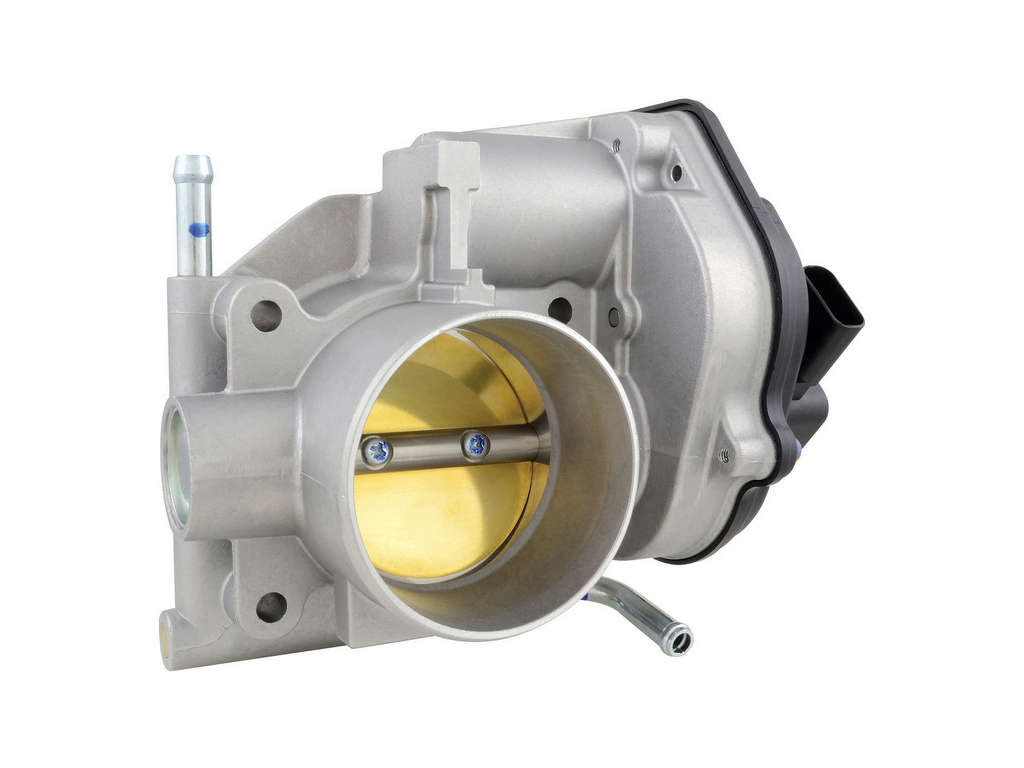
On a 2005-2007 Ford Freestyle, code P0505 is almost always caused by a dirty Electronic Throttle Body (ETB). The most likely fix is to clean the throttle body and plate with a dedicated cleaner, which costs under $15. If cleaning doesn't work, the entire ETB may need replacement. This issue is also identical on its platform mates, the Ford Five Hundred and Mercury Montego.
- P0505 on the 2005-2007 Freestyle points to a problem with the Electronic Throttle Body (ETB), not a separate IAC valve.
- The first and most effective step is to thoroughly clean the carbon buildup from the throttle body and plate.
- Always use a new gasket when reinstalling the throttle body to prevent vacuum leaks.
- If cleaning does not solve the stalling or rough idle, the entire ETB assembly likely needs to be replaced.
- Driving with this code can be hazardous due to the risk of the engine stalling in traffic.
What's Unique About the 2005-2007 Ford Freestyle
The Ford Freestyle, and its siblings the Five Hundred and Montego, are known for carbon buildup on the electronic throttle body, which can cause the throttle plate to stick or move improperly. This is such a common issue that Ford issued a Technical Service Bulletin (TSB) specifically recommending that technicians clean the throttle body to resolve idle fluctuation issues associated with codes P0505 and P0506. Therefore, before considering expensive part replacements, the first step for this code on this vehicle is almost always a thorough cleaning.
Symptoms You May Notice
- Engine stalling when coming to a stop or at idle.
- Rough, erratic, or fluctuating idle speed, sometimes called 'idle hunting'.
- Idle speed is too high or too low.
- Vehicle surging or lurching at low speeds or when coasting.
- Difficulty starting the engine.
- Check Engine Light is on.
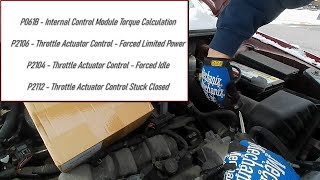
- Wrench light may be illuminated 🎬 Watch: A mechanic explains common Ford Five Hundred throttle issues. on the dashboard.
- Replacing a separate Idle Air Control (IAC) valve. This vehicle does not have one; idle is controlled by the electronic throttle body.
Most Likely Causes
- Dirty or Sticking Electronic Throttle Body (ETB) 🔴 High Probability → Shop Fuel Injection Throttle Body Carbon and gunk accumulate around the throttle plate and bore, a well-documented issue on this platform. This buildup restricts the plate's movement, preventing the fine adjustments needed for idle control.
How to confirm: Remove the air intake hose from the throttle body and visually inspect for a black, tar-like ring of carbon where the throttle plate closes. The plate may feel sticky when moved by hand (with the engine off).
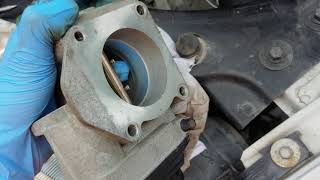
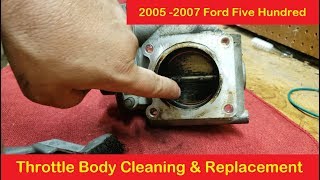
Typical fix: Remove the throttle body and clean it thoroughly with a dedicated throttle body cleaner and a soft brush or cloth. 🎬 Watch: Step-by-step guide to removing and cleaning your throttle body. Pay special attention to the throttle plate edges and the bore. A new gasket should be used on reinstallation. One owner reported significant improvement by using a fuel additive like 'Lucas Upper Cylinder Lubricant' and driving for an hour on the highway, which helped clean deposits without disassembly.
Est. part cost: $10-$20 for cleaner and a gasket. - Vacuum Leak 🟡 Medium Probability Hoses and gaskets become brittle with age and heat cycles, leading to cracks that allow unmetered air to enter the intake manifold, disrupting the PCM's ability to control idle. Common sources include PCV hoses and the intake manifold gaskets.
How to confirm: Visually inspect all vacuum lines connected to the intake manifold for cracks or disconnections. A professional smoke test is the most reliable method to find hard-to-see leaks.
Typical fix: Replace the cracked hose or leaking gasket. Common culprits include the PCV valve hose and intake manifold gaskets.
Est. part cost: $10-$100 depending on the leaking component. - Failing Electronic Throttle Body (ETB) ⚪ Low Probability → Shop Fuel Injection Throttle Body If a thorough cleaning does not resolve the issue, the internal electronic motor or the integrated throttle position sensor may have failed due to contamination of internal contacts. This is a known failure item on this platform, even if cleaning doesn't work.
How to confirm: After cleaning the ETB and confirming no vacuum leaks, the code returns and symptoms persist. A scan tool may show erratic throttle position sensor readings or related codes like P2111 or P2112.
Typical fix: Replace the entire electronic throttle body assembly. 🎬 See this walkthrough on how to replace the throttle body. An idle relearn procedure may be required after installation.
Est. part cost: $150-$400
Rare But Worth Checking
- Wiring or Connector Issue: The wiring harness leading to the electronic throttle body can become damaged or corroded, causing an intermittent signal. Always inspect the connector for bent pins or corrosion when servicing the throttle body.
- Powertrain Control Module (PCM) Failure: → Shop Engine Control Module (ECM) This is very rare, but a faulty PCM can fail to properly command the throttle body. This should only be considered after all other possibilities have been exhaustively ruled out by a professional.
Diagnosis Steps
- Read the code with an OBD-II scanner to confirm P0505 is present.
- Visually inspect the air intake system for any obvious loose connections or damaged hoses.
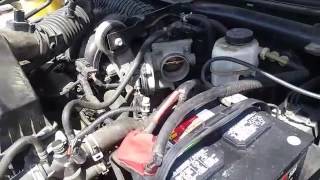
- Remove the air intake duct from the throttle body. Inspect the throttle bore and plate for heavy carbon buildup.
- If dirty, remove the throttle body from the intake manifold. This typically involves removing four 8mm (or 5/16") bolts and disconnecting one electrical connector. Coolant lines may also be connected and will need to be pinched off or drained.
- Clean the throttle body thoroughly using sensor-safe throttle body cleaner and a soft cloth or brush. Do not spray directly into the electronic components; spray the cloth or brush instead.
- Reinstall the throttle body with a new gasket to prevent vacuum leaks.
- Perform an idle relearn procedure. This can often be accomplished by disconnecting the battery for 15 minutes, reconnecting it, and then letting the vehicle idle for about 10 minutes to allow the PCM to relearn idle trims.
- If the problem persists, perform a smoke test to check for vacuum leaks in the intake manifold, PCV system, and other vacuum hoses.
- If no vacuum leaks are found, inspect the throttle body electrical connector and wiring for damage or corrosion.
- If all other steps fail to resolve the issue, the Electronic Throttle Body assembly is likely faulty and requires replacement.
Parts You'll Likely Need
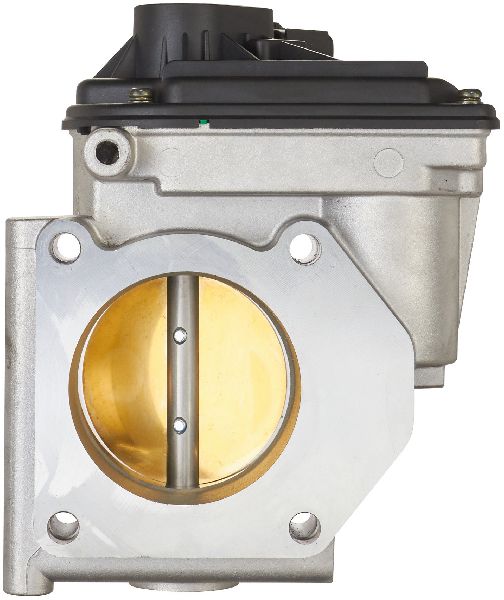
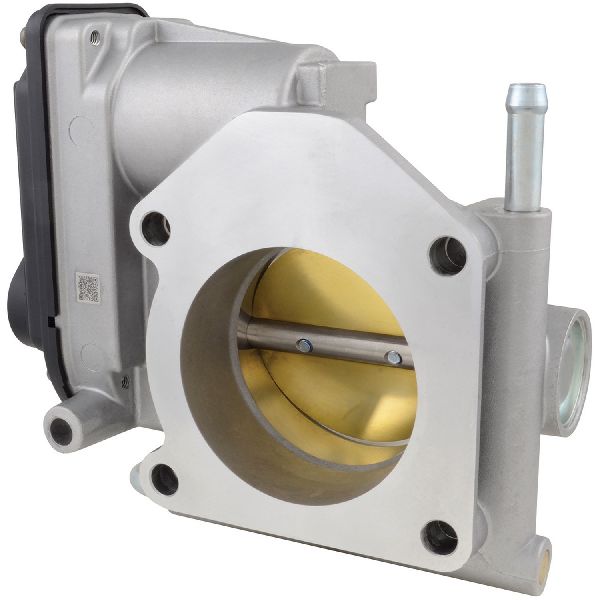
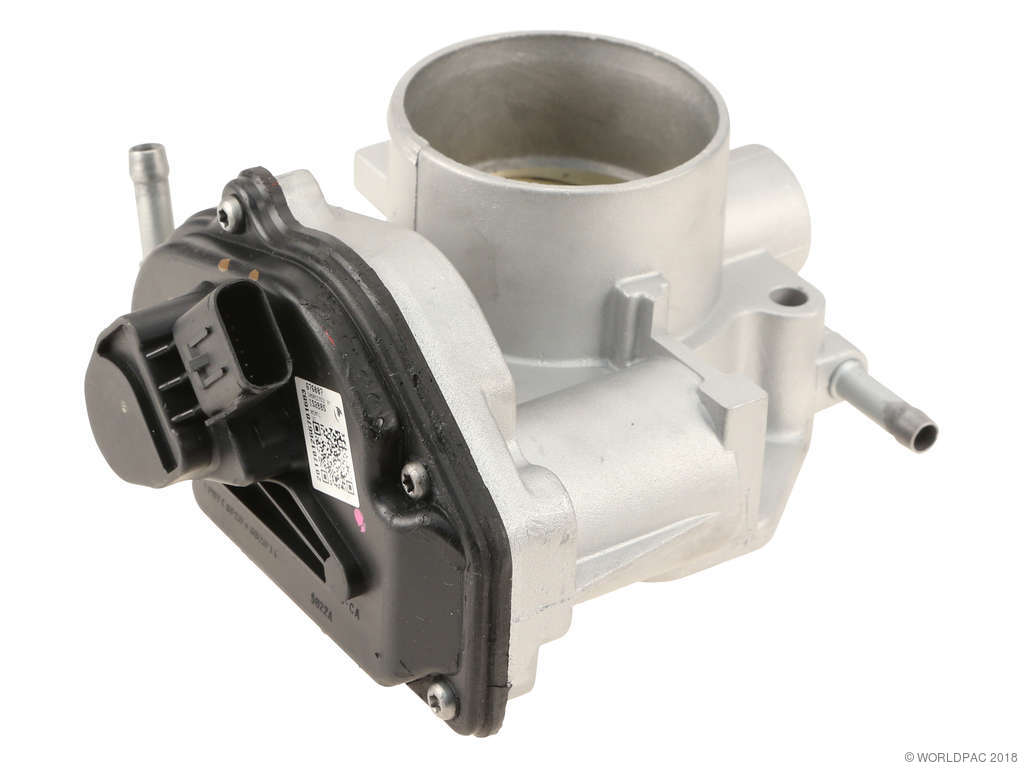
- Electronic Throttle Body Assembly
(OEM #6F9Z-9E926-A (supersedes 5F9Z-9E926-B))— This is the primary component responsible for idle control. If cleaning doesn't fix the issue, the internal electronics have likely failed, requiring a full replacement.
Trusted brands: Motorcraft, Standard Motor Products, SKP
OEM price range: $250-$400
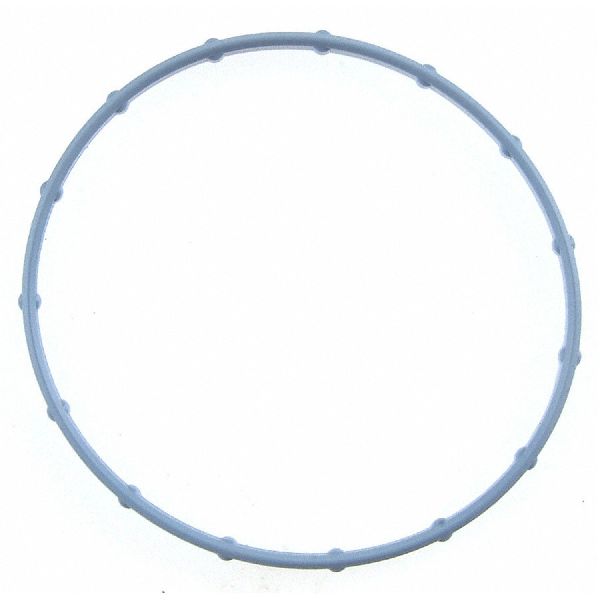
Aftermarket price range: $120-$250 - Throttle Body Gasket — A new gasket should always be used when the throttle body is removed for cleaning or replacement to prevent vacuum leaks.
Trusted brands: Fel-Pro, Mahle, Motorcraft
OEM price range: $10-$20
Aftermarket price range: $5-$15 - Throttle Body Cleaner — This is required for the most common and inexpensive fix: cleaning the carbon buildup from the throttle body.
Trusted brands: CRC, Berryman, Gumout
OEM price range: N/A
Aftermarket price range: $8-$15
Related Codes That Often Appear With This One
- P0506 — This code means 'Idle Control System RPM Lower Than Expected' and is often triggered by the same causes as P0505, particularly a sticking throttle body. Ford TSBs often group these two codes together for this platform.
- P2111 / P2112 — These codes relate to the throttle actuator being stuck open or closed, pointing directly to a mechanical or electrical fault with the Electronic Throttle Body.
Technical Service Bulletins (TSBs) & Recalls
- A Ford TSB for the 2005-2007 Ford Freestyle and Five Hundred specifically mentions cleaning the throttle body to address RPM fluctuations related to codes P0505 and P0506.
- Customer Satisfaction Program 13N03 was issued for other Ford models (2009-2013 Fusion, Escape, etc.) with similar 10-year/150,000-mile extended warranty coverage for throttle body replacement due to internal contamination causing limp mode.
Platform-Specific Known Issues
- While not officially covered, this platform exhibits the same failure mode (internal electronic contamination) described in Ford's Customer Satisfaction Program 13N03, which extended the throttle body warranty on other Ford models. This indicates a known design weakness.
- A Ford TSB was issued for the 2005-2007 Freestyle and Five Hundred suggesting that cleaning the throttle body is the correct first-line procedure for idle RPM fluctuations with codes P0505 and P0506.
Documented NHTSA Reports
- NHTSA ODI Investigation #PE11018 — This investigation into "Idle instability" noted that symptoms associated with the condition may include Check Engine lamp illumination and diagnostic trouble codes P0505, P0506, or P061B. Ford attributed the surge condition to changes in idle air flow resulting from the progressive buildup of deposits in the throttle body.
Mechanic-Grade Diagnostic Values
- Throttle Position Sensor (TPS) Signal Voltage at Idle — expected: ~0.95V - 1.0V DC. Failure: Voltage is stuck high, low, or does not change smoothly as the throttle plate is manually opened.
- Throttle Position Sensor (TPS) Signal Voltage at Wide-Open Throttle (WOT) — expected: ~4.5V - 4.65V DC. Failure: Voltage does not reach the expected range or shows erratic jumps/drops while opening the throttle.
- TPS 5V Reference Voltage (at connector, Key On Engine Off) — expected: Approximately 5.0V DC. Failure: Voltage is significantly lower than 4.5V or absent, indicating a wiring or PCM issue, not a sensor fault.
- PCM Ground Strap Resistance — expected: Less than 0.1 Ω. Failure: Higher resistance indicates a poor ground, which can cause various electronic issues, including erratic idle control.
- Scan Tool PID: Desired vs. Actual Throttle Plate Position — expected: Values should closely match at all times (idle, part throttle, etc.).. Failure: A significant and persistent deviation between the desired and actual values points to a failing throttle body motor or a sticking throttle plate.
- Scan Tool PID: Deviation of Engine Speed from Target — expected: Deviation should be minimal, typically less than 100-150 RPM.. Failure: The PCM may set code P0505 if the actual idle RPM deviates from the target by more than a specified amount (e.g., 150-200 RPM) multiple times during a drive cycle.
Scan Tool Commands That Help
- Ford IDS (Integrated Diagnostic System): Throttle Body/Pedal Diagnostics — To monitor live data PIDs for desired vs. actual throttle angle, pedal position, and related sensor voltages to confirm if the throttle body is responding correctly to commands.
- Ford IDS (Integrated Diagnostic System): Clear PCM Adaptive Memory / KAM Reset — After cleaning or replacing the throttle body, this function forces the PCM to erase its learned idle trim values and begin a new learning process. This is a more robust alternative to disconnecting the battery.
- Professional OBD-II Scanner: Idle Relearn Procedure — Many high-end scanners have a dedicated function to initiate the idle relearn process after a throttle body service, which is often required to stabilize the idle.
Wiring & Ground Locations
- Powertrain Control Module (PCM) — In the engine compartment, mounted on the driver's side near the firewall, close to the intake manifold or battery.. The PCM is responsible for commanding the electronic throttle body. A poor connection or faulty ground at the PCM can cause P0505 and other drivability issues.
- Electronic Throttle Body Connector — Directly on the Electronic Throttle Body, where the engine wiring harness connects. It is a multi-pin connector (typically 6-pin on these models).. This is the direct interface for power, ground, and signal between the PCM and the throttle body. Corrosion, bent pins, or damaged wires here will directly cause P0505.
- PCM Ground — While specific ground point designators (e.g., G101) for the Freestyle are not easily found in public sources, primary engine and PCM grounds are typically located on the engine block, firewall, or inner fender near the battery.. A faulty PCM ground can lead to incorrect sensor readings and improper actuator commands, mimicking a throttle body failure.
Real Owner Repair Stories
- Ford Tech Makuloco YouTube Channel (Ford Five Hundred (platform mate)) — Surging, no-start conditions, and codes indicating a throttle plate position error.
❌ Tried (didn't work) The video focuses directly on the known common failure, implying that simple cleaning is often insufficient.
✅ What actually fixed it Complete replacement of the Electronic Throttle Body. The technician noted that even after a recall, these units commonly fail. He also highlights that replacement units are no longer coolant-heated and require bypassing the old coolant lines. - Scott Link Media blog post (2006 Ford Freestyle) — Sudden lunging in reverse, intermittent 'Yellow Wrench' and Check Engine lights, stalling at highway speeds, and unintended acceleration at stops.
❌ Tried (didn't work) Initial diagnosis was unclear; the owner suspected a transmission problem.
✅ What actually fixed it A Ford dealership diagnosed and replaced the entire electronic throttle body assembly at a cost of nearly $900. The owner later received a full reimbursement from Ford under an extended warranty program (Customer Satisfaction Program 13N03) that covered the part for 10 years/150,000 miles.
OEM Part Supersession History
5F9Z-9E926-B (and others)→6F9Z-9E926-A— The original design was prone to electronic failure and may have included coolant heating passages.
Heads up: The newer part (6F9Z-9E926-A) and most aftermarket replacements do not have the coolant heating passages found on some original units. When installing a new throttle body, the two small coolant hoses must be disconnected from the old unit and connected together with a bypass fitting, or simply looped.
Diagnostic Flowchart
Other Known Issues on This Vehicle
Issues unrelated to this code that are worth knowing about as an owner of this generation:
- CVT Transmission Failure 🔴 High — Very common, can occur anywhere from 75,000 to 150,000 miles. Failure can be sudden and complete, often requiring full replacement.
- Leaking/Collapsed Engine Mounts 🟠 Medium — Common failure item. Symptoms include cabin vibrations at idle, and a 'clunk' when shifting into drive or reverse.
- Internal Water Pump Failure 🔴 High — The water pump is internal to the engine and camshaft-driven. Failure is a labor-intensive and expensive repair, often costing over $1,000. Some aftermarket pumps have been reported to cause camshaft damage.
Used vs. New Parts: Buying Guide for This Vehicle
When a used part is the smart pick: A used throttle body is a high-risk purchase for this vehicle. The part has a known high failure rate due to internal electronics, and a used part from a donor vehicle is likely to have similar wear or be close to failure. It should only be considered as a very temporary, low-cost option if the donor vehicle has very low mileage.
Donor-vehicle mileage cap: roughly under 60000 miles for the part to have meaningful remaining life.
What to inspect on the donor part:
- Verify the part number matches (e.g., 6F9Z-9E926-A or a compatible predecessor).
- Inspect the electrical connector pins for any signs of corrosion, moisture, or damage.
- Manually (with engine off) move the throttle plate; it should move smoothly without any gritty feeling or binding.
- Ask for the VIN of the donor car to check its mileage and history if possible.
OEM-only on this vehicle (don't cheap out):
- While not strictly 'OEM-only', using a new Motorcraft (Ford's OEM brand) throttle body is the most reliable, albeit most expensive, fix. Given the high failure rate of this component, investing in a quality part is recommended to avoid repeat repairs.
Aftermarket brands forum-validated for this vehicle:
- Standard Motor Products (SMP)
- SKP
Brands owners have reported issues with on this vehicle:
- Unbranded, 'white-box' parts from online marketplaces have a high reported failure rate. While brands like Dorman are common, some professional technicians express a preference for OEM or SMP for this specific critical component.
Real Owner Stories
Aggregated from forums and TSBs cited above. Mileages and costs reflect what owners reported in those sources.
2005 Ford Freestyle 3.0L V6 — ~100000 miles
Symptoms: Vehicle was surging and stalling. A dealer quoted nearly $800 for a throttle body replacement.
What fixed it: Used a fuel additive (Lucas Upper Cylinder Lubricant) and drove for an hour on the highway to clean the system.
Cost: $0-$20
Source hint: 2CarPros.com - '2005 Ford Freestyle Ford Freestyle clogged Throttle body'
2005 Ford Freestyle 3.0L V6
Symptoms: Intermittent stalling when the engine was warm and 'idle hunting'.
What fixed it: The owner cleaned the throttle body and replaced the gasket, but the symptoms persisted, indicating the electronic throttle body assembly itself had likely failed and required replacement.
Source hint: CarKiller.com - 'Intermittent Stalling 05 Freestyle'
Related OBD-II Codes
Frequently Asked Questions
Is there a Ford TSB for idle fluctuations on the 2005-2007 Freestyle?
Does the Customer Satisfaction Program 13N03 cover my 2005-2007 Ford Freestyle?
Can I use a fuel additive to fix the P0505 code without taking the engine apart?
What is the recommended first step if my Freestyle is 'idle hunting' or stalling at stops?
Will I need to perform any special procedures after cleaning or replacing the throttle body?
Are there specific vacuum hoses I should check on the 3.0L Duratec V6 for this code?
Helpful Videos
We Have This Part in Stock


The information in this article is provided for general reference and educational purposes only. Vehicle specifications, procedures, and part compatibility can vary by production date, trim level, and region. Always consult your vehicle's factory service manual and verify part numbers before purchasing or performing repairs. Safety-critical components such as airbags, seat belts, and braking systems should be installed by a qualified professional.
- Ford Freestyle:
- 🧭 Diagnostic Flowchart
- 🎬 Helpful Videos
- 🛍️ Shop This Part
- What's Unique About the 2005-2007 Ford Freestyle
- Symptoms You May Notice
- Most Likely Causes
- Rare But Worth Checking
- Diagnosis Steps
- Parts You'll Likely Need
- Related Codes That Often Appear With This One
- Technical Service Bulletins (TSBs) & Recalls
- Platform-Specific Known Issues
- Documented NHTSA Reports
- Mechanic-Grade Diagnostic Values
- Scan Tool Commands That Help
- Wiring & Ground Locations
- Real Owner Repair Stories
- OEM Part Supersession History
- Other Known Issues on This Vehicle
- Used vs. New Parts: Buying Guide for This Vehicle
- Real Owner Stories
- 2005 Ford Freestyle 3.0L V6 — ~100000 miles
- 2005 Ford Freestyle 3.0L V6
- Related OBD-II Codes
- Frequently Asked Questions
- 🎟️ Get 5% Off