

P0505 on 2005-2006 Ford Mustang: Idle Control System Malfunction Causes and Fixes
On a 2005-2006 Mustang, code P0505 is almost always caused by carbon and sludge buildup inside the electronic throttle body. The most common fix is to remove and thoroughly clean the throttle body, a low-cost DIY job. A formal Ford Technical Service Bulletin (TSB 12-8-1) confirms this procedure for P0505 and the related P0506 code.
- For a P0505 code on a 2005-2006 Mustang, start by cleaning the electronic throttle body; this is the most likely fix and is supported by a Ford TSB.
- This vehicle does NOT use an Idle Air Control (IAC) valve, so do not waste time or money on diagnosing or replacing one.
- Always perform an idle relearn procedure after cleaning/replacing the throttle body or disconnecting the battery.
- If cleaning doesn't work, check for vacuum leaks before condemning the expensive electronic throttle body assembly.
What's Unique About the 2005-2006 Ford Mustang
Unlike many vehicles that use a separate Idle Air Control (IAC) valve, the 2005-2006 S197 Mustang generation controls idle speed by making tiny adjustments to the main plate in the electronic throttle body. This design is susceptible to carbon and oil sludge buildup from the PCV system around the edges of the throttle plate, which can cause it to stick or restrict airflow. Ford acknowledged this specific issue in Technical Service Bulletin (TSB) 12-8-1, making a dirty throttle body the most likely culprit, rather than a separate failed part. This phenomenon of progressive buildup causing idle instability is a known characteristic across several Ford platforms from this era, as noted in NHTSA ODI Investigation #PE11018.
Symptoms You May Notice
- Check Engine Light is on
- Engine idle is higher or lower than normal
- Idle speed fluctuates, surges, or is rough
- Engine stalls when coming to a stop or when the gas pedal is released
- Difficulty starting the engine
- Hesitation or stumbling on light acceleration
- Car feels like it wants to 'jump' forward at red lights
- After cleaning the throttle body, the engine may idle very high (e.g., 3000 RPM) until an idle relearn procedure is completed
- Replacing the Idle Air Control (IAC) Valve. This vehicle does not have a separate IAC valve; idle is controlled by the electronic throttle body. Replacing a non-existent part is a common piece of incorrect generic advice for this code.
Most Likely Causes
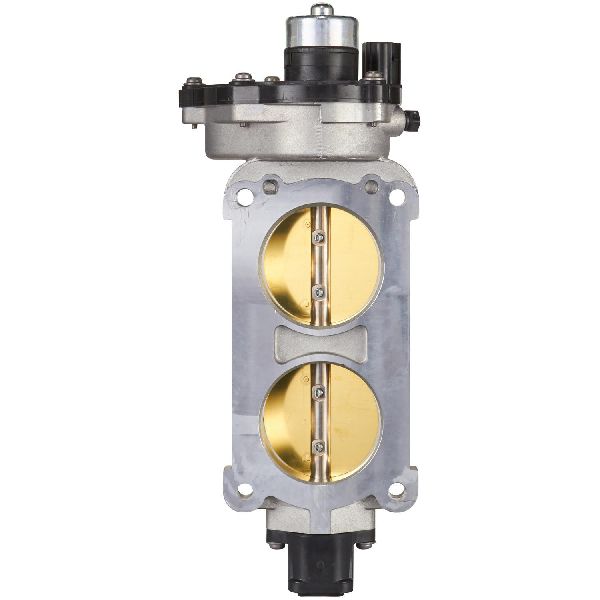
- Dirty Electronic Throttle Body 🔴 High Probability → Shop Fuel Injection Throttle Body As documented in Ford TSB 12-8-1, sludge and carbon from the PCV system can build up in the throttle body bore and on the throttle plate, restricting precise airflow control at idle. Forum users on StangNet and The Mustang Source confirm this is a very common issue, often appearing after 25,000-35,000 miles.
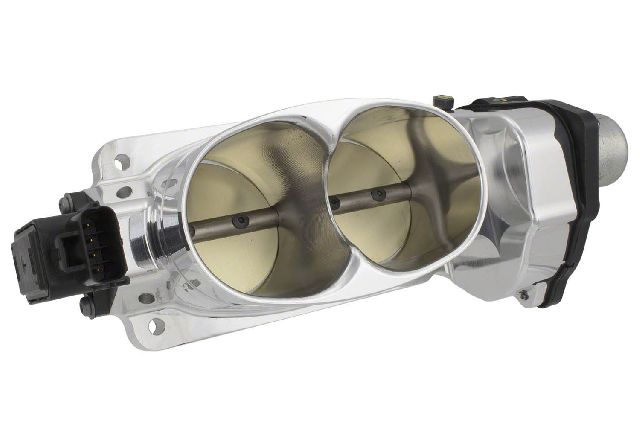
How to confirm: Visually inspect the inside of the throttle body for a black, sticky film, especially around the edges of the throttle plate where it seats. The buildup may not look severe but can be enough to cause a problem. The side of the plate facing the intake manifold is often the dirtiest.
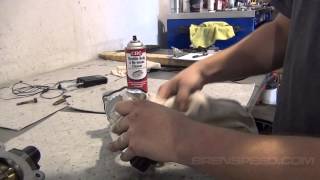
Typical fix: Remove the four 8mm bolts holding the throttle body to the intake manifold and clean it thoroughly with a dedicated throttle body cleaner and a soft brush or lint-free cloth. 🎬 Watch: This Brenspeed tech video shows how to clean your Mustang GT throttle body. Pay special attention to the plate edges and the bore where it seats. Reinstall and perform an idle relearn procedure.
Est. part cost: $5-$15 for cleaner - Vacuum Leak 🟡 Medium Probability Over time, rubber vacuum hoses and plastic fittings can become brittle and crack. A common, hard-to-see culprit on the 4.6L V8 is the EVAP purge valve hose that runs to the throttle body, which can become porous and leak. In a cross-manufacturer reference, NHTSA ODI #10383032 notes that even after a throttle body replacement for code P0505, a vehicle continued to stall until a pinpoint leak in a resonator hose was identified.
How to confirm: Listen for hissing sounds around the engine bay at idle. Inspect all vacuum hoses connected to the intake manifold for cracks, loose fittings, or deterioration, especially the PCV and EVAP lines. A smoke test is the most effective way to find small leaks. You can also carefully spray carb cleaner or propane around suspected areas; a change in idle RPM indicates a leak.
Typical fix: Replace the cracked or leaking vacuum hose or gasket. The Ford part number for the updated EVAP tube assembly on some 4.6L V8s is 8W7Z-9D289-A.
Est. part cost: $10-$100 depending on the hose or gasket - Failed Electronic Throttle Body (ETB) ⚪ Low Probability → Shop Fuel Injection Throttle Body
How to confirm: If a thorough cleaning does not resolve the issue and no vacuum leaks are present, the internal motor or position sensor of the throttle body may have failed. This often requires a scan tool to monitor throttle position sensor data (PIDs) for erratic readings or a failure to respond to commands.
Typical fix: Replace the entire electronic throttle body assembly. After replacement, an idle relearn procedure must be performed.
Est. part cost: $150-$350
Rare But Worth Checking
- Corrupted PCM Memory / Needs Idle Relearn: If the battery was recently disconnected or replaced, or after cleaning the throttle body, the PCM may have lost its learned idle values. Performing an idle relearn procedure can sometimes resolve the code without replacing any parts. One owner on The Mustang Source forum noted high idle after cleaning was resolved by disconnecting the battery for 30 minutes to force a reset.
- Damaged ETB Wiring or Connector: Check the wiring harness and connector going to the electronic throttle body for any signs of chafing, corrosion, or loose pins. This can cause intermittent communication and trigger the P0505 code.
Diagnosis Steps
- Check for Ford TSB 12-8-1. This bulletin specifically addresses P0505 and P0506 on this vehicle, confirming cleaning the ETB as the primary fix.
- Inspect the Electronic Throttle Body (ETB). Remove the air intake tube and visually check for carbon and sludge buildup around the throttle plate and bore. Use a mirror to check the back side of the plate.
- Clean the Throttle Body. If dirty, remove the ETB from the vehicle (typically four 8mm bolts). Using a dedicated throttle body cleaner and a soft brush or microfiber cloth, thoroughly clean all residue. Do not spray cleaner directly into the electronic components. Reinstall with a new gasket if required.
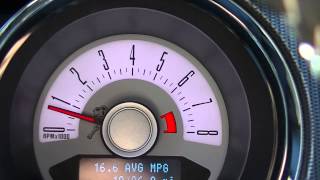
- Perform an Idle Relearn Procedure. This step is crucial after cleaning/replacing the ETB or disconnecting the battery. Start the engine with all accessories off. Let it idle for one minute. Turn the A/C on and let it idle for another minute. Drive the vehicle for at least 10 minutes at various speeds to allow the PCM to relearn the idle and fuel trim strategy. 🎬 See this walkthrough for the proper Mustang GT idle relearn procedure.
- Inspect for Vacuum Leaks. If the problem persists, check all vacuum hoses, the PCV system (especially the hose elbow), and intake gaskets for leaks. A smoke test is the most reliable method. Pay close attention to the EVAP vapor tube on 4.6L models.
- Test the ETB Circuit. If no leaks are found, inspect the wiring and connector to the throttle body for damage. A scan tool can be used to monitor the throttle position sensor voltage for smooth operation.
- Replace the Electronic Throttle Body. If all other steps fail, the throttle body assembly itself is likely faulty and should be replaced.
Parts You'll Likely Need
- Electronic Throttle Body Cleaner — This is required for the most common fix: cleaning the carbon buildup as per Ford's TSB.
Trusted brands: CRC, Motorcraft, Gumout
OEM price range: $10-$20
Aftermarket price range: $5-$15 - Electronic Throttle Body Assembly
(OEM #Motorcraft TCK-2 (for 4.0L V6), 6R3Z-9E926-AA (for 4.6L V8, check specific VIN))— If cleaning fails to solve the problem, the entire unit, which includes the motor and position sensors, must be replaced.
Trusted brands: Motorcraft, Bosch, Hitachi, BBK (Performance Upgrade)
OEM price range: $250-$400
Aftermarket price range: $150-$250 - Throttle Body Gasket
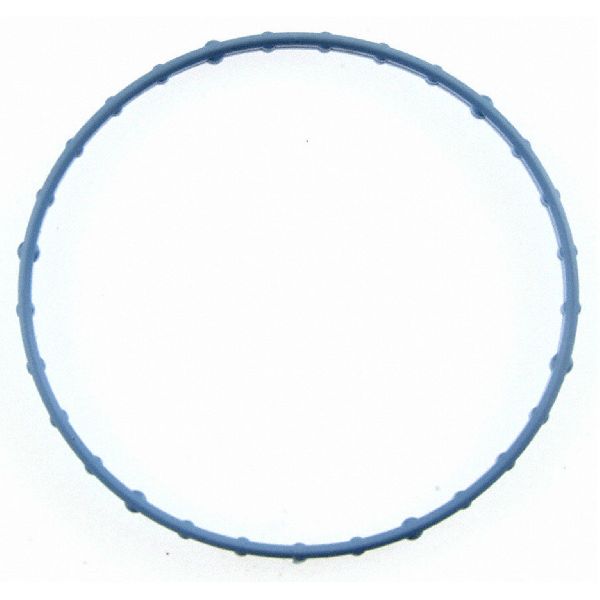
(OEM #Fel-Pro 61356 (for 4.0L V6), Fel-Pro 61426 (for 4.6L V8))— It is best practice to replace the gasket when removing the throttle body to prevent future vacuum leaks.
Trusted brands: Fel-Pro, Motorcraft, Mahle
OEM price range: $10-$15
Aftermarket price range: $5-$10
Related Codes That Often Appear With This One
- P0506 — P0506 indicates 'Idle Air Control System RPM Lower Than Expected.' Both P0505 and P0506 are addressed by the same Ford TSB and are often caused by the same dirty throttle body issue, sometimes appearing together.
- P2111 / P2112 — These codes indicate the throttle actuator is stuck open or closed. They can appear after clearing the PCM's memory if severe carbon buildup prevents the throttle plate from moving properly during its self-test. TSB 12-8-1 mentions these codes can appear after a KAM clear or battery disconnect.
- P061B — This code relates to internal PCM calculation errors often triggered by the same idle air flow changes that cause P0505 and P0506, as noted in NHTSA ODI Investigation #PE11018.
Technical Service Bulletins (TSBs) & Recalls
- TSB 12-8-1: Addresses DTCs P0505 and P0506 caused by sludge buildup in the electronic throttle body on 2005-2006 Mustangs.
- TSB 11-10-21: While issued for related Ford models, this bulletin is cited in NHTSA ODI #11052150 as providing updated powertrain control calibration for vehicles experiencing symptoms associated with P0505 and P0506.
Platform-Specific Known Issues
- Owner Experience: Stalling and Low Idle on 2005 GT: An owner on StangNet forums with a 2005 GT reported codes P0505 and P0506 along with a very low idle, sometimes low enough to stall. Other members confirmed that cleaning the throttle body is the correct first step before considering replacing the entire unit, as the issue is typically buildup behind the butterfly plates causing uneven airflow.
- Owner Experience: High Idle After Cleaning: A user on The Mustang Source forums with a 2005 GT cleaned their throttle body at 55,000 miles to fix throttle lag. After cleaning, the car idled very high and would not 'throttle back'. The issue was resolved by disconnecting the negative battery terminal for 30 minutes to reset the PCM's learned values, followed by a drive cycle to retrain the idle.
Mechanic-Grade Diagnostic Values
- Throttle Position Sensor 1 (TPS1) Voltage — expected: ~4.1V with key on, engine off (KOEO), and throttle closed.. Failure: Significant deviation from 4.1V. Tightening the throttle stop screw lowers this voltage.
- Throttle Position Sensor 2 (TPS2) Voltage — expected: ~1.2V with key on, engine off (KOEO), and throttle closed. The PCM expects to see a value below 1.250V.. Failure: Voltage above 1.25V at closed throttle. Tightening the throttle stop screw raises this voltage. The PCM has a resolution of 0.004V, so small deviations matter.
- PCM Operating Voltage — expected: 13.5V to 14.5V with the engine running.. Failure: Voltage dropping below 9V can cause the idle-control algorithm to reset and trigger the code.
- PCM Ground Strap Resistance — expected: Less than 0.1 Ω.. Failure: Higher resistance indicates a poor ground, which can cause intermittent electrical issues for the idle control system.
Scan Tool Commands That Help
- Ford IDS (or equivalent high-end scanner): Throttle Actuator Command / Bidirectional Control — To manually command the throttle plate to open and close, verifying if the throttle motor is responding to PCM commands. This helps differentiate between a wiring/PCM issue and a failed throttle body motor.
- Manual Procedure: KAM (Keep Alive Memory) Reset — After cleaning or replacing the throttle body, or if the battery was disconnected, to force the PCM to erase its learned adaptive values. This is done by disconnecting the negative battery cable and shorting it to the positive cable (while disconnected from the battery) for a few minutes to drain internal capacitors.
- Manual Procedure: Throttle Calibration / Relearn — To force the PCM to find the new closed-throttle position after cleaning, replacement, or a KAM reset. A common procedure is: turn the key to 'ON' (engine off), wait for dash lights to stabilize, slowly press the accelerator to the floor, slowly release it, then turn the key 'OFF' before starting the engine.
Wiring & Ground Locations
- PCM Location — In the passenger side of the engine bay, next to the fuse box.. This is the location of the main computer controlling the throttle body, and where diagnostic tests on the wiring harness will originate.
- C175T (Engine Connector) — The bottom of the three connectors on the PCM.. This connector contains the wiring for the throttle position sensors.
- TPS1 Signal Wire — Pin E-61, a Gray/White wire, on the C175T PCM connector.. This is the specific pin to test at the PCM for the Throttle Position Sensor 1 signal, allowing a technician to check for wiring integrity between the sensor and the computer.
- TPS Signal Wire (at sensor) — The YELLOW wire on the TPS sensor connector, located on the passenger side of the throttle body.. This is the wire to probe with a multimeter to measure TPS voltage directly at the throttle body, typically for setting an aftermarket unit or diagnosing the sensor itself.
- G100 — Main body ground point in the engine bay.. While not exclusive to the throttle body, ensuring major ground points like G100 are clean and tight is critical for stable sensor readings and preventing intermittent electrical faults that could trigger a P0505.
Real Owner Repair Stories
- Reddit user in r/S197Stangs (2005-2009 Mustang GT) — After replacing the TPS and later disconnecting the battery, the car went into limp mode and threw code P061b.
❌ Tried (didn't work) Clearing codes with a standard scanner.
✅ What actually fixed it Performing a specific throttle reset procedure: Turn key to 'ON' (engine off), wait for dash lights to stabilize, press the gas pedal smoothly to the floor, release it, turn key 'OFF', wait 5 seconds, then start the engine. This resolved the limp mode issue.
OEM Part Supersession History
6R3Z-9E926-AA→9W7Z-9E926-A— Standard part revision and consolidation by Ford.
Heads up: The new part number is a direct replacement for the original.
Model Year Variations Within This Range
- 2005: The 2005 model year Mustang was equipped with a heated throttle body. Ford later determined this was not necessary and removed the feature in subsequent model years.
Diagnostic Flowchart
Real Owner Stories
Aggregated from forums and TSBs cited above. Mileages and costs reflect what owners reported in those sources.
2005 Ford Mustang GT
Symptoms: Experienced a very low idle, sometimes dropping low enough to stall the engine, accompanied by codes P0505 and P0506.
What fixed it: Cleaned the throttle body to remove buildup behind the butterfly plates, restoring proper airflow.
Source hint: StangNet Forums thread titled '2005 GT Throttle Issue'
2005 Ford Mustang GT — 55000 miles
Symptoms: Initially experienced throttle lag. After cleaning the throttle body, the car idled very high and would not 'throttle back'.
What fixed it: Disconnected the negative battery terminal for 30 minutes to reset the PCM's learned values, followed by a drive cycle to retrain the idle.
Source hint: The Mustang Source forums thread titled 'Clean those throttle bodies!'
2006 Ford Mustang
Symptoms: Experienced a rough start-up immediately after performing a 10-minute throttle body cleaning.
What fixed it: Allowed the engine to run and burn off the excess throttle body cleaner.
Source hint: StangNet Forums thread titled 'Throttle Body Cleaning'
Documented NHTSA Reports
NHTSA ODI #11052150
Symptoms: Owner reported issues with vehicle speed control. Symptoms associated with the condition included the check engine light and diagnostic codes P0505, P0506, or P061B.
What fixed it: Reference was made to Ford Bulletin TSB 11-10-21, which included an updated powertrain control calibration.
NHTSA ODI #10383032
Symptoms: A vehicle experienced stalling and conflicting codes. After the throttle body was replaced for code P0505, the truck stalled again.
What fixed it: Technicians eventually identified a pinpoint leak in the resonator hose (associated with code P0102), demonstrating that vacuum leaks can mimic or follow throttle body issues.
Related OBD-II Codes
Frequently Asked Questions
Does Ford have a Technical Service Bulletin for the P0505 code on my 2005-2006 Mustang?
I just cleaned the throttle body on my 4.6L V8 and now it idles at 3000 RPM. Is it broken?
What is the correct idle relearn procedure for the 2005-2006 Mustang after cleaning the ETB?
Are there any specific vacuum hoses I should check on the 4.6L V8 Mustang for a P0505 code?
At what mileage does the throttle body usually need cleaning on these Mustangs?
Why does my Mustang run rough immediately after cleaning the throttle body?
Helpful Videos
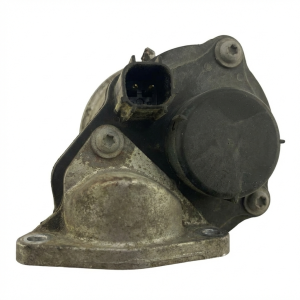
Used OEM Parts in Stock
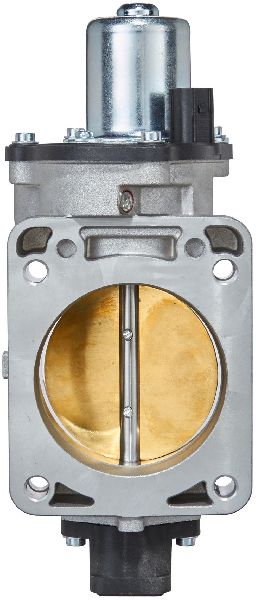
New Aftermarket Parts Available


The information in this article is provided for general reference and educational purposes only. Vehicle specifications, procedures, and part compatibility can vary by production date, trim level, and region. Always consult your vehicle's factory service manual and verify part numbers before purchasing or performing repairs. Safety-critical components such as airbags, seat belts, and braking systems should be installed by a qualified professional.
- Ford Mustang:
- 🧭 Diagnostic Flowchart
- 🎬 Helpful Videos
- 🛍️ Shop This Part
- What's Unique About the 2005-2006 Ford Mustang
- Symptoms You May Notice
- Most Likely Causes
- Rare But Worth Checking
- Diagnosis Steps
- Parts You'll Likely Need
- Related Codes That Often Appear With This One
- Technical Service Bulletins (TSBs) & Recalls
- Platform-Specific Known Issues
- Mechanic-Grade Diagnostic Values
- Scan Tool Commands That Help
- Wiring & Ground Locations
- Real Owner Repair Stories
- OEM Part Supersession History
- Model Year Variations Within This Range
- Real Owner Stories
- 2005 Ford Mustang GT
- 2005 Ford Mustang GT — 55000 miles
- 2006 Ford Mustang
- Documented NHTSA Reports
- NHTSA ODI #11052150
- NHTSA ODI #10383032
- Related OBD-II Codes
- Frequently Asked Questions
- 🎟️ Get 5% Off