

P0505 on 2003-2005 Ford Thunderbird 3.9L V8: Idle Control Fault Causes and Fixes
On the 2003-2005 Thunderbird, P0505 is almost always caused by carbon and sludge buildup inside the electronic throttle body. The fix, outlined in a Ford TSB, is to remove and thoroughly clean the throttle body. This is a low-cost DIY job, typically only requiring a new gasket (~$10-$20). After cleaning, a Keep Alive Memory (KAM) reset by disconnecting the battery is recommended to help the PCM relearn idle trims.
- P0505 on this Thunderbird is most likely not a failed part, but a dirty one.
- The first and most important step is to remove and thoroughly clean the throttle body and plate, as recommended by Ford.
- Do not look for a separate Idle Air Control (IAC) valve; it is built into the throttle body.
- Always use a new gasket when reinstalling the throttle body to prevent new vacuum leaks.
- If cleaning doesn't work, check for vacuum leaks and inspect the throttle body electrical connector for damage before replacing the entire throttle body assembly.
What's Unique About the 2003-2005 Ford Thunderbird
The 2003-2005 Thunderbird uses a Jaguar-derived 3.9L V8 with an electronic throttle body, shared with the Lincoln LS. Unlike many vehicles of the era, it does not have a separate, replaceable Idle Air Control (IAC) valve; that function is integrated into the throttle body assembly. Ford released Technical Service Bulletin (TSB) 12-8-1 (which supersedes 05-13-8) specifically for this vehicle, identifying the most common cause of P0505 as sludge buildup on the throttle plate and bore, which restricts the very small amount of air needed for the computer to control idle.
Symptoms You May Notice
- Check Engine Light is on
- Erratic or fluctuating idle speed, sometimes described as 'surging'
- Idle speed is consistently too high or too low
- Engine stalling when coming to a stop or at idle
- Hard starting
- Rough idle
- Replacing the throttle position sensor (TPS) separately. The TPS is integrated into the throttle body assembly on this vehicle and is not serviced as an individual component. Note that a separate TSB (05-14-4) addresses TPS failure, but it typically presents with codes P2106 and P2135, not P0505.
- Searching for or attempting to replace a non-existent Idle Air Control (IAC) valve. The function is integrated into the electronic throttle body.
Most Likely Causes
- Dirty Throttle Body 🔴 High Probability → Shop Fuel Injection Throttle Body Ford TSB 12-8-1 specifically calls out sludge and carbon buildup in the throttle body as the primary cause for P0505 on this engine for vehicles with over 10,000 miles.
How to confirm: Remove the air intake tube from the throttle body and visually inspect the throttle plate and bore for a ring of black, sticky residue. The buildup is often most significant on the edges of the plate and where it seats in the bore, preventing it from closing completely or restricting initial airflow.
Typical fix: Remove the throttle body from the intake manifold. Thoroughly clean the plate (front and back) and the entire bore with a dedicated throttle body cleaner and a soft brush or microfiber cloth. Replace the throttle body gasket during reinstallation. After reassembly, perform a KAM (Keep Alive Memory) reset by disconnecting the negative battery terminal for at least 15 minutes. Then, start the engine and let it idle for 10-15 minutes to allow the PCM to begin the idle relearn process.
Est. part cost: $10-$25 for cleaner and a new gasket. - Vacuum Leak 🟡 Medium Probability The complex intake system and aging rubber/plastic components on the AJ-V8 engine create multiple potential failure points for vacuum leaks, which introduce unmetered air and disrupt idle control. Common failure points on the 3.9L V8 shared with the Lincoln LS include PCV valve O-rings, the large ribbed intake air tube (which can crack), valve cover gaskets, and intake manifold gaskets.
How to confirm: Perform a smoke test to find the source of the leak. Alternatively, you can carefully spray short bursts of brake cleaner or propane around suspected areas with the engine idling; a change in idle RPM indicates you've found the leak. Visually inspect all hoses for cracks and listen for hissing sounds.
Typical fix: Replace the leaking gasket, o-ring, or vacuum hose. This can range from a simple PCV valve O-ring replacement to a more involved intake manifold gasket job.
Est. part cost: $5-$150 depending on the source of the leak. - Damaged Throttle Body Electrical Connector ⚪ Low Probability → Shop Fuel Injection Throttle Body The connector's plastic locking tab can become brittle and break, leading to a poor or intermittent connection that disrupts the signal between the PCM and the throttle body. This is a known issue in the Thunderbird/Lincoln LS community.
How to confirm: Visually inspect the electrical connector at the throttle body. Wiggle the connector with the engine running to see if it affects the idle. Check for a broken locking tab, pushed-out pins, or corrosion.
Typical fix: If the connector is damaged, replace the pigtail (Motorcraft WPT-158 is a commonly cited replacement). As a well-documented temporary fix from owner forums, a zip tie can be wrapped tightly around the connector and throttle body to hold it securely in place.
Est. part cost: $20-$60 for a new pigtail connector.
Rare But Worth Checking
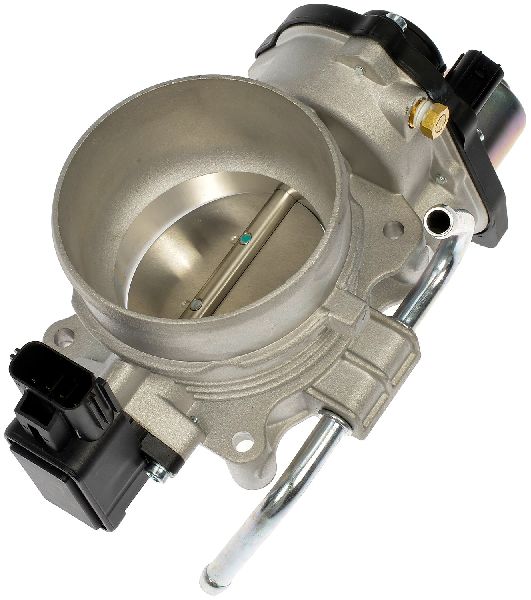
- Faulty Throttle Body Assembly: → Shop Fuel Injection Throttle Body If a thorough cleaning does not resolve the issue and all wiring is confirmed to be good, the internal electronic motor or position sensors within the throttle body itself may have failed. In this case, the entire assembly must be replaced.
- Faulty Mass Airflow (MAF) Sensor: A dirty or failing MAF sensor can provide incorrect airflow readings to the PCM, leading to improper fuel and idle calculations. While this usually triggers other codes (like P0101-P0104), it can sometimes contribute to idle problems similar to P0505.
Diagnosis Steps
- Scan for any other DTCs to see if other problems are present.
- Disconnect the negative battery terminal to reset the Keep Alive Memory (KAM) and ensure safety during the repair.
- Visually inspect all accessible vacuum hoses connected to the intake manifold for cracks, disconnection, or deterioration. Pay close attention to the PCV system hoses and the main intake air duct.
- Remove the air intake duct from the throttle body.
- Inspect the throttle body bore and plate edges for black sludge or carbon buildup. This is the most likely cause per TSB 12-8-1.
- If dirty, remove the four bolts holding the throttle body to the intake manifold.
- Disconnect the electrical connector. Inspect it for damage, corrosion, or a broken locking tab.
- Clean the throttle body thoroughly off the vehicle using throttle body cleaner and a soft brush. Do not use abrasive tools.
- Install a new throttle body gasket, reinstall the throttle body, and reconnect all components.
- Reconnect the battery. Start the engine and let it idle for 10-15 minutes without touching the accelerator to allow the PCM to relearn idle values. A short drive cycle may also be required.
- If the problem persists, perform a smoke test to definitively rule out any hard-to-see vacuum leaks.
- If cleaning and confirming no vacuum leaks does not fix the issue, the throttle body assembly itself is the likely point of failure.
Parts You'll Likely Need
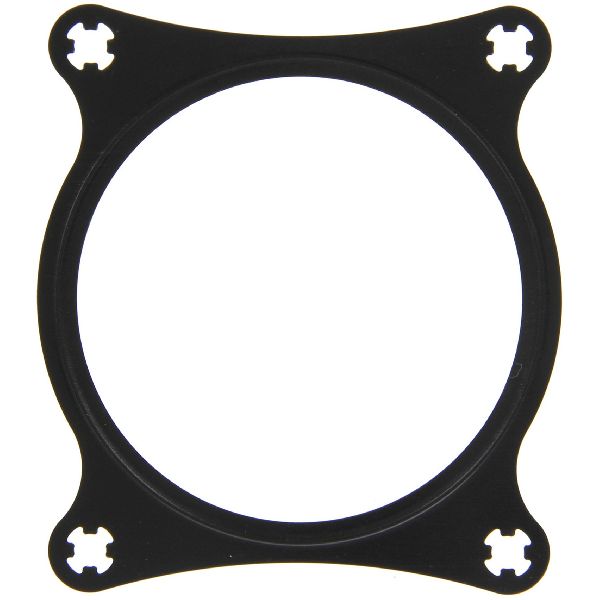
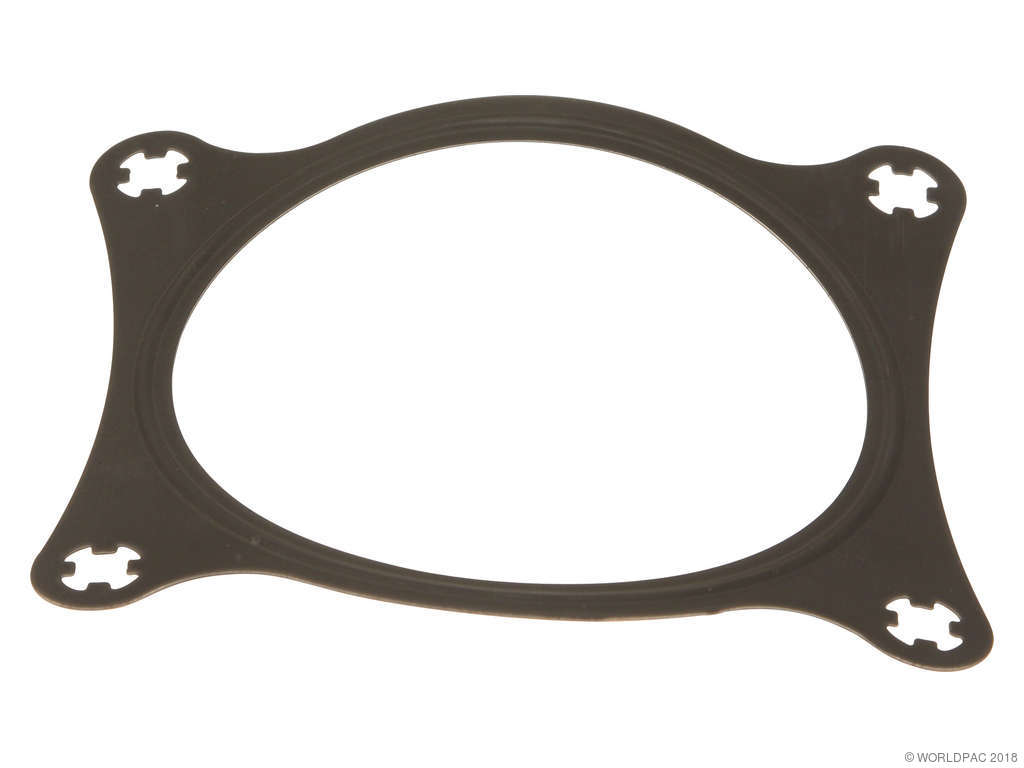
- Throttle Body Gasket
(OEM #2W9Z-9E936-A)— This should be replaced whenever the throttle body is removed for cleaning to prevent a vacuum leak.
Trusted brands: Motorcraft, Fel-Pro (61458), Mahle
OEM price range: $15-$25
Aftermarket price range: $5-$15 - Throttle Body Assembly
(OEM #3W4Z-9E926-AD)— This is only needed if a thorough cleaning of the original part does not solve the problem. It contains the integrated idle control motor and sensors that can fail internally.
Trusted brands: Motorcraft
OEM price range: $300-$450
Aftermarket price range: $200-$350 - Throttle Body Connector Pigtail
(OEM #WPT-158)— Needed if the original connector's locking tab is broken or if the terminals are corroded, causing an intermittent connection.
Trusted brands: Motorcraft, Standard Motor Products (S-941)
OEM price range: $40-$60
Aftermarket price range: $20-$35
Related Codes That Often Appear With This One
- P0506 — This code means 'Idle Air Control System RPM Lower Than Expected' and is often triggered by the same sludge buildup that causes P0505, restricting airflow too much at idle.
- P0507 — This code means 'Idle Air Control System RPM Higher Than Expected' and can be caused by a vacuum leak or the throttle plate sticking slightly open due to carbon deposits.
Technical Service Bulletins (TSBs) & Recalls
- TSB 12-8-1: Addresses DTCs P0505, P0506, idle RPM fluctuation, and hard starts on 2003-2005 Thunderbirds and 2003-2006 Lincoln LS. It identifies the cause as sludge buildup in the throttle body and provides the procedure for cleaning it. This TSB supersedes a previous version, 05-13-8.
Platform-Specific Known Issues
- Owner Experience with Connector Failure: An owner on Tbirdforum.com with a 2003 Thunderbird reported experiencing P0505 along with a wrench light and no throttle response. The cause was found to be a broken locking tab on the throttle body's electrical connector, causing it to back off. The owner used a long zip tie around the connector and throttle body as a secure temporary fix while waiting for a replacement pigtail.
- KAM Reset and Relearn Procedure: Forum discussions among Thunderbird and Lincoln LS owners emphasize the importance of resetting the PCM's memory after cleaning the throttle body. The consensus procedure is to disconnect the negative battery cable for at least 15 minutes. After reconnection, the engine should be started and allowed to idle for several minutes to warm up and relearn the new, clean throttle plate position for idle control.
Mechanic-Grade Diagnostic Values
- Scan Tool Live Data: Desired Idle RPM vs. Actual Idle RPM — expected: Actual RPM should closely track Desired RPM, typically within +/- 50 RPM at stable idle.. Failure: A large, persistent deviation between the two values indicates the PCM is commanding an idle speed but the engine is not achieving it, triggering P0505.
- Scan Tool Live Data: Throttle Position (TP) or Relative Throttle Position — expected: At idle with no pedal input, the value should be low, stable, and slightly above 0% (e.g., 2-5%) to allow for idle air.. Failure: If the value is fluctuating erratically at idle, or is higher than expected, it can indicate carbon buildup preventing the throttle plate from closing properly. If the value is 0% or does not change when the throttle is moved manually, the sensor may be faulty.
Scan Tool Commands That Help
- Ford IDS (Integrated Diagnostic System): Datalogger - Throttle PIDs (TP1, TP2, APP1, APP2) — To simultaneously graph the two throttle position sensors (TP1, TP2) and two accelerator pedal position sensors (APP1, APP2). This allows a technician to verify that all sensors are tracking correctly and that there are no dropouts or glitches in their signals, which could point to a failing sensor or wiring issue.
- Ford IDS (or equivalent advanced scan tool): Active Command - Throttle Plate Sweep — This bidirectional test commands the PCM to sweep the throttle plate from fully closed to fully open and back. The technician can observe the plate's movement for any sticking or binding and watch the live TP sensor data to ensure it reports a smooth, linear progression. This directly tests the throttle actuator motor and position sensors.
- Ford IDS: Service Functions - PCM Reset — This command should be used after cleaning or replacing the throttle body. It clears the Keep Alive Memory (KAM) and all learned adaptive strategies, including idle trim. This forces the PCM to perform a new throttle body relearn procedure upon the next startup.
Wiring & Ground Locations
- Powertrain Control Module (PCM) — Located in the engine compartment on the right (passenger) side, near the firewall.. The PCM is the central computer that controls the electronic throttle body. All signals to and from the throttle body originate or terminate here. A poor connection at the PCM can mimic a throttle body failure.
- G101 — A primary engine ground point located on the left (driver) side front of the engine compartment.. A poor ground at G101 can cause a variety of engine control issues, including erratic sensor readings and improper actuator function. The PCM and its related sensors rely on a clean ground path to function correctly.
- G104 — An engine ground point located at the right (passenger) front wheelwell area.. Similar to G101, this ground is critical for the proper operation of the engine management system. Verifying it is clean and tight is a key step in diagnosing any electronic fault.
- Throttle Body Connector (C145) — The 6-pin electrical connector directly on the electronic throttle body assembly.. This is the direct interface between the engine harness and the throttle body's internal motor and sensors. It is a common failure point due to broken locking tabs, corrosion, or pushed-out pins, as noted in Pass 2.
Real Owner Repair Stories
- DodgeForum.com user with P0505 (2001 Dodge Dakota (different vehicle, but illustrates a universal diagnostic principle for this code)) — Engine would crank and start, but immediately die unless the throttle was held open manually. Codes P0505 and P0506 were present.
❌ Tried (didn't work) A shop had replaced the PCM and only performed a cursory spray-cleaning of the throttle body, which did not resolve the issue long-term.
✅ What actually fixed it The owner removed the throttle body and performed a thorough bench cleaning, removing all carbon buildup. After reinstallation and a battery disconnect to reset the computer, the truck started immediately, idled smoothly, and the codes did not return. This reinforces that a superficial cleaning is often insufficient and a complete removal and cleaning is required.
OEM Part Supersession History
3W4Z-9E926-AA, 3W4Z-9E926-AC, 3W4Z-9E926-BA→3W4Z-9E926-AD— Standard part revision and improvement by the manufacturer over the production life of the vehicle and its service life.
Model Year Variations Within This Range
- 2003-2005: The 2003-2005 Thunderbirds use the AJ-35 version of the 3.9L V8, which features Variable Valve Timing (VVT) and a fully electronic 'drive-by-wire' throttle system. This is a significant change from the 2002 model's AJ-30 engine, which did not have VVT and used a different electronic setup. Therefore, engine components like the throttle body, wiring harness, and PCM are not interchangeable between 2002 and 2003-2005 models.
Diagnostic Flowchart
Real Owner Stories
Aggregated from forums and TSBs cited above. Mileages and costs reflect what owners reported in those sources.
2003 Ford Thunderbird 3.9L V8
Symptoms: Experienced code P0505 along with a wrench light and a complete loss of throttle response.
What fixed it: Found a broken locking tab on the throttle body's electrical connector causing it to back off. Used a long zip tie around the connector and throttle body as a secure temporary fix while waiting for a replacement pigtail.
Source hint: Tbirdforum.com - '2003 Idle Air Control P505, Part catalog is Wrong' (Mar 2021) / Owner Experience with Connector Failure
2003-2005 Ford Thunderbird 3.9L V8 — ~15000 miles
Symptoms: DTCs P0505, P0506, idle RPM fluctuation, and hard starts.
What fixed it: Cleaned the sludge and carbon buildup from the throttle body bore and plate edges.
Source hint: TSB 12-8-1
2005 Ford Thunderbird 3.9L V8
Symptoms: Rough idle after servicing the throttle body.
What fixed it: Performed a KAM reset by disconnecting the negative battery cable for 15 minutes, then allowed the engine to idle for several minutes to warm up and relearn the clean throttle plate position.
Source hint: Tbirdforum.com - '2005 rough idle reprogram question' (Nov 2019)
Related OBD-II Codes
Frequently Asked Questions
Does TSB 12-8-1 apply to my 2004 Ford Thunderbird for code P0505?
I have a P0505 code, a wrench light, and no throttle response on my 3.9L V8. What could cause this?
What is the recommended replacement part if my throttle body connector is broken?
How do I perform a KAM reset on my 2003-2005 Thunderbird after cleaning the throttle body?
Where are the most common vacuum leaks located on the 3.9L AJ-30/35 V8?
Can I just replace the Idle Air Control (IAC) valve on my 2003 Thunderbird to fix P0505?
We Have This Part in Stock




The information in this article is provided for general reference and educational purposes only. Vehicle specifications, procedures, and part compatibility can vary by production date, trim level, and region. Always consult your vehicle's factory service manual and verify part numbers before purchasing or performing repairs. Safety-critical components such as airbags, seat belts, and braking systems should be installed by a qualified professional.
- Ford Thunderbird:
- 🧭 Diagnostic Flowchart
- 🛍️ Shop This Part
- What's Unique About the 2003-2005 Ford Thunderbird
- Symptoms You May Notice
- Most Likely Causes
- Rare But Worth Checking
- Diagnosis Steps
- Parts You'll Likely Need
- Related Codes That Often Appear With This One
- Technical Service Bulletins (TSBs) & Recalls
- Platform-Specific Known Issues
- Mechanic-Grade Diagnostic Values
- Scan Tool Commands That Help
- Wiring & Ground Locations
- Real Owner Repair Stories
- OEM Part Supersession History
- Model Year Variations Within This Range
- Real Owner Stories
- 2003 Ford Thunderbird 3.9L V8
- 2003-2005 Ford Thunderbird 3.9L V8 — ~15000 miles
- 2005 Ford Thunderbird 3.9L V8
- Related OBD-II Codes
- Frequently Asked Questions
- 🎟️ Get 5% Off