

P0505 on 2010-2013 Ford Transit Connect: Idle Control System Causes and Fixes
For a 2010-2013 Transit Connect, code P0505 is most often caused by a faulty or carbon-fouled Idle Air Control (IAC) valve. Cleaning the throttle body and IAC valve may fix it, but replacement is common. Also inspect for vacuum leaks, especially the large air intake hose from the filter box. Expect to pay $40-$80 for an aftermarket valve, with a DIY difficulty of 2/5.
- P0505 on your Transit Connect almost always points to a problem with the Idle Air Control (IAC) valve or a vacuum leak.
- Before replacing parts, first try cleaning the throttle body and the IAC valve with dedicated throttle body cleaner, as carbon buildup is a frequent cause.
- If cleaning doesn't work, replacing the IAC valve is an affordable and straightforward DIY job that usually solves the problem.
- Always check for cracked or disconnected vacuum hoses around the top of the engine, as this is a common and inexpensive fix.
What's Unique About the 2010-2013 Ford Transit Connect
The 2.0L Duratec engine in this generation of Transit Connect uses a traditional, straightforward idle control system with a mechanical throttle cable and a separate Idle Air Control (IAC) valve. This design is less complex than the fully electronic 'drive-by-wire' throttle bodies found on newer vehicles. As a result, diagnosing P0505 is typically simpler, focusing on a few key mechanical and electrical components like the IAC valve itself, vacuum hoses, and the throttle body, making it a very approachable DIY repair.
Symptoms You May Notice
- Check Engine Light is on
- Engine idle speed is erratic, fluctuating up and down ('hunting')
- Idle speed is consistently too high or too low
- Engine stalls when coming to a stop or at idle, but often restarts immediately
- Rough idle, sometimes made worse by turning on the A/C
- Intermittent stalling when slowing down, even before a code is stored
- Replacing spark plugs or ignition coils. While these can cause a rough idle, they typically won't cause the specific idle control fault logged by P0505.
- Replacing the Mass Airflow (MAF) sensor. A faulty MAF sensor will usually set its own specific codes (like P0101-P0103) and should be diagnosed separately.
- Replacing the throttle body assembly. On this model, the IAC is a separate, serviceable part. Some owners replace the entire throttle body when only the IAC valve was needed.
Most Likely Causes
- Faulty or Sticking Idle Air Control (IAC) Valve 🔴 High Probability → Shop Idle Air Control Valve The IAC valve is a small motor with a plunger that moves constantly. Over time, carbon from the crankcase ventilation system builds up on it, causing the plunger to stick or respond slowly. The failure is most often mechanical (sticking) rather than an electrical failure of the internal motor.
How to confirm: With the engine idling, unplug the IAC valve's electrical connector. A significant change in idle (or stalling) suggests the valve was working. If there's no change, the valve is likely stuck or has failed. You can also remove the valve (two 8mm bolts) and inspect its plunger for heavy carbon buildup. Test the resistance between the two electrical pins; a good valve should read around 10 ohms.
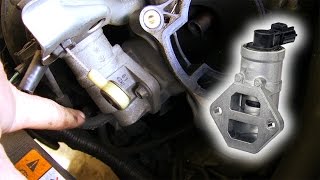
Typical fix: Sometimes, the valve and its port on the intake manifold can be cleaned with throttle body cleaner. However, cleaning is often a temporary fix or unsuccessful if the valve is worn. Replacement is the most reliable repair. 🎬 See this walkthrough on cleaning and replacing the IAC valve.
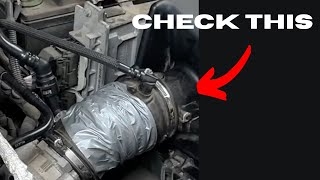
Est. part cost: $40-$120 - Vacuum Leak 🟡 Medium Probability The plastic and rubber vacuum hoses in the engine bay become brittle with age and heat cycles, leading to cracks. A specific and common failure on the Transit Connect is the large rubber air intake hose (boot) between the air filter box and the throttle body, which can crack and cause a major unmetered air leak. The PCV hose is another common failure point. 🎬 Watch: How to find and fix this common rotten hose.
How to confirm: Visually inspect all vacuum hoses, especially the large air intake boot, for cracks or disconnection. Listen for a hissing sound at idle. For hard-to-find leaks, a mechanic will use a smoke machine to feed smoke into the intake system and watch where it escapes.
Typical fix: Replace the cracked or broken vacuum hose or leaking gasket. In some Ford vehicles, a pinpoint leak in a resonator hose has been known to trigger idle-related faults (NHTSA ODI #10383032).
Est. part cost: $10-$85 - Dirty Throttle Body 🟡 Medium Probability → Shop Fuel Injection Throttle Body Similar to the IAC valve, the throttle body bore and the edges of the throttle plate accumulate carbon and oil residue. This buildup can restrict the baseline airflow or cause the throttle plate to stick, forcing the IAC valve to operate outside its intended range. NHTSA ODI Investigation #PE11018 notes that Ford has attributed surge conditions and P0505 codes to changes in idle air flow resulting from the progressive buildup of deposits.
How to confirm: Remove the air intake tube from the throttle body and visually inspect the inside for a thick, black layer of carbon, especially around the throttle plate and the idle air bypass port.
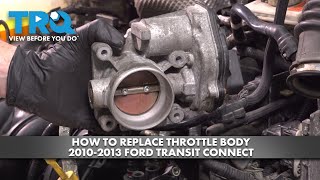
Typical fix: Clean the throttle body bore and plate with a dedicated throttle body cleaner and a soft brush or rag. 🎬 Watch: Step-by-step guide to removing and replacing the throttle body. Ford TSBs 12-7-4 and 12-8-1, while not for this exact vehicle, recommend this procedure for P0505 on other models with similar issues.
Est. part cost: $5-$15 for cleaner - IAC Valve Circuit Issue ⚪ Low Probability
How to confirm: Inspect the wiring and connector at the IAC valve for damage, corrosion, or loose pins. A multimeter can be used to check for 12V power at the connector with the key on, engine off.
Typical fix: Repair the damaged wiring or replace the connector pigtail.
Est. part cost: $15-$30
Rare But Worth Checking
- Lost Idle Relearn/Adaptation: If the vehicle's battery was recently disconnected or replaced, the PCM can lose its learned idle strategy. This can cause erratic idle and a P0505 code. An idle relearn procedure may be required. This is referenced in Ford TSB 12-7-4 for other models.
- Faulty Powertrain Control Module (PCM): → Shop Engine Control Module (ECM) This is extremely rare. Before suspecting the PCM, all other possibilities, including the IAC valve, vacuum leaks, and wiring, must be thoroughly ruled out. A faulty PCM driver circuit can fail to send the correct signal to the IAC valve. Note that some Ford models required an updated powertrain control calibration to resolve P0505 and P0506 codes (NHTSA ODI #11052150).
Diagnosis Steps
- Read the codes: Use an OBD-II scanner to confirm P0505 and check for any other related codes like P0506 or P0507.
- Perform Visual Inspection: Carefully inspect the large rubber air intake hose between the air filter and throttle body for cracks. Then check all smaller vacuum lines connected to the intake manifold for obvious cracks, breaks, or loose connections. Pay close attention to the PCV hose.
- Consider Idle Relearn: If the battery was recently disconnected, perform an idle relearn procedure. This typically involves letting the engine idle for several minutes with and without A/C on to allow the PCM to adapt. This is suggested by TSB 12-7-4 for similar issues.
- Inspect IAC Connector: Check the electrical connector on the Idle Air Control valve for corrosion, damage, or loose wires.
- Clean Throttle Body: Remove the air intake hose and clean the throttle body bore and plate with throttle body cleaner and a rag.
- Test/Replace IAC Valve: Remove the IAC valve (two 8mm bolts). Clean the valve and port. Test the valve's internal resistance between the two pins; it should be approximately 10 ohms. Even if the resistance is correct, the valve often fails mechanically by sticking, so replacement is a very common fix.
- Check for Hidden Vacuum Leaks: If the problem persists, use a smoke machine to test the intake system for hidden vacuum leaks that weren't visible.
- Advanced Scan Tool Analysis: Monitor the IAC duty cycle PID. On Ford systems, a value near 20% while idling high indicates the PCM is commanding the valve closed and suspects a vacuum leak. If the value is high, the PCM is trying to open the valve to prevent a stall.
- Test IAC Circuit: If a new IAC valve doesn't solve the issue, use a multimeter to check for 12V power and a good ground at the IAC connector to rule out a wiring problem.
- Consider PCM: Only after all other steps have been exhausted should the PCM be considered a potential cause.
Parts You'll Likely Need
- Idle Air Control (IAC) Valve
(OEM #1S7Z-9F715-AA (alt: 1S7G-9F715-AE, CX1773))— This is the most common component to fail for this code. The internal motor wears out or the plunger gets stuck with carbon.
Trusted brands: Motorcraft, Standard Motor Products, Hitachi
OEM price range: $90-$150
Aftermarket price range: $40-$80 - Air Intake Hose (Boot) — A common vehicle-specific failure. The rubber hose between the air filter box and throttle body cracks with age, causing a large vacuum leak and rough idle.
Trusted brands: Motorcraft, Dorman, Various Aftermarket
OEM price range: $60-$85
Aftermarket price range: $20-$40 - IAC Valve Gasket — Should be replaced whenever the IAC valve is removed to prevent a vacuum leak. Most new valves include one.
Trusted brands: Motorcraft, Fel-Pro
OEM price range: $5-$10
Aftermarket price range: $2-$5
Related Codes That Often Appear With This One
- P0506 — This code means 'Idle Control System RPM Lower Than Expected'. It often appears with P0505 and points strongly to a stuck-closed IAC valve or a severe restriction in the idle air passages.
- P0507 — This code means 'Idle Control System RPM Higher Than Expected'. It often appears with P0505 and points strongly to a large vacuum leak or an IAC valve that is stuck open.
Technical Service Bulletins (TSBs) & Recalls
- TSB 12-8-1: While not listing the Transit Connect specifically, this Ford TSB addresses P0505/P0506 on other models due to sludge buildup in the throttle body, recommending a cleaning procedure that is directly applicable to the 2.0L Duratec engine.
- TSB 12-7-4: Addresses P0505 and idle fluctuation on various Ford models that can occur after the battery has been disconnected or gone dead. It points to the need for the PCM to perform an idle relearn procedure. This should be considered before replacing parts if the battery has been recently serviced.
- TSB 11-10-21: Mentioned in NHTSA ODI #11052150, this bulletin for related Ford models includes updated powertrain control calibrations to address idle control codes including P0505 and P0506.
Platform-Specific Known Issues
- Cracked Air Intake Hose: A very common issue on the 2010-2013 Transit Connect is for the large, flexible rubber air hose running from the air filter box to the throttle body to become brittle and crack. This introduces a significant amount of unmetered air into the engine, leading to a rough idle, potential stall
Mechanic-Grade Diagnostic Values
- IAC Valve Coil Resistance — expected: Approximately 8 to 13 ohms between the two pins.. Failure: An open circuit (infinite resistance) or a short (near zero ohms) indicates a failed valve coil. Note that a good resistance reading does not rule out a mechanical (sticking) failure.
- IAC Connector Voltage (Power Supply) — expected: 12V (Battery Voltage) on one pin with Key On, Engine Off.. Failure: No voltage indicates a problem with the power supply from the PCM relay or a break in the power wire.
- IAC Duty Cycle PID (Scan Tool) — expected: Typically 30-40% at normal warm idle.. Failure: A very low value (e.g., <25%) with a high idle suggests the PCM is trying to close the valve to lower RPM, indicating a vacuum leak. A very high value (>50%) with a low or stalling idle suggests the PCM is trying to open the valve to raise RPM, pointing to a restriction or a stuck valve.
- PCM Ground Strap Resistance — expected: Less than 0.1 Ω between the ground point and the battery negative terminal.. Failure: Higher resistance indicates a poor ground, which can cause erratic behavior from the PCM and its controlled components like the IAC.
Scan Tool Commands That Help
- Ford IDS (Integrated Diagnostic System): Output State Control / Active Command for IAC — This bidirectional control allows a technician to manually command the IAC valve to a specific duty cycle (e.g., 20%, 50%, 80%) while monitoring engine RPM. This directly tests the PCM's ability to control the valve and the valve's mechanical response, helping to distinguish between a wiring, PCM, or component failure.
- Ford IDS (Integrated Diagnostic System): Power Balance Test — While not a direct test for P0505, if a rough idle is a primary symptom, the Power Balance test can identify if a specific cylinder is misfiring. This helps rule out a misfire as the root cause of the idle instability before focusing solely on the IAC system.
Wiring & Ground Locations
- G101 — Located on the left side of the engine compartment.. This is a primary ground point for the Powertrain Control Module (PCM). A corroded or loose G101 can cause erratic PCM behavior, leading to incorrect calculations and commands for the IAC valve, potentially triggering a P0505.
- G104 — Located on the left side of the engine compartment.. This is another ground point in the engine bay that serves various components. Ensuring all engine bay grounds are clean and tight is a critical step in diagnosing any electronic control issue, including idle control.
- G100 — Located at the right rear of the engine.. This ground point is directly on the engine block. A poor engine-to-chassis ground can cause electrical noise and voltage drops, affecting sensors and actuators controlled by the PCM, including the IAC valve.
- Alternator Wiring Harness — The short wiring harness running from the main loom to the alternator.. On Transit Connects, this specific harness is known to suffer from heat and vibration, causing internal wire cracking. This can lead to intermittent charging, overcharging, or voltage instability, which can disrupt the PCM and trigger various codes, including P0505, even if the alternator itself is good.
Real Owner Repair Stories
- FocusFanatics Forum User (Ford Focus with 2.0L Duratec engine (similar platform to Transit Connect)) — Stalling at idle, erratic idle, P0505 code present.
❌ Tried (didn't work) Cleaning the IAC valve, Cleaning the throttle body
✅ What actually fixed it Replacing the Idle Air Control (IAC) valve with a new Motorcraft part. The user noted that cleaning the original valve did not resolve the issue, and only a full replacement worked, confirming that the valve can fail electrically or mechanically even if it appears clean. - NHTSA ODI #10383032 Reporter — An owner reported that after a P0505 code was triggered, the throttle body was replaced. However, the vehicle stalled again shortly after, and the actual cause was found to be a pinpoint leak in a resonator hose.
OEM Part Supersession History
1S7G-9F715-AE→1S7Z-9F715-AA— Part revision and consolidation by Ford.
Heads up: Both part numbers are generally interchangeable for this application. 1S7Z-9F715-AA is the most current OEM replacement part number. The aftermarket cross-reference is often CX1773.
Model Year Variations Within This Range
- 2010-2013: There are no significant documented variations in the idle control system for the 2.0L Duratec engine within this specific model year range. The engine and 4-speed 4F27E automatic transmission were consistent for the North American market during this period.
Diagnostic Flowchart
Real Owner Stories
Aggregated from forums and TSBs cited above. Mileages and costs reflect what owners reported in those sources.
2013 Ford Transit Connect
Symptoms: Intermittent stalling at stops and a rough idle, which started without setting any engine codes.
What fixed it: The owner initially replaced the throttle body without success, highlighting a common misdiagnosis, before performing a smoke test to locate the actual vacuum leak.
Source hint: Reddit /r/MechanicAdvice: 'Ford Transit Connect engine stalling at idle and when coming to a stop while driving. No engine codes.'
2013 Ford Transit Connect
Symptoms: Engine stalling when coming to a stop as the vehicle warms up, with no diagnostic codes present.
What fixed it: After unnecessarily replacing spark plugs, ignition coils, the throttle body, and an O2 sensor, the root cause was determined to be the IAC valve or a vacuum leak.
Source hint: Ford Transit Connect Forum: 'Low idle stall'
Ford Focus 2.0L Duratec HE
Symptoms: Intermittent stalling at idle.
What fixed it: Replaced the Idle Air Control (IAC) valve. The mechanic noted that cleaning the valve is often not a permanent fix because the failure is usually mechanical sticking.
Source hint: YouTube - GerardBurke: 'Idle Air Control Valve Fault - Ford Focus Guided Repair'
Related OBD-II Codes
Frequently Asked Questions
Does TSB 12-7-4 apply to my 2010-2013 Transit Connect if I just replaced the battery?
My Transit Connect is stalling at stops but there is no check engine light yet. Could it still be related to P0505?
I heard the air intake hose is a common problem on the 2.0L Duratec. How do I check it?
Can I just clean the Idle Air Control (IAC) valve on my Transit Connect instead of replacing it?
What should the resistance be on a good IAC valve for this 2.0L engine?
Will cleaning the throttle body fix my P0505 code?
Helpful Videos

The information in this article is provided for general reference and educational purposes only. Vehicle specifications, procedures, and part compatibility can vary by production date, trim level, and region. Always consult your vehicle's factory service manual and verify part numbers before purchasing or performing repairs. Safety-critical components such as airbags, seat belts, and braking systems should be installed by a qualified professional.
- Ford Transit Connect:
- 🧭 Diagnostic Flowchart
- 🎬 Helpful Videos
- What's Unique About the 2010-2013 Ford Transit Connect
- Symptoms You May Notice
- Most Likely Causes
- Rare But Worth Checking
- Diagnosis Steps
- Parts You'll Likely Need
- Related Codes That Often Appear With This One
- Technical Service Bulletins (TSBs) & Recalls
- Platform-Specific Known Issues
- Mechanic-Grade Diagnostic Values
- Scan Tool Commands That Help
- Wiring & Ground Locations
- Real Owner Repair Stories
- OEM Part Supersession History
- Model Year Variations Within This Range
- Real Owner Stories
- 2013 Ford Transit Connect
- 2013 Ford Transit Connect
- Ford Focus 2.0L Duratec HE
- Related OBD-II Codes
- Frequently Asked Questions
- 🎟️ Get 5% Off