

P0505 on 2007-2009 Land Rover LR3: Idle Control System Malfunction Causes and Fixes
On a 2007-2009 Land Rover LR3 with the 4.4L V8, P0505 is almost always caused by a vacuum leak from a failed PCV valve or a dirty electronic throttle body. Start by inspecting the PCV system and cleaning the throttle body before considering more expensive repairs. A smoke test is the most effective diagnostic step.
- Assume P0505 on a 2007-2009 LR3 4.4L V8 is caused by a vacuum leak until proven otherwise.
- The PCV valve and its hoses are the most likely source of the vacuum leak. Inspect and replace them if they are old or show signs of damage.
- A smoke test is the most reliable way to find the source of the leak before replacing any parts.
- Do not replace the expensive electronic throttle body until all potential vacuum leaks have been ruled out and the throttle body itself has been thoroughly cleaned.
What's Unique About the 2007-2009 Land Rover LR3
For the LR3 with the Jaguar-derived 4.4L V8, code P0505 is very frequently a symptom of another problem, not a primary component failure. These engines are known for developing vacuum leaks from aged plastic and rubber components in the PCV (Positive Crankcase Ventilation) system. Land Rover even issued a Technical Service Bulletin (SSM74374) acknowledging that P0505 can be triggered by an air intake system leak due to a split diaphragm in the PCV valve. Therefore, the root cause is often unmetered air entering the engine, which the PCM cannot account for, leading to an idle control fault.
Diagnostic Flowchart
Tap your situation to follow the diagnostic path that matches what you're seeing on this vehicle.
Symptoms You May Notice
- Check Engine Light is on
- Rough, surging, or fluctuating idle
- Idle speed is too high or too low
- Engine stalling when coming to a stop or at idle.
- Difficult engine starting.
- "Reduced Engine Performance" message may appear on the dash.
- Loud hissing or sucking noise from the engine bay, especially near the passenger-side valve cover where the PCV valve is located.
- In severe PCV failure cases, a large cloud of blue or white smoke from the exhaust, especially under load or above 2000 RPM.
- Replacing the throttle body assembly without first performing a smoke test. The issue is far more likely to be a cheap-to-fix vacuum leak from a PCV hose or other cracked rubber component.
- Replacing the Mass Airflow (MAF) sensor. While MAF issues can cause performance problems, P0505 on this engine is almost always related to unmetered air entering *after* the MAF sensor.
Most Likely Causes
- Vacuum Leak (PCV System or Intake) 🔴 High Probability The PCV valve on the 4.4L V8 is a known high-failure part. Its internal diaphragm can tear, and the associated plastic hoses become brittle and crack, creating a significant vacuum leak. This is confirmed by TSB SSM74374, which explicitly mentions a split diaphragm as the cause. Owners on forums frequently report this as the fix for P0505 combined with lean codes.
How to confirm: Perform a smoke test on the intake system. Smoke will emerge from the cracked hose or faulty valve. You can also visually inspect the PCV valve and its hoses for cracks or damage. The PCV valve is located on the passenger-side valve cover, toward the firewall. A loud hissing sound from this area at idle is a strong indicator of failure.
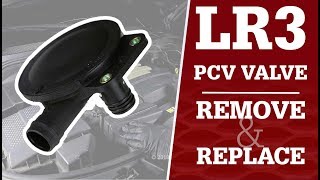
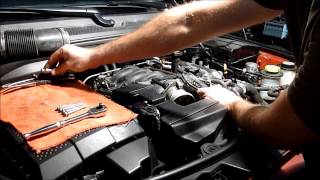
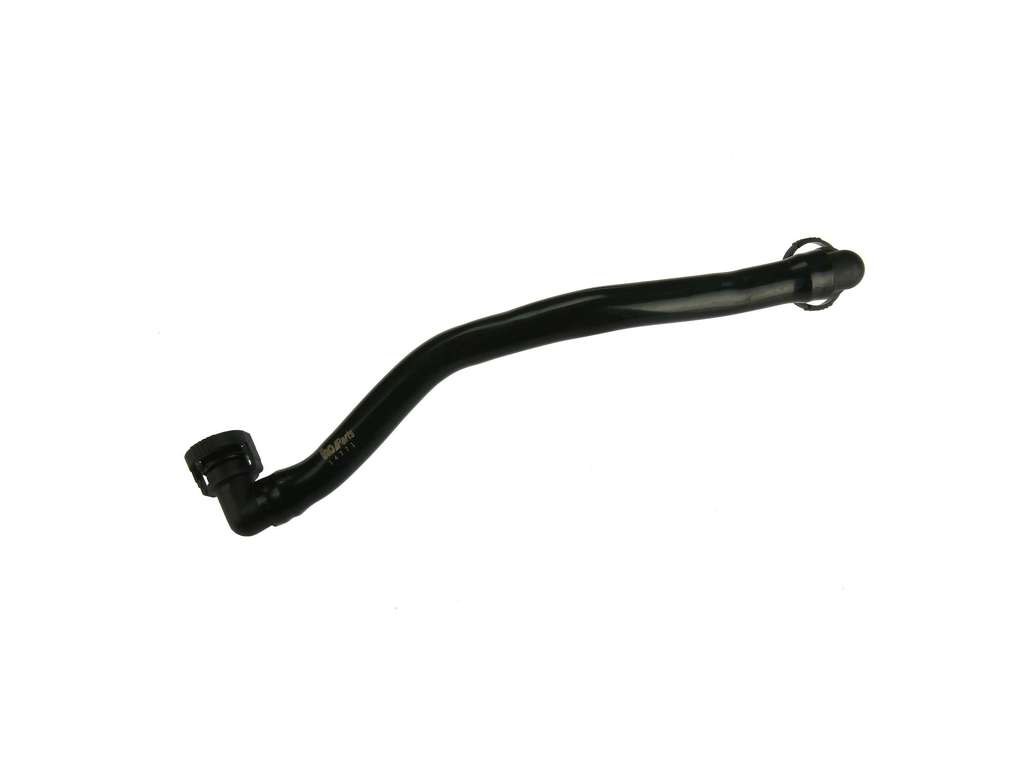
Typical fix: Replace the faulty PCV valve 🎬 Watch: Step-by-step guide to replacing your LR3 PCV valve. and any cracked or brittle hoses. Land Rover offers a diaphragm repair kit (LR133579 for later models, check applicability) as an alternative to replacing the entire valve cover. Also inspect the associated breather tube (LR062601). A small vacuum cap on the rear of the intake manifold is also a common failure point to check.
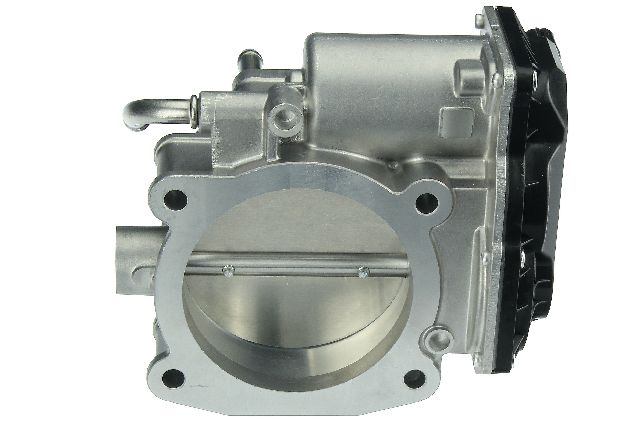
Est. part cost: $20-$100 - Dirty or Sticking Electronic Throttle Body (ETB) 🟡 Medium Probability → Shop Fuel Injection Throttle Body Over time, carbon and oil vapor from the PCV system can build up inside the throttle body and on the throttle plate. This buildup can prevent the plate from closing fully or moving smoothly, disrupting the precise airflow needed for stable idle.
How to confirm: Remove the air intake tube connected to the throttle body. Visually inspect the throttle plate and the bore for black carbon deposits. The back side of the plate is often the dirtiest.
Typical fix: Thoroughly clean the throttle body bore and plate using a dedicated throttle body cleaner and a soft cloth. Manually open the plate to clean the edges and the area where it seats. Do not spray cleaner directly 🎬 See how to safely clean your LR3 throttle body. into the electronic components.
Est. part cost: $10-$20
Rare But Worth Checking
- Failed Electronic Throttle Body: → Shop Fuel Injection Throttle Body While less common than leaks or carbon buildup, the internal electronics or motor of the throttle body can fail, often due to heat exposure. This should only be considered after exhaustively ruling out all vacuum leaks and cleaning the unit. The OEM part number is LR006142.
- Leaking Brake Booster or Vacuum Hose: → Shop Vacuum Hose A ruptured diaphragm in the brake booster or a crack in its vacuum supply hose (Part No. LR018331) creates a large vacuum leak. This is usually accompanied by a hissing sound when the brake pedal is pressed and a hard pedal feel.
- Leaking Intake Manifold Gaskets: → Shop Engine Intake Manifold The gaskets sealing the upper or lower intake manifold can fail, creating a vacuum leak. This is less common than PCV issues but can be found with a smoke test. One forum user noted that the lower intake manifold bolts on these engines can become loose over time.
Diagnosis Steps
- Scan for all DTCs. Note if lean codes like P2187, P2189, P0171, or P0174 are present, as this strongly points to a vacuum leak.
- Perform a thorough visual inspection of the entire air intake system, from the air filter to the intake manifold. Pay close attention to the PCV valve on the passenger-side valve cover and all connected hoses, including the brake booster line.
- Listen for audible hissing noises at idle, particularly around the PCV valve.
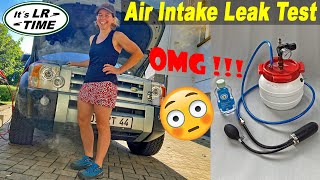
- Conduct a smoke test. 🎬 Watch: How to build a DIY smoke tester for leaks. This is the most effective method to pinpoint the exact location of any vacuum leaks, which are the most common cause.
- If no vacuum leaks are found, remove the intake duct from the throttle body and inspect it for heavy carbon buildup.
- If the throttle body is dirty, clean it thoroughly with appropriate cleaner, paying special attention to the throttle plate and bore.
- After any repairs, clear the codes and reset the fuel adaptations if you have the appropriate scan tool, as the computer may have learned to compensate for the leak.
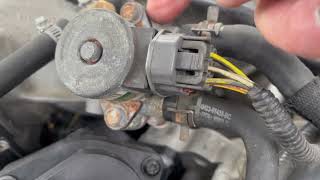
- If the problem persists after cleaning and confirming no leaks, inspect the wiring and connector at the throttle body for damage or corrosion.
- If all other steps fail, the electronic throttle body itself may be faulty and require replacement.
Parts You'll Likely Need
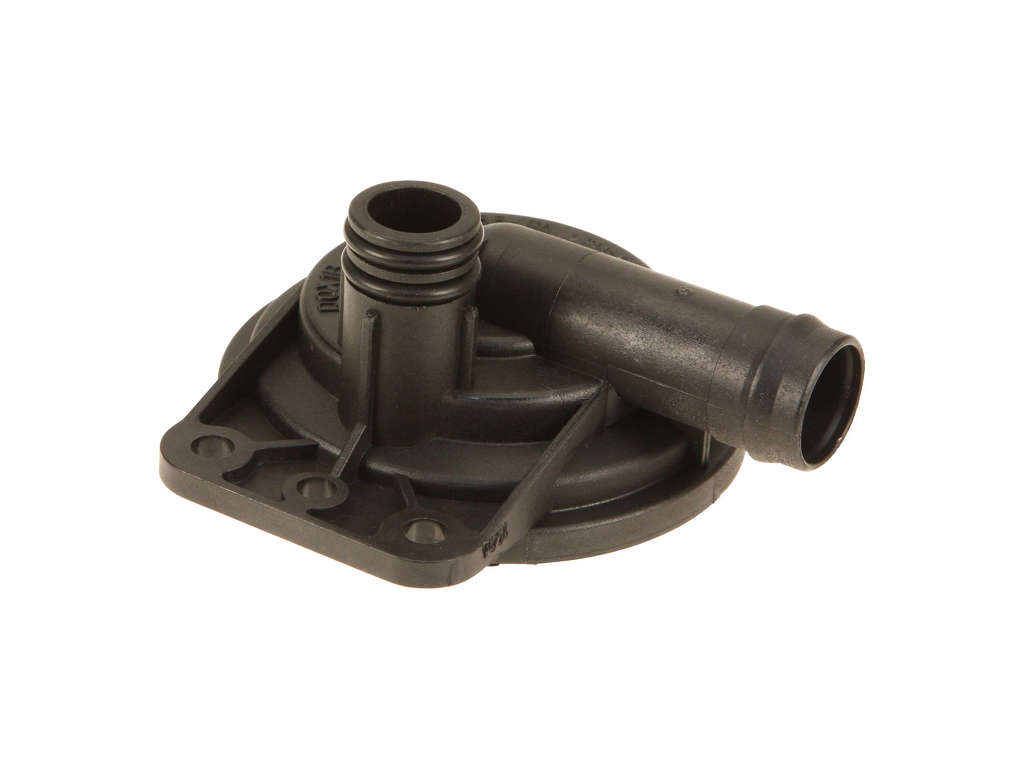
- PCV Valve
(OEM #LR003380)— This is a very common failure point on the 4.4L V8 that directly causes vacuum leaks leading to code P0505. Its internal diaphragm tears.
Trusted brands: Land Rover (OEM), Beck/Arnley, APA/URO Parts
OEM price range: $60-$90
Aftermarket price range: $20-$40 - Throttle Body Cleaner — Often, the only issue is carbon buildup inside the throttle body, and a simple cleaning is all that is required to restore proper idle.
Trusted brands: CRC, Berryman, Permatex
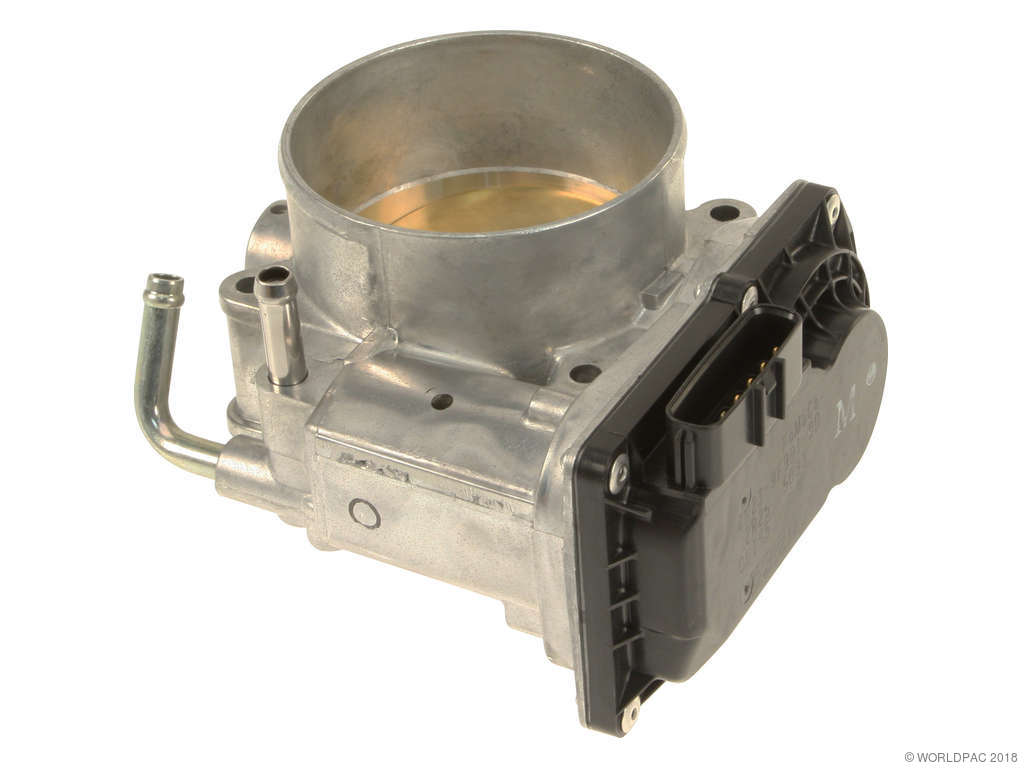
Aftermarket price range: $10-$20 - Electronic Throttle Body
(OEM #LR006142)— If cleaning and fixing vacuum leaks does not resolve the code, the throttle body's internal electronics may have failed, requiring complete replacement.
Trusted brands: Land Rover (Genuine), Bosch
OEM price range: $450-$680
Aftermarket price range: $160-$350
Related Codes That Often Appear With This One
- P2187 — System Too Lean at Idle (Bank 1). This code directly indicates unmetered air is entering the engine, which is the primary cause of P0505 on this vehicle. TSB SSM74374 lists these codes together.
- P2189 — System Too Lean at Idle (Bank 2). Similar to P2187, this points to a vacuum leak affecting the other engine bank. Seeing both codes strongly suggests a significant air leak.
- P0507 — Idle Air Control System RPM Higher Than Expected. This is a more specific version of P0505, directly triggered by the same vacuum leaks. It is also listed in TSB SSM74374.
- P0171 / P0174 — System Too Lean (Bank 1 / Bank 2). These are general lean codes that often accompany P0505, reinforcing the diagnosis of a vacuum leak.
Technical Service Bulletins (TSBs) & Recalls
- SSM74374: Confirms that DTCs P2187, P2189, P0505, or P0507 can be stored due to an air leak from the right-hand camshaft cover assembly because of a split diaphragm within the pressure control valve.
Platform-Specific Known Issues
- TSB SSM74374 explicitly states that P0505, along with lean codes, can be stored due to an air intake system leak from a split diaphragm in the PCV valve.
- The plastic PCV valve and associated hoses are prone to becoming brittle from engine heat cycles, leading to cracks and vacuum leaks.
- A user on landroverforums.com shared a detailed guide for replacing the PCV diaphragm and breather hose, noting the difficulty in accessing the hose clip near the valve.
Mechanic-Grade Diagnostic Values
- Throttle Position Sensor (TPS) Voltage — expected: Approximately 0.5V - 0.7V at idle (throttle closed), smoothly increasing to 4.5V - 5.0V at wide-open throttle.. Failure: Voltage is jumpy, erratic, has dead spots, or does not correspond to the throttle plate angle. A reading that doesn't change when the pedal is pressed indicates a fault.
- Live Data: Accelerator Pedal vs. Throttle Position — expected: With the engine running and not in cruise control, the 'Absolute Throttle Position' percentage should closely match the 'Accelerator Pedal Position' percentage.. Failure: A significant discrepancy where the throttle position stops responding or lags far behind the pedal position (e.g., pedal at 60%, throttle stuck at 30%) points to a failing electronic throttle body.
Scan Tool Commands That Help
- JLR SDD (Symptom Driven Diagnostics): Air Path Set-up Routine / Air Path Calibration — This function should be run after cleaning or replacing the electronic throttle body. It resets the learned open and closed positions of the throttle valve, allowing the ECM to relearn the correct idle parameters. It is found under 'Service Functions' -> 'Recommendations' -> 'Powertrain'.
- Manual Procedure (No Scan Tool): Throttle Adaptation Relearn — Can be attempted after cleaning the throttle body or disconnecting the battery. Turn ignition to 'ON' (position II, engine off). Slowly press the accelerator pedal to the floor and hold for 15-20 seconds. Release the pedal, turn ignition to 'OFF', and wait 2 minutes for the ECM to store the values before starting the engine.
- iCarsoft / Autel / GAP IIDTool: ETC (Electronic Throttle Control) Reset / Throttle Position Reset — Used after cleaning or replacing the throttle body to force the ECU to relearn the throttle plate's home and range of motion, which is critical for correct idle speed.
Wiring & Ground Locations
- C0175 — Connector for the Electronic Throttle Unit on the 4.4L V8, located at the center rear of the engine.. This is the main electrical connector for the throttle body. Corrosion or damage to its pins can cause erratic throttle behavior and trigger P0505.
- Main Engine/Body Grounds — Key ground points are located: 1. A large ground wire from the battery negative terminal to the body, a few inches from the terminal. 2. Behind the right front fender well on the engine block, near the starter. 3. Two smaller grounds located under the engine airbox.. Poor grounds can cause unstable voltage references for the ECM and sensors, including the throttle body, leading to incorrect readings and idle control faults.
Real Owner Repair Stories
- landroverforums.com user (Land Rover LR3 V8) — Vehicle started slowing down on the freeway with no response from the accelerator pedal. Later experienced stumbling/misfires and a lean code (Bank 1).
❌ Tried (didn't work) An induction cleaning was performed preventatively prior to the failure.
✅ What actually fixed it The diagnosis pointed to a faulty Electronic Throttle Body. Using an IIDTool to monitor live data, the owner saw that above 29% accelerator pedal input, the Throttle Position Sensor (TPS) value would get stuck at 29-30%. After an engine restart, it would work correctly for a while before failing again. This mismatch between commanded and actual throttle position was the root cause. - YouTube Case Study (Mechanic Lifestyles) (Range Rover (similar idle control system)) — P0505 Idle Control System Malfunction, erratic idle.
❌ Tried (didn't work) The owner had replaced the entire airbox from a junkyard part, but the problem persisted.
✅ What actually fixed it The cause was a simple disconnected hose from the airbox, creating a massive vacuum leak. Reconnecting the hose and securing the clip immediately resolved the idle issue and the code.
OEM Part Supersession History
4536843→LR003380— Part update/revision by Land Rover for the PCV valve.4605514, 4637031→LR006142— Part update/revision by Land Rover for the Electronic Throttle Body.
Model Year Variations Within This Range
- 2007-2009: For the specified 4.4L V8 engine, there are no significant design changes within this year range that alter the primary causes or diagnostic approach for code P0505. The engine is the same Jaguar-derived AJ41 V8. The V6 engine option was discontinued for the 2008 model year, making the V8 standard.
Helpful Videos

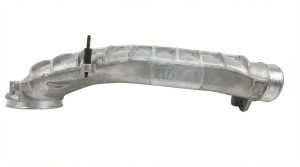
Used OEM Parts in Stock
New Aftermarket Parts Available

The information in this article is provided for general reference and educational purposes only. Vehicle specifications, procedures, and part compatibility can vary by production date, trim level, and region. Always consult your vehicle's factory service manual and verify part numbers before purchasing or performing repairs. Safety-critical components such as airbags, seat belts, and braking systems should be installed by a qualified professional.
- Land Rover LR3:
- 🧭 Diagnostic Flowchart
- 🎬 Helpful Videos
- 🛍️ Shop This Part
- What's Unique About the 2007-2009 Land Rover LR3
- Symptoms You May Notice
- Most Likely Causes
- Rare But Worth Checking
- Diagnosis Steps
- Parts You'll Likely Need
- Related Codes That Often Appear With This One
- Technical Service Bulletins (TSBs) & Recalls
- Platform-Specific Known Issues
- Mechanic-Grade Diagnostic Values
- Scan Tool Commands That Help
- Wiring & Ground Locations
- Real Owner Repair Stories
- OEM Part Supersession History
- Model Year Variations Within This Range
- 🎟️ Get 5% Off