

P0505 on 2016-2020 Lexus GS: Idle Control System Malfunction Causes and Fixes
On a 2016-2020 Lexus GS, code P0505 is most often caused by a dirty or failing electronic throttle body. Cleaning the throttle body of carbon buildup is a common first step, but replacement of the entire assembly may be required, especially on V8-powered GS F models which have a specific TSB for this issue.
- P0505 means the idle speed is out of specification on your Lexus GS.
- The most likely cause is a dirty electronic throttle body, which you can often fix by cleaning it.
- If cleaning doesn't work, the throttle body assembly itself may have failed, which is a known issue on the V8-powered GS F.
- Check for cracked or loose air intake and vacuum hoses, as these can also cause this code.
- This car does not have a separate Idle Air Control (IAC) valve; all idle control is handled by the electronic throttle body.
What's Unique About the 2016-2020 Lexus GS
Unlike older vehicles that use a separate Idle Air Control (IAC) valve, the 2016-2020 Lexus GS integrates this function into the main electronic throttle body assembly. This can confuse some DIY mechanics looking for a separate IAC valve to clean or replace. For the high-performance GS F model with the 2UR-GSE V8 engine, Lexus has issued a specific Technical Service Bulletin (TSB L-SB-0032-15, later updated) that directly links the P0505 code to a failure of the throttle body assembly, indicating a known issue with this component on that specific engine and its platform mates.
Diagnostic Flowchart
Tap your situation to follow the diagnostic path that matches what you're seeing on this vehicle.
Symptoms You May Notice
- Check Engine Light is on
- Idle speed is erratic, fluctuating up and down
- Idle speed is consistently too high or too low
- Engine stalls when coming to a stop or when the gas pedal is released
- Vehicle shakes or runs rough while idling
- Reduced fuel economy
- On GS F models, the car may enter a 'limp mode' with reduced power.
- Replacing a separate Idle Air Control (IAC) Valve. This vehicle does not have one; the function is integrated into the electronic throttle body.
- Assuming a new throttle body will fix the issue without checking for vacuum leaks first.
Most Likely Causes
- Dirty or Sticking Electronic Throttle Body 🔴 High Probability → Shop Fuel Injection Throttle Body Over time, carbon and oil vapor from the PCV system can build up inside the throttle body bore and on the throttle plate. This buildup restricts airflow or causes the plate to stick, preventing the fine movements needed for precise idle control. This is a common issue across many modern vehicles.
How to confirm: Remove the air intake tube connected to the throttle body and visually inspect for a dark, sticky residue around the throttle plate and bore. The butterfly valve may not close completely.
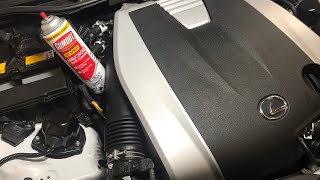
Typical fix: Carefully clean the throttle body bore and plate using a dedicated throttle body cleaner and a soft cloth or brush. 🎬 See a step-by-step walkthrough of the throttle body cleaning process An idle relearn procedure is required after cleaning. This often involves disconnecting the battery for a period, or a specific sequence of key turns and letting the car idle in Drive with the e-brake on for several minutes until the idle stabilizes.
Est. part cost: $5-$15 for cleaner - Faulty Electronic Throttle Body Assembly 🟡 Medium Probability → Shop Fuel Injection Throttle Body The internal electric motor or position sensor can fail. A manufacturer TSB (L-SB-0032-15, later revised to L-SB-0032-25) specifically identifies this as a likely cause for the P0505 code on the 2UR-GSE engine used in the Lexus GS F. The TSB recommends replacing the throttle body and associated ventilation hoses.
How to confirm: After cleaning the throttle body, if the problem persists, a diagnostic scan tool can be used to monitor the throttle position sensor data for erratic readings. A mechanic may also test the motor's circuit. If the code returns immediately after clearing even when the valve is unplugged, it points to a wiring issue; if it only returns when plugged in, the valve itself is likely shorted internally.
Typical fix: Replacement of the entire throttle body assembly. This is often sold as a complete unit with the motor and sensor.
Est. part cost: $200-$700 - Vacuum Leak 🟡 Medium Probability Rubber and plastic hoses in the intake system, particularly the main air intake duct and PCV hoses, can become brittle and crack over time, allowing unmetered air to enter the engine and disrupt the idle.
How to confirm: Visually inspect all vacuum hoses and the main air intake duct for cracks or loose connections. A smoke test, where smoke is fed into the intake system, is the most effective way to find small leaks.
Typical fix: Replace the cracked or leaking hose or gasket. The throttle body gasket should always be replaced when the throttle body is removed.
Est. part cost: $10-$100
Rare But Worth Checking
- Faulty Engine Control Module (ECM): → Shop Engine Control Module (ECM) This is an uncommon cause. It should only be considered after all other possibilities, like the throttle body and vacuum leaks, have been thoroughly ruled out. In one documented case on a GS, a failing alternator caused an electrical surge that damaged the ECM, leading to a persistent P0505 code that began immediately after the alternator was replaced.
Diagnosis Steps
- Use an OBD-II scanner to confirm the P0505 code and check for any other related codes, such as P2111.
- Visually inspect the air intake system, including the large intake boot and all vacuum lines (especially PCV hoses) connected to the intake manifold, for any cracks, tears, or loose connections.
- Remove the air intake boot from the throttle body. Inspect the throttle plate and the inside of the throttle body for heavy carbon or sludge buildup.
- If dirty, disconnect the battery, then clean the throttle body thoroughly with a dedicated cleaner and a soft cloth. Do not spray directly into the electronic components.
- Replace the throttle body gasket, reconnect everything, and reconnect the battery.
- Perform an idle relearn procedure. A common method for Lexus is to warm the engine, turn it off, then start it and let it idle in Drive (D) with the emergency brake engaged for 3-5 minutes until the RPMs stabilize. 🎬 Watch: How to perform the Lexus throttle idle relearn procedure
- If the code returns, the issue is likely a faulty throttle body assembly or a hard-to-find vacuum leak.
- A professional smoke test can definitively identify any vacuum leaks.
- If no leaks are found, testing the throttle body's electrical circuit and sensor data with a scan tool is the next step. If it fails these tests, replacement is necessary. For the GS F, refer to TSB L-SB-0032-15/25.
- As a final, rare step, the ECM's function would be tested by a qualified technician, especially if the issue appeared after another major electrical repair (like an alternator replacement).
Parts You'll Likely Need
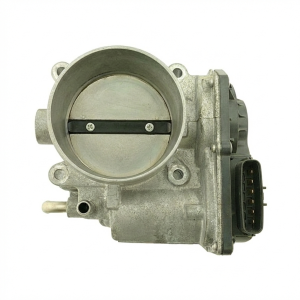
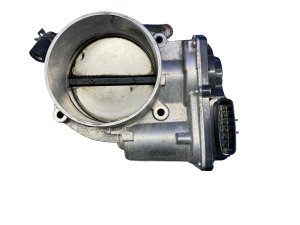
- Electronic Throttle Body Assembly
(OEM #22030-38050 (for 2UR-GSE / GS F))— This is the primary component that controls idle speed. It can fail either mechanically (sticking) or electrically (bad motor/sensor). The TSB for the GS F points directly to this part.
Trusted brands: Lexus (OEM), Aisan, Dorman
OEM price range: $650-$900
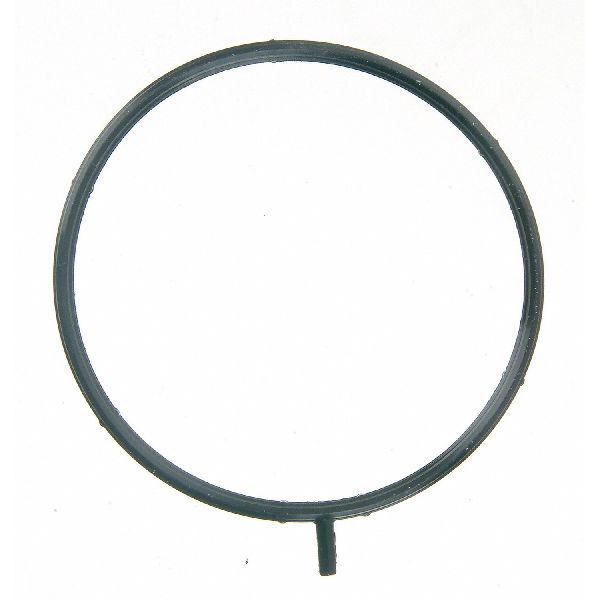
Aftermarket price range: $200-$450 - Throttle Body Gasket — This gasket should always be replaced whenever the throttle body is removed to prevent vacuum leaks.
Trusted brands: Lexus OE, Fel-Pro
OEM price range: $10-$25
Aftermarket price range: $5-$15 - Intake Air Duct / PCV Hoses — These rubber/plastic parts can crack with age, causing vacuum leaks that trigger the P0505 code. The TSB for the GS F also calls for replacing specific ventilation hoses along with the throttle body.
Trusted brands: Lexus OE
OEM price range: $50-$150
Aftermarket price range: $30-$80
Related Codes That Often Appear With This One
- P2111 — This code means 'Throttle Actuator Control System – Stuck Open' and is mentioned alongside P0505 in TSB L-SB-0032-15/25. It strongly suggests a mechanical or electrical fault within the throttle body assembly itself.
Technical Service Bulletins (TSBs) & Recalls
- L-SB-0032-15 / L-SB-0032-25: For 2UR-GSE engines (GS F), may exhibit a MIL ON with DTC P0505 and/or P2111, pointing to a faulty throttle body assembly and ventilation hoses. This TSB covers a wide range of model years for vehicles with the 2UR-GSE engine.
Platform-Specific Known Issues
- A Technical Service Bulletin (L-SB-0032-15, later revised as L-SB-0032-25) exists for the 2UR-GSE engine (found in the 2016-2020 GS F) that may exhibit a MIL ON condition with DTC P0505. The bulletin recommends replacing the throttle body assembly (Part No. 22030-38050) and specific ventilation hoses to resolve the issue.
Mechanic-Grade Diagnostic Values
- DTC P0505 Set Condition — expected: Target idle speed should be maintained.. Failure: Actual engine idle speed varies from the target idle speed by 100-200 rpm or more, 5 times or more during a driving cycle.
- Throttle Body Motor Voltage (Key On, Engine Off) — expected: Approximately 12V (Battery Voltage) at the power supply terminals of the throttle body connector.. Failure: No voltage or significantly low voltage indicates a wiring or ECM power supply issue.
Hidden / Shadow Codes Worth Checking
- Information Code 33: On older Toyota/Lexus systems, P0505 may be associated with a two-digit information code '33', which also points to an Idle Control System 🎬 Watch: A breakdown of P0505 causes and common fixes Malfunction. (see via May be visible on older diagnostic testers or through specific manual procedures, less common with modern Techstream software.)
Scan Tool Commands That Help
- Techstream: Data List / Active Test — Used to monitor live data parameters like 'Engine Speed', 'ISC Feedback Value', and 'ISC Learning Value' to see how the ECM is attempting to control idle. The Active Test can be used to command components like the EGR valve to check for related system faults.
- Techstream: Clear DTCs / Reset Memory — Used after a repair (like cleaning or replacing the throttle body) to clear the fault code and reset the ECM's learned values. A subsequent idle relearn procedure is then required.
- Techstream: Confirmation Driving Pattern — A specific driving sequence described in the service manual that must be performed to allow the ECM to run its internal monitors and confirm if a fault is still present after a repair.
Real Owner Repair Stories
- Car Talk Community User (2006 Lexus GS 300, 140k miles) — Check Engine Light with code P0505, RPMs dipping to 300 and fluctuating between 300-700 at idle, car shaking.
❌ Tried (didn't work) Replacing the battery., Cleaning the throttle body at the Lexus dealer., Clearing the code (it returned the same day).
✅ What actually fixed it The issue began immediately after a faulty alternator was replaced (it was smoking and glowing red hot). The user was left to suspect that the electrical surge from the failing alternator damaged the Engine Control Module (ECM), as all standard diagnostics for P0505 could not identify another cause. The thread did not post a final confirmed repair, but strongly points to ECM damage as the root cause. - ClubLexus Forum User (2006 Lexus GS300, 147k miles) — P0505 code, high idle on startup and in neutral, 750-800 RPM idle in drive.
❌ Tried (didn't work) Replacing the original throttle body with a used one (61k miles).
✅ What actually fixed it The user replaced the throttle body, but the code returned. The thread discussion pointed towards other potential causes like vacuum leaks or the need for a proper idle relearn procedure, highlighting that simply swapping the part doesn't always resolve the issue if underlying problems exist. The final resolution was not posted.
OEM Part Supersession History
22030-38050→N/A - Current Part Number— This is the current specified part for the 2UR-GSE engine in the GS F and other Lexus V8 models.
Model Year Variations Within This Range
- 2016: The 2016 model year marked a significant mid-cycle refresh for the GS line. For the GS 350, this included the introduction of the 2GR-FKS engine (up from 306 to 311 hp) which uses both port and direct injection. While the P0505 diagnosis is fundamentally similar, the engine and some intake components differ from the pre-refresh 2013-2015 models. There are no significant mechanical differences noted between 2016-2020 that would alter the P0505 diagnosis.
Helpful Videos

Used OEM Parts in Stock
New Aftermarket Parts Available

The information in this article is provided for general reference and educational purposes only. Vehicle specifications, procedures, and part compatibility can vary by production date, trim level, and region. Always consult your vehicle's factory service manual and verify part numbers before purchasing or performing repairs. Safety-critical components such as airbags, seat belts, and braking systems should be installed by a qualified professional.
- Lexus GS:
- 🧭 Diagnostic Flowchart
- 🎬 Helpful Videos
- 🛍️ Shop This Part
- What's Unique About the 2016-2020 Lexus GS
- Symptoms You May Notice
- Most Likely Causes
- Rare But Worth Checking
- Diagnosis Steps
- Parts You'll Likely Need
- Related Codes That Often Appear With This One
- Technical Service Bulletins (TSBs) & Recalls
- Platform-Specific Known Issues
- Mechanic-Grade Diagnostic Values
- Hidden / Shadow Codes Worth Checking
- Scan Tool Commands That Help
- Real Owner Repair Stories
- OEM Part Supersession History
- Model Year Variations Within This Range
- 🎟️ Get 5% Off