

P0505 on 2003-2006 Lincoln LS: Idle Control Fault Causes and Fixes
On a 2003-2006 Lincoln LS, code P0505 is almost always caused by a dirty Electronic Throttle Body (ETB) or a vacuum leak. This car has no separate IAC valve. Start by thoroughly cleaning the throttle body as per Ford TSB 12-8-1; this is often a no-cost fix if you DIY.
- Do NOT look for or buy an Idle Air Control (IAC) valve; your vehicle does not have one.
- The most likely and cheapest fix is to remove and thoroughly clean your Electronic Throttle Body.
- If cleaning the throttle body doesn't work, the next most likely cause is a vacuum leak. A smoke test is the best way to find it.
- On the 3.0L V6, be highly suspicious of the PCV hose that runs underneath the intake manifold.
What's Unique About the 2003-2006 Lincoln LS
A critical detail for the 2003-2006 Lincoln LS is that it uses a 'drive-by-wire' system and does NOT have a traditional Idle Air Control (IAC) valve. Idle speed is managed by tiny movements of the main throttle plate within the Electronic Throttle Body (ETB). Many generic guides for P0505 will incorrectly suggest replacing a non-existent IAC valve, leading to confusion and wasted money. The most common fixes for this specific platform are cleaning the ETB as outlined in a Ford Technical Service Bulletin (TSB 12-8-1) or repairing common vacuum leaks.
Symptoms You May Notice
- Engine stalling when coming to a stop or at idle
- Rough or vibrating idle
- Idle speed is higher than normal (surging)
- Idle speed is lower than normal (bogging)
- Fluctuating engine RPM at idle
- Illuminated Check Engine Light
- Replacing the Idle Air Control (IAC) Valve. This vehicle does not have one; parts stores may list it incorrectly, causing confusion. The idle is controlled by the electronic throttle body.
Most Likely Causes
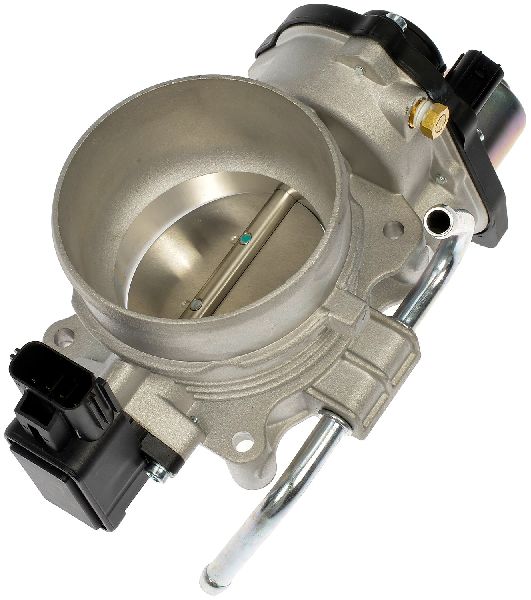
- Dirty or Sticking Electronic Throttle Body (ETB) 🔴 High Probability → Shop Fuel Injection Throttle Body Ford issued TSB 12-8-1 specifically for this issue on the LS and its platform mates. Carbon and sludge build-up on the throttle plate and bore restricts the fine movements needed for idle control. This is the most common cause and the first thing that should be addressed.
How to confirm: Visually inspect the throttle body bore and the edges of the throttle plate for a dark, sticky film of carbon buildup. The engine may also have a delayed return to idle.
Typical fix: Remove the throttle body and thoroughly clean the plate and bore with a dedicated throttle body cleaner and a soft brush. Reinstall and perform an idle relearn procedure if necessary. One owner on lincolnvscadillac.com noted, "Cleaned the throttle body... problem solved. It's amazing how much gunk builds up in there."
Est. part cost: $5-$15 for cleaner and a gasket - Vacuum Leak 🔴 High Probability The plastic and rubber components in the vacuum system, particularly on the 3.0L V6, become brittle with age. A PCV hose and elbow located under the intake manifold are common failure points. On the 3.9L V8, the O-rings on the PCV valve itself are a known leak source.
How to confirm: Listen for a distinct hissing sound from the engine bay at idle. Perform a smoke test by introducing smoke into the intake system and watching where it escapes. You can also carefully spray short bursts of brake cleaner or propane around vacuum lines and gaskets; a change in idle RPM indicates you've found the leak.
Typical fix: Replace the cracked or broken vacuum hose, elbow, or gasket. The PCV hose under the intake manifold on the V6 requires removing the upper intake to access. A user on LVCforums described this repair as tedious but necessary: "Had to pull the intake manifold on my V6 for a $15 hose, but it fixed the P0505 and P0171 codes I was chasing for months."
Est. part cost: $10-$75 depending on the specific hose or gasket - Failing Coil-On-Plugs (COPs) 🟡 Medium Probability Failing ignition coils are a well-documented weak point on the Lincoln LS. A failing COP can create electrical noise (RFI) that interferes with the PCM, which can be misinterpreted as a throttle control fault, leading to idle issues and related codes. This is often a 'ghost' issue when other fixes fail.
How to confirm: This is difficult to confirm without an oscilloscope. Often diagnosed when a rough idle persists after cleaning the throttle body and confirming no vacuum leaks. Misfire codes (P030x) may also be present.
Typical fix: Replace the failing ignition coil(s) and spark plugs. Many owners opt to replace all coils and plugs at once for reliability. It's recommended to use high-quality OEM or equivalent coils to prevent premature failure.
Est. part cost: $30-$60 per coil
Rare But Worth Checking
- Faulty Electronic Throttle Body (ETB): → Shop Fuel Injection Throttle Body While cleaning usually resolves the issue, the electronic motor or position sensor within the throttle body can fail. This is a last resort after all other causes are ruled out. A user on Tbirdforum.com reported a broken plastic tab on the ETB's electrical connector caused a loss of communication and a no-throttle condition.
- Wiring Harness Issue: Damage or corrosion on the wires or connector for the electronic throttle body can interrupt the signal from the PCM, causing a P0505 code.
- Powertrain Control Module (PCM) Fault: → Shop Engine Control Module (ECM) This is extremely rare, but a software glitch or internal failure in the PCM can cause it to improperly command the throttle body. This should only be considered after every other possibility has been exhausted.
Diagnosis Steps
- Scan for other DTCs. Codes like P0171/P0174 strongly suggest a vacuum leak.
- Visually inspect all accessible vacuum hoses for cracks, disconnection, or brittleness. Listen for an audible hissing at idle.
- Perform a smoke test to definitively locate any vacuum leaks, paying close attention to the intake manifold gaskets and PCV hoses.
- If no vacuum leaks are found, remove the Electronic Throttle Body (ETB).
- Thoroughly clean the throttle plate and bore using throttle body cleaner and a soft brush, as detailed in TSB 12-8-1. Avoid spraying cleaner directly into the pivot shaft bore.
- Reinstall the throttle body with a new gasket. Clear the codes and perform a Keep Alive Memory (KAM) reset. This can be done by disconnecting the battery for at least 15 minutes. Afterwards, let the car idle for several minutes to begin the relearn process.
- If the problem persists, inspect the wiring and connector at the ETB for damage, corrosion, or a broken locking tab.
- If a rough idle or misfire is still present, investigate the Coil-On-Plugs (COPs) as a potential source of electrical interference.
- As a final step, consider replacing the entire Electronic Throttle Body assembly.
Parts You'll Likely Need
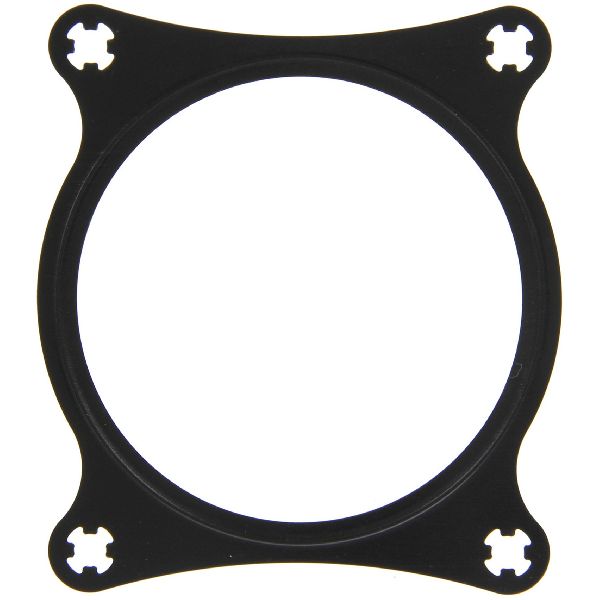
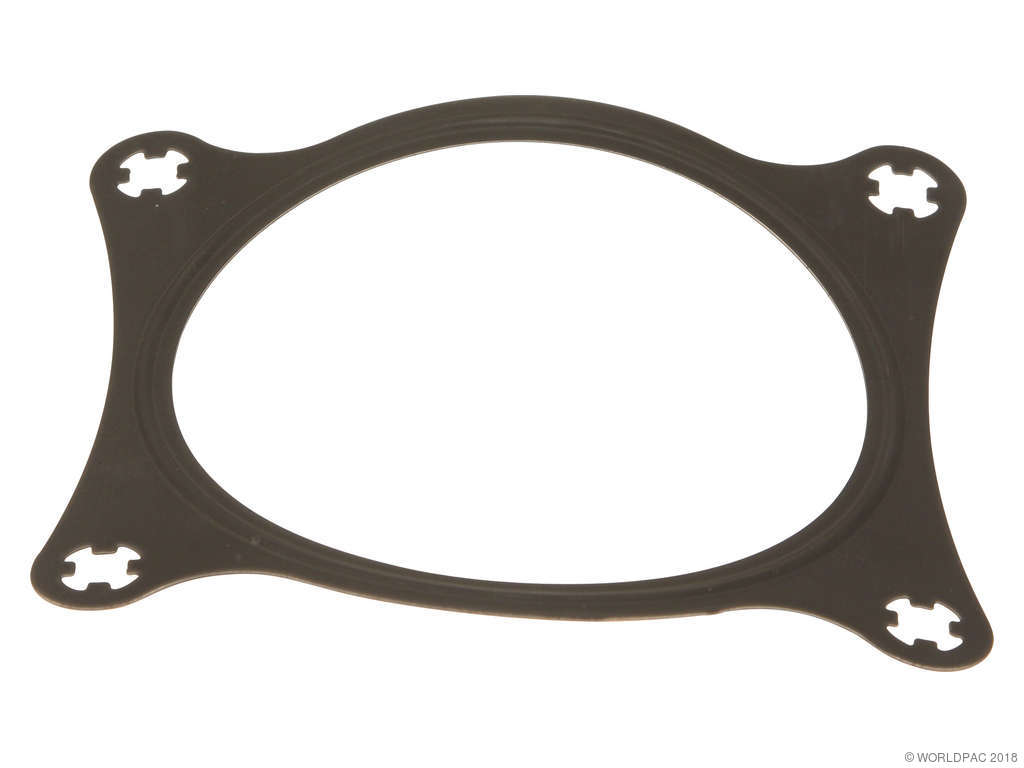
- Electronic Throttle Body Gasket
(OEM #XW4Z-9E936-AA)— Should be replaced whenever the throttle body is removed for cleaning to prevent vacuum leaks.
Trusted brands: Motorcraft, Fel-Pro
OEM price range: $15-$25
Aftermarket price range: $5-$15 - PCV Hoses and Elbows
(OEM #2L5Z-6758-AA (Common V6 hose))— These are the most common sources of vacuum leaks on this platform, especially on the 3.0L V6.
Trusted brands: Motorcraft
OEM price range: $25-$75
Aftermarket price range: $15-$50 - Electronic Throttle Body — Replaced only if cleaning does not solve the problem and the internal electronics or motor have failed.
Trusted brands: Motorcraft
OEM price range: $300-$450
Aftermarket price range: $150-$250
Related Codes That Often Appear With This One
- P0506 — This code for 'Idle Air Control System RPM Lower Than Expected' points to the same system fault, just specifically noting a low idle condition. TSB 12-8-1 covers both P0505 and P0506.
- P0171 / P0174 — These 'System Too Lean' codes for Bank 1 and Bank 2 are often triggered alongside P0505 when the root cause is a significant vacuum leak, which introduces unmetered air into the engine.
- P2104 / P2111 — These codes relate to the throttle actuator control system. They can appear if the throttle plate is stuck or if there's an electrical fault in the ETB, which are also root causes of P0505. TSB 12-8-1 notes that P2111 and P2112 can appear after a battery disconnect on vehicles with this issue.
Technical Service Bulletins (TSBs) & Recalls
- TSB 12-8-1: Addresses DTCs P0505, P0506, idle RPM fluctuation, and hard starts. Recommends cleaning the throttle body to resolve sludge buildup. Applies to both 3.0L and 3.9L engines on the LS and Thunderbird.
Platform-Specific Known Issues
- A PCV hose that runs under the intake manifold on the 3.0L V6 is a very common failure point that causes vacuum leaks and idle issues.
- Failing ignition coils (COPs) are known to cause electrical interference that can trigger false throttle-related fault codes.
Mechanic-Grade Diagnostic Values
- PCM Power and Ground Integrity — expected: Battery voltage at the PCM should be 13.5V - 14.5V with the engine running. Ground resistance should be less than 0.1 Ω.. Failure: Low voltage or high resistance on ground circuits can cause erratic PCM behavior and false codes.
- Throttle Position Sensor (TPS) Voltage at Closed Throttle — expected: Approximately 0.4V - 1.0V. This value is manufacturer-specific but should be stable at idle.. Failure: Voltage that is too high, too low, or erratic at closed throttle can indicate a faulty TPS within the ETB assembly.
Scan Tool Commands That Help
- Ford IDS (or equivalent professional scan tool): Throttle Relearn / KAM Reset — After cleaning or replacing the Electronic Throttle Body, or after disconnecting the battery. This function forces the PCM to relearn the throttle plate's closed and open positions, which is critical for correct idle control. While a manual battery disconnect can work, the scan tool command is more reliable and faster.
- Ford IDS (or equivalent professional scan tool): Live Data Monitoring (Actual vs. Commanded Idle RPM) — During initial diagnosis to confirm the fault. If the 'Commanded Idle RPM' from the PCM does not match the 'Actual RPM' from the tachometer signal, it confirms the control loop is failing and P0505 is a valid code.
Wiring & Ground Locations
- G101 — On the right radiator support.. This is a primary engine bay ground point. A corroded or loose connection here can affect various sensors and modules, including the PCM and ETB, potentially causing erratic behavior and incorrect readings that lead to a P0505 code.
- G102 — On the right front fender.. Another key engine compartment ground. Poor integrity at this point can introduce electrical noise or voltage drops, interfering with the sensitive signals between the PCM and the Electronic Throttle Body.
- PCM Connector Pins 25, 26, 27 — At the main Powertrain Control Module connector, located at the right rear of the engine compartment.. These are specific ground pins for the PCM. Verifying continuity to ground at these pins is a critical step in ruling out a PCM-related issue when diagnosing persistent, hard-to-trace electronic faults like P0505.
Real Owner Repair Stories
- Lincoln vs Cadillac Forums user 'telcodad' (2003 Lincoln LS V6, 110K miles) — Car going into fail-safe mode, throwing codes for throttle body stuck open/closed, TPS sensor, throttle body actuator, and low fuel pressure.
❌ Tried (didn't work) Replaced all 6 ignition coils, valve cover gaskets, and spark plugs previously for misfires., Replaced the original throttle body with a used one from a 2011 Crown Victoria, which was believed to be an interchangeable part.
✅ What actually fixed it The story highlights a critical misdiagnosis: assuming a throttle body from a different Ford model (Crown Victoria) was compatible, even if salvage yard and some aftermarket databases suggested it was. The problem remained unresolved with the incorrect part, pointing towards either the used part also being faulty or a fundamental incompatibility. The final fix was not posted, but the lesson is the danger of using non-verified interchangeable parts for complex electronic components. - Lincoln vs Cadillac Forums user 'karmabob' (via another user) (2000 Lincoln LS 3.9L V8 (Note: Pre-2003, but linkage design may be similar)) — Throttle pedal became unresponsive; pressing the pedal did nothing.
❌ Tried (didn't work) Initial diagnosis was a failed throttle body.
✅ What actually fixed it The root cause was not the electronic part of the throttle body, but a small mechanical linkage rod. The plastic bushings in the linkage had decomposed and fallen out, causing the C-clips to pop off and the linkage to disconnect. The dealer stated the bushings were not sold separately and required a new $400 throttle body. The user temporarily fixed it with a matchbook to hold the clip on, highlighting a mechanical failure point that can mimic a total electronic failure.
"I Checked Everything" — The Actual Cause
- In cases where a smoke test reveals no vacuum leaks and cleaning the throttle body provides no fix, the cause is often electrical. Failing Coil-On-Plugs (COPs) are a notorious source of Radio Frequency Interference (RFI) on the Lincoln LS. This electrical noise can disrupt the PCM's ability to accurately read the throttle position or control the throttle motor, triggering a P0505 code even though the throttle body and intake system are mechanically sound.
Model Year Variations Within This Range
- 2003-2006: For 2003, the LS received a significant update, including the introduction of the electronic 'drive-by-wire' throttle for both V6 and V8 engines, replacing the previous mechanical cable. This makes the 2003-2006 models a distinct group for diagnosing this code, as pre-2003 models had a different throttle control system.
- 2006: For the final model year, the V6 engine option was dropped. All 2006 Lincoln LS models came standard with the 3.9L V8.
Diagnostic Flowchart
Other Known Issues on This Vehicle
Issues unrelated to this code that are worth knowing about as an owner of this generation:
- Leaking Valve Cover Gaskets 🔴 High — Extremely common. Oil leaks onto hot exhaust manifolds, causing a burning smell, and can also leak into spark plug wells, causing engine misfires. (Ref: An extended warranty was offered for 2003 models under SSM 46085.)
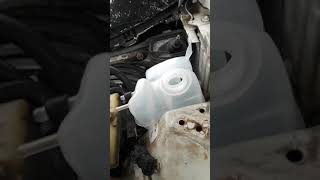
- Cracked Coolant Degas Tank (Expansion Tank) 🔴 High — Very common failure. The plastic tank becomes brittle and cracks, leading to coolant loss and potential engine overheating. Owners strongly recommend using only OEM replacements, as aftermarket versions (like Dorman) are reported to fail quickly.
- Failing Window Regulators 🟠 Medium — Extremely common across all years. The plastic clips holding the window glass break, causing the window to suddenly drop inside the door. The motor is usually fine, but the regulator assembly requires replacement. Models from 2003-2006 have a 'smart motor' that requires a de-initialization/re-initialization procedure after replacement.
- Hydraulic Cooling Fan Failure (2000-2002 V8 models) 🔴 High — Specific to the Gen 1 V8s, this system was replaced by an electric fan in 2003. The hydraulic pump or its control solenoid fails, causing the fan to spin too slowly, leading to overheating.
- Failing Dual Climate Control Valve (DCCV) 🟠 Medium — Common issue where the valve fails, causing the HVAC system to blow hot air on one side and cold on the other, or for coolant flow to the engine to be disrupted.
Used vs. New Parts: Buying Guide for This Vehicle
When a used part is the smart pick: A used Electronic Throttle Body (ETB) from a salvage yard can be a cost-effective option, as a new OEM unit is expensive. However, it is a gamble. It only makes sense if the donor vehicle is confirmed to be low-mileage and the part comes with a short warranty or return period. Vacuum hoses should always be purchased new, as used rubber is likely to be just as brittle as the part being replaced.
Donor-vehicle mileage cap: roughly under 80000 miles for the part to have meaningful remaining life.
What to inspect on the donor part:
- For a used ETB, inspect the throttle bore for deep scoring or damage; light carbon is acceptable as it can be cleaned.
- Ensure the electrical connector and its plastic locking tab are intact and free of corrosion or bent pins.
- Verify the throttle plate moves smoothly by hand (with the unit off the car) and doesn't bind or stick.
OEM-only on this vehicle (don't cheap out):
- Ignition Coils (COPs): Forum consensus strongly suggests using only Motorcraft (OEM) or high-quality OEM-equivalent brands like Denso or NGK. Cheaper aftermarket coil sets are widely reported to fail prematurely, causing misfires and RFI that can trigger false P0505 codes.
Aftermarket brands forum-validated for this vehicle:
- Ignition Coils: Motorcraft, Denso, NGK, Delphi.
- Throttle Body: Dorman offers an 'OE Fix' version that may have improved internal seals.
Brands owners have reported issues with on this vehicle:
- Unbranded or 'white box' ignition coil sets from online marketplaces are frequently cited by owners as a source of recurring problems.
Real Owner Stories
Aggregated from forums and TSBs cited above. Mileages and costs reflect what owners reported in those sources.
2003-2006 Lincoln LS V6
Symptoms: Chasing P0505 and P0171 codes for months; required pulling the intake manifold for a $15 hose.
What fixed it: Replaced the PCV hose located under the intake manifold.
Cost: $10-$75
Source hint: LVCforums user description of V6 vacuum leak repair
2003-2006 Lincoln LS
Symptoms: Idle issues caused by gunk build-up in the throttle body.
What fixed it: Cleaned the throttle body plate and bore with dedicated cleaner.
Cost: $5-$15
Source hint: lincolnvscadillac.com owner report
2003-2005 Ford Thunderbird 3.9L V8
Symptoms: P0505 code, wrench light, and no throttle response.
What fixed it: Repaired the electrical connection at the ETB after the plastic lock on the connector broke.
Source hint: Tbirdforum.com thread 'P0505 code, wrench light, and no throttle response'
Related OBD-II Codes
Frequently Asked Questions
Does TSB 12-8-1 apply to my 2004 Lincoln LS with the 3.9L V8?
I have a P0505 on my 3.0L V6; is it the same Idle Air Control (IAC) valve issue found on the Jaguar S-Type?
Can failing ignition coils (COPs) cause a P0505 code even if I don't have a misfire code?
Is there a specific vacuum hose on the V6 model known for causing this code?
What is the recommended first step for a P0505 according to Lincoln owner communities?
How do I reset the system after cleaning the throttle body to fix the idle?
Helpful Videos


Used OEM Parts in Stock
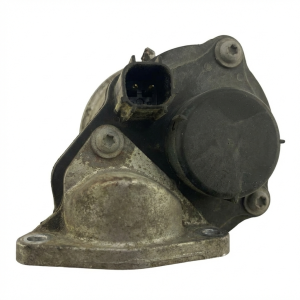
New Aftermarket Parts Available


The information in this article is provided for general reference and educational purposes only. Vehicle specifications, procedures, and part compatibility can vary by production date, trim level, and region. Always consult your vehicle's factory service manual and verify part numbers before purchasing or performing repairs. Safety-critical components such as airbags, seat belts, and braking systems should be installed by a qualified professional.
- Lincoln LS:
- 🧭 Diagnostic Flowchart
- 🎬 Helpful Videos
- 🛍️ Shop This Part
- What's Unique About the 2003-2006 Lincoln LS
- Symptoms You May Notice
- Most Likely Causes
- Rare But Worth Checking
- Diagnosis Steps
- Parts You'll Likely Need
- Related Codes That Often Appear With This One
- Technical Service Bulletins (TSBs) & Recalls
- Platform-Specific Known Issues
- Mechanic-Grade Diagnostic Values
- Scan Tool Commands That Help
- Wiring & Ground Locations
- Real Owner Repair Stories
- "I Checked Everything" — The Actual Cause
- Model Year Variations Within This Range
- Other Known Issues on This Vehicle
- Used vs. New Parts: Buying Guide for This Vehicle
- Real Owner Stories
- 2003-2006 Lincoln LS V6
- 2003-2006 Lincoln LS
- 2003-2005 Ford Thunderbird 3.9L V8
- Related OBD-II Codes
- Frequently Asked Questions
- 🎟️ Get 5% Off