

P0505 on 2006-2008 Mercury Milan: Idle Air Control System Causes and Fixes
On a 2006-2008 Mercury Milan, code P0505 is most often caused by carbon buildup in the throttle body, which prevents the Idle Air Control (IAC) valve from working correctly. The fix is usually a thorough cleaning of the throttle body and IAC passages, which is a low-cost DIY job. Replacing the IAC valve is the next most common step if cleaning doesn't resolve the issue.
- For a P0505 code on a 2006-2008 Milan, start by cleaning the throttle body thoroughly before replacing any parts.
- This issue is common enough that Ford issued a Technical Service Bulletin (TSB 12-8-1) for it.
- Always replace the throttle body gasket after cleaning to prevent new vacuum leaks.
- If cleaning doesn't work, the next most likely cause is a failed Idle Air Control (IAC) valve.
- An unexpected engine stall is the primary risk, so it's best to fix this issue promptly.
What's Unique About the 2006-2008 Mercury Milan
The 2006-2008 Mercury Milan, which is mechanically identical to the Ford Fusion and Lincoln Zephyr of the same years, uses a separate Idle Air Control (IAC) valve rather than a fully electronic throttle body for idle management. This design is particularly susceptible to carbon buildup in the throttle body's air passages. Ford acknowledged this issue by releasing Technical Service Bulletin (TSB) 12-8-1, which specifically points to cleaning the throttle body as the primary solution for P0505 and related idle fluctuation on these cars, affecting both the 2.3L and 3.0L engines.
Symptoms You May Notice
- Engine idle speed is too high (surging) or too low (bogging)
- Engine stalls when coming to a stop or while idling
- Rough or fluctuating idle
- Difficulty starting the engine, or a crank-no-start condition
- Check Engine Light is on
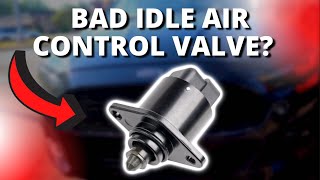
- Car feels like it wants to 'jump' or 'lunge' at a stop if the idle is too high. 🎬 Watch: Learn how to spot symptoms of a bad IAC valve.
- Replacing the IAC valve before cleaning the throttle body. The valve itself may be functional, but unable to do its job due to clogged air passages. Always clean the throttle body first as per the TSB.
- Replacing the throttle position sensor (TPS). While a faulty TPS can cause idle issues, it typically sets its own specific trouble codes and is less likely to be the cause of P0505 than a dirty throttle body or bad IAC valve.
Most Likely Causes
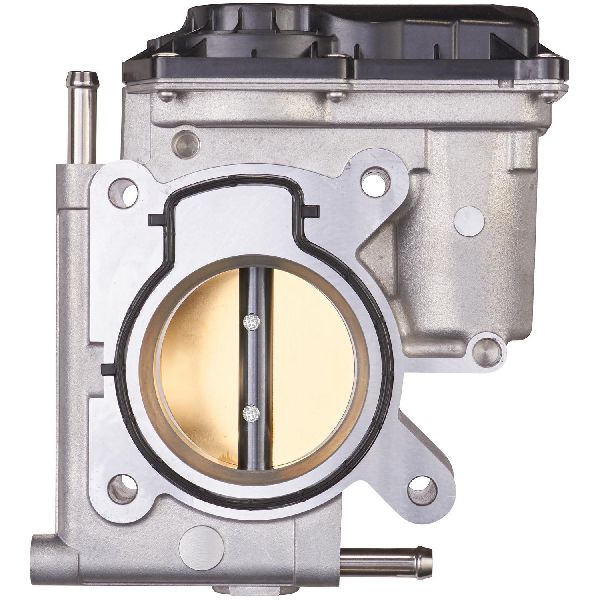
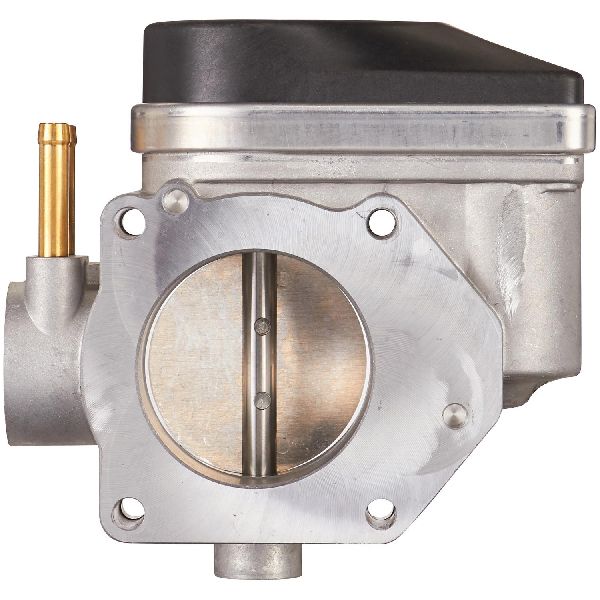
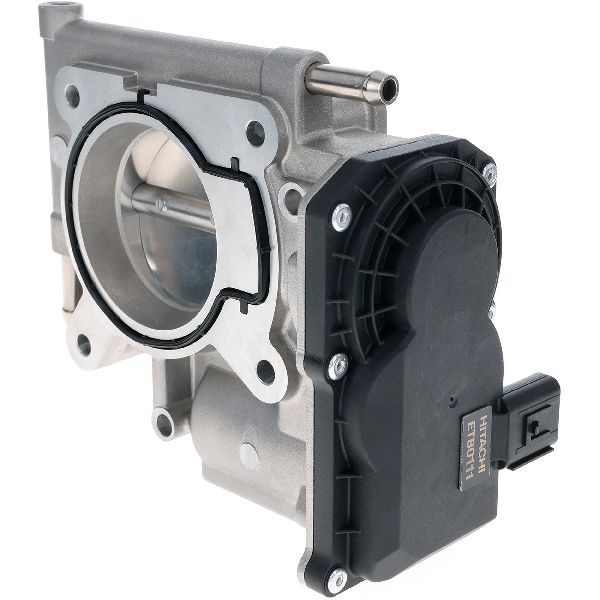
- Dirty Throttle Body and IAC Passages 🔴 High Probability → Shop Fuel Injection Throttle Body As documented in Ford TSB 12-8-1, carbon and oil vapor deposits from the PCV system commonly clog the small air passages in the throttle body that the IAC valve uses to control idle speed. The throttle plate itself can also stick due to buildup, preventing it from closing properly.
How to confirm: Remove the air intake tube from the throttle body and visually inspect for a thick, black coating of carbon around the throttle plate and inside the bore. A dirty throttle body is the most common cause and should be the first step in diagnosis.
Typical fix: Remove the throttle body from the intake manifold and clean it thoroughly with dedicated throttle body cleaner and a soft brush. Pay special attention to the IAC passages. Do not use harsh tools that could scratch the bore. Replace the throttle body gasket upon reinstallation to prevent vacuum leaks.
Est. part cost: $5 - $20 for cleaner and a new gasket. - Faulty Idle Air Control (IAC) Valve 🟡 Medium Probability → Shop Idle Air Control Valve The IAC valve is a small electric motor (stepper motor) that constantly moves to adjust airflow. Over time, it can fail electrically, the internal motor can short out, or it can become so clogged with carbon that cleaning is ineffective.
How to confirm: After thoroughly cleaning the throttle body, if the problem persists, test the IAC valve. With the engine running, unplugging the IAC's electrical connector should cause a significant change in idle speed or stall the engine. If there is no change, the valve is likely faulty. You can also test the resistance across the valve's terminals with a multimeter to check for an open or shorted circuit.
Typical fix: Replace the Idle Air Control valve. It is typically mounted directly to the throttle body with two 8mm bolts.
Est. part cost: $50 - $150 - Vacuum Leak ⚪ Low Probability Rubber and plastic vacuum lines, especially the PCV (Positive Crankcase Ventilation) hoses, can become brittle and crack with age and heat cycles. This allows unmetered air to enter the engine, disrupting the air-fuel mixture and causing a high or erratic idle.
How to confirm: Listen for a distinct hissing sound around the engine bay at idle. You can also carefully spray short bursts of brake cleaner or use a smoke machine around vacuum lines and intake gaskets; a change in idle RPM or visible smoke will pinpoint the leak's location.
Typical fix: Replace the cracked or broken vacuum hose or leaking gasket. The PCV hose is a common culprit.
Est. part cost: $5 - $50
Rare But Worth Checking
- Faulty Powertrain Control Module (PCM): → Shop Engine Control Module (ECM) This is very uncommon, but on the 3.0L V6 models, there is a known issue where a failed ignition coil can short out and back-feed voltage, damaging the PCM driver circuit for that coil and potentially affecting other functions, including idle control. If you have replaced the IAC and have no vacuum leaks, and especially if you have other strange electrical issues or persistent misfire codes (P0300-P0306), the PCM could be the culprit. A video by 'Ford Boss Me' on YouTube details this exact failure scenario.
Diagnosis Steps
- Verify the P0505 code is present using an OBD-II scanner. Check for any other codes and document them.
- Visually inspect all vacuum hoses connected to the intake manifold for obvious cracks, breaks, or disconnections. Pay close attention to the PCV hoses.
- Remove the air intake duct from the throttle body. Inspect the throttle bore and plate for heavy carbon buildup.
- Following the procedure in TSB 12-8-1, remove the throttle body from the vehicle for cleaning.
- Using a dedicated throttle body cleaner and a soft brush or rag, thoroughly clean all carbon from the throttle bore, throttle plate (front and back), and especially the IAC air passages. Do not spray cleaner directly into any electronic components.
- Reinstall the throttle body with a new gasket to prevent future vacuum leaks.
- Disconnect the negative battery terminal for at least 15 minutes to reset the PCM's learned idle values and other adaptive memory.
- Reconnect the battery and perform an idle relearn procedure. A common procedure is: Start the engine and let it idle in Park for several minutes to reach operating temperature. Then, let it idle for at least one more minute. Turn the A/C on high and let it idle for another minute, then turn it off. Drive the vehicle to allow the PCM to fully adapt.
- If the problem persists after cleaning, test the IAC valve and its wiring connector for power, ground, and signal. Unplugging the IAC while the engine is running should cause a dramatic change in idle.
- If the IAC and wiring test good, perform a smoke test to find any hard-to-see vacuum leaks (e.g., intake manifold gasket, PCV system).
- On 3.0L V6 models, if misfire codes are also present, investigate the ignition coils and consider testing the PCM driver circuits as a final step.
Parts You'll Likely Need
- Throttle Body Cleaner — This is required to perform the most common fix: cleaning the carbon buildup from the throttle body as recommended by Ford's TSB.
Trusted brands: CRC, Berryman, Gumout
Aftermarket price range: $5 - $10 - Idle Air Control Valve
(OEM #Motorcraft CX2083 (for 2.3L I4))— If cleaning the throttle body doesn't resolve the issue, the IAC valve itself has likely failed and will need replacement.
Trusted brands: Motorcraft, Hitachi, Standard Motor Products
OEM price range: $100 - $180
Aftermarket price range: $50 - $120 - Throttle Body Gasket
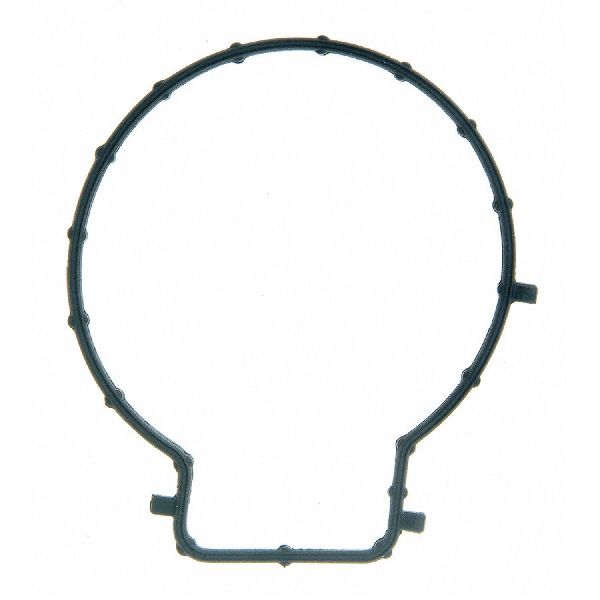
(OEM #Motorcraft CG-764 (also listed as 3S4Z-9F670-AA) for 2.3L I4. For 3.0L V6, gasket is often specific to the throttle body part number.)— This gasket should always be replaced whenever the throttle body is removed for cleaning to prevent a vacuum leak.
Trusted brands: Motorcraft, Fel-Pro, Victor Reinz
OEM price range: $10 - $30
Aftermarket price range: $5 - $15
Related Codes That Often Appear With This One
- P0506 — P0506 means 'Idle Air Control System RPM Lower Than Expected'. This code is often triggered by the same root causes as P0505, such as a clogged IAC passage or a stuck-closed valve, and is mentioned in the same TSB.
- P0507 — P0507 means 'Idle Air Control System RPM Higher Than Expected'. This can be caused by a large vacuum leak or an IAC valve that is stuck open.
Technical Service Bulletins (TSBs) & Recalls
- TSB 12-8-1: Addresses DTCs P0505, P0506 and/or engine idle RPM fluctuation. The fix involves cleaning the throttle body. This applies to 2006-2008 Milan models with the 2.3L and 3.0L engines.
- General Ford TSBs: Other Ford TSBs for different models but similar engines (e.g., 2005-2007 Ford Five Hundred) also recommend spray cleaning the throttle body for RPM fluctuations with codes P0505 and P0506, reinforcing this as a common Ford repair procedure.
Platform-Specific Known Issues
- Owner Experience: Cleaning is Almost Always the Fix: Numerous owners on forums like FordFusion.net and Reddit report that a thorough throttle body cleaning completely resolved their P0505 code and associated stalling/idle issues. Many emphasize that simply spraying cleaner into the intake is not enough; the throttle body must be removed for a proper cleaning of the IAC passages.
- 3.0L V6 Ignition Coil Failure Can Damage PCM: A well-documented issue on the 3.0L V6 is that a failing ignition coil can short and destroy the corresponding driver in the PCM. This can lead to a persistent misfire and, in some cases, may contribute to other control issues, including idle problems. If other causes for P0505 have been ruled out and misfire codes are present, this becomes a more likely, though still rare, possibility.
Documented NHTSA Reports
- NHTSA ODI Investigation #PE11018 describes idle instability issues where Ford attributed surge conditions to changes in idle air flow resulting from progressive buildup. This investigation notes that symptoms may include Check Engine lamp illumination and diagnostic trouble codes P0505, P0506, or P061B.
Mechanic-Grade Diagnostic Values
- IAC Valve Power Supply Voltage — expected: Approximately 12 Volts (battery voltage) at the power supply pin of the IAC connector with the key on, engine off.. Failure: No voltage or significantly low voltage indicates a wiring issue, blown fuse, or problem with the PCM power relay.
- IAC Valve Control Signal (Live Data) — expected: On a scan tool, the IAC duty cycle percentage should be actively changing as the engine runs and loads (like A/C) are applied. A typical warm idle might show 30-40%.. Failure: A value stuck at a very high percentage (e.g., 60%+) with a low idle suggests the valve is commanded open but is stuck closed or clogged. A value stuck at a very low percentage with a high idle suggests a vacuum leak or a valve stuck open.
Scan Tool Commands That Help
- Ford IDS (Integrated Diagnostic System): Output Diagnostic Test Mode / Bi-Directional Controls — This dealer-level function allows a technician to directly command the IAC valve to open or close, bypassing the PCM's automatic control. If the valve moves when commanded by the scan tool, it confirms the valve and wiring are functional, pointing the diagnosis towards a sensor input issue or a problem with the PCM itself.
Wiring & Ground Locations
- IAC Connector — The electrical connector plugged directly into the Idle Air Control valve, which is mounted on the throttle body.. This is the primary point for testing voltage and resistance. A visual inspection for corrosion, moisture, or pushed-out pins is critical. A bad connection here will cause a P0505.
- G102 — Located on the left rear of the engine compartment.. This is a primary engine control ground. A poor connection at this ground point can cause erratic behavior from various sensors and actuators, including the IAC valve, leading to idle control problems.
- G104 — On the 2.3L, it is in front of the right strut tower. On the 3.0L, it is on the right front of the engine compartment.. This is another key engine compartment ground point. Similar to G102, corrosion or a loose connection here can create hard-to-diagnose electrical issues that may manifest as a P0505 code.
Real Owner Repair Stories
- Tacoma World forum user (2002 Toyota Tacoma 3.4L V6 (Note: Different vehicle, but identical P0505 symptoms and diagnostic path involving a separate IAC valve)) — High idle and P0505 code. Could not pass smog test.
❌ Tried (didn't work) Thoroughly cleaned the original throttle body and IAC valve, which was gunked up and not moving., Tested the original IAC and it appeared to be working., Replaced the IAC valve with a new one, with no change in symptoms., Replaced the IAC a second time, still no change.
✅ What actually fixed it The issue was finally resolved by replacing the entire throttle body assembly with one from a salvage yard ('bone yard'). An initial replacement from eBay was not the correct part, but the salvage yard part, despite having a broken TPS (which was swapped from the old unit), fixed the high idle and code.
Model Year Variations Within This Range
- 2010-2011: The Mercury Milan received a significant refresh for the 2010 model year, which included new powertrains. The base engine became a 2.5L I4 (175 hp) and the V6 was updated to produce 240 hp. These later models may use different idle control strategies (like a fully electronic throttle body) and part numbers, so this guide is specific to the 2006-2008 models with the separate IAC valve.
Diagnostic Flowchart
Used vs. New Parts: Buying Guide for This Vehicle
When a used part is the smart pick: A used throttle body assembly from a salvage yard can be a cost-effective solution, especially if cleaning the original part and replacing the IAC valve fails to solve the problem. This is because there could be internal wear or an unseen crack in the throttle body itself that a simple cleaning won't fix. A used IAC valve is generally not recommended due to it being a common wear item.
Donor-vehicle mileage cap: roughly under 120000 miles for the part to have meaningful remaining life.
What to inspect on the donor part:
- Visually inspect the throttle bore for deep scoring or damage beyond normal carbon buildup.
- Ensure all vacuum ports are intact and not cracked or broken.
- Check that the throttle plate moves smoothly without binding (if mechanically actuated).
- If possible, get a part from a vehicle with documented lower mileage.
OEM-only on this vehicle (don't cheap out):
- While not strictly 'OEM-only', using a Motorcraft IAC valve is highly recommended for fitment and reliability. Some aftermarket sensors can have calibration inconsistencies.
Aftermarket brands forum-validated for this vehicle:
- Motorcraft (OEM for Ford/Mercury/Lincoln)
- Standard Motor Products
- Delphi
- Hitachi
Brands owners have reported issues with on this vehicle:
- No-name, unbranded parts from online marketplaces should be avoided, as their quality and longevity are highly questionable and can lead to repeat repairs.
Real Owner Stories
Aggregated from forums and TSBs cited above. Mileages and costs reflect what owners reported in those sources.
2006-2008 Mercury Milan / Ford Fusion
Symptoms: Stalling and idle issues associated with code P0505.
What fixed it: A thorough throttle body cleaning, which required removing the part from the vehicle to properly clean the IAC passages. Simply spraying cleaner into the intake was not enough.
Source hint: Owner Experience: Cleaning is Almost Always the Fix
Representative Milan/Fusion
Symptoms: After disconnecting the battery on a car with a dirty throttle body, the engine had a no-idle condition.
What fixed it: The problem was resolved by removing and thoroughly cleaning the throttle body.
Source hint: BobIsTheOilGuy.com - 'Cleaning Throttle body, necessary service now?'
Related OBD-II Codes
Frequently Asked Questions
Is there an official Ford TSB for the P0505 code on my 2007 Mercury Milan?
What is the most common cause of a P0505 code on the Milan?
My mechanic wants to replace the IAC valve immediately. Is this the correct first step?
I cleaned my throttle body, but the idle is still erratic. What did I miss?
I have a 3.0L V6 Milan with a P0505 and a misfire code. Are these issues related?
Is it enough to just spray cleaner into the air intake to fix this?
Does this same P0505 issue affect the Ford Fusion or Lincoln MKZ?
Helpful Videos
We Have This Part in Stock



The information in this article is provided for general reference and educational purposes only. Vehicle specifications, procedures, and part compatibility can vary by production date, trim level, and region. Always consult your vehicle's factory service manual and verify part numbers before purchasing or performing repairs. Safety-critical components such as airbags, seat belts, and braking systems should be installed by a qualified professional.
- Mercury Milan:
- 🧭 Diagnostic Flowchart
- 🎬 Helpful Videos
- 🛍️ Shop This Part
- What's Unique About the 2006-2008 Mercury Milan
- Symptoms You May Notice
- Most Likely Causes
- Rare But Worth Checking
- Diagnosis Steps
- Parts You'll Likely Need
- Related Codes That Often Appear With This One
- Technical Service Bulletins (TSBs) & Recalls
- Platform-Specific Known Issues
- Documented NHTSA Reports
- Mechanic-Grade Diagnostic Values
- Scan Tool Commands That Help
- Wiring & Ground Locations
- Real Owner Repair Stories
- Model Year Variations Within This Range
- Used vs. New Parts: Buying Guide for This Vehicle
- Real Owner Stories
- 2006-2008 Mercury Milan / Ford Fusion
- Representative Milan/Fusion
- Related OBD-II Codes
- Frequently Asked Questions
- 🎟️ Get 5% Off